
Clinical Data Warehouse A Data Warehouse is a
- Slides: 7
Clinical Data Warehouse A Data Warehouse is a repository of historical data organized for reporting and analysis. It facilitates data access by having data from many sources in one place, linked together, and easily searchable. The Clinical Data Warehouse is • A database containing clinical data from multiple sources • Data extracted from the databases of BMC’s clinical software packages • A database containing data related to each other with some unique identifier • A database that is only as good as the data entered
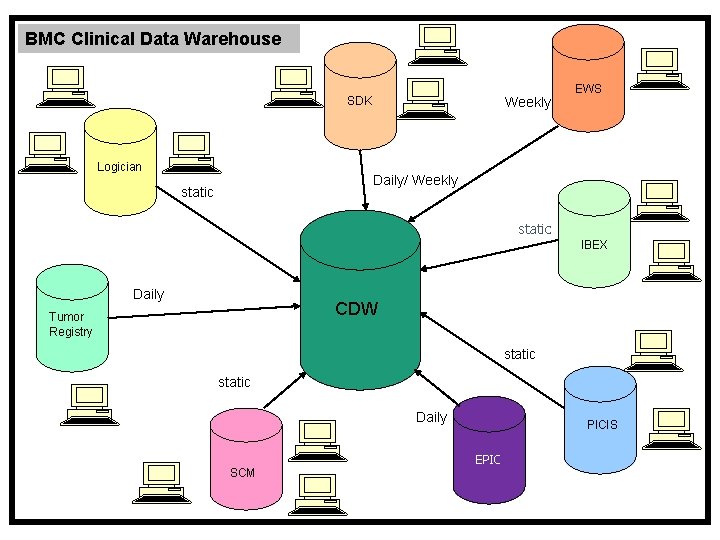
BMC Clinical Data Warehouse SDK Logician Weekly EWS Daily/ Weekly static IBEX Daily CDW Tumor Registry static Daily PICIS EPIC SCM
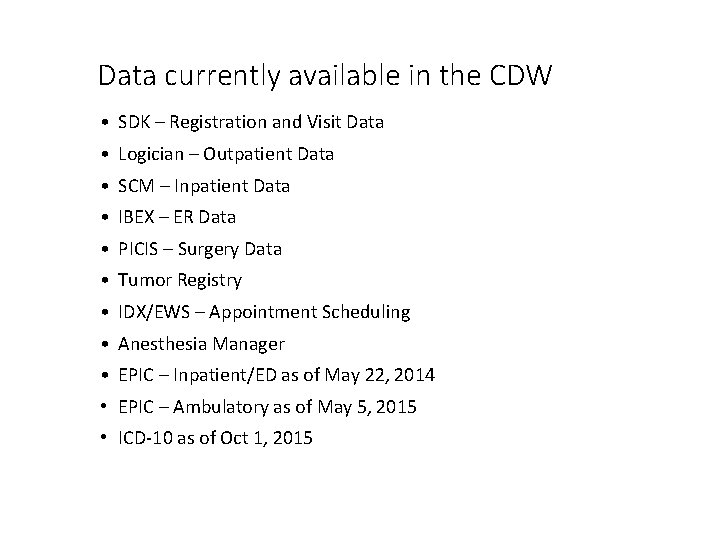
Data currently available in the CDW • SDK – Registration and Visit Data • Logician – Outpatient Data • SCM – Inpatient Data • IBEX – ER Data • PICIS – Surgery Data • Tumor Registry • IDX/EWS – Appointment Scheduling • Anesthesia Manager • EPIC – Inpatient/ED as of May 22, 2014 • EPIC – Ambulatory as of May 5, 2015 • ICD-10 as of Oct 1, 2015
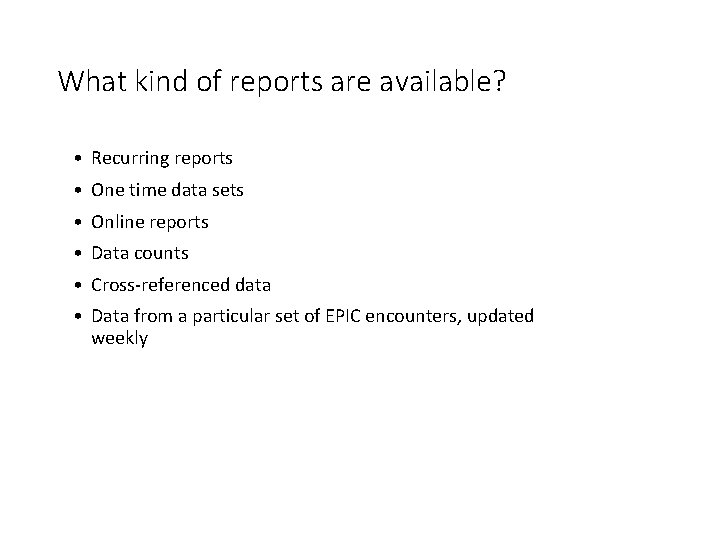
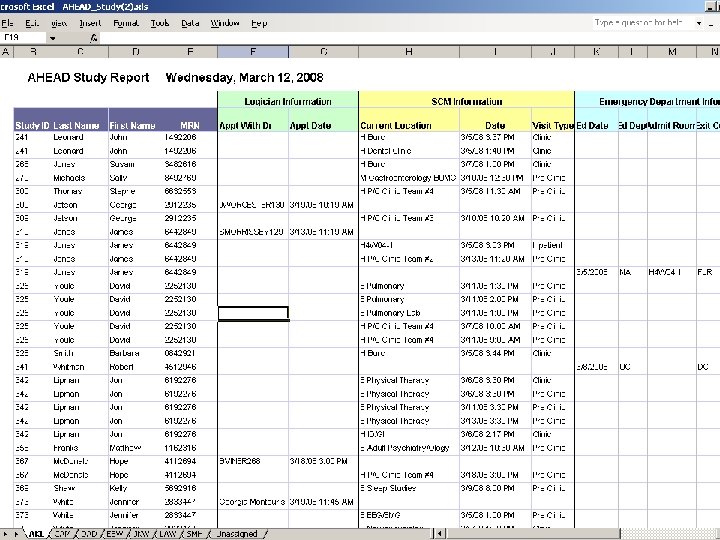
What kind of reports are available? • Recurring reports • One time data sets • Online reports • Data counts • Cross-referenced data • Data from a particular set of EPIC encounters, updated weekly
One Time Report – a misnomer • Complicated reports may take many iterations to get the complete data set. • The data provided are only as good as the request received. • Provide ICD-9 codes when diagnoses are involved a request. • Identify the source of the data if there is a known preference. • Indicate if the request is a one-time data set or if there will be future request for the same data with different dates. • Specify if there are multiple ways to denote a data item of interest. • e. g. , CIN I/CIN III could also be listed as Mild/Moderate/Severe Dysplasia • Often it is not until the researcher reviews a set of data that the request (and subsequent new report) can be refined to meet the study’s requirements – understand that the process is iterative. • It is the researcher’s responsibility to understand the data. • Ask questions
Data Quality • Consider these examples: • Smoking history • Pregnancy at a particular time • Medications active/inactive • Problem active/inactive