
CLINICAL CHEMISTRY MLT 301 CARBOHYDRATE LECTURE ONE Dr
CLINICAL CHEMISTRY (MLT 301) CARBOHYDRATE LECTURE ONE Dr. Essam H. Jiffri 1
Introduction Carbohydrates are distributed widely in the body, and have: - Metabolic functions -Glucose (the principal form and the major fuel for cellular metabolism) - Structural functions: -The precursor of other sugars, such as ribose which is found in: • nucleic acids, and of the • carbohydrate moieties of glycoproteins 2

Introduction Man can synthesize some carbohydrate from substrates such as: - Glycerol and, - Amino acids but most is derived from plant sources 3
Blood glucose homeostasis Sources: Blood glucose is maintained from several sources including: - Diet - Ingested carbohydrate includes both: - Digestible form (starch or disaccharides-after digestion are absorbed as glucose, galactose or fructose) - Nondigestible forms (dietary fibre) 4
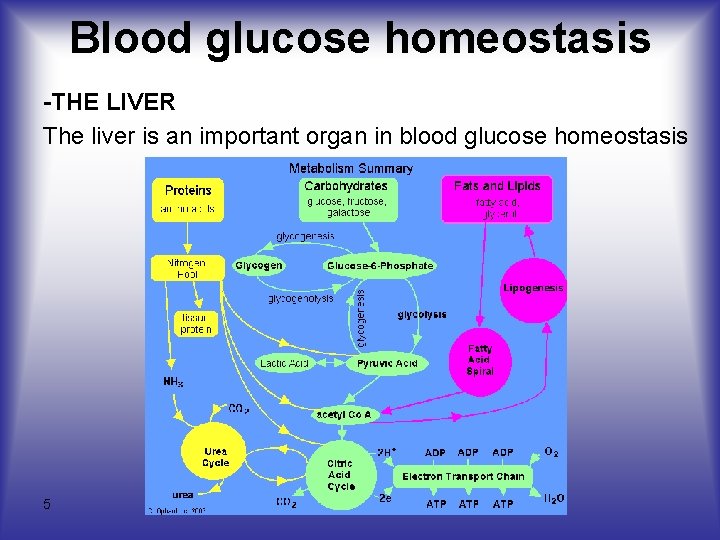
Blood glucose homeostasis -THE LIVER The liver is an important organ in blood glucose homeostasis 5
Blood glucose homeostasis -THE LIVER • After feeding (stores some excess glucose as glycogen) • In the fasted state (through glycogenolysis and gluconeogenesis, maintains blood levels) • The hepatic uptake and output of glucose is controlled by: o the concentration of key intermediates, and o The activity of enzymes. 6
Blood glucose homeostasis -THE LIVER • In hepatocytes, glucose phosphorylation is promoted by glucokinase which has a lower affinity than hexokinase. • The activity of glucokinase increases with high blood glucose levels and the liver removes glucose from the portal blood after a meal. • After uptake and phosphorylation, excess glucose is stored in the liver as glycogen. 7
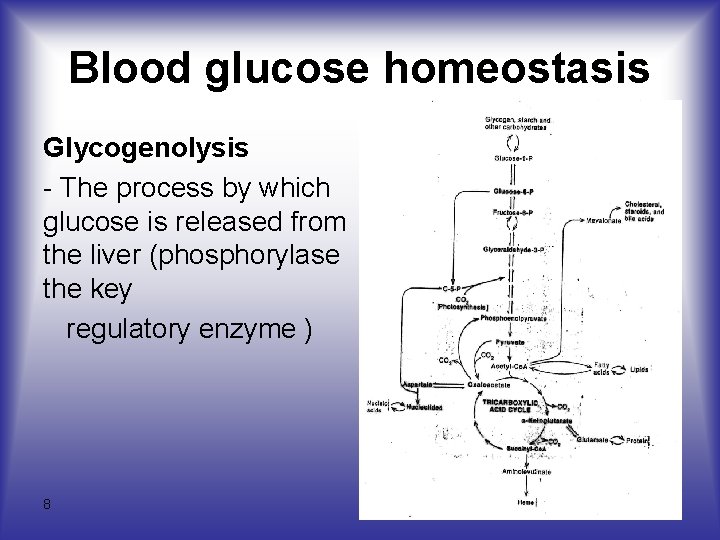
Blood glucose homeostasis Glycogenolysis - The process by which glucose is released from the liver (phosphorylase the key regulatory enzyme ) 8
Blood glucose homeostasis Glycogenolysis -In well-fed individuals hepatic glycogen stores can account for up to 10% of organ weight. -It forms a buffer which maintains blood glucose levels between meals. 9

Blood glucose homeostasis Gluconeogenesis - Other compounds are also converted to glucose in the liver 10
Blood glucose homeostasis Gluconeogenesis - lactate, glycerol and amino acids, particularly alanine, are gluconeogenic substrates. - Lactate is continually produced by partial oxidation of glucose in muscle and erythrocytes and is reconverted to glucose in the liver by the (Cori cycle ) 11
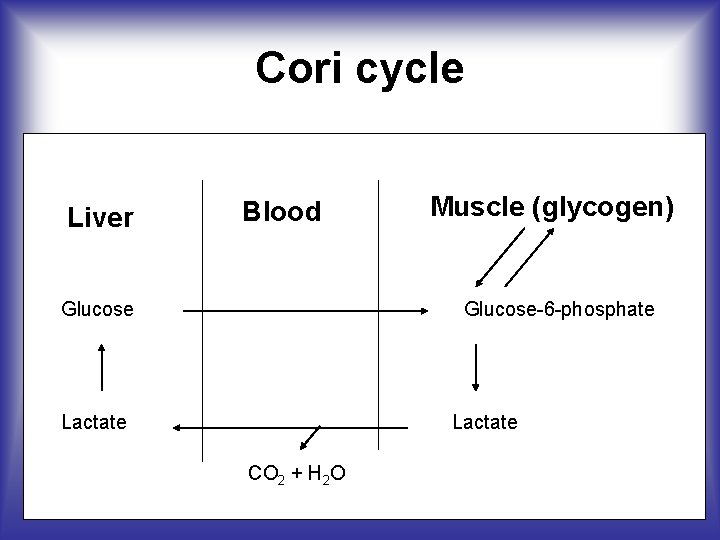
Cori cycle Liver Blood Glucose-6 -phosphate Lactate CO 2 + H 2 O 12 Muscle (glycogen)
Blood glucose homeostasis Hormonal regulation -carbohydrate-rich meal also affects the release of several hormones: -Insulin is the major hypoglycaemic hormone -Other hormones, including glucagon, growth hormone, cortisol and adrenaline are counterregulatory; these antagonize the effects of: insulin and have gluconeogenic effects. 13
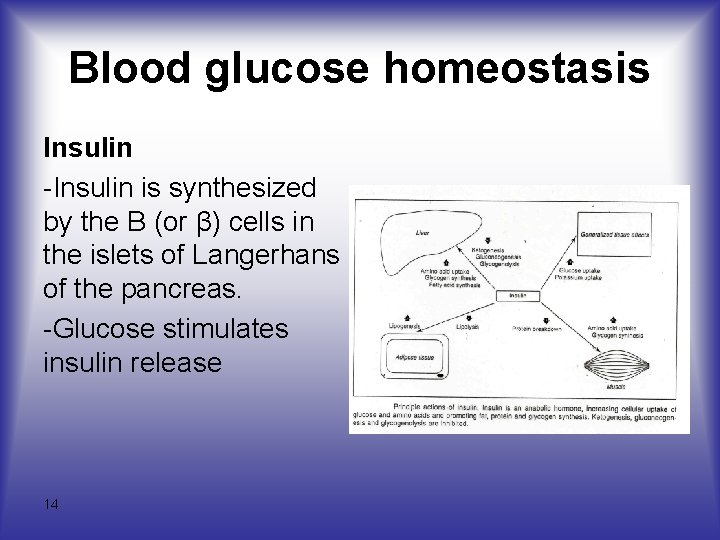
Blood glucose homeostasis Insulin -Insulin is synthesized by the B (or β) cells in the islets of Langerhans of the pancreas. -Glucose stimulates insulin release 14
Blood glucose homeostasis Insulin -Insulin is an anabolic hormone which stimulates: - glucose uptake by muscle and adipose tissue, and increases: • protein synthesis, • glycogen synthesis • lipogenesis. 15
Blood glucose homeostasis Glucagon -Glucagon is synthesized in the A (or α) cells of the pancreas. -Inhibited by glucose and insulin -Glucagon stimulates: • glycogenolysis and • gluconeogenesis (raising blood glucose concentrations). 16
Blood glucose homeostasis Growth Hormone -Growth hormone secretion is stimulated by hypoglycaemia -Actions include: • increased hepatic glucose production, and • increased lipolysis and raising plasma NEFA levels. 17
Blood glucose homeostasis Adrenaline -Hypoglycaemia is a potent stimulus for adrenaline secretion. • Inhibits insulin secretion • stimulates adipose tissue lipolysis, • increasing NEF A production 18
Blood glucose homeostasis Cortisol -Cortisol stimulates: • hepatic gluconeogenesis • promotes adipose tissue lipolysis and NEFA release 19
INTERRELATION OF GLUCOSE, NONESTERIFIED FATTY ACID AND KETONE BODY METABOLISM -Muscle has a higher rate of fuel utilization than other organs during exercise. -The brain, kidney and intestine utilize a higher percentage of available glucose at rest. -Alternative fuels are required during prolonged fasting or starvation 20
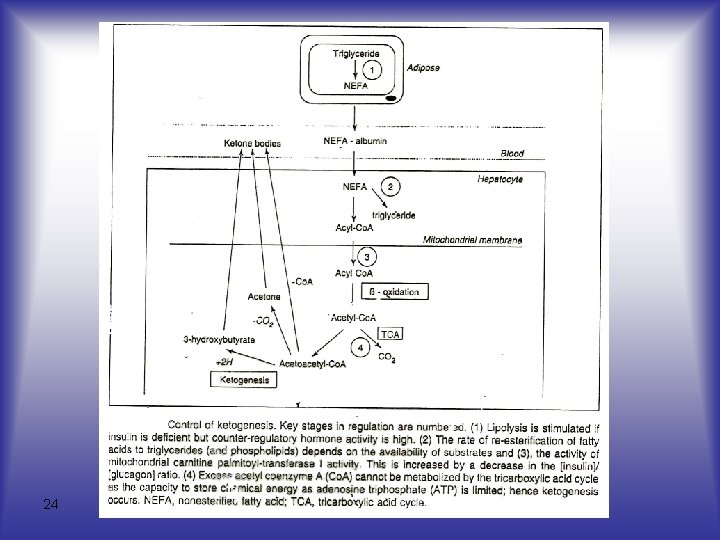
INTERRELATION OF GLUCOSE, NONESTERIFIED FATTY ACID AND KETONE BODY METABOLISM -The ketone bodies derived from fatty acid metabolism in the liver : • acetone • acetoacetate, and • β-hydroxybutyrate, 21
INTERRELATION OF GLUCOSE, NONESTERIFIED FATTY ACID AND KETONE BODY METABOLISM • • NEFA from adipose tissue is controlled by: the activity of hormon-sensitive lipase. Insulin inhibits this enzyme (anti-lipolytic) adrenaline, growth hormone, glucagon and cortisol are lipolytic. - Greater fluxes of NEFAs occur if carbohydrate availability is limited. 22
INTERRELATION OF GLUCOSE, NONESTERIFIED FATTY ACID AND KETONE BODY METABOLISM -NEFAs are transported in blood bound to albumin; about 30% is extracted by the liver. -In the liver, NEFAs are either: • reesterified to form triglycerides or, • metabolized by Beta-oxidation in mitochondria to form acetyl Co. A 23
24
KEY POINTS Ketone bodies are produced from NEFA in the liver Ketone bodies are a alternative fuel for brain metabolism In the starvation many organs utilize ketones, sparing glucose 25
- Slides: 25