
CLINICAL CASES Case Ms MC Ms MC Profile


- Slides: 127
CLINICAL CASES
Case: Ms. MC
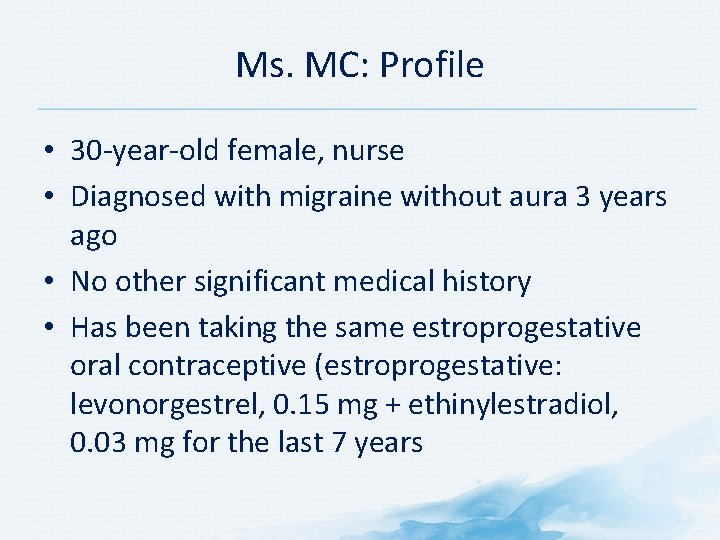
Ms. MC: Profile • 30 -year-old female, nurse • Diagnosed with migraine without aura 3 years ago • No other significant medical history • Has been taking the same estroprogestative oral contraceptive (estroprogestative: levonorgestrel, 0. 15 mg + ethinylestradiol, 0. 03 mg for the last 7 years
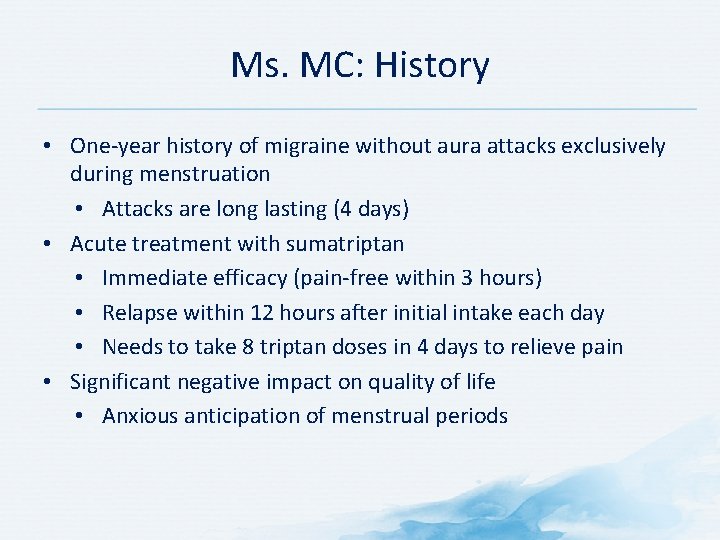
Ms. MC: History • One-year history of migraine without aura attacks exclusively during menstruation • Attacks are long lasting (4 days) • Acute treatment with sumatriptan • Immediate efficacy (pain-free within 3 hours) • Relapse within 12 hours after initial intake each day • Needs to take 8 triptan doses in 4 days to relieve pain • Significant negative impact on quality of life • Anxious anticipation of menstrual periods
Discussion Questions BASED ON THE CASE PRESENTATION, WHAT WOULD YOU CONSIDER IN YOUR DIFFERENTIAL DIAGNOSIS? WHAT FURTHER HISTORY WOULD YOU LIKE TO KNOW? WHAT TESTS OR EXAMINATIONS WOULD YOU CONDUCT?
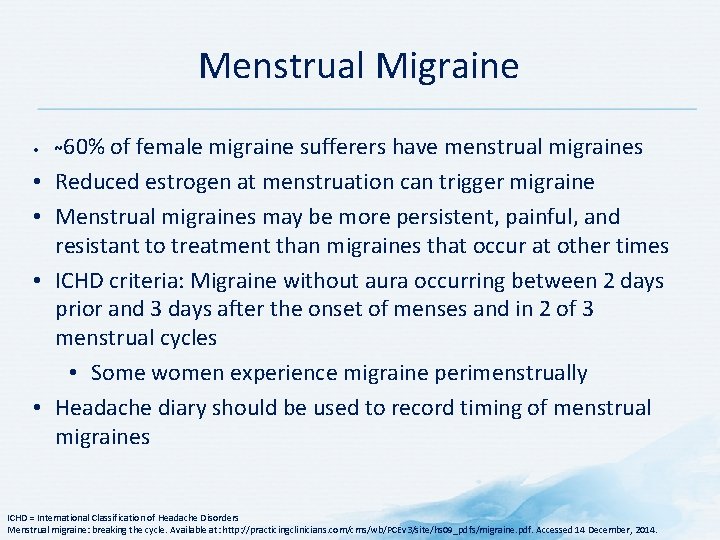
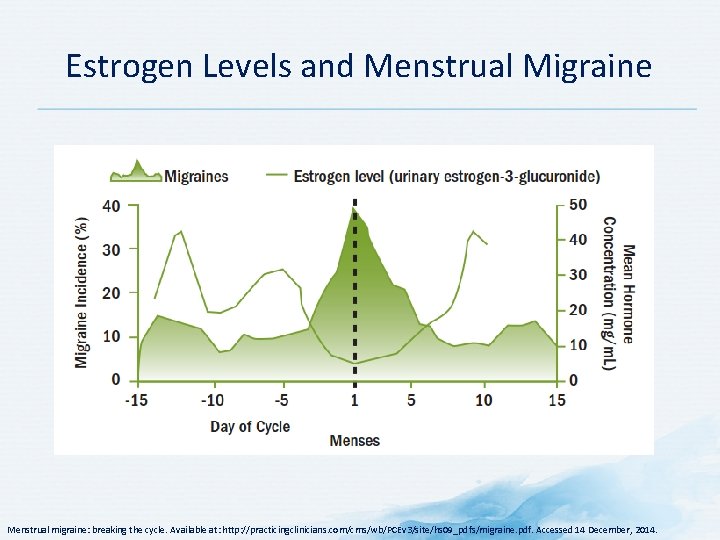
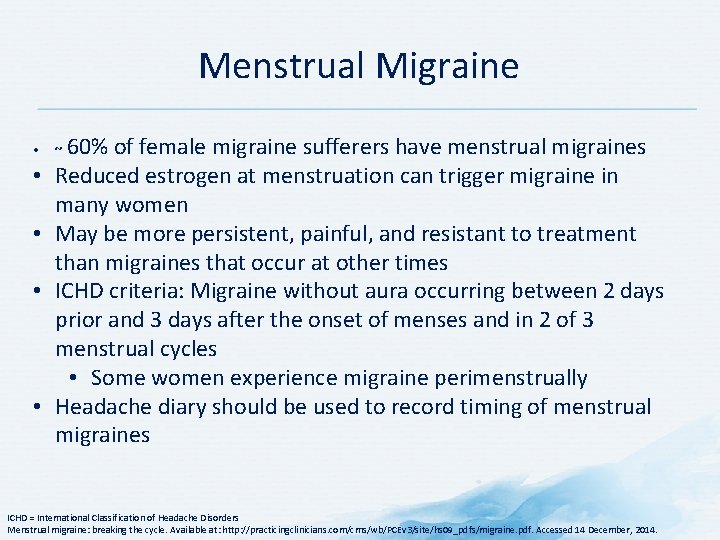
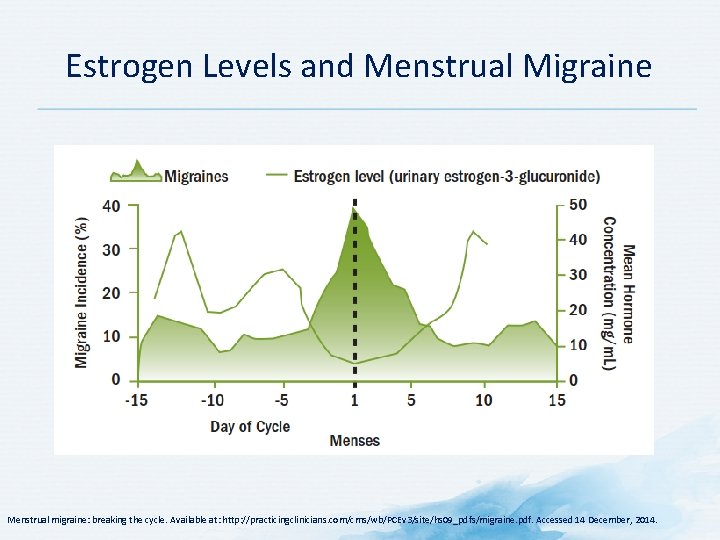
Menstrual Migraine • ~60% of female migraine sufferers have menstrual migraines • Reduced estrogen at menstruation can trigger migraine • Menstrual migraines may be more persistent, painful, and resistant to treatment than migraines that occur at other times • ICHD criteria: Migraine without aura occurring between 2 days prior and 3 days after the onset of menses and in 2 of 3 menstrual cycles • Some women experience migraine perimenstrually • Headache diary should be used to record timing of menstrual migraines ICHD = International Classification of Headache Disorders Menstrual migraine: breaking the cycle. Available at: http: //practicingclinicians. com/cms/wb/PCEv 3/site/hs 09_pdfs/migraine. pdf. Accessed 14 December, 2014.
Estrogen Levels and Menstrual Migraine Menstrual migraine: breaking the cycle. Available at: http: //practicingclinicians. com/cms/wb/PCEv 3/site/hs 09_pdfs/migraine. pdf. Accessed 14 December, 2014.
Discussion Question WOULD YOU MAKE ANY CHANGES TO THERAPY OR CONDUCT FURTHER INVESTIGATIONS?
Ms. MC: Further Tests/Examinations • In this clinical case there is no need for further tests. • If desired, a diary could be filled to confirm the reality of pure menstrual migraine.
Discussion Question WHAT WOULD BE YOUR DIAGNOSIS FOR THIS PATIENT?
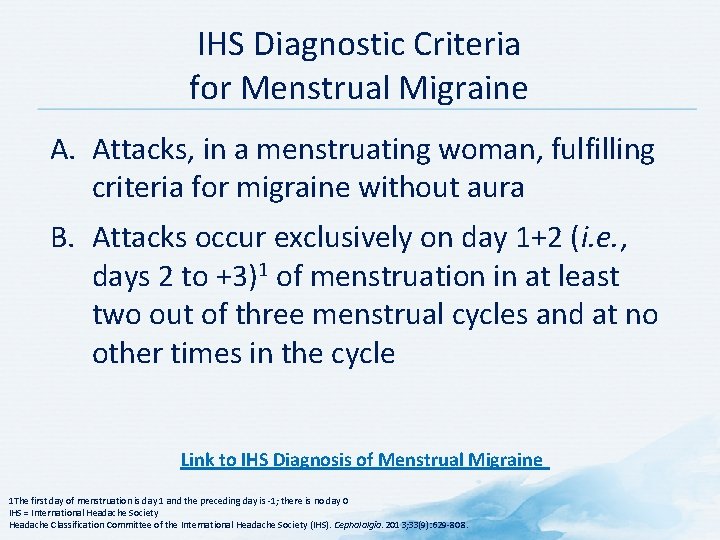
IHS Diagnostic Criteria for Menstrual Migraine A. Attacks, in a menstruating woman, fulfilling criteria for migraine without aura B. Attacks occur exclusively on day 1+2 (i. e. , days 2 to +3)1 of menstruation in at least two out of three menstrual cycles and at no other times in the cycle Link to IHS Diagnosis of Menstrual Migraine 1 The first day of menstruation is day 1 and the preceding day is -1; there is no day 0 IHS = International Headache Society Headache Classification Committee of the International Headache Society (IHS). Cephalalgia. 2013; 33(9): 629 -808.
Ms. MC: Diagnosis • This patient has pure menstrual migraine • Her attacks are difficult to treat • She has recurrence of pain even with treatment with triptans
Discussion Question WHAT TREATMENT STRATEGY WOULD YOU RECOMMEND?
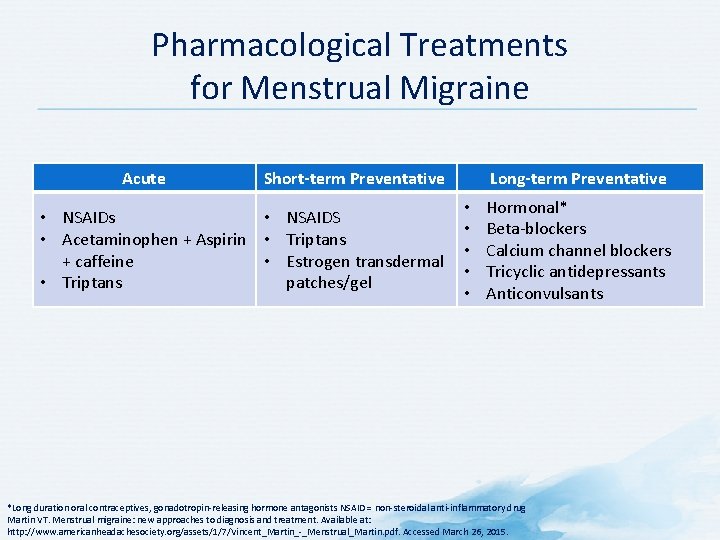
Pharmacological Treatments for Menstrual Migraine Acute Short-term Preventative Long-term Preventative • Hormonal* • NSAIDs • NSAIDS • Beta-blockers • Acetaminophen + Aspirin • Triptans • Calcium channel blockers + caffeine • Estrogen transdermal • Tricyclic antidepressants • Triptans patches/gel • Anticonvulsants *Long duration oral contraceptives, gonadotropin-releasing hormone antagonists NSAID = non-steroidal anti-inflammatory drug Martin VT. Menstrual migraine: new approaches to diagnosis and treatment. Available at: http: //www. americanheadachesociety. org/assets/1/7/Vincent_Martin_-_Menstrual_Martin. pdf. Accessed March 26, 2015.
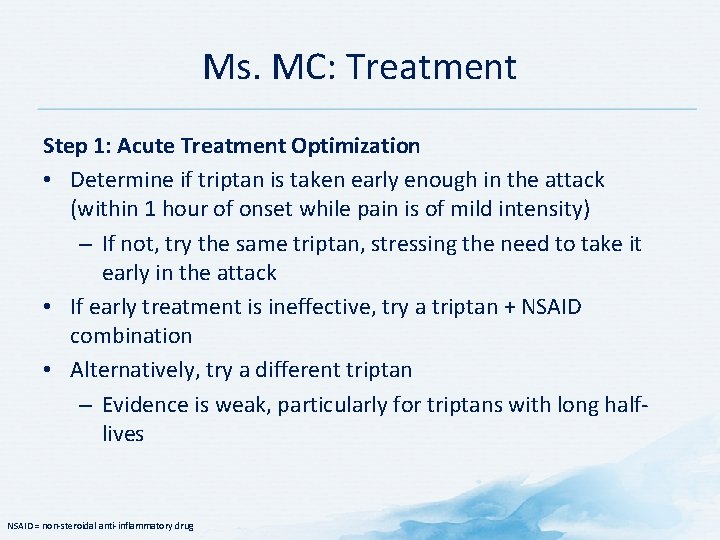
Ms. MC: Treatment Step 1: Acute Treatment Optimization • Determine if triptan is taken early enough in the attack (within 1 hour of onset while pain is of mild intensity) – If not, try the same triptan, stressing the need to take it early in the attack • If early treatment is ineffective, try a triptan + NSAID combination • Alternatively, try a different triptan – Evidence is weak, particularly for triptans with long halflives NSAID = non-steroidal anti-inflammatory drug
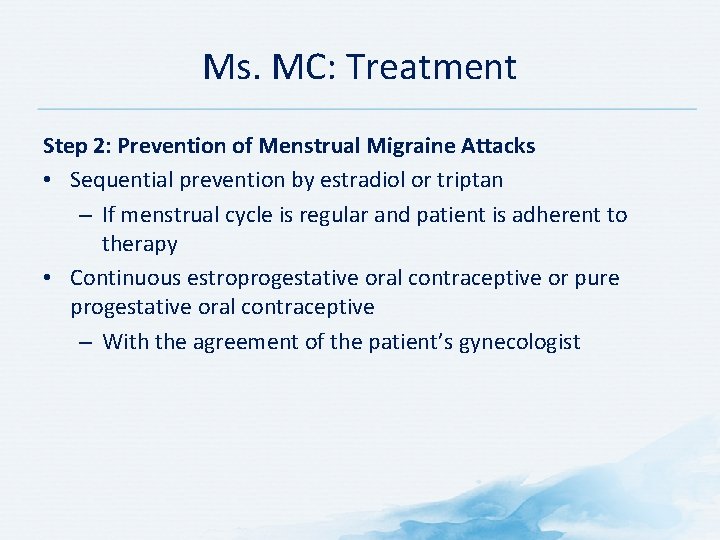
Ms. MC: Treatment Step 2: Prevention of Menstrual Migraine Attacks • Sequential prevention by estradiol or triptan – If menstrual cycle is regular and patient is adherent to therapy • Continuous estroprogestative oral contraceptive or pure progestative oral contraceptive – With the agreement of the patient’s gynecologist
Discussion Question WOULD YOU MAKE ANY CHANGES TO THERAPY OR CONDUCT FURTHER INVESTIGATIONS?
Case: Mrs. LT
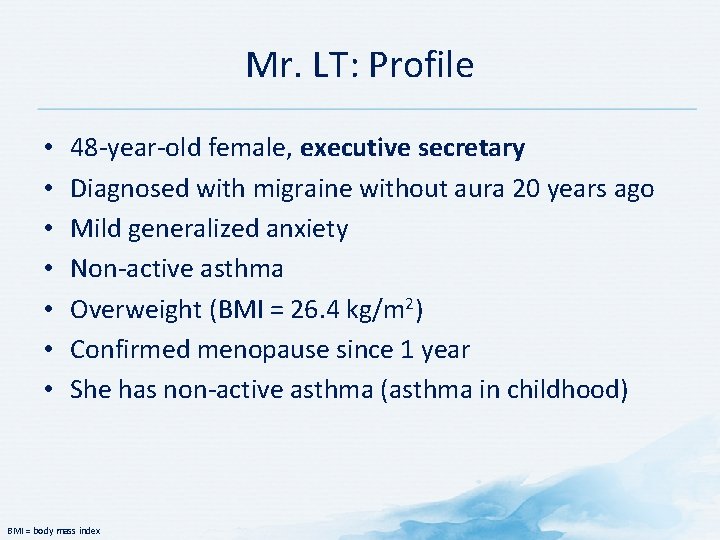
Mr. LT: Profile • • 48 -year-old female, executive secretary Diagnosed with migraine without aura 20 years ago Mild generalized anxiety Non-active asthma Overweight (BMI = 26. 4 kg/m 2) Confirmed menopause since 1 year She has non-active asthma (asthma in childhood) BMI = body mass index
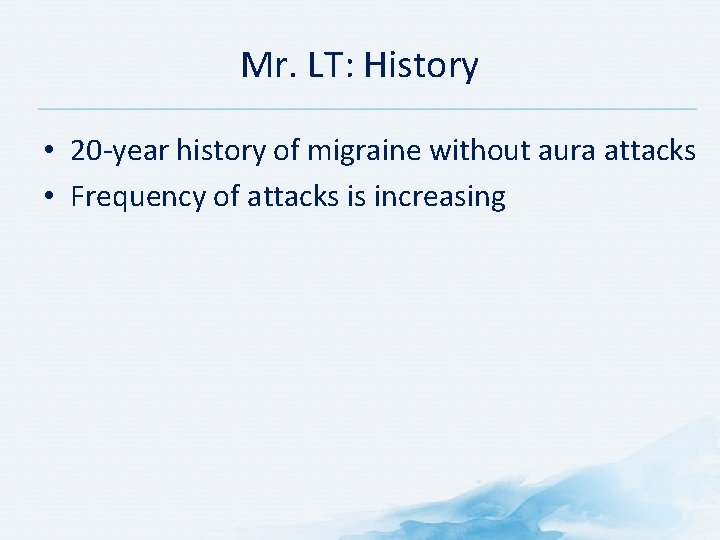
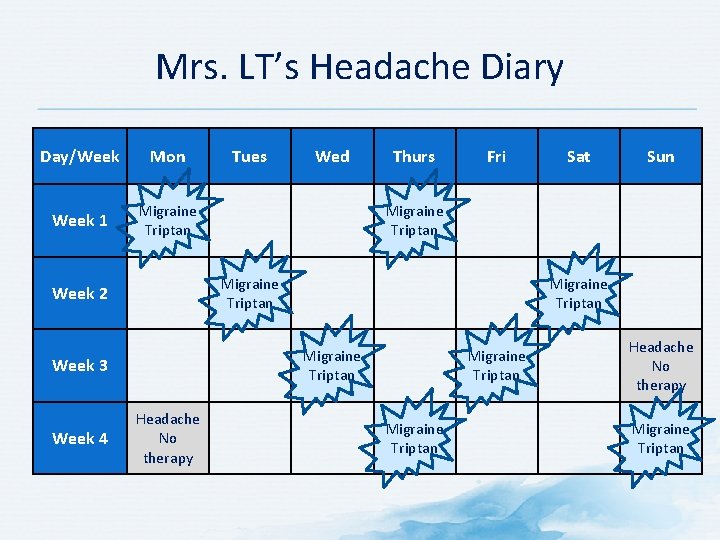
Mr. LT: History • 20 -year history of migraine without aura attacks • Frequency of attacks is increasing
Mrs. LT’s Headache Diary Day/Week Mon Week 1 Migraine Triptan Wed Thurs Fri Headache No therapy Sun Migraine Triptan Week 3 Sat Migraine Triptan Week 2 Week 4 Tues Migraine Triptan Headache No therapy Migraine Triptan
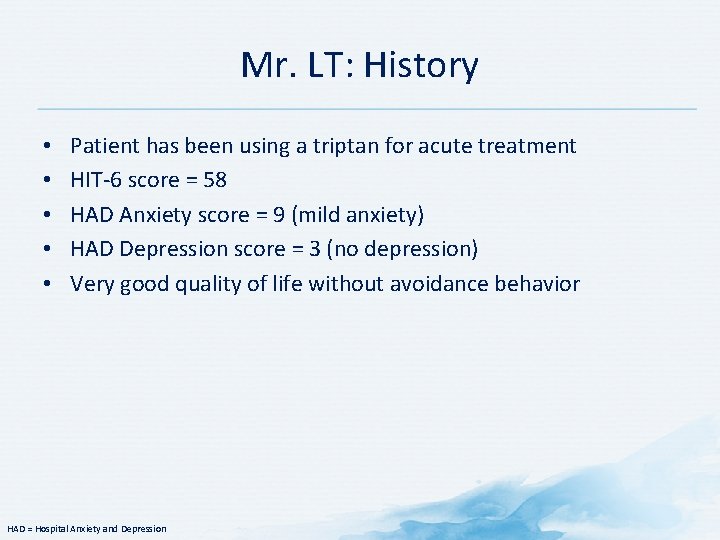
Mr. LT: History • • • Patient has been using a triptan for acute treatment HIT-6 score = 58 HAD Anxiety score = 9 (mild anxiety) HAD Depression score = 3 (no depression) Very good quality of life without avoidance behavior HAD = Hospital Anxiety and Depression
Tools to Assess Impact of Migraine Test MIDAS (Migraine Disability Assessment) Comments • 5 -item tool • Scores number of days of inactivity due to migraine in the past 3 months Headache Impact Test™-6 • Covers 6 categories (HIT-6) • Useful in clinical practice and research Headache Needs Assessment (HANA) • 7 -item self-administered tool • Can help identify which patients require treatment Short Form 36® (SF-36®) • 36 items covering physical and mental components of health • Generic measuring tool to identify quality of life issues Stewart WF et al. Neurology. 2001; 56(6 Suppl 1): S 20 -8; Kosinski M et al. Qual Life Res. 2003; 12(8): 963 -74; Cramer JA et al. Headache. 2001; 41(4): 402 -9; Ware, JE Jr. Available at: http: //www. sf-36. org/tools/SF 36. shtml.
HIT – Headache Impact Test • Helps patients communicate the severity of their headache pain to their health care provider • Helps to • Determine impact of headaches on patient’s life • Better communicate the information to the health care provider • Track the patient’s headache history and response to therapy over time Kosinski M et al. Qual Life Res. 2003; 12(8): 963 -74.
Headache Impact Test™-6 (HIT-6) Score >60 indicates patient is severely impacted or impaired by migraines Kosinski M et al. Qual Life Res. 2003; 12(8): 963 -74.
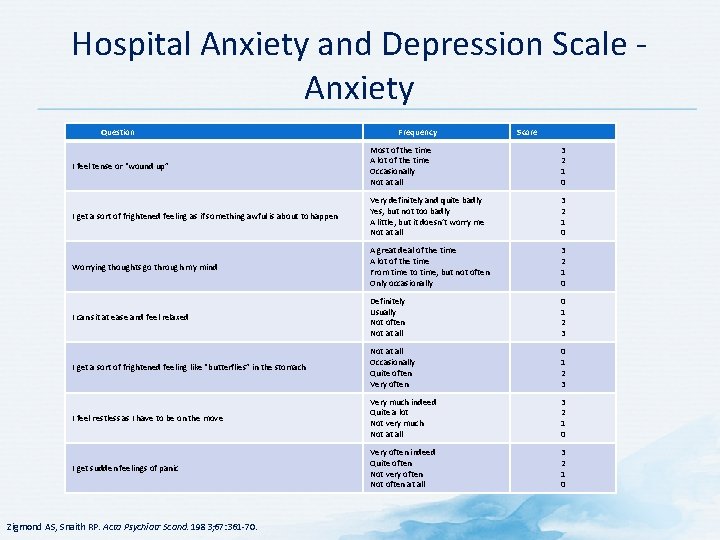
Hospital Anxiety and Depression Scale - Anxiety Question Frequency Score I feel tense or “wound up” Most of the time A lot of the time Occasionally Not at all 3 2 1 0 I get a sort of frightened feeling as if something awful is about to happen Very definitely and quite badly Yes, but not too badly A little, but it doesn’t worry me Not at all 3 2 1 0 Worrying thoughts go through my mind A great deal of the time A lot of the time From time to time, but not often Only occasionally 3 2 1 0 I can sit at ease and feel relaxed Definitely Usually Not often Not at all 0 1 2 3 I get a sort of frightened feeling like “butterflies” in the stomach Not at all Occasionally Quite often Very often 0 1 2 3 I feel restless as I have to be on the move Very much indeed Quite a lot Not very much Not at all 3 2 1 0 I get sudden feelings of panic Very often indeed Quite often Not very often Not often at all 3 2 1 0 Zigmond AS, Snaith RP. Acta Psychiatr Scand. 1983; 67: 361 -70.
Discussion Questions BASED ON THE CASE PRESENTATION, WHAT WOULD YOU CONSIDER IN YOUR DIFFERENTIAL DIAGNOSIS? WHAT FURTHER HISTORY WOULD YOU LIKE TO KNOW? WHAT TESTS OR EXAMINATIONS WOULD YOU CONDUCT?
Mr. LT: Further Tests/Examinations • In this clinical case there is no need for further tests. • The only thing that could possibly be proposed is to confirm normality of the clinical examination.
Discussion Question WHAT WOULD BE YOUR DIAGNOSIS FOR THIS PATIENT?
Mr. LT: Diagnosis • This patient has the beginnings of medication overuse headache • There is an indication for preventative treatment
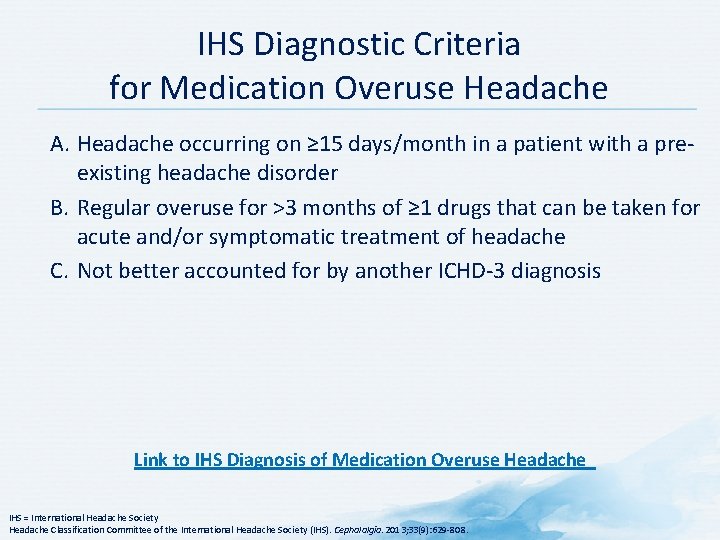
IHS Diagnostic Criteria for Medication Overuse Headache A. Headache occurring on ≥ 15 days/month in a patient with a preexisting headache disorder B. Regular overuse for >3 months of ≥ 1 drugs that can be taken for acute and/or symptomatic treatment of headache C. Not better accounted for by another ICHD-3 diagnosis Link to IHS Diagnosis of Medication Overuse Headache IHS = International Headache Society Headache Classification Committee of the International Headache Society (IHS). Cephalalgia. 2013; 33(9): 629 -808.
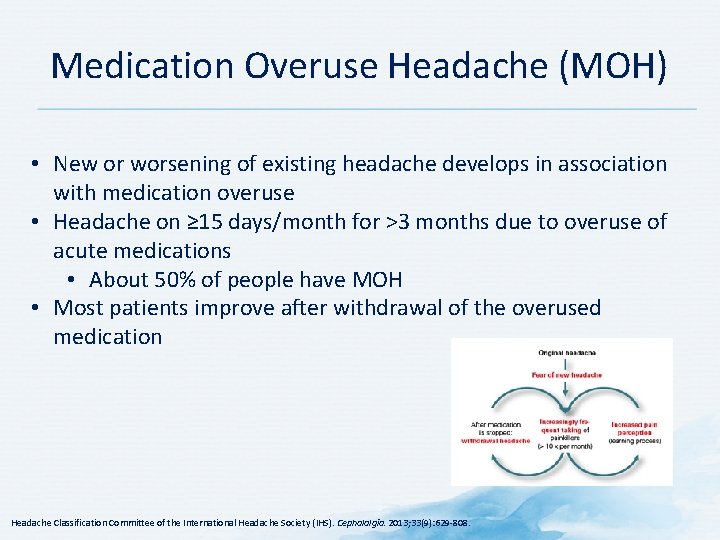
Medication Overuse Headache (MOH) • New or worsening of existing headache develops in association with medication overuse • Headache on ≥ 15 days/month for >3 months due to overuse of acute medications • About 50% of people have MOH • Most patients improve after withdrawal of the overused medication Headache Classification Committee of the International Headache Society (IHS). Cephalalgia. 2013; 33(9): 629 -808.
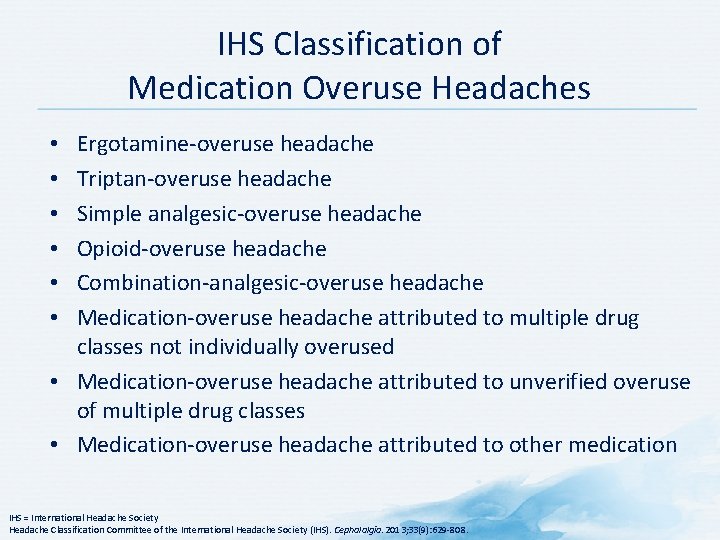
IHS Classification of Medication Overuse Headaches Ergotamine-overuse headache Triptan-overuse headache Simple analgesic-overuse headache Opioid-overuse headache Combination-analgesic-overuse headache Medication-overuse headache attributed to multiple drug classes not individually overused • Medication-overuse headache attributed to unverified overuse of multiple drug classes • Medication-overuse headache attributed to other medication • • • IHS = International Headache Society Headache Classification Committee of the International Headache Society (IHS). Cephalalgia. 2013; 33(9): 629 -808.
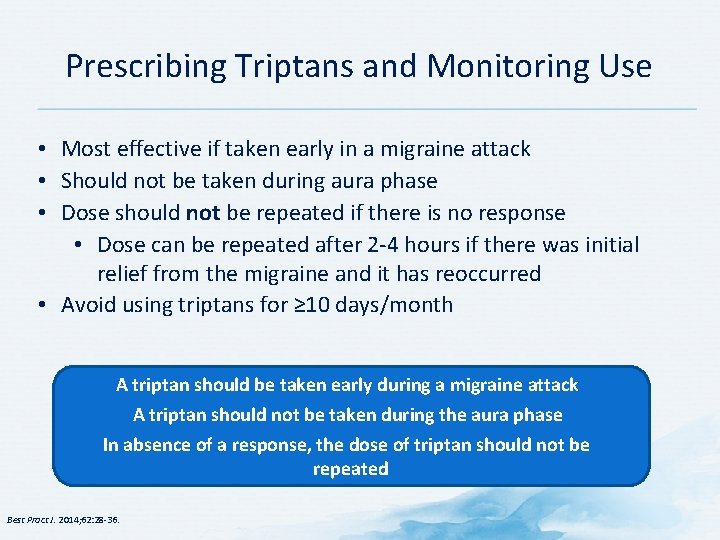
Prescribing Triptans and Monitoring Use • Most effective if taken early in a migraine attack • Should not be taken during aura phase • Dose should not be repeated if there is no response • Dose can be repeated after 2 -4 hours if there was initial relief from the migraine and it has reoccurred • Avoid using triptans for ≥ 10 days/month A triptan should be taken early during a migraine attack A triptan should not be taken during the aura phase In absence of a response, the dose of triptan should not be repeated Best Pract J. 2014; 62: 28 -36.
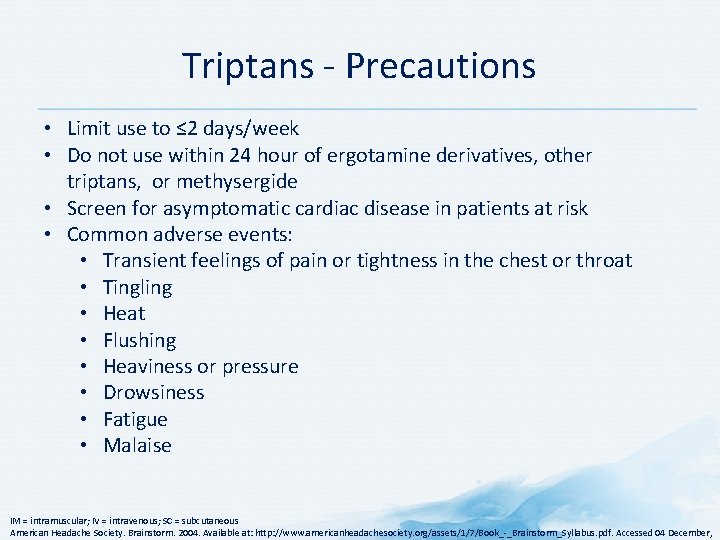
Triptans - Precautions • Limit use to ≤ 2 days/week • Do not use within 24 hour of ergotamine derivatives, other triptans, or methysergide • Screen for asymptomatic cardiac disease in patients at risk • Common adverse events: • Transient feelings of pain or tightness in the chest or throat • Tingling • Heat • Flushing • Heaviness or pressure • Drowsiness • Fatigue • Malaise IM = intramuscular; IV = intravenous; SC = subcutaneous American Headache Society. Brainstorm. 2004. Available at: http: //www. americanheadachesociety. org/assets/1/7/Book_-_Brainstorm_Syllabus. pdf. Accessed 04 December,
Discussion Question WOULD YOU MAKE ANY CHANGES TO THERAPY OR CONDUCT FURTHER INVESTIGATIONS?
Discussion Question WHAT TREATMENT STRATEGY WOULD YOU RECOMMEND?
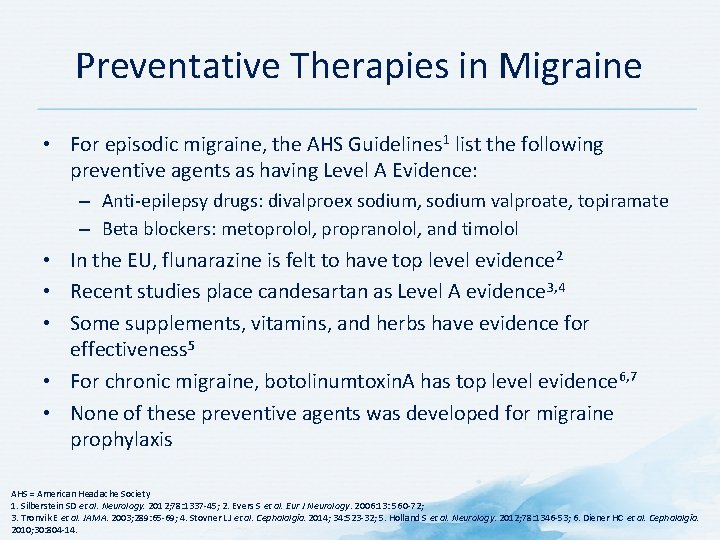
Preventative Therapies in Migraine • For episodic migraine, the AHS Guidelines 1 list the following preventive agents as having Level A Evidence: – Anti-epilepsy drugs: divalproex sodium, sodium valproate, topiramate – Beta blockers: metoprolol, propranolol, and timolol • In the EU, flunarazine is felt to have top level evidence 2 • Recent studies place candesartan as Level A evidence 3, 4 • Some supplements, vitamins, and herbs have evidence for effectiveness 5 • For chronic migraine, botolinumtoxin. A has top level evidence 6, 7 • None of these preventive agents was developed for migraine prophylaxis AHS = American Headache Society 1. Silberstein SD et al. Neurology. 2012; 78: 1337 -45; 2. Evers S et al. Eur J Neurology. 2006: 13: 560 -72; 3. Tronvik E et al. JAMA. 2003; 289: 65 -69; 4. Stovner LJ et al. Cephalalgia. 2014; 34: 523 -32; 5. Holland S et al. Neurology. 2012; 78: 1346 -53; 6. Diener HC et al. Cephalalgia. 2010; 30: 804 -14.
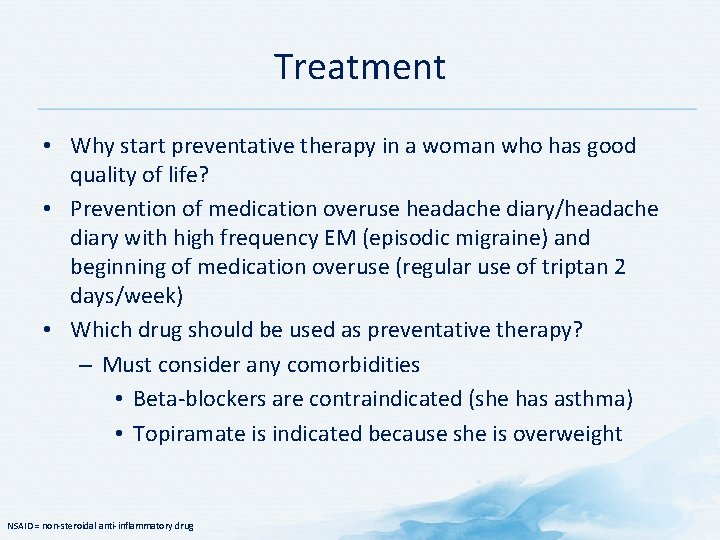
Treatment • Why start preventative therapy in a woman who has good quality of life? • Prevention of medication overuse headache diary/headache diary with high frequency EM (episodic migraine) and beginning of medication overuse (regular use of triptan 2 days/week) • Which drug should be used as preventative therapy? – Must consider any comorbidities • Beta-blockers are contraindicated (she has asthma) • Topiramate is indicated because she is overweight NSAID = non-steroidal anti-inflammatory drug
Treatment • Objective of preventative therapy: reduce number of headache days and days with acute migraine drug use by ≥ 50% • How can the efficacy of preventative therapy be evaluated? – Use a headache diary
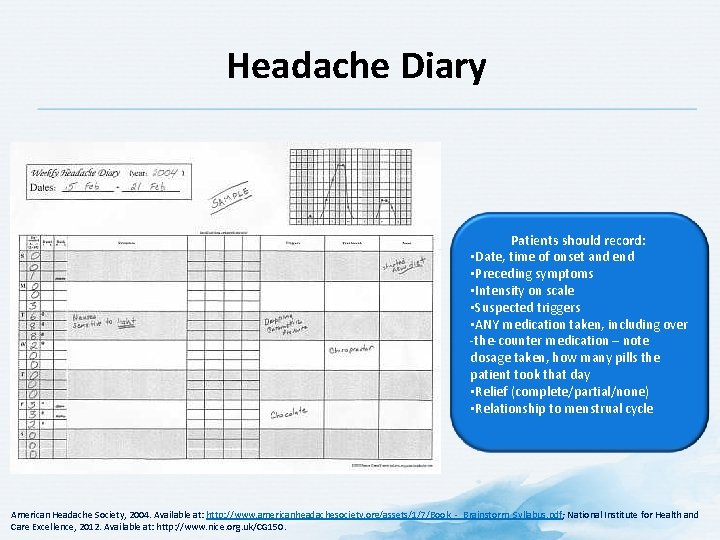
Headache Diary Patients should record: • Date, time of onset and end • Preceding symptoms • Intensity on scale • Suspected triggers • ANY medication taken, including over -the-counter medication – note dosage taken, how many pills the patient took that day • Relief (complete/partial/none) • Relationship to menstrual cycle American Headache Society, 2004. Available at: http: //www. americanheadachesociety. org/assets/1/7/Book_-_Brainstorm_Syllabus. pdf; National Institute for Health and Care Excellence, 2012. Available at: http: //www. nice. org. uk/CG 150.
Discussion Question WOULD YOU MAKE ANY CHANGES TO THERAPY OR CONDUCT FURTHER INVESTIGATIONS?
Case: Ms. MC
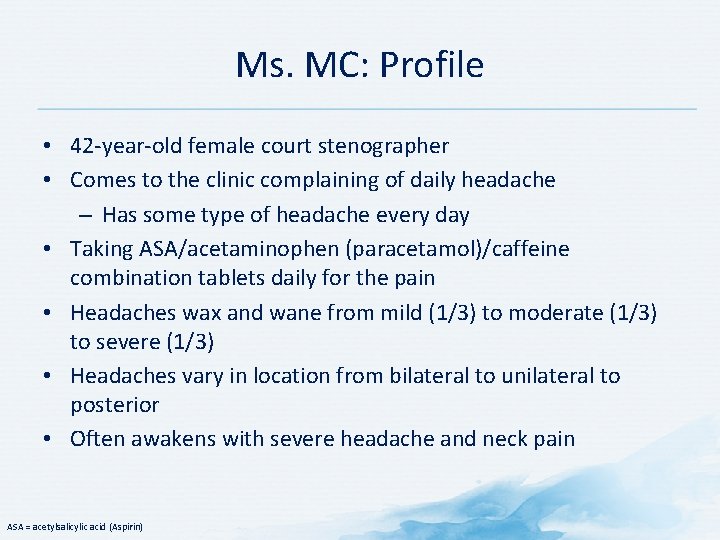
Ms. MC: Profile • 42 -year-old female court stenographer • Comes to the clinic complaining of daily headache – Has some type of headache every day • Taking ASA/acetaminophen (paracetamol)/caffeine combination tablets daily for the pain • Headaches wax and wane from mild (1/3) to moderate (1/3) to severe (1/3) • Headaches vary in location from bilateral to unilateral to posterior • Often awakens with severe headache and neck pain ASA = acetylsalicylic acid (Aspirin)
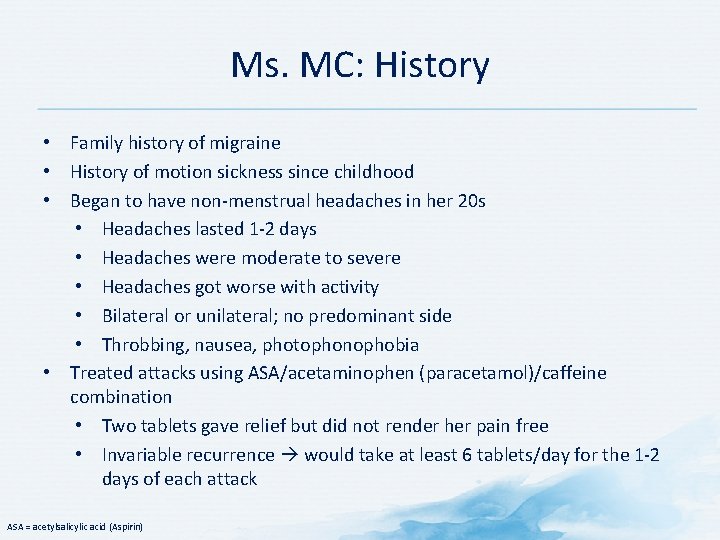
Ms. MC: History • Family history of migraine • History of motion sickness since childhood • Began to have non-menstrual headaches in her 20 s • Headaches lasted 1 -2 days • Headaches were moderate to severe • Headaches got worse with activity • Bilateral or unilateral; no predominant side • Throbbing, nausea, photophonophobia • Treated attacks using ASA/acetaminophen (paracetamol)/caffeine combination • Two tablets gave relief but did not render her pain free • Invariable recurrence would take at least 6 tablets/day for the 1 -2 days of each attack ASA = acetylsalicylic acid (Aspirin)
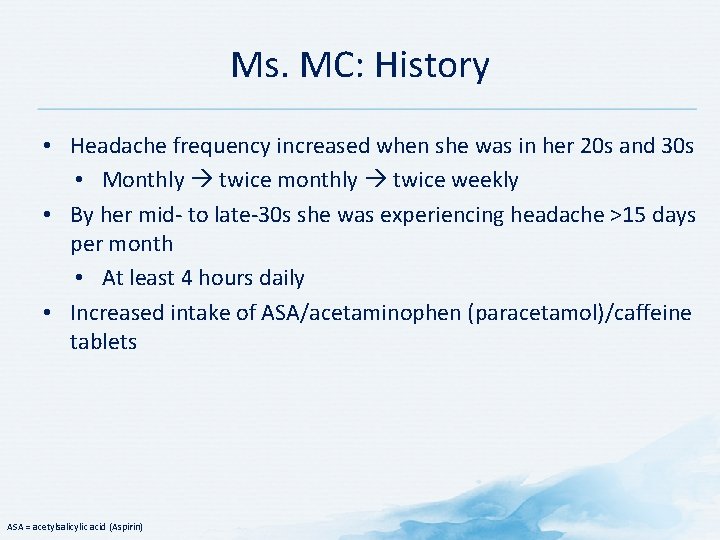
Ms. MC: History • Headache frequency increased when she was in her 20 s and 30 s • Monthly twice monthly twice weekly • By her mid- to late-30 s she was experiencing headache >15 days per month • At least 4 hours daily • Increased intake of ASA/acetaminophen (paracetamol)/caffeine tablets ASA = acetylsalicylic acid (Aspirin)
Discussion Questions BASED ON THE CASE PRESENTATION, WHAT WOULD YOU CONSIDER IN YOUR DIFFERENTIAL DIAGNOSIS? WHAT FURTHER HISTORY WOULD YOU LIKE TO KNOW? WHAT TESTS OR EXAMINATIONS WOULD YOU CONDUCT?
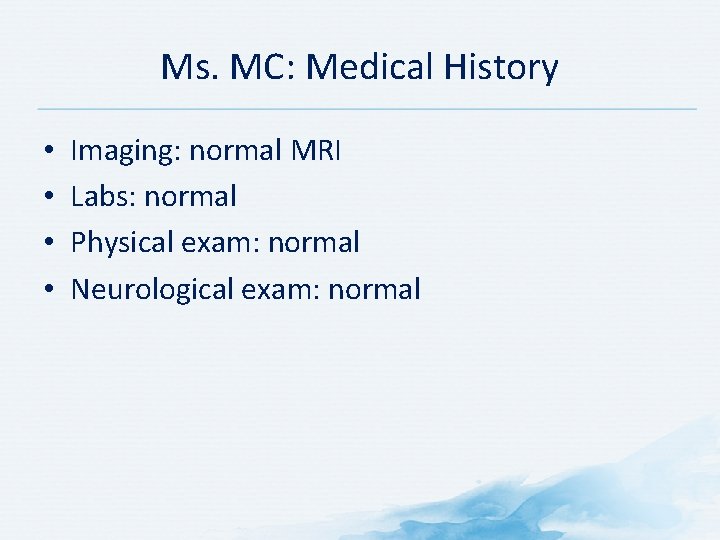
Ms. MC: Medical History • • Imaging: normal MRI Labs: normal Physical exam: normal Neurological exam: normal
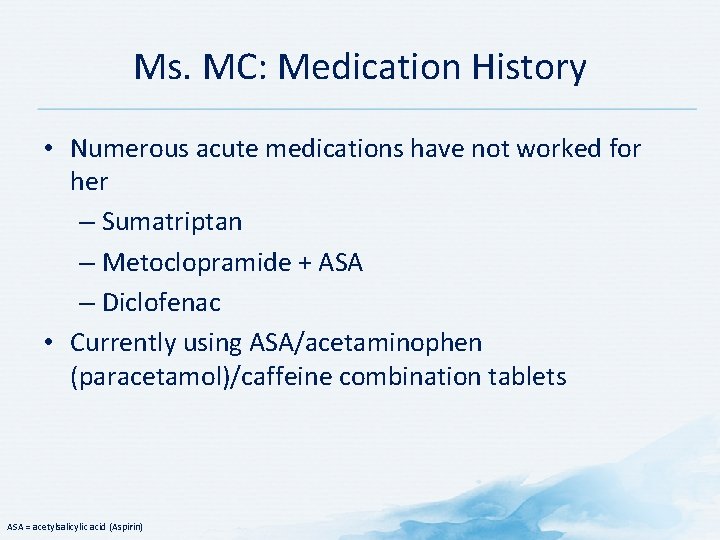
Ms. MC: Medication History • Numerous acute medications have not worked for her – Sumatriptan – Metoclopramide + ASA – Diclofenac • Currently using ASA/acetaminophen (paracetamol)/caffeine combination tablets ASA = acetylsalicylic acid (Aspirin)
Discussion Question WHAT WOULD BE YOUR DIAGNOSIS FOR THIS PATIENT?
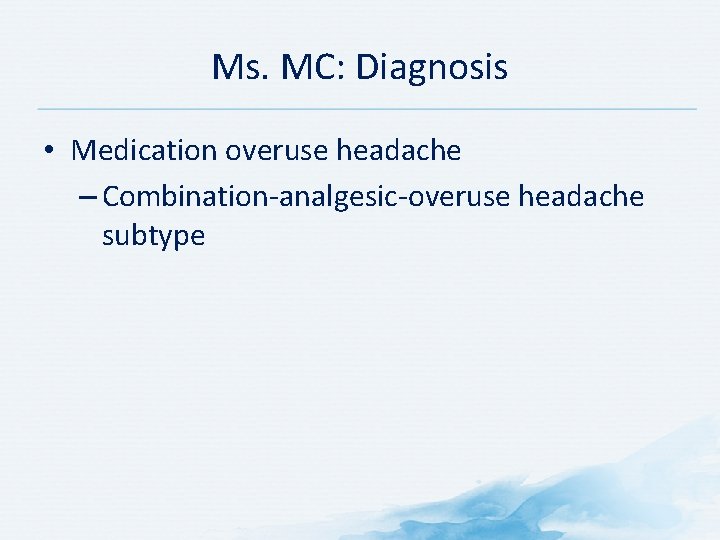
Ms. MC: Diagnosis • Medication overuse headache – Combination-analgesic-overuse headache subtype
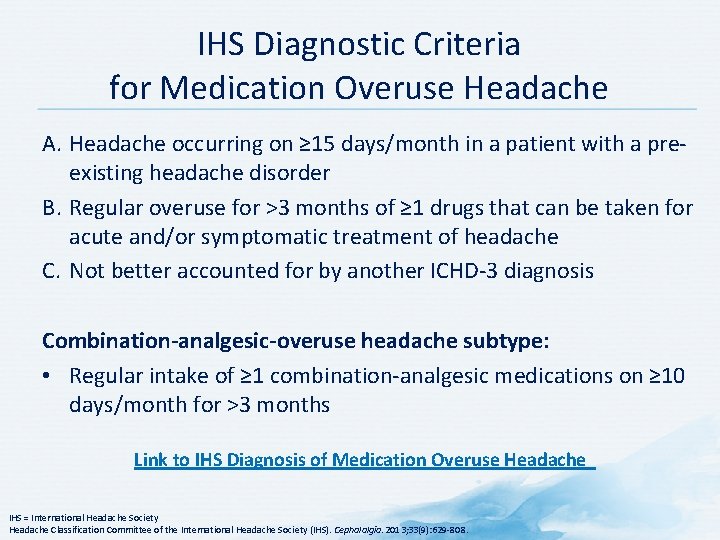
IHS Diagnostic Criteria for Medication Overuse Headache A. Headache occurring on ≥ 15 days/month in a patient with a preexisting headache disorder B. Regular overuse for >3 months of ≥ 1 drugs that can be taken for acute and/or symptomatic treatment of headache C. Not better accounted for by another ICHD-3 diagnosis Combination-analgesic-overuse headache subtype: • Regular intake of ≥ 1 combination-analgesic medications on ≥ 10 days/month for >3 months Link to IHS Diagnosis of Medication Overuse Headache IHS = International Headache Society Headache Classification Committee of the International Headache Society (IHS). Cephalalgia. 2013; 33(9): 629 -808.
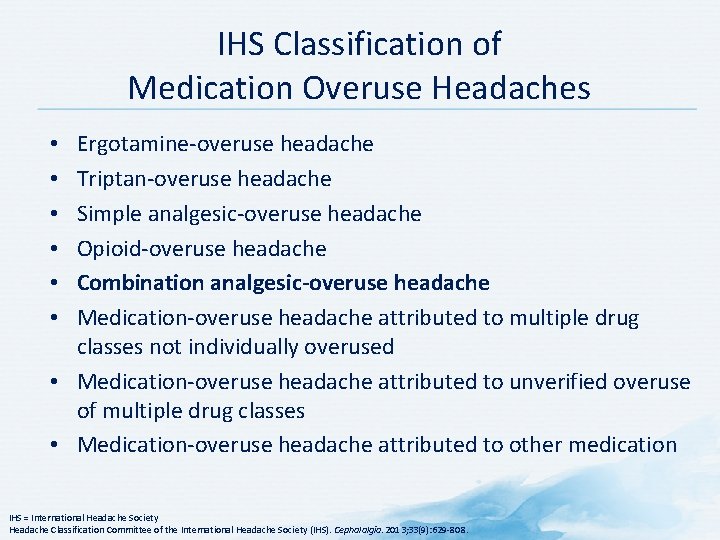
IHS Classification of Medication Overuse Headaches Ergotamine-overuse headache Triptan-overuse headache Simple analgesic-overuse headache Opioid-overuse headache Combination analgesic-overuse headache Medication-overuse headache attributed to multiple drug classes not individually overused • Medication-overuse headache attributed to unverified overuse of multiple drug classes • Medication-overuse headache attributed to other medication • • • IHS = International Headache Society Headache Classification Committee of the International Headache Society (IHS). Cephalalgia. 2013; 33(9): 629 -808.
Discussion Question WHAT TREATMENT STRATEGY WOULD YOU RECOMMEND?
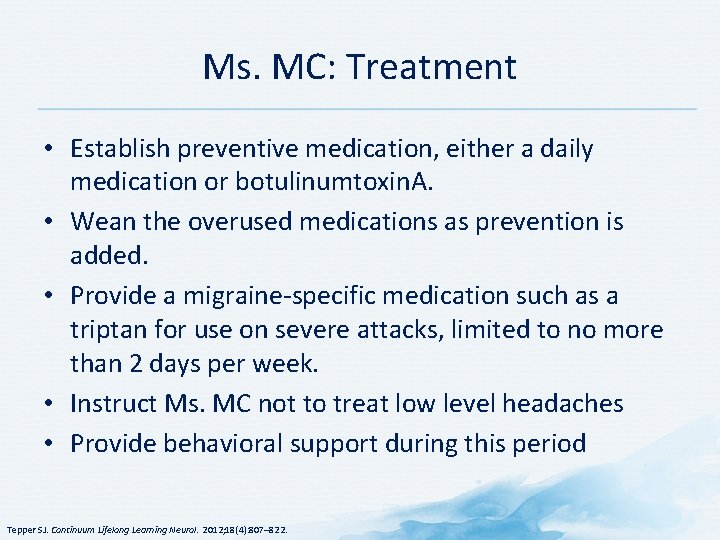
Ms. MC: Treatment • Establish preventive medication, either a daily medication or botulinumtoxin. A. • Wean the overused medications as prevention is added. • Provide a migraine-specific medication such as a triptan for use on severe attacks, limited to no more than 2 days per week. • Instruct Ms. MC not to treat low level headaches • Provide behavioral support during this period Tepper SJ. Continuum Lifelong Learning Neurol. 2012; 18(4): 807– 822.
Ms. MC: Follow up • Providing regular follow up is very important. • Ms. MC was started on topiramate, was able to tolerate it at 100 mg, and was provided eletriptan for use for her attacks. • By 3 months, she was no longer having daily headaches, but had discrete episodic attacks of migraine without aura every 7 -10 days, with a sustained pain-free response from the eletriptan.
Ms. MC: Work Up • This patient had a long history of episodic migraine and a clear description of transformation to daily headache with increased combination analgesic intake. • She had chronic migraine for years, stable and without change. • Her exam was normal and she had a normal MRI in the past, during the time of daily headaches. – Therefore, further workup was not necessary before initiating the treatment.
Case: Ms. HT
Ms. HT: Profile • 24 -year-old female nurse • Comes to the clinic complaining of headaches ASA = acetylsalicylic acid (Aspirin)
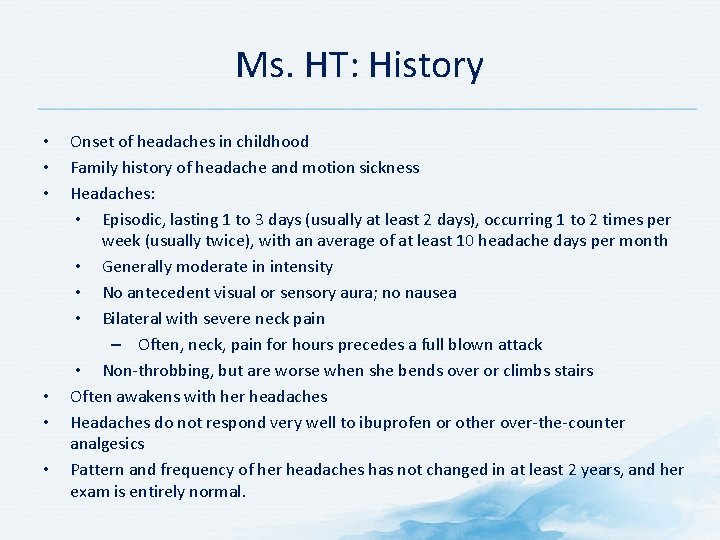
Ms. HT: History • • • Onset of headaches in childhood Family history of headache and motion sickness Headaches: • Episodic, lasting 1 to 3 days (usually at least 2 days), occurring 1 to 2 times per week (usually twice), with an average of at least 10 headache days per month • Generally moderate in intensity • No antecedent visual or sensory aura; no nausea • Bilateral with severe neck pain – Often, neck, pain for hours precedes a full blown attack • Non-throbbing, but are worse when she bends over or climbs stairs Often awakens with her headaches Headaches do not respond very well to ibuprofen or other over-the-counter analgesics Pattern and frequency of her headaches has not changed in at least 2 years, and her exam is entirely normal.
Discussion Questions BASED ON THE CASE PRESENTATION, WHAT WOULD YOU CONSIDER IN YOUR DIFFERENTIAL DIAGNOSIS? WHAT FURTHER HISTORY WOULD YOU LIKE TO KNOW? WHAT TESTS OR EXAMINATIONS WOULD YOU CONDUCT?
Discussion Question WHAT WOULD BE YOUR DIAGNOSIS FOR THIS PATIENT?
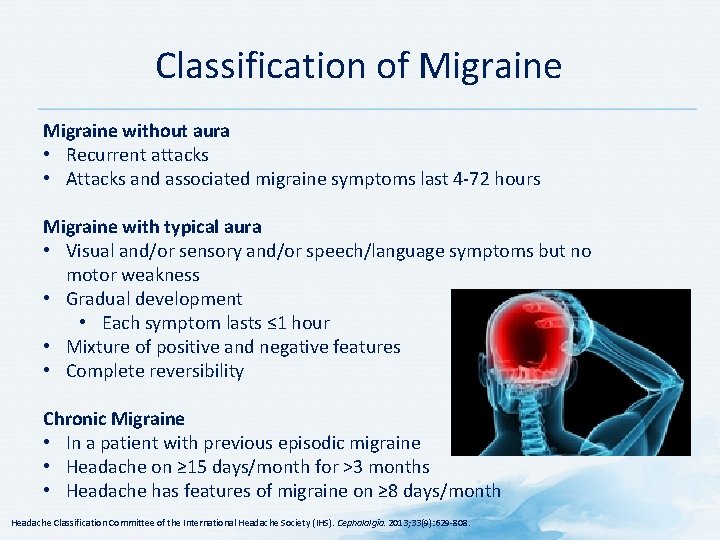
Classification of Migraine without aura • Recurrent attacks • Attacks and associated migraine symptoms last 4 -72 hours Migraine with typical aura • Visual and/or sensory and/or speech/language symptoms but no motor weakness • Gradual development • Each symptom lasts ≤ 1 hour • Mixture of positive and negative features • Complete reversibility Chronic Migraine • In a patient with previous episodic migraine • Headache on ≥ 15 days/month for >3 months • Headache has features of migraine on ≥ 8 days/month Headache Classification Committee of the International Headache Society (IHS). Cephalalgia. 2013; 33(9): 629 -808.
Discussion Question WHAT TREATMENT STRATEGY WOULD YOU RECOMMEND?
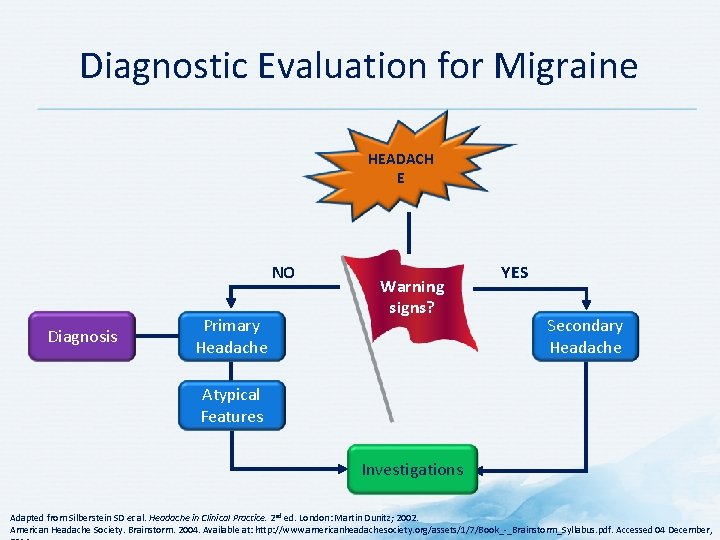
Diagnostic Evaluation for Migraine HEADACH E NO Diagnosis Primary Headache Warning signs? YES Secondary Headache Atypical Features Investigations Adapted from Silberstein SD et al. Headache in Clinical Practice. 2 nd ed. London: Martin Dunitz; 2002. American Headache Society. Brainstorm. 2004. Available at: http: //www. americanheadachesociety. org/assets/1/7/Book_-_Brainstorm_Syllabus. pdf. Accessed 04 December,
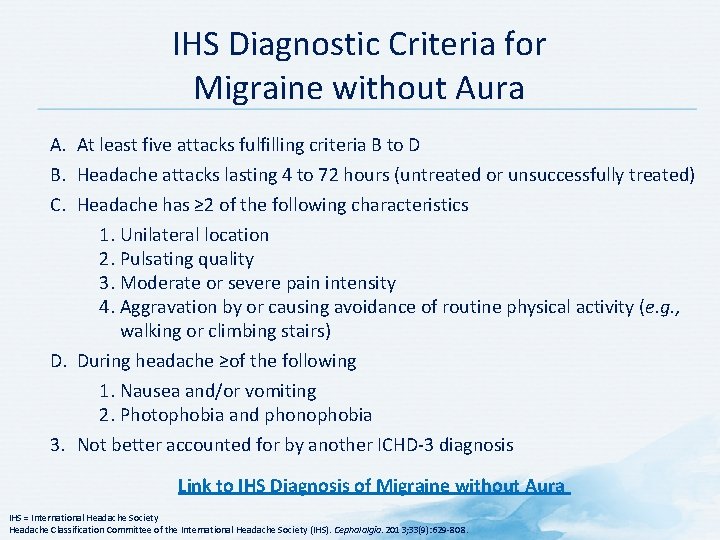
IHS Diagnostic Criteria for Migraine without Aura A. At least five attacks fulfilling criteria B to D B. Headache attacks lasting 4 to 72 hours (untreated or unsuccessfully treated) C. Headache has ≥ 2 of the following characteristics 1. Unilateral location 2. Pulsating quality 3. Moderate or severe pain intensity 4. Aggravation by or causing avoidance of routine physical activity (e. g. , walking or climbing stairs) D. During headache ≥of the following 1. Nausea and/or vomiting 2. Photophobia and phonophobia 3. Not better accounted for by another ICHD-3 diagnosis Link to IHS Diagnosis of Migraine without Aura IHS = International Headache Society Headache Classification Committee of the International Headache Society (IHS). Cephalalgia. 2013; 33(9): 629 -808.
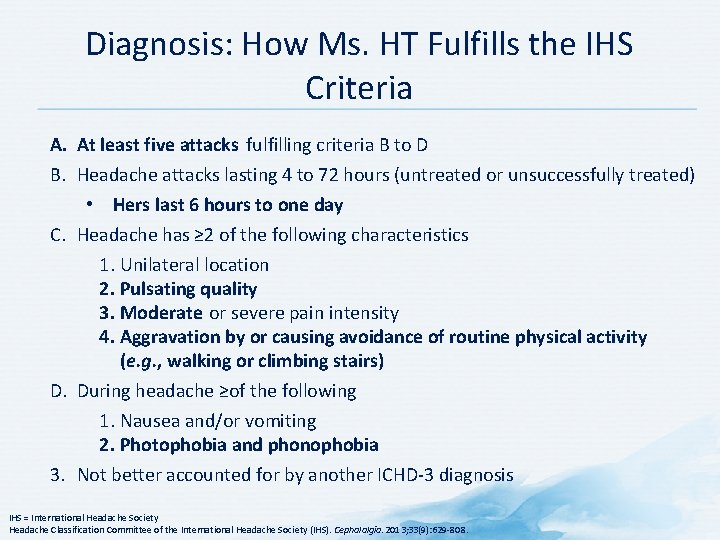
Diagnosis: How Ms. HT Fulfills the IHS Criteria A. At least five attacks fulfilling criteria B to D B. Headache attacks lasting 4 to 72 hours (untreated or unsuccessfully treated) • Hers last 6 hours to one day C. Headache has ≥ 2 of the following characteristics 1. Unilateral location 2. Pulsating quality 3. Moderate or severe pain intensity 4. Aggravation by or causing avoidance of routine physical activity (e. g. , walking or climbing stairs) D. During headache ≥of the following 1. Nausea and/or vomiting 2. Photophobia and phonophobia 3. Not better accounted for by another ICHD-3 diagnosis IHS = International Headache Society Headache Classification Committee of the International Headache Society (IHS). Cephalalgia. 2013; 33(9): 629 -808.
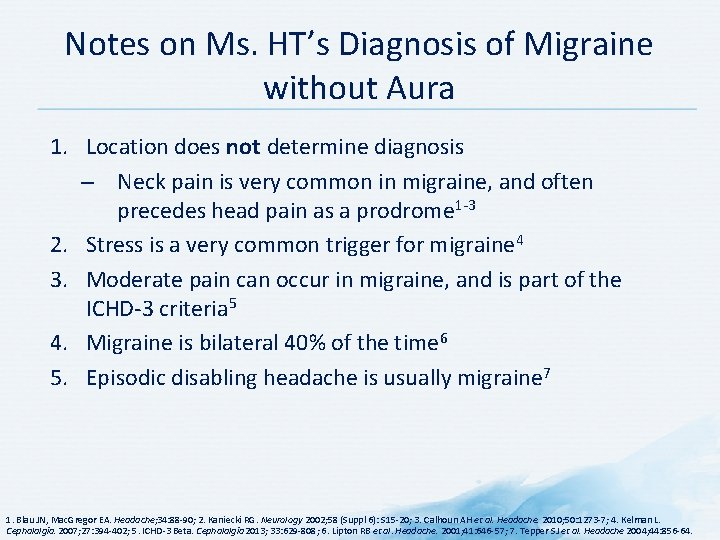
Notes on Ms. HT’s Diagnosis of Migraine without Aura 1. Location does not determine diagnosis – Neck pain is very common in migraine, and often precedes head pain as a prodrome 1 -3 2. Stress is a very common trigger for migraine 4 3. Moderate pain can occur in migraine, and is part of the ICHD-3 criteria 5 4. Migraine is bilateral 40% of the time 6 5. Episodic disabling headache is usually migraine 7 1. Blau JN, Mac. Gregor EA. Headache; 34: 88 -90; 2. Kaniecki RG. Neurology 2002; 58 (Suppl 6): S 15 -20; 3. Calhoun AH et al. Headache. 2010; 50: 1273 -7; 4. Kelman L. Cephalalgia. 2007; 27: 394 -402; 5. ICHD-3 Beta. Cephalalgia 2013; 33: 629 -808; 6. Lipton RB et al. Headache. 2001; 41: 646 -57; 7. Tepper SJ et al. Headache 2004; 44: 856 -64.
Ms. HT: Acute Treatment • Treatment goal : sustained pain-free response • Oral triptan for her daytime attacks • Non-oral triptan for the migraines upon wakening
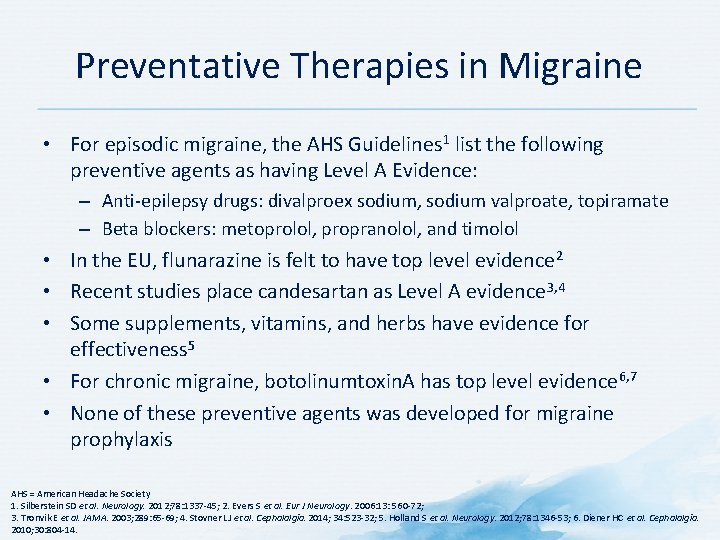
Preventative Therapies in Migraine • For episodic migraine, the AHS Guidelines 1 list the following preventive agents as having Level A Evidence: – Anti-epilepsy drugs: divalproex sodium, sodium valproate, topiramate – Beta blockers: metoprolol, propranolol, and timolol • In the EU, flunarazine is felt to have top level evidence 2 • Recent studies place candesartan as Level A evidence 3, 4 • Some supplements, vitamins, and herbs have evidence for effectiveness 5 • For chronic migraine, botolinumtoxin. A has top level evidence 6, 7 • None of these preventive agents was developed for migraine prophylaxis AHS = American Headache Society 1. Silberstein SD et al. Neurology. 2012; 78: 1337 -45; 2. Evers S et al. Eur J Neurology. 2006: 13: 560 -72; 3. Tronvik E et al. JAMA. 2003; 289: 65 -69; 4. Stovner LJ et al. Cephalalgia. 2014; 34: 523 -32; 5. Holland S et al. Neurology. 2012; 78: 1346 -53; 6. Diener HC et al. Cephalalgia. 2010; 30: 804 -14.
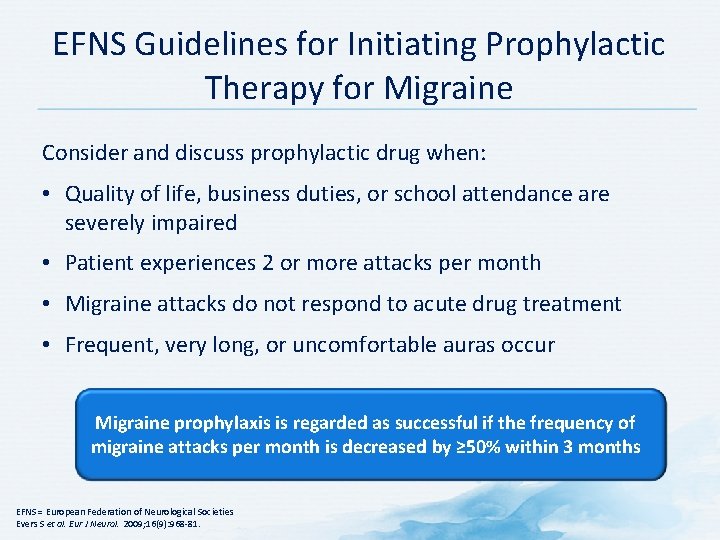
EFNS Guidelines for Initiating Prophylactic Therapy for Migraine Consider and discuss prophylactic drug when: • Quality of life, business duties, or school attendance are severely impaired • Patient experiences 2 or more attacks per month • Migraine attacks do not respond to acute drug treatment • Frequent, very long, or uncomfortable auras occur Migraine prophylaxis is regarded as successful if the frequency of migraine attacks per month is decreased by ≥ 50% within 3 months EFNS = European Federation of Neurological Societies Evers S et al. Eur J Neurol. 2009; 16(9): 968 -81.
Ms. HT: Treatment • With a stable pattern of ICHD-3 migraine without aura and a normal exam, no imaging study or further work up is necessary. • Ms. HT was offered oral sumatriptan for headaches beginning during the day and subcutaneous sumatriptan for headaches full blown upon awakening. • Her headache frequency is high, so candesartan 16 mg at bedtime was offered for prevention. • She did well, with a 50% reduction in headache frequency and was able to reliably treat each attack with either oral or subcutaneous sumatriptan or use of both sequentially. ICHD = The International Headache Classification
Case: Ms. LG
Ms. LG: Profile • 8 -year-old female • 8 -month history of headache
Discussion Questions WHAT FURTHER HISTORY WOULD YOU LIKE TO KNOW? WHAT TESTS OR EXAMINATIONS WOULD YOU CONDUCT? WHAT RED FLAGS WOULD YOU LOOK FOR?
Ms. LG’s Headache Characteristics • Bilateral, frontal non-throbbing severe headache that comes on in the later part of the morning – Attack frequency: twice per month • The girl wants to lie down in a dark, quiet place and not run around • She feels better after sleeping
Ms. LG: History • Born at term • Colicky as a baby • Episodes of unexplained abdominal pain for about a year at age six • No other medical problems • Normal development • Happy at school • Mother has a headache with her menses • Physical examination is normal
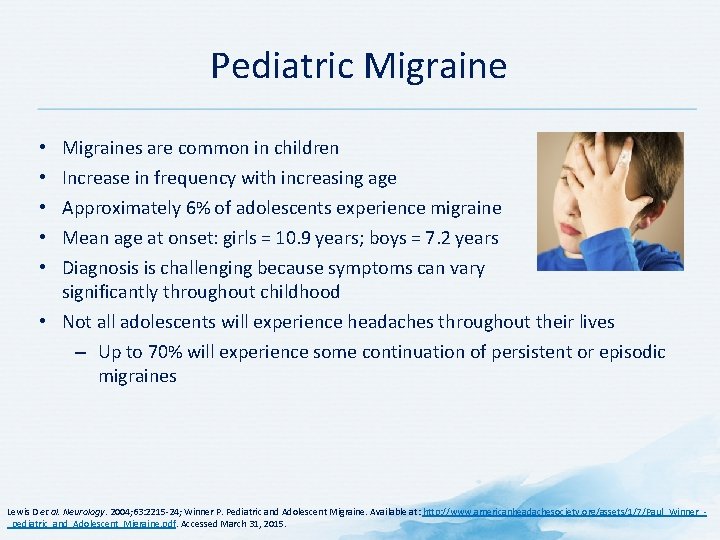
Pediatric Migraine • • • Migraines are common in children Increase in frequency with increasing age Approximately 6% of adolescents experience migraine Mean age at onset: girls = 10. 9 years; boys = 7. 2 years Diagnosis is challenging because symptoms can vary significantly throughout childhood • Not all adolescents will experience headaches throughout their lives – Up to 70% will experience some continuation of persistent or episodic migraines Lewis D et al. Neurology. 2004; 63: 2215 -24; Winner P. Pediatric and Adolescent Migraine. Available at: http: //www. americanheadachesociety. org/assets/1/7/Paul_Winner__pediatric_and_Adolescent_Migraine. pdf. Accessed March 31, 2015.
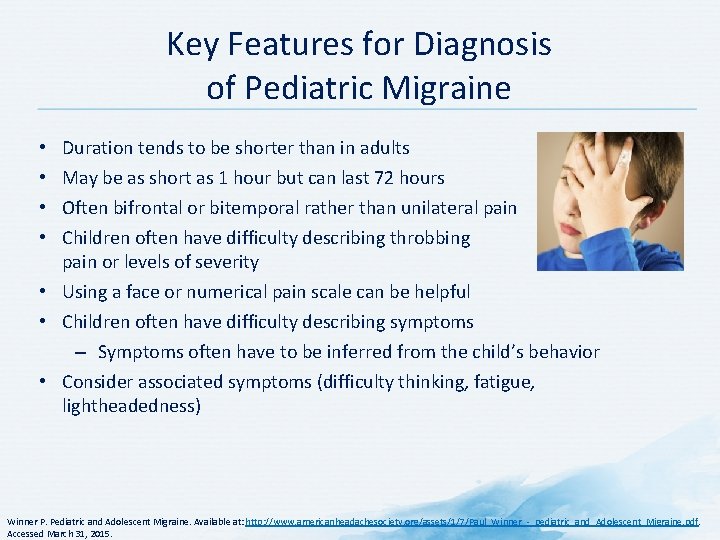
Key Features for Diagnosis of Pediatric Migraine • • Duration tends to be shorter than in adults May be as short as 1 hour but can last 72 hours Often bifrontal or bitemporal rather than unilateral pain Children often have difficulty describing throbbing pain or levels of severity • Using a face or numerical pain scale can be helpful • Children often have difficulty describing symptoms – Symptoms often have to be inferred from the child’s behavior • Consider associated symptoms (difficulty thinking, fatigue, lightheadedness) Winner P. Pediatric and Adolescent Migraine. Available at: http: //www. americanheadachesociety. org/assets/1/7/Paul_Winner_-_pediatric_and_Adolescent_Migraine. pdf. Accessed March 31, 2015.
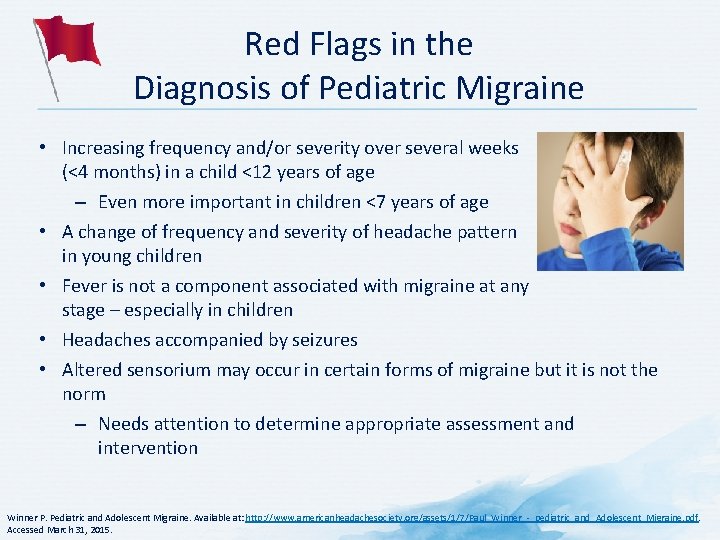
Red Flags in the Diagnosis of Pediatric Migraine • Increasing frequency and/or severity over several weeks (<4 months) in a child <12 years of age – Even more important in children <7 years of age • A change of frequency and severity of headache pattern in young children • Fever is not a component associated with migraine at any stage – especially in children • Headaches accompanied by seizures • Altered sensorium may occur in certain forms of migraine but it is not the norm – Needs attention to determine appropriate assessment and intervention Winner P. Pediatric and Adolescent Migraine. Available at: http: //www. americanheadachesociety. org/assets/1/7/Paul_Winner_-_pediatric_and_Adolescent_Migraine. pdf. Accessed March 31, 2015.
Discussion Question WHAT WOULD BE YOUR DIAGNOSIS FOR THIS PATIENT?
Ms. LG: Diagnosis • Ms. LG has migraine without aura.
Discussion Question WHAT TREATMENT STRATEGY WOULD YOU RECOMMEND?
Ms. LG: Treatment • Ms. LG was advised to treat her headaches using simple analgesics, such as acetaminophen (paracetamol) or ibuprofen.
Treatment of Pediatric and Adolescent Migraine • Management includes a comprehensive approach: pharmacologic + non-pharmacologic therapies • Review dietary triggers • Avoid caffeine overuse • Avoid head trauma • Wear protective headgear whenever appropriate • Behavior modification • Exercise protocols • Proper sleep Lewis D et al. Neurology. 2004; 63: 2215 -24; Winner P. Pediatric and Adolescent Migraine. Available at: http: //www. americanheadachesociety. org/assets/1/7/Paul_Winner__pediatric_and_Adolescent_Migraine. pdf. Accessed March 31, 2015.
Pharmacotherapies for Pediatric and Adolescent Migraine • Acute therapies should be used as soon as it is clear the headache is migraine – Ibuprofen and sumatriptan nasal spray are effective – Acetaminophen (paracetamol) is probably effective • Almotriptan is the only triptan currently approved by the FDA for treatment of migraine in patients ≥ 12 years of age • Analgesics or acute medications should not be used >2 times per week unless patient is under medical supervision • Supplementation with magnesium, riboflavin, and coenzyme Q 10 may be helpful • No medication currently approved by FDA for migraine prophylaxis in children – Some studies have shown topiramate to be effective Lewis D et al. Neurology. 2004; 63: 2215 -24; Winner P. Pediatric and Adolescent Migraine. Available at: http: //www. americanheadachesociety. org/assets/1/7/Paul_Winner__pediatric_and_Adolescent_Migraine. pdf. Accessed March 31, 2015.
Case: Mrs. PA
Mrs. PA: Profile • 43 -year-old female who works at home • Twice-monthly attacks of disabling headache over the last two years
Discussion Questions WHAT FURTHER HISTORY WOULD YOU LIKE TO KNOW? WHAT TESTS OR EXAMINATIONS WOULD YOU CONDUCT? WHAT RED FLAGS WOULD YOU LOOK FOR?
Mrs. PA’s Headache Characteristics • Bilateral, frontal throbbing severe pain, worsened with movement • Nausea • No sound or light sensitivity • Cranial allodynia during attacks • No aura • Bilateral nasal congestion and lacrimation with attacks • Attacks last 1 -2 days and occur twice a month
Ms. PA: History • Her mother had menstrual headache. • Ms. PA’s physical exam is normal.
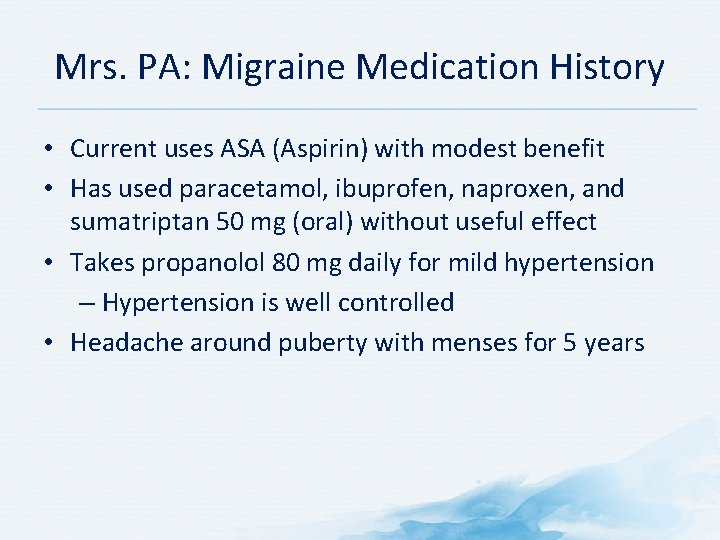
Mrs. PA: Migraine Medication History • Current uses ASA (Aspirin) with modest benefit • Has used paracetamol, ibuprofen, naproxen, and sumatriptan 50 mg (oral) without useful effect • Takes propanolol 80 mg daily for mild hypertension – Hypertension is well controlled • Headache around puberty with menses for 5 years
Menstrual Migraine • ~ 60% of female migraine sufferers have menstrual migraines • Reduced estrogen at menstruation can trigger migraine in many women • May be more persistent, painful, and resistant to treatment than migraines that occur at other times • ICHD criteria: Migraine without aura occurring between 2 days prior and 3 days after the onset of menses and in 2 of 3 menstrual cycles • Some women experience migraine perimenstrually • Headache diary should be used to record timing of menstrual migraines ICHD = International Classification of Headache Disorders Menstrual migraine: breaking the cycle. Available at: http: //practicingclinicians. com/cms/wb/PCEv 3/site/hs 09_pdfs/migraine. pdf. Accessed 14 December, 2014.
Estrogen Levels and Menstrual Migraine Menstrual migraine: breaking the cycle. Available at: http: //practicingclinicians. com/cms/wb/PCEv 3/site/hs 09_pdfs/migraine. pdf. Accessed 14 December, 2014.
Discussion Question WHAT WOULD BE YOUR DIAGNOSIS FOR THIS PATIENT?
Mrs. PA: Diagnosis • Ms. PA has migraine without aura.
Discussion Question WHAT TREATMENT STRATEGY WOULD YOU RECOMMEND?
Mrs. PA: Treatment • Rizatriptan (10 mg po) or eletriptan (40 mg po) could be prescribed to Mrs. PA.
Mrs. PA: Follow-up • Mrs. PA should be followed up in two to three months to see how her treatment is working.
Case: Ms. MY
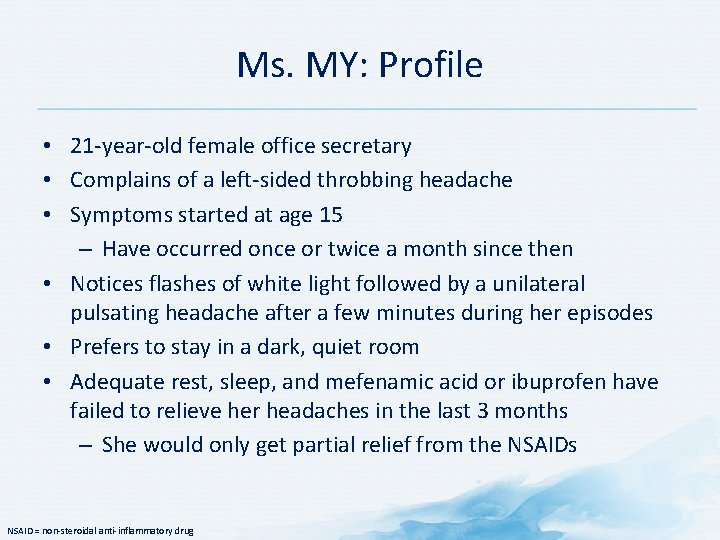
Ms. MY: Profile • 21 -year-old female office secretary • Complains of a left-sided throbbing headache • Symptoms started at age 15 – Have occurred once or twice a month since then • Notices flashes of white light followed by a unilateral pulsating headache after a few minutes during her episodes • Prefers to stay in a dark, quiet room • Adequate rest, sleep, and mefenamic acid or ibuprofen have failed to relieve her headaches in the last 3 months – She would only get partial relief from the NSAIDs NSAID = non-steroidal anti-inflammatory drug
Discussion Questions WHAT FURTHER HISTORY WOULD YOU LIKE TO KNOW? WHAT TESTS OR EXAMINATIONS WOULD YOU CONDUCT? WHAT RED FLAGS WOULD YOU LOOK FOR?
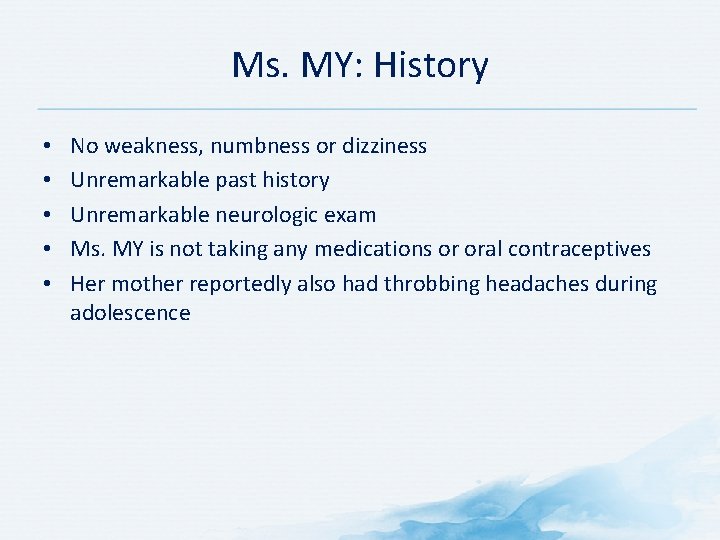
Ms. MY: History • • • No weakness, numbness or dizziness Unremarkable past history Unremarkable neurologic exam Ms. MY is not taking any medications or oral contraceptives Her mother reportedly also had throbbing headaches during adolescence
Discussion Question WHAT WOULD BE YOUR DIAGNOSIS FOR THIS PATIENT?
Ms. MY: Diagnosis • This patient has migraine with aura
Discussion Question WHAT TREATMENT STRATEGY WOULD YOU RECOMMEND?
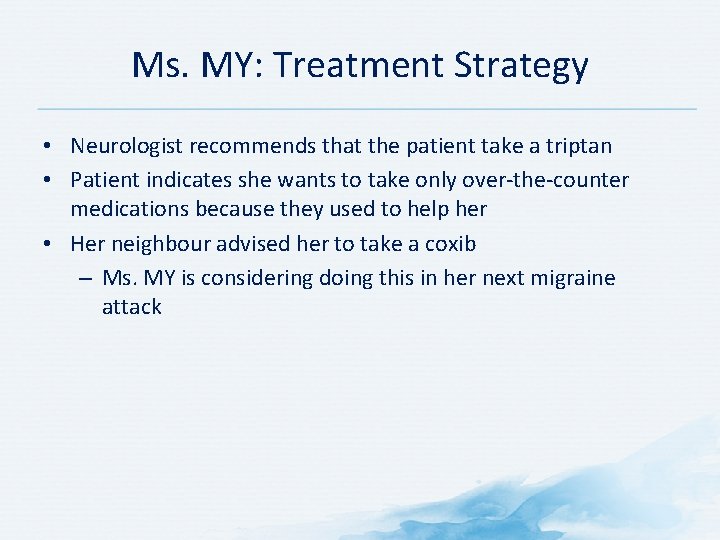
Ms. MY: Treatment Strategy • Neurologist recommends that the patient take a triptan • Patient indicates she wants to take only over-the-counter medications because they used to help her • Her neighbour advised her to take a coxib – Ms. MY is considering doing this in her next migraine attack
Discussion Question WHAT TREATMENT STRATEGY WOULD YOU RECOMMEND?
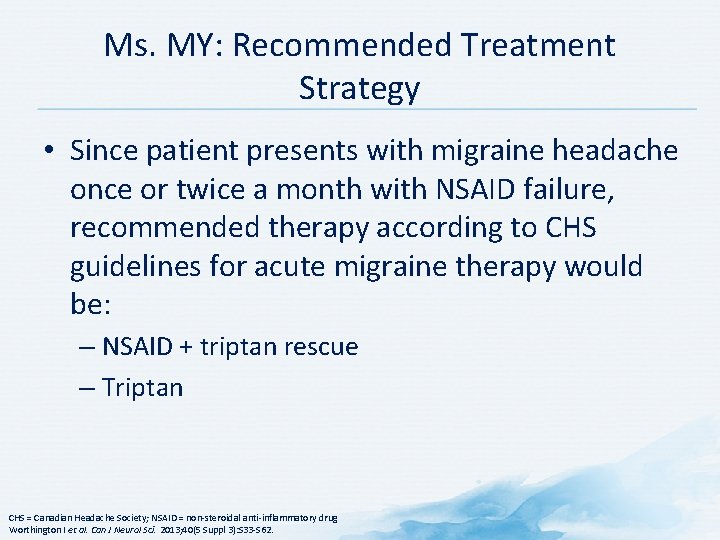
Ms. MY: Recommended Treatment Strategy • Since patient presents with migraine headache once or twice a month with NSAID failure, recommended therapy according to CHS guidelines for acute migraine therapy would be: – NSAID + triptan rescue – Triptan CHS = Canadian Headache Society; NSAID = non-steroidal anti-inflammatory drug Worthington I et al. Can J Neurol Sci. 2013; 40(5 Suppl 3): S 33 -S 62.
Ms. MY: Follow Up • Regular follow up with attending physician is recommended to assess treatment efficacy • Any changes in the character of headache or the presence of red flags warrants immediate reassessment
Case: Ms. BD
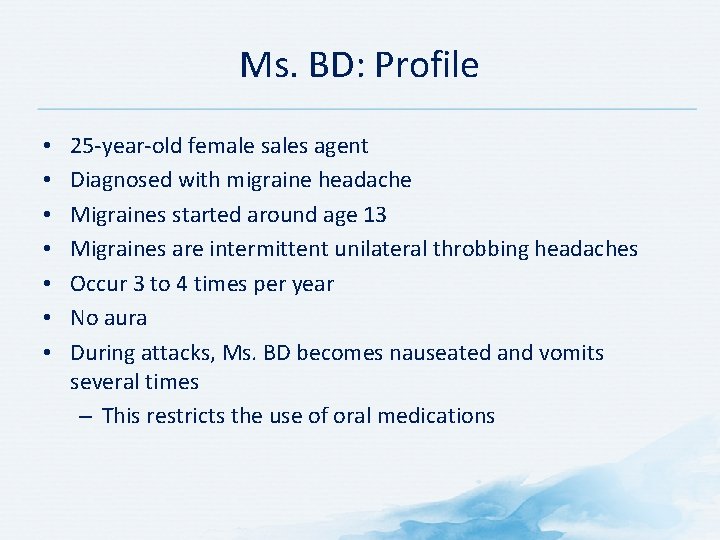
Ms. BD: Profile • • 25 -year-old female sales agent Diagnosed with migraine headache Migraines started around age 13 Migraines are intermittent unilateral throbbing headaches Occur 3 to 4 times per year No aura During attacks, Ms. BD becomes nauseated and vomits several times – This restricts the use of oral medications
Ms. BD: History • No comorbid conditions • Neurologic exam is unremarkable
Discussion Questions WHAT FURTHER HISTORY WOULD YOU LIKE TO KNOW? WHAT TESTS OR EXAMINATIONS WOULD YOU CONDUCT? WHAT RED FLAGS WOULD YOU LOOK FOR?
Ms. BD: Further History • No family history of chronic headaches, intracranial tumors, or lesions • Not a smoker, not an alcoholic beverage drinker, denies drug use
Ms. BD: Further Testing • Stable headache • Normal neurologic examination • Nausea and vomiting – May be a sign of increased intracranial pressure – Midline lesions may not show any focal neurologic deficit and present only with headache, nausea and vomiting • Imaging may be done – ideally cranial MRI with contrast
Ms. BD: Red Flags • Nausea and vomiting in this present case • Particular attention to character, intensity of headaches and accompanying manifestations (e. g. , new kind of headache [non-throbbing, progressive] – Such severe intensity for the first time (from usual VAS 4 to 7 to VAS 8 to 10) – Accompanied by diplopia, lateralizing signs and altered consciousness VAS = Visual Analog Score
Discussion Question WHAT TREATMENT STRATEGY WOULD YOU RECOMMEND?
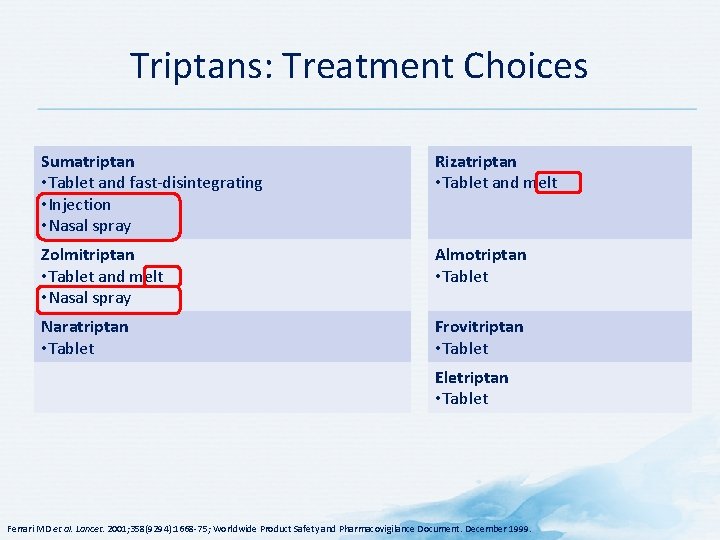
Choosing a Triptan • All triptans have similar efficacy • Base choice on patient preference • Patients often prefer oral therapy • Vomiting and nausea may preclude use of oral treatment consider s ubcutaneous or nasal formulations • Patients who do not respond to one triptan may respond to a different one • Try an alternative triptan in a subsequent attack • Patients who do not respond to oral triptans should be encouraged to try subcutaneous formulations Best Pract J. 2014; 62: 28 -36.
Triptans: Treatment Choices Sumatriptan • Tablet and fast-disintegrating • Injection • Nasal spray Rizatriptan • Tablet and melt Zolmitriptan • Tablet and melt • Nasal spray Almotriptan • Tablet Naratriptan • Tablet Frovitriptan • Tablet Eletriptan • Tablet Ferrari MD et al. Lancet. 2001; 358(9294): 1668 -75; Worldwide Product Safety and Pharmacovigilance Document. December 1999.
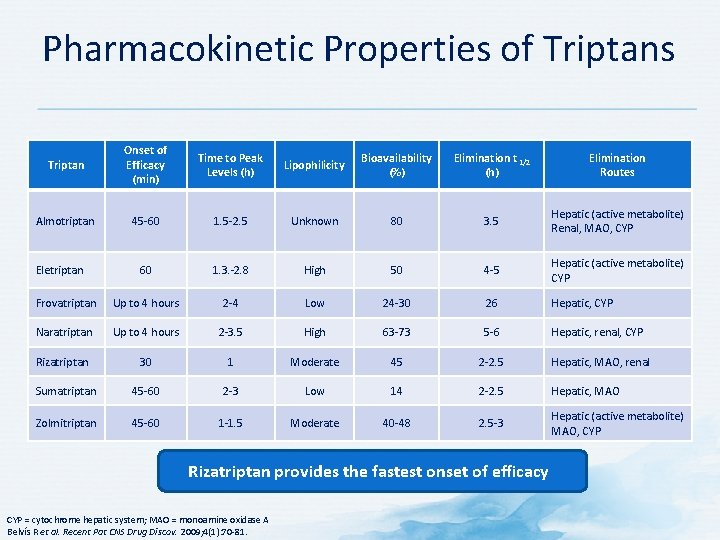
Pharmacokinetic Properties of Triptans Triptan Onset of Efficacy (min) Time to Peak Levels (h) Lipophilicity Bioavailability (%) Elimination t 1/2 (h) Elimination Routes Almotriptan 45 -60 1. 5 -2. 5 Unknown 80 3. 5 Hepatic (active metabolite) Renal, MAO, CYP 60 1. 3. -2. 8 High 50 4 -5 Hepatic (active metabolite) CYP Frovatriptan Up to 4 hours 2 -4 Low 24 -30 26 Hepatic, CYP Naratriptan Up to 4 hours 2 -3. 5 High 63 -73 5 -6 Hepatic, renal, CYP Rizatriptan 30 1 Moderate 45 2 -2. 5 Hepatic, MAO, renal Sumatriptan 45 -60 2 -3 Low 14 2 -2. 5 Hepatic, MAO Zolmitriptan 45 -60 1 -1. 5 Moderate 40 -48 2. 5 -3 Hepatic (active metabolite) MAO, CYP Eletriptan Rizatriptan provides the fastest onset of efficacy CYP = cytochrome hepatic system; MAO = monoamine oxidase A Belvís R et al. Recent Pat CNS Drug Discov. 2009; 4(1): 70 -81.
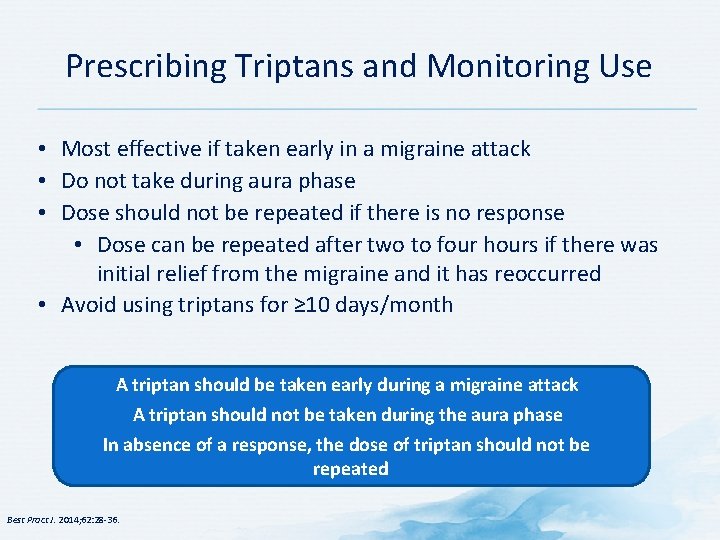
Prescribing Triptans and Monitoring Use • Most effective if taken early in a migraine attack • Do not take during aura phase • Dose should not be repeated if there is no response • Dose can be repeated after two to four hours if there was initial relief from the migraine and it has reoccurred • Avoid using triptans for ≥ 10 days/month A triptan should be taken early during a migraine attack A triptan should not be taken during the aura phase In absence of a response, the dose of triptan should not be repeated Best Pract J. 2014; 62: 28 -36.
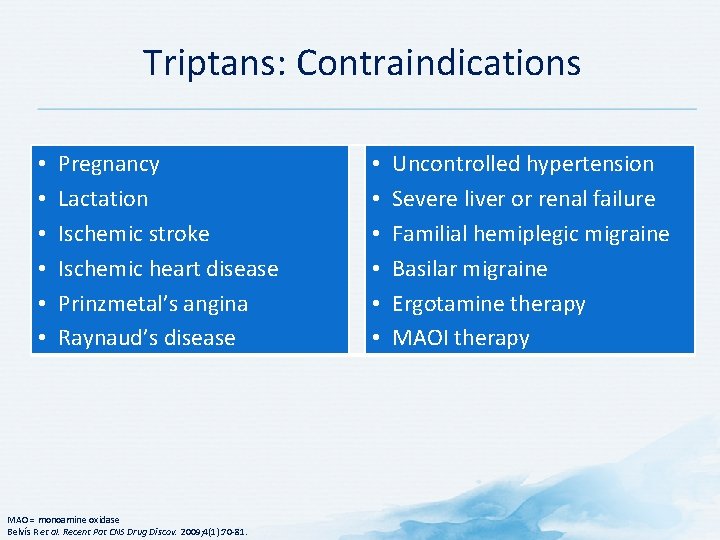
Triptans: Contraindications • • • Pregnancy Lactation Ischemic stroke Ischemic heart disease Prinzmetal’s angina Raynaud’s disease MAO = monoamine oxidase Belvís R et al. Recent Pat CNS Drug Discov. 2009; 4(1): 70 -81. • • • Uncontrolled hypertension Severe liver or renal failure Familial hemiplegic migraine Basilar migraine Ergotamine therapy MAOI therapy
Ms. BD: Follow Up • Cranial imaging • Assess response to treatment • Changes in the character of headache and the presence of other red flags warrant reassessment
References American Headache Society. Brainstorm. 2004. Available at: http: //www. americanheadachesociety. org/assets/1/7/Book__Brainstorm_Syllabus. pdf. Accessed 04 December, 2014. Aurora SK, Dodick DW, Turkel CC et al. Onabotulinumtoxin. A for treatment of chronic migraine: results from the double-blind, randomized, placebo-controlled phase of the PREEMPT 1 trial. Cephalalgia. 2010; 30: 793 -803. Beck E, Sieber WJ, Trejo R. Management of cluster headache. Am Fam Physician. 2005; 71(4): 717 -24. Belvís R, Pagonabarraga J, Kulisevsky J. Individual triptan selection in migraine attack therapy. Recent Pat CNS Drug Discov. 2009; 4(1): 70 -81. Blau JN, Mac. Gregor EA. Migraine and the neck. Headache. 1994; 34: 88 -90. Calhoun AH, Ford S, Millen C et al. The prevalence of neck pain in migraine. Headache. 2010; 50: 1273 -7. Cramer JA, Silberstein SD, Winner P. Development and validation of the Headache Needs Assessment (HANA) survey. Headache. 2001; 41(4): 402 -9. Diener HC, Dodick DW, Aurora SK et al. Onabotulinumtoxin. A for treatment of chronic migraine: results from the double-blind, randomized, placebo-controlled phase of the PREEMPT 2 trial. Cephalalgia. 2010; 30: 804 -14. Dodick DW, Campbell JK. Cluster headache: diagnosis, management and treatment. In: Silberstein SD, Lipton RB, Dalessio DJ, eds. Wolff’s Headache And Other Head Pain. 7 th ed. New York, NY: Oxford University Press; 2001: 283 -309. Evers S, Afra J, Frese A et al. EFNS guidelines on the drug treatment of migraine – report of an EFNS task force. Eur J Neurology. 2006; 13: 560 -72. Ferrari MD, Roon KI, Lipton RB, Goadsby PJ. Oral triptans (serotonin 5 -HT(1 B/1 D) agonists) in acute migraine treatment: a meta-analysis of 53 trials. Lancet. 2001; 358(9294): 1668 -75. Headache Classification Committee of the International Headache Society (IHS). The International Classification of Headache Disorders, 3 rd edition (beta version). Cephalalgia. 2013; 33(9): 629 -808. Holland S, Silberstein SD, Freitag F et al. Evidence-based guideline update: NSAIDs and other complementary treatments for episodic migraine prevention in adults: report of the Quality Standards Subcommittee of the American Academy of Neurology and the American Headache Society. Neurology. 2012; 78(17): 1346 -53. Julian LJ. Measures of Anxiety. Arthritis Care Res. (Hoboken). 2011 Nov; 63(0 11): 10. 1002/acr. 20561. Kaniecki RG. Migraine and tension-type headache: an assessment of challenges in diagnosis. Neurology. 2002; 58(9 Suppl 6): S 15 -20.
References Kelman L. The triggers or precipitants of the acute migraine attack. Cephalalgia. 2007; 27: 394 -402. Kosinski M, Bayliss MS, Bjorner JB et al. A six-item short-form survey for measuring headache impact: the HIT-6. Qual Life Res. 2003; 12(8): 963 -74. Lewis D, Ashwal S, Hershey A et al. Practice parameter: pharmacological treatment of migraine headache in children and adolescents: report of the American Academy of Neurology Quality Standards Subcommittee and the Practice Committee of the Child Neurology Society. Neurology. 2004; 63: 2215 -24. Lipton RB, Stewart WF, Diamond S et al. Prevalence and burden of migraine in the United States: data from the American Migraine Study II. Headache. 2001; 41: 646 -57. Martin VT. Menstrual migraine: new approaches to diagnosis and treatment. Available at: http: //www. americanheadachesociety. org/assets/1/7/Vincent_Martin_-_Menstrual_Martin. pdf. Accessed March 26, 2015. Menstrual migraine: breaking the cycle. Available at: http: //practicingclinicians. com/cms/wb/PCEv 3/site/hs 09_pdfs/migraine. pdf. Accessed 14 December, 2014. National Institute for Health and Care Excellence. Diagnosis and management of headache in young people and adults. CG 150. London: NICE; 2012. Available at: http: //www. nice. org. uk/CG 150. Accessed 04 December, 2014. Scharff L, Turk DC, Marcus DA. Triggers of headache episodes and coping responses of headache diagnostic groups. Headache. 1995; 35: 397403. Silberstein SD, Holland S, Freitag F et al. Evidence-based guideline update: pharmacologic treatment for episodic migraine prevention in adults: report of the Quality Standards Subcommittee of the American Academy of Neurology and the American Headache Society. Neurology. 2012; 78: 1337 -45. Stewart WF, Lipton RB, Dowson AJ, Sawyer J. Development and testing of the Migraine Disability Assessment (MIDAS) Questionnaire to assess headache-related disability. Neurology. 2001; 56(6 Suppl 1): S 20 -8. Stovner LJ, Linde M 2, Gravdahl GB et al. A comparative study of candesartan versus propranolol for migraine prophylaxis: A randomised, triple -blind, placebo-controlled, double cross-over study. Cephalalgia. 2013; 34: 523 -532. Tepper SJ, Dahlöf CG, Dowson A et al. Prevalence and diagnosis of migraine in patients consulting their physician with a complaint of headache: data from the Landmark Study. Headache. 2004; 44: 856 -64.
References Tepper SJ, Dahlöf CG, Dowson A et al. Prevalence and diagnosis of migraine in patients consulting their physician with a complaint of headache: data from the Landmark Study. Headache. 2004; 44: 856 -64. Tepper SJ. Medication overuse headache. Continuum Lifelong Learning Neurol. 2012; 18(4): 807– 822. The role of triptans in the treatment of migraine in adults. Best Pract J. 2014; 62: 28 -36. Tronvik E, Stovner LJ, Helde G, Sand T, Bovim G. Prophylactic treatment of migraine with an angiotensin II receptor blocker: a randomized controlled trial. JAMA. 2003; 289: 65 -9. Ware, JE Jr. SF-36® Health Survey Update. Available at: http: //www. sf-36. org/tools/SF 36. shtml. Accessed 03 December, 2014. Winner P. Pediatric and Adolescent Migraine. Available at: http: //www. americanheadachesociety. org/assets/1/7/Paul_Winner__pediatric_and_Adolescent_Migraine. pdf. Accessed March 31, 2015. Worldwide Product Safety and Pharmacovigilance Document. December 1999. Worthington I, Pringsheim T, Gawel MJ et al. Pharmacological acute migraine treatment strategies: choosing the right drug for a specific patient. Can J Neurol Sci. 2013; 40(5 Suppl 3): S 33 -S 62. Zigmond AS, Snaith RP. The hospital anxiety and depression scale. Acta Psychiatr Scand. 1983; 67: 361 -70.