
Clinical case studiesprotein metabolism II Dr Greeshma Case
Clinical case studiesprotein metabolism II Dr Greeshma
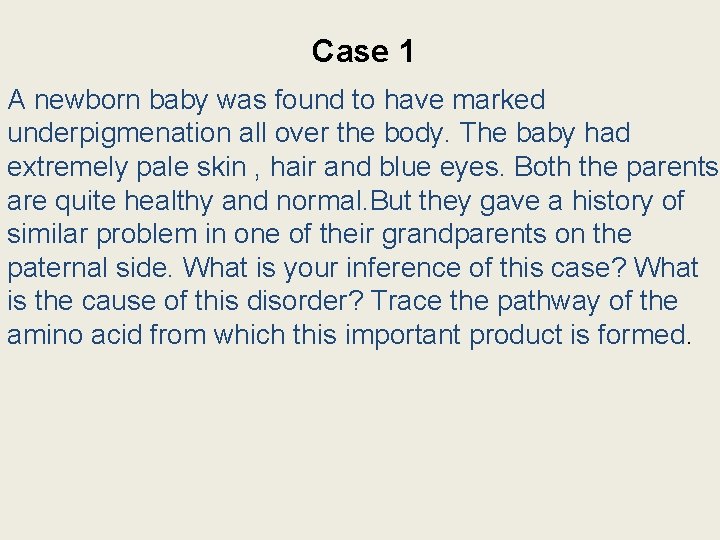
Case 1 A newborn baby was found to have marked underpigmenation all over the body. The baby had extremely pale skin , hair and blue eyes. Both the parents are quite healthy and normal. But they gave a history of similar problem in one of their grandparents on the paternal side. What is your inference of this case? What is the cause of this disorder? Trace the pathway of the amino acid from which this important product is formed.
- Albinism - Tyrosinase deficiency
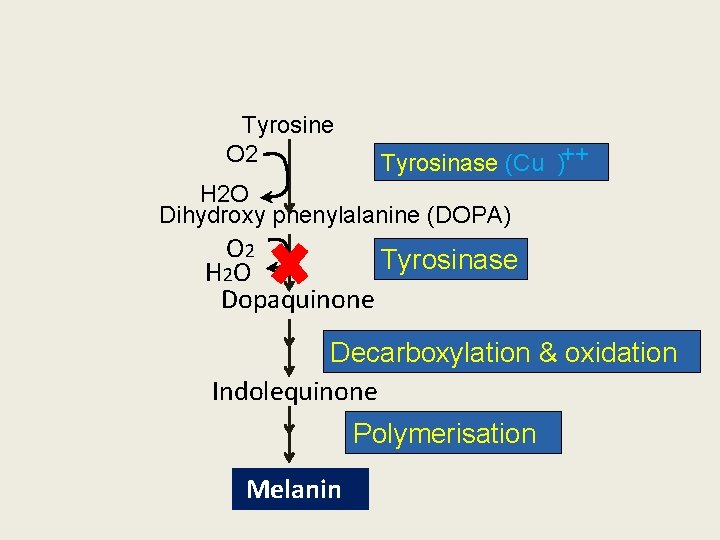
Tyrosine O 2 Tyrosinase (Cu )++ H 2 O Dihydroxy phenylalanine (DOPA) O 2 Tyrosinase H 2 O Dopaquinone Decarboxylation & oxidation Indolequinone Polymerisation Melanin
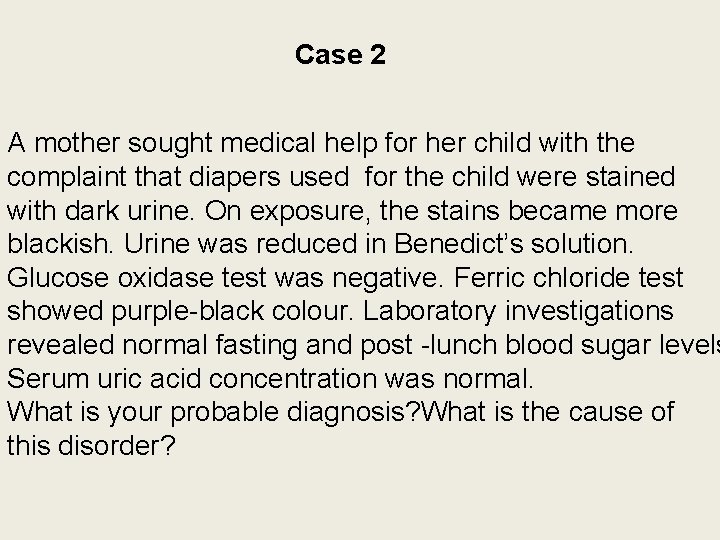
Case 2 A mother sought medical help for her child with the complaint that diapers used for the child were stained with dark urine. On exposure, the stains became more blackish. Urine was reduced in Benedict’s solution. Glucose oxidase test was negative. Ferric chloride test showed purple-black colour. Laboratory investigations revealed normal fasting and post -lunch blood sugar levels Serum uric acid concentration was normal. What is your probable diagnosis? What is the cause of this disorder?
Alkaptonuria absence of homogentesic acid oxidase
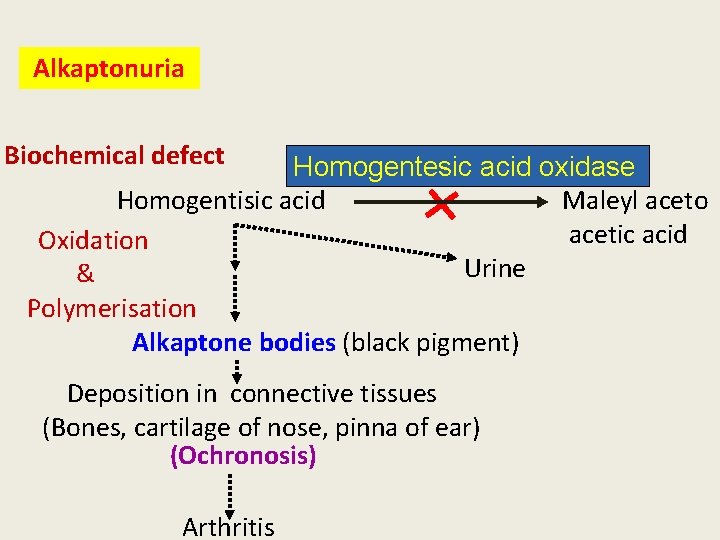
Alkaptonuria Biochemical defect Homogentesic acid oxidase Homogentisic acid Maleyl aceto acetic acid Oxidation Urine & Polymerisation Alkaptone bodies (black pigment) Deposition in connective tissues (Bones, cartilage of nose, pinna of ear) (Ochronosis) Arthritis
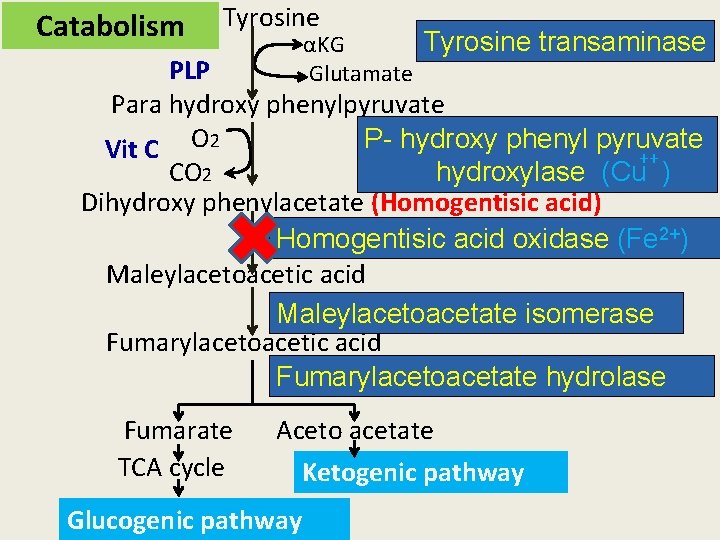
Catabolism Tyrosine transaminase αKG Glutamate PLP Para hydroxy phenylpyruvate P- hydroxy phenyl pyruvate Vit C O 2 ++ CO 2 hydroxylase (Cu ) Dihydroxy phenylacetate (Homogentisic acid) Homogentisic acid oxidase (Fe 2+) Maleylacetoacetic acid Maleylacetoacetate isomerase Fumarylacetoacetic acid Fumarylacetoacetate hydrolase Fumarate TCA cycle Aceto acetate Ketogenic pathway Glucogenic pathway
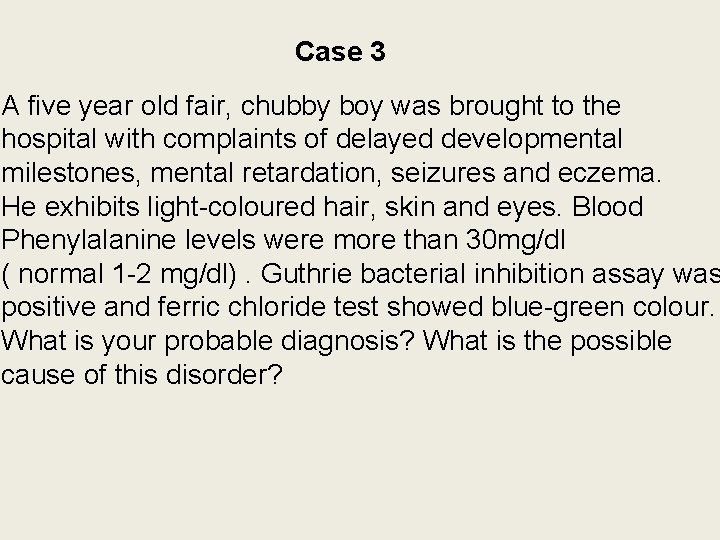
Case 3 A five year old fair, chubby boy was brought to the hospital with complaints of delayed developmental milestones, mental retardation, seizures and eczema. He exhibits light-coloured hair, skin and eyes. Blood Phenylalanine levels were more than 30 mg/dl ( normal 1 -2 mg/dl). Guthrie bacterial inhibition assay was positive and ferric chloride test showed blue-green colour. What is your probable diagnosis? What is the possible cause of this disorder?
Phenyl ketonuria (PKU) deficiency of Phenyalanine hydroxylase enzyme
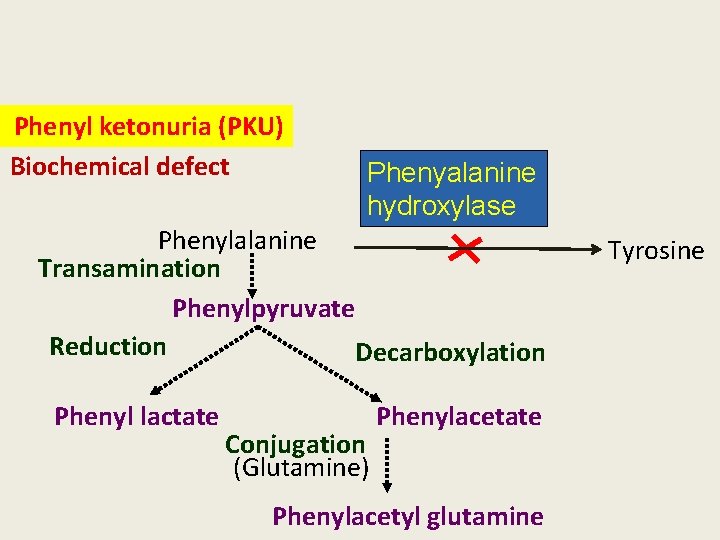
Phenyl ketonuria (PKU) Biochemical defect Phenyalanine hydroxylase Phenylalanine Transamination Phenylpyruvate Reduction Decarboxylation Phenyl lactate Conjugation (Glutamine) Phenylacetate Phenylacetyl glutamine Tyrosine
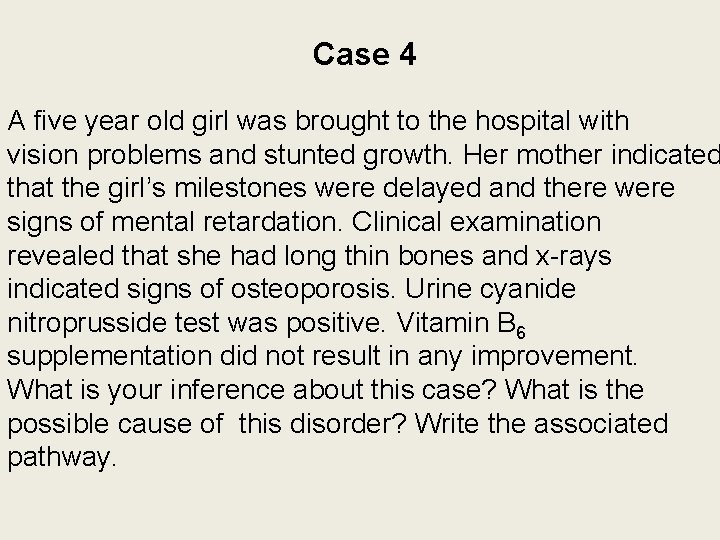
Case 4 A five year old girl was brought to the hospital with vision problems and stunted growth. Her mother indicated that the girl’s milestones were delayed and there were signs of mental retardation. Clinical examination revealed that she had long thin bones and x-rays indicated signs of osteoporosis. Urine cyanide nitroprusside test was positive. Vitamin B 6 supplementation did not result in any improvement. What is your inference about this case? What is the possible cause of this disorder? Write the associated pathway.
Homocystinuria Cystathionine β synthase deficiency
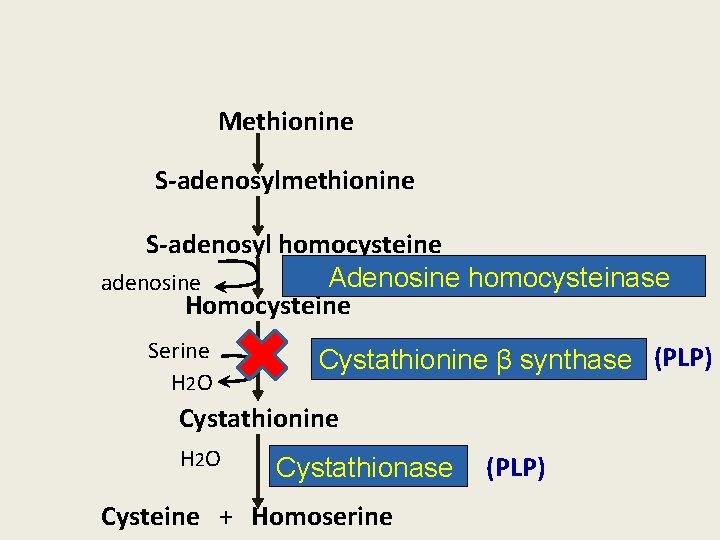
Methionine S-adenosylmethionine S-adenosyl homocysteine Adenosine homocysteinase adenosine Homocysteine Serine H 2 O Cystathionine β synthase (PLP) Cystathionine H 2 O Cystathionase Cysteine + Homoserine (PLP)
Case 5 A 22 year old male is brought to hospital with a complaint of hematuria and severe pain in his lower right flank. Urine examination revealed elevated levels of cystine, ornithine, arginine and lysine. Microscopic examination showed hexagonal crystal deposit. Urine examination was positive for the cyanide nitroprusside test. Further X-rays showed the presence of stones in kidney. What is your probable diagnosis? What is the possible cause of this disorder?
Cystinuria Defective transporters in the kidney for amino acids cystine, lysine, arginine and ornithine, due to which kidneys fail to reabsorb them.
CASE 6 A 3 week old infant was passing urine which smelled like burnt sugar. Subsequently, an overwhelming acidosis developed associated with vomitting and CNS related symptoms. On investigation, the concentration of branched chain amino acids( val, leu and Ile) in plasma and urine were found to be very high. On further investigation, the enzyme activity of branched chain α Keto acid dehydrogenase was found to be very low. What is your inference about this case? What is the possible cause of this disorder?
Maple syrup urine disease (MSUD)
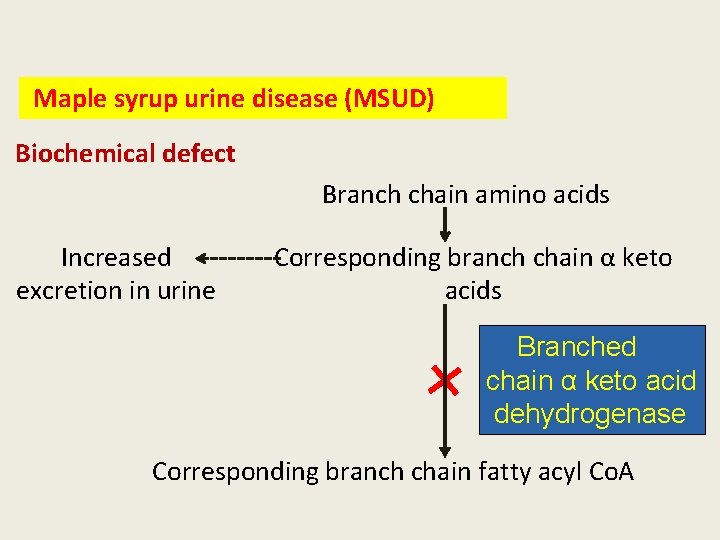
Maple syrup urine disease (MSUD) Biochemical defect Branch chain amino acids Increased excretion in urine Corresponding branch chain α keto acids Branched chain α keto acid dehydrogenase Corresponding branch chain fatty acyl Co. A
- Slides: 19