
CLINICAL BIOCHEMISTRY 2 BIOCHEMICAL INVESTIGATION OF LIVER FUNCTIONS
CLINICAL BIOCHEMISTRY 2 BIOCHEMICAL INVESTIGATION OF LIVER FUNCTIONS Verman Georgeta Irinel, MD, GP, Ph. D, lecturer in Biochemistry Department, Faculty of Medicine, "Ovidius" University Constanta, Romania
PHYSIOLOGY 1. EXCRETION AND SECRETION BILE: 1. 2. 3. production 3 liters/day, excretion 1 liter/day composition Bile acids and salts, Bile pigments (bilirubin) Cholesterol and other substances from the blood 1. Bile acids (cholic and chenodeoxycholic) Are produced in the liver from cholesterol; Are conjugated with glycine or taurine forming glyco- or tauro-cholic acid; As bile salts of Na+ or K+ are excreted in the bile canaliculi by an active transport mediated by a transporter; During fasting or between the meals a great part of the bile acids are concentrated 10 folds After the food intake the gallbladder contracts; the salts arrive in the intestine with the bile – approx. 500 -600 ml/day, and take part to the lipid digestion and absorption When the bile salts arrive in the terminal ileon and colon under the action of the microflora they are dehydrated forming secondary bile acids – deoxycholic and lithocholic; they are absorbed and through the portal vein are re-circulated to the liver, are re-conjugated and re-excreted (entero-hepatic cycle, repeated 2 -5 times per day)
2. Bilirubin is formed: 80% - degradation of hemoglobin when the old erythrocytes are degraded in the cells of the reticuloendothelial system in the spleen, liver, bone marrow 20% - degradation of myoglobin, cytochromes, catalases Degradation of hemoglobin: The globin is catabolized to the component aminoacids, Fe 2+ is stored Porfirin is transformed in biliverdin → bilirubin (B): - - Because it is not hydrosoluble, B is transported in the blood linked with albumin is separated of albumin and uptaken by the hepatocyte (proteins Y and Z) is conjugated in the endoplasmic reticulum with glucuronic acid (reaction catalyzed by UDPG-T), and transformed in mono or diglucuronid-bilirubin (conjugated B), hydrosoluble, secreted of the hepatocyte in the bile canaliculi to the bile ducts and the duodenum In the colon bacteria transform the bilirubin → mezobilirubinogen → urobilinogen (colorless) : - Oxidized to → urobilin (brown) excreted in the feces - absorption in the portal vein → liver → re-excreted in the bile (entero-hepatic cycle) - Filtered by the kidney and excreted in the urine Production 200 -300 mg/day
In the blood Total Bilirubin (TB) 0, 2 -1, 0 mg/dl - Non conjugated B (NCB = Free B = Indirect B): major part Conjugated B (CB = Direct B): 0, 2 mg/dl Increased concentration → icterus (jaundice): Prehepatic (the bilirubin in increased amount is transported in the normal functional liver) –hemolytic anemia : BNC↑ (< 5 mg/dl) insoluble in water, bound with albumin, not filtered by the kidney Hepatic (hepatic uptake, conjugation or secretion are disturbed) Gylbert Syndrome – the hepatic uptake is disturbed (BNC ↑ < 3 mg/dl) Crigler-Najjar Syndrome – UDPG-T deficiency tip I = enzyme absent (fatal) tip II = less severe deficiency Dubin-Johnson and Rotor Syndromes – deficiency of the excretion from the hepatocyte Posthepatic (mechanic obstruction of the bile flow) in tumors, lithiasis, BC blood ↑ UBG urine + urine ↓ feces light colored
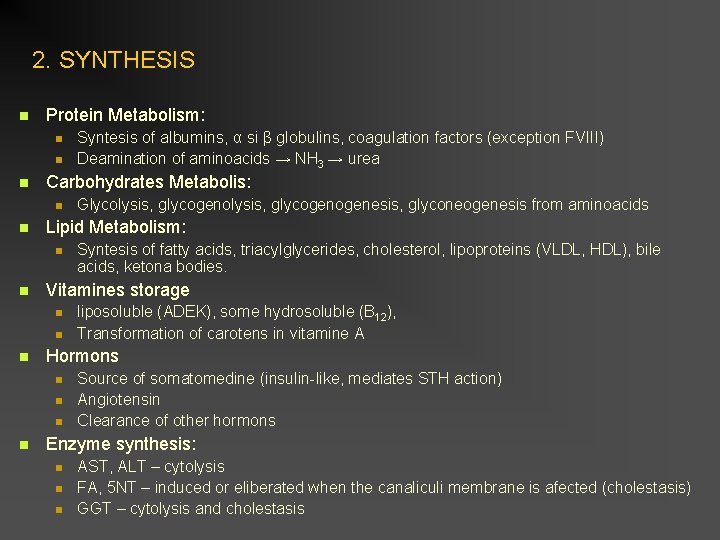
2. SYNTHESIS Protein Metabolism: Carbohydrates Metabolis: liposoluble (ADEK), some hydrosoluble (B 12), Transformation of carotens in vitamine A Hormons Syntesis of fatty acids, triacylglycerides, cholesterol, lipoproteins (VLDL, HDL), bile acids, ketona bodies. Vitamines storage Glycolysis, glycogenogenesis, glyconeogenesis from aminoacids Lipid Metabolism: Syntesis of albumins, α si β globulins, coagulation factors (exception FVIII) Deamination of aminoacids → NH 3 → urea Source of somatomedine (insulin-like, mediates STH action) Angiotensin Clearance of other hormons Enzyme synthesis: AST, ALT – cytolysis FA, 5 NT – induced or eliberated when the canaliculi membrane is afected (cholestasis) GGT – cytolysis and cholestasis
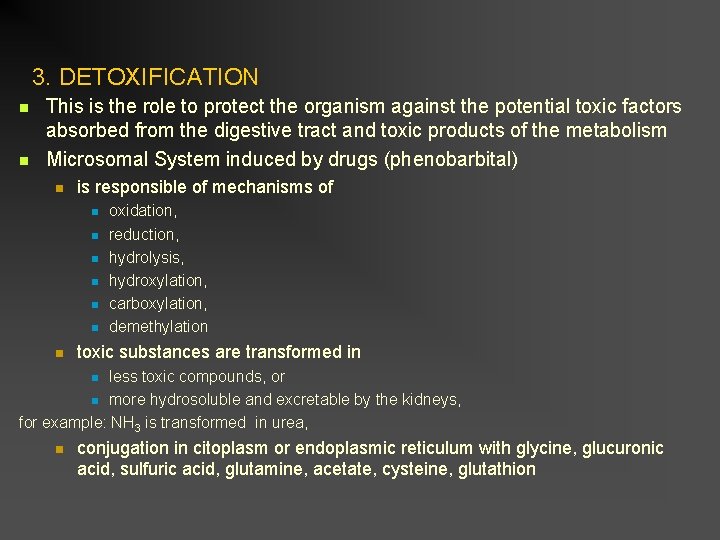
3. DETOXIFICATION This is the role to protect the organism against the potential toxic factors absorbed from the digestive tract and toxic products of the metabolism Microsomal System induced by drugs (phenobarbital) is responsible of mechanisms of oxidation, reduction, hydrolysis, hydroxylation, carboxylation, demethylation toxic substances are transformed in less toxic compounds, or more hydrosoluble and excretable by the kidneys, for example: NH 3 is transformed in urea, conjugation in citoplasm or endoplasmic reticulum with glycine, glucuronic acid, sulfuric acid, glutamine, acetate, cysteine, glutathion
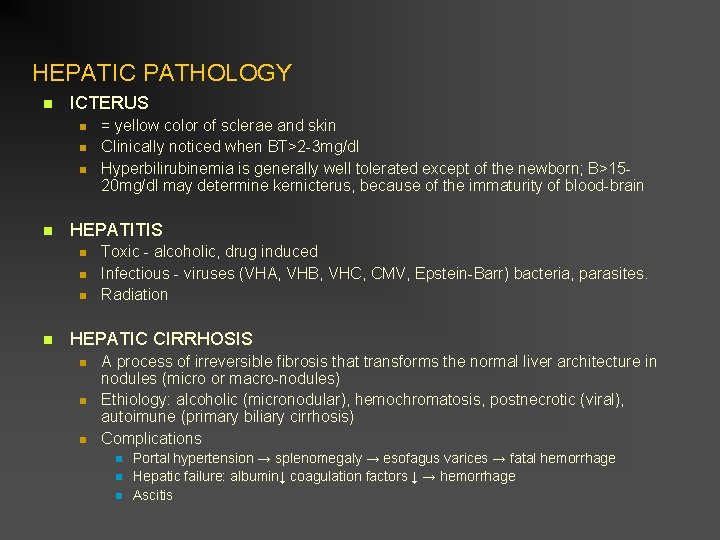
HEPATIC PATHOLOGY ICTERUS HEPATITIS = yellow color of sclerae and skin Clinically noticed when BT>2 -3 mg/dl Hyperbilirubinemia is generally well tolerated except of the newborn; B>1520 mg/dl may determine kernicterus, because of the immaturity of blood-brain Toxic - alcoholic, drug induced Infectious - viruses (VHA, VHB, VHC, CMV, Epstein-Barr) bacteria, parasites. Radiation HEPATIC CIRRHOSIS A process of irreversible fibrosis that transforms the normal liver architecture in nodules (micro or macro-nodules) Ethiology: alcoholic (micronodular), hemochromatosis, postnecrotic (viral), autoimune (primary biliary cirrhosis) Complications Portal hypertension → splenomegaly → esofagus varices → fatal hemorrhage Hepatic failure: albumin↓ coagulation factors ↓ → hemorrhage Ascitis
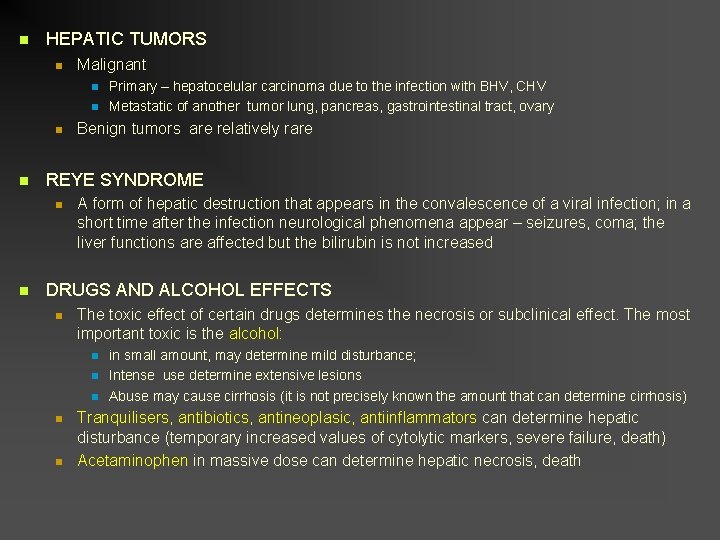
HEPATIC TUMORS Malignant Benign tumors are relatively rare REYE SYNDROME Primary – hepatocelular carcinoma due to the infection with BHV, CHV Metastatic of another tumor lung, pancreas, gastrointestinal tract, ovary A form of hepatic destruction that appears in the convalescence of a viral infection; in a short time after the infection neurological phenomena appear – seizures, coma; the liver functions are affected but the bilirubin is not increased DRUGS AND ALCOHOL EFFECTS The toxic effect of certain drugs determines the necrosis or subclinical effect. The most important toxic is the alcohol: in small amount, may determine mild disturbance; Intense use determine extensive lesions Abuse may cause cirrhosis (it is not precisely known the amount that can determine cirrhosis) Tranquilisers, antibiotics, antineoplasic, antiinflammators can determine hepatic disturbance (temporary increased values of cytolytic markers, severe failure, death) Acetaminophen in massive dose can determine hepatic necrosis, death
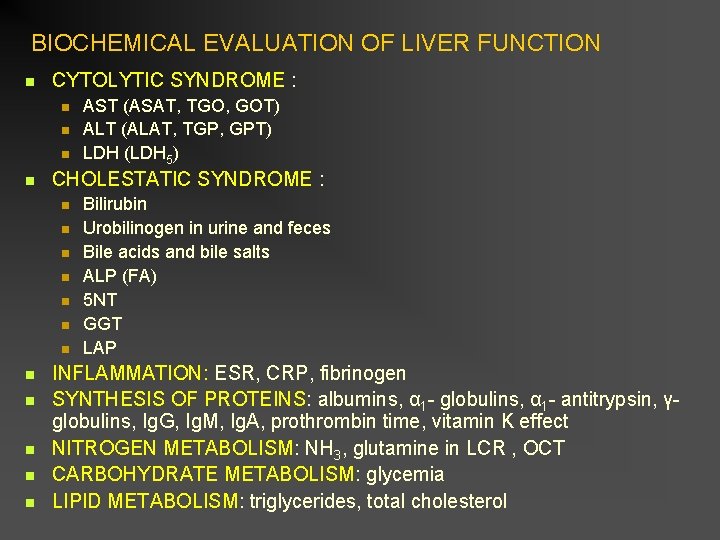
BIOCHEMICAL EVALUATION OF LIVER FUNCTION CYTOLYTIC SYNDROME : CHOLESTATIC SYNDROME : AST (ASAT, TGO, GOT) ALT (ALAT, TGP, GPT) LDH (LDH 5) Bilirubin Urobilinogen in urine and feces Bile acids and bile salts ALP (FA) 5 NT GGT LAP INFLAMMATION: ESR, CRP, fibrinogen SYNTHESIS OF PROTEINS: albumins, α 1 - globulins, α 1 - antitrypsin, γglobulins, Ig. G, Ig. M, Ig. A, prothrombin time, vitamin K effect NITROGEN METABOLISM: NH 3, glutamine in LCR , OCT CARBOHYDRATE METABOLISM: glycemia LIPID METABOLISM: triglycerides, total cholesterol
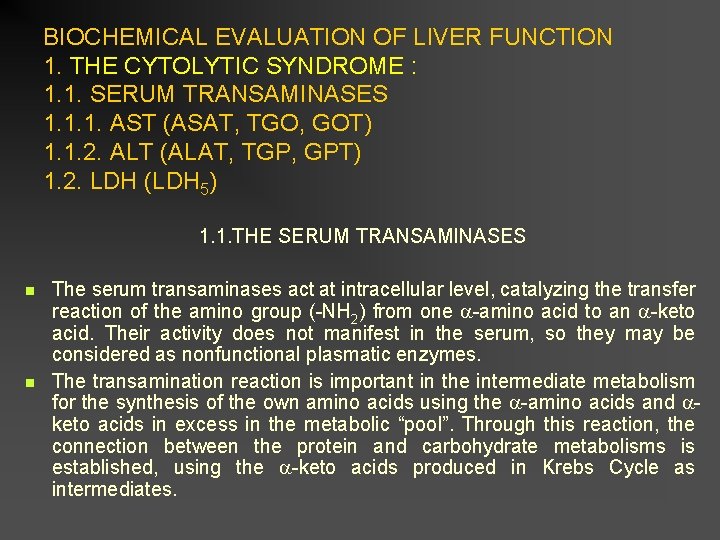
BIOCHEMICAL EVALUATION OF LIVER FUNCTION 1. THE CYTOLYTIC SYNDROME : 1. 1. SERUM TRANSAMINASES 1. 1. 1. AST (ASAT, TGO, GOT) 1. 1. 2. ALT (ALAT, TGP, GPT) 1. 2. LDH (LDH 5) 1. 1. THE SERUM TRANSAMINASES The serum transaminases act at intracellular level, catalyzing the transfer reaction of the amino group (-NH 2) from one -amino acid to an -keto acid. Their activity does not manifest in the serum, so they may be considered as nonfunctional plasmatic enzymes. The transamination reaction is important in the intermediate metabolism for the synthesis of the own amino acids using the -amino acids and keto acids in excess in the metabolic “pool”. Through this reaction, the connection between the protein and carbohydrate metabolisms is established, using the -keto acids produced in Krebs Cycle as intermediates.
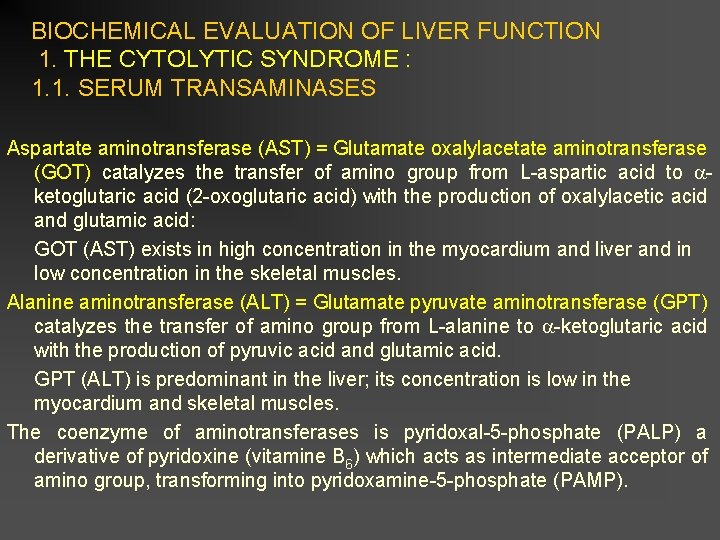
BIOCHEMICAL EVALUATION OF LIVER FUNCTION 1. THE CYTOLYTIC SYNDROME : 1. 1. SERUM TRANSAMINASES Aspartate aminotransferase (AST) = Glutamate oxalylacetate aminotransferase (GOT) catalyzes the transfer of amino group from L-aspartic acid to ketoglutaric acid (2 -oxoglutaric acid) with the production of oxalylacetic acid and glutamic acid: GOT (AST) exists in high concentration in the myocardium and liver and in low concentration in the skeletal muscles. Alanine aminotransferase (ALT) = Glutamate pyruvate aminotransferase (GPT) catalyzes the transfer of amino group from L-alanine to -ketoglutaric acid with the production of pyruvic acid and glutamic acid. GPT (ALT) is predominant in the liver; its concentration is low in the myocardium and skeletal muscles. The coenzyme of aminotransferases is pyridoxal-5 -phosphate (PALP) a derivative of pyridoxine (vitamine B 6) which acts as intermediate acceptor of amino group, transforming into pyridoxamine-5 -phosphate (PAMP).
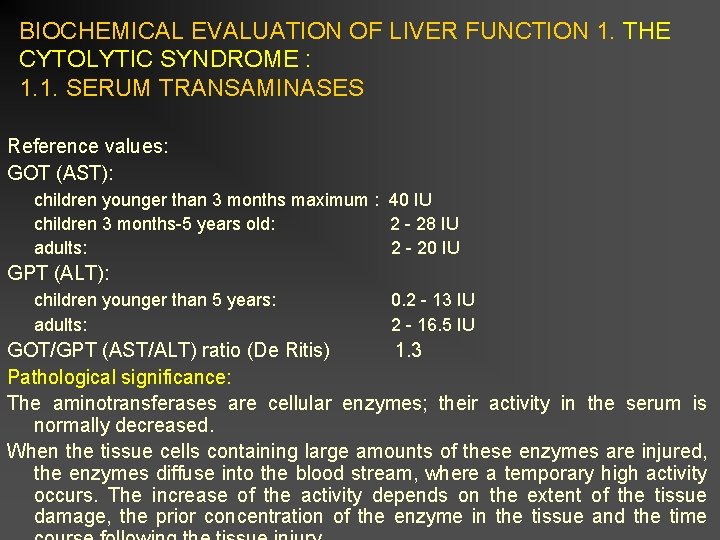
BIOCHEMICAL EVALUATION OF LIVER FUNCTION 1. THE CYTOLYTIC SYNDROME : 1. 1. SERUM TRANSAMINASES Reference values: GOT (AST): children younger than 3 months maximum : 40 IU children 3 months-5 years old: 2 - 28 IU adults: 2 - 20 IU GPT (ALT): children younger than 5 years: 0. 2 - 13 IU adults: 2 - 16. 5 IU GOT/GPT (AST/ALT) ratio (De Ritis) 1. 3 Pathological significance: The aminotransferases are cellular enzymes; their activity in the serum is normally decreased. When the tissue cells containing large amounts of these enzymes are injured, the enzymes diffuse into the blood stream, where a temporary high activity occurs. The increase of the activity depends on the extent of the tissue damage, the prior concentration of the enzyme in the tissue and the time
GOT (AST) serum activity is increased in: 1) heart affections: - myocardial infarction - the activity begins to rise about 6 to 12 hours after the infarction and usually reaches its maximum value in about 24 -48 hours; it usually returns to normal 4 -6 days after the infarction; it is a much less specific indication of the myocardial infarction than the rise in creatinphosphokinase (CK) because many other conditions can cause a rise of GOT (liver, muscle, hemolytic diseases); - prolonged myocardial ischemia; congestive heart failure (hepatic ischemia and anoxia are produced). 2) hepatic affections: - activity may rise 100 times the normal value in severe acute hepatitis, acute toxicity of a drug that severely damages the liver tissue (chloroform ingestion, CCl 4, phosphorus compounds); the rise in the acute hepatitis begins early in the disease, frequently before jaundice is visible; it may be the only sign of a hepatitis without jaundice and an early sign for a new active period of the disease; - moderate elevation (1 -10 times the normal value) usually occurs in cholestasis, chronic hepatitis, cirrhosis, hepatic tumours, mononucleosis. 3) muscular disorders: - all types of progressive muscular distrophy (10 times the normal value, then, the values becomeprogressivelly lower because of the decreased muscle mass), - neurogenic muscle atrophies, muscle trauma, surgery, intramuscular injections when long lasting preparation are used.
GPT (ALT) serum activity increased values occur in: 1) hepatic affections - hepatitis (viral, toxic), cholestasis, tumors; 2) pancreatic diseases - acute pancreatitis, tumors; 3) GPT is used to resolve some ambiguous increases in serum GOT in cases of suspected myocardial infarction, when CK, CK-MB or LD isoenzymes are not available or electrocardiogram signs are not characteristic: - when both GOT and GPT are elevated in serum, the liver is the primary source of the enzymes (liver ischemia because of congestive heart failure or other sources of liver cells injury); - - if the serum GOT (AST) is elevated while the GPT (ALT) remains within normal limits in a case of suspected myocardial infarction, the results are compatible with myocardial infarction. GOT/GPT ratio (De Ritis): 1) In hepatic affections: GOT/GPT 1. 3 2) In myocardial infarction: GOT is increased and GPT normal. Thus, GOT/GPT 1. 3
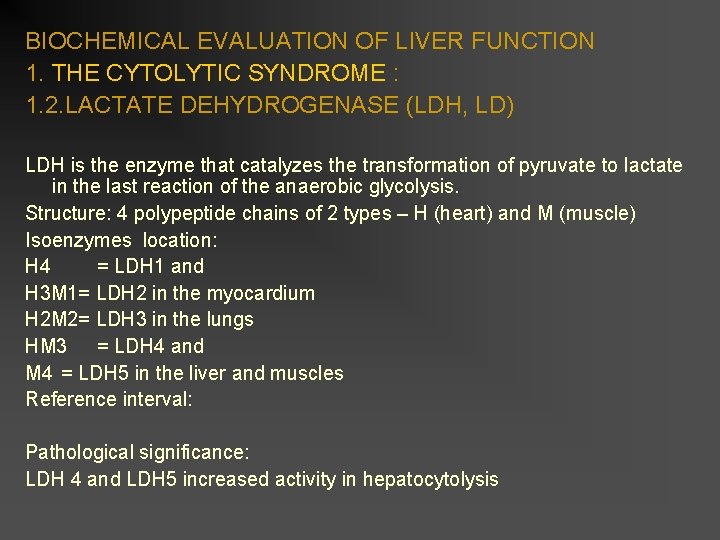
BIOCHEMICAL EVALUATION OF LIVER FUNCTION 1. THE CYTOLYTIC SYNDROME : 1. 2. LACTATE DEHYDROGENASE (LDH, LD) LDH is the enzyme that catalyzes the transformation of pyruvate to lactate in the last reaction of the anaerobic glycolysis. Structure: 4 polypeptide chains of 2 types – H (heart) and M (muscle) Isoenzymes location: H 4 = LDH 1 and H 3 M 1= LDH 2 in the myocardium H 2 M 2= LDH 3 in the lungs HM 3 = LDH 4 and M 4 = LDH 5 in the liver and muscles Reference interval: Pathological significance: LDH 4 and LDH 5 increased activity in hepatocytolysis
BIOCHEMICAL EVALUATION OF LIVER FUNCTION 2. CHOLESTATIC SYNDROME : 2. 1. Bilirubin 2. 2. Urobilinogen in urine and feces 2. 3. Bile acids and bile salts 2. 4. ALP (FA) 2. 5. 5’NT 2. 6. GGT 2. 7. LAP
BIOCHEMICAL EVALUATION OF LIVER FUNCTION 2. CHOLESTATIC SYNDROME : 2. 1. Bilirubin When serum bilirubin is fractioned by liquid chromatography, four separate forms are identifiable: nonesterified bilirubin, indirect, unconjugated, that binds strongly but reversibly to albumin and cannot be excreted by the kidneys. bilirubin monoglucuronide, conjugated, direct-reacting. bilirubin diglucuronide, conjugated, direct-reacting. delta-bilirubin, recently discovered, covalently bound to albumin and not excreted by the kidney, direct but slowly reacting; it is present in very low concentrations, if at all, in the blood of normal adults and children, being formed from bilirubin diglucuronide.
BIOCHEMICAL EVALUATION OF LIVER FUNCTION 2. CHOLESTATIC SYNDROME : 2. 1. Bilirubin The classic method is by converting bilirubin into an azo dye and measuring its extinction at specific wavelength. Each bilirubin molecule splits in half to form two dipyrroles which form an azo dye by coupling with the diazonium salt; the resulting azobilirubins have essentially the same spectral extinction values. The most commonly used diazonium salt is prepared from sulfanylic acid diazotized with sodium nitrite in acid solution. Then it is coupled with bilirubin glucuronide. Because the nonesterified bilirubin is tightly bound to albumin, it requires the presence of a polar solvent (methanol, ethanol) or an accelerator like coffeine/benzoate that promotes the displacement of bilirubin from albumin and speeds up the diazo coupling. The coloured complex obtained in the reaction of serum treated previously with accelerator represents the product of total bilirubin reaction (TB). The complex obtained in the reaction of serum with diazo salt represents the product of esterified bilirubin, cojugated, direct bilirubin (DB). The nonesterified, indirect bilirubin (IB) can be calculated by substracting the value of DB from TB.
BIOCHEMICAL EVALUATION OF LIVER FUNCTION 2. CHOLESTATIC SYNDROME : 2. 1. Bilirubin Diagnostic importance: Reference values: TB = 0. 1 - 1. 0 mg/dl (1. 7 - 17. 1 mol/L) DB = maximum 0. 2 mg/dl (3. 4 mol/L). Physiological variations: In full-term newborn there is an immatury of UDP-Glucuronyltransferase, the enzyme which is necessary in bilirubin esterification. The total bilirubin concentration may rise up to 8 mg/dl arround 3 -6 days of life. This condition is known as the physiological jaundice of the newborn. Adult levels are attained by age 30 days. In premature newborn, the deficiency of the enzyme is more intense, thus, the bilirubin may rise up to 12 -15 mg/dl.
2. 1. Bilirubin Pathological significance: Determination of total and esterified bilirubin is useful for the differential diagnosis of jaundice, particularly in differentiating hemolytic disease from others causing jaundice. Jaundice or icterus is the colour of the sclera and skin which become yellow due to the storage of the bilirubin existing in a higher than normal concentration in the blood. The colour becomes evident to an experienced observer when the serum bilirubin reaches a concentration of 2. 5 mg/dl (43 mol/L) or more. Total bilirubin is increased: mildly (below 5 mg/dl) in chronic hemolytic diseases; moderately to severe (10 -30 mg/dl) in hepatocellular diseases; markedly (up to 60 mg/dl) in cholestasis (internal or external obstruction to bile flow). Nonesterified bilirubin (indirect) is increased: hemolytic diseases, including the hemolytic disease of the newborn (HDN); it also accounts for about 30 -50% of the bilirubin rise in hepatocellular disease and cholestasis. Esterified, direct bilirubin is increased in hepatocellular disease and cholestasis. Decreased concentration has no clinical significance.
BIOCHEMICAL EVALUATION OF LIVER FUNCTION 2. CHOLESTATIC SYNDROME : 2. 1. Bilirubin in urine Identification of bilirubin in urine by oxidation with iodine Principle of method: The bilirubin is oxidized to biliverdin by iodine. Identification of bilirubin by Franke method Principle of method: The urine containing bilirubin is coloured intensely green in the presence of methylen-blue. Diagnostic significance: Bilirubin is not detectable by conventional methods in the urine of a normal, healthy person Bilirubin diglucuronide exists in urine only in pathological conditions: hepatocellular liver disease (hepatic icterus) associated with increased urobilinogenuria and colaluria; obstructive icterus - associated with decreased or absent urobilinogenuria and colaluria.
BIOCHEMICAL EVALUATION OF LIVER FUNCTION 2. CHOLESTATIC SYNDROME : 2. 2. Urobilinogen is a colourless compound derived from bilirubin that has been excreted in the bile and partially hydrogenated by bacteria in the intestines. It is partially reabsorbed into the portal vein, almost completely extracted from the blood by normal liver cells, and re-excreted into the bile. The small portion that is not taken up by the hepatocytes is excreted by the kidney. Normally, about 1 -4 mg/24 hours are excreted in urine. Diagnostic significance of urinary urobilinogen: increased values are present in: hemolytic disease (excess production from bilirubin); hepatocellular liver disease (decreased removal by hepatocytes); congestive heart failure (impaired circulation to liver); infectious diseases (pneumonia, septicemia). urobilinogen is absent in: obstructive icterus (calculi, inflammations, tumours, biliar parasites). after excessive antibiotic treatment (intestinal microflora is affected)
BIOCHEMICAL EVALUATION OF LIVER FUNCTION 2. CHOLESTATIC SYNDROME : 2. 3. Bile acids Identification of bile acids by Pettenkofer reaction. Principle: The cholic acid produced by the hydrolysis of bile acids reacts with furfurol (produced in the reaction between sucrose and sulfuric acid). A redviolet colour appears. Bile acids exist in urine only in pathological conditions (obstructive icterus) as bile salts (tauro- and glyco-cholate). Pathologic significance The reaction is positive in hepatitis, biliary obstruction. It is negative in hemolytic icterus.
BIOCHEMICAL EVALUATION OF LIVER FUNCTION 2. CHOLESTATIC SYNDROME : 2. 4. Alkaline Phosphatase (ALP) The phosphatases which are analyzed in the clinical laboratory are generally phosphomonoesterases, catalyzing the hydrolysis reaction of the phosphoric esters ( -glycerophosphate, p-nitrophenyl phosphate) and production of phosphoric acid. R - O - PO 3 H 2 + H 2 O R - OH + H 3 PO 4 The phosphatases are not very specific but their optimum p. H for the activity is varying with the organ of origin. From this point of view, they can be classified in: 1) Phosphomonoesterases type I (alkaline phosphatases): - the optimum p. H is 9. 0 -10. 4; they are activated by the presence of Mg 2+; they are widely distributed in the body, being present in high concentration in bones (osteoblasts-cells of growing bone), intestinal mucosa, renal tubule cells, and in lower concentration in the liver (cells lining the sinusoids, bile canaliculi), leukocytes, placenta, mammary gland; The normal serum contains a mixture of isoenzymes derivated primarily from liver, intestines, bones; the one from the liver is predominant excepting the cases of rapid skeletal growth. 2) Phosphomonoesterases type II (acidic phosphatases): - the optimum p. H is 5. 0 -5. 5; they are not activated by Mg 2+, and are inhibited by fluorides and oxalates; they exist in the prostate gland, kidney, spleen, platelets and erythrocytes; they have a low concentration in plasma.
BIOCHEMICAL EVALUATION OF LIVER FUNCTION 2. CHOLESTATIC SYNDROME : 2. 4. Alkaline Phosphatase (ALP) Diagnostic significance: The values which are obtained represent the activity of more isoenzymes. The ALP are eliminated by bile, except the bone fraction (it has a high molecular mass and is catabolized by the reticulo-endothelial system cells). Reference values: One international unit of alkaline phosphatase represents the amount of enzyme which catalyzes the hydrolysis of 1 mol of substrate per minute, at 370 C and p. H 10. 5. adults: 20 - 48 IU/L children: 38 - 138 IU/L third trimester of pregnancy: 28 - 115 IU/L The children high values reflect the increased osteoblastic activity that occurs during periods of rapid skeletal growth. The physiological increased value in the third trimester of pregnancy is due to the elaboration of a placental isoenzyme that is absorbed into the maternal bloodstream. After a meal rich in carbohydrates and lipids the intestinal isoenzyme is increased, especially in the persons with B or O blood groups.
2. 4. Alkaline Phosphatase (ALP) Pathological significance: Increased activity can be noticed after treatment with drugs for epilepsy, anticoagulant, antidiabetic, especially in women. In order to determine the organ origin of the increased values the isoenzymes can be separated by electrophoresis. Increased values are present in: 1) bone isoenzyme: increased osteoblastic activity - Paget’s disease (osteitis deformans), osteoblastic tumours with metastases; hyperparathyroidism (mobilization of calcium and phosphorus from bone); deficiency of vitamin D (rickets, osteomalacia). 2) liver and bile isoenzyme: - intra- and extra-hepatic cholestasis (more than 2. 5 times the normal value) due to the increased synthesis of the enzyme; the determination of alkaline phosphatase permits the differentiation between the obstructive icterus and the hemolytic icterus (normal values); - the cholestatic form of the acute viral hepatitis; hepatic granulomatosis, neoplasm; leukemia. 3) Hyperphosphatasemia, extremely rare. Decreased values exist in: - hypophosphatasemia, rare congenital defect; - depressed osteoblastic activity- dwarfs; - hypothyroidism - deficiency of thyroid hormon; - pernicious anemia (deficiency of vitamin B 12).
BIOCHEMICAL EVALUATION OF LIVER FUNCTION 4. SYNTHESIS OF PROTEINS 4. 1. Serum total proteins Dosing serum total proteins by biuret method Principle: In alkaline solution, Cu 2+ reacts with the peptide bonds in the proteins to form a violet-coloured complex. The intensity of the colour is proportional to the concentration of protein. All the compounds containing at least two peptide bonds form similar complex (peptides, polypeptides, biuret NH 2 -CO-NH 2). Diagnostic significance: Reference values in serum: new born: 5. 2 -9. 0 g/dl children younger than 3 years: 5. 5 -8. 6 g/dl children older than 3 years: 6. 6 -8. 6 g/dl adults: 6. 6 -8. 6 g/dl Physiological variations: In infants for the first 3 -4 months the values are 1 g/dl lower than in adult. Values are higher with about 0. 5 g/dl in ambulatory persons than in one at bed rest, because the orthostatic position produces flow of protein-free fluid from the blood vessels to interstitial fluid, in the lower extremities.
BIOCHEMICAL EVALUATION OF LIVER FUNCTION 4. SYNTHESIS OF PROTEINS 4. 1. Serum total proteins Pathological significance: 1. Increased concentration is noticed in: dehydration; monoclonal diseases (increase of only one type of -globulines): multiple myeloma, macroglobulinemia, cryoglobulinemia; polyclonal diseases (chronic infections, liver cirrhosis, sarcoidosis, systemic lupus erythematosus). 2. Decreased concentration appears in: inadverted overhydratation; failure of protein synthesis: - starvation, malnutrition; - maldigestion, malabsorption; - severe nonviral liver cell damage. protein loss through kidneys, skin, digestive tract. Determination of total proteins supplies limited information except in conditions relating to changes in plasma or fluid volum (shock, dehydration, possible overhydration, hemorrhage).
BIOCHEMICAL EVALUATION OF LIVER FUNCTION 4. SYNTHESIS OF PROTEINS 4. 2. Electrophoresis of serum proteins The technique for separating the proteins by means of an electric current is called electrophoresis. Principle: At p. H 8. 6, all the serum proteins carry a negative charge. If a small serum sample is placed upon a wet support medium, interposed between two electrodes immersed in p. H 8. 6 buffer and subjected to an electric charge of several hundred volts, the proteins move toward the anode (+). The migration distance varies directly with the charge carried by the protein but is modified to a slight extent by the buffer flow (electro-osmotic or endosmotic flow). After the time needed for migration and separation in different fractions, the paper strips are dried and dyed (blue with brom-phenol blue, red with azo-carmin, black with amidoschwartz). The evaluation of the protein fractions is performed by: - direct photometry: the paper is made transparent and is passed in front of a light source; a photoelectric cell will give an information over the intensity of the spots colour (30% error). - colorimetric method: is used after the elution of the coloured spots (5% error). An integrator will give 5 values of the extinctions (absorbance, optical density) corresponding and proportional to the concentrations of the proteins in the 5 coloured spots; the sum is considered 100%, and the percent concentration is calculated for each fraction. To express the concentrations in g/dl, it is necessary to determine the total proteins in the serum.
BIOCHEMICAL EVALUATION OF LIVER FUNCTION 4. SYNTHESIS OF PROTEINS 4. 2. Electrophoresis of serum proteins Diagnostic importance: Reference values: Fraction Concentration (g/dl) Percentage (%) Albumins 3. 5 - 5. 2 50 - 65 1 - globulins 0. 1 - 0. 4 2 - 6 2 - globulins 0. 5 - 1. 0 6 - 13 - globulins 0. 6 - 1. 2 8 - 15 - globulins 0. 7 - 1. 6 10 - 20 Physiological variations: Infant electrophoreogram is similar to the adult one but between 3 and 4 months of life there is a physiological decrease of the -globulin peak. New born and the premature does not have this variation, but the albumins are decreased in neonatal period. In old people, there is a decrease of the albumins and -globulins (75% have hypoproteinemia).
BIOCHEMICAL EVALUATION OF LIVER FUNCTION 4. SYNTHESIS OF PROTEINS 4. 2. Electrophoresis of serum proteins Pathological significance: Albumins: increased values only temporary during the dehydration or shock; decreased values are noticed: o deficient protein intake or absorption; o deficient hepatic synthesis (acute and chronic hepatitis, hepatic cirrhosis); o intense activity of reticulo-endothelial system (intense catabolism) in chronic inflammation; o protein loss: - through kidneys (nephrotic syndrome); - through skin (extensive burns, dermatitis with exfoliation); - through gastrointestinal tract (protein losing enteropathies); - shift to ascitic fluid (chronic liver disease with cirrhosis). analbuminemia (genetic rare disease): bisalbuminemia (genetic or acquired) with normal and an abnormal albumin.
Globulins: 1 -globulins: increased values: - acute inflammations, infections. decreased values: - acute hepatitis - 1 -antitripsin deficiency (pulmonary emphysema) 2 -globulins: very high values: nephrotic syndrome ( 2 -macroglobulin is increased); increased values: - inflammatory acute diseases; - rheumatoid arthritis, lupus erythematosus; - after myocardial infarction; - multiple myeloma ( G, A). decreased values: - acute hepatocellular diseases. -globulins: increased values in hyperlipemias of various types multiple myeloma (paraprotein). -globulins: increased values: - polyclonal: - chronic infections; viral hepatitis sarcoidosis, rheumatoid arthritis; leukemia, lymphoma. - monoclonal: - multiple myeloma (paraprotein = Ig. G, A); Waldenstrom’s disease (macroglobulin = Ig. M); cryoglobulinemia (Ig. M). decreased synthesis by lymphocytes may be impared congenital or acquired after therapy with drugs, in the terminal stage of Hodgkin’s disease, burns.
There are characteristic patterns for the electrophoregram in different pathological conditions: 1. very rare: analbuminemia (28 cases described only); bisalbuminemia (two peaks of albumin, normal and mutant). 2. frequent; hepatic cirrhosis with ascitis of alcoholic ethiology: - albumins are decreased; - Ig. A are increased and form a + block. acute inflammatory processes: - albumins are moderately decreased; - 1 and 2 are increased. chronic inflammatory processes: - albumins are decreased; - -globulins are increased. nephrotic syndrome: - albumins are decreased; - globulins are generally decreased; - , 2 globulins are increased. disglobulinemias (gammapathies): - -globulins intensely increased
BIOCHEMICAL EVALUATION OF LIVER FUNCTION 4. SYNTHESIS OF PROTEINS : 4. 3. Fibrinogen Turbidimetric dosing of plasma fibrinogen Principle: The fibrinogen is precipitated at 55 -560 C, in neutral solution, without the addition of any reagent. Turbidity is obtained. It is proportional to the fibrinogen concentration in the sample. The other proteins do not precipitate at this temperature. Diagnostic importance: Reference values: 200 - 400 mg/dl plasma Pathological significance: Congenital diseases: - afibrinogenemia, hypofibrinogenemia. - disfibrinogenemia (deficiency of function). Decreased values are noticed in: - severe hepatic failure; - leukemia; - cancer of prostate, cancer of pancreas; - surgical intervention with extracorporal circulation. Increased values appear in: - bacterial infections (pneumonia) - rheumatic fever (up to 1, 000 mg/dl).
BIOCHEMICAL EVALUATION OF LIVER FUNCTION 4. SYNTHESIS OF PROTEINS 4. 4. Serum cholinesterase (Ch. E) The human body possesses enzymes which are able to catalyze the hydrolysis reaction of the choline esters with different organic acids. Specific cholinesterases (acetylcholinhydrolases) act upon acetylcholine and acetylthiocholine; they exist in the erythrocytes and nervous system, and in a low concentration in the serum. They have a reduced diagnostic significance. The unspecific cholinesterases (pseudocholinesterase, acyl-cholin hydrolase) catalyzes the hydrolysis of acetylcholine and other esters as benzoylcholine, butiryl-choline, succinyl-choline. It is synthesized in the liver and passes in the serum. Diagnostic significance: Reference values: 3, 000 - 8, 000 m. IU/ml (IU/L).
BIOCHEMICAL EVALUATION OF LIVER FUNCTION 4. SYNTHESIS OF PROTEINS 4. 4. Serum cholinesterase (Ch. E) Pathologic significance: Decreased concentration (enzyme activity) is noticed when the synthesis is decreased or when the enzyme is inhibited. - denutrition; malabsorption; - hepatic insufficiency - the Ch. E determination in the serum is used to evaluate the severity, the state of evolution or differential diagnosis of the hepatic disease. (Note that in the obstructive icterus the Ch. E is normal); - hypothyroidism (the values are with 30% lower than normal in the severe cases); - intoxication with organophosphates (insecticides commonly used in certain farm areas) - enzyme inhibition is proportional to the amount of exposure to the insecticide; the efficiency of the specific treatment with drugs which reactivate the enzyme (Toxogonin, PAM) can be monitored by repeated dosing of the Ch. E. Increased values appear: when the hepatic synthesis is stimulated (specific stimulation or general proteic synthesis of the liver); - convalescence after acute hepatitis; - nephrotic syndrome; - obesity, diabetus mellitus, hyperlipoproteinemia IIb, IV; - hyperthyroidism (with 30% higher than normal).

- Slides: 37