
Clinical Audit an overview October 2020 What does
Clinical Audit – an overview October 2020

What does this module cover? • • • The origins of clinical audit What is clinical audit? Why do clinical audit? The clinical audit cycle Clinical audit for assurance & improvement – the difference • Choosing a clinical audit • Registering a clinical audit 2
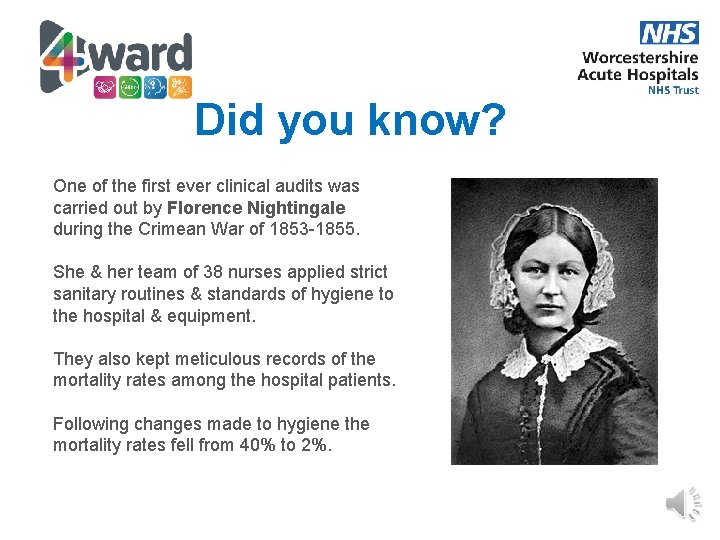
Did you know? One of the first ever clinical audits was carried out by Florence Nightingale during the Crimean War of 1853 -1855. She & her team of 38 nurses applied strict sanitary routines & standards of hygiene to the hospital & equipment. They also kept meticulous records of the mortality rates among the hospital patients. Following changes made to hygiene the mortality rates fell from 40% to 2%.
What is Clinical Audit? “Clinical audit is a quality improvement cycle that involves measurement of the effectiveness of healthcare against agreed and proven standards for high quality, and taking action to bring practice in line with these standards so as to improve the quality of care and health outcomes. ” New Principles of Best Practice in Clinical Audit (HQIP, 2020) 4

Why do Clinical Audit? To provide assurance of our processes to our patients, staff and external organisations To check we’ve sustained improvements that we’ve made Check compliance with a newly introduced procedure To measure & improve the quality of healthcare provided Address a Trust priority e. g. assessing compliance to a piece of NICE guidance To ensure care is provided effectively and efficiently Assurance against a patient safety issue 5
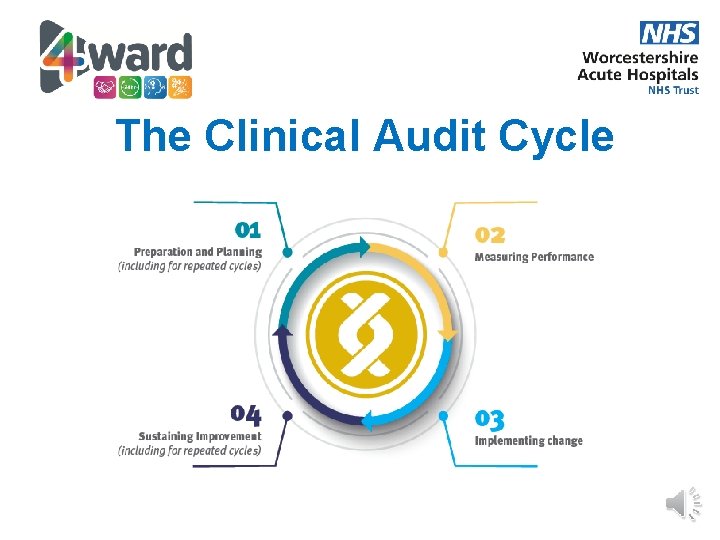
The Clinical Audit Cycle
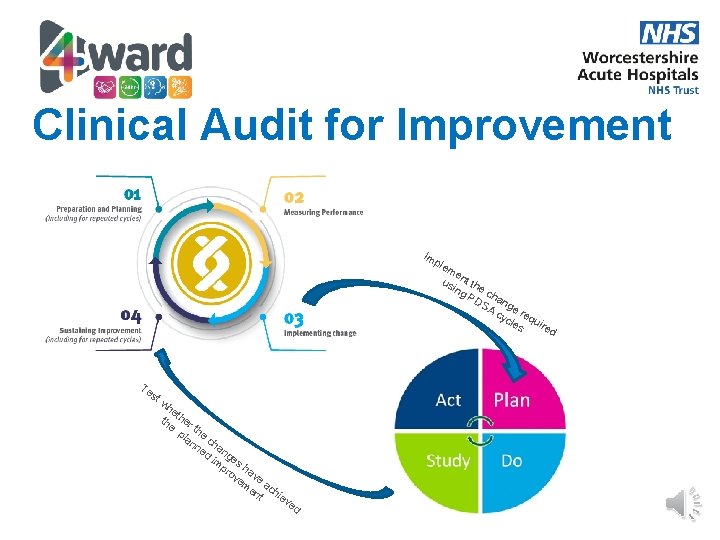
Clinical Audit for Improvement Im ple Te st wh e th ther e pla the nn cha ed ng im es pr ha ov v em e a en c h t ie ve d me us nt th ing e c PD han SA ge cy req cle ui red s
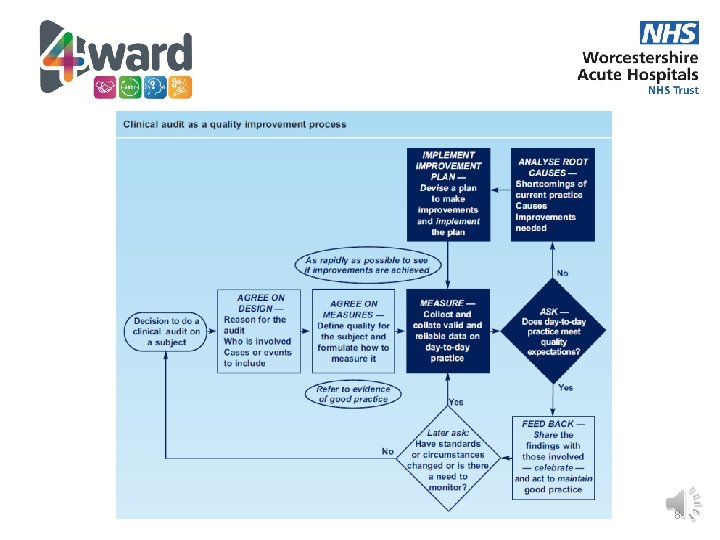
8
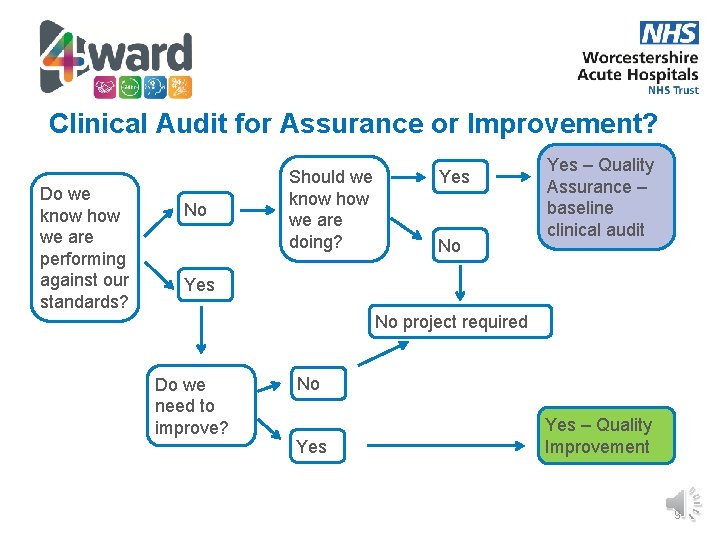
Clinical Audit for Assurance or Improvement? Do we know how we are performing against our standards? No Should we know how we are doing? Yes No Yes – Quality Assurance – baseline clinical audit Yes No project required Do we need to improve? No Yes – Quality Improvement 9
Choosing a clinical audit • The annual Better Outcomes for Patients Programme (BOPP) for each specialty includes priority audits where we are seeking assurance and to improve quality; – Mandatory audits (National Clinical Audit & Patient Outcomes Programme (NCAPOP) – National standards (e. g. NICE, Royal Colleges) – Local standards (e. g. policies, guidelines) – Audits driven by incidents, risks & complaints – Audits driven by local areas of interest 10
Ad Hoc Audits • Ad hoc audits are audits that are not included in the BOPP. This may be because; – They emerged as an important topic for clinical audit midyear, after the annual BOPP was developed. – They address a clinician’s area of interest. While all clinical audit activity that drives improvement is encouraged, priority must be given to BOPP and emerging priority topics. Each Specialty Audit Lead can provide advice on choosing an audit. 11
Registering the audit –why? All clinical audits must be registered on the Clinical Audit Tracking System (CATS) prior to the audit beginning. CATS is found on the Intranet under ‘Clinical Systems’ o It’s a great planning tool for your audit o Helps you gain a better understanding of your project before you begin o Evidences audit activity within the Trust o Provides assurance to external regulators o It is a requirement within the Trust’s Clinical Audit for Improvement Policy o Ensures you will get a certificate at the end of the audit. o Gives you an ID number that you’ll need if you are requesting health 12 records or data from the Information Team.
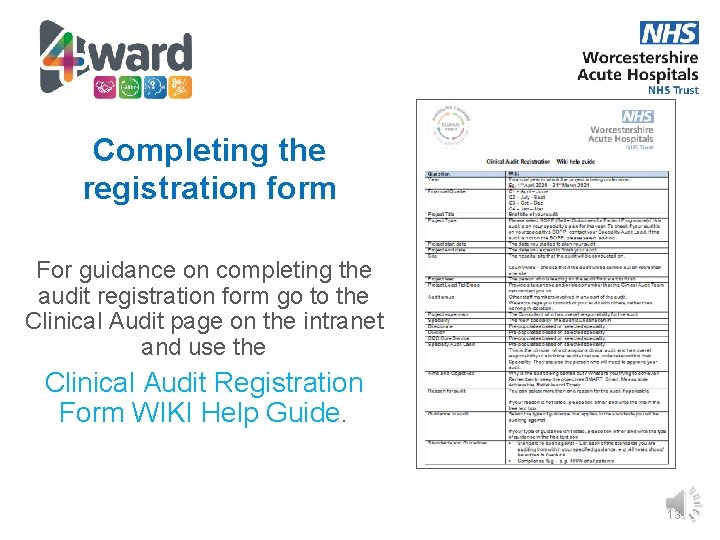
Completing the registration form For guidance on completing the audit registration form go to the Clinical Audit page on the intranet and use the Clinical Audit Registration Form WIKI Help Guide. 13
Audit Zone Registering your audit on CATS allocates a unique ID number for the audit & creates an Audit Zone on CATS. This is where you will; • • Find report & presentation templates. Upload the documents that support the audit. Generate the action plan. Upload the audit report and/or presentation. 14
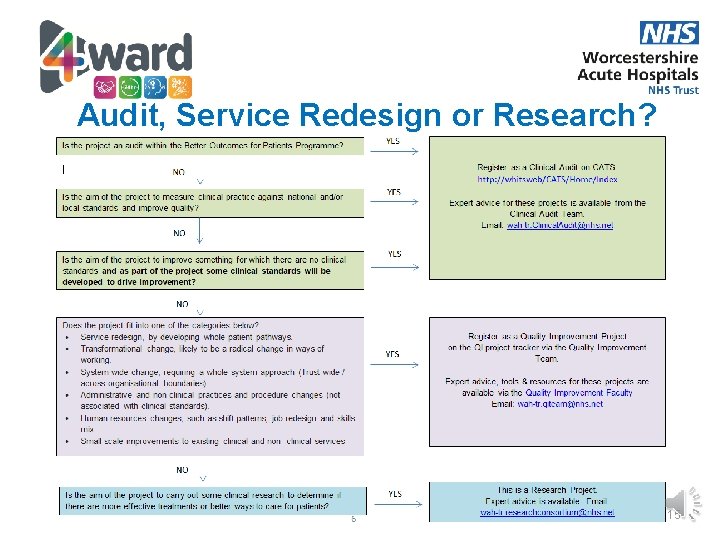
Audit, Service Redesign or Research? 15
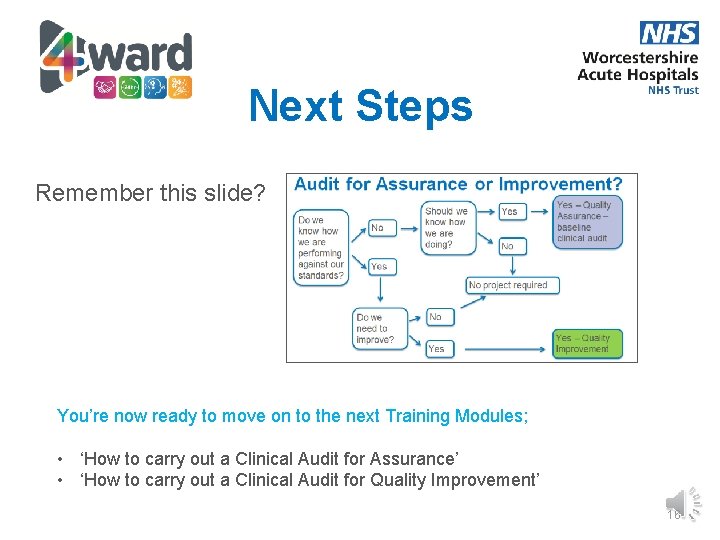
Next Steps Remember this slide? You’re now ready to move on to the next Training Modules; • ‘How to carry out a Clinical Audit for Assurance’ • ‘How to carry out a Clinical Audit for Quality Improvement’ 16
Do you have any questions? The Clinical Audit Team offer drop-in sessions where you can ask your clinical audit-related questions. These are currently being held virtually. You will find the details of these sessions and how to join them on the Clinical Audit pages on the intranet. Alternatively you are warmly invited to contact the team directly, using the contact details on the next slide. The team can provide advice and expertise on all aspects of clinical audit and quality improvement. 17
Clinical Audit Team Contact Details Jo Howden Clinical Audit Manager 38632 jo. howden@nhs. net Holly Page Clinical Audit Facilitator 38630 holly. page@nhs. net Bec Harris Clinical Audit Facilitator 38629 rebecca. harris 51@nhs. net Vacant Clinical Audit Support Officer Generic Email Account wah-tr. clinicalaudit@nhs. net We are on Twitter!!! Follow us @WAHTClin. Audit 18
Thank you for completing this training module If you would like a certificate to confirm you have completed this module you’ll need to complete a brief assessment. The link is on the Clinical Audit Training page. Your certificate will be emailed to you within a few days. You can also find links to more training modules and resources on the Clinical Audit Training page. 19
- Slides: 19