
Clinical Assessment vs Cerebral Function Monitoring Implications for
Clinical Assessment vs. Cerebral Function Monitoring – Implications for therapeutic hypothermia in a managed clinical network Malini Ketty Nitin Goel Sujoy Banerjee Neonatal Unit, Singleton Hospital
Background Case selection for Therapeutic Hypothermia Trial Criteria : TOBY study / NICHD (Shankaran) study Establishment of Hypoxia + Encephalopathy (clinical & a. EEG) Extrapolation of trial criteria in clinical practice Neurological assessment – subjective CFM (a. EEG) is gold standard for initial bedside encephalopathy assessment
Background Non-availability of CFM in all referral centres Therapeutic drift towards active hypothermia Implementation of hypothermia in borderline cases: Neonatal Transfer, Critical care Separation from parents Resource implications – cots, logistics, manpower Long term effects of cooling OUTSIDE the trial criteria not yet known.
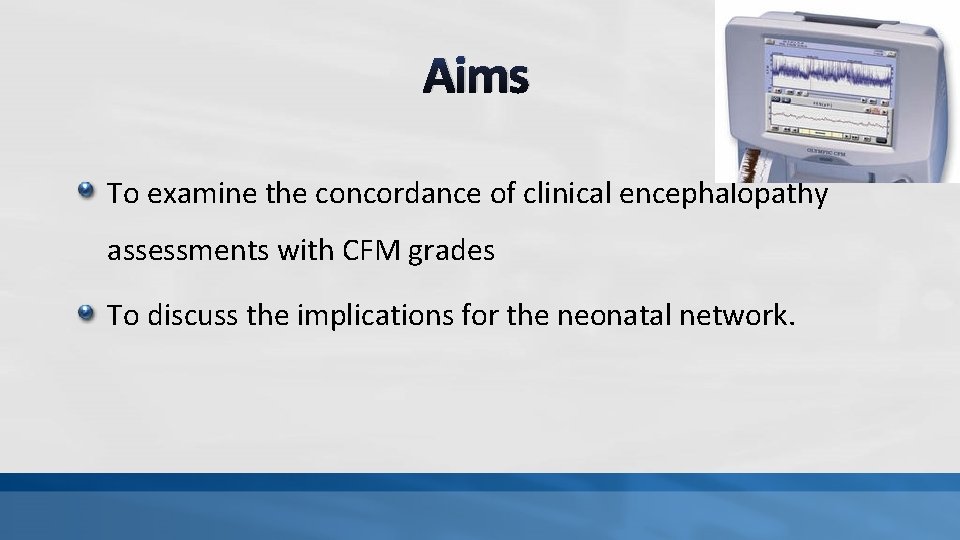
Aims To examine the concordance of clinical encephalopathy assessments with CFM grades To discuss the implications for the neonatal network.
Methods Retrospective analysis Cases identified from unit cooling register Data collected from TOBY forms and case notes Grade of clinically assessed encephalopathy compared with CFM grades
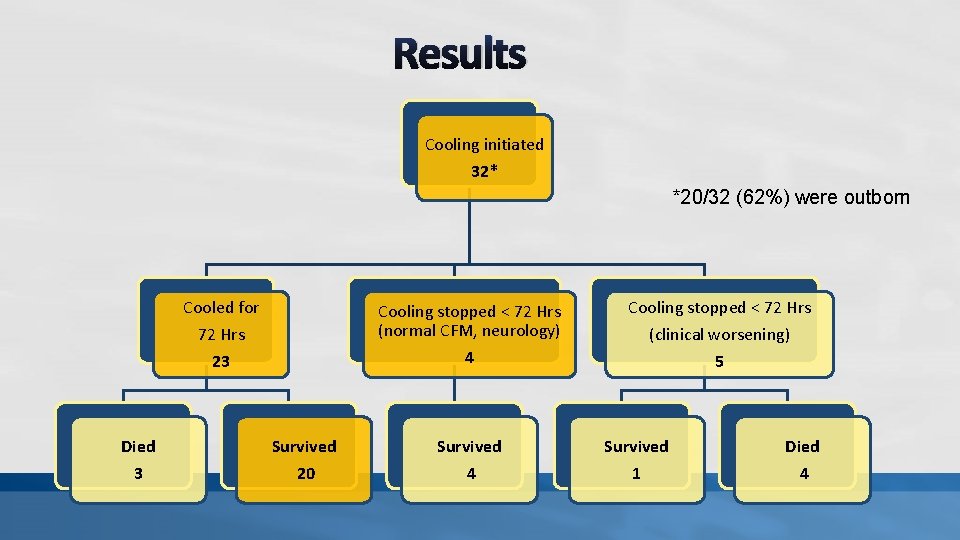
Results Cooling initiated 32* *20/32 (62%) were outborn Cooled for Cooling stopped < 72 Hrs (normal CFM, neurology) 4 72 Hrs 23 Cooling stopped < 72 Hrs (clinical worsening) 5 Died Survived Died 3 20 4 1 4
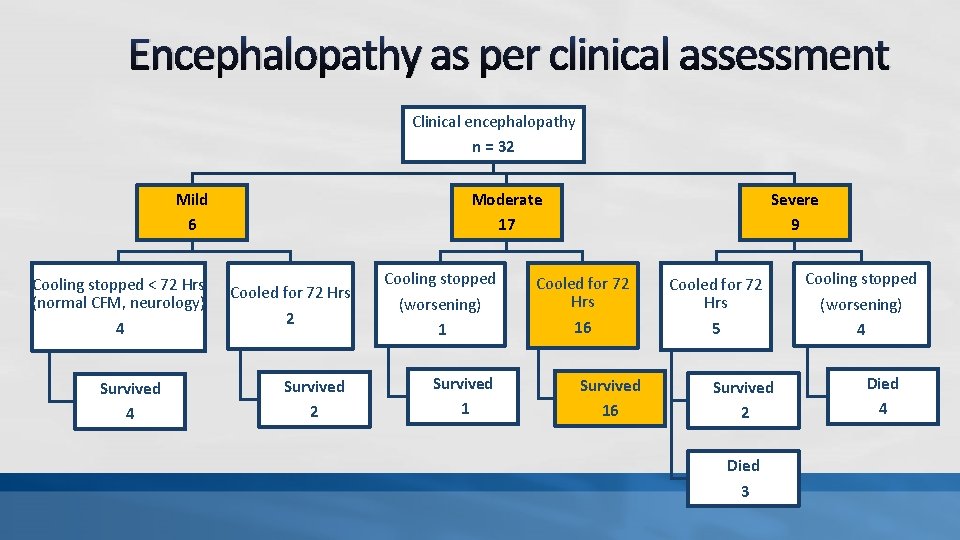
Encephalopathy as per clinical assessment Clinical encephalopathy n = 32 Mild 6 Cooling stopped < 72 Hrs (normal CFM, neurology) 4 Survived 4 Moderate 17 Cooled for 72 Hrs 2 Survived 2 Cooling stopped (worsening) 1 Survived 1 Severe 9 Cooled for 72 Hrs 16 Survived 16 Cooled for 72 Hrs 5 Survived 2 Died 3 Cooling stopped (worsening) 4 Died 4
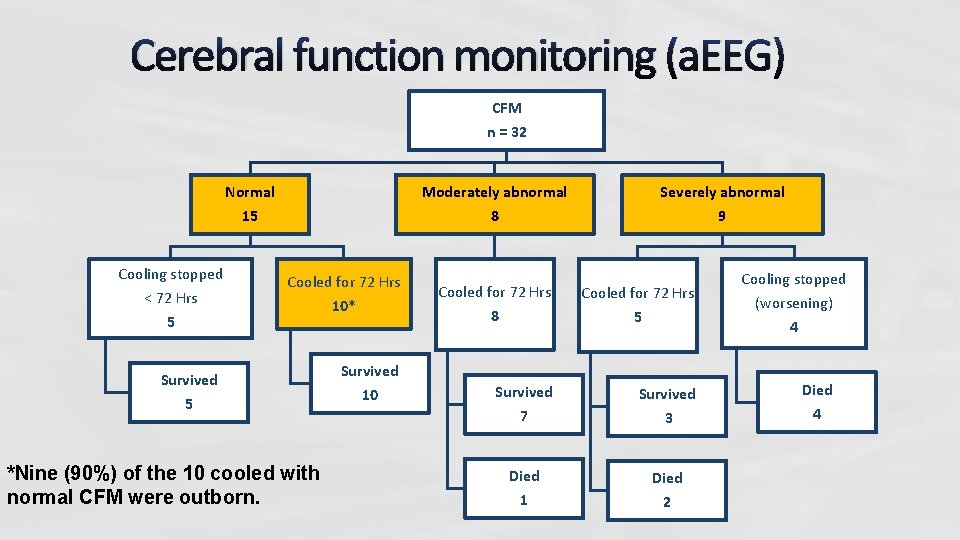
Cerebral function monitoring (a. EEG) CFM n = 32 Normal 15 Cooling stopped < 72 Hrs 5 Moderately abnormal 8 Cooled for 72 Hrs Survived 5 *Nine (90%) of the 10 cooled with normal CFM were outborn. 10* Survived 10 Severely abnormal 9 Cooled for 72 Hrs 8 Cooled for 72 Hrs 5 Survived 7 Survived 3 Died 1 Died 2 Cooling stopped (worsening) 4 Died 4
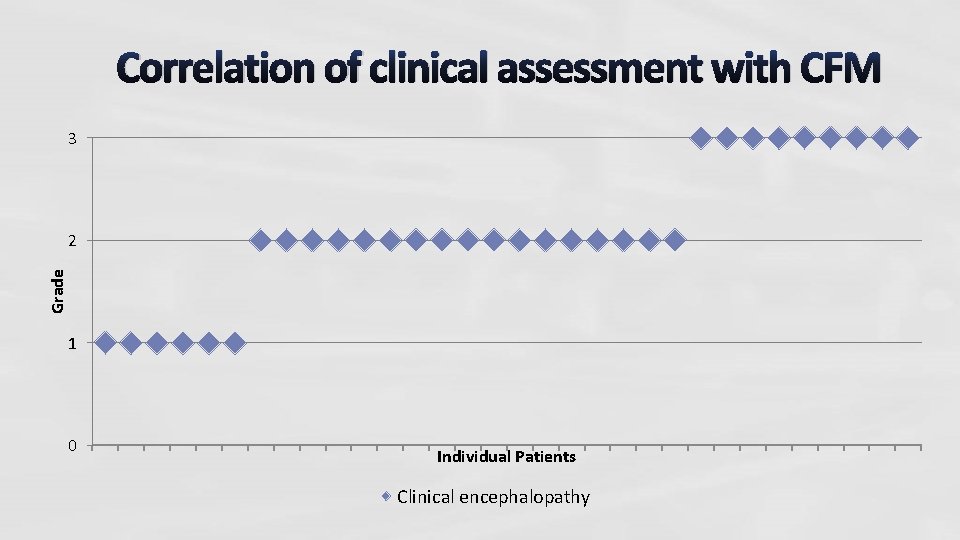
Correlation of clinical assessment with CFM 3 Grade 2 1 0 Individual Patients Clinical encephalopathy
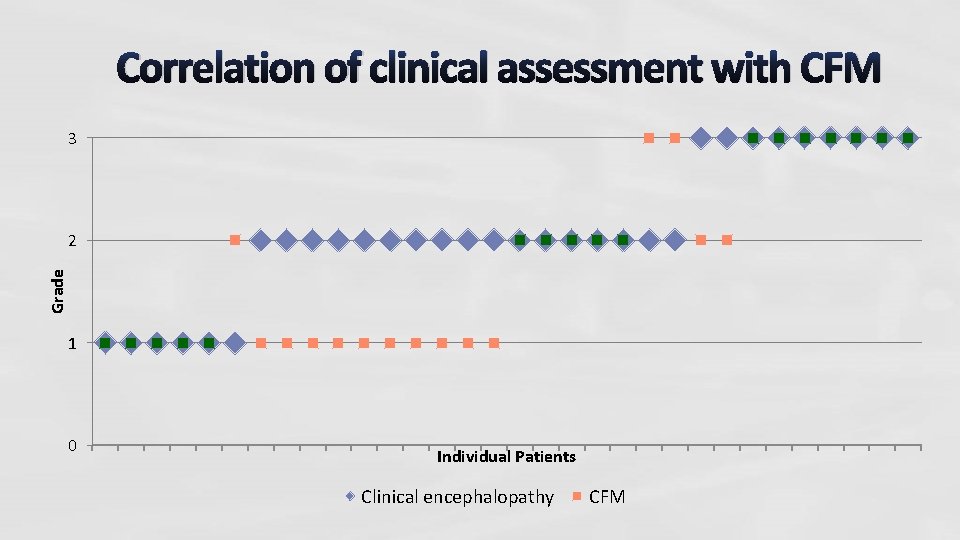
Correlation of clinical assessment with CFM 3 Grade 2 1 0 Individual Patients Clinical encephalopathy CFM
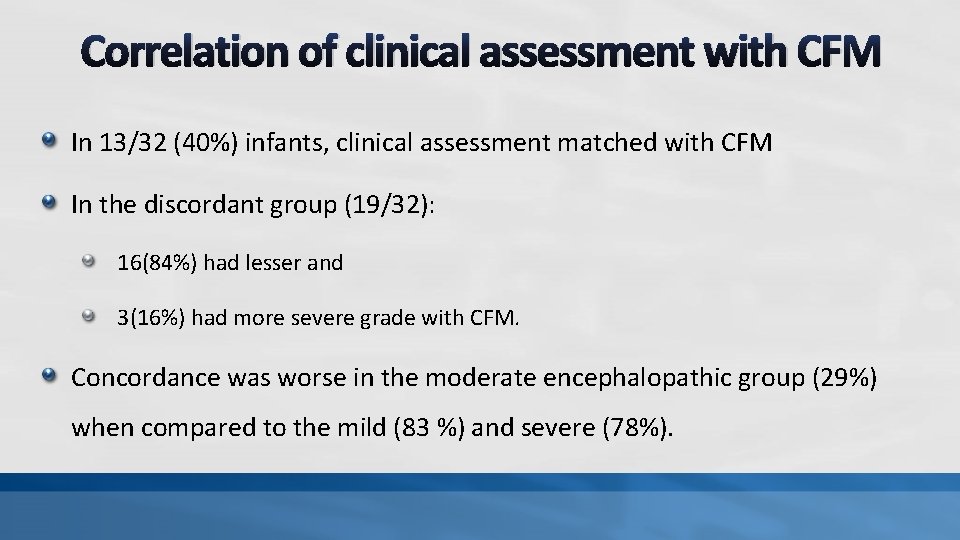
Correlation of clinical assessment with CFM In 13/32 (40%) infants, clinical assessment matched with CFM In the discordant group (19/32): 16(84%) had lesser and 3(16%) had more severe grade with CFM. Concordance was worse in the moderate encephalopathic group (29%) when compared to the mild (83 %) and severe (78%).
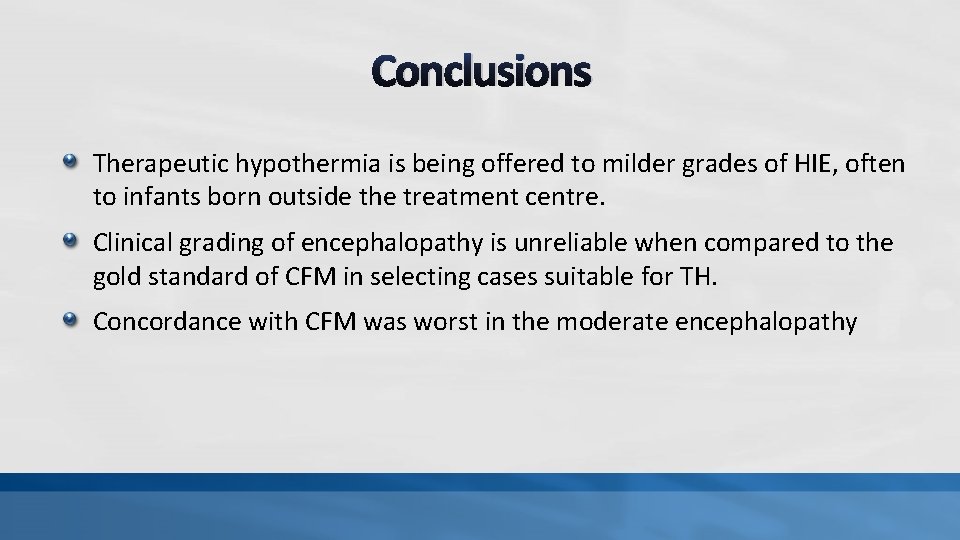
Conclusions Therapeutic hypothermia is being offered to milder grades of HIE, often to infants born outside the treatment centre. Clinical grading of encephalopathy is unreliable when compared to the gold standard of CFM in selecting cases suitable for TH. Concordance with CFM was worst in the moderate encephalopathy
Recommendations Strict adherence to Encephalopathy assessment criteria Consideration to equip referral units with CFM More reliable assessment of the grade of brain injury Support could be provided by cooling centre by reviewing images The cost of the equipment and personnel training will be offset by the reduced cost of transfer, critical care cot occupancy and unnecessary emotional burden on the family.
THANK YOU for your attention
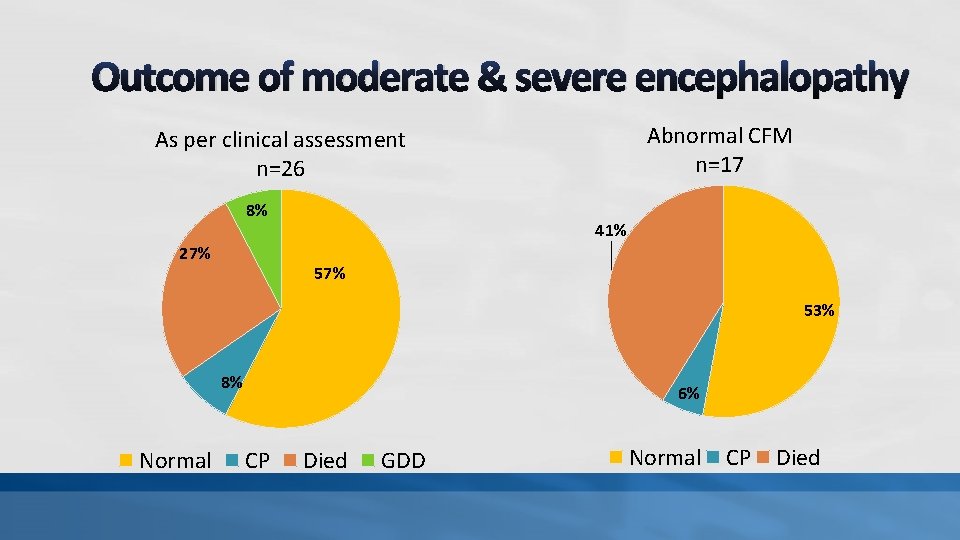
Outcome of moderate & severe encephalopathy Abnormal CFM n=17 As per clinical assessment n=26 8% 27% 41% 57% 53% 8% Normal 6% CP Died GDD Normal CP Died
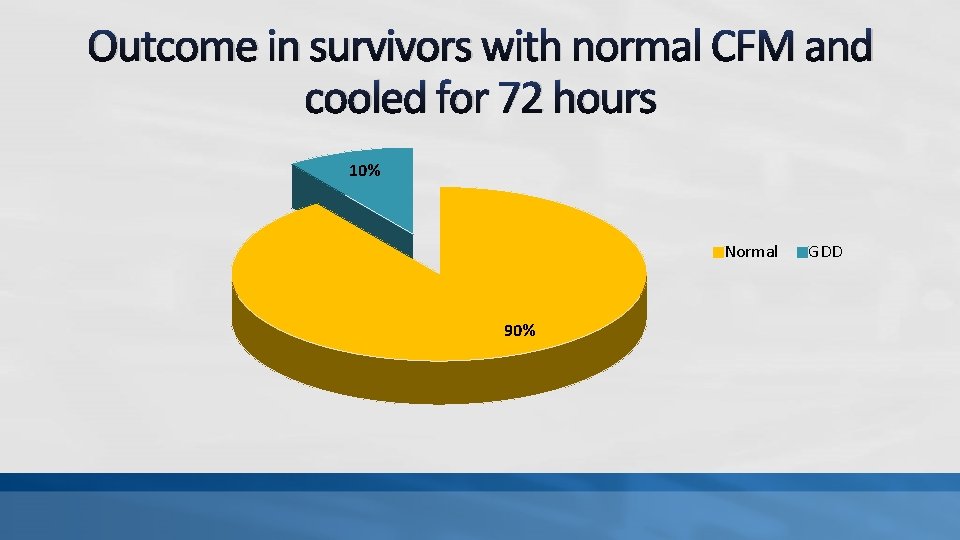
Outcome in survivors with normal CFM and cooled for 72 hours 10% Normal 90% GDD
- Slides: 16