
Clinical Assessment Treatment of Simple Complex Trauma Introduction
- Slides: 18
Clinical Assessment & Treatment of Simple & Complex Trauma
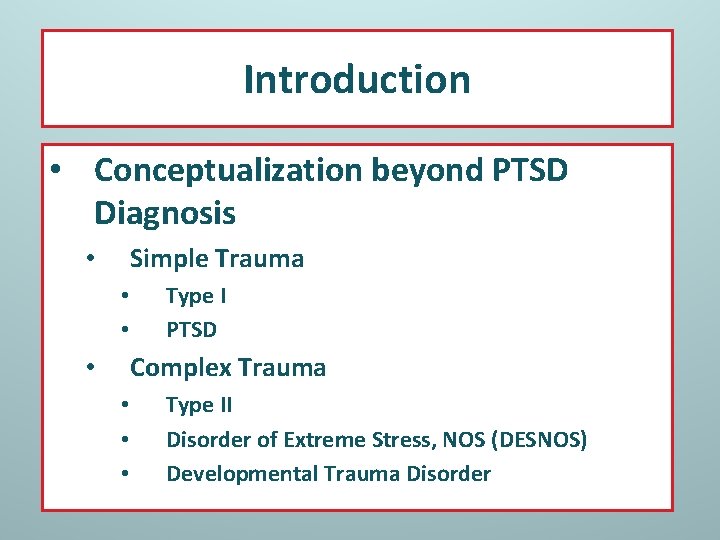
Introduction • Conceptualization beyond PTSD Diagnosis Simple Trauma • • • Type I PTSD Complex Trauma • • Type II Disorder of Extreme Stress, NOS (DESNOS) Developmental Trauma Disorder
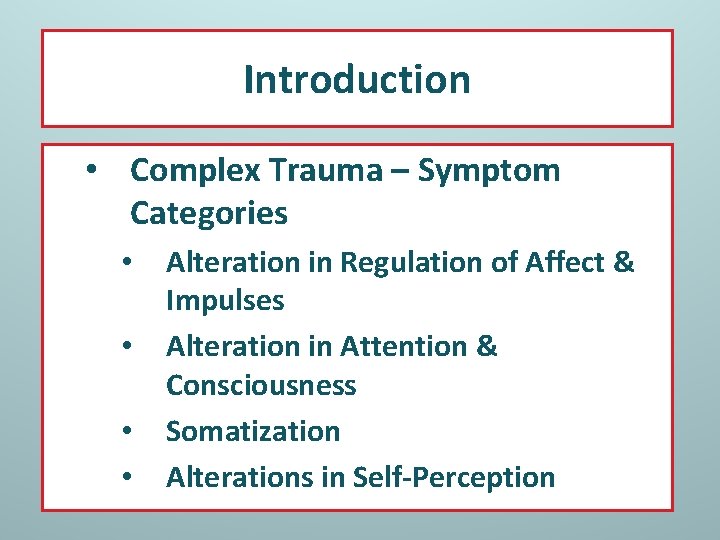
Introduction • Complex Trauma – Symptom Categories • • Alteration in Regulation of Affect & Impulses Alteration in Attention & Consciousness Somatization Alterations in Self-Perception
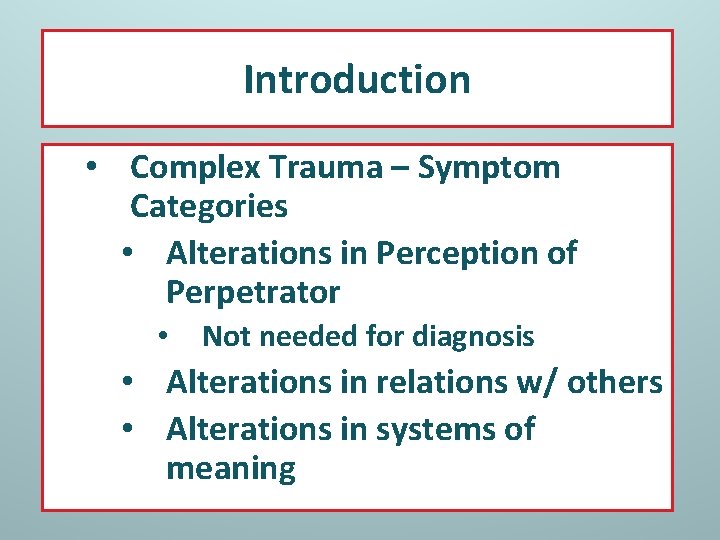
Introduction • Complex Trauma – Symptom Categories • Alterations in Perception of Perpetrator • Not needed for diagnosis • Alterations in relations w/ others • Alterations in systems of meaning
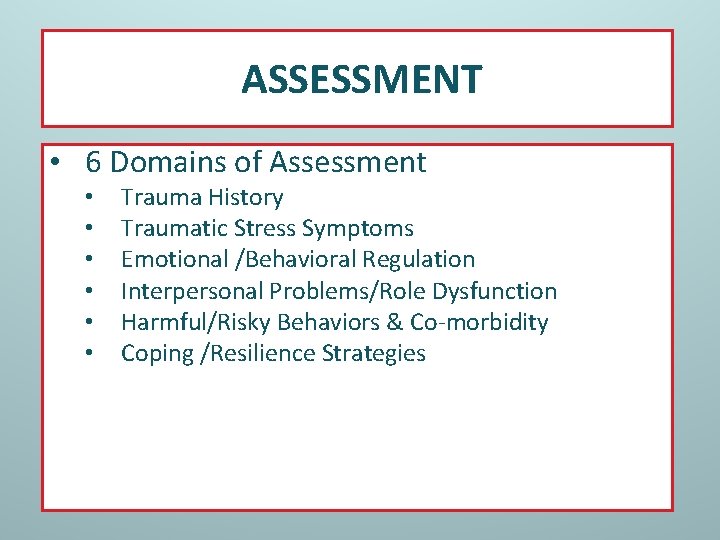
ASSESSMENT • 6 Domains of Assessment • • • Trauma History Traumatic Stress Symptoms Emotional /Behavioral Regulation Interpersonal Problems/Role Dysfunction Harmful/Risky Behaviors & Co-morbidity Coping /Resilience Strategies
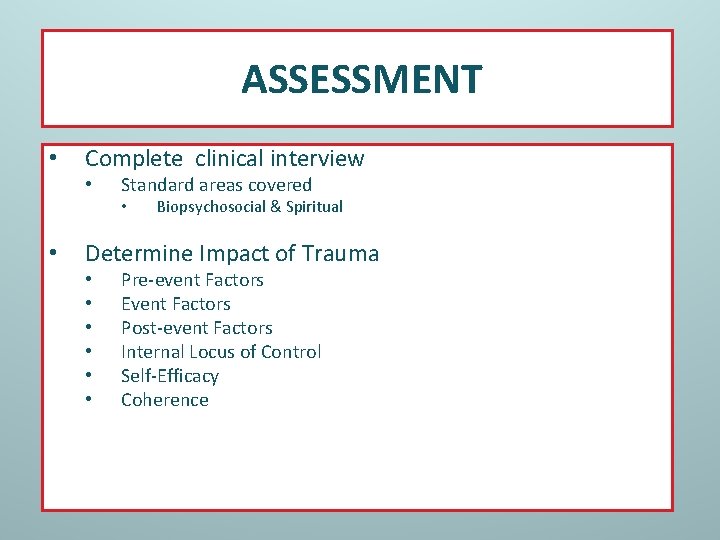
ASSESSMENT • Complete clinical interview • Standard areas covered • • Biopsychosocial & Spiritual Determine Impact of Trauma • • • Pre-event Factors Event Factors Post-event Factors Internal Locus of Control Self-Efficacy Coherence
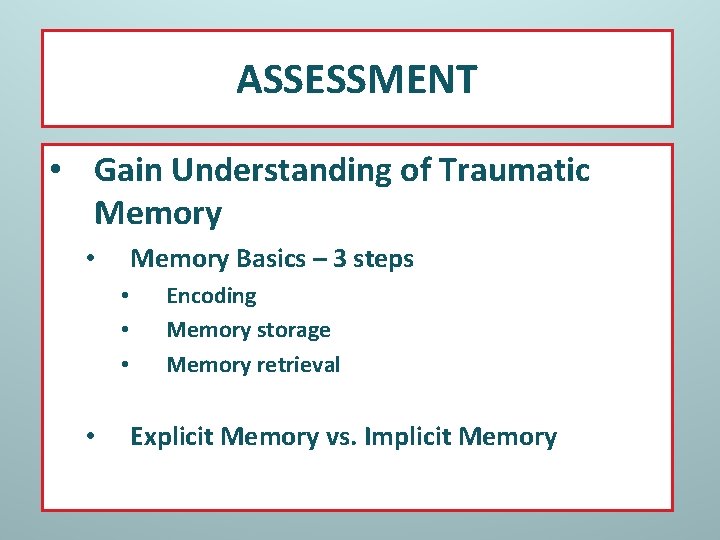
ASSESSMENT • Gain Understanding of Traumatic Memory Basics – 3 steps • • • Encoding Memory storage Memory retrieval Explicit Memory vs. Implicit Memory
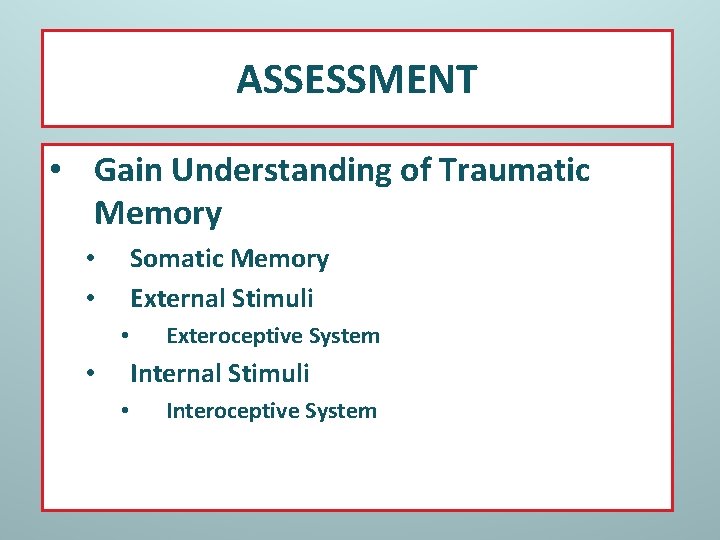
ASSESSMENT • Gain Understanding of Traumatic Memory Somatic Memory External Stimuli • • • Exteroceptive System Internal Stimuli • • Interoceptive System
ASSESSMENT • Gain Understanding of Traumatic Memory • • Assist with process of identifying/understanding triggers Flashbacks
ASSESSMENT Instruments • Trauma Symptom Inventory -2 (TSI-2) • Trauma Symptom Checklist for Children -2 (TSCC 2) • Trauma Attachment & Beliefs Scale (TABS) • PTSD – Checklist (PCL) • Clinician-Administered PTSD Scale (CAPS) • Impact of Events Scale (IES) • Clinician Administered PTSD Scale for Children and Adolescents (CAPS-CA)
ASSESSMENT INSTRUMENTS National Center for PTSD http: //www. ptsd. va. gov/professional/pages/assessment. asp • Can request – the majority are public domain (free). Must be qualified mental health professional and researcher. • Some instruments designed specifically for research purpose. While others are for clinical use
TREATMENT General Guidelines/Considerations • • • Safety Stabilization Establishing Therapeutic Relationship Mastery Working w/ Traumatic Material Individualized Resolution Avoid Retraumatization Countertransference /Transference Vicarious Traumatization
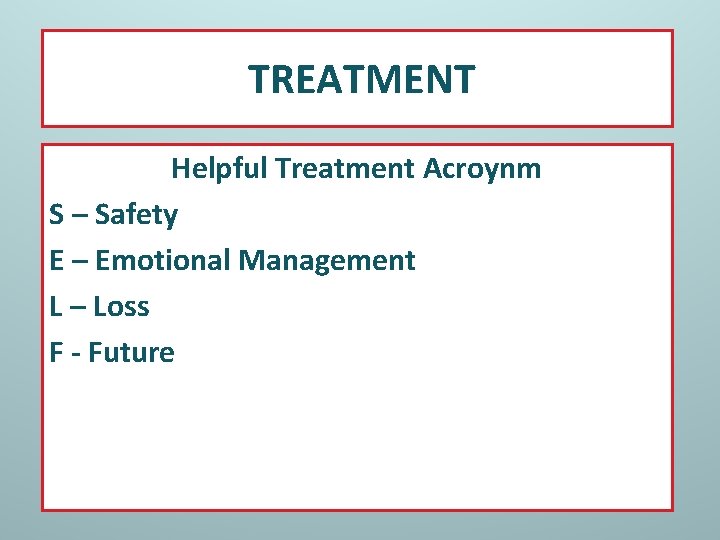
TREATMENT Helpful Treatment Acroynm S – Safety E – Emotional Management L – Loss F - Future
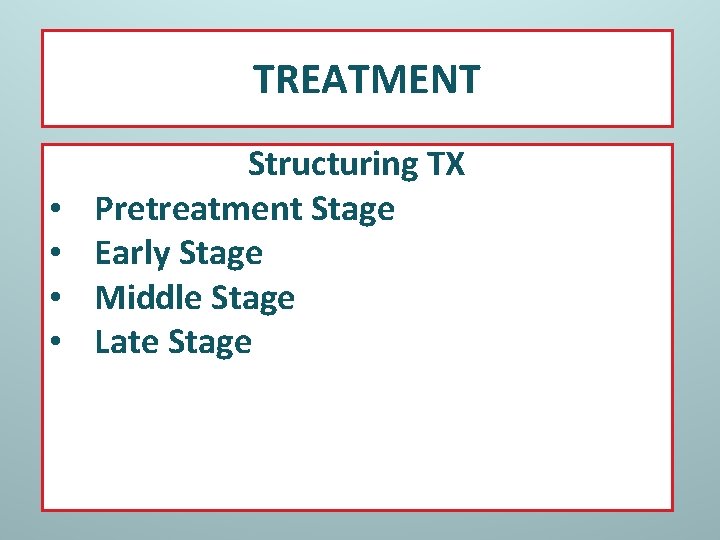
TREATMENT • • Structuring TX Pretreatment Stage Early Stage Middle Stage Late Stage
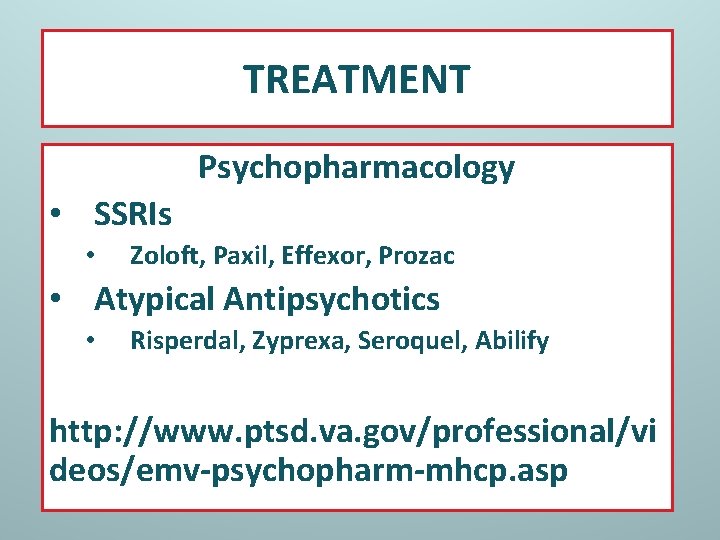
TREATMENT Psychopharmacology • SSRIs • Zoloft, Paxil, Effexor, Prozac • Atypical Antipsychotics • Risperdal, Zyprexa, Seroquel, Abilify http: //www. ptsd. va. gov/professional/vi deos/emv-psychopharm-mhcp. asp
TREATMENT Research & Effective TX’s Most studied CBT EMDR
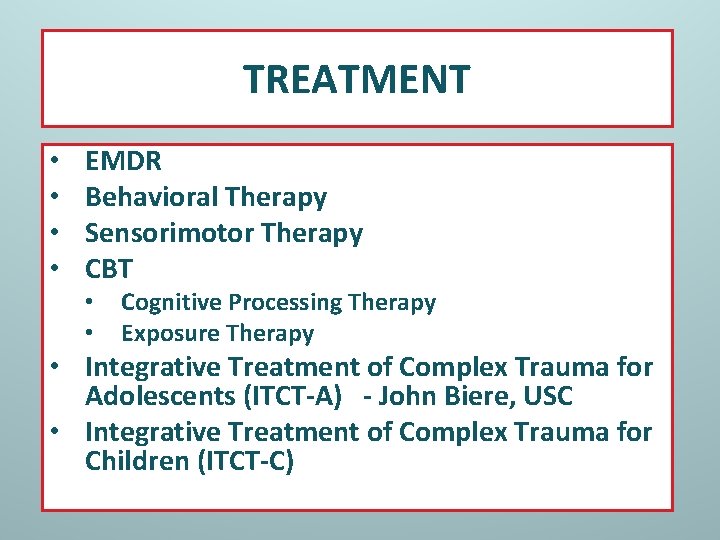
TREATMENT • • EMDR Behavioral Therapy Sensorimotor Therapy CBT • • Cognitive Processing Therapy Exposure Therapy • Integrative Treatment of Complex Trauma for Adolescents (ITCT-A) - John Biere, USC • Integrative Treatment of Complex Trauma for Children (ITCT-C)
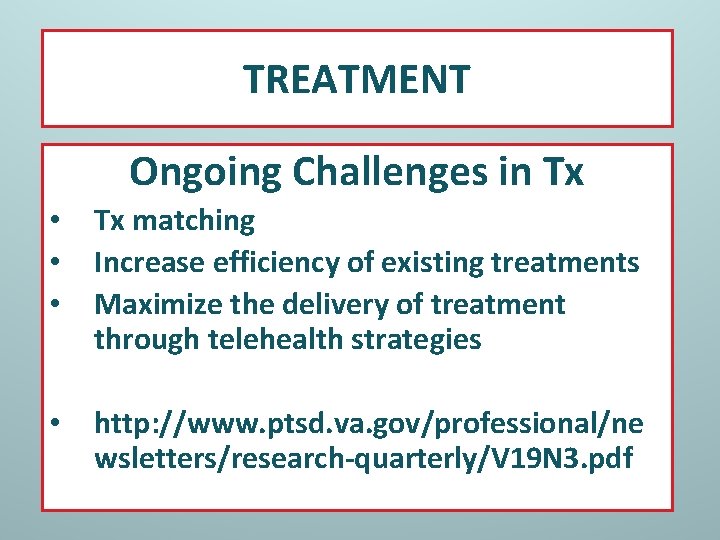
TREATMENT Ongoing Challenges in Tx • • • Tx matching Increase efficiency of existing treatments Maximize the delivery of treatment through telehealth strategies • http: //www. ptsd. va. gov/professional/ne wsletters/research-quarterly/V 19 N 3. pdf