
Clinical Applications of Spirometry for Pediatric Asthma Andi

- Slides: 56
Clinical Applications of Spirometry for Pediatric Asthma Andi Marmor, MD Assistant Clinical Professor, Pediatrics University of California, San Francisco General Hospital November 21, 2010
Goals and Objectives l l Goal: Improved comfort in performing and interpreting spirometry Objectives: l l Define FVC, FEV 1/FVC and FEF 25%-75% Recognize and describe the characteristic spirometry patterns of obstructive lung disease Interpret the results of a bronchodilator challenge Describe one way in which spirometry can impact the care of a patient with asthma
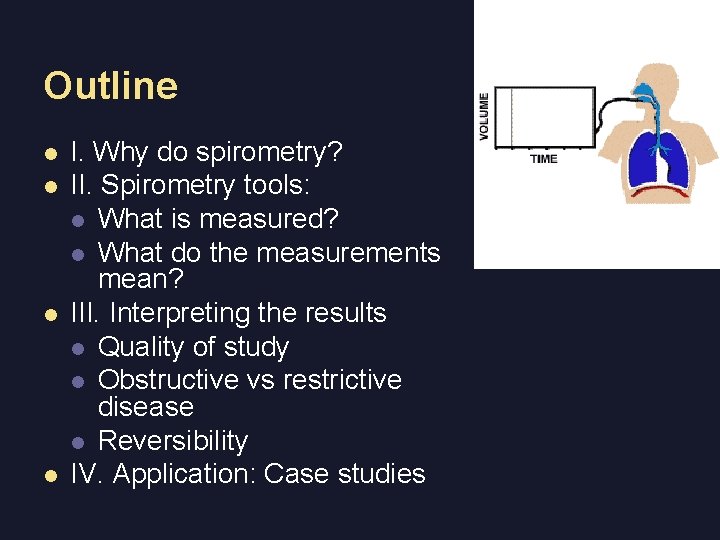
Outline l l I. Why do spirometry? II. Spirometry tools: l What is measured? l What do the measurements mean? III. Interpreting the results l Quality of study l Obstructive vs restrictive disease l Reversibility IV. Application: Case studies
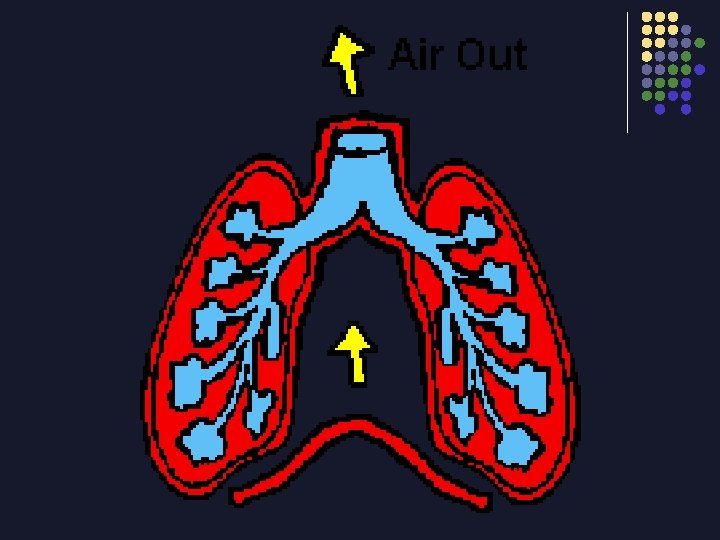
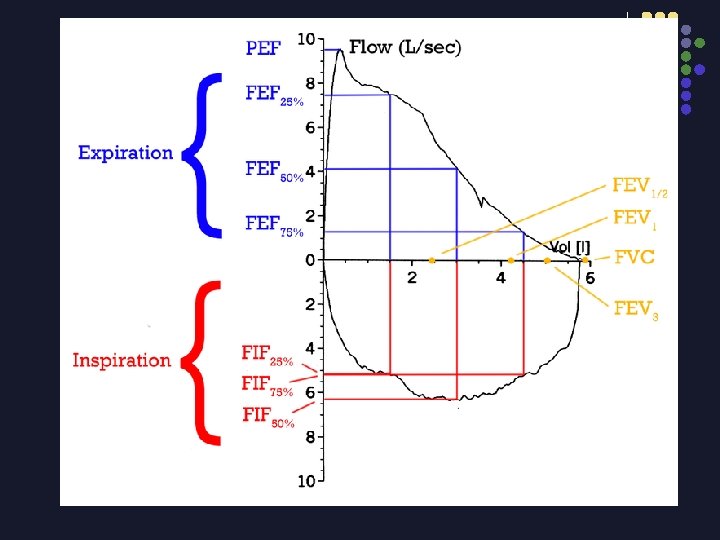
I. Why do Spirometry? l l Spirometry measures expiratory volume and airway flow during a forced expiration These numbers and the resultant expiratory flow diagram can help us estimate l l Strength and function of chest wall Lung size and compliance (“restrictive lung disease”) Airway size and patency (“obstructive lung disease” Asthma is a form of obstructive lung disease
Who Should Get Spirometry? l General indications: l l l Diagnosis of lung disease Screening for individuals at risk of lung disease Monitoring of response to treatments or exposures Preoperative assessments Disability evaluations Public health concerns
Who Should Get Spirometry? l General indications: l l l Diagnosis of lung disease Screening for individuals at risk of lung disease Monitoring of response to treatments or exposures Preoperative assessments Disability evaluations Public health concerns
Spirometry in Pediatric Asthma l For Diagnosis l l Document presence and severity of airway obstruction Demonstrate reversibility of obstruction Document reactivity of obstruction For Monitoring l l l Response to treatment Evidence of compliance Changes in disease severity over time
EPR-3 and Spirometry l l l Recommended in adults and children >5 in whom diagnosis of asthma is being considered FEV 1/FVC added to classification for asthma severity and control in children>5 and adults FEV 1 can be used to follow lung growth
When should spirometry be done for asthma patients? At the time of initial diagnosis l l l Document airflow obstruction Document reversibility When reducing the dosage of medications At least every 1 – 2 years in moderate to severe asthmatics
Who should NOT get spirometry? l Inability to tolerate test l l Symptoms such as severe cough, nausea, vertigo Risk of damage from performing test l l l Hemoptysis Pneumothorax Recent abdominal, thoracic or ocular surgery Recent MI Thoracic aneurysm
II. Tools for Interpreting Spirometry: What Are We Measuring? l l l FVC, FEV 1/FVC, FEF 25 -75% Reported as both absolute values and percent predicted “Percent predicted” l l Based on age, height Most useful in interpretation
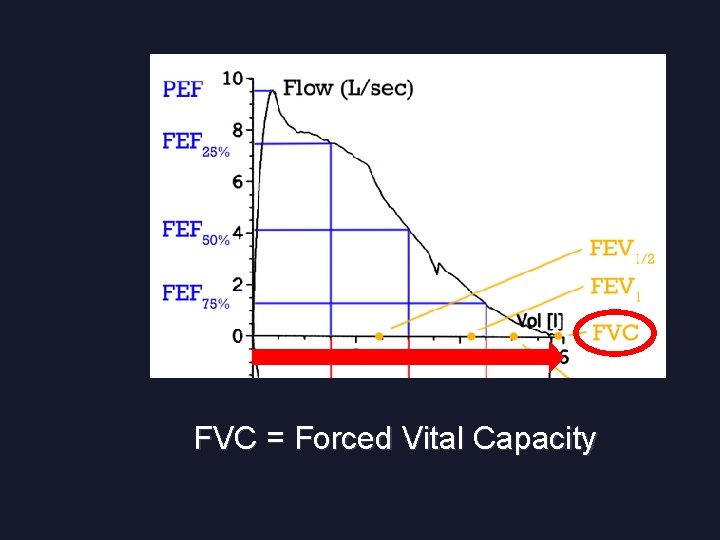
FVC = Forced Vital Capacity
FVC l l l Maximum volume expired during forced expiratory effort after maximum inhalation Normal = 80 -120% of predicted Reduced in l l l Conditions which reduce lung volumes Eg: restrictive lung disease (stiff lung, weak/stiff chest wall) or poor effort Should NOT be reduced in asthma
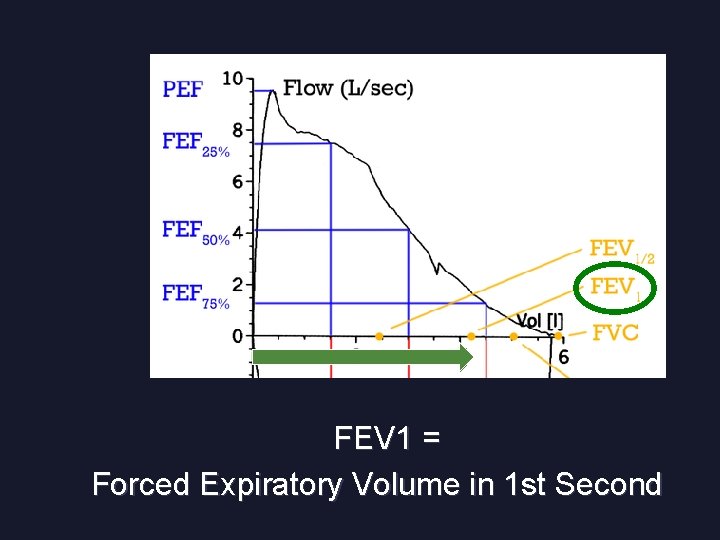
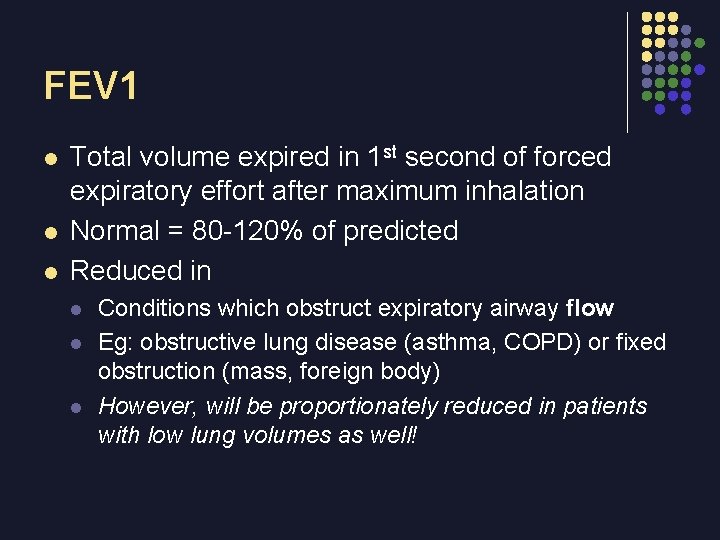
FEV 1 = Forced Expiratory Volume in 1 st Second
FEV 1 l l l Total volume expired in 1 st second of forced expiratory effort after maximum inhalation Normal = 80 -120% of predicted Reduced in l l l Conditions which obstruct expiratory airway flow Eg: obstructive lung disease (asthma, COPD) or fixed obstruction (mass, foreign body) However, will be proportionately reduced in patients with low lung volumes as well!
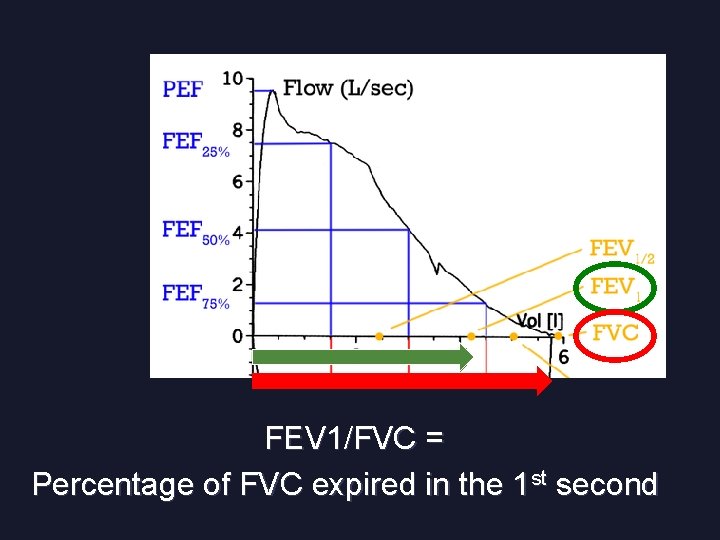
FEV 1/FVC = Percentage of FVC expired in the 1 st second
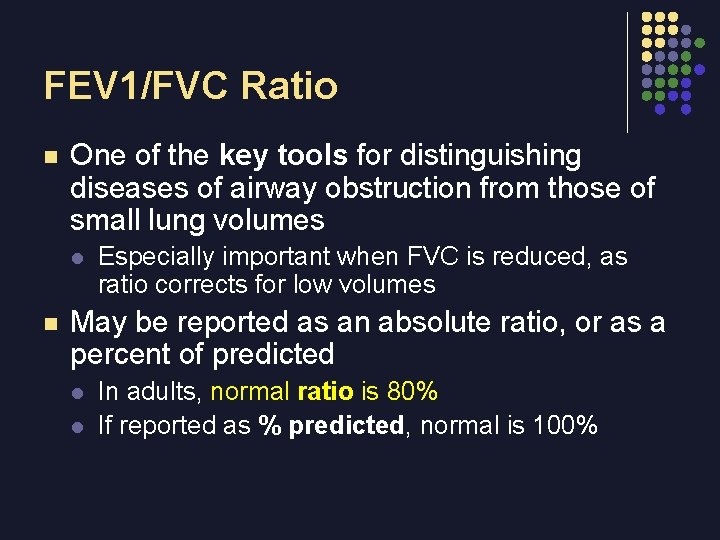
FEV 1/FVC Ratio n One of the key tools for distinguishing diseases of airway obstruction from those of small lung volumes l n Especially important when FVC is reduced, as ratio corrects for low volumes May be reported as an absolute ratio, or as a percent of predicted l l In adults, normal ratio is 80% If reported as % predicted, normal is 100%
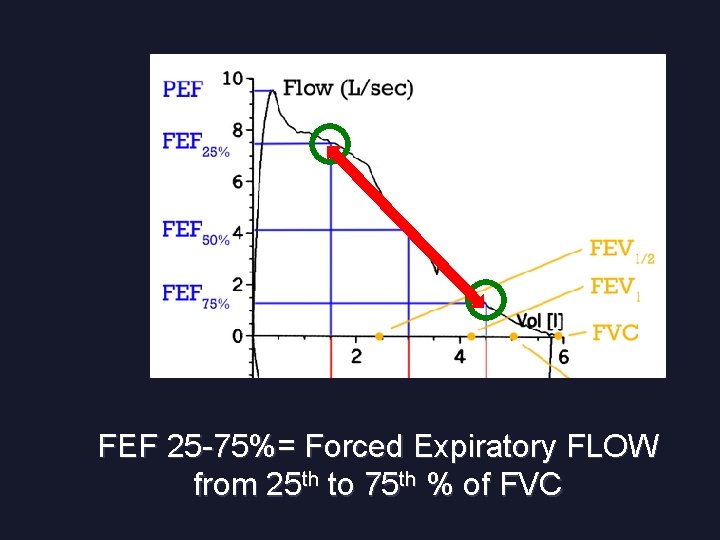
FEF 25 -75%= Forced Expiratory FLOW from 25 th to 75 th % of FVC
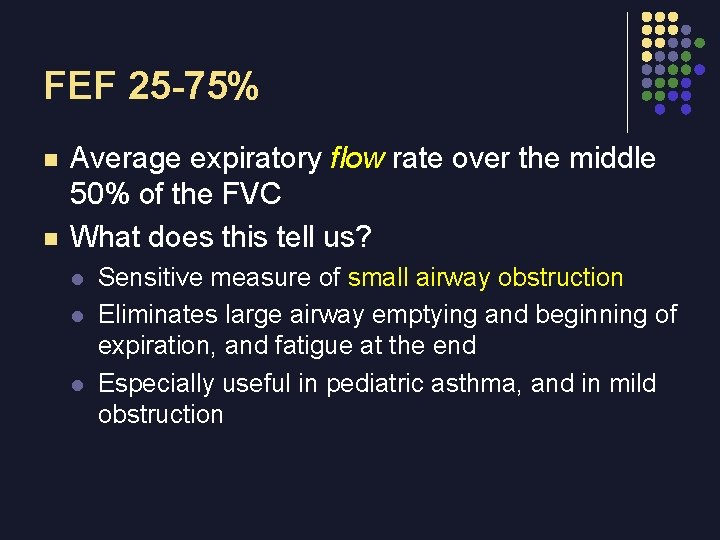
FEF 25 -75% n n Average expiratory flow rate over the middle 50% of the FVC What does this tell us? l l l Sensitive measure of small airway obstruction Eliminates large airway emptying and beginning of expiration, and fatigue at the end Especially useful in pediatric asthma, and in mild obstruction
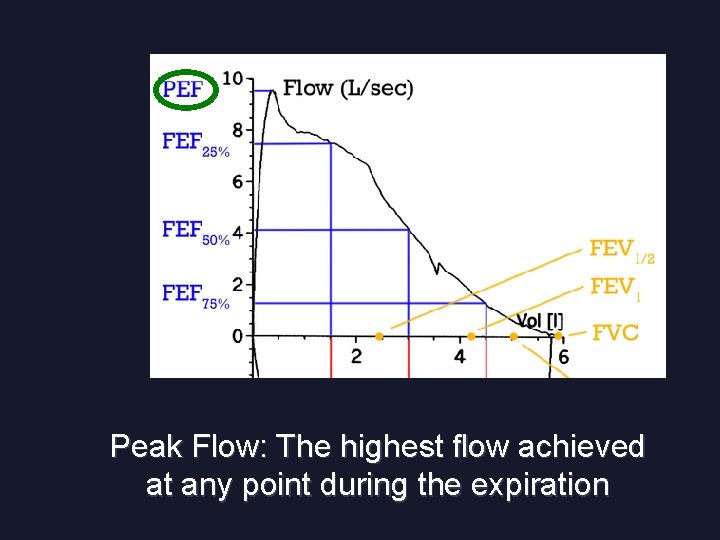
Peak Flow: The highest flow achieved at any point during the expiration
III. Interpreting Spirometry 1. 2. 3. Is the test adequate? Does this patient have restrictive or obstructive lung disease? Is the obstruction reversible?
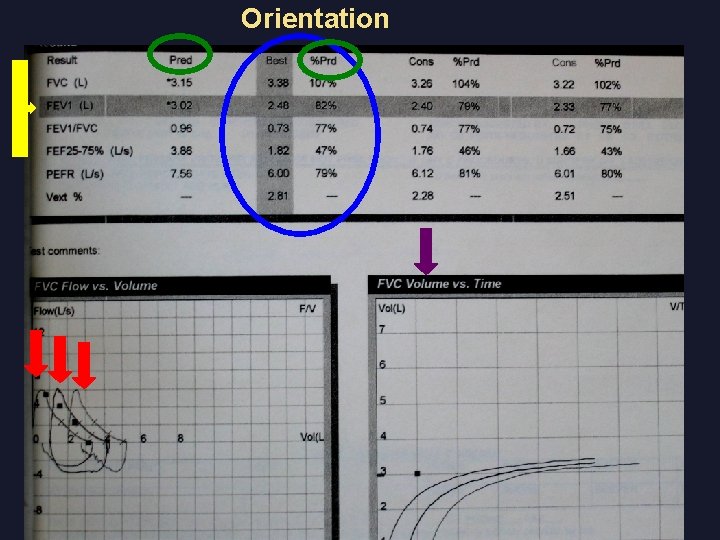
Orientation
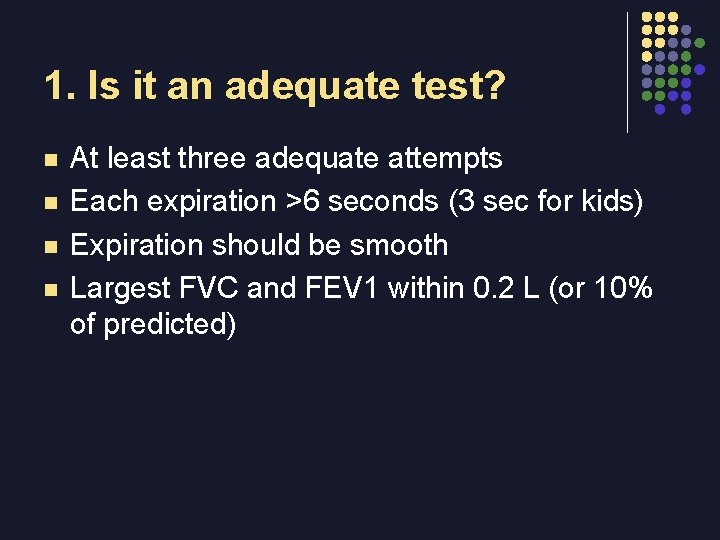
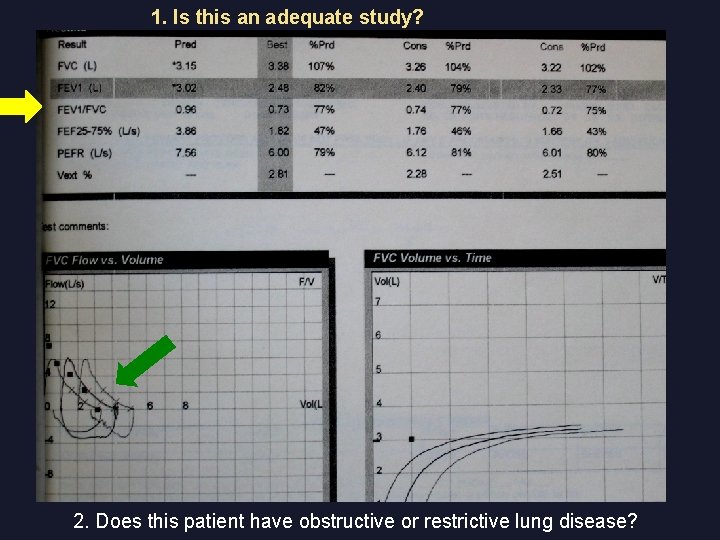
1. Is it an adequate test? n n At least three adequate attempts Each expiration >6 seconds (3 sec for kids) Expiration should be smooth Largest FVC and FEV 1 within 0. 2 L (or 10% of predicted)
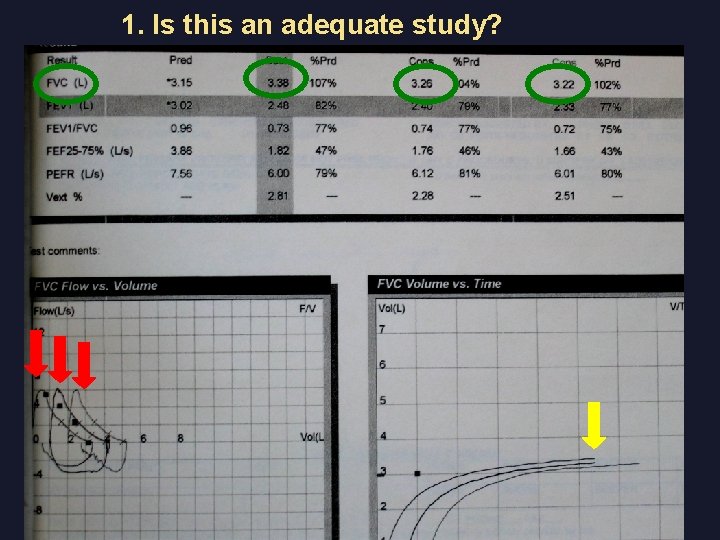
1. Is this an adequate study?
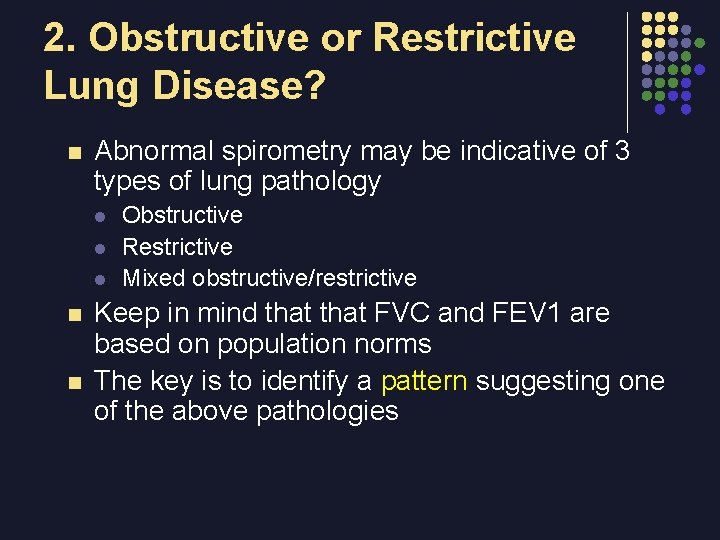
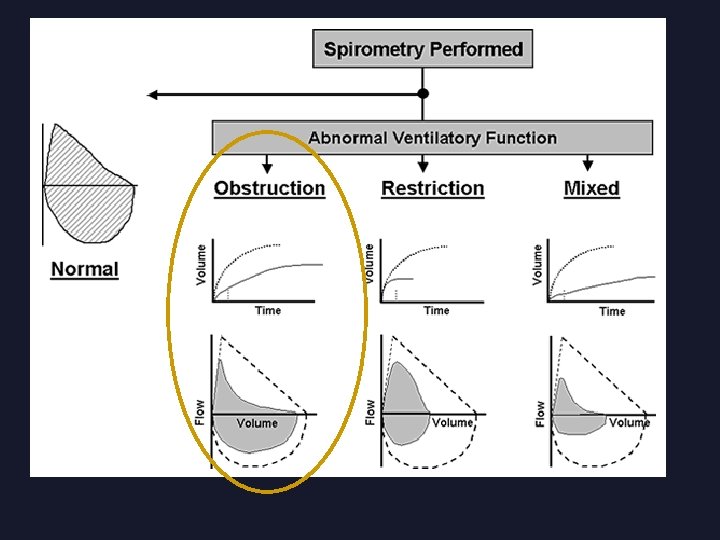
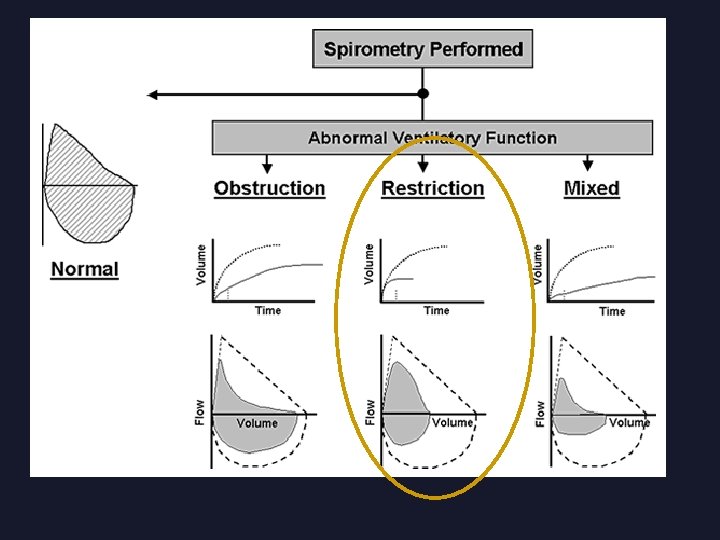
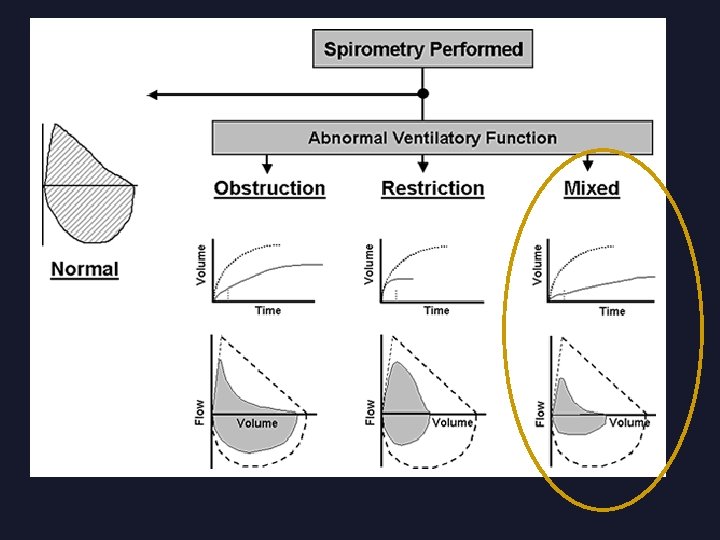
2. Obstructive or Restrictive Lung Disease? n Abnormal spirometry may be indicative of 3 types of lung pathology l l l n n Obstructive Restrictive Mixed obstructive/restrictive Keep in mind that FVC and FEV 1 are based on population norms The key is to identify a pattern suggesting one of the above pathologies
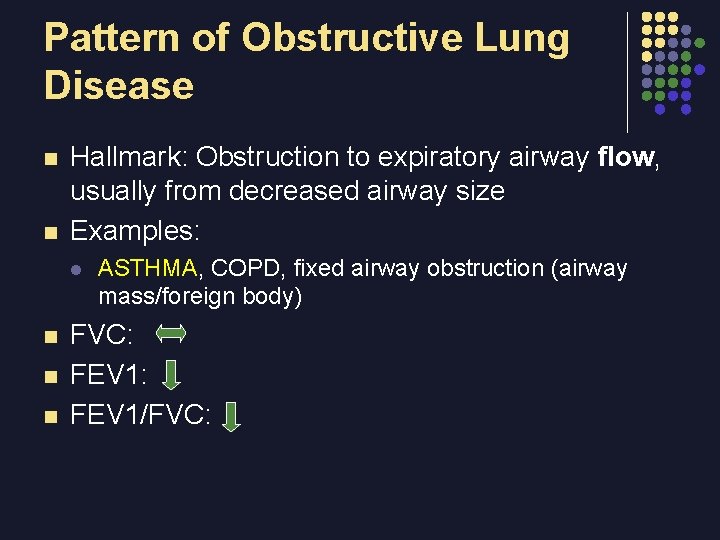
Pattern of Obstructive Lung Disease n n Hallmark: Obstruction to expiratory airway flow, usually from decreased airway size Examples: l n n n ASTHMA, COPD, fixed airway obstruction (airway mass/foreign body) FVC: FEV 1/FVC:
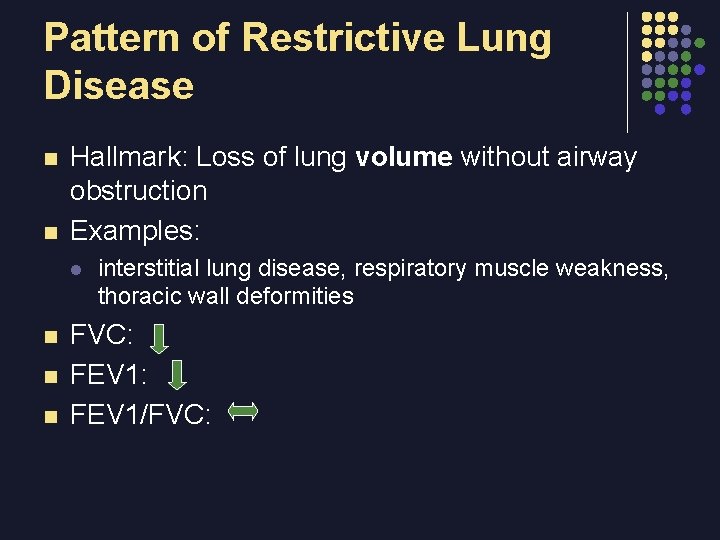
Pattern of Restrictive Lung Disease n n Hallmark: Loss of lung volume without airway obstruction Examples: l n n n interstitial lung disease, respiratory muscle weakness, thoracic wall deformities FVC: FEV 1/FVC:
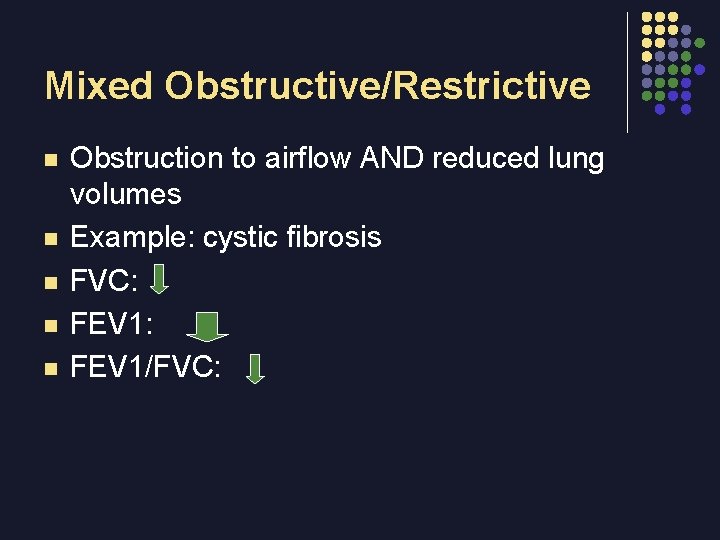
Mixed Obstructive/Restrictive n n n Obstruction to airflow AND reduced lung volumes Example: cystic fibrosis FVC: FEV 1/FVC:
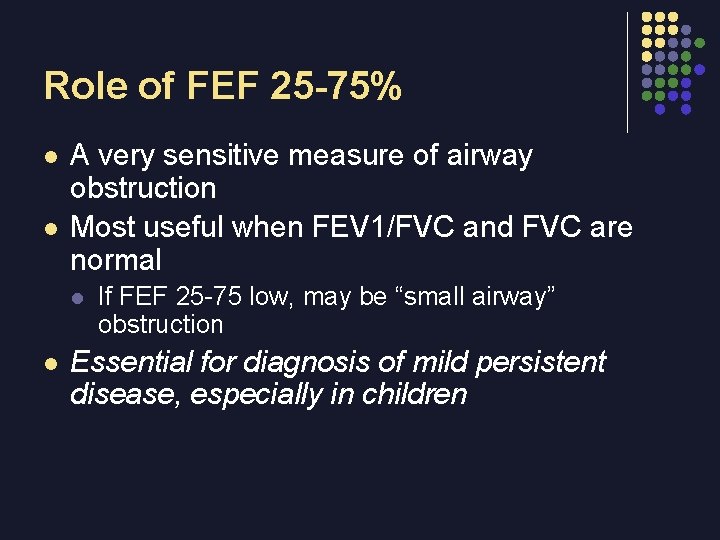
Role of FEF 25 -75% l l A very sensitive measure of airway obstruction Most useful when FEV 1/FVC and FVC are normal l l If FEF 25 -75 low, may be “small airway” obstruction Essential for diagnosis of mild persistent disease, especially in children
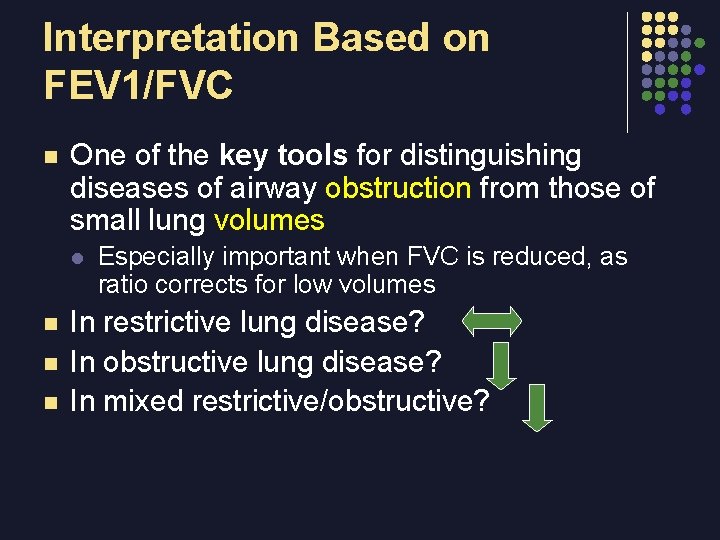
Interpretation Based on FEV 1/FVC n One of the key tools for distinguishing diseases of airway obstruction from those of small lung volumes l n n n Especially important when FVC is reduced, as ratio corrects for low volumes In restrictive lung disease? In obstructive lung disease? In mixed restrictive/obstructive?
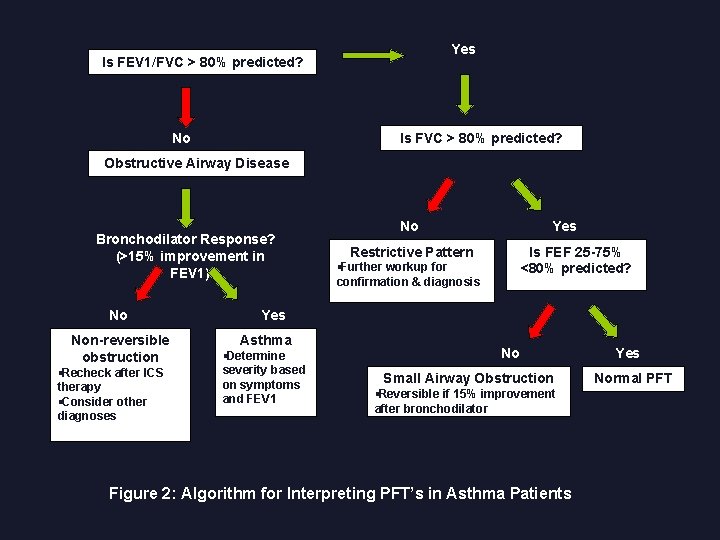
Yes Is FEV 1/FVC > 80% predicted? No Is FVC > 80% predicted? Obstructive Airway Disease Bronchodilator Response? (>15% improvement in FEV 1) No Non-reversible obstruction ▪Recheck after ICS therapy ▪Consider other diagnoses No Yes Restrictive Pattern Is FEF 25 -75% <80% predicted? ▪Further workup for confirmation & diagnosis Yes Asthma ▪Determine severity based on symptoms and FEV 1 No Small Airway Obstruction ▪Reversible if 15% improvement after bronchodilator Figure 2: Algorithm for Interpreting PFT’s in Asthma Patients Yes Normal PFT
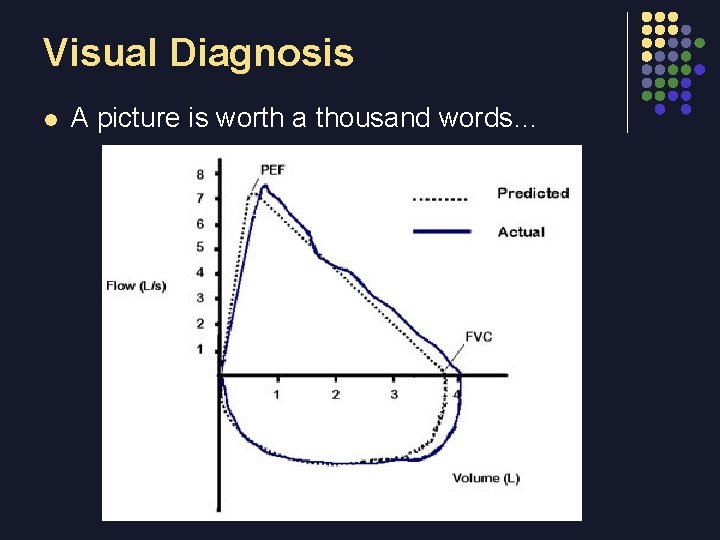
Visual Diagnosis l A picture is worth a thousand words…
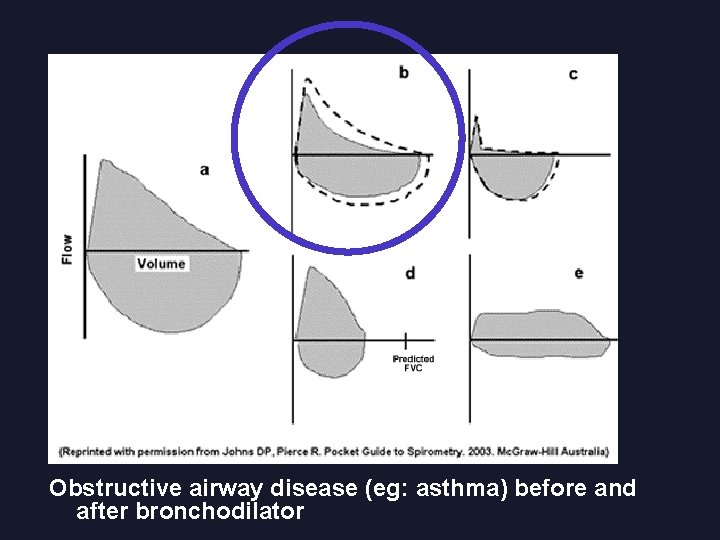
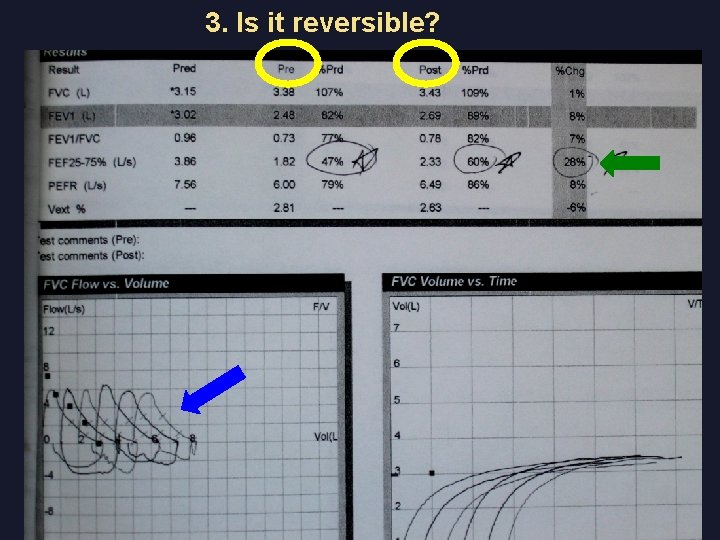
3. Reversibility n n Obstructive airway disease + reversibility = asthma Absence of reversibility DOES NOT rule out asthma l Recheck after 1 -3 months of inhaled corticosteroid
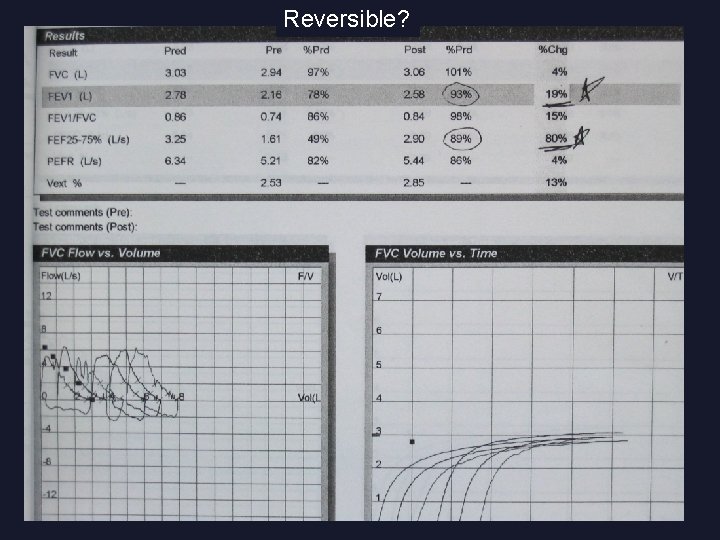
Bronchodilator challenge l Inhaled albuterol or levalbuterol l Patient has not had BD for 24 hours Perform spirometry 15 -20 minutes after BD Positive if l l 15% increase in FEV 1 OR 15% increase in FEF 25 -75%
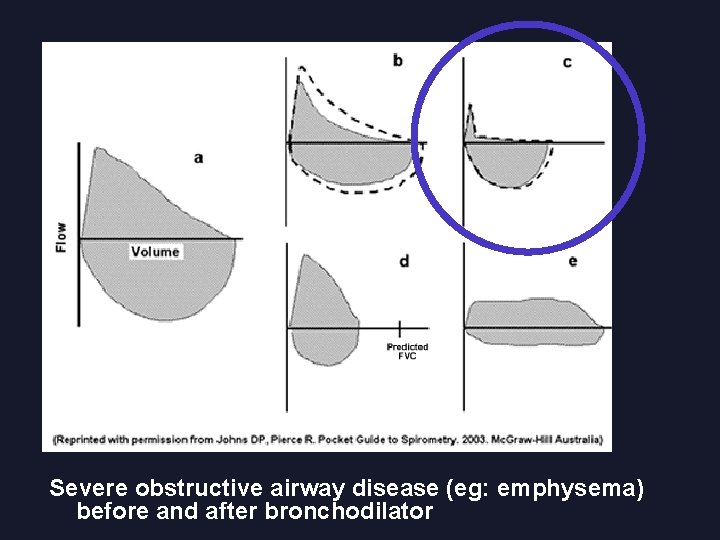
Obstructive airway disease (eg: asthma) before and after bronchodilator
Severe obstructive airway disease (eg: emphysema) before and after bronchodilator
IV. Case Studies n n Is the study adequate? Is there evidence of obstructive, restrictive lung disease or both? What is the response to bronchodilator? What has spirometry added to our understanding and management of the patient?
Case Study 1: DB l l l 16 yo girl with a long history of poorly controlled asthma At her first visit, she reports no daytime or nighttime symptoms She is on no daily meds for her asthma, and reports infrequent use of albuterol
1. Is this an adequate study? 2. Does this patient have obstructive or restrictive lung disease?
3. Is it reversible?
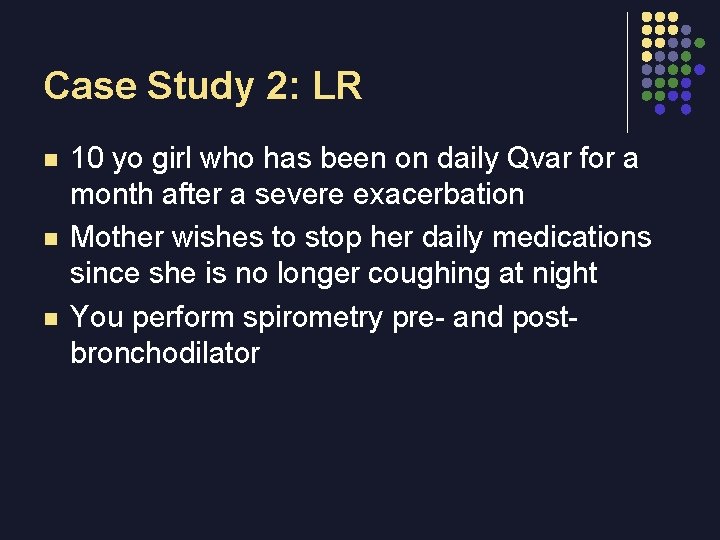
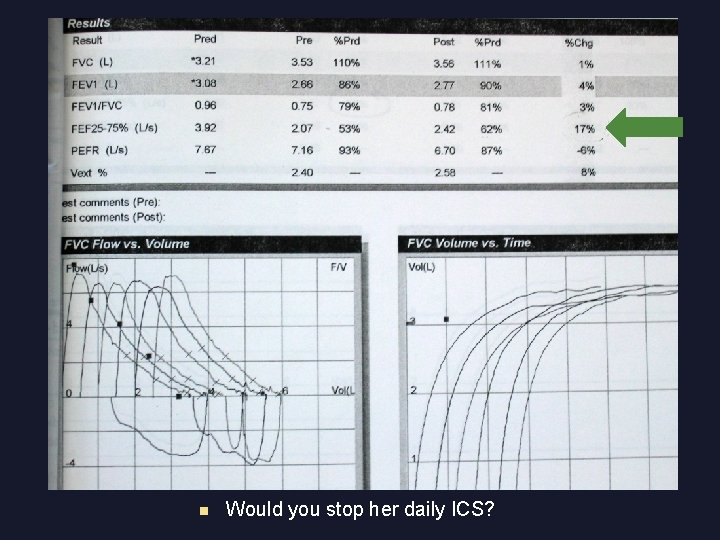
Case Study 2: LR n n n 10 yo girl who has been on daily Qvar for a month after a severe exacerbation Mother wishes to stop her daily medications since she is no longer coughing at night You perform spirometry pre- and postbronchodilator
n Would you stop her daily ICS?
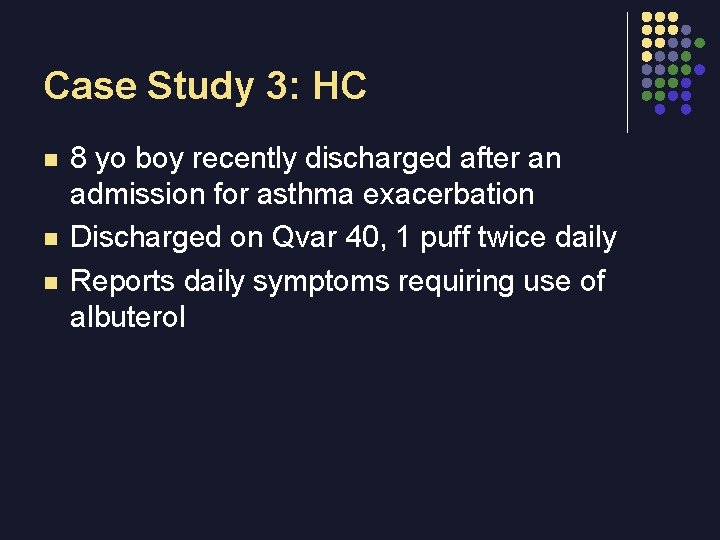
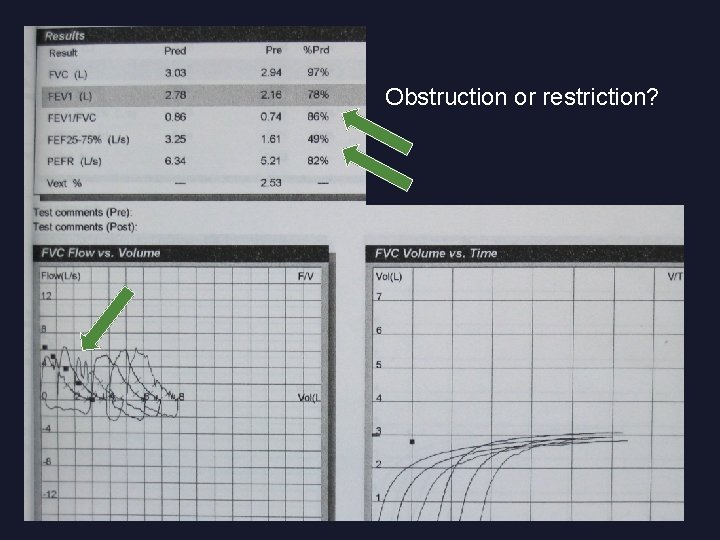
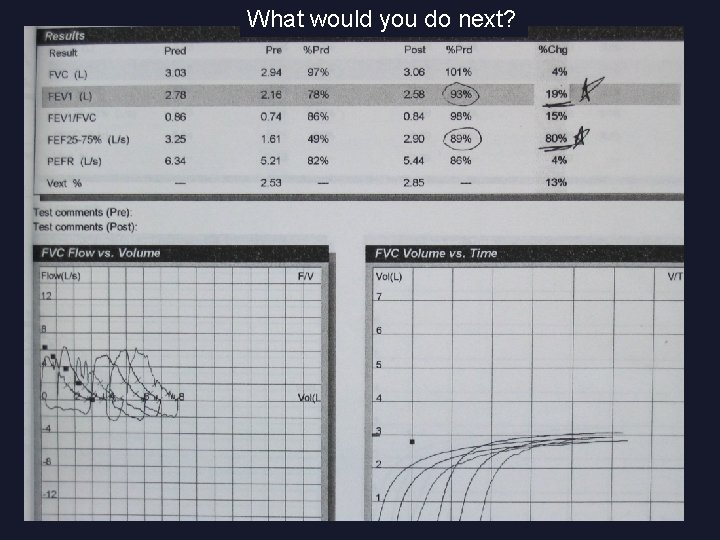
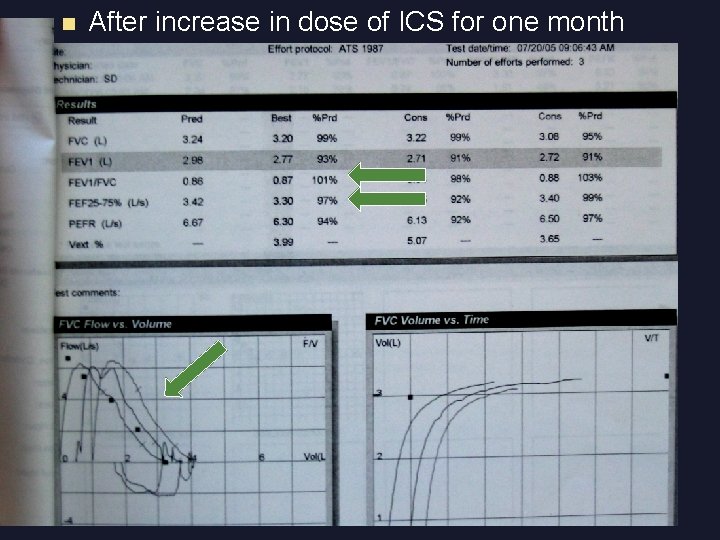
Case Study 3: HC n n n 8 yo boy recently discharged after an admission for asthma exacerbation Discharged on Qvar 40, 1 puff twice daily Reports daily symptoms requiring use of albuterol
Obstruction or restriction?
Reversible?
What would you do next?
n After increase in dose of ICS for one month
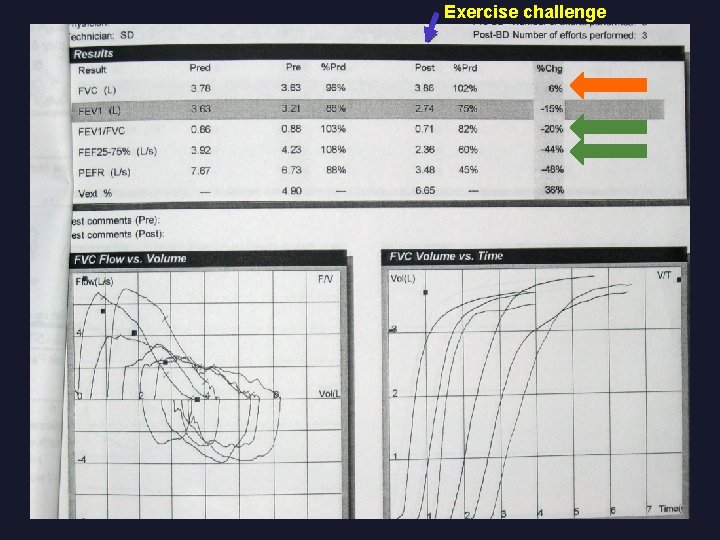
Case Study 4: GV l l l 16 yo girl whose symptoms of cough and shortness of breath are isolated to exercise She wishes to play on the soccer team, but feels that she is too “out of shape” to play Unclear if symptoms are due to asthma or poor conditioning
Exercise challenge
Review of Key Points l l Ensure an adequate study Look at FEV 1/FVC ratio and FVC and to determine if obstructive or restrictive disease is present l l FEF 25 -75% useful in cases of mild obstruction Reversibility confirms asthma
Thank you!