
Clinical applications of laser in periodontology b Gingivoplasty
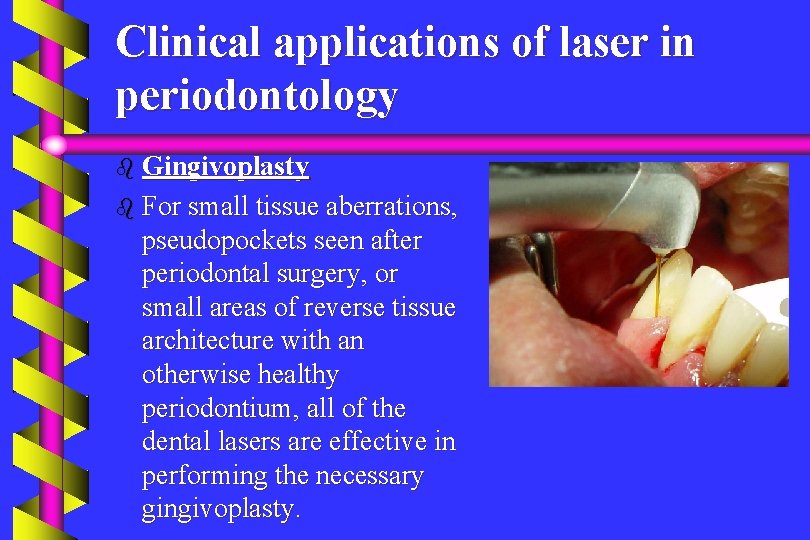
Clinical applications of laser in periodontology b Gingivoplasty b For small tissue aberrations, pseudopockets seen after periodontal surgery, or small areas of reverse tissue architecture with an otherwise healthy periodontium, all of the dental lasers are effective in performing the necessary gingivoplasty.
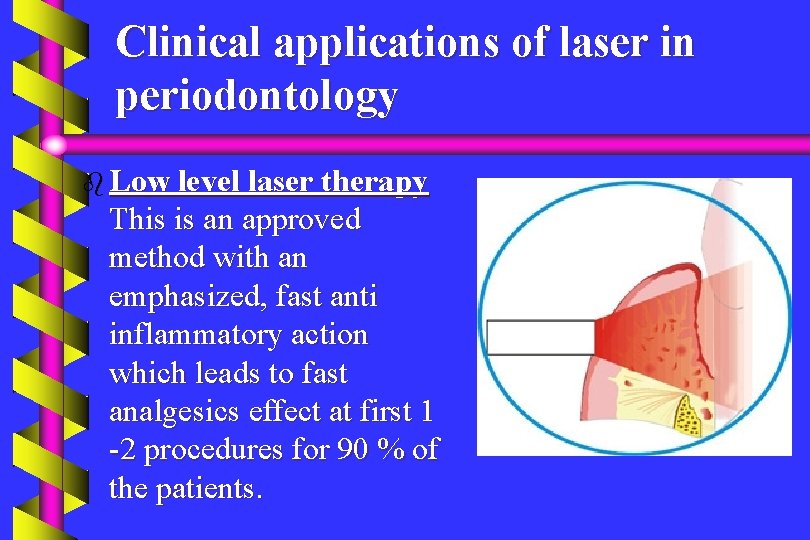
Clinical applications of laser in periodontology b Low level laser therapy This is an approved method with an emphasized, fast anti inflammatory action which leads to fast analgesics effect at first 1 -2 procedures for 90 % of the patients.
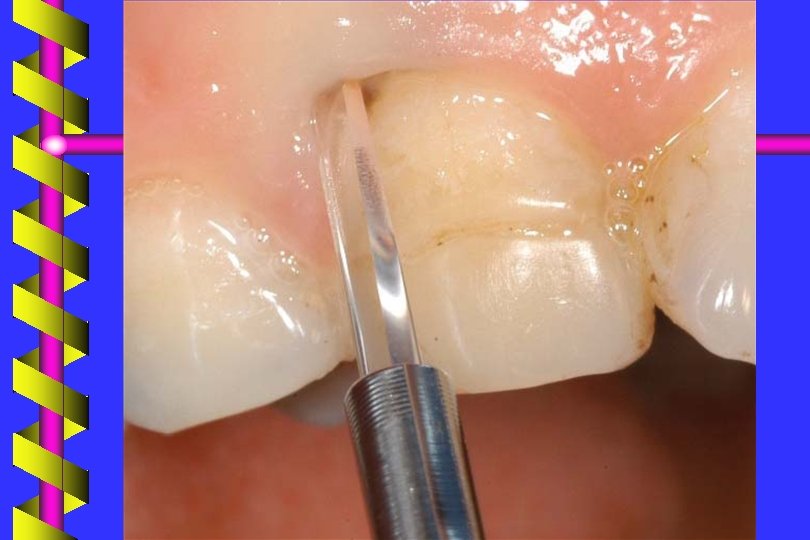
Laser-assisted new attachment procedure (LANAP) LANAP is a step-by-step procedure developed within a practice setting specifically for treating moderate to advanced periodontitis.

Laser-assisted new attachment procedure (LANAP) A. Perio probe indicates excessive pocket depth.

Laser-assisted new attachment procedure (LANAP) B. Laser light removes bacteria and diseased tissue.

Laser-assisted new attachment procedure (LANAP) C. Ultrasonic scaler and special hand instruments are used to remove root surface calculus.
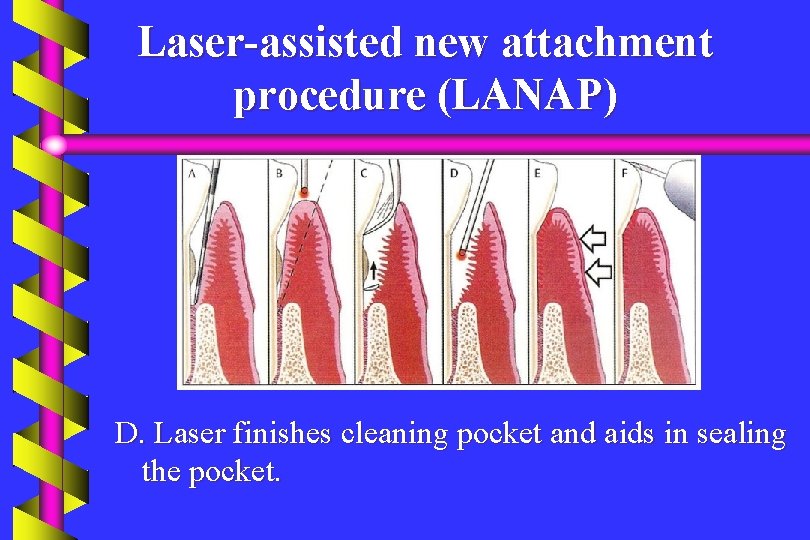
Laser-assisted new attachment procedure (LANAP) D. Laser finishes cleaning pocket and aids in sealing the pocket.
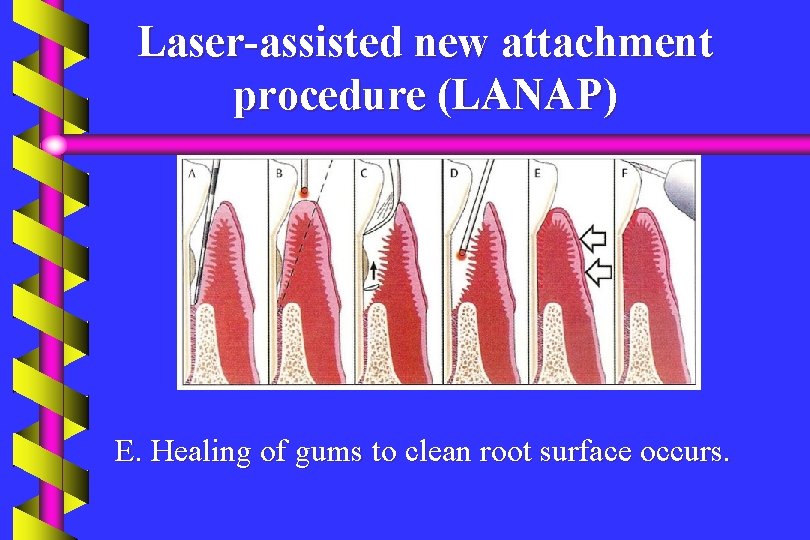
Laser-assisted new attachment procedure (LANAP) E. Healing of gums to clean root surface occurs.
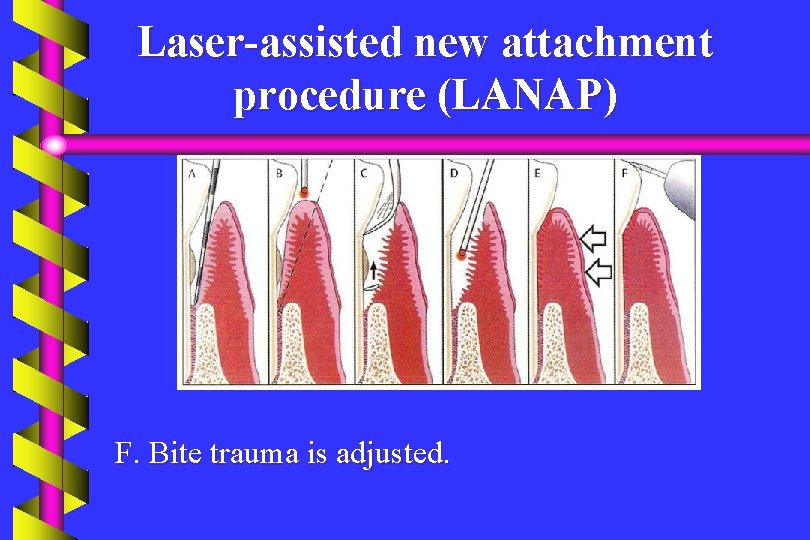
Laser-assisted new attachment procedure (LANAP) F. Bite trauma is adjusted.
The advantages of laser in periodontal surgery 1. 2. 3. 4. 5. 6. 7. Less bleeding during the procedure. Surgical site sterilization. Less post-operative swelling and pain. More effective bone cleaning. Faster completion of the surgical procedure. No rotary tool vibrations (patient comfort). Working in non-contact mode enables constant rinsing of the bone.
Disadvantages 1. 2. 3. Require precautions to be taken during clinical application. Cost. Size of laser device.
- Slides: 12