
Clinical Application of the Diaphragmatic Breathing Pacemaker Using
Clinical Application of the Diaphragmatic Breathing Pacemaker Using Transcutaneous Energy Transmission Hyun Seok Moon, Hoon Ki Lee and Hee Chan Kim Medical Electronics Laboratory Department of Biomedical Engineering Seoul National University, Seoul, Korea
CONTENTS • Introduction • System Description • Results – In Vitro, In Vivo, and Clinical • Conclusion & Discussion 2
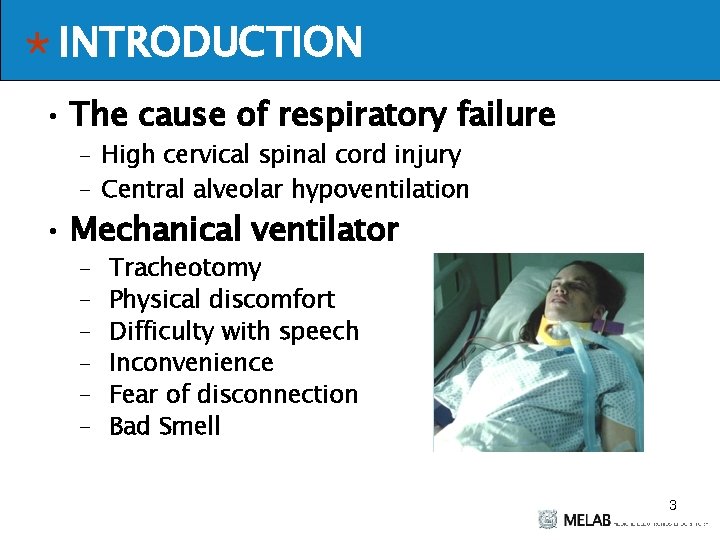
INTRODUCTION • The cause of respiratory failure – High cervical spinal cord injury – Central alveolar hypoventilation • Mechanical ventilator – – – Tracheotomy Physical discomfort Difficulty with speech Inconvenience Fear of disconnection Bad Smell 3

INTRODUCTION • Breathing pacemaker – Neuromuscular control dysfunction – Applied to more than 1200 patients (worldwide) – Phrenic nerve vs nerve motor point stimulation Avery Mark IV (Avery Lab. , USA) Atrostim system (Atrotech Ltd, Finland) Phrenic Nerve Motor Point Stimulator (Seoul National University)
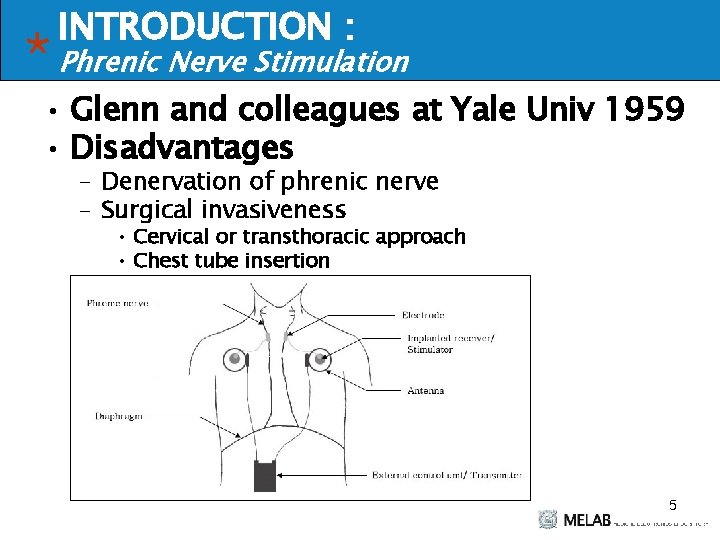
INTRODUCTION : Phrenic Nerve Stimulation • Glenn and colleagues at Yale Univ 1959 • Disadvantages – Denervation of phrenic nerve – Surgical invasiveness • Cervical or transthoracic approach • Chest tube insertion 5

INTRODUCTION : Phrenic Nerve motor Point Stimulation • Schmitt BD and collegue in 1998 • Advantages – Minimize nerve damage : no direct contact – Less invasive : laparoscopic placement 6
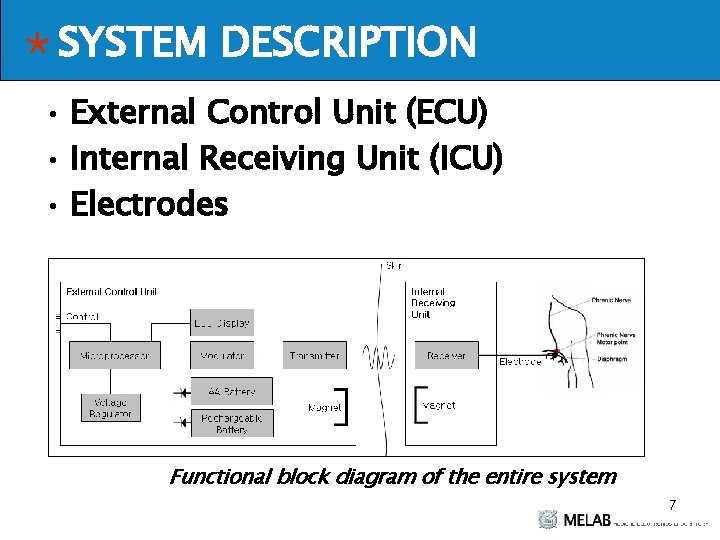
SYSTEM DESCRIPTION • External Control Unit (ECU) • Internal Receiving Unit (ICU) • Electrodes Functional block diagram of the entire system 7
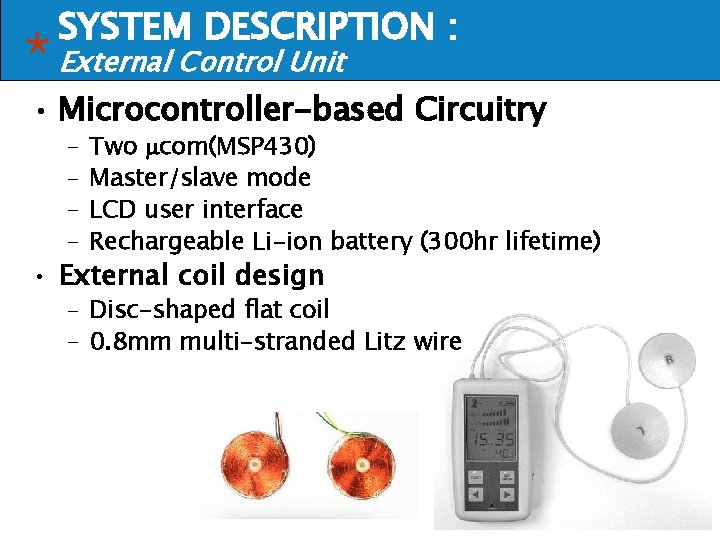
SYSTEM DESCRIPTION : External Control Unit • Microcontroller-based Circuitry – – Two com(MSP 430) Master/slave mode LCD user interface Rechargeable Li-ion battery (300 hr lifetime) • External coil design – Disc-shaped flat coil – 0. 8 mm multi-stranded Litz wire 8

SYSTEM DESCRIPTION : Internal Receiving Unit • Demodulation Circuitry – Passive elements only • Internal coil design – PCB-based copper patterned coil • Biocompatible Packaging – Silicone/PEEK 9
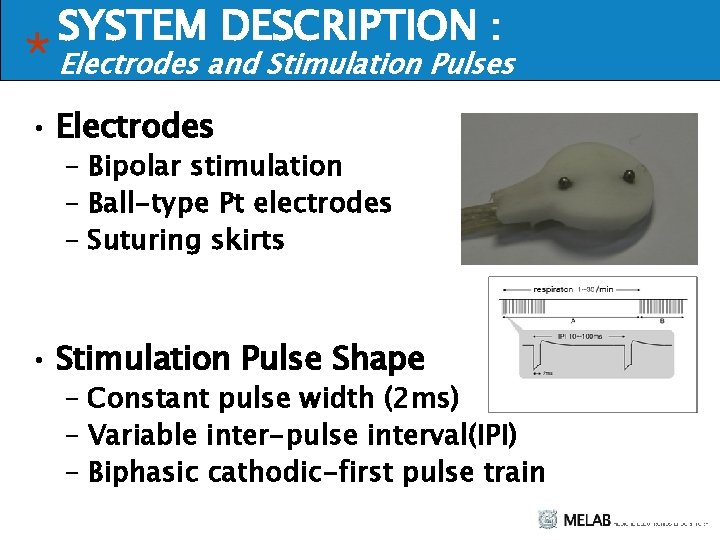
SYSTEM DESCRIPTION : Electrodes and Stimulation Pulses • Electrodes – Bipolar stimulation – Ball-type Pt electrodes – Suturing skirts • Stimulation Pulse Shape – Constant pulse width (2 ms) – Variable inter-pulse interval(IPI) – Biphasic cathodic-first pulse train
IN-VITRO TEST : Safety Tests • Electrical / Mechanical safety – Power input / Packaging / Leakage current / – Mechanical strength / Overheat … • Electromagnetic wave safety • Biological safety – Maximization sensitization / Intracutaneous reactivity / Cytotoxicity / – Implantation / Ames / Sterility … • Effluent test • EO gas residue 11
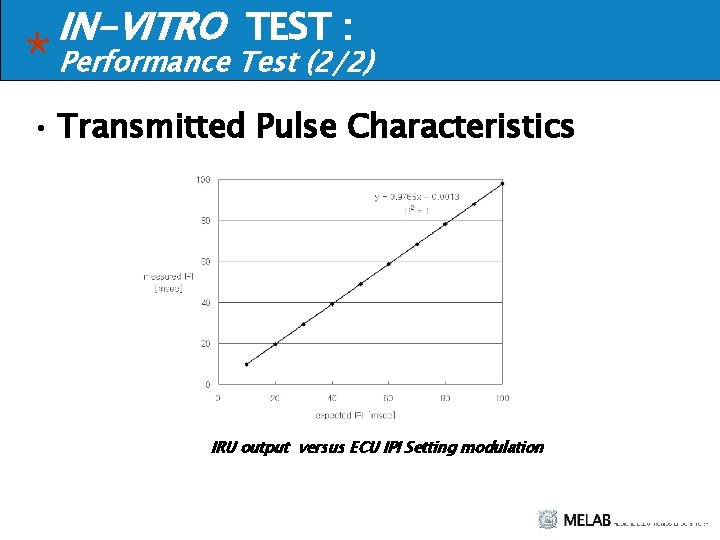
IN-VITRO TEST : Performance Test (2/2) • Transmitted Pulse Characteristics IRU output versus ECU IPI Setting modulation
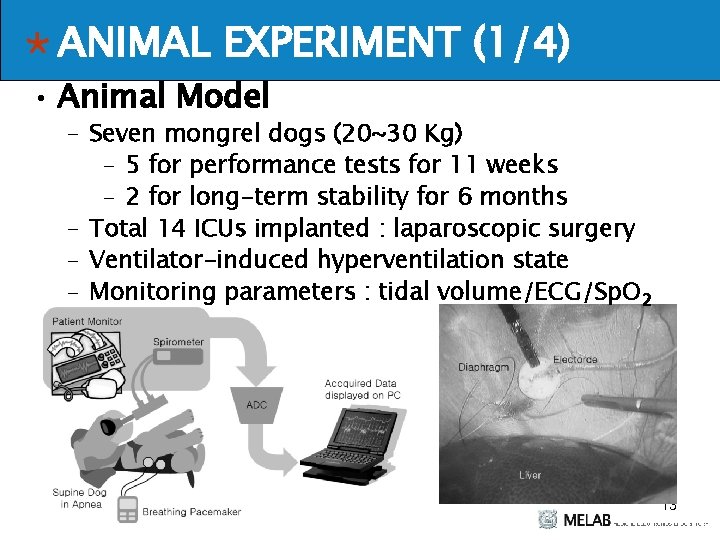
ANIMAL EXPERIMENT (1/4) • Animal Model – Seven mongrel dogs (20~30 Kg) – 5 for performance tests for 11 weeks – 2 for long-term stability for 6 months – Total 14 ICUs implanted : laparoscopic surgery – Ventilator-induced hyperventilation state – Monitoring parameters : tidal volume/ECG/Sp. O 2 13
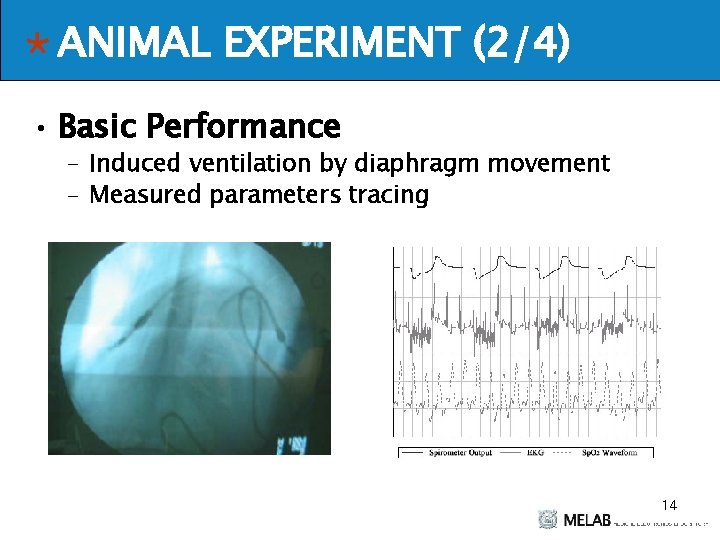
ANIMAL EXPERIMENT (2/4) • Basic Performance – Induced ventilation by diaphragm movement – Measured parameters tracing 14
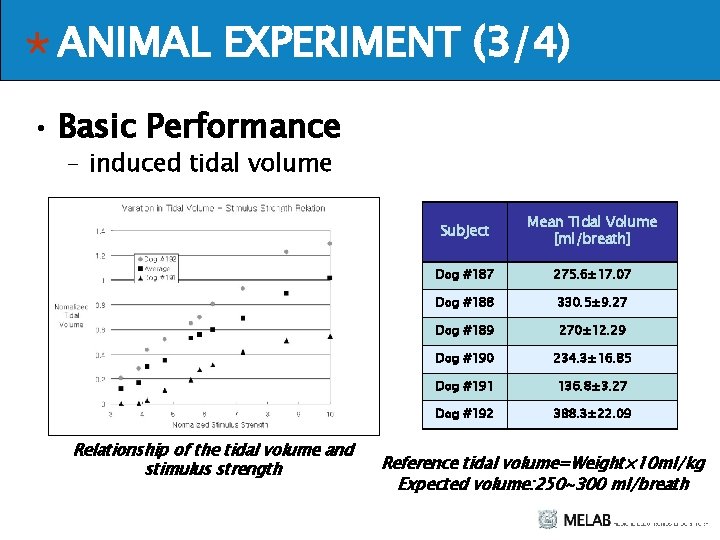
ANIMAL EXPERIMENT (3/4) • Basic Performance – induced tidal volume Relationship of the tidal volume and stimulus strength Subject Mean Tidal Volume [ml/breath] Dog #187 275. 6± 17. 07 Dog #188 330. 5± 9. 27 Dog #189 270± 12. 29 Dog #190 234. 3± 16. 85 Dog #191 136. 8± 3. 27 Dog #192 388. 3± 22. 09 Reference tidal volume=Weight× 10 ml/kg Expected volume: 250~300 ml/breath
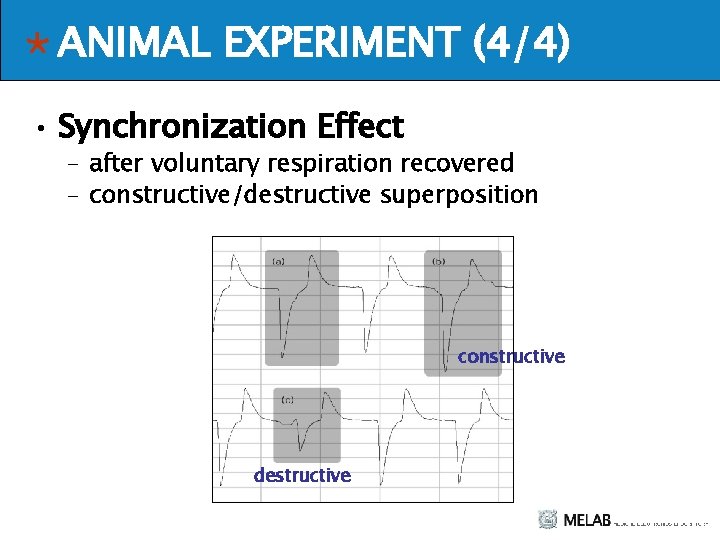
ANIMAL EXPERIMENT (4/4) • Synchronization Effect – after voluntary respiration recovered – constructive/destructive superposition constructive destructive
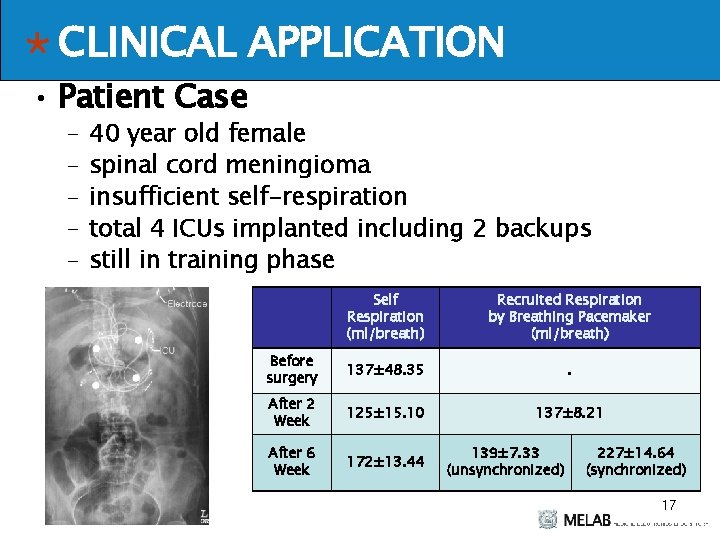
CLINICAL APPLICATION • Patient Case – – – 40 year old female spinal cord meningioma insufficient self-respiration total 4 ICUs implanted including 2 backups still in training phase Self Respiration (ml/breath) Recruited Respiration by Breathing Pacemaker (ml/breath) Before surgery 137± 48. 35 . After 2 Week 125± 15. 10 137± 8. 21 After 6 Week 172± 13. 44 139± 7. 33 (unsynchronized) 227± 14. 64 (synchronized) 17
DISCUSSIONS & CONCLUSIONS • Diaphragmatic breathing pacemaker – Phrenic nerve motor point stimulation – Tether-free system using TET – Copper-patterned, thin & flat internal coil on PCB • Animal Experiment – Almost complete diaphragm activation achieved • Clinical Application – Reducing ventilator-dependent time – Still in progress • Future Works – Detection of self respiration for synchronization – Electrode reshape for easier implantation – Coil optimization for size & efficiency 18

Thank You! 19
- Slides: 19