
Clinical Analysis of Adverse Drug Reactions Karim Anton

- Slides: 46
Clinical Analysis of Adverse Drug Reactions Karim Anton Calis, Pharm. D. , M. P. H. National Institutes of Health
Objectives Define adverse drug reactions Discuss epidemiology and classification of ADRs Describe basic methods to detect, evaluate, and document ADRs
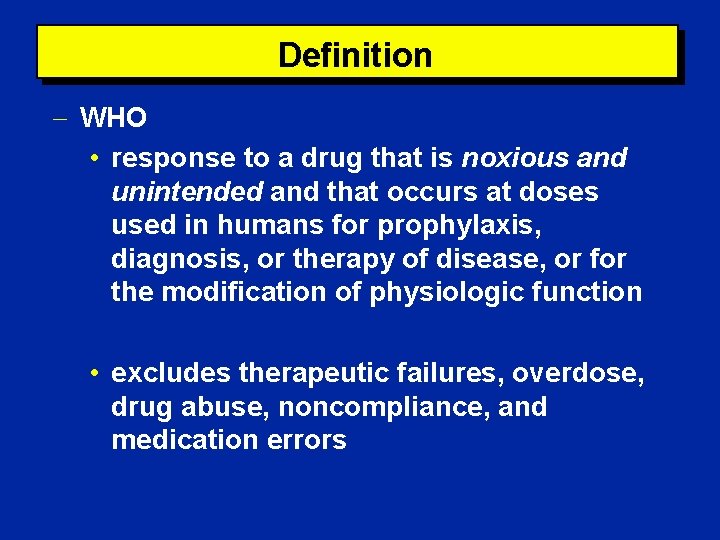
Definition WHO • response to a drug that is noxious and unintended and that occurs at doses used in humans for prophylaxis, diagnosis, or therapy of disease, or for the modification of physiologic function • excludes therapeutic failures, overdose, drug abuse, noncompliance, and medication errors
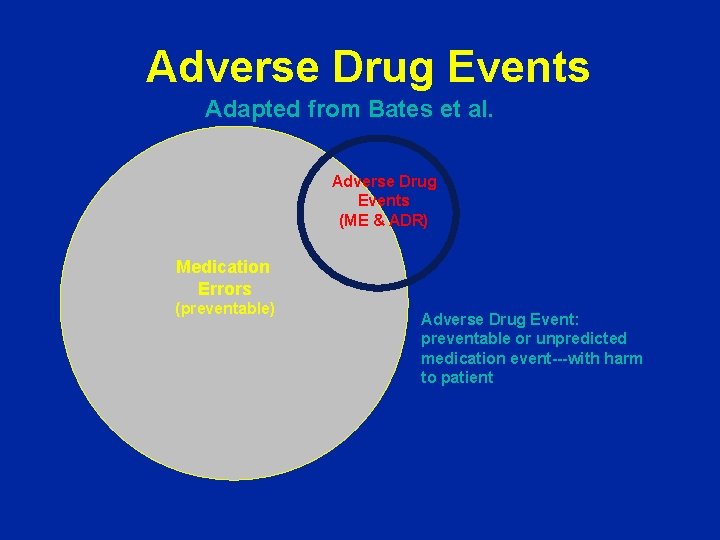
Adverse Drug Events Adapted from Bates et al. Adverse Drug Events (ME & ADR) Medication Errors (preventable) Adverse Drug Event: preventable or unpredicted medication event---with harm to patient
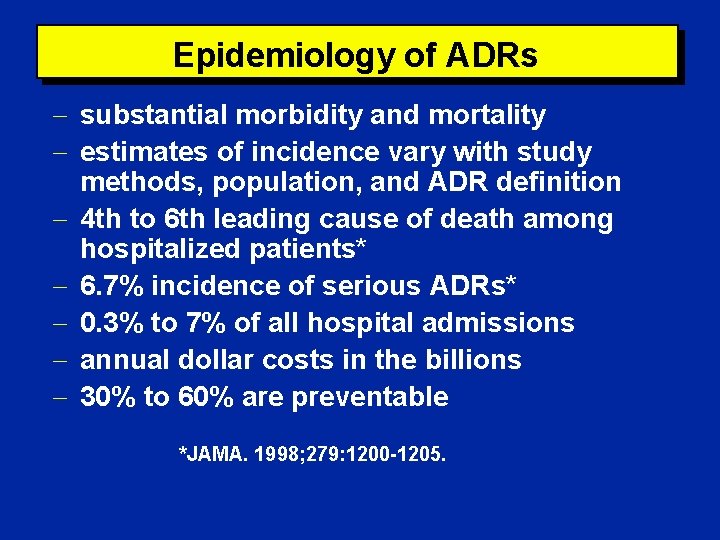
Epidemiology of ADRs substantial morbidity and mortality estimates of incidence vary with study methods, population, and ADR definition 4 th to 6 th leading cause of death among hospitalized patients* 6. 7% incidence of serious ADRs* 0. 3% to 7% of all hospital admissions annual dollar costs in the billions 30% to 60% are preventable *JAMA. 1998; 279: 1200 -1205.
Classification Onset Severity Type
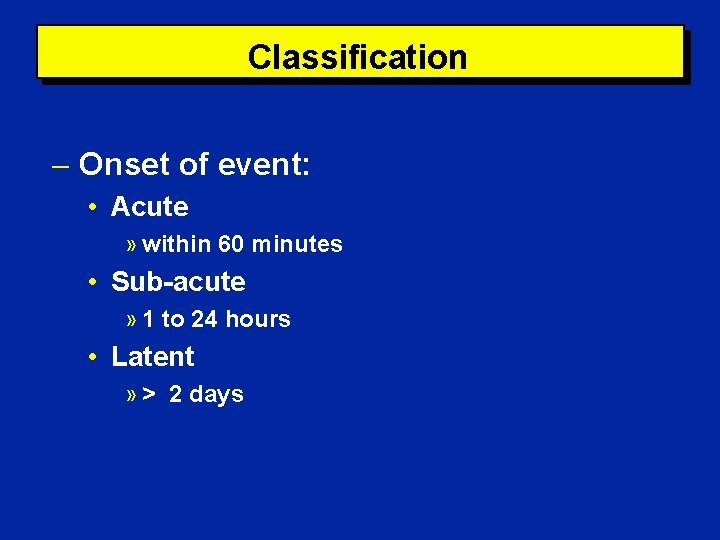
Classification Onset of event: • Acute » within 60 minutes • Sub-acute » 1 to 24 hours • Latent » > 2 days
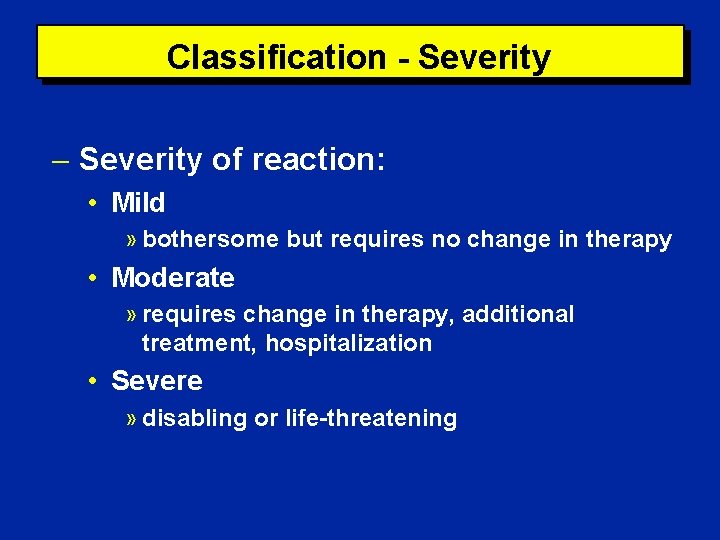
Classification - Severity of reaction: • Mild » bothersome but requires no change in therapy • Moderate » requires change in therapy, additional treatment, hospitalization • Severe » disabling or life-threatening
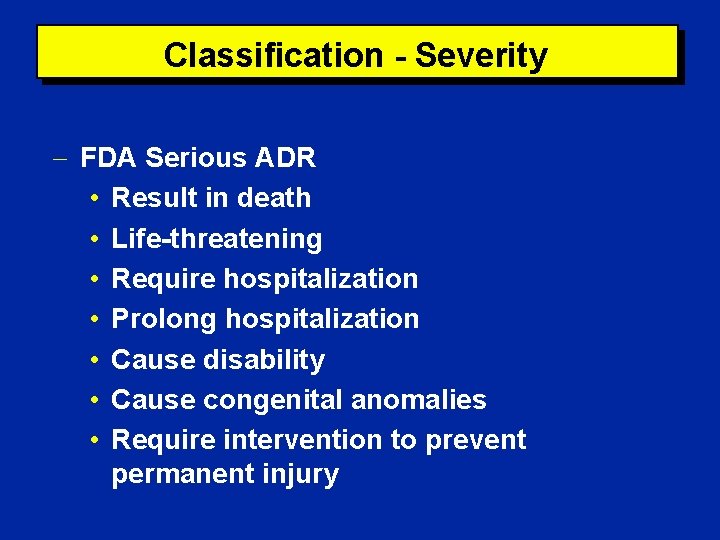
Classification - Severity FDA Serious ADR • Result in death • Life-threatening • Require hospitalization • Prolong hospitalization • Cause disability • Cause congenital anomalies • Require intervention to prevent permanent injury
Classification • Type A » extension of pharmacologic effect » often predictable and dose dependent » responsible for at least two-thirds of ADRs » e. g. , propranolol and heart block, anticholinergics and dry mouth
Classification • Type B » idiosyncratic or immunologic reactions » rare and unpredictable » e. g. , chloramphenicol and aplastic anemia
Classification • Type C » associated with long-term use » involves dose accumulation » e. g. , phenacetin and interstitial nephritis or antimalarials and ocular toxicity
Classification • Type D » delayed effects (dose independent) » Carcinogenicity (e. g. , immunosuppressants) » Teratogenicity (e. g. , fetal hydantoin syndrome)
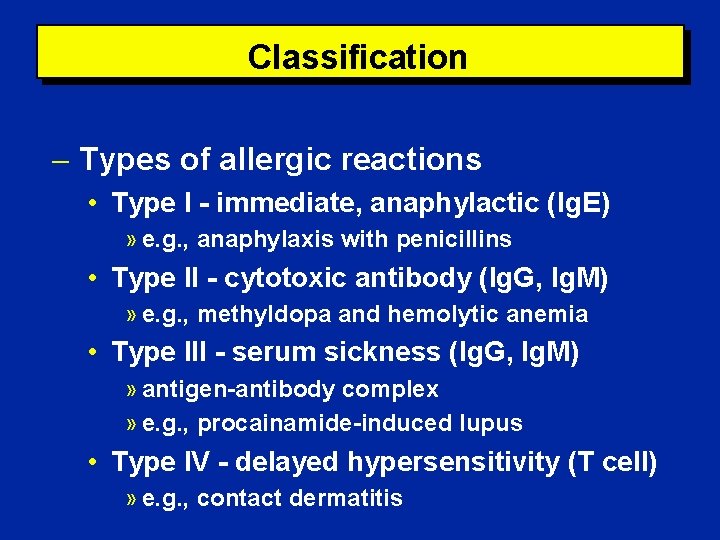
Classification Types of allergic reactions • Type I - immediate, anaphylactic (Ig. E) » e. g. , anaphylaxis with penicillins • Type II - cytotoxic antibody (Ig. G, Ig. M) » e. g. , methyldopa and hemolytic anemia • Type III - serum sickness (Ig. G, Ig. M) » antigen-antibody complex » e. g. , procainamide-induced lupus • Type IV - delayed hypersensitivity (T cell) » e. g. , contact dermatitis
Classification - Type Reportable - All significant or unusual adverse drug reactions as well as unanticipated or novel events that are suspected to be drug related
Classification - Type Reportable l Hypersensitivity - Life-threatening - Cause disability - Idiosyncratic - Secondary to Drug interactions - Unexpected detrimental effect - Drug intolerance - Any ADR with investigational drug
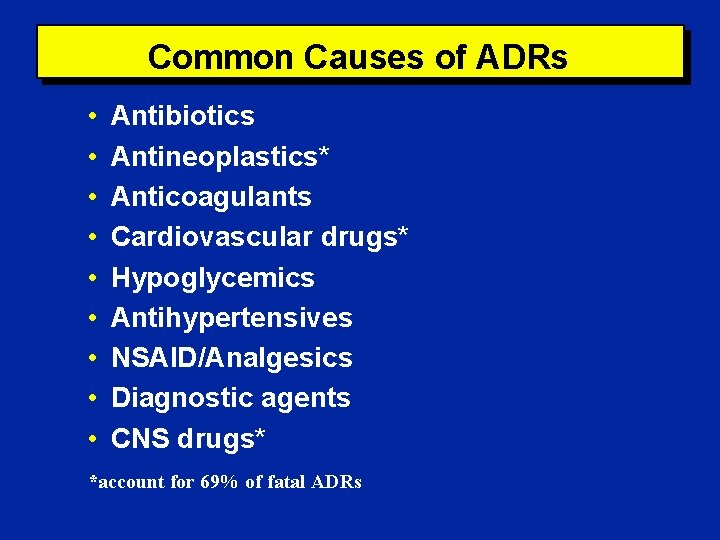
Common Causes of ADRs • • • Antibiotics Antineoplastics* Anticoagulants Cardiovascular drugs* Hypoglycemics Antihypertensives NSAID/Analgesics Diagnostic agents CNS drugs* *account for 69% of fatal ADRs
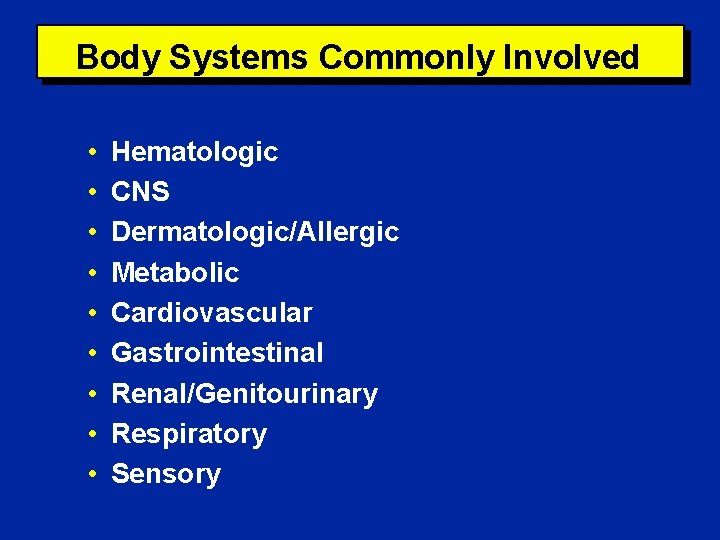
Body Systems Commonly Involved • • • Hematologic CNS Dermatologic/Allergic Metabolic Cardiovascular Gastrointestinal Renal/Genitourinary Respiratory Sensory
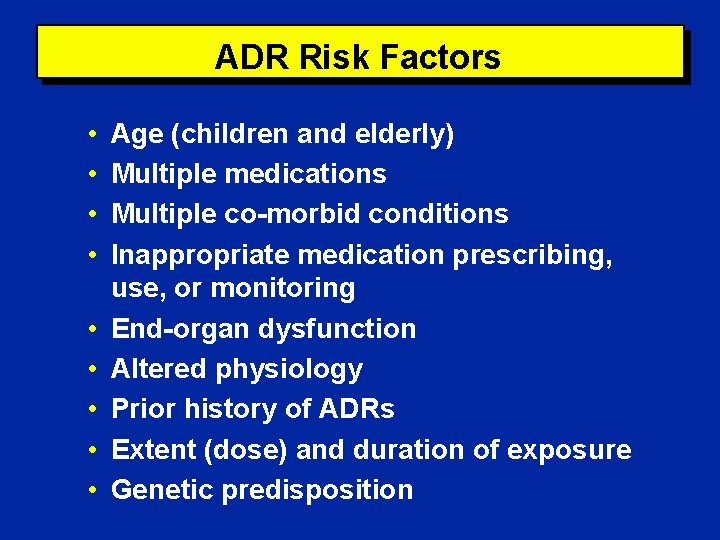
ADR Risk Factors • • • Age (children and elderly) Multiple medications Multiple co-morbid conditions Inappropriate medication prescribing, use, or monitoring End-organ dysfunction Altered physiology Prior history of ADRs Extent (dose) and duration of exposure Genetic predisposition
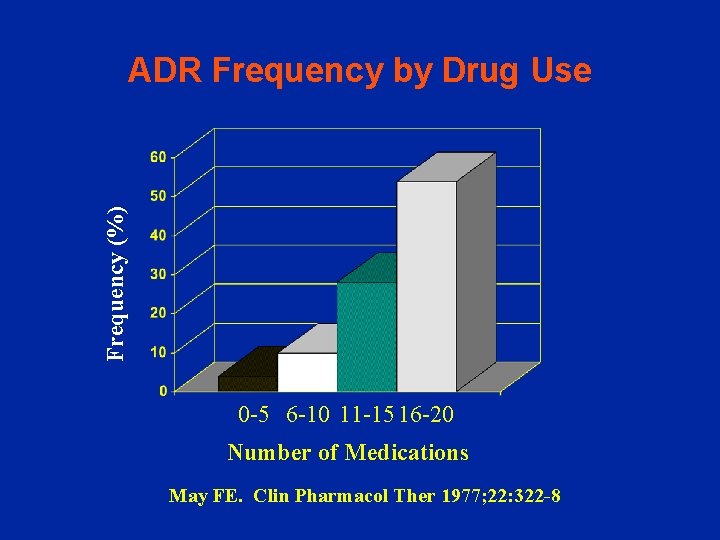
Frequency (%) ADR Frequency by Drug Use 0 -5 6 -10 11 -15 16 -20 Number of Medications May FE. Clin Pharmacol Ther 1977; 22: 322 -8
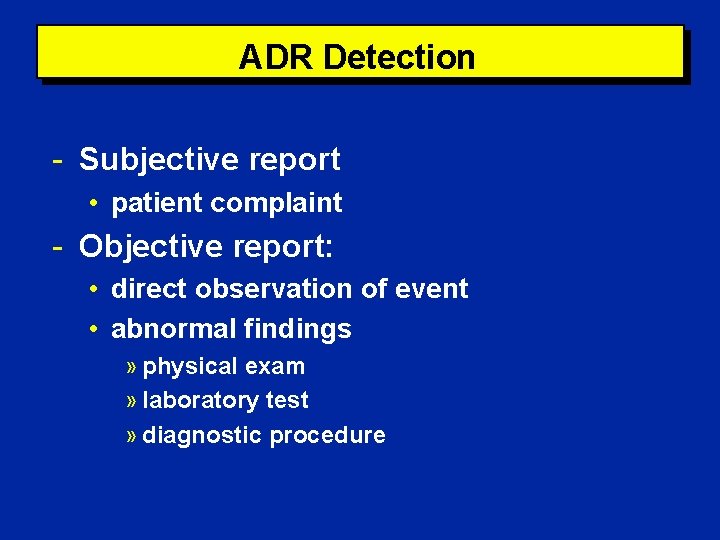
ADR Detection - Subjective report • patient complaint - Objective report: • direct observation of event • abnormal findings » physical exam » laboratory test » diagnostic procedure
ADR Detection - Medication order screening • abrupt medication discontinuation • abrupt dosage reduction • orders for “tracer” or “trigger” substances • orders for special tests or serum drug concentrations - Spontaneous reporting - Medication utilization review • Computerized screening • Chart review and concurrent audits
ADR Detection in Clinical Trials - Methods • • Standard laboratory tests Diagnostic tests Complete history and physical Adverse drug event questionnaire » Extensive checklist of symptoms categorized by body system » Review-of-systems approach » Qualitative and quantitative
ADR Detection in Clinical Trials Limitations • exposure limited to few individuals » rare and unusual ADRs not detected » 3000 patients at risk are needed to detect ADR with incidence of 1/1000 with 95% certainty • exposure is often short-term » latent ADRs missed • external validity » may exclude children, elderly, women of childbearing age; and patients with severe form of disease, multiple co-morbidities, and those taking multiple medications
Preliminary Assessment Preliminary description of event: • Who, what, when, where, how? • Who is involved? • What is the most likely causative agent? • Is this an exacerbation of a pre-existing condition? • Alternative explanations / differential diagnosis • When did the event take place? • Where did the event occur? • How has the event been managed thus far?
Preliminary Assessment Determination of urgency: • What is the patient’s current clinical status? • How severe is the reaction? Appropriate triage: • Acute (ER, ICU, Poison Control)
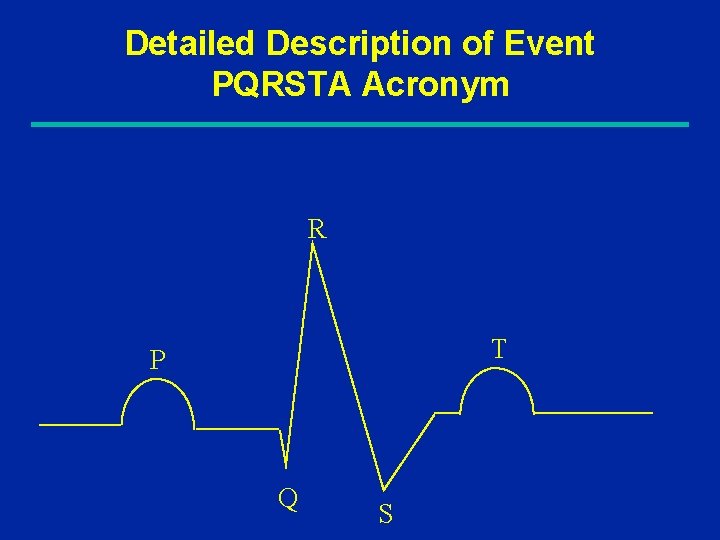
Detailed Description of Event PQRSTA Acronym R T P Q S
Detailed Description of Event History of present illness Signs / Symptoms: PQRSTA • Provoking or palliative factors • Quality (character or intensity) • Response to treatment, Radiation, Reports in literature • Severity / extent, Site (location) • Temporal relationship (onset, duration, frequency) • Associated signs and symptoms
Pertinent Patient/Disease Factors Demographics • age, race, ethnicity, gender, height, weight Medical history and physical exam • Concurrent conditions or special circumstances » e. g. , dehydration, autoimmune condition, HIV infection, pregnancy, dialysis, breast feeding • Recent procedures or surgeries and any resultant complications » e. g. , contrast material, radiation treatment, hypotension, shock, renal insufficiency
Pertinent Patient/Disease Factors • End-organ function • Review of systems • Laboratory tests and diagnostics • Social history » tobacco, alcohol, substance abuse, physical activity, environmental or occupational hazards or exposures • Pertinent family history • Nutritional status » special diets, malnutrition, weight loss
Pertinent Medication Factors Medication history • Prescription medications • Non-prescription medications • Alternative and investigational therapies • Medication use within previous 6 months • Allergies or intolerances • History of medication reactions • Adherence to prescribed regimens • Cumulative mediation dosages
Pertinent Medication Factors Medication • Indication, dose, diluent, volume Administration • Route, method, site, schedule, rate, duration Formulation • Pharmaceutical excipients » e. g. , colorings, flavorings, preservatives • Other components » e. g. , DEHP, latex
Pertinent Medication Factors Pharmacology Pharmacokinetics (LADME) Pharmacodynamics Adverse effect profiles Interactions • drug-drug • drug-nutrient • drug-lab test interference Cross-allergenicity or cross-reactivity
ADR Information • • Incidence and prevalence Mechanism and pathogenesis Clinical presentation and diagnosis Time course Dose relationship Reversibility Cross-reactivity/Cross-allergenicity Treatment and prognosis
ADR Information Resources • Tertiary » Reference books – Medical and pharmacotherapy textbooks – Package inserts, PDR, AHFS, USPDI – Specialized ADR resources • Meyler’s Side Effects of Drugs • Textbook of Adverse Drug Reactions – Drug interactions resources – Micromedex databases (e. g. , TOMES, POISINDEX, DRUGDEX) » Review articles
ADR Information Resources • Secondary » MEDLARS databases (e. g. , Medline, Toxline, Cancerline, Toxnet) » Excerpta Medica’s Embase » International Pharmaceutical Abstracts » Current Contents » Biological Abstracts (Biosis) » Science Citation Index » Clin-Alert and Reactions
ADR Information Resources • Primary » Spontaneous reports or unpublished data – FDA – Manufacturer » Anecdotal and descriptive reports – Case reports, case series » Observational studies – Case-control, cross-sectional, cohort » Experimental and other studies – Clinical trials – Meta-analyses
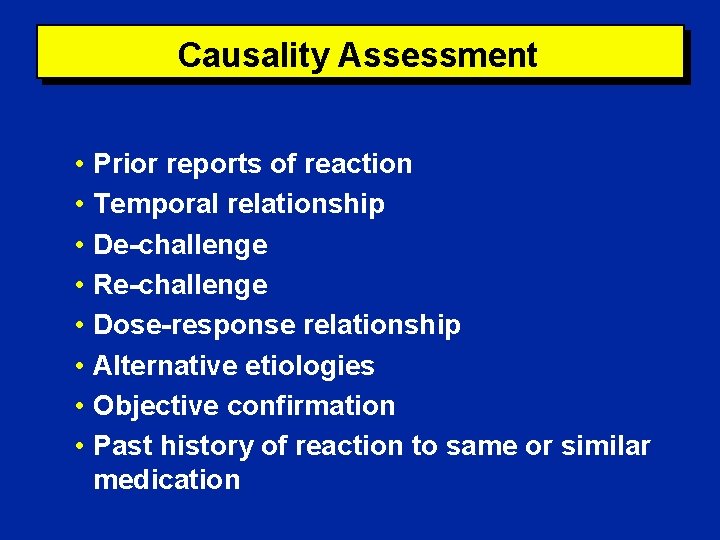
Causality Assessment • Prior reports of reaction • Temporal relationship • De-challenge • Re-challenge • Dose-response relationship • Alternative etiologies • Objective confirmation • Past history of reaction to same or similar medication
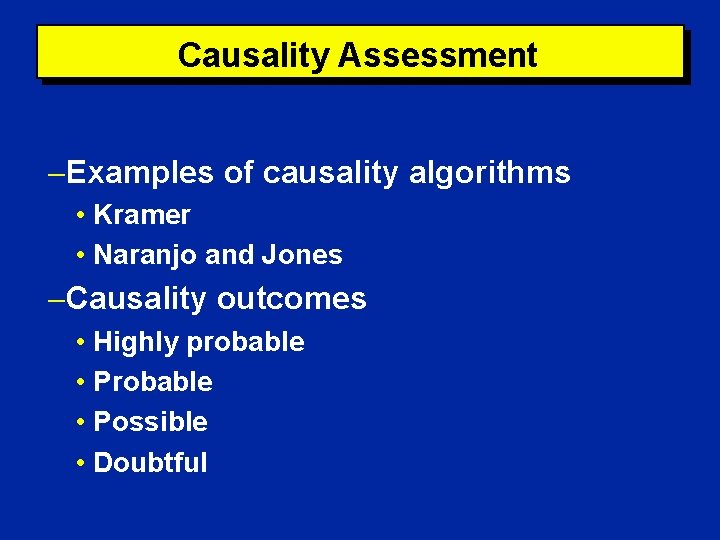
Causality Assessment Examples of causality algorithms • Kramer • Naranjo and Jones Causality outcomes • Highly probable • Possible • Doubtful
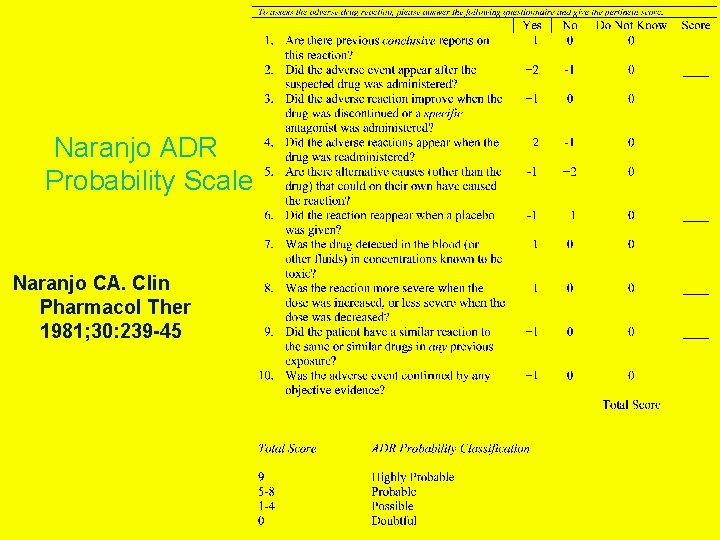
Naranjo ADR Probability Scale Naranjo CA. Clin Pharmacol Ther 1981; 30: 239 -45
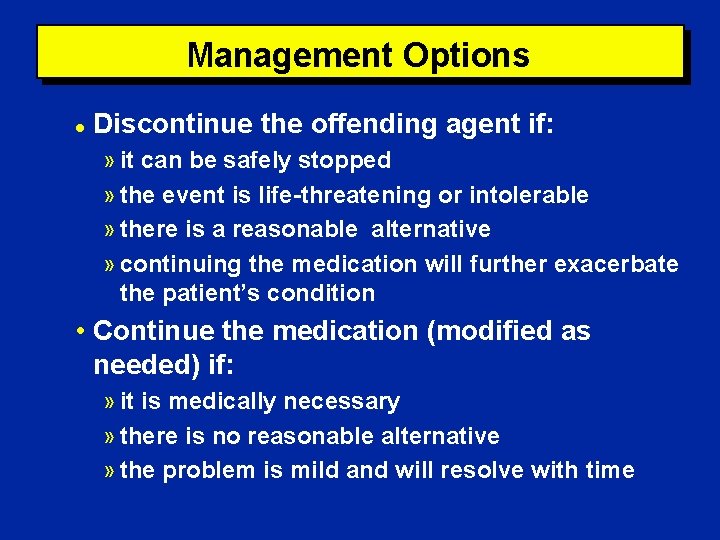
Management Options l Discontinue the offending agent if: » it can be safely stopped » the event is life-threatening or intolerable » there is a reasonable alternative » continuing the medication will further exacerbate the patient’s condition • Continue the medication (modified as needed) if: » it is medically necessary » there is no reasonable alternative » the problem is mild and will resolve with time
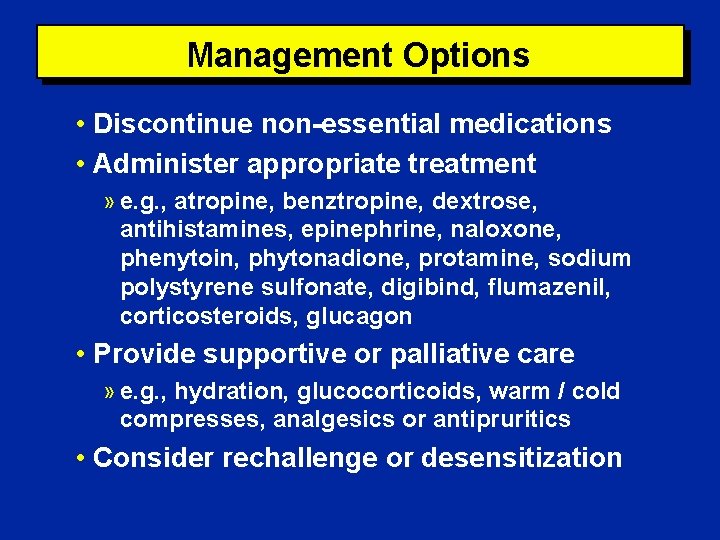
Management Options • Discontinue non-essential medications • Administer appropriate treatment » e. g. , atropine, benztropine, dextrose, antihistamines, epinephrine, naloxone, phenytoin, phytonadione, protamine, sodium polystyrene sulfonate, digibind, flumazenil, corticosteroids, glucagon • Provide supportive or palliative care » e. g. , hydration, glucocorticoids, warm / cold compresses, analgesics or antipruritics • Consider rechallenge or desensitization
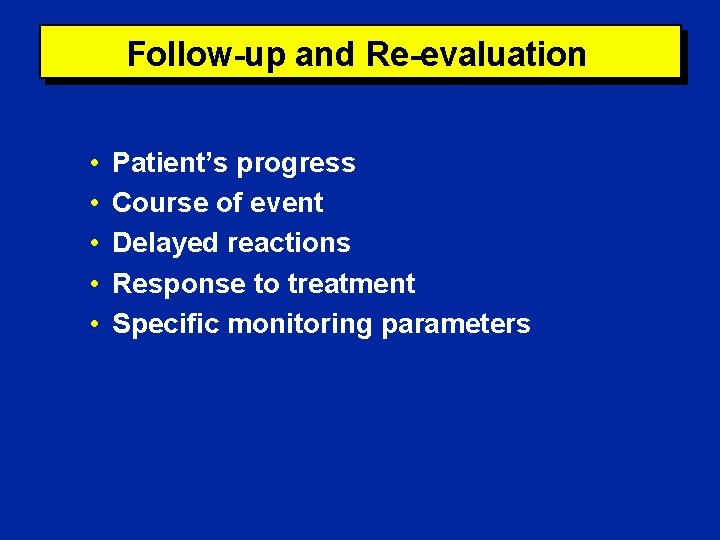
Follow-up and Re-evaluation • • • Patient’s progress Course of event Delayed reactions Response to treatment Specific monitoring parameters
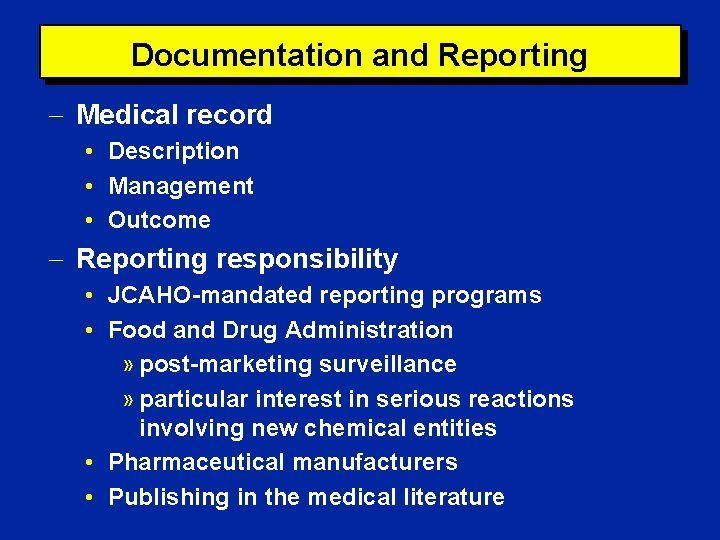
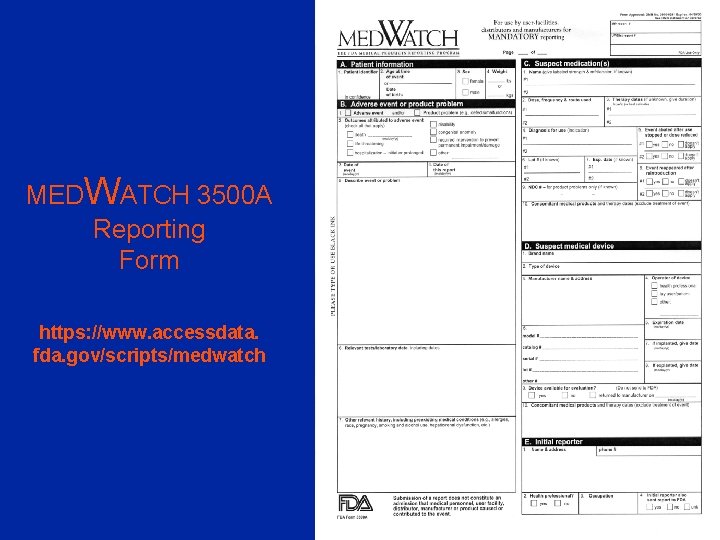
Documentation and Reporting Medical record • Description • Management • Outcome Reporting responsibility • JCAHO-mandated reporting programs • Food and Drug Administration » post-marketing surveillance » particular interest in serious reactions involving new chemical entities • Pharmaceutical manufacturers • Publishing in the medical literature
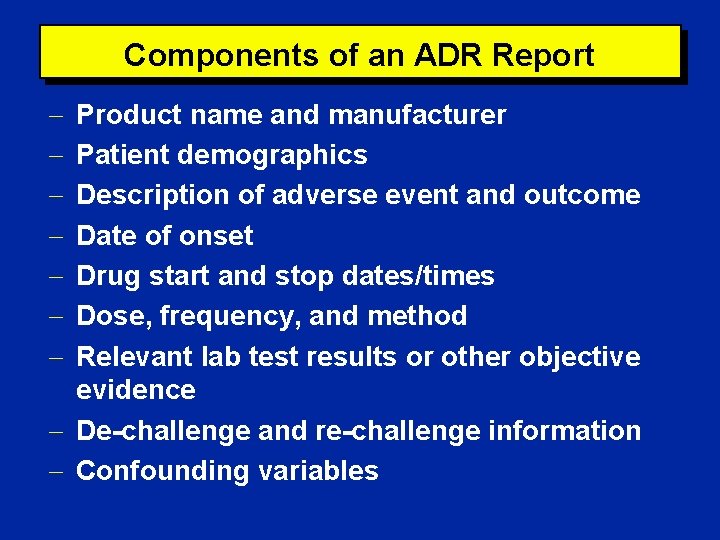
Components of an ADR Report Product name and manufacturer Patient demographics Description of adverse event and outcome Date of onset Drug start and stop dates/times Dose, frequency, and method Relevant lab test results or other objective evidence De-challenge and re-challenge information Confounding variables
MEDWATCH 3500 A Reporting Form https: //www. accessdata. fda. gov/scripts/medwatch