
CLINICA EMATOLOGICA Udine Convegno regionale SIEWorkshop GITMO IL
- Slides: 48
CLINICA EMATOLOGICA Udine Convegno regionale SIE-Workshop GITMO IL TRAPIANTO A CONDIZIONAMENTO RIDOTTO COMPIE 10 ANNI: E’ L’ORA DEI BILANCI COME IL TRAPIANTO RIC CURA UNA NEOPLASIA ONCOEMATOLOGICA? Senigallia 23 -24 ottobre 2008
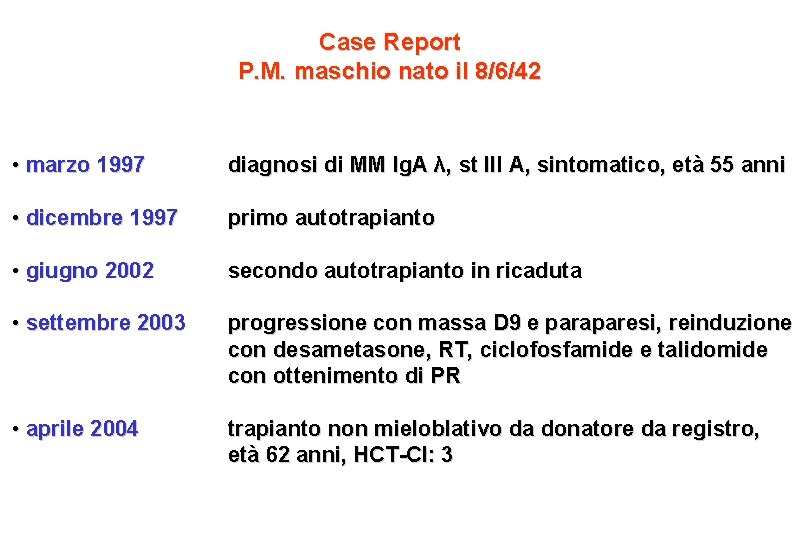
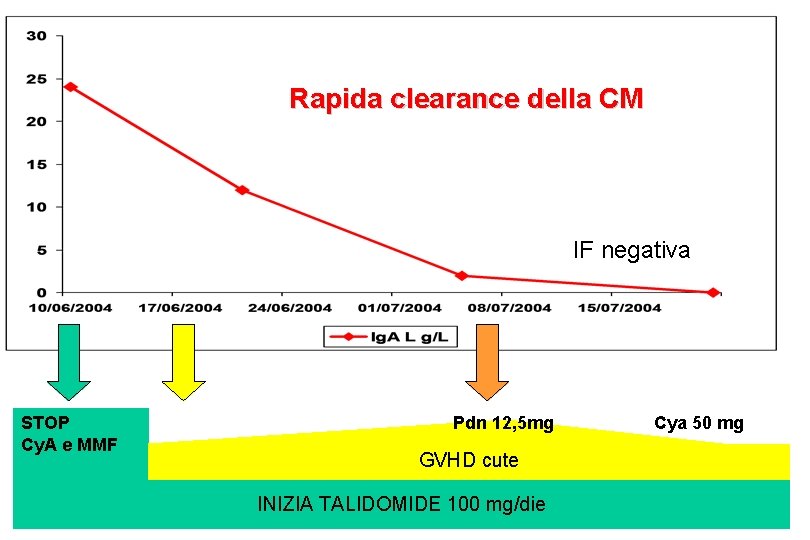
Case Report P. M. maschio nato il 8/6/42 • marzo 1997 diagnosi di MM Ig. A λ, st III A, sintomatico, età 55 anni • dicembre 1997 primo autotrapianto • giugno 2002 secondo autotrapianto in ricaduta • settembre 2003 progressione con massa D 9 e paraparesi, reinduzione con desametasone, RT, ciclofosfamide e talidomide con ottenimento di PR • aprile 2004 trapianto non mieloblativo da donatore da registro, età 62 anni, HCT-CI: 3
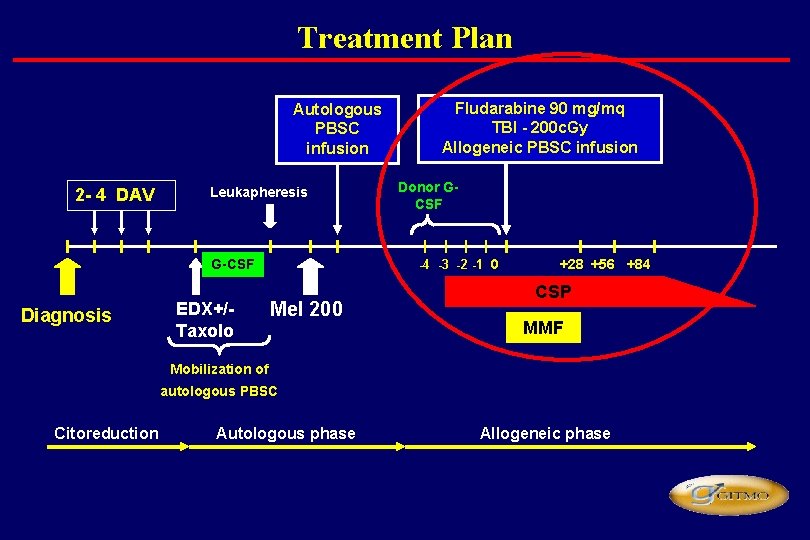
Treatment Plan Autologous PBSC infusion 2 - 4 DAV Leukapheresis G-CSF Diagnosis EDX+/Taxolo Fludarabine 90 mg/mq TBI - 200 c. Gy Allogeneic PBSC infusion Donor GCSF -4 -3 -2 -1 0 Mel 200 +28 +56 +84 CSP MMF Mobilization of autologous PBSC Citoreduction Autologous phase Allogeneic phase
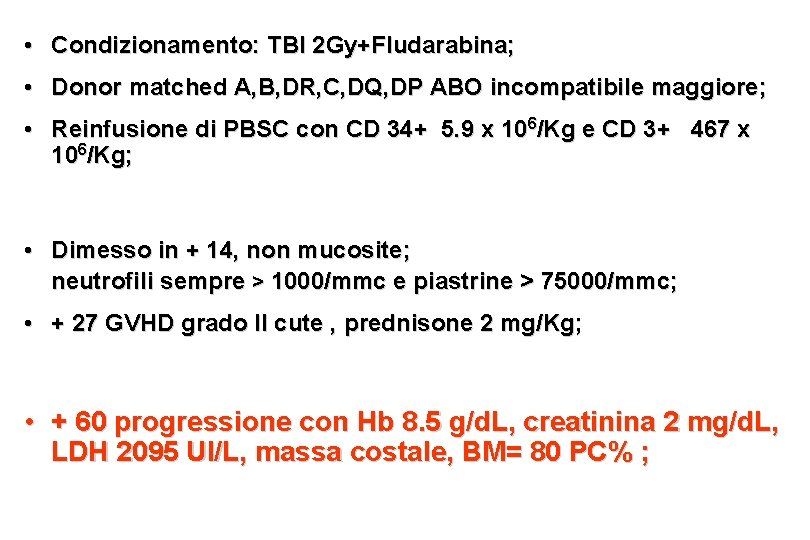
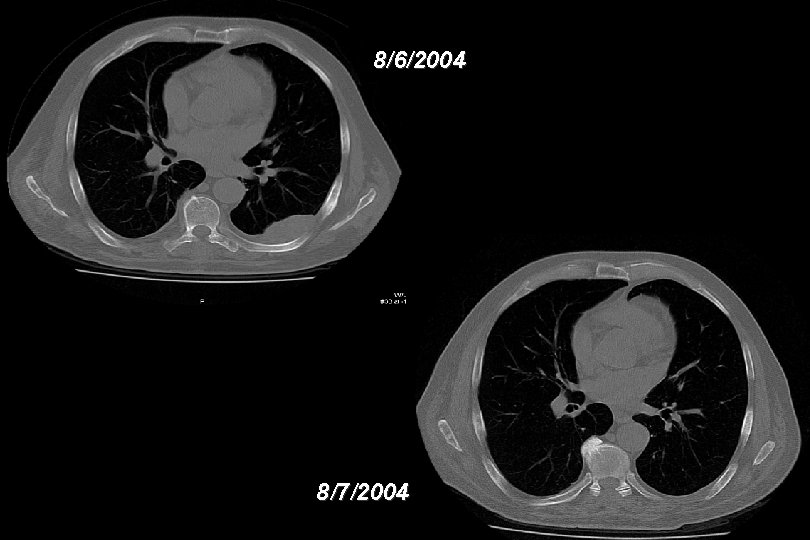
• Condizionamento: TBI 2 Gy+Fludarabina; • Donor matched A, B, DR, C, DQ, DP ABO incompatibile maggiore; • Reinfusione di PBSC con CD 34+ 5. 9 x 10⁶/Kg e CD 3+ 467 x 106/Kg; • Dimesso in + 14, non mucosite; neutrofili sempre > 1000/mmc e piastrine > 75000/mmc; • + 27 GVHD grado II cute , prednisone 2 mg/Kg; • + 60 progressione con Hb 8. 5 g/d. L, creatinina 2 mg/d. L, LDH 2095 UI/L, massa costale, BM= 80 PC% ;
Rapida clearance della CM IF negativa STOP Cy. A e MMF Pdn 12, 5 mg GVHD cute INIZIA TALIDOMIDE 100 mg/die Cya 50 mg
8/6/2004 8/7/2004
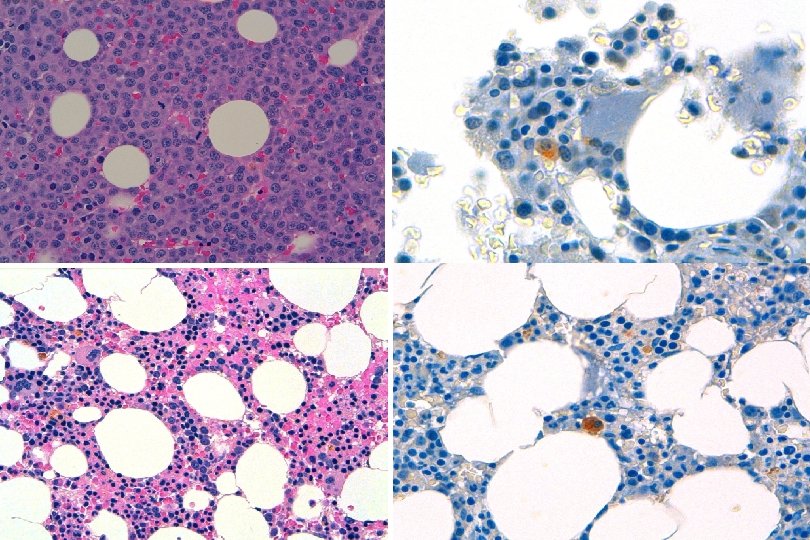
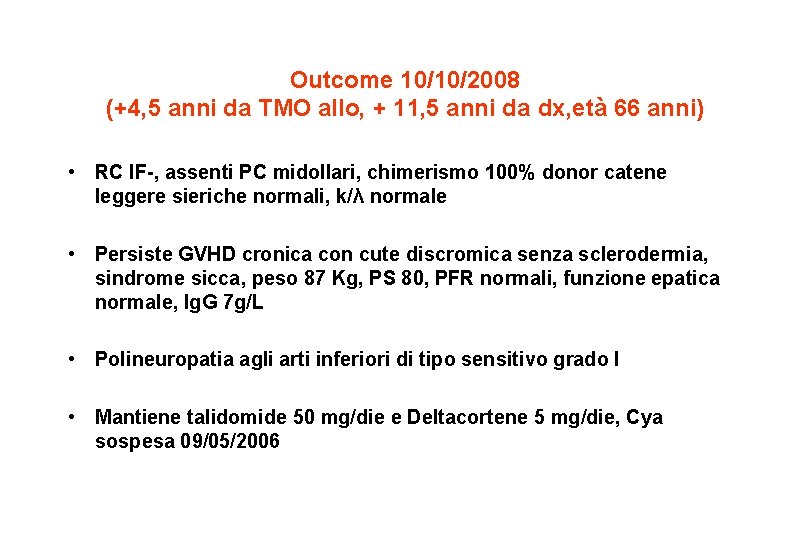
Outcome 10/10/2008 (+4, 5 anni da TMO allo, + 11, 5 anni da dx, età 66 anni) • RC IF-, assenti PC midollari, chimerismo 100% donor catene leggere sieriche normali, k/λ normale • Persiste GVHD cronica con cute discromica senza sclerodermia, sindrome sicca, peso 87 Kg, PS 80, PFR normali, funzione epatica normale, Ig. G 7 g/L • Polineuropatia agli arti inferiori di tipo sensitivo grado I • Mantiene talidomide 50 mg/die e Deltacortene 5 mg/die, Cya sospesa 09/05/2006
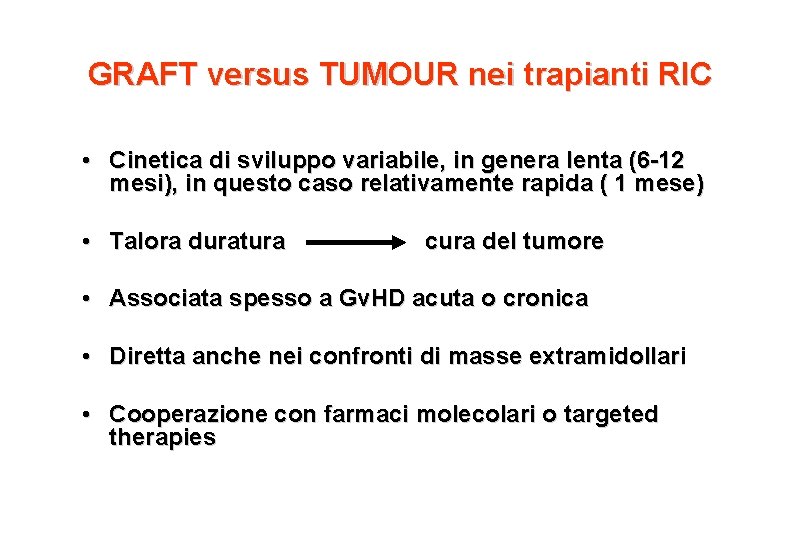
GRAFT versus TUMOUR nei trapianti RIC • Cinetica di sviluppo variabile, in genera lenta (6 -12 mesi), in questo caso relativamente rapida ( 1 mese) • Talora duratura cura del tumore • Associata spesso a Gv. HD acuta o cronica • Diretta anche nei confronti di masse extramidollari • Cooperazione con farmaci molecolari o targeted therapies
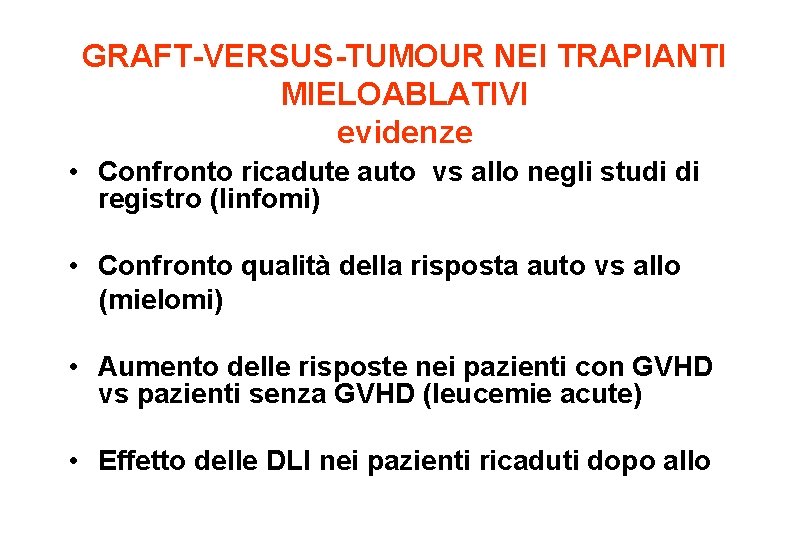
GRAFT-VERSUS-TUMOUR NEI TRAPIANTI MIELOABLATIVI evidenze • Confronto ricadute auto vs allo negli studi di registro (linfomi) • Confronto qualità della risposta auto vs allo (mielomi) • Aumento delle risposte nei pazienti con GVHD vs pazienti senza GVHD (leucemie acute) • Effetto delle DLI nei pazienti ricaduti dopo allo
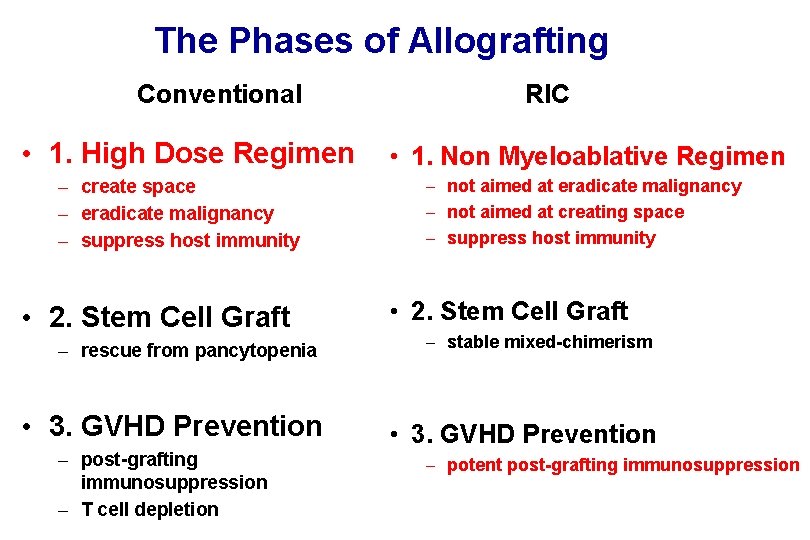
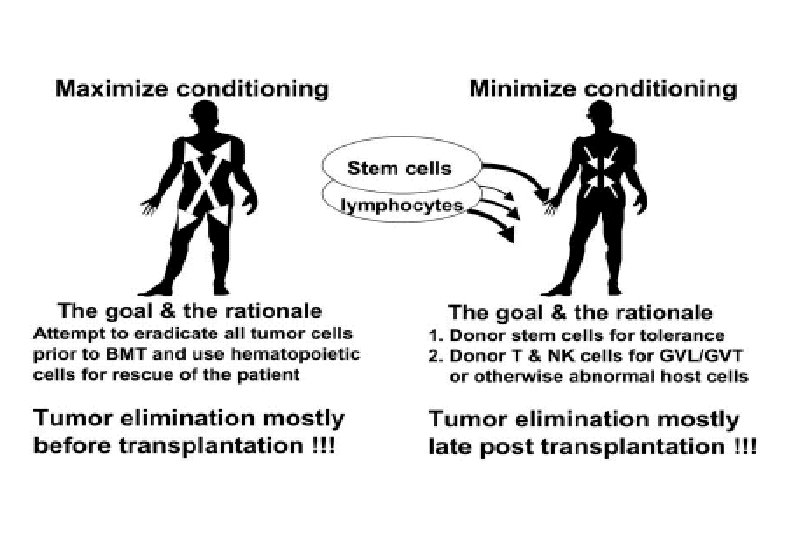
The Phases of Allografting Conventional • 1. High Dose Regimen – create space – eradicate malignancy – suppress host immunity • 2. Stem Cell Graft – rescue from pancytopenia • 3. GVHD Prevention – post-grafting immunosuppression – T cell depletion RIC • 1. Non Myeloablative Regimen – not aimed at eradicate malignancy – not aimed at creating space – suppress host immunity • 2. Stem Cell Graft – stable mixed-chimerism • 3. GVHD Prevention – potent post-grafting immunosuppression
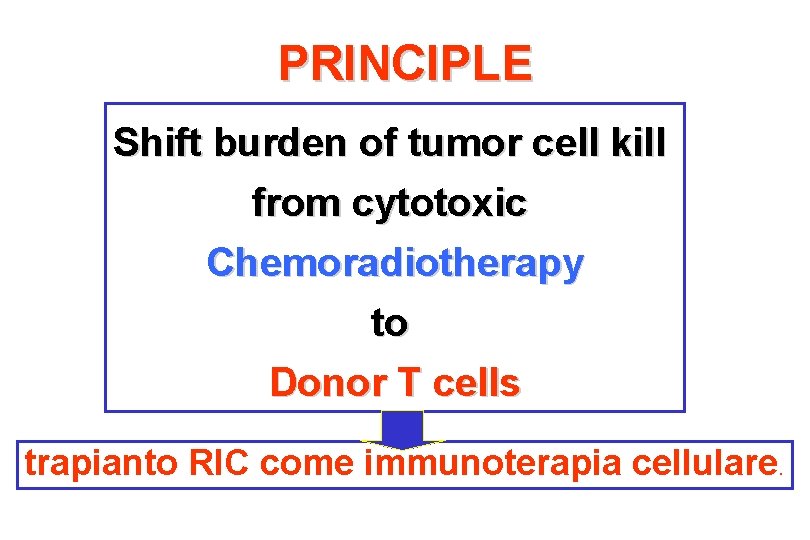
PRINCIPLE Shift burden of tumor cell kill from cytotoxic Chemoradiotherapy to Donor T cells trapianto RIC come immunoterapia cellulare.
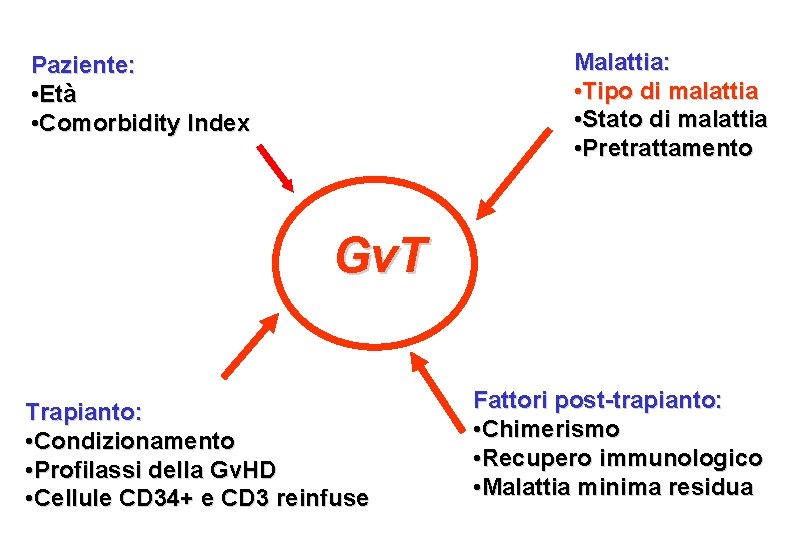
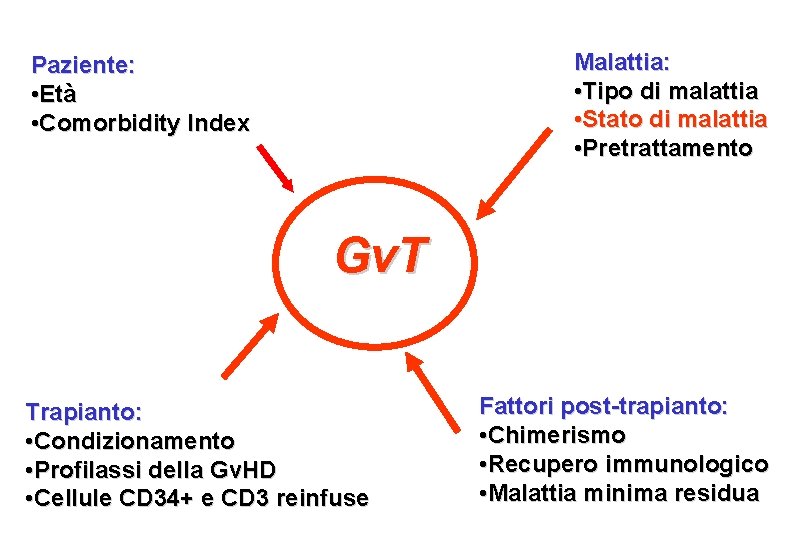
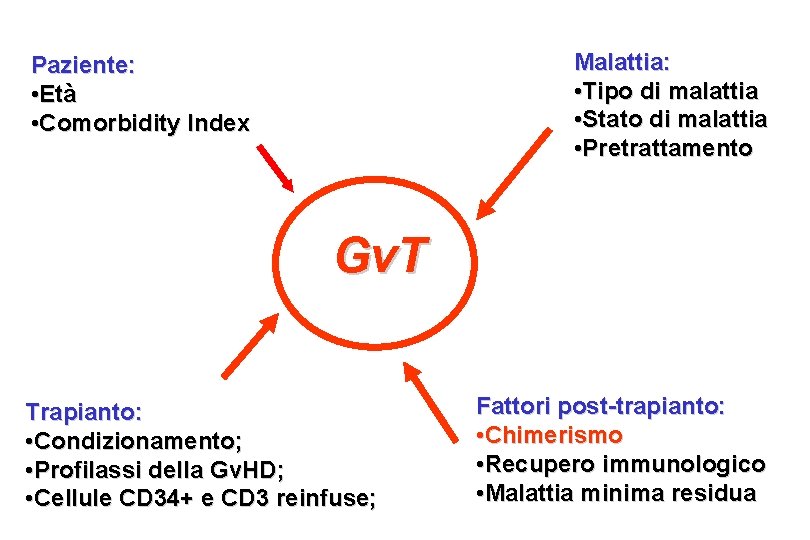
Malattia: • Tipo di malattia • Stato di malattia • Pretrattamento Paziente: • Età • Comorbidity Index Gv. T Trapianto: • Condizionamento • Profilassi della Gv. HD • Cellule CD 34+ e CD 3 reinfuse Fattori post-trapianto: • Chimerismo • Recupero immunologico • Malattia minima residua
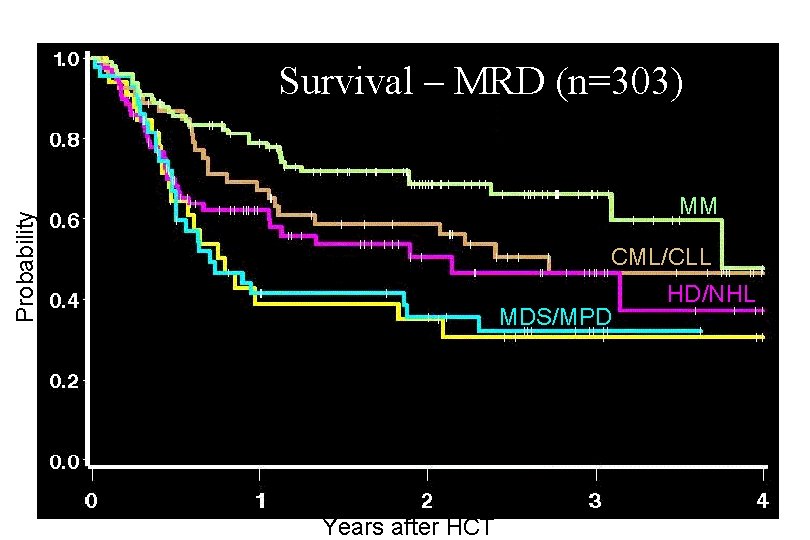
Survival – MRD (n=303) Probability MM CML/CLL MDS/MPD HD/NHL AML/ALL Years after HCT
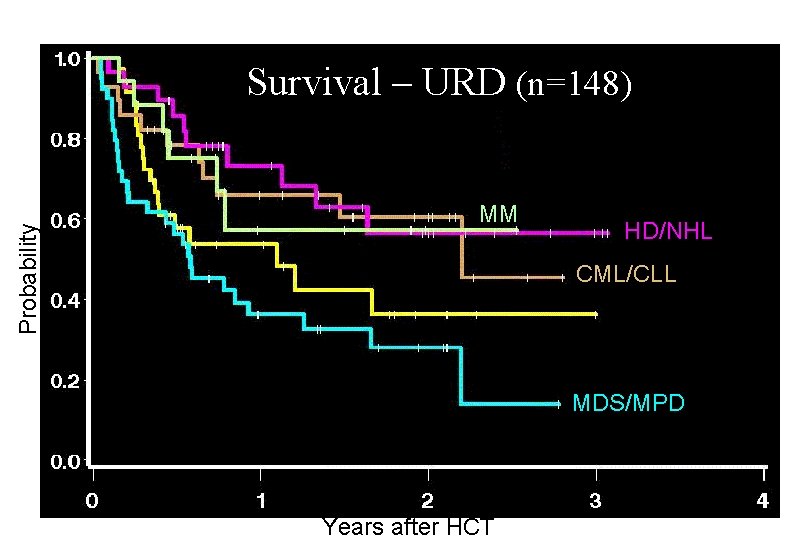
Probability Survival – URD (n=148) MM HD/NHL CML/CLL AML/ALL MDS/MPD Years after HCT
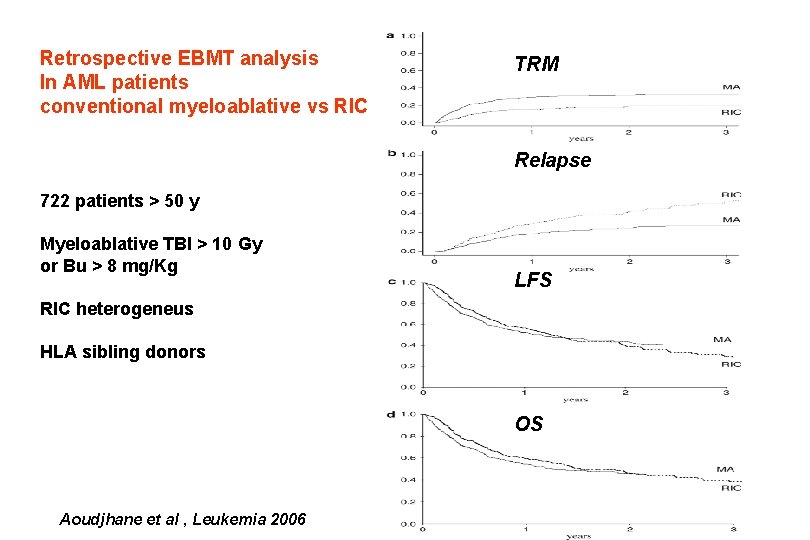
Retrospective EBMT analysis In AML patients conventional myeloablative vs RIC TRM Relapse 722 patients > 50 y Myeloablative TBI > 10 Gy or Bu > 8 mg/Kg LFS RIC heterogeneus HLA sibling donors OS Aoudjhane et al , Leukemia 2006
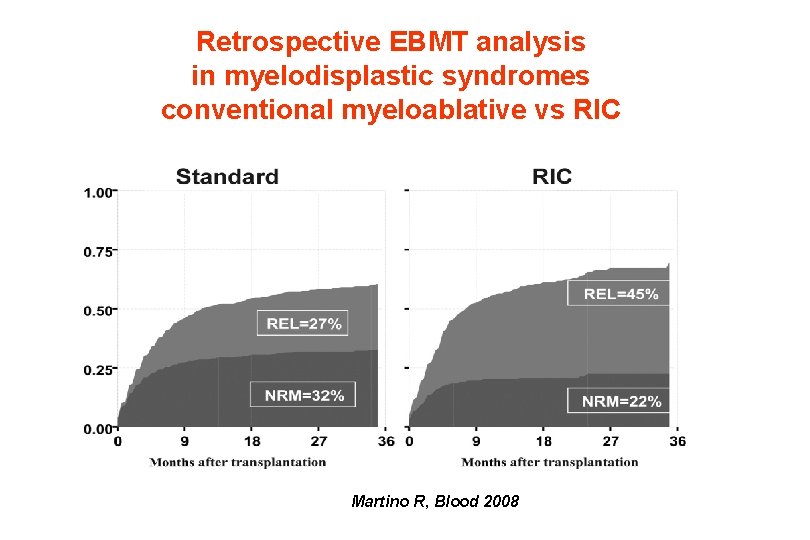
Retrospective EBMT analysis in myelodisplastic syndromes conventional myeloablative vs RIC Martino R, Blood 2008
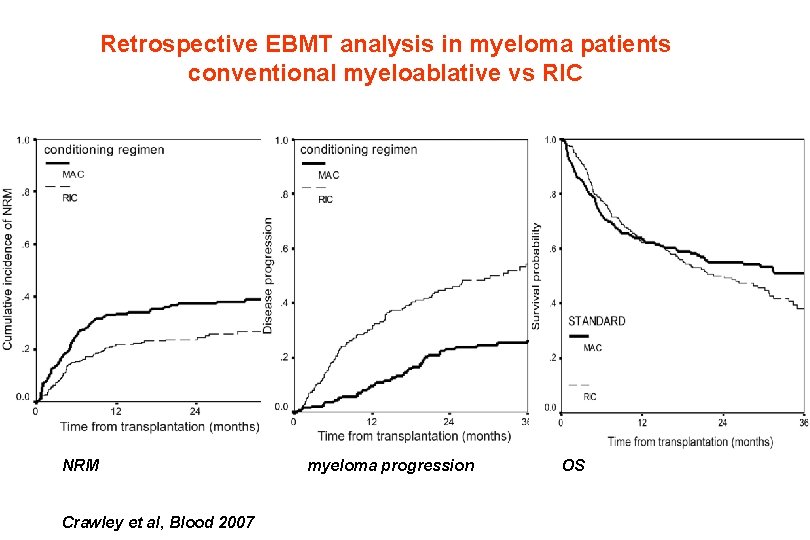
Retrospective EBMT analysis in myeloma patients conventional myeloablative vs RIC NRM Crawley et al, Blood 2007 myeloma progression OS
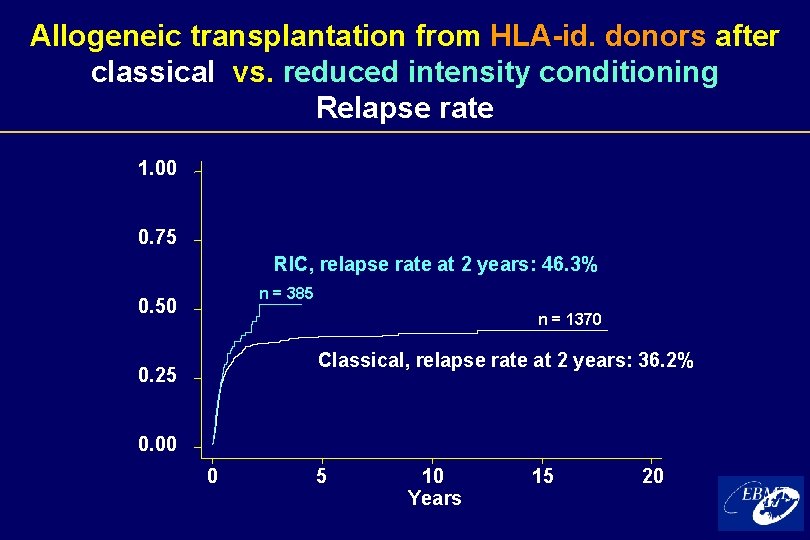
Allogeneic transplantation from HLA-id. donors after classical vs. reduced intensity conditioning Relapse rate 1. 00 0. 75 RIC, relapse rate at 2 years: 46. 3% n = 385 0. 50 n = 1370 Classical, relapse rate at 2 years: 36. 2% 0. 25 0. 00 0 5 10 Years 15 20
Malattia: • Tipo di malattia • Stato di malattia • Pretrattamento Paziente: • Età • Comorbidity Index Gv. T Trapianto: • Condizionamento • Profilassi della Gv. HD • Cellule CD 34+ e CD 3 reinfuse Fattori post-trapianto: • Chimerismo • Recupero immunologico • Malattia minima residua
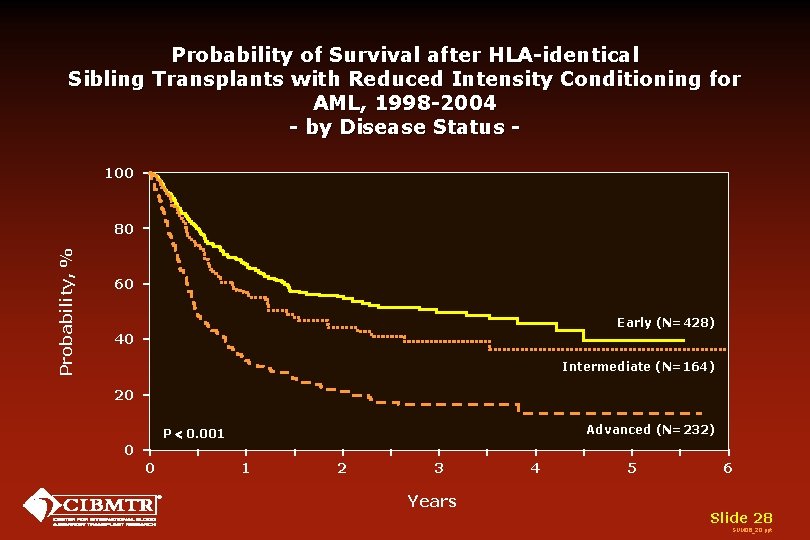
Probability of Survival after HLA-identical Sibling Transplants with Reduced Intensity Conditioning for AML, 1998 -2004 - by Disease Status 100 Probability, % 80 60 Early (N=428) 40 Intermediate (N=164) 20 Advanced (N=232) P < 0. 001 0 0 1 2 3 Years 4 5 6 Slide 28 SUM 06_20. ppt
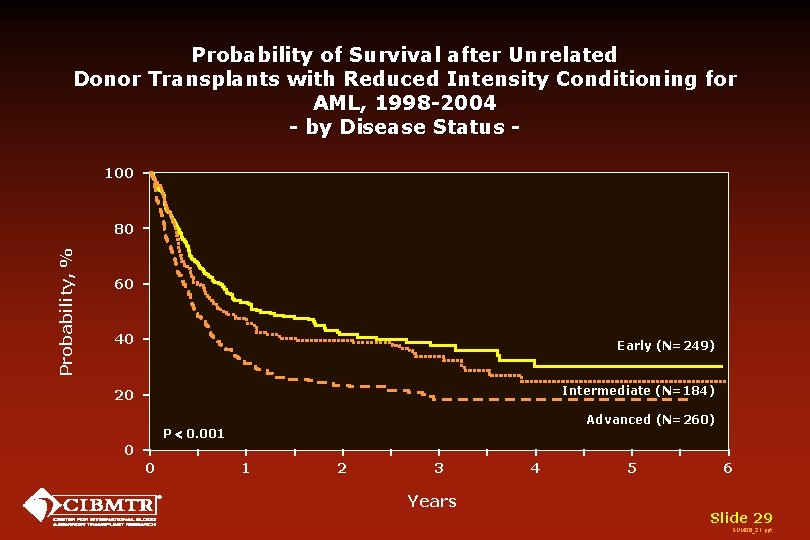
Probability of Survival after Unrelated Donor Transplants with Reduced Intensity Conditioning for AML, 1998 -2004 - by Disease Status 100 Probability, % 80 60 40 Early (N=249) 20 Intermediate (N=184) Advanced (N=260) P < 0. 001 0 0 1 2 3 Years 4 5 6 Slide 29 SUM 06_21. ppt
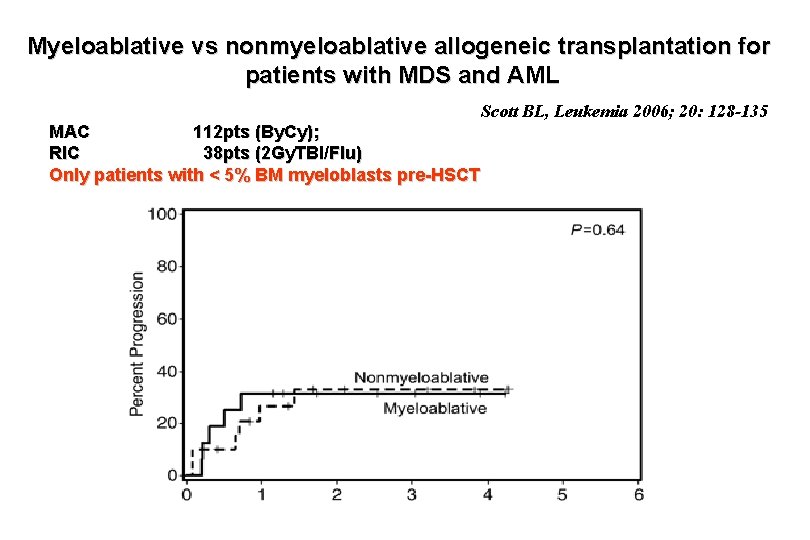
Myeloablative vs nonmyeloablative allogeneic transplantation for patients with MDS and AML Scott BL, Leukemia 2006; 20: 128 -135 MAC 112 pts (By. Cy); RIC 38 pts (2 Gy. TBI/Flu) Only patients with < 5% BM myeloblasts pre-HSCT
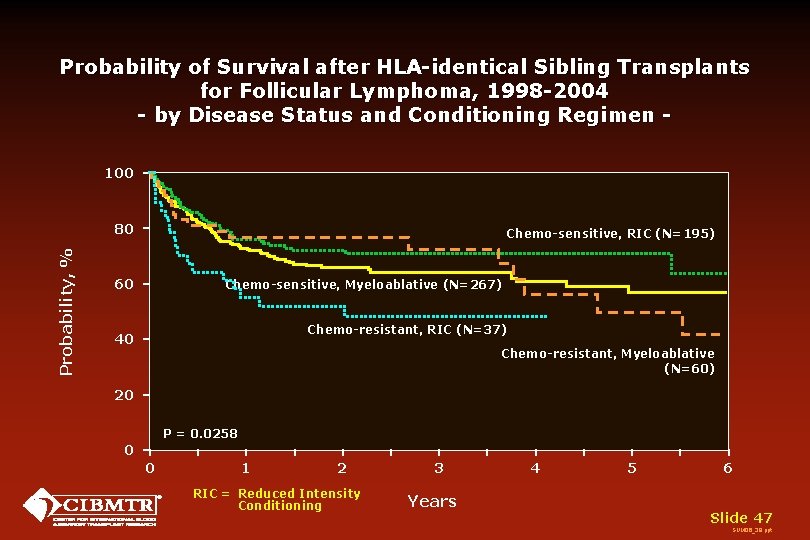
Probability of Survival after HLA-identical Sibling Transplants for Follicular Lymphoma, 1998 -2004 - by Disease Status and Conditioning Regimen 100 Probability, % 80 Chemo-sensitive, RIC (N=195) 60 Chemo-sensitive, Myeloablative (N=267) Chemo-resistant, RIC (N=37) 40 Chemo-resistant, Myeloablative (N=60) 20 P = 0. 0258 0 0 1 2 RIC = Reduced Intensity Conditioning 3 Years 4 5 6 Slide 47 SUM 06_39. ppt
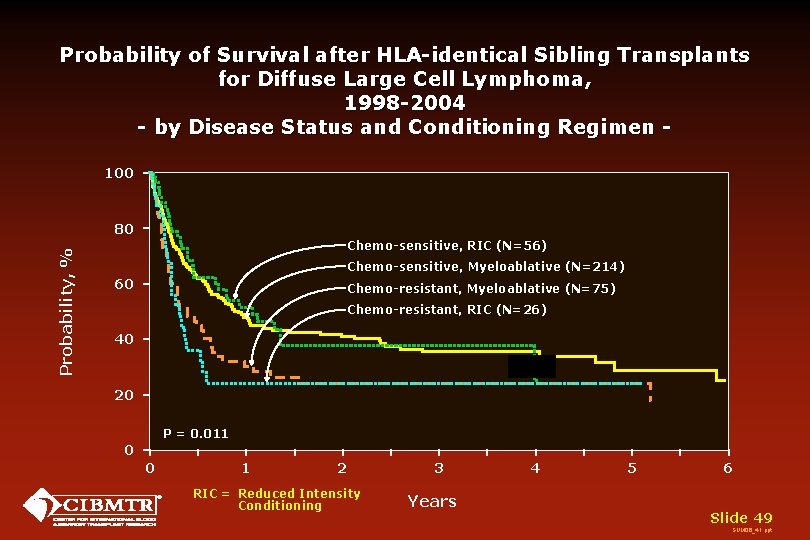
Probability of Survival after HLA-identical Sibling Transplants for Diffuse Large Cell Lymphoma, 1998 -2004 - by Disease Status and Conditioning Regimen 100 Probability, % 80 Chemo-sensitive, RIC (N=56) Chemo-sensitive, Myeloablative (N=214) 60 Chemo-resistant, Myeloablative (N=75) Chemo-resistant, RIC (N=26) 40 20 P = 0. 011 0 0 1 2 RIC = Reduced Intensity Conditioning 3 Years 4 5 6 Slide 49 SUM 06_41. ppt
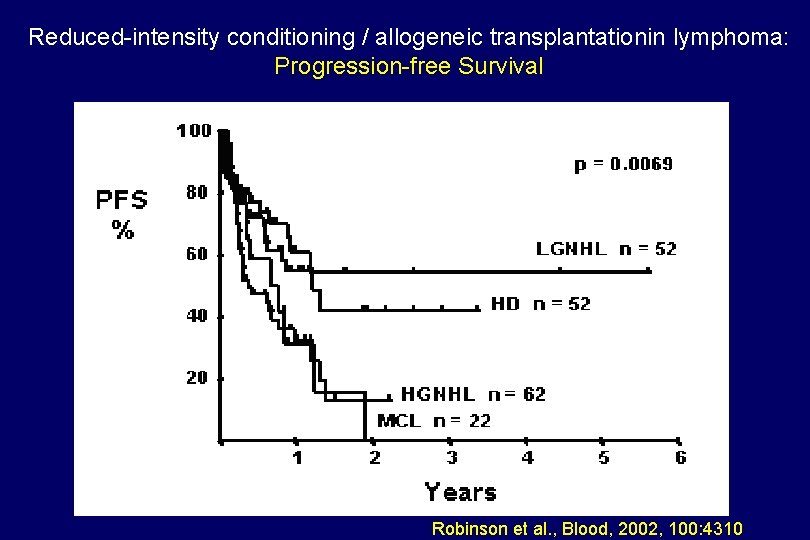
Reduced-intensity conditioning / allogeneic transplantationin lymphoma: Progression-free Survival Robinson et al. , Blood, 2002, 100: 4310
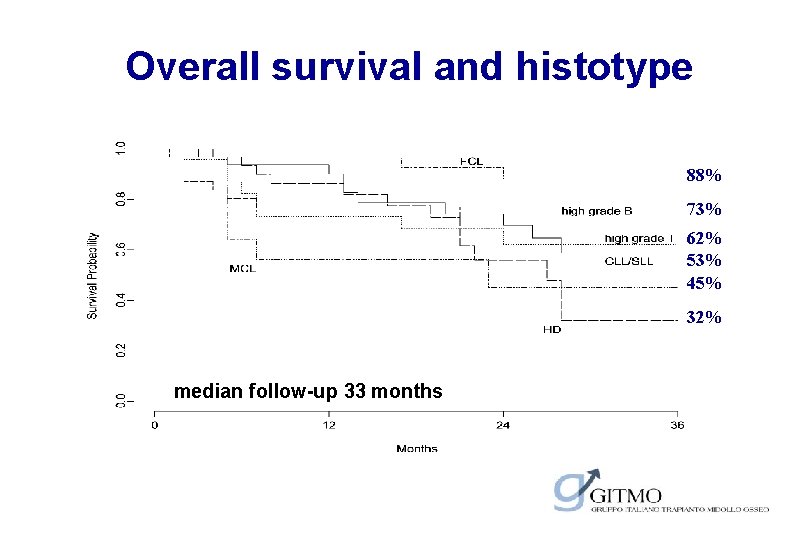
Overall survival and histotype 88% 73% 62% 53% 45% 32% median follow-up 33 months
Malattia: • Tipo di malattia • Stato di malattia • Pretrattamento Paziente: • Età • Comorbidity Index Gv. T Trapianto: • Condizionamento; • Profilassi della Gv. HD; • Cellule CD 34+ e CD 3 reinfuse; Fattori post-trapianto: • Chimerismo • Recupero immunologico • Malattia minima residua
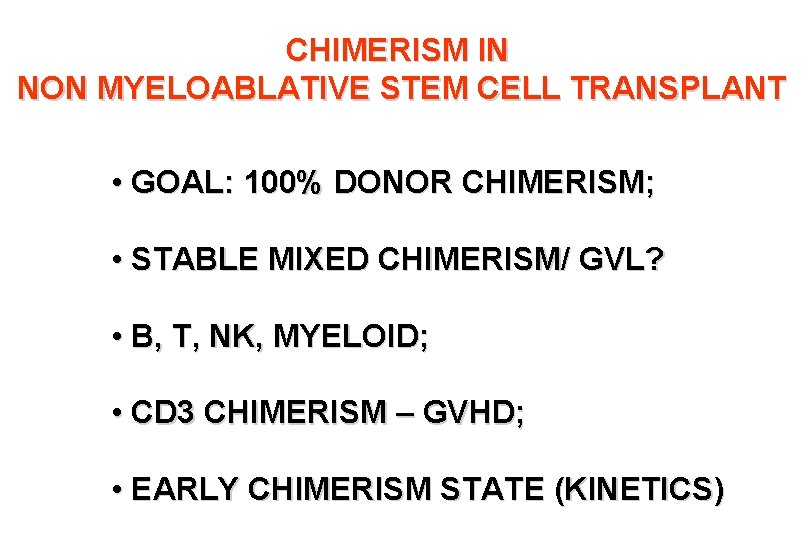
CHIMERISM IN NON MYELOABLATIVE STEM CELL TRANSPLANT • GOAL: 100% DONOR CHIMERISM; • STABLE MIXED CHIMERISM/ GVL? • B, T, NK, MYELOID; • CD 3 CHIMERISM – GVHD; • EARLY CHIMERISM STATE (KINETICS)
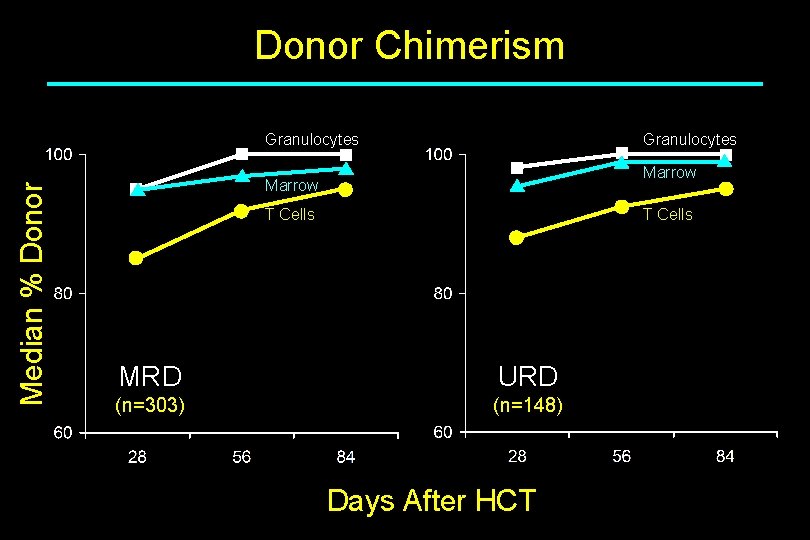
Donor Chimerism Median % Donor Granulocytes Marrow T Cells MRD URD (n=303) (n=148) Days After HCT
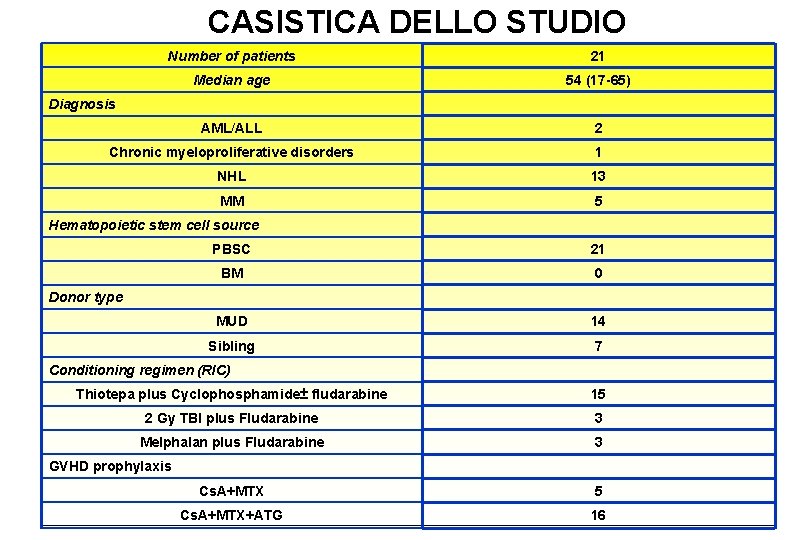
CASISTICA DELLO STUDIO Number of patients 21 Median age 54 (17 -65) AML/ALL 2 Chronic myeloproliferative disorders 1 NHL 13 MM 5 Diagnosis Hematopoietic stem cell source PBSC 21 BM 0 MUD 14 Sibling 7 Donor type Conditioning regimen (RIC) Thiotepa plus Cyclophosphamide± fludarabine 15 2 Gy TBI plus Fludarabine 3 Melphalan plus Fludarabine 3 GVHD prophylaxis Cs. A+MTX 5 Cs. A+MTX+ATG 16
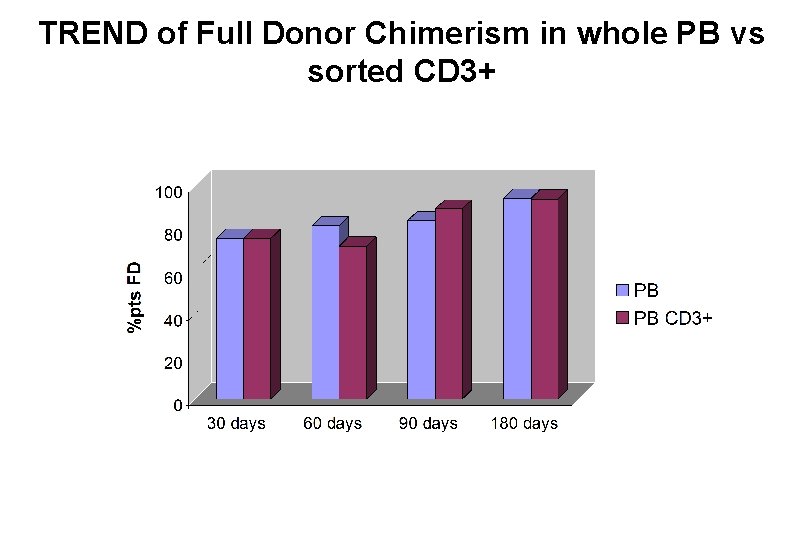
TREND of Full Donor Chimerism in whole PB vs sorted CD 3+
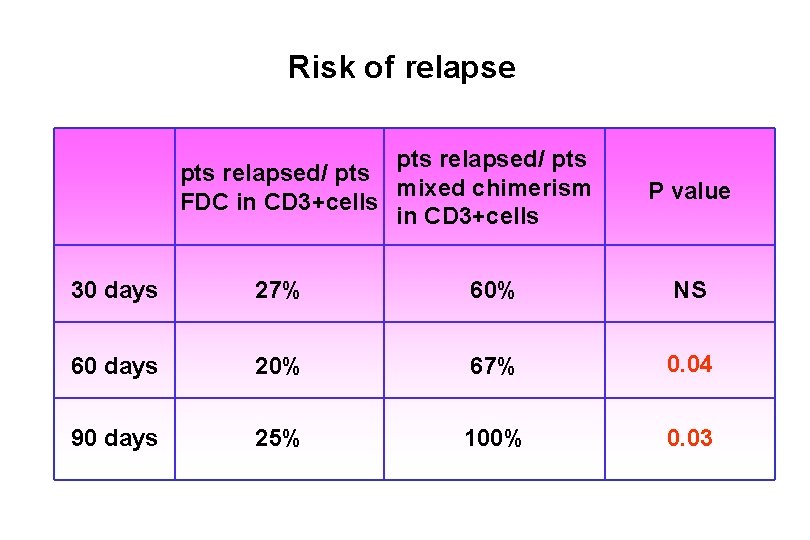
Risk of relapse pts relapsed/ pts mixed chimerism FDC in CD 3+cells P value 30 days 27% 60% NS 60 days 20% 67% 0. 04 90 days 25% 100% 0. 03
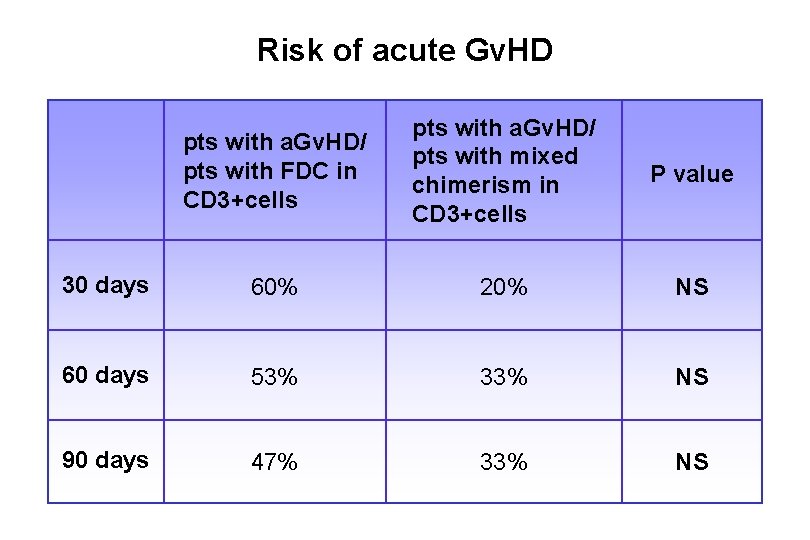
Risk of acute Gv. HD pts with a. Gv. HD/ pts with FDC in CD 3+cells pts with a. Gv. HD/ pts with mixed chimerism in CD 3+cells P value 30 days 60% 20% NS 60 days 53% 33% NS 90 days 47% 33% NS
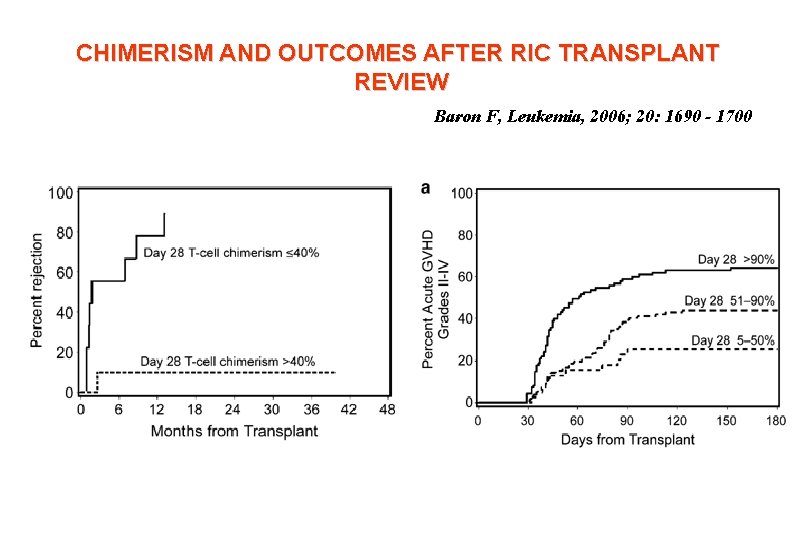
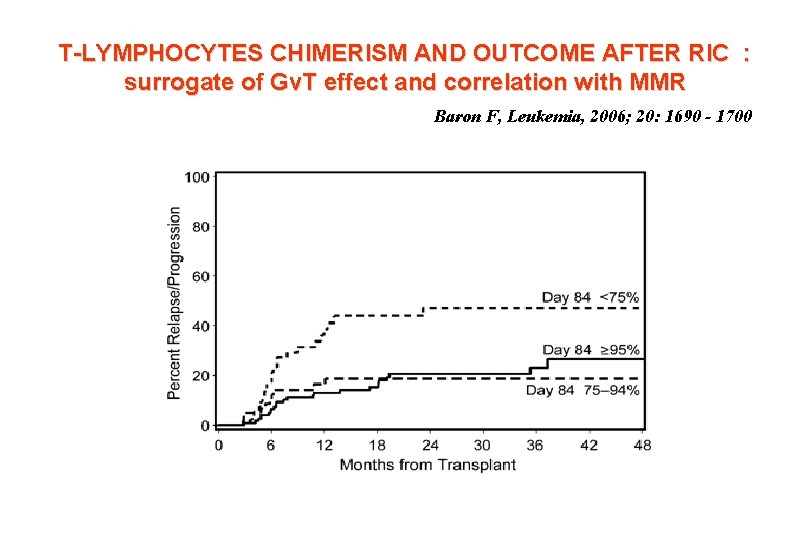
CHIMERISM AND OUTCOMES AFTER RIC TRANSPLANT REVIEW Baron F, Leukemia, 2006; 20: 1690 - 1700
T-LYMPHOCYTES CHIMERISM AND OUTCOME AFTER RIC : surrogate of Gv. T effect and correlation with MMR Baron F, Leukemia, 2006; 20: 1690 - 1700
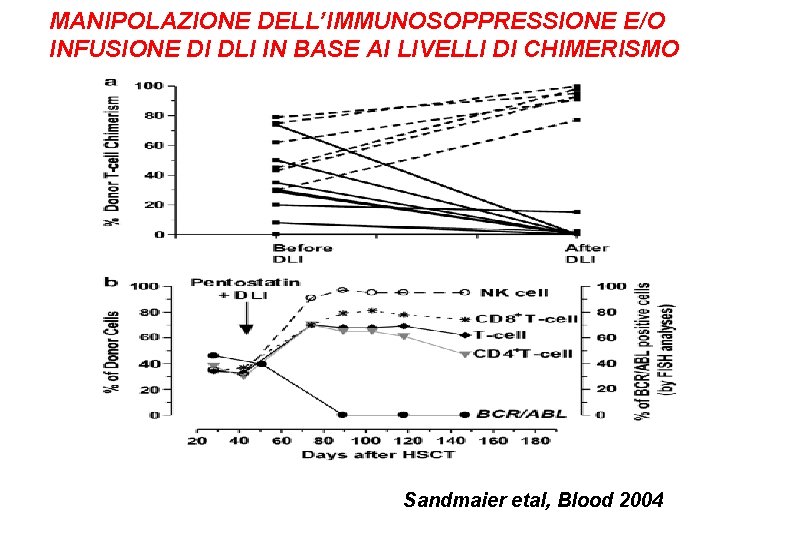
MANIPOLAZIONE DELL’IMMUNOSOPPRESSIONE E/O INFUSIONE DI DLI IN BASE AI LIVELLI DI CHIMERISMO Sandmaier etal, Blood 2004
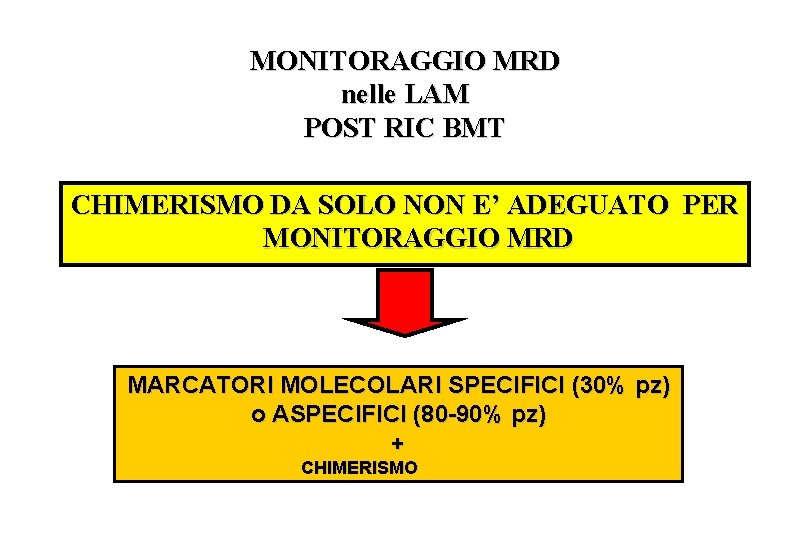
MONITORAGGIO MRD nelle LAM POST RIC BMT CHIMERISMO DA SOLO NON E’ ADEGUATO PER MONITORAGGIO MRD MARCATORI MOLECOLARI SPECIFICI (30% pz) o ASPECIFICI (80 -90% pz) + CHIMERISMO
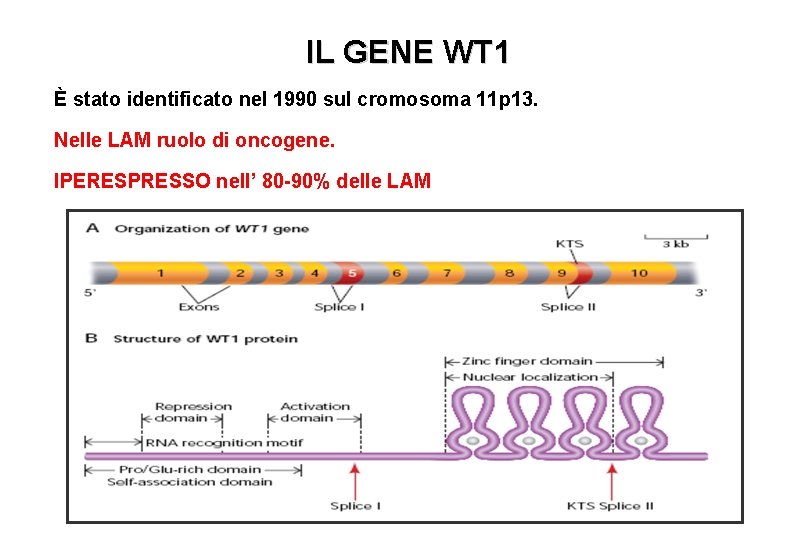
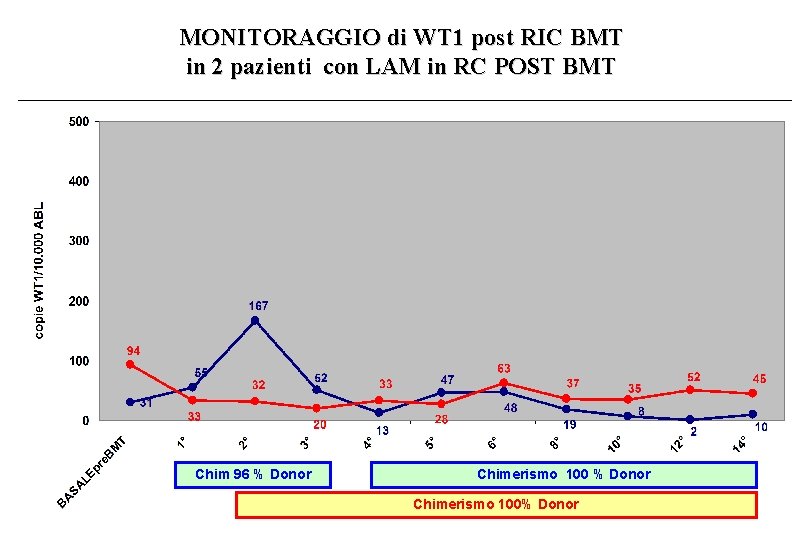
IL GENE WT 1 È stato identificato nel 1990 sul cromosoma 11 p 13. Nelle LAM ruolo di oncogene. IPERESPRESSO nell’ 80 -90% delle LAM
MONITORAGGIO di WT 1 post RIC BMT in 2 pazienti con LAM in RC POST BMT Chim 96 % Donor Chimerismo 100% Donor
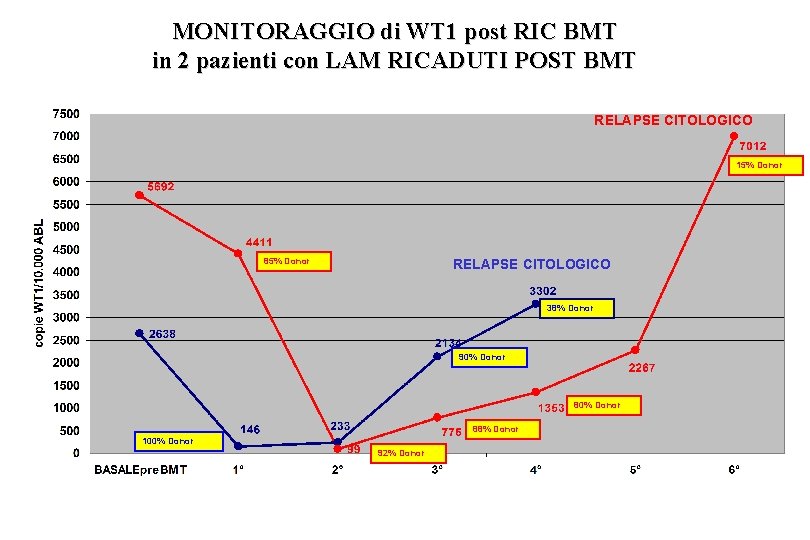
MONITORAGGIO di WT 1 post RIC BMT in 2 pazienti con LAM RICADUTI POST BMT RELAPSE CITOLOGICO 15% Donor 85% Donor RELAPSE CITOLOGICO 38% Donor 90% Donor 88% Donor 100% Donor 92% Donor
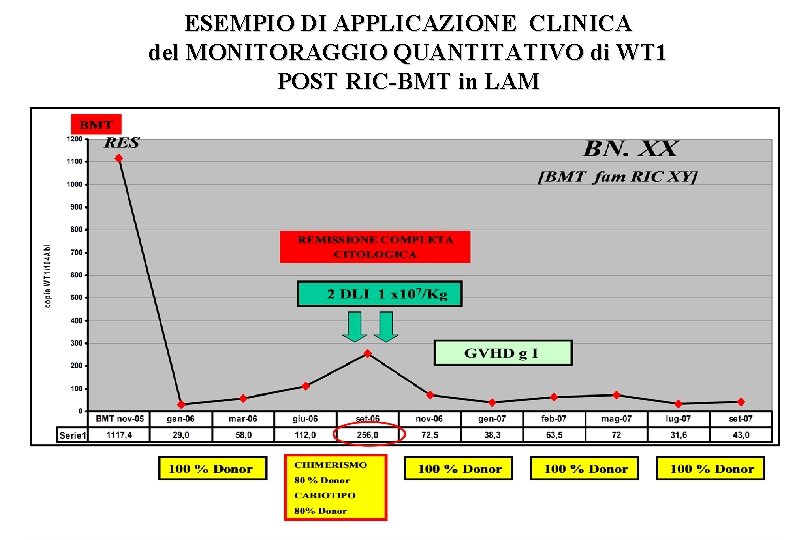
ESEMPIO DI APPLICAZIONE CLINICA del MONITORAGGIO QUANTITATIVO di WT 1 POST RIC-BMT in LAM
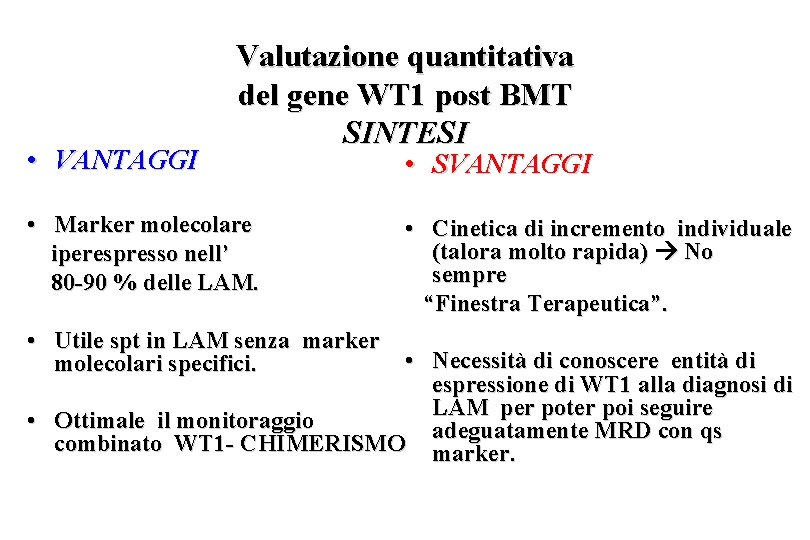
• VANTAGGI Valutazione quantitativa del gene WT 1 post BMT SINTESI • Marker molecolare iperespresso nell’ 80 -90 % delle LAM. • Utile spt in LAM senza marker molecolari specifici. • SVANTAGGI • Cinetica di incremento individuale (talora molto rapida) No sempre “Finestra Terapeutica”. • Necessità di conoscere entità di espressione di WT 1 alla diagnosi di LAM per poter poi seguire • Ottimale il monitoraggio adeguatamente MRD con qs combinato WT 1 - CHIMERISMO marker.
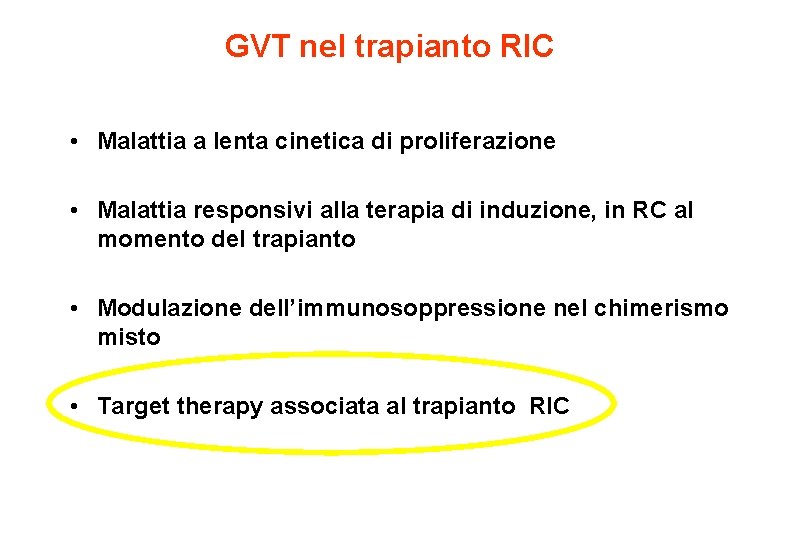
GVT nel trapianto RIC • Malattia a lenta cinetica di proliferazione • Malattia responsivi alla terapia di induzione, in RC al momento del trapianto • Modulazione dell’immunosoppressione nel chimerismo misto • Target therapy associata al trapianto RIC
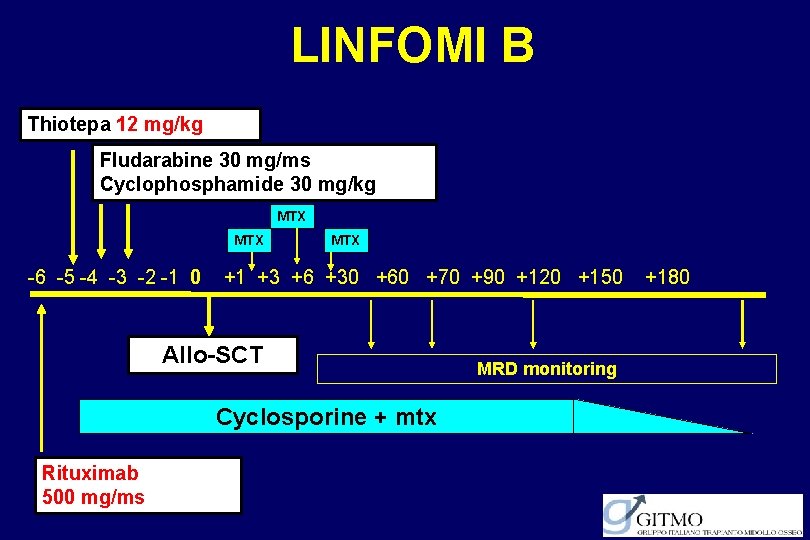
LINFOMI B Thiotepa 12 mg/kg Fludarabine 30 mg/ms Cyclophosphamide 30 mg/kg MTX -6 -5 -4 -3 -2 -1 0 MTX +1 +3 +6 +30 +60 +70 +90 +120 +150 Allo-SCT Cyclosporine + mtx Rituximab 500 mg/ms MRD monitoring +180
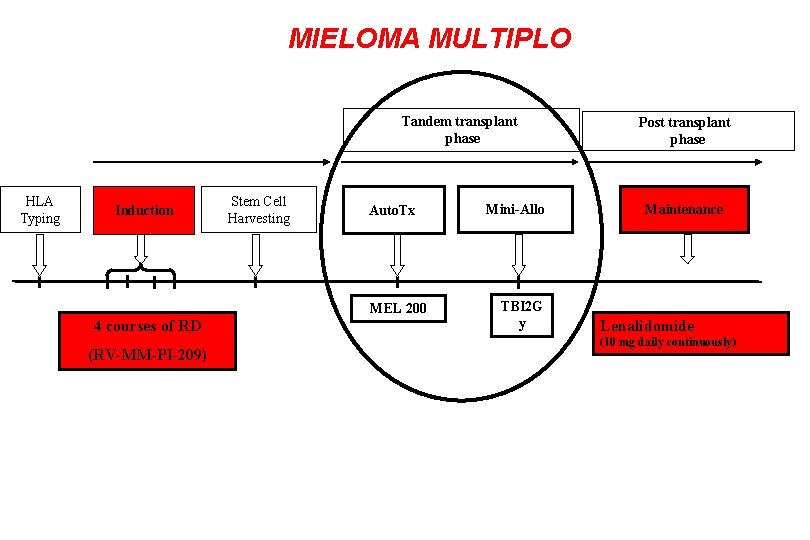
MIELOMA MULTIPLO Tandem transplant phase HLA Typing Induction Stem Cell Harvesting Auto. Tx MEL 200 4 courses of RD (RV-MM-PI-209) Mini-Allo TBI 2 G y Post transplant phase Maintenance Lenalidomide (10 mg daily continuously)
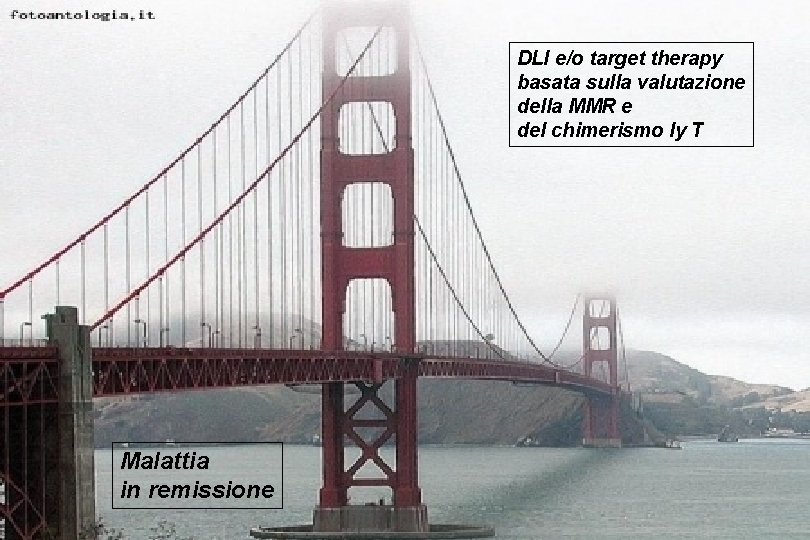
DLI e/o target therapy basata sulla valutazione della MMR e del chimerismo ly T Malattia in remissione