
Clinic Transformation in East Toronto Study June 4
- Slides: 24
Clinic Transformation in East Toronto Study June 4, 2013
Context �East of Yonge St. Study � Created by Clinics � Funded through a grant request to LAO � Examined relationship between client needs and existing structures � Explored refinements to client-centred model for poverty law � Explored potential for expanded partnerships, collaboration, other new relationships between Clinics
Poverty law exploration �Community profiles � Demographic analysis of each census tract in catchments � Exploring concentrations of challenges relating to income, housing, immigration and family obligations �Review of literature � International English language literature � Service provision � Access to justice
Poverty law exploration �Focus groups � 6 front-line Clinic staff focus groups � 6 focus groups with Clinic clients �Key � 6 informant interviews Clinic Directors � 2 Private Bar Lawyers � 2 PBLO/Pro Bono Students � 6 community organizations
Methodology � Review of patterns of service use in all east end Clinics � Review of caseloads in each Clinic by type � Review geographic mix of clients in each Clinic � Review of different staffing structures and models � Comparisons of existing models of delivery in other Clinics in Ontario � Reviewed data, challenges, options with Clinic EDs
Data showed significant challenges Growing demand for service by clients �Pressure on scope and volume of service � Volume of demand consistency exceeds capacity � Case selection reflected very dire need, not full scope of demand � Services restricted to clients at very, very low income levels � Demand for expanded areas of law �Employment, more Immigration, Family law
Data showed significant challenges Non-case related service � Some Clinics face difficulties to maintain community outreach and engagement � Sustaining PLE and community development challenging � Unable to keep up with law reform demand � Front-line community outreach efforts often pushed to back burner � Sustaining partnerships with other organizations serving low income communities challenging
Data showed significant challenges Access to justice � Central � What � Who consideration impedes access? needs access? � How do access questions affect the organization of Clinics? � Concern about boundaries, structures affecting access
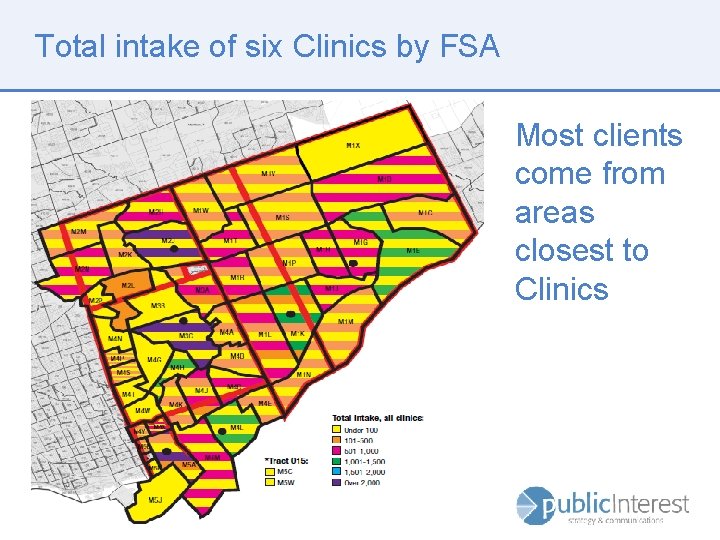
Total intake of six Clinics by FSA Most clients come from areas closest to Clinics
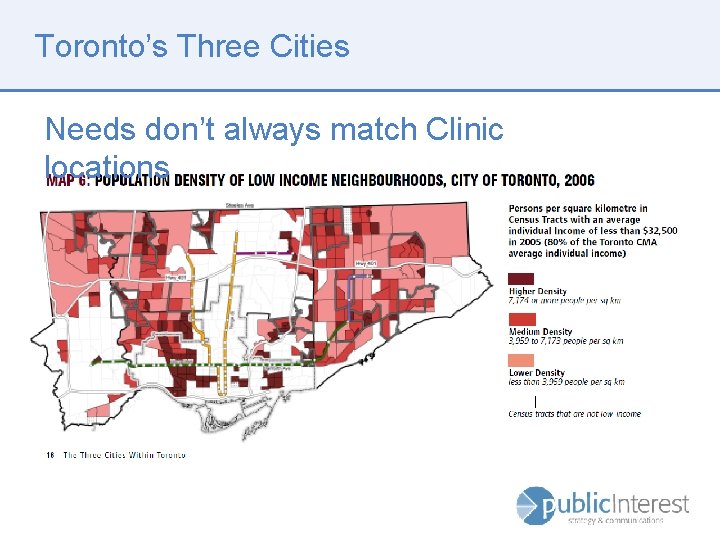
Toronto’s Three Cities Needs don’t always match Clinic locations
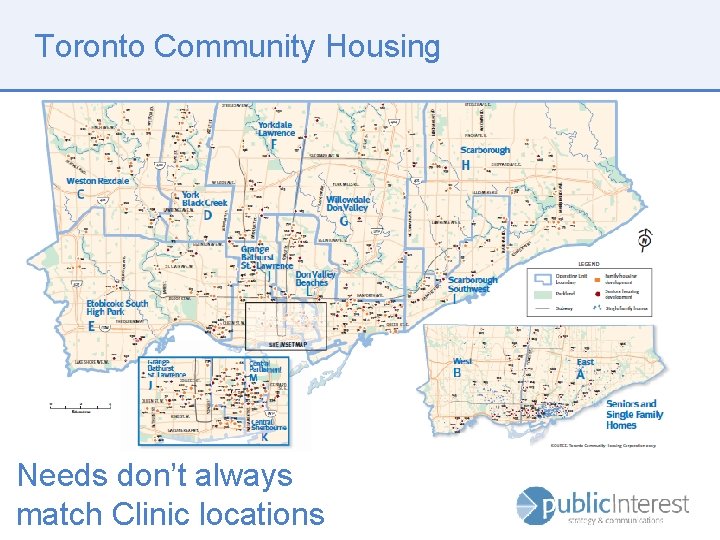
Toronto Community Housing Needs don’t always match Clinic locations
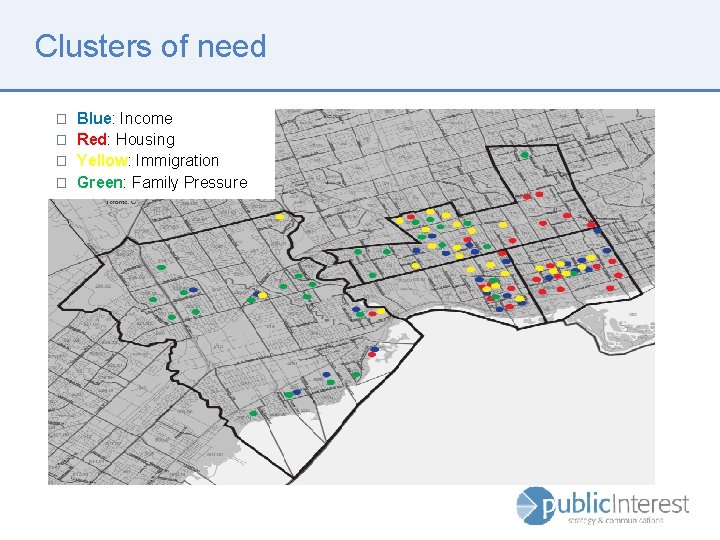
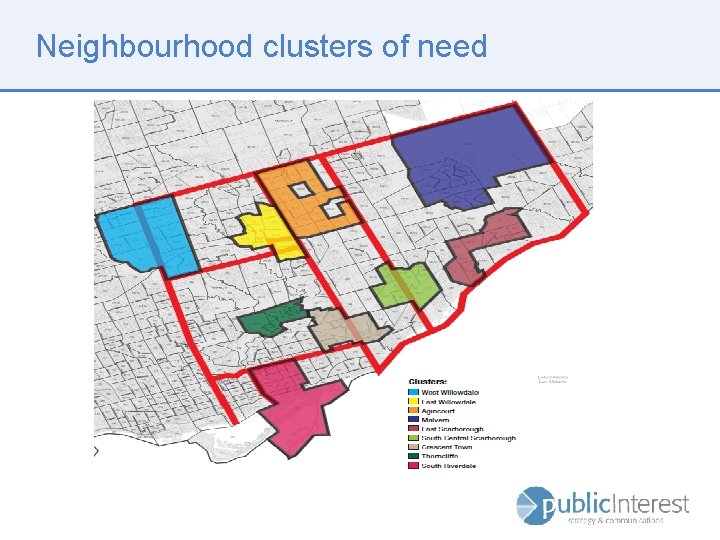
Clusters of need � � Blue: Income Red: Housing Yellow: Immigration Green: Family Pressure
Neighbourhood clusters of need
Clinic Boundaries �Varied definitions of “local” � Variations of geography – some Clinics in large areas, far from clients � Larger potential for travel challenges and access issues �Clients in larger catchments less likely to access service if office is far from home
Clinic staffing models Staffing and structure � Discrepancy in size results in discrepancy in staffing � Larger Clinics form teams, smaller Clinics cope with fluctuations � Variations in staff complements � Different ratios of lawyers, community legal workers and paralegals � Smaller Clinics express frustration about staffing constraints/flexibility
Findings – access points and proximity � Clients require familiar gateways to services � Easy to reach � Presence of established, substantial, professional organization � Principle of local proximity strong determinant of good service delivery � Strategies needed for diverse communities and geographic neighbourhoods � Review of target populations, patterns of services need, barriers to service � Smaller Clinics found creating satellites or access points more difficult
Findings - partnerships � Range of informal partnerships supporting areas of law, referral and service � Broaden scope of service and enhanced capacity of Clinics � Potential for coordinated services, collaboration, colocation � Professional (pro bono), individuals, student partnerships � Intensity of partnerships must be based on strategy to meet needs of community � Dedicated staff time needed for successful partnerships � Smaller Clinics found dedicated partnership time harder to accommodate
Findings – intake models �Phone and walk-in intake support broader access to service � Informed intake staff familiar with legal and local social services reinforce quality service � In-person intake preferred when possible � IT challenges to successful intake
Findings – Clinic structure �No clear criteria underlying existing boundaries � Not aligned with adjudicating bodies, administrative offices � Vary in size and population � Many too large for truly local access but too small to create local hubs or satellites
Findings – staff structure � Inconsistent staffing allocation criteria � Smaller Clinics benefit from proximity to clients; challenges in diversified team, flexibility and workloads � Larger Clinics share workloads, support specialized skills and expertise; challenges in engaging and being responsive to communities � Most Clinics operate primarily in three areas of law � Landlord/tenant, income supports, immigration � Staff sizes range from 5 -10 staff in each Clinic � Some Clinics working within an integrated team model
Findings – Clinic size � Criteria varies too widely in size, volume of clients and internal capacities � New boundaries should be based on clear criteria � Should reflect client populations and their needs, and ways in which Clinics operate most effectively � Transportation barriers and proximity of service should be integrated to increase access � Connection � Sustaining to community key element of success awareness in context of ongoing demographic and needs shift � Role of community boards, outreach staff share role in leadership
Findings – catchment boundaries � Relationships important in advocating on behalf of clients � Catchment boundaries based on adjudicating bodies, governments sustain relationships � Elected officials as sources of referral, avenues for law reform and client advocacy � Local service networks and delivery systems shape catchment � Reinforce local, community input into service planning, referral � Physical proximity increases opportunities for local issue identification � Well maintained relationships sustain effective service delivery
Findings – information technology �Multiple tools support staff communication and enhanced client support � Clients need access to in-person support, complemented by other methods/tools � Online document management, including scanning capacity � Mobile communication tools for staff (cell phones) � Management time necessary to support and coordinate staff
Findings – locations, administration Permanent locations � Clients have more confidence in legal services delivered by organizations with a clear physical presence in the community Administration � Dedicated administrative support needed with enhanced client-centred services � Support formal partnerships � Focused intake structure � IT infrastructure