
CLINDAMYCIN Antibacterial activity Anaerobes esp Bacteroides fragilis Gve
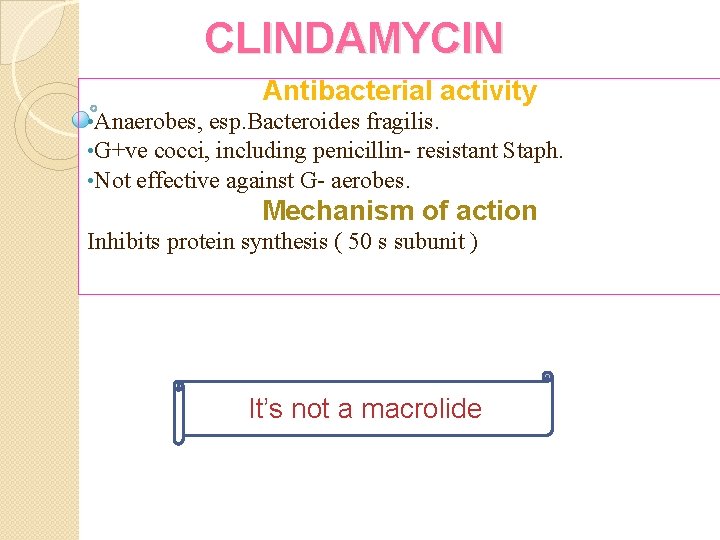
CLINDAMYCIN Antibacterial activity • Anaerobes, esp. Bacteroides fragilis. • G+ve cocci, including penicillin- resistant • Not effective against G- aerobes. Staph. Mechanism of action Inhibits protein synthesis ( 50 s subunit ) It’s not a macrolide
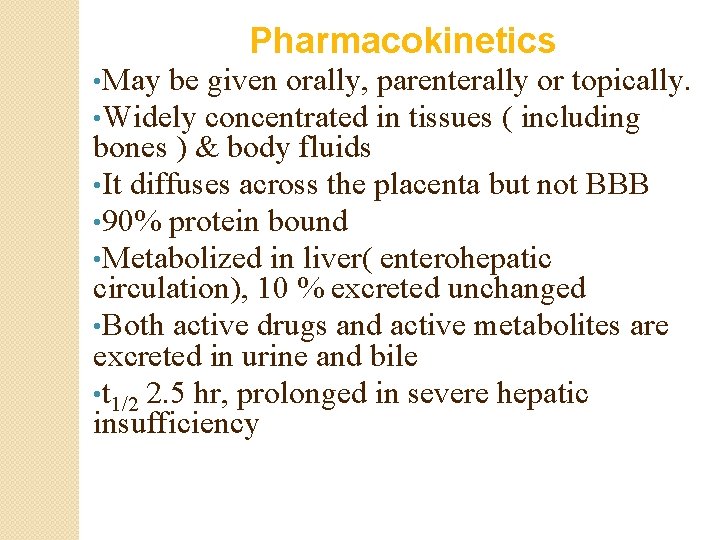
Pharmacokinetics • May be given orally, parenterally or topically. • Widely concentrated in tissues ( including bones ) & body fluids • It diffuses across the placenta but not BBB • 90% protein bound • Metabolized in liver( enterohepatic circulation), 10 % excreted unchanged • Both active drugs and active metabolites are excreted in urine and bile • t 1/2 2. 5 hr, prolonged in severe hepatic insufficiency

CLINDAMYCIN ( CONT. ) Clinical uses Limited because of pseudomembranous colitis Anaerobic infections caused by Bacteroids( metronidazole is preferred). � Staphylcoccal joint & bone infections such as osteomyelitis � Staph. Conjunctivitis ( eye drops ) � � Diabetic foot infections � � � Acne ( 1% topical gel & lotion ) (has no side effects) Treat penetrating wound (with AG or cephalosporins) Prophylaxis of endocarditis Pneumocystis jerovecii (with primaquine Toxoplasmis of AIDS pts. (with pyremthamine) Side effects Mainly GI disturbances: Diarrhoea is common Psuedomembranous colitis (due to it’s eneterohepatic circulation, so it go &comeback to intestine. hence it will stay for longer time ) � Impaired liver function � �
- Slides: 3