
Climographs What is a Climograph A graph showing
- Slides: 14
Climographs
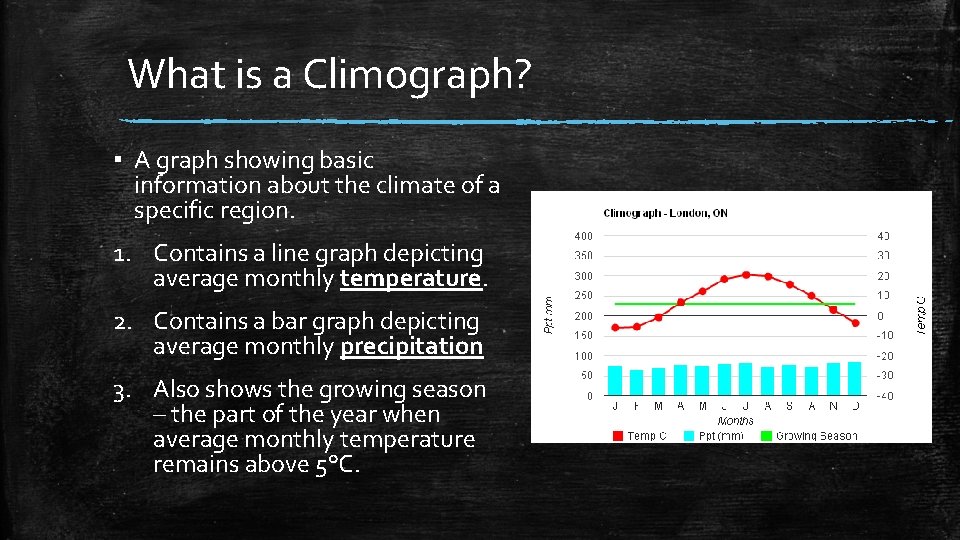
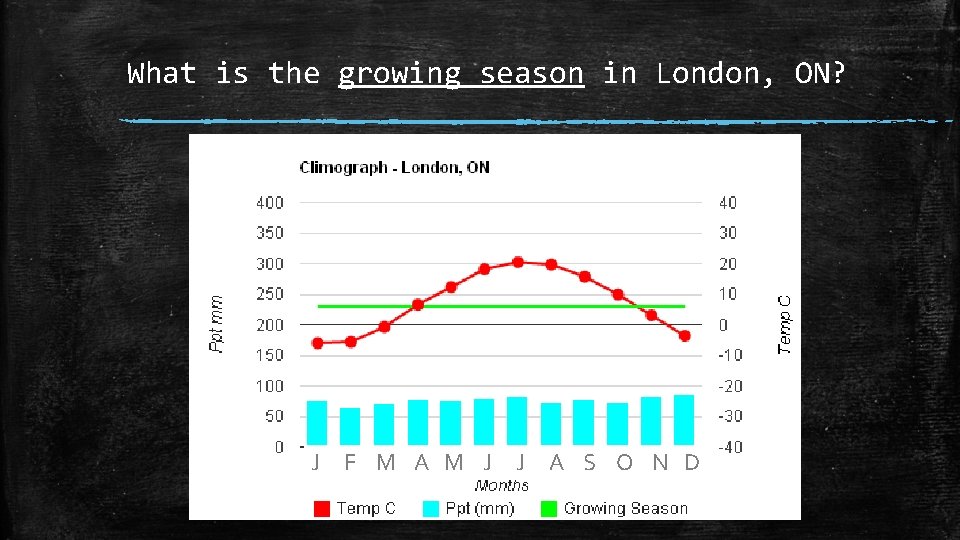
What is a Climograph? ▪ A graph showing basic information about the climate of a specific region. 1. Contains a line graph depicting average monthly temperature. 2. Contains a bar graph depicting average monthly precipitation 3. Also shows the growing season – the part of the year when average monthly temperature remains above 5°C.
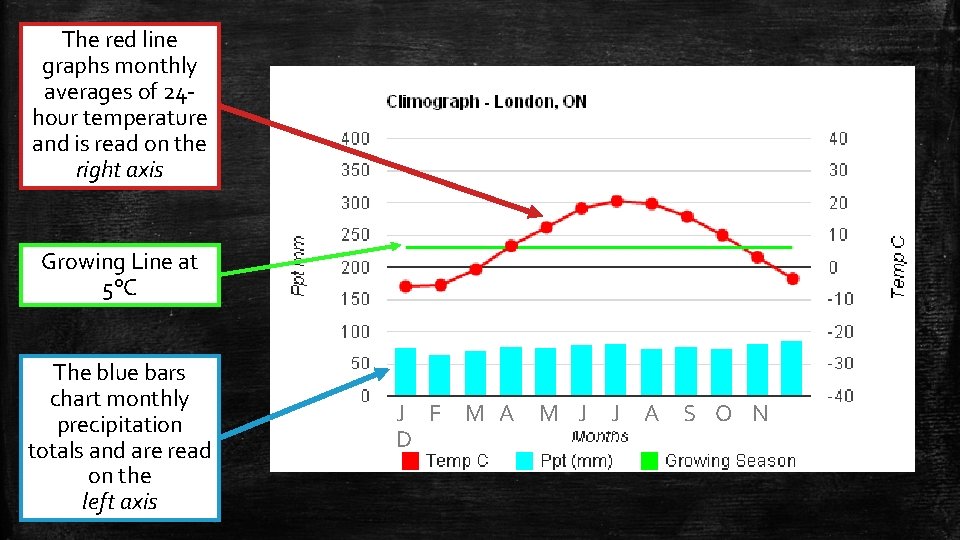
The red line graphs monthly averages of 24 hour temperature and is read on the right axis Growing Line at 5°C The blue bars chart monthly precipitation totals and are read on the left axis J F D M A M J J A S O N
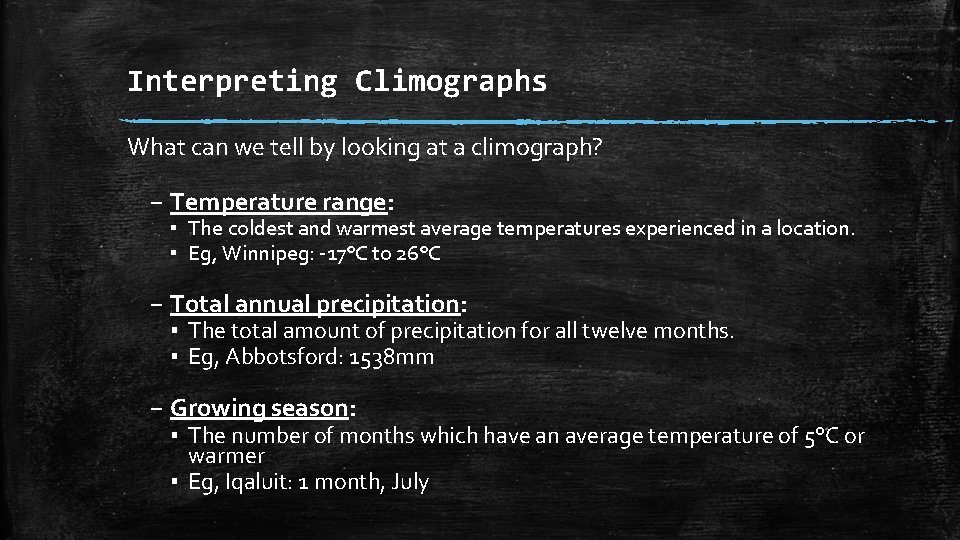
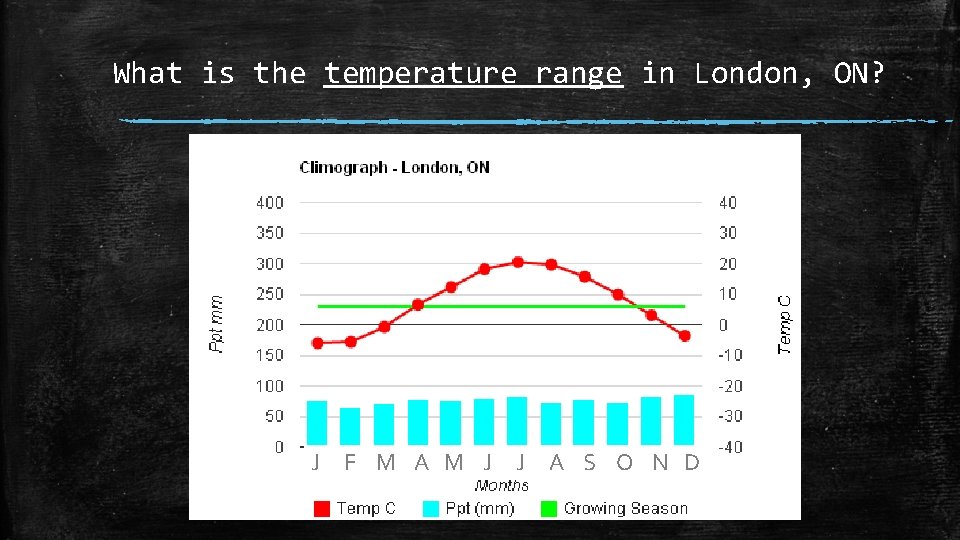
Interpreting Climographs What can we tell by looking at a climograph? – Temperature range: ▪ The coldest and warmest average temperatures experienced in a location. ▪ Eg, Winnipeg: -17°C to 26°C – Total annual precipitation: ▪ The total amount of precipitation for all twelve months. ▪ Eg, Abbotsford: 1538 mm – Growing season: ▪ The number of months which have an average temperature of 5°C or warmer ▪ Eg, Iqaluit: 1 month, July
What is the temperature range in London, ON? J F M A M J J A S O N D
What is the growing season in London, ON? J F M A M J J A S O N D
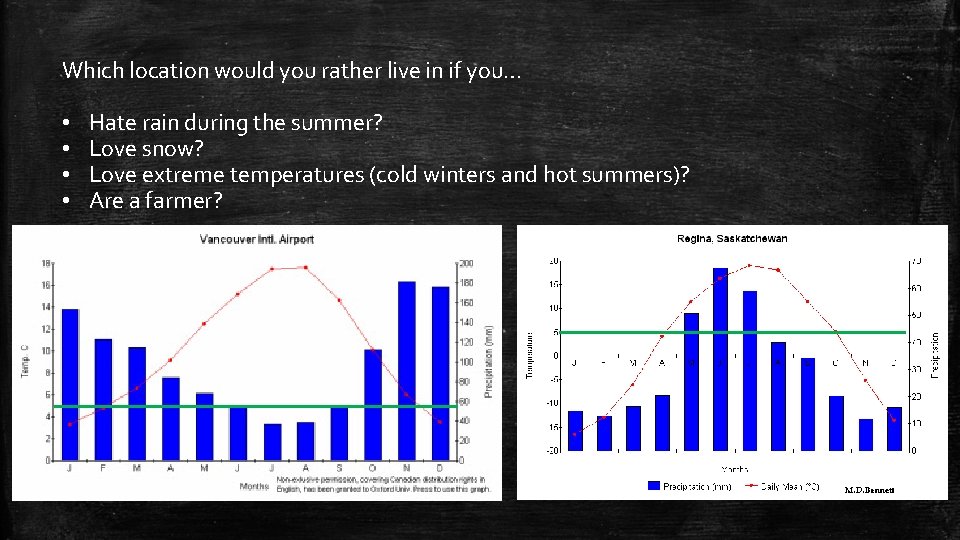
Which location would you rather live in if you… • • Hate rain during the summer? Love snow? Love extreme temperatures (cold winters and hot summers)? Are a farmer?
How does geography affect climate? Factors: Latitude: ▪ Location in terms of north and south Elevation: ▪ Height above sea level Bodies of Water: ▪ Proximity to large bodies of water
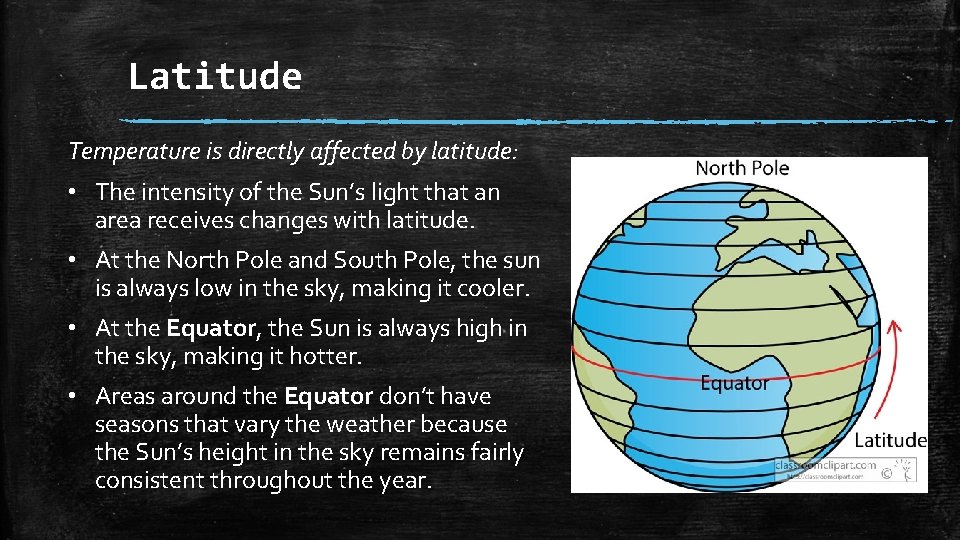
Latitude Temperature is directly affected by latitude: • The intensity of the Sun’s light that an area receives changes with latitude. • At the North Pole and South Pole, the sun is always low in the sky, making it cooler. • At the Equator, the Sun is always high in the sky, making it hotter. • Areas around the Equator don’t have seasons that vary the weather because the Sun’s height in the sky remains fairly consistent throughout the year.
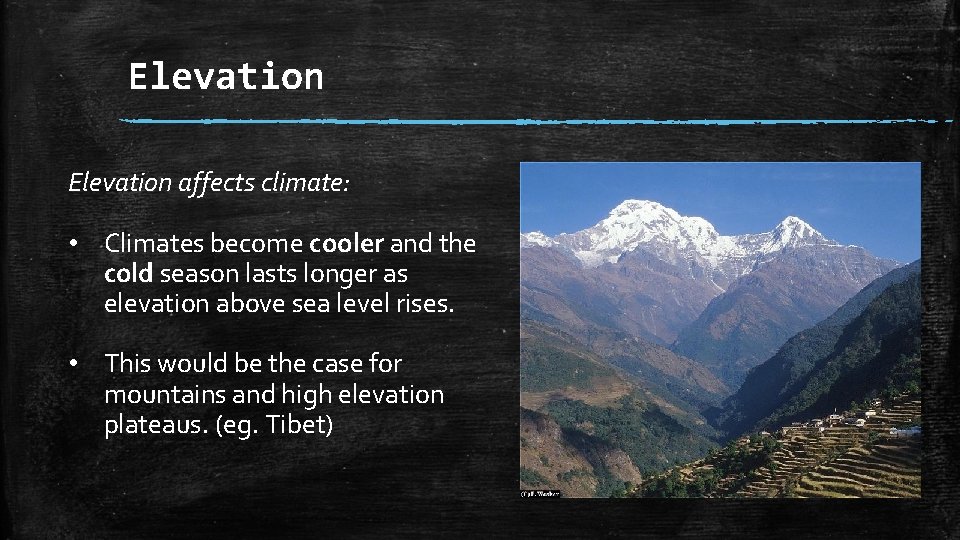
Elevation affects climate: • Climates become cooler and the cold season lasts longer as elevation above sea level rises. • This would be the case for mountains and high elevation plateaus. (eg. Tibet)
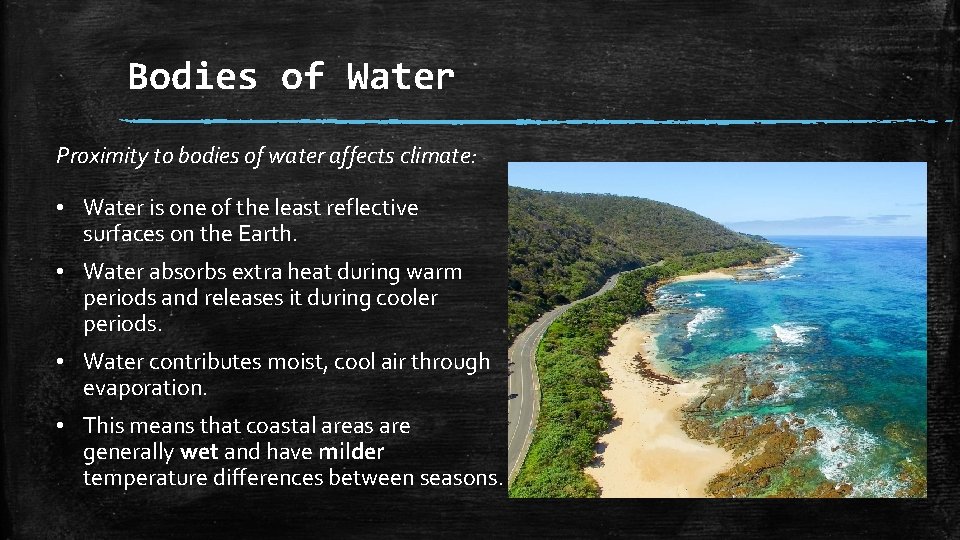
Bodies of Water Proximity to bodies of water affects climate: • Water is one of the least reflective surfaces on the Earth. • Water absorbs extra heat during warm periods and releases it during cooler periods. • Water contributes moist, cool air through evaporation. • This means that coastal areas are generally wet and have milder temperature differences between seasons.
Examples of extreme climates…
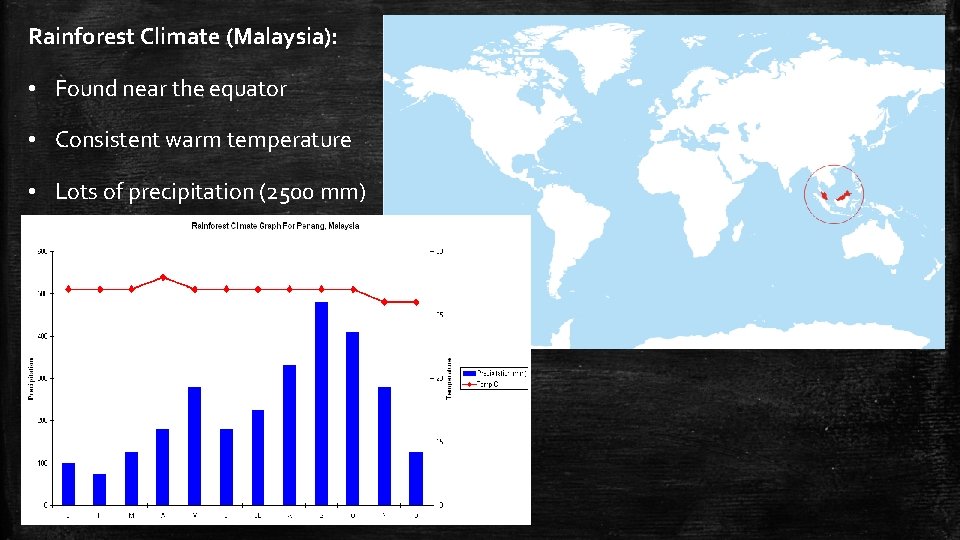
Rainforest Climate (Malaysia): • Found near the equator • Consistent warm temperature • Lots of precipitation (2500 mm)
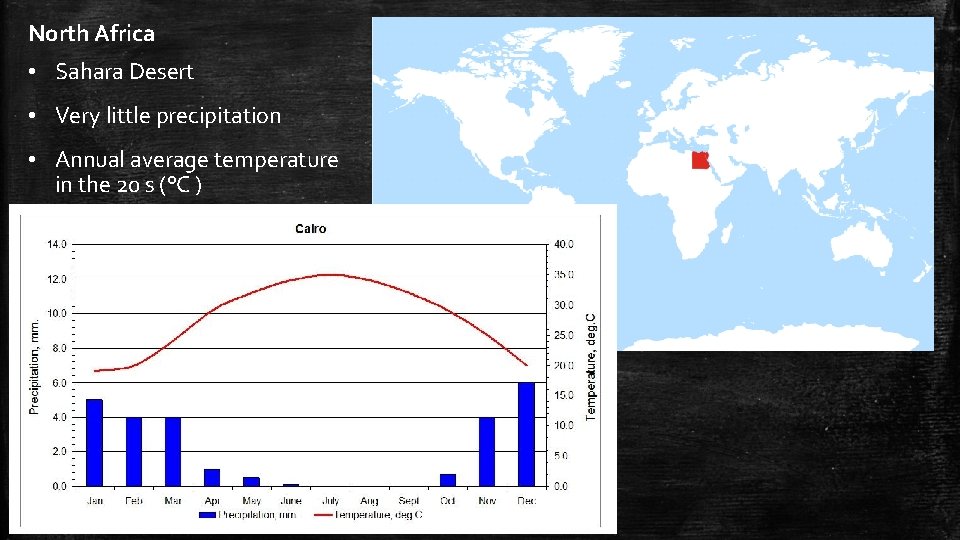
North Africa • Sahara Desert • Very little precipitation • Annual average temperature in the 20 s (°C )