
ClimateSmart Agriculture Food and Agriculture Organisation of the
- Slides: 28
Climate-Smart Agriculture Food and Agriculture Organisation of the UN (FAO) Rome, Italy
Structure • • • WHY climate-smart agriculture? WHAT is it? HOW to get there? Selected tools
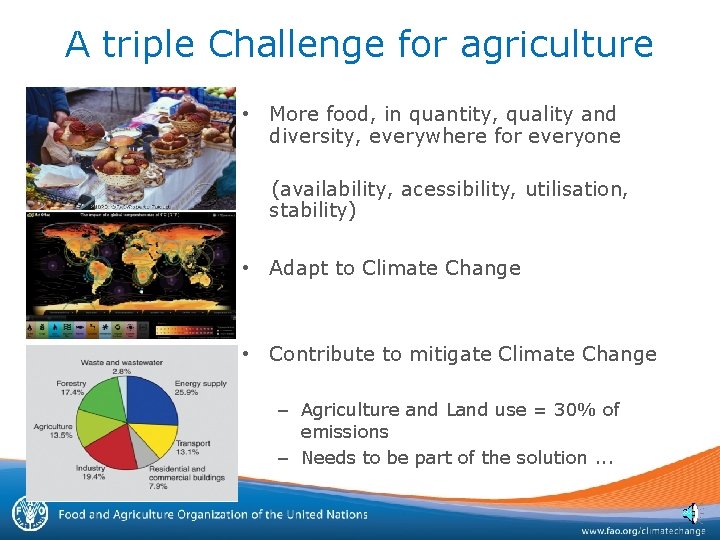
A triple Challenge for agriculture • More food, in quantity, quality and diversity, everywhere for everyone (availability, acessibility, utilisation, stability) • Adapt to Climate Change • Contribute to mitigate Climate Change – Agriculture and Land use = 30% of emissions – Needs to be part of the solution. . .
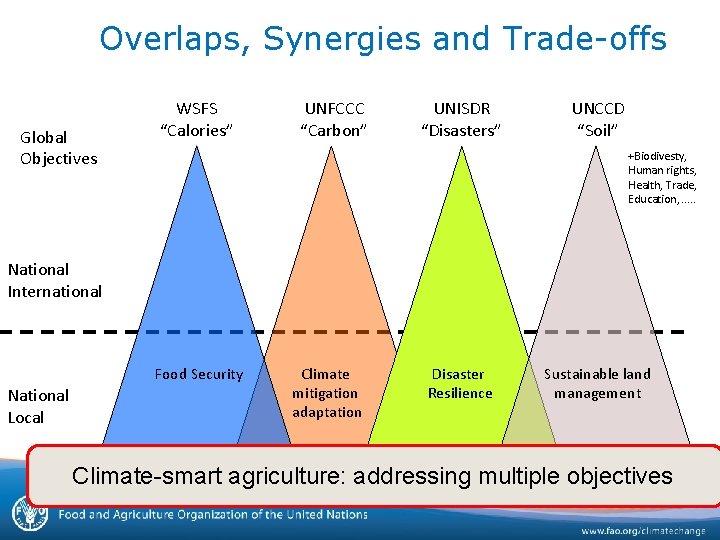
Overlaps, Synergies and Trade-offs International to local divide Global Objectives WSFS “Calories” UNFCCC “Carbon” UNISDR “Disasters” UNCCD “Soil” +Biodivesty, Human rights, Health, Trade, Education, . . . National International Food Security National Local Climate mitigation adaptation Disaster Resilience Sustainable land management Climate-smart agriculture: addressing multiple objectives
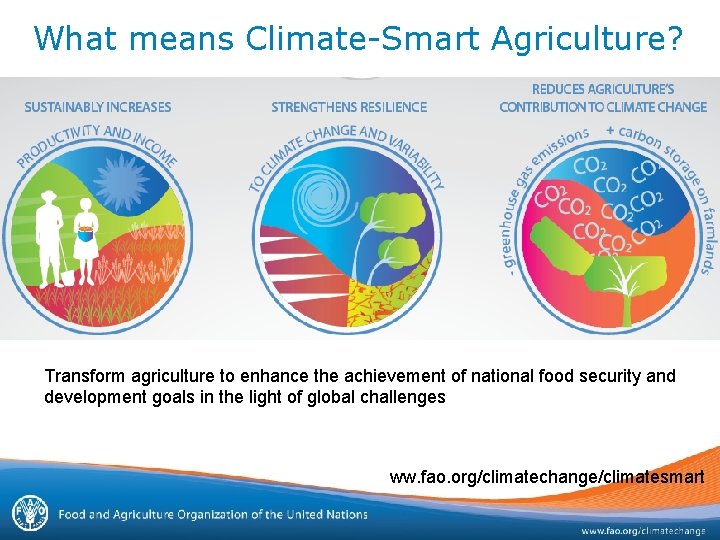
Long-term Adaptation - Towards Climate. What means Climate-Smart Agriculture? Smart Agricultural Landscapes Transform agriculture to enhance the achievement of national food security and development goals in the light of global challenges ww. fao. org/climatechange/climatesmart
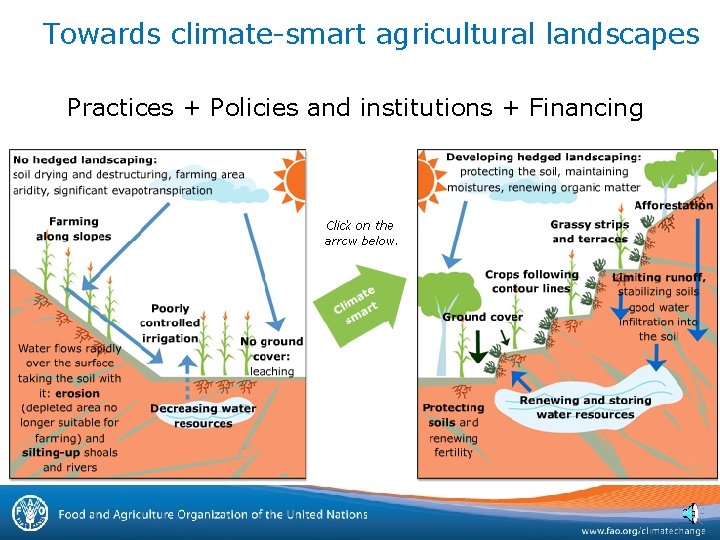
Towards climate-smart agricultural landscapes Practices + Policies and institutions + Financing
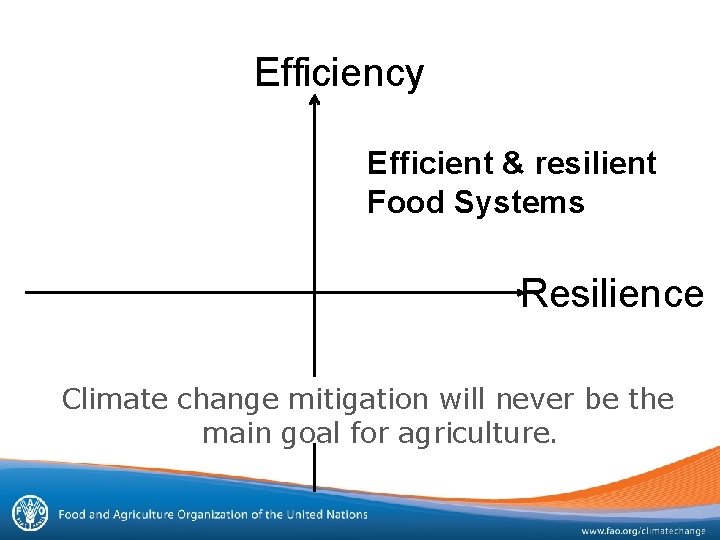
Efficiency Efficient & resilient Food Systems Resilience Climate change mitigation will never be the main goal for agriculture.
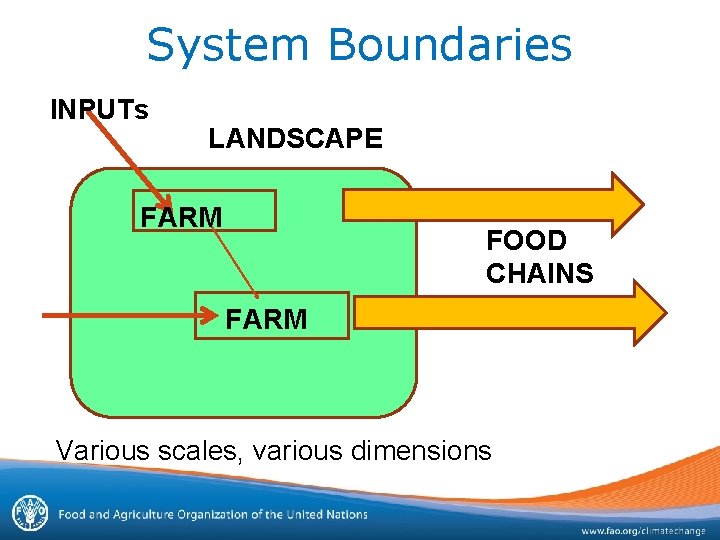
System Boundaries INPUTs LANDSCAPE FARM FOOD CHAINS FARM Various scales, various dimensions
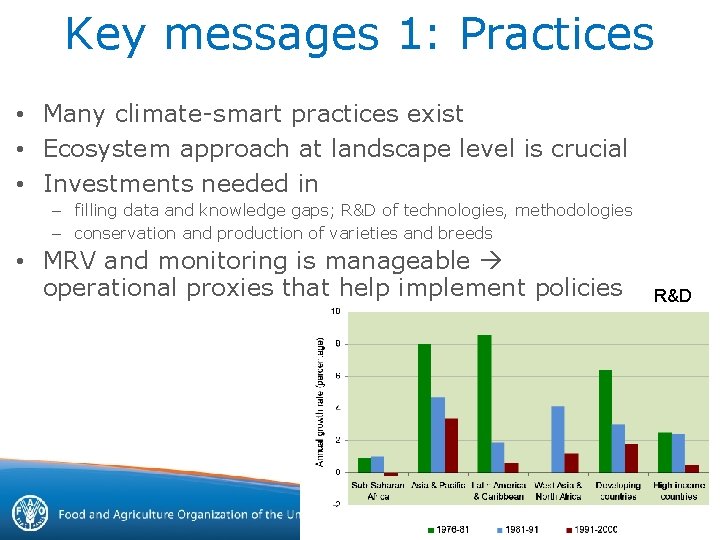
Key messages 1: Practices • Many climate-smart practices exist • Ecosystem approach at landscape level is crucial • Investments needed in – filling data and knowledge gaps; R&D of technologies, methodologies – conservation and production of varieties and breeds • MRV and monitoring is manageable operational proxies that help implement policies R&D
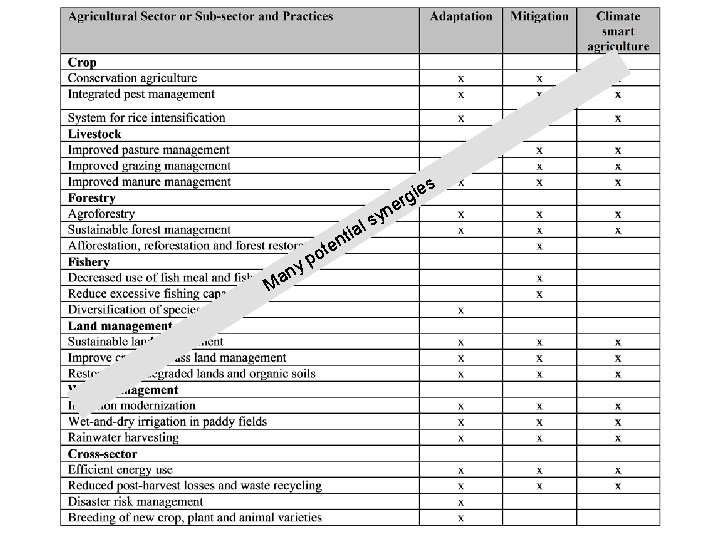
s ial yn n a M nt e t o yp es i g er
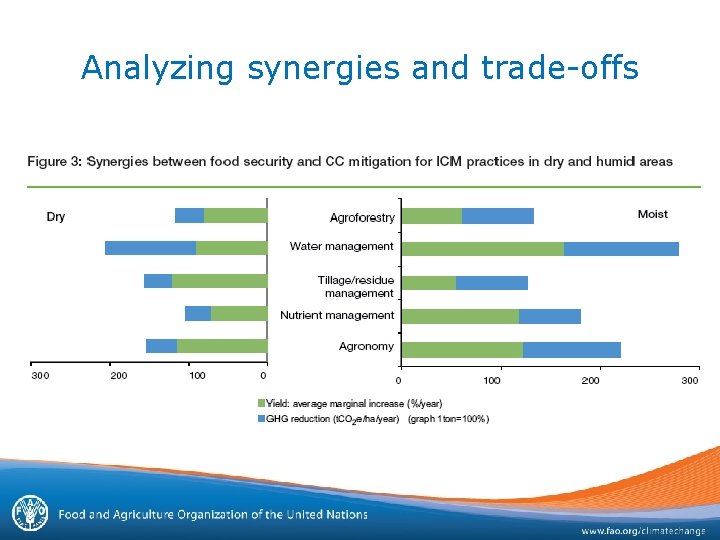
Analyzing synergies and trade-offs
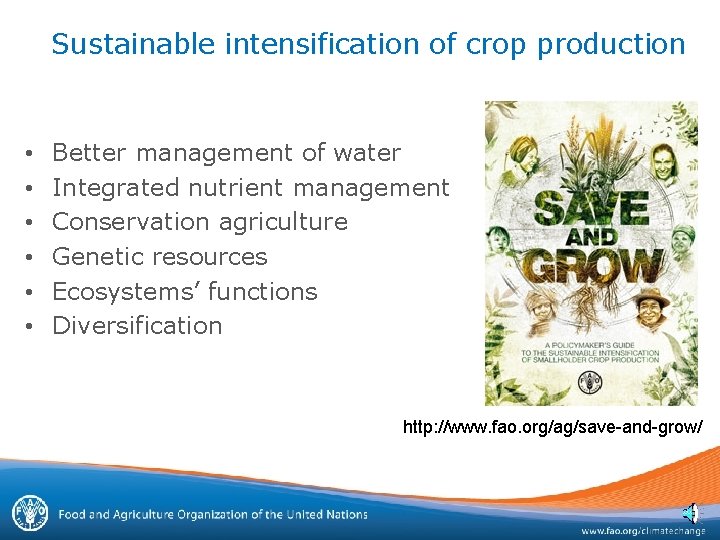
Sustainable intensification of crop production • • • Better management of water Integrated nutrient management Conservation agriculture Genetic resources Ecosystems’ functions Diversification http: //www. fao. org/ag/save-and-grow/
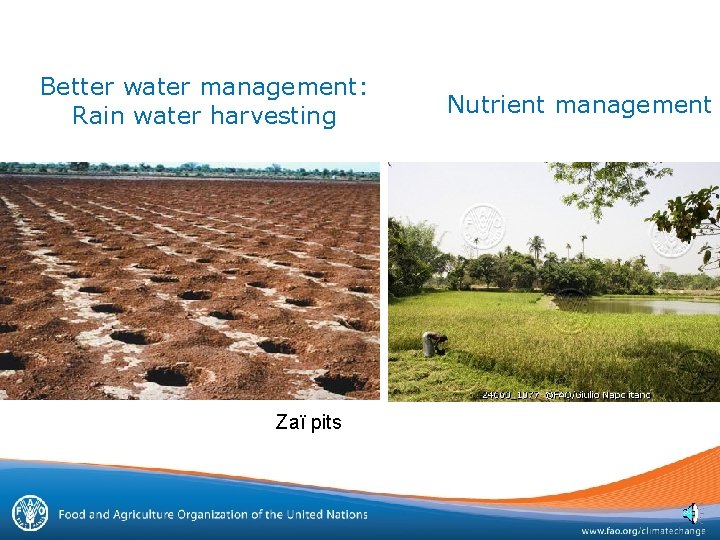
Better water management: Rain water harvesting Zaï pits Nutrient management
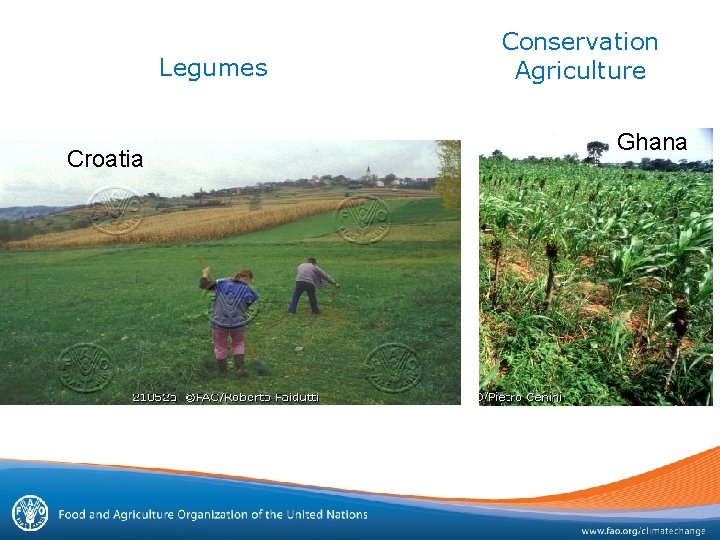
Legumes Croatia Conservation Agriculture Ghana
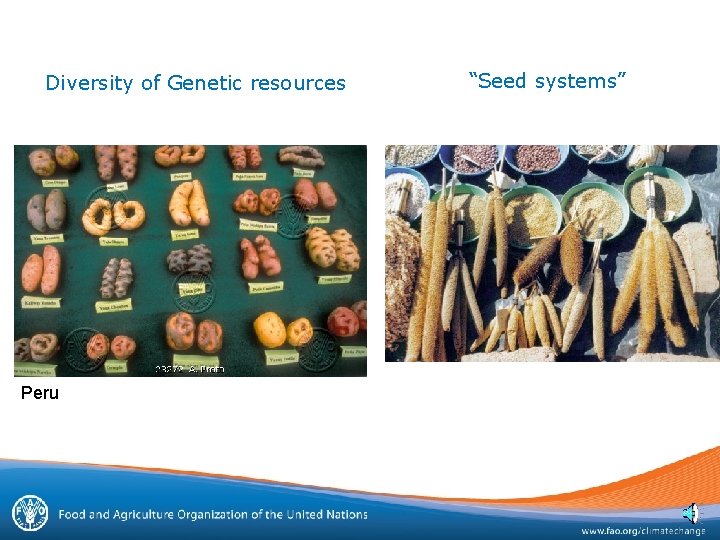
Diversity of Genetic resources Peru “Seed systems”
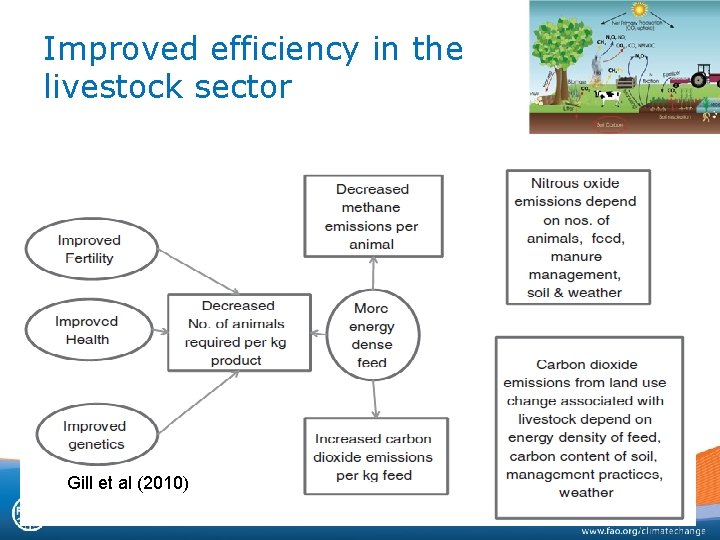
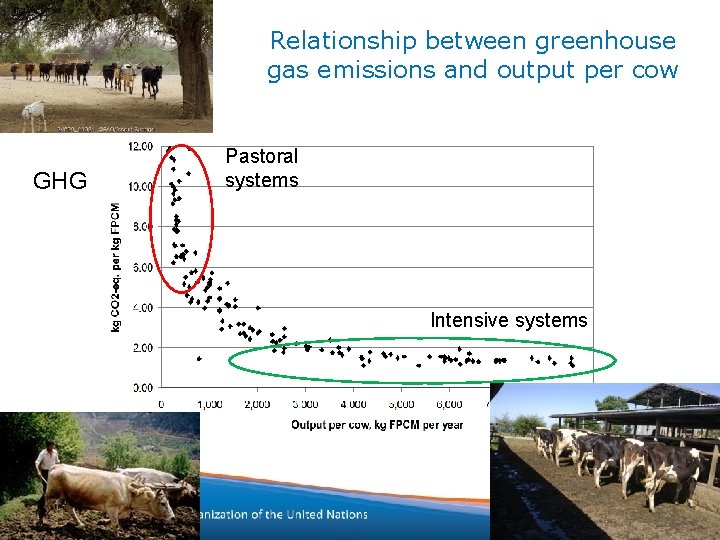
Improved efficiency in the livestock sector Gill et al. (2010) Gill et al (2010)
Relationship between greenhouse gas emissions and output per cow GHG Pastoral systems Intensive systems Milk
Resilience in “Industrial” systems • Heat stress – Buildings (projections) – Management (previsions) • Feed accessibility – Increased variability of production and trade – Increased price volatility • Flexibility
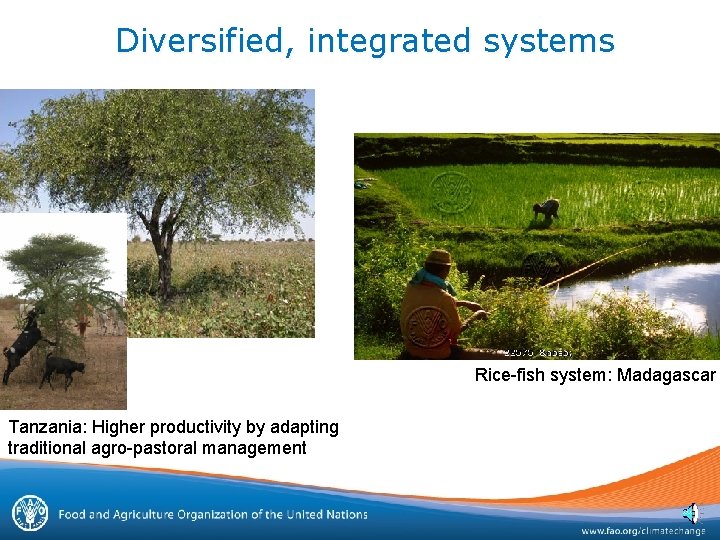
Diversified, integrated systems Rice-fish system: Madagascar Tanzania: Higher productivity by adapting traditional agro-pastoral management
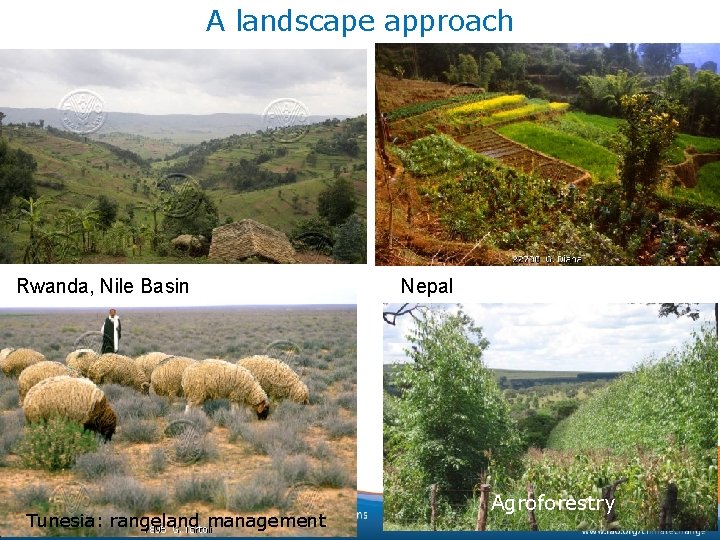
A landscape approach Rwanda, Nile Basin Tunesia: rangeland management Nepal Agroforestry
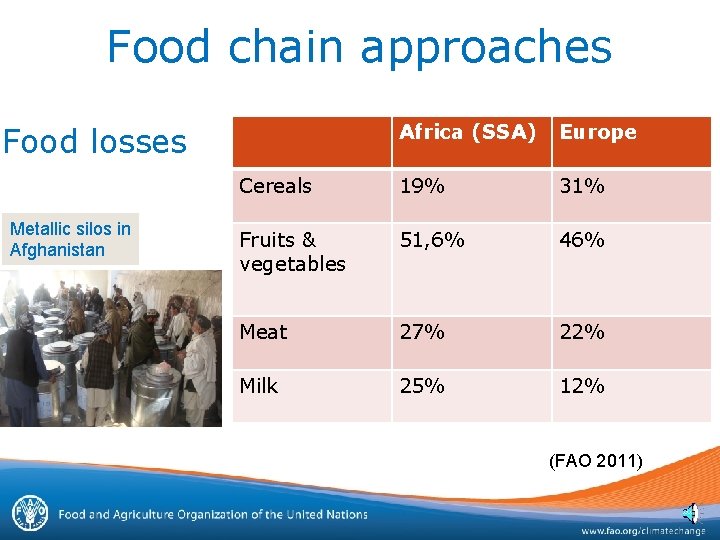
Food chain approaches Africa (SSA) Europe Cereals 19% 31% Fruits & vegetables 51, 6% 46% Meat 27% 22% Milk 25% 12% Food losses Metallic silos in Afghanistan (FAO 2011)
CSA is part of the bigger efforts towards to Sustainable development • transition towards truly sustainable food consumption and production systems that do not harms ecosystems on which supplies depend • policies that moderate future food demand wastage can reduce stresses on ecosystems and facilitate the transition • wise resource use in agriculture is essential to achieving environmental sustainability, including climate-smart practices Requires policy action and improved governance of food systems (e. g. land tenure, pricing, R&D, safety nets, markets , real-time info, smallholder support, commitment)
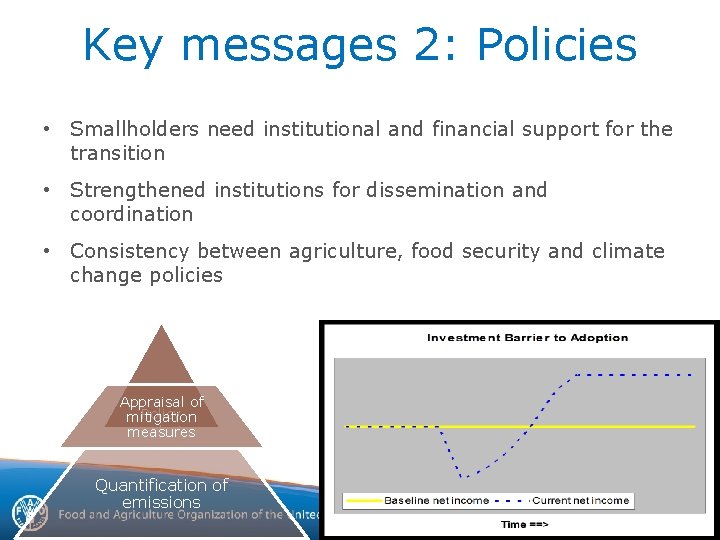
Key messages 2: Policies • Smallholders need institutional and financial support for the transition • Strengthened institutions for dissemination and coordination • Consistency between agriculture, food security and climate change policies Appraisal of Policy mitigation analysis measures Quantification of emissions
Key messages 3: Finance • Available financing, current and projected, are substantially insufficient • Combining finance (public/private, climate change/food security) improves options • Fast-track financing must take sector-specific considerations into account
Capacity development on climate change • Training programs for GHG inventory development and life cycle analysis; methodology & tool development • Learning services on Climate Change, Agriculture and Food Security, incl. E-learning http: //www. fao. org/climatechange/learning • Climate-Smart Agriculture Sourcebook planned in collaboration with World Bank (forthcoming) • Mainstreaming: Various guidance materials for incorporating CC considerations into Agricultural/Forest Projects and programmes
Tools for SLM/NRM assessment • SLM assessment tools with WOCAT World Overview of Conservation Approaches and Technologies: http: //www. wocat. net/ • LADA land degradation and national SLM assessment http: //www. fao. org/nr/land/degradation/en/ • Terrafrica Country support tool for SLM planning http: //www. terrafrica. org/ • TECA: Technologies and practices for small agricultural producers http: //teca. fao. org/
Global and national support related to GHG inventories • Training courses in forest & natural resources monitoring • Support to the CD-REDD process to develop the GHG Inventories • Capacity building to assists NAI Parties to the UNFCCC in preparing their National Communications and their National GHGs Inventory (UNDP) • Development of tools to support the compilation of national GHGs inventories in collaboration with international entities. Ex-act Carbon Balance Tool: • A tool to conduct the carbon balance appraisal of Agricultural, Forestry and other Land Use (AFOLU) projects and beyond;
Thank you very much for your attention! Contact: claudia. hiepe@fao. org For Exact Tool: Louis. Bockel@fao. org