
Climate Zones and Vegetation Ch 2 Sec 3
- Slides: 17
Climate Zones and Vegetation Ch. 2, Sec. 3 Pp. 61 -68
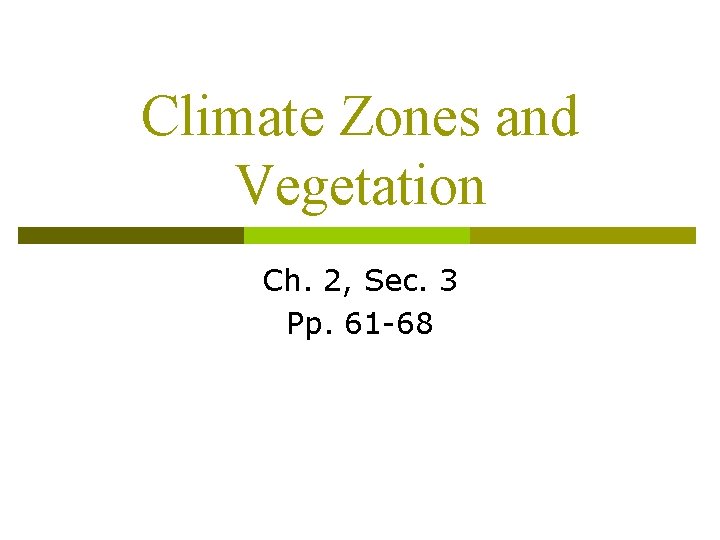
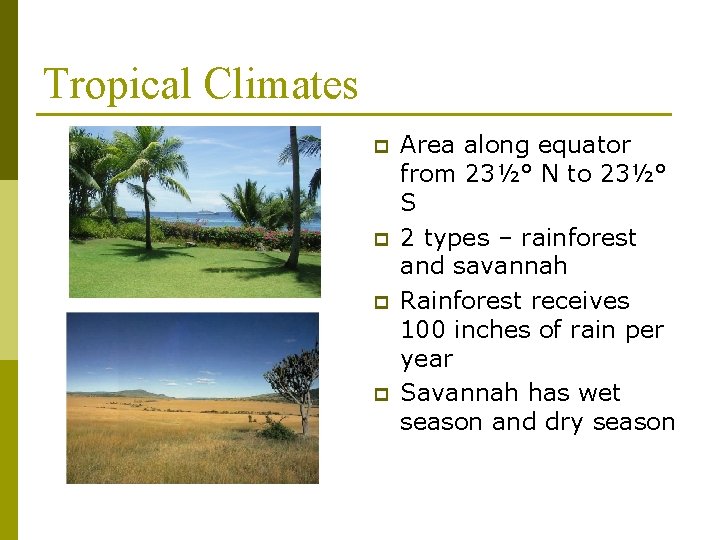
Tropical Climates p p Area along equator from 23½° N to 23½° S 2 types – rainforest and savannah Rainforest receives 100 inches of rain per year Savannah has wet season and dry season
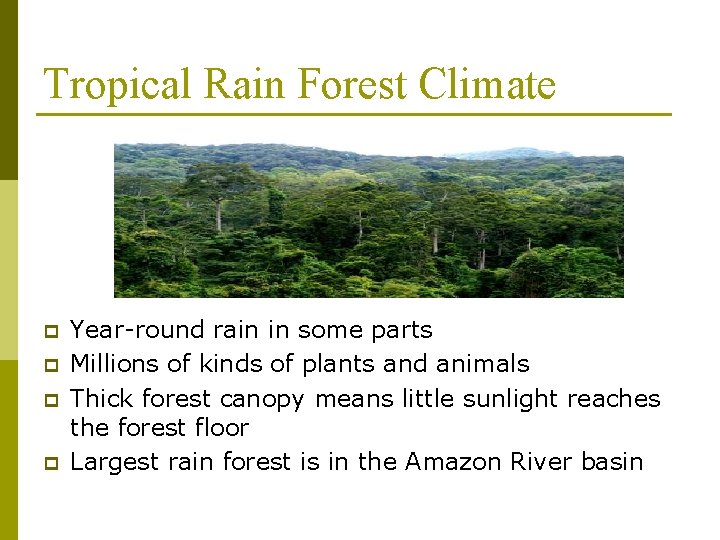
Tropical Rain Forest Climate p p Year-round rain in some parts Millions of kinds of plants and animals Thick forest canopy means little sunlight reaches the forest floor Largest rain forest is in the Amazon River basin
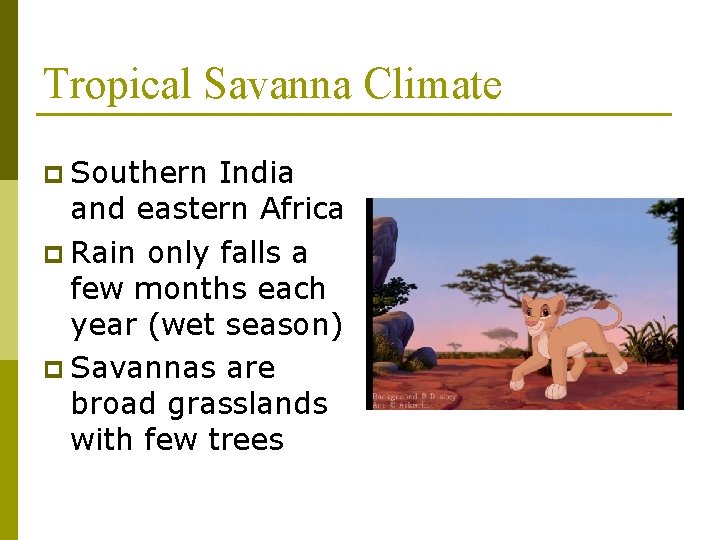
Tropical Savanna Climate p Southern India and eastern Africa p Rain only falls a few months each year (wet season) p Savannas are broad grasslands with few trees
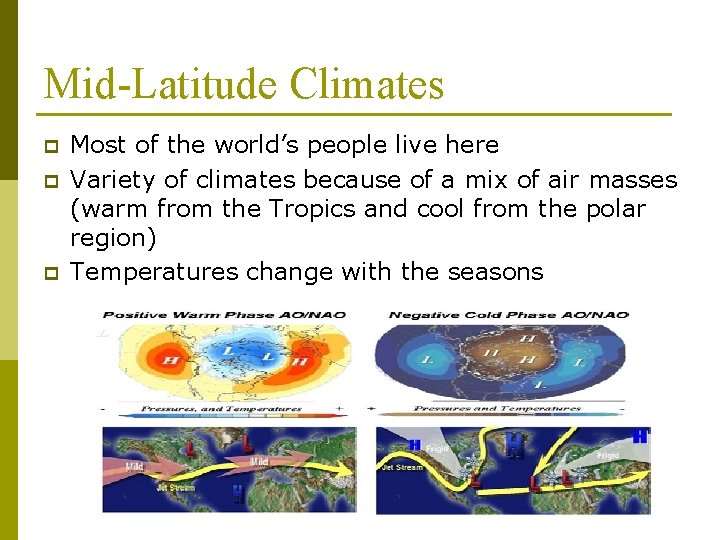
Mid-Latitude Climates p p p Most of the world’s people live here Variety of climates because of a mix of air masses (warm from the Tropics and cool from the polar region) Temperatures change with the seasons
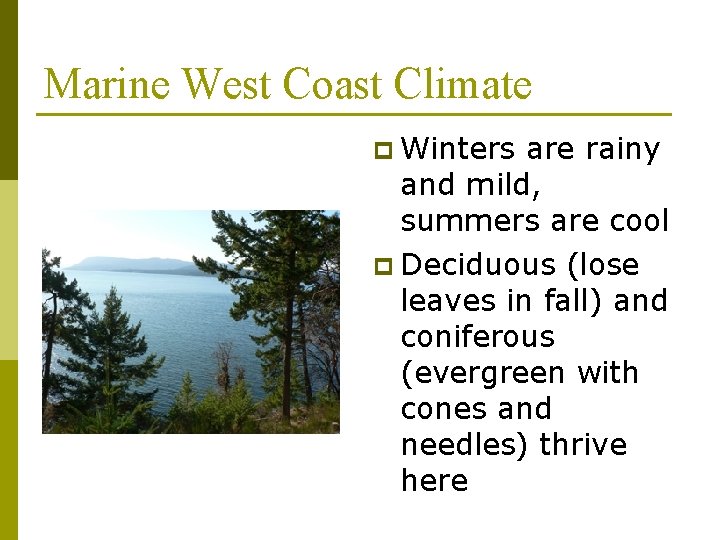
Marine West Coast Climate p Winters are rainy and mild, summers are cool p Deciduous (lose leaves in fall) and coniferous (evergreen with cones and needles) thrive here
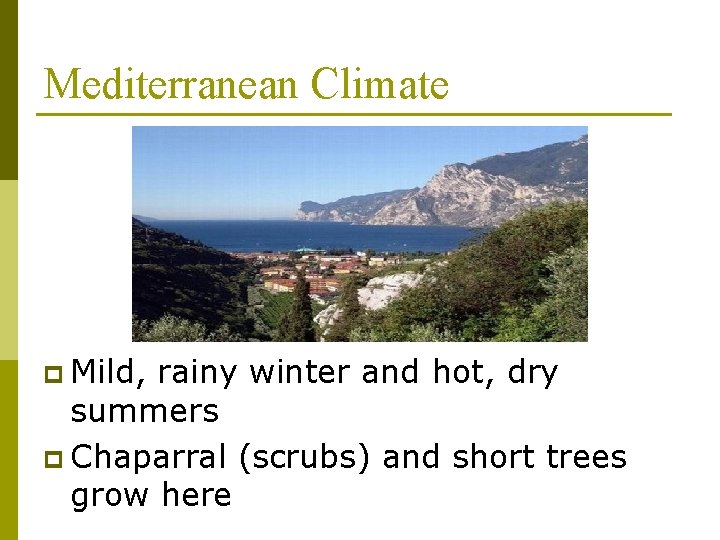
Mediterranean Climate p Mild, rainy winter and hot, dry summers p Chaparral (scrubs) and short trees grow here
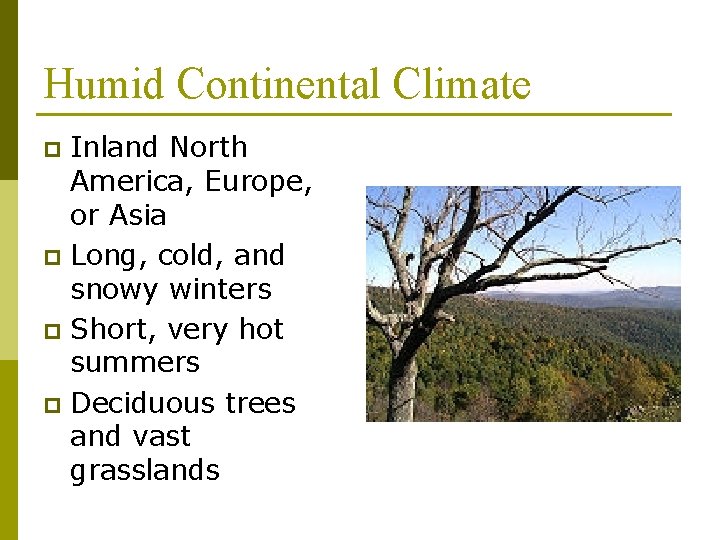
Humid Continental Climate Inland North America, Europe, or Asia p Long, cold, and snowy winters p Short, very hot summers p Deciduous trees and vast grasslands p
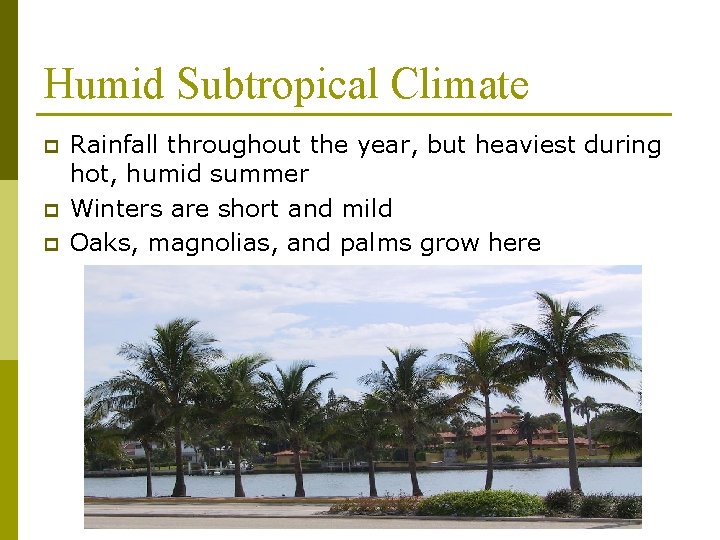
Humid Subtropical Climate p p p Rainfall throughout the year, but heaviest during hot, humid summer Winters are short and mild Oaks, magnolias, and palms grow here
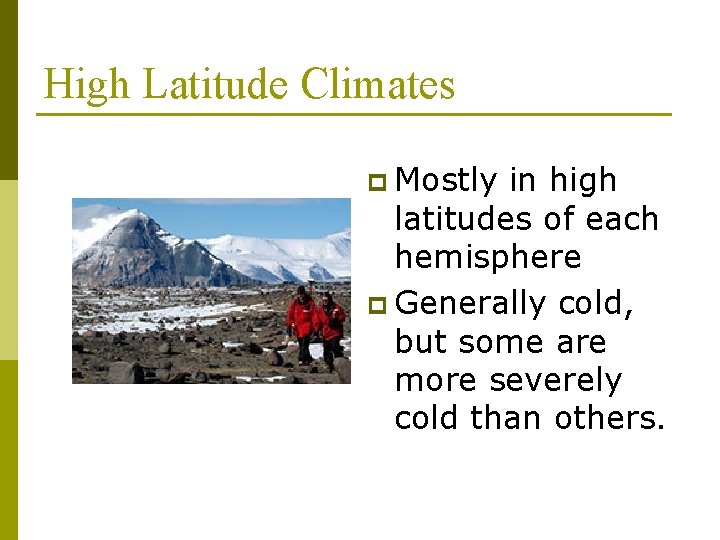
High Latitude Climates p Mostly in high latitudes of each hemisphere p Generally cold, but some are more severely cold than others.
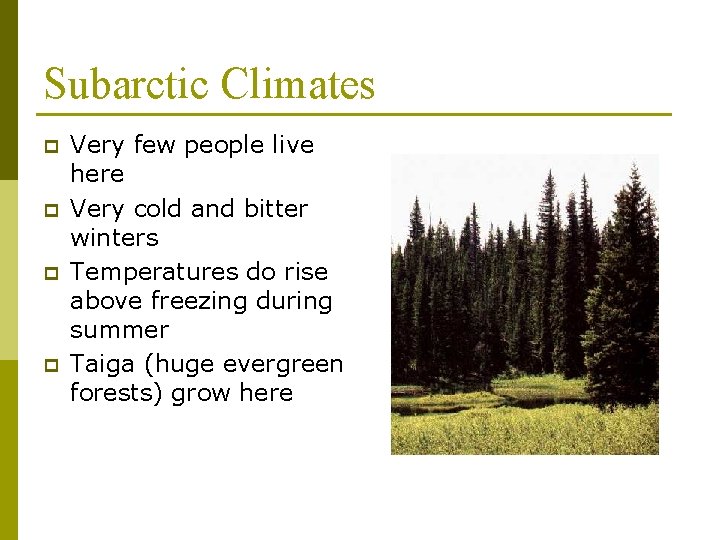
Subarctic Climates p p Very few people live here Very cold and bitter winters Temperatures do rise above freezing during summer Taiga (huge evergreen forests) grow here
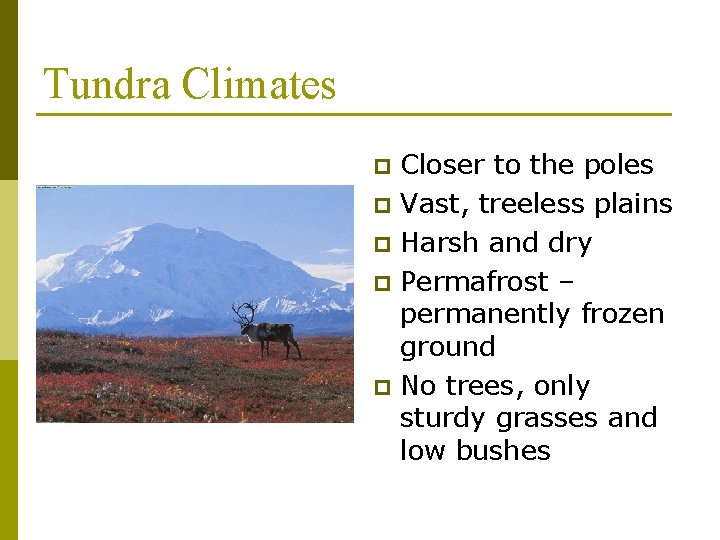
Tundra Climates p p p Closer to the poles Vast, treeless plains Harsh and dry Permafrost – permanently frozen ground No trees, only sturdy grasses and low bushes
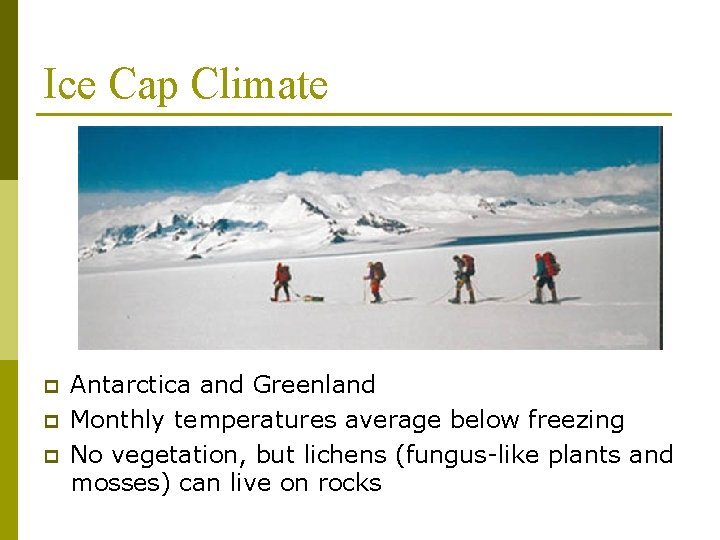
Ice Cap Climate p p p Antarctica and Greenland Monthly temperatures average below freezing No vegetation, but lichens (fungus-like plants and mosses) can live on rocks
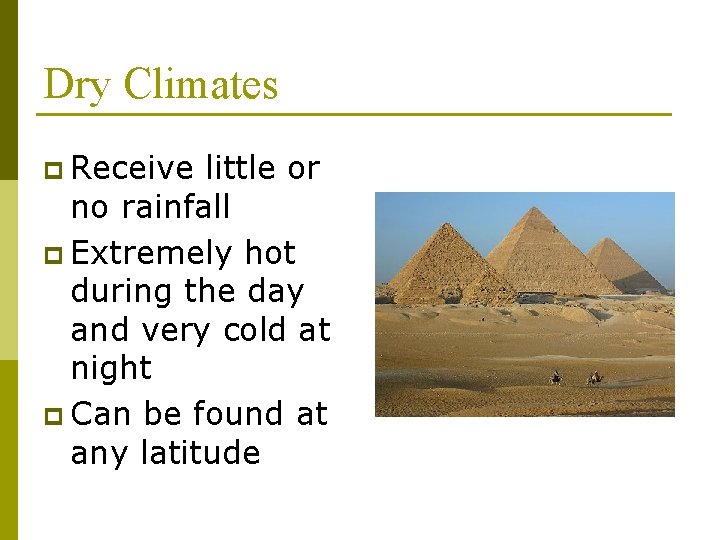
Dry Climates p Receive little or no rainfall p Extremely hot during the day and very cold at night p Can be found at any latitude
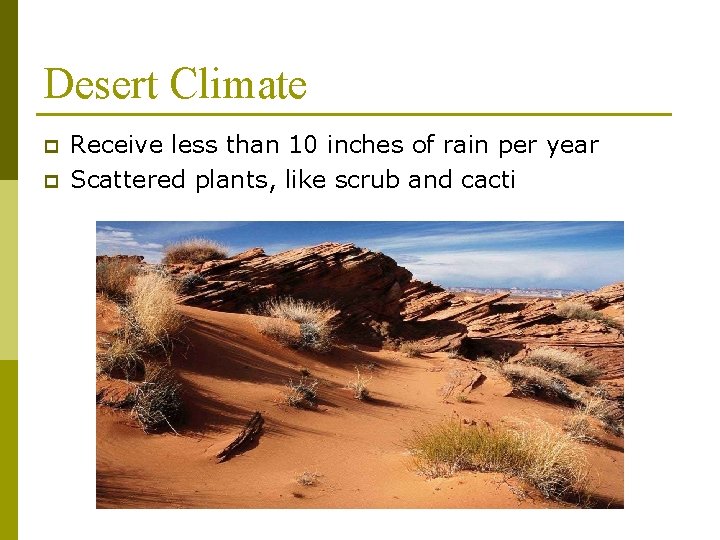
Desert Climate p p Receive less than 10 inches of rain per year Scattered plants, like scrub and cacti
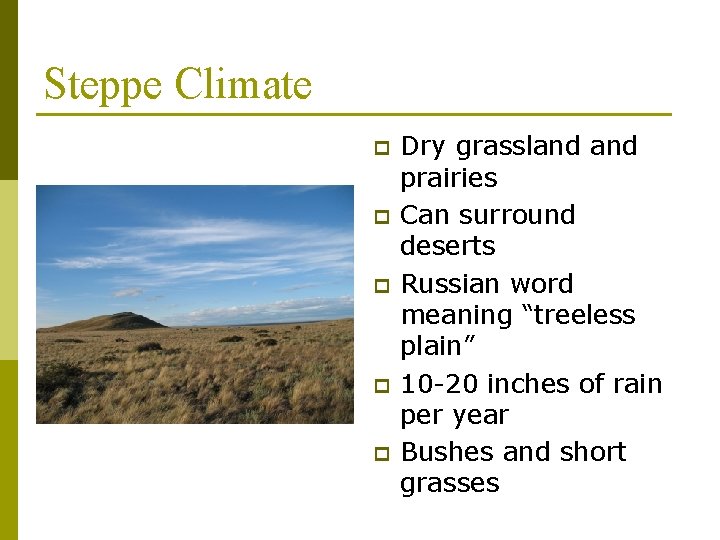
Steppe Climate p p p Dry grassland prairies Can surround deserts Russian word meaning “treeless plain” 10 -20 inches of rain per year Bushes and short grasses
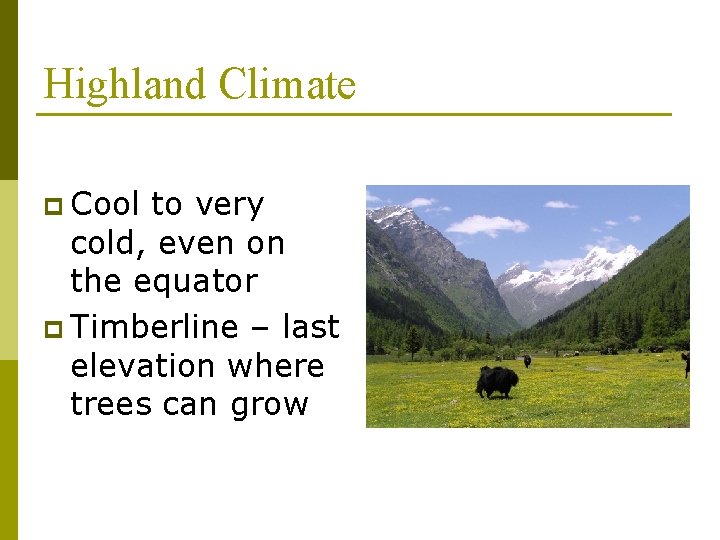
Highland Climate p Cool to very cold, even on the equator p Timberline – last elevation where trees can grow