
Climate Weather and Vegetation Zones Factors That Affect
- Slides: 32
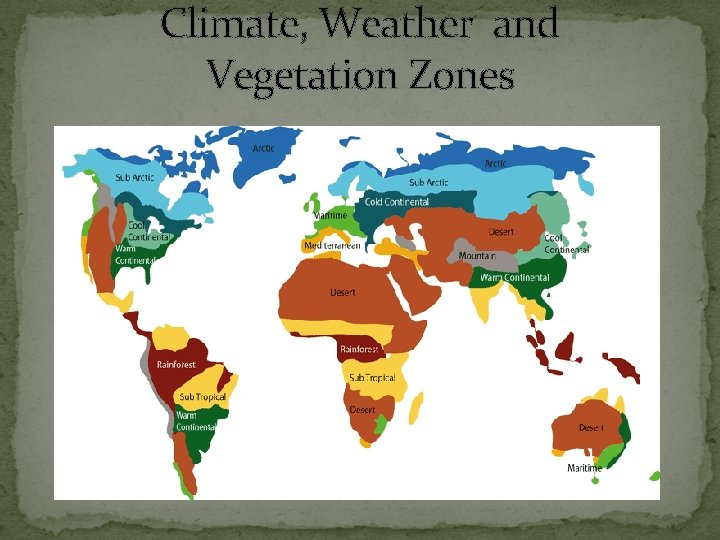
Climate, Weather and Vegetation Zones
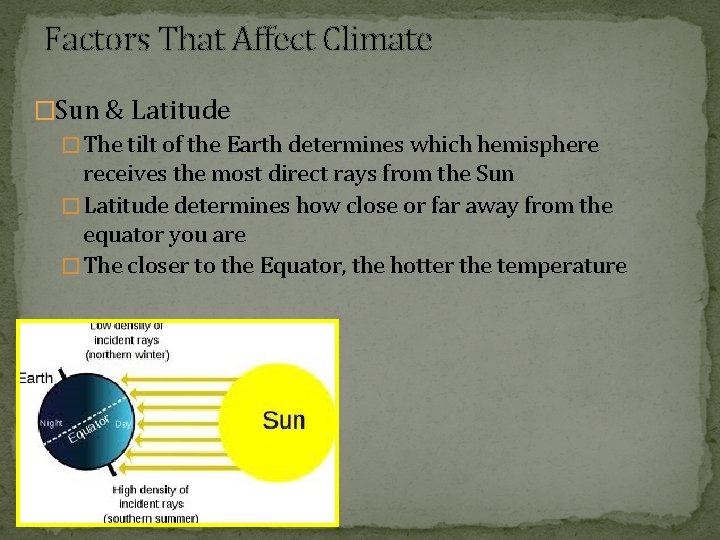
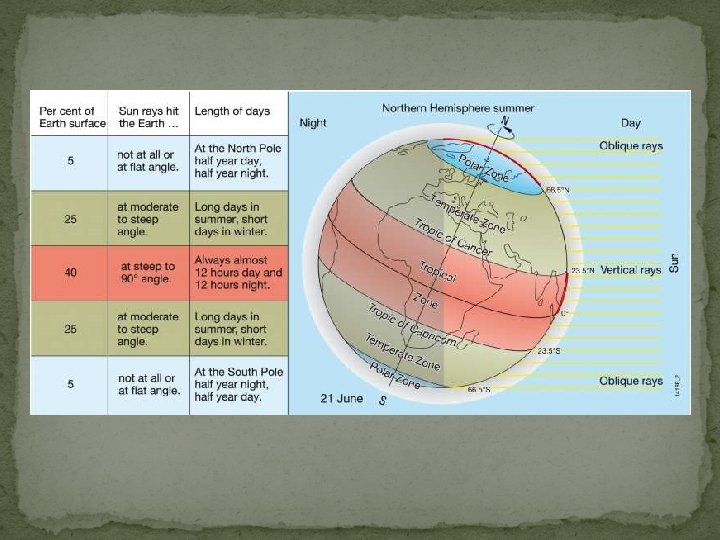
Factors That Affect Climate �Sun & Latitude � The tilt of the Earth determines which hemisphere receives the most direct rays from the Sun � Latitude determines how close or far away from the equator you are � The closer to the Equator, the hotter the temperature
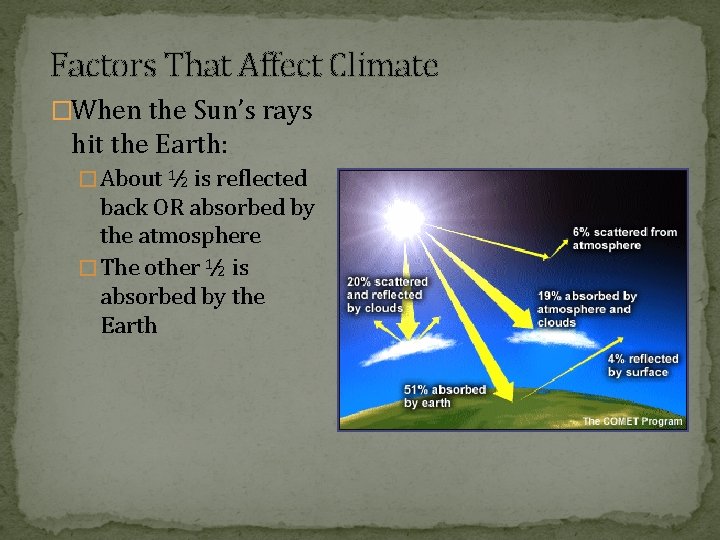
Factors That Affect Climate �When the Sun’s rays hit the Earth: � About ½ is reflected back OR absorbed by the atmosphere � The other ½ is absorbed by the Earth
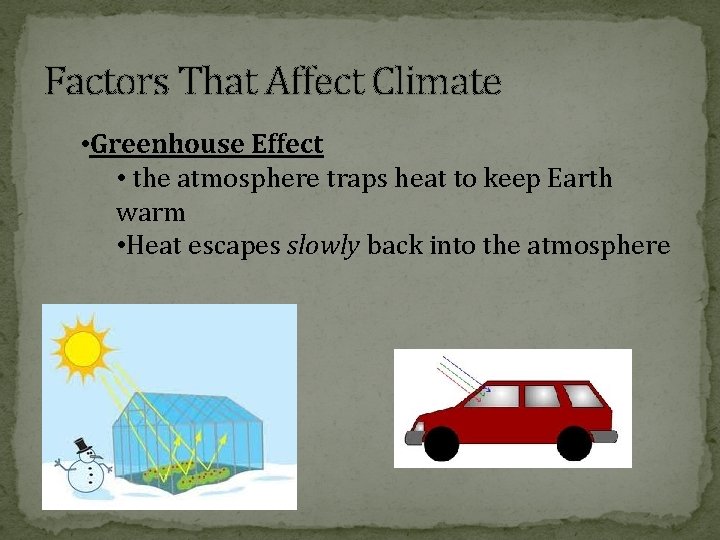
Factors That Affect Climate • Greenhouse Effect • the atmosphere traps heat to keep Earth warm • Heat escapes slowly back into the atmosphere
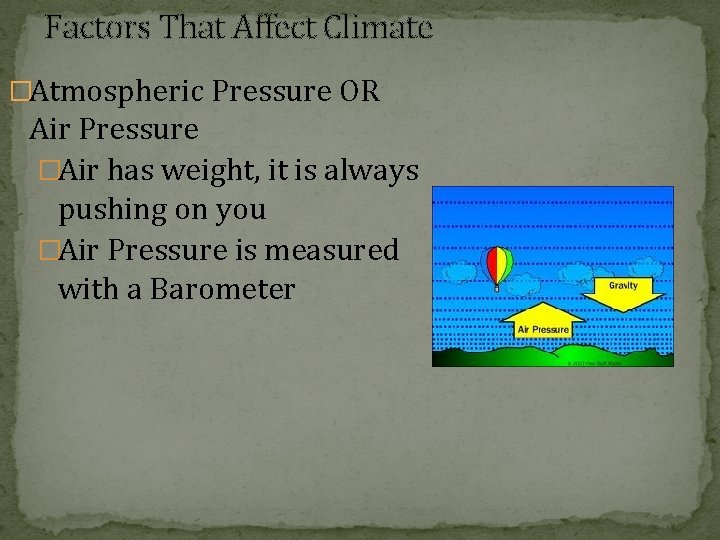
Factors That Affect Climate �Atmospheric Pressure OR Air Pressure �Air has weight, it is always pushing on you �Air Pressure is measured with a Barometer
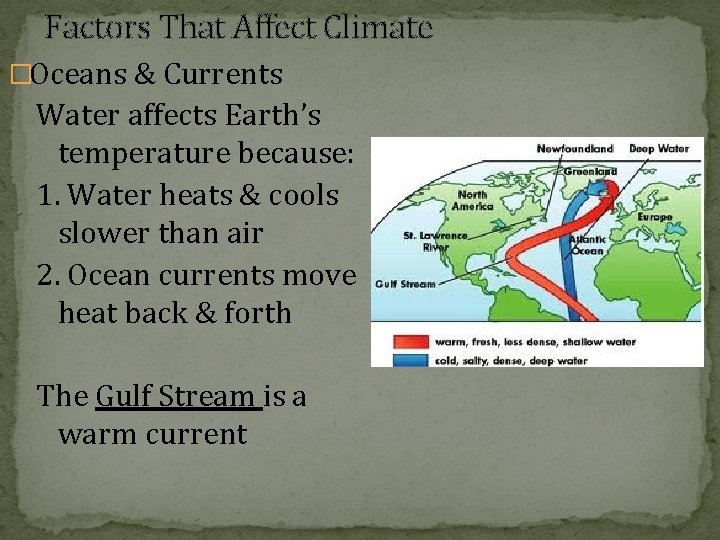
Factors That Affect Climate �Oceans & Currents Water affects Earth’s temperature because: 1. Water heats & cools slower than air 2. Ocean currents move heat back & forth The Gulf Stream is a warm current
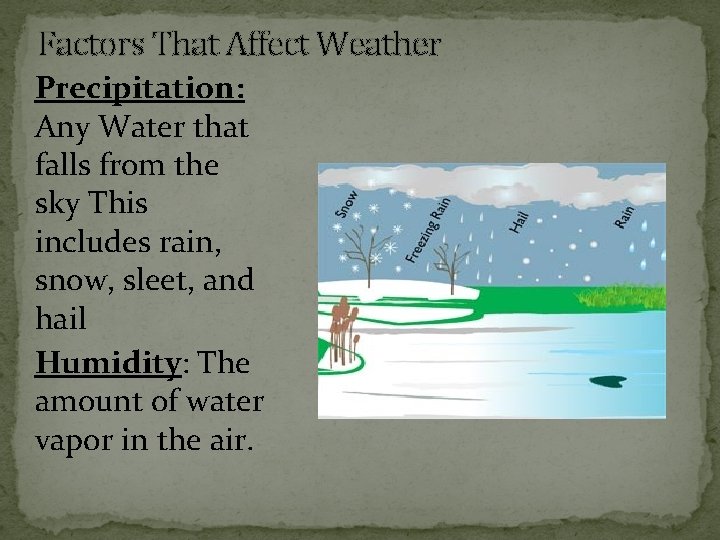
Factors That Affect Weather Precipitation: Any Water that falls from the sky This includes rain, snow, sleet, and hail Humidity: The amount of water vapor in the air.
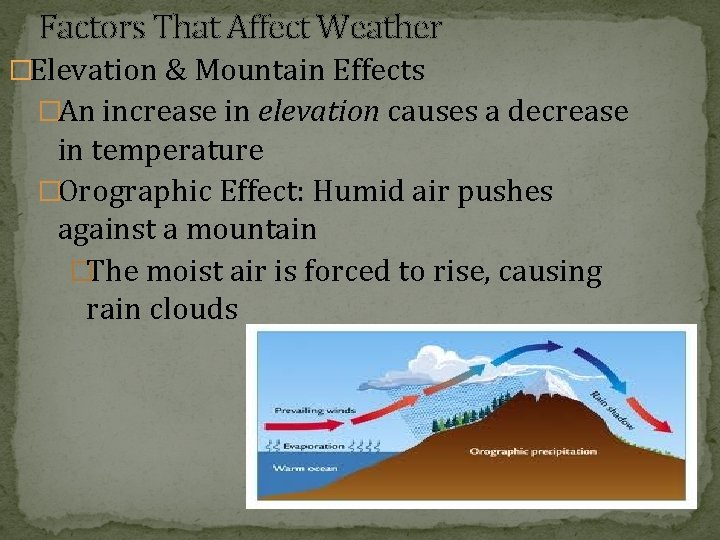
Factors That Affect Weather �Elevation & Mountain Effects �An increase in elevation causes a decrease in temperature �Orographic Effect: Humid air pushes against a mountain �The moist air is forced to rise, causing rain clouds
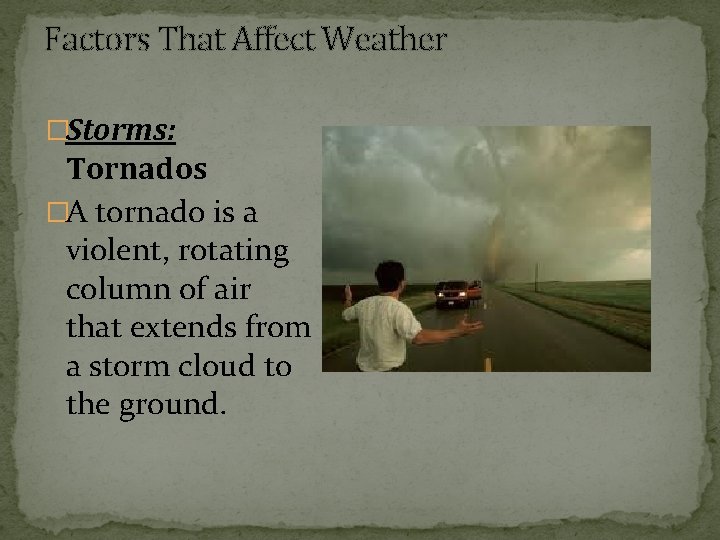
Factors That Affect Weather �Storms: Tornados �A tornado is a violent, rotating column of air that extends from a storm cloud to the ground.
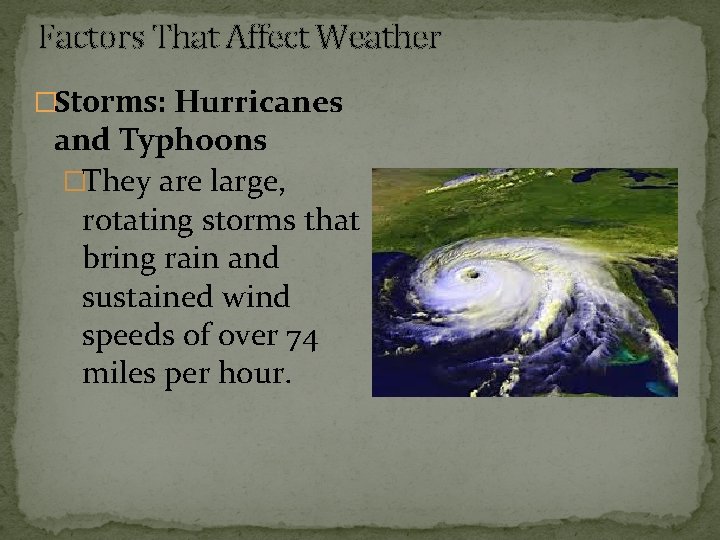
Factors That Affect Weather �Storms: Hurricanes and Typhoons �They are large, rotating storms that bring rain and sustained wind speeds of over 74 miles per hour.
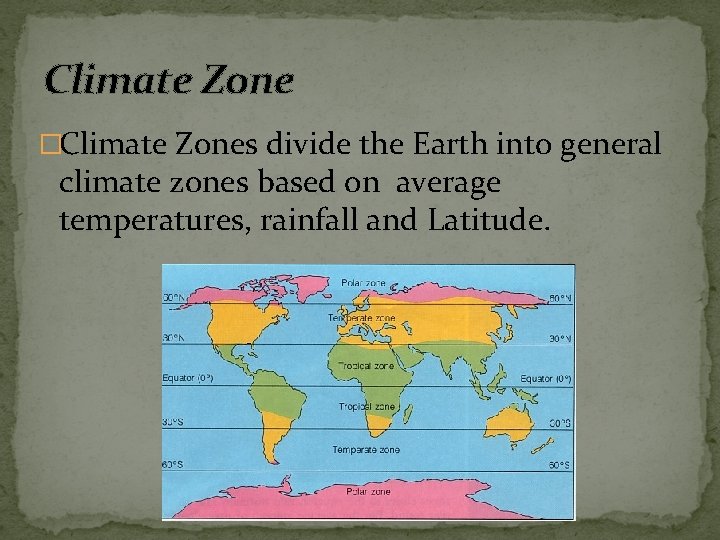
Climate Zone �Climate Zones divide the Earth into general climate zones based on average temperatures, rainfall and Latitude.
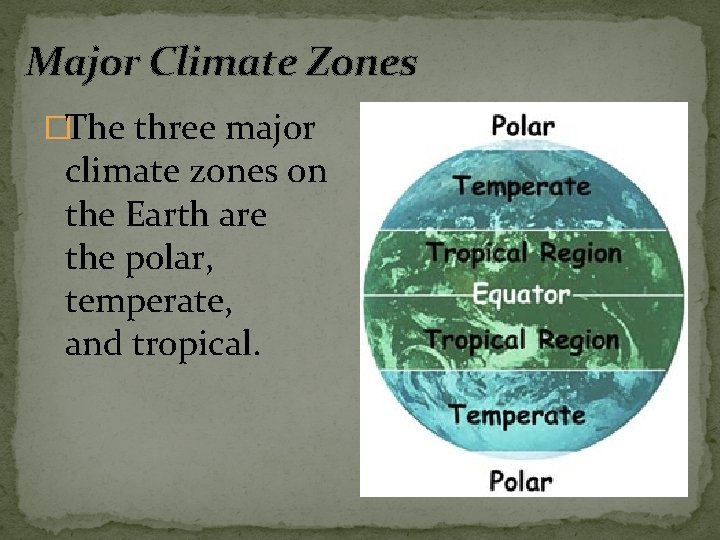
Major Climate Zones �The three major climate zones on the Earth are the polar, temperate, and tropical.
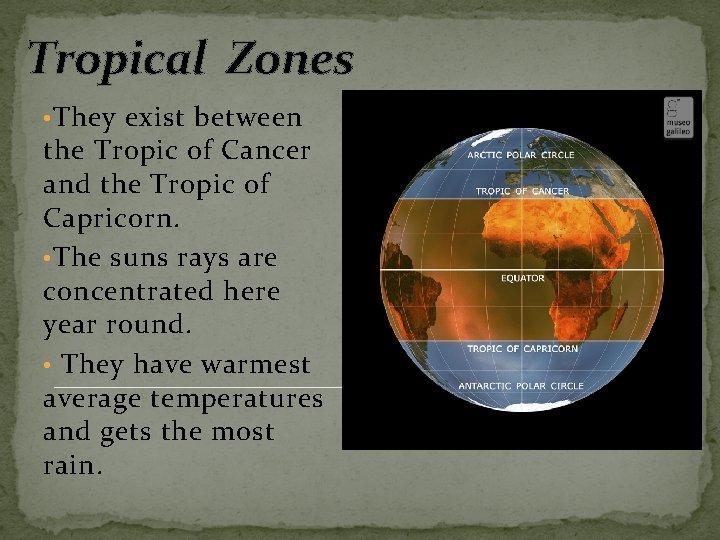
Tropical Zones • They exist between the Tropic of Cancer and the Tropic of Capricorn. • The suns rays are concentrated here year round. • They have warmest average temperatures and gets the most rain.
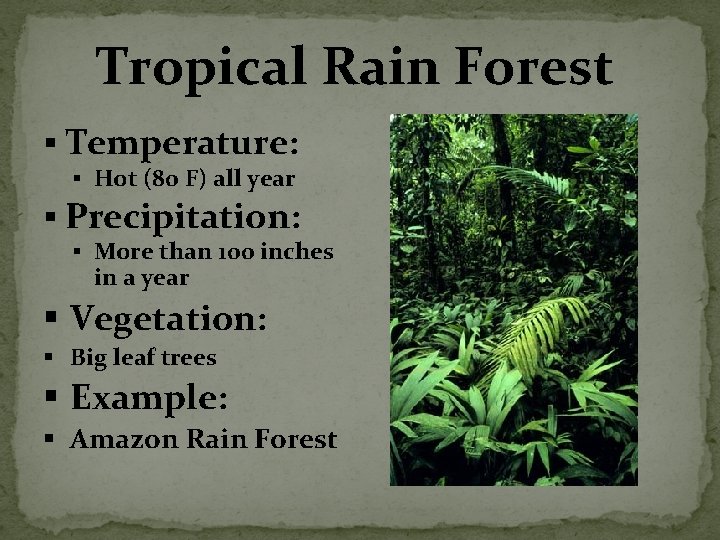
Tropical Rain Forest § Temperature: § Hot (80 F) all year § Precipitation: § More than 100 inches in a year § Vegetation: § Big leaf trees § Example: § Amazon Rain Forest
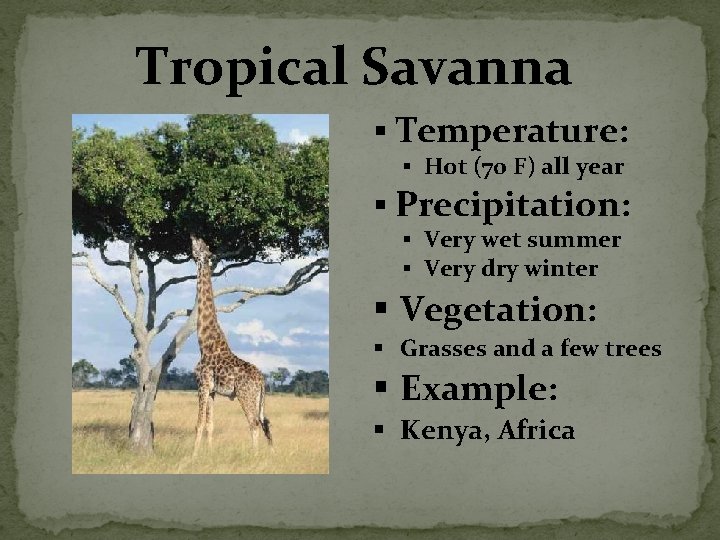
Tropical Savanna § Temperature: § Hot (70 F) all year § Precipitation: § Very wet summer § Very dry winter § Vegetation: § Grasses and a few trees § Example: § Kenya, Africa
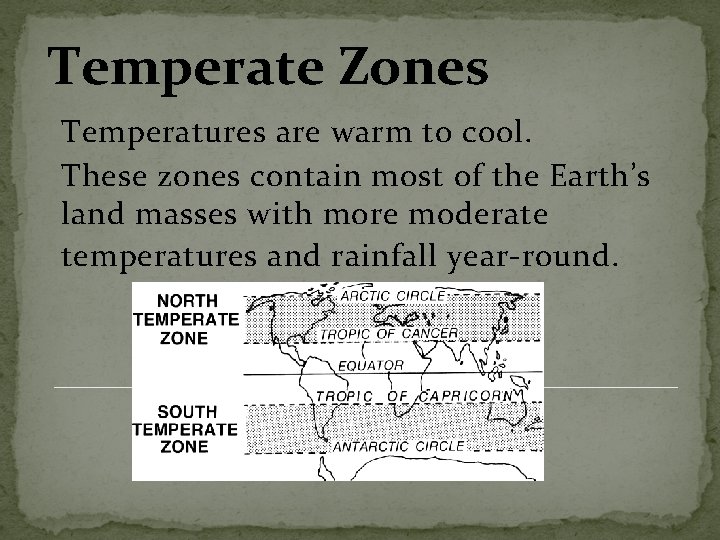
Temperate Zones Temperatures are warm to cool. These zones contain most of the Earth’s land masses with more moderate temperatures and rainfall year-round.
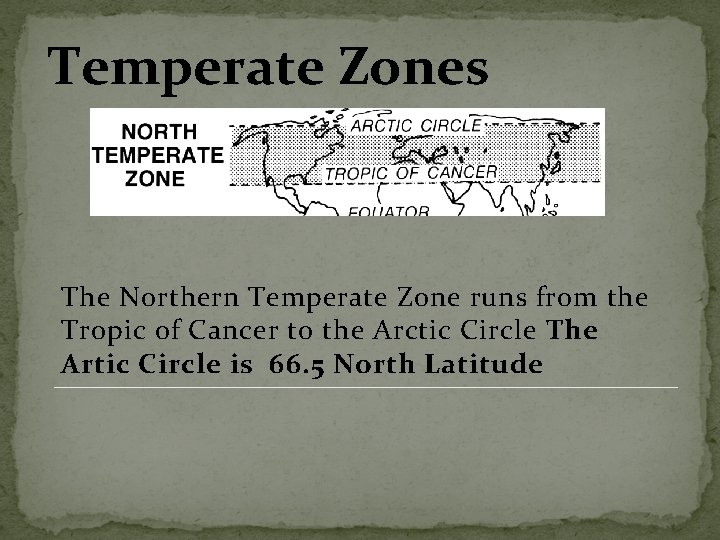
Temperate Zones The Northern Temperate Zone runs from the Tropic of Cancer to the Arctic Circle The Artic Circle is 66. 5 North Latitude
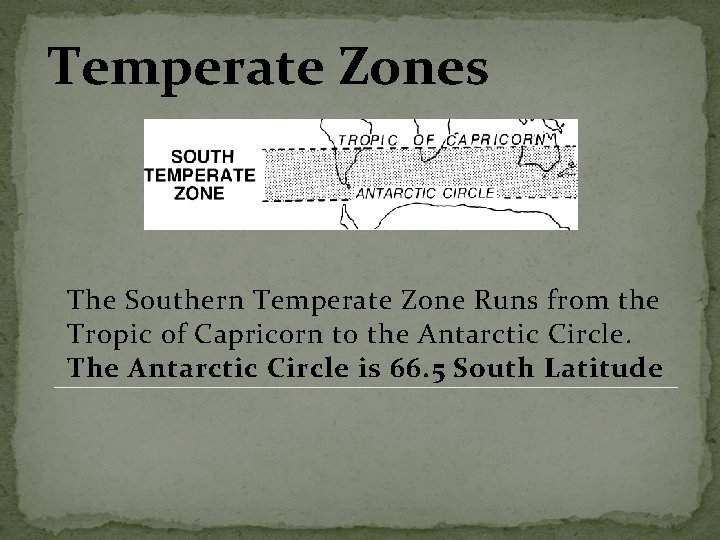
Temperate Zones The Southern Temperate Zone Runs from the Tropic of Capricorn to the Antarctic Circle. The Antarctic Circle is 66. 5 South Latitude
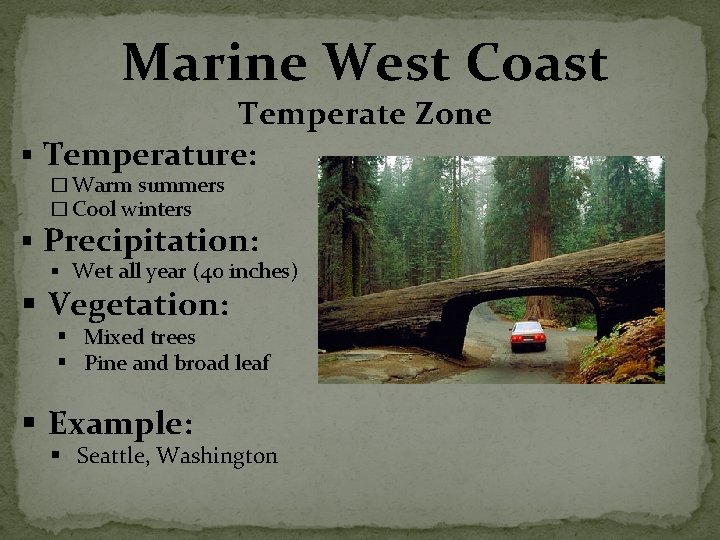
Marine West Coast Temperate Zone § Temperature: � Warm summers � Cool winters § Precipitation: § Wet all year (40 inches) § Vegetation: § Mixed trees § Pine and broad leaf § Example: § Seattle, Washington
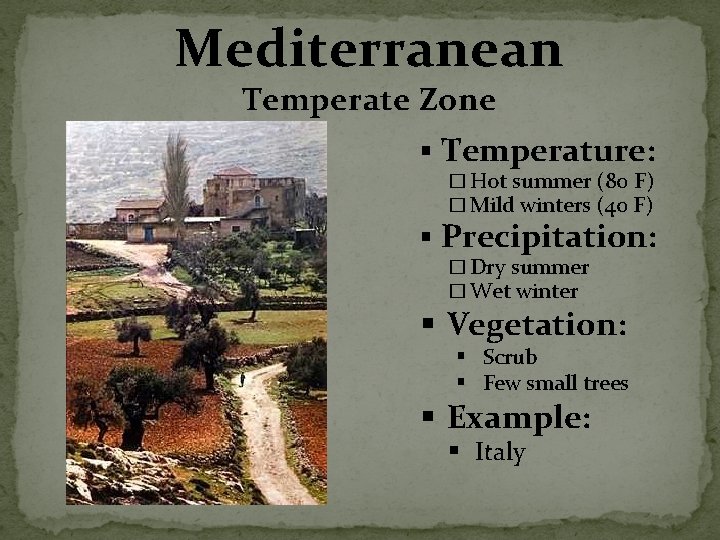
Mediterranean Temperate Zone § Temperature: � Hot summer (80 F) � Mild winters (40 F) § Precipitation: � Dry summer � Wet winter § Vegetation: § Scrub § Few small trees § Example: § Italy
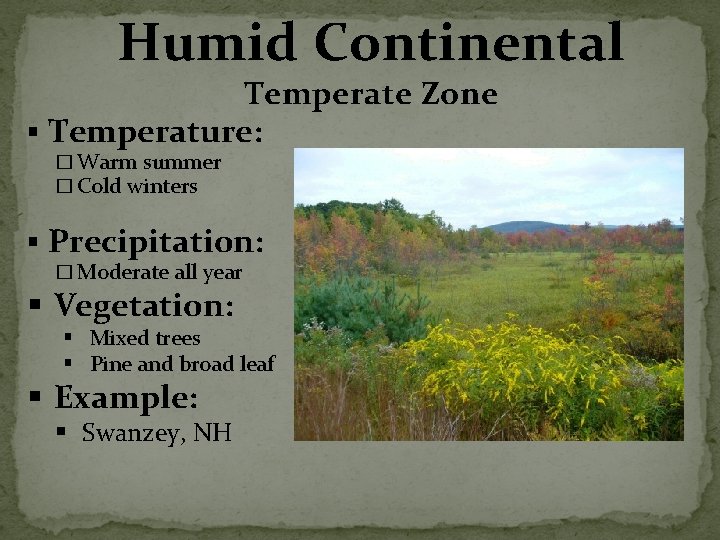
Humid Continental Temperate Zone § Temperature: � Warm summer � Cold winters § Precipitation: � Moderate all year § Vegetation: § Mixed trees § Pine and broad leaf § Example: § Swanzey, NH
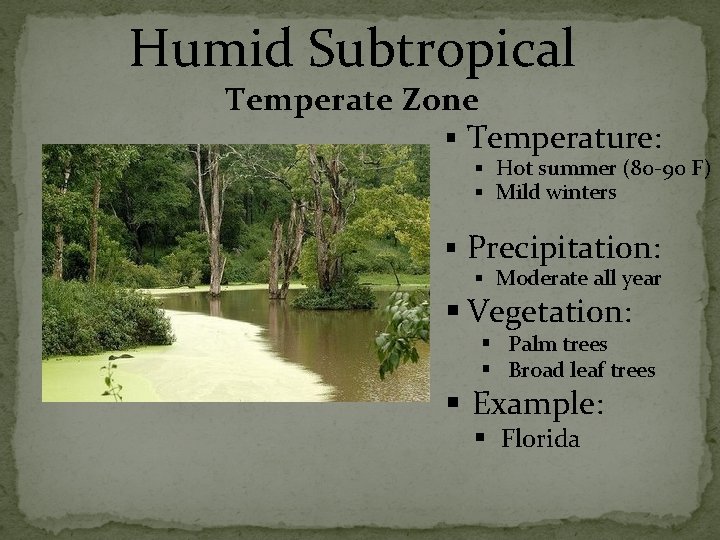
Humid Subtropical Temperate Zone § Temperature: § Hot summer (80 -90 F) § Mild winters § Precipitation: § Moderate all year § Vegetation: § Palm trees § Broad leaf trees § Example: § Florida
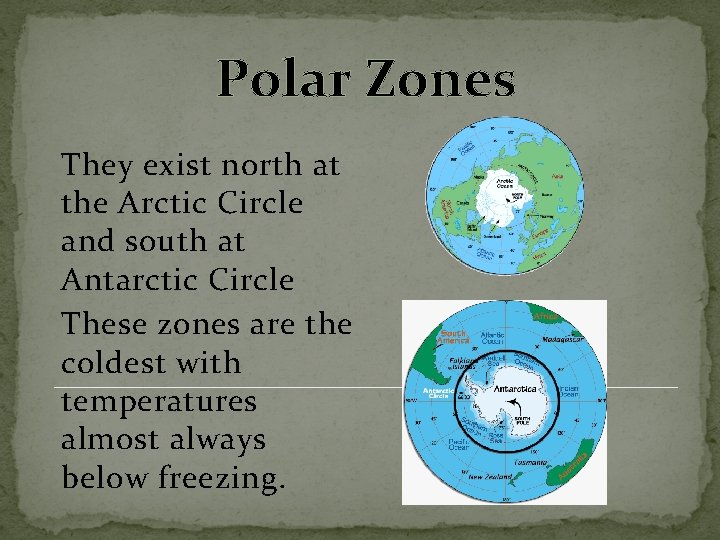
Polar Zones They exist north at the Arctic Circle and south at Antarctic Circle These zones are the coldest with temperatures almost always below freezing.
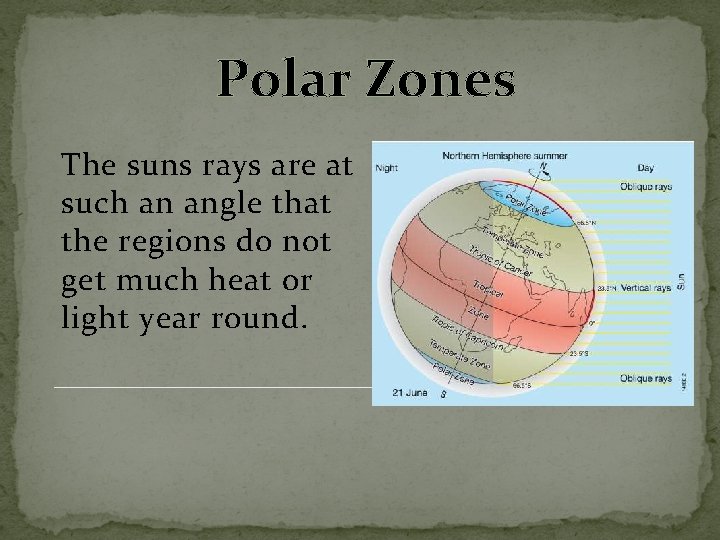
Polar Zones The suns rays are at such an angle that the regions do not get much heat or light year round.
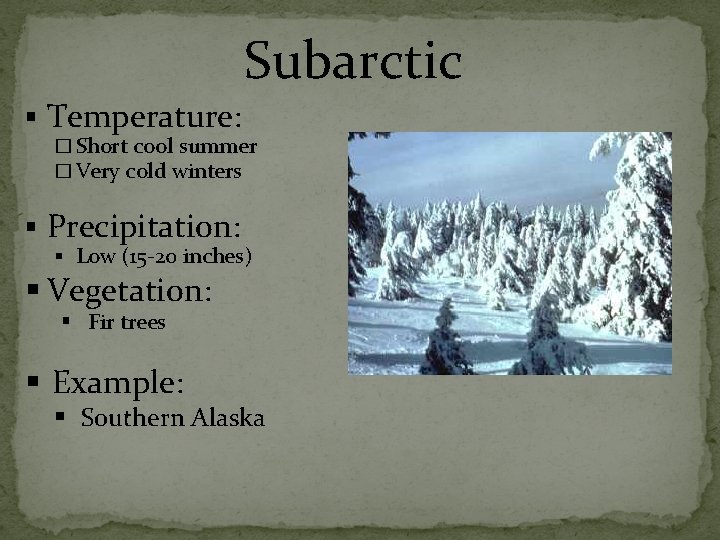
Subarctic § Temperature: � Short cool summer � Very cold winters § Precipitation: § Low (15 -20 inches) § Vegetation: § Fir trees § Example: § Southern Alaska
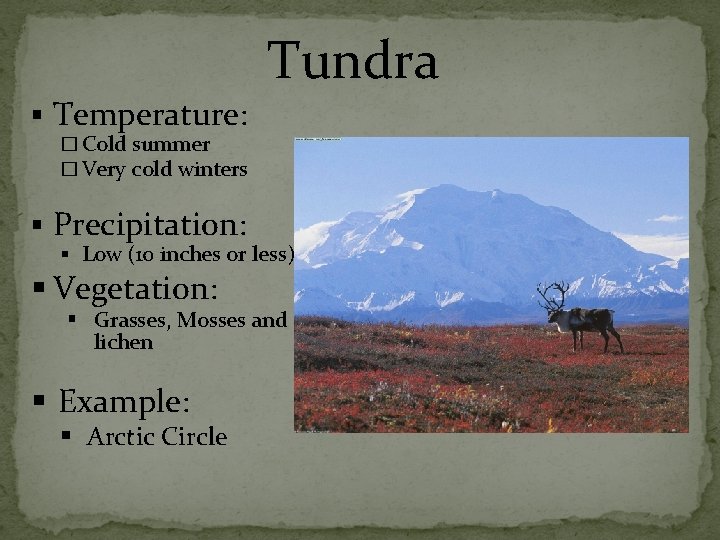
Tundra § Temperature: � Cold summer � Very cold winters § Precipitation: § Low (10 inches or less) § Vegetation: § Grasses, Mosses and lichen § Example: § Arctic Circle
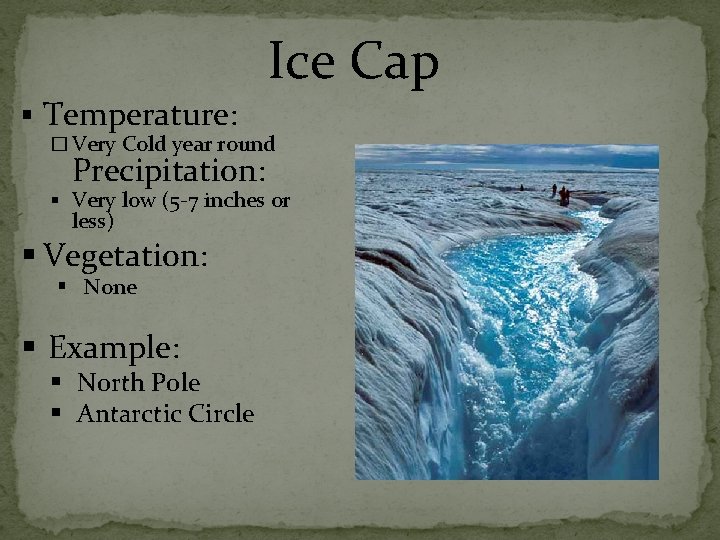
Ice Cap § Temperature: � Very Cold year round Precipitation: § Very low (5 -7 inches or less) § Vegetation: § None § Example: § North Pole § Antarctic Circle
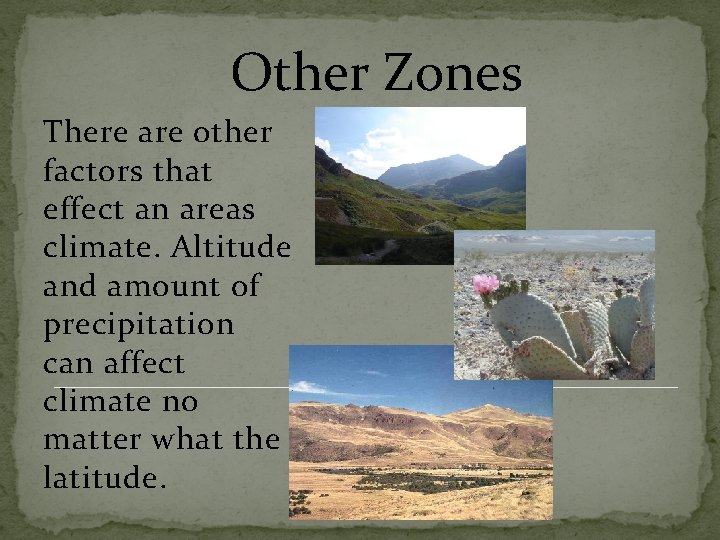
Other Zones There are other factors that effect an areas climate. Altitude and amount of precipitation can affect climate no matter what the latitude.
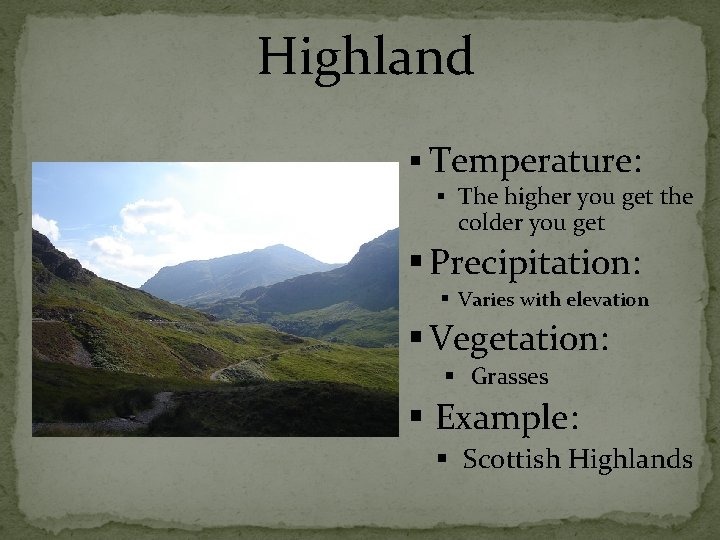
Highland § Temperature: § The higher you get the colder you get § Precipitation: § Varies with elevation § Vegetation: § Grasses § Example: § Scottish Highlands
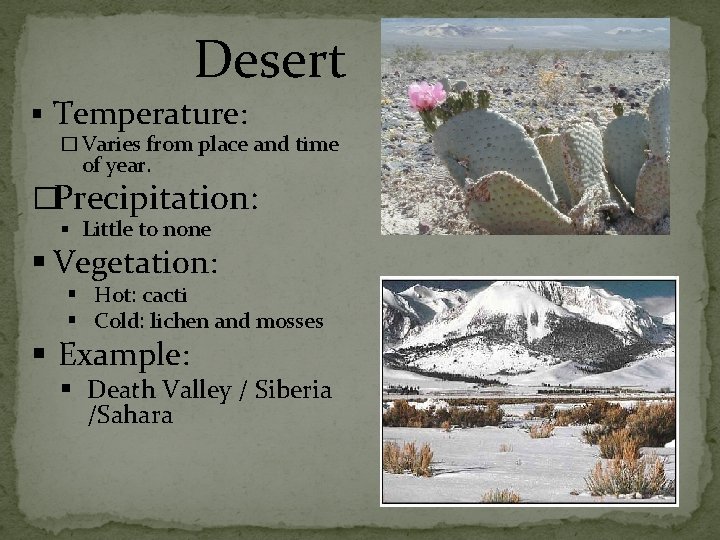
Desert § Temperature: � Varies from place and time of year. �Precipitation: § Little to none § Vegetation: § Hot: cacti § Cold: lichen and mosses § Example: § Death Valley / Siberia /Sahara
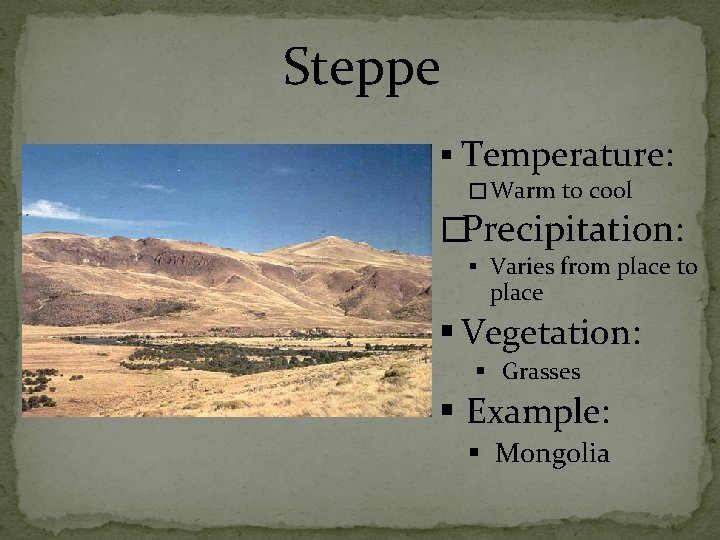
Steppe § Temperature: � Warm to cool �Precipitation: § Varies from place to place § Vegetation: § Grasses § Example: § Mongolia