
Climate THE AVERAGE WEATHER IN A PARTICULAR AREA
- Slides: 20
Climate: THE AVERAGE WEATHER IN A PARTICULAR AREA OVER A LONG PERIOD OF TIME
What are Some Factors That Affect Climate?
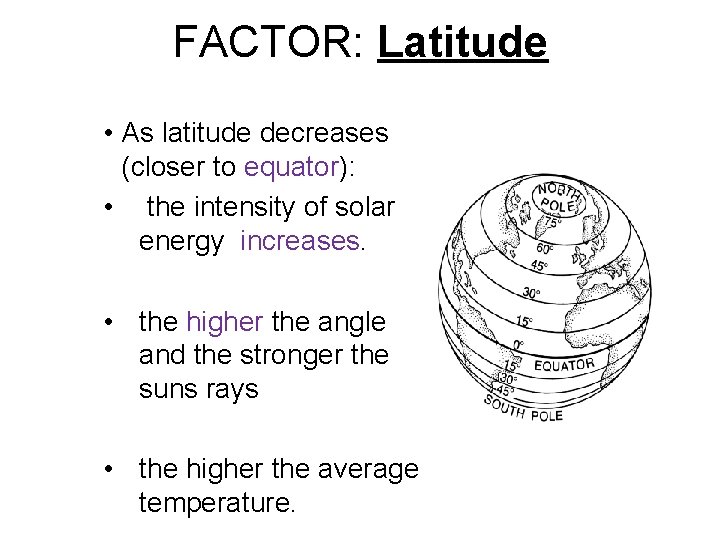
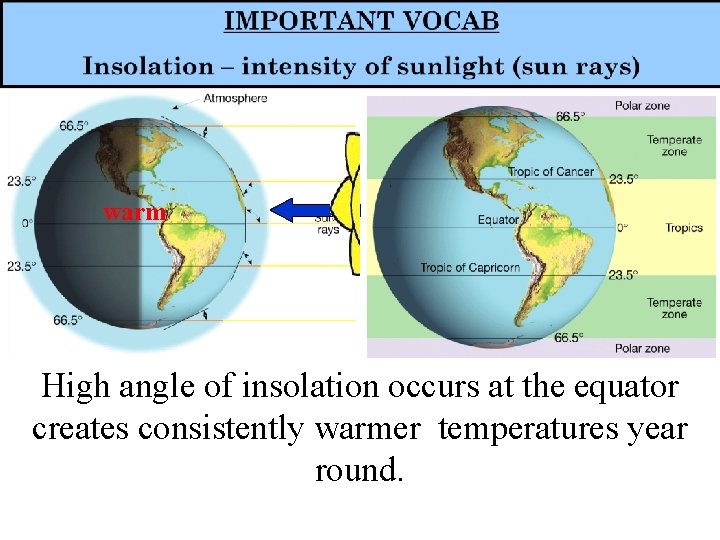
FACTOR: Latitude • As latitude decreases (closer to equator): • the intensity of solar energy increases. • the higher the angle and the stronger the suns rays • the higher the average temperature.
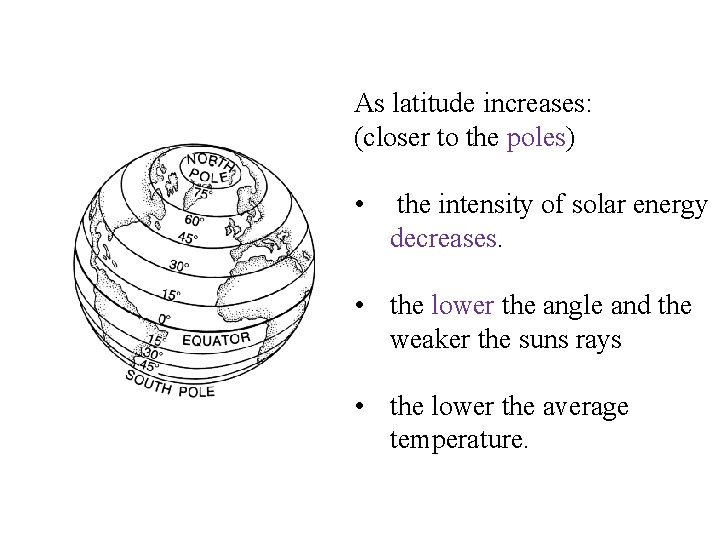
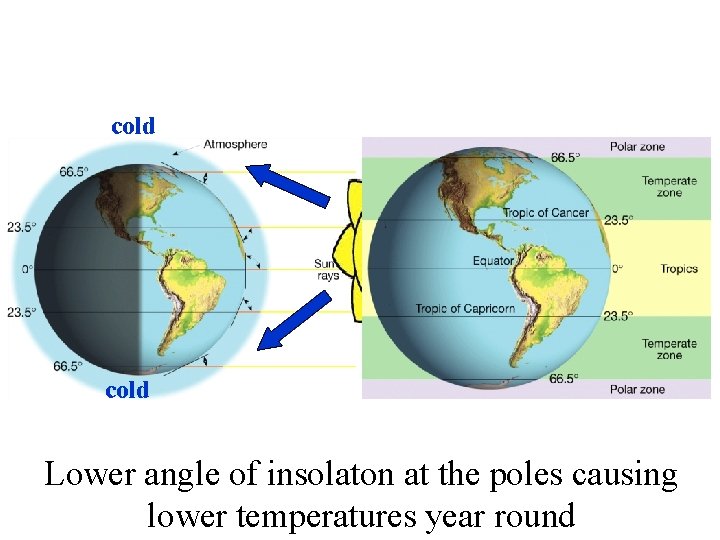
As latitude increases: (closer to the poles) • the intensity of solar energy decreases. • the lower the angle and the weaker the suns rays • the lower the average temperature.
warm High angle of insolation occurs at the equator creates consistently warmer temperatures year round.
cold Lower angle of insolaton at the poles causing lower temperatures year round
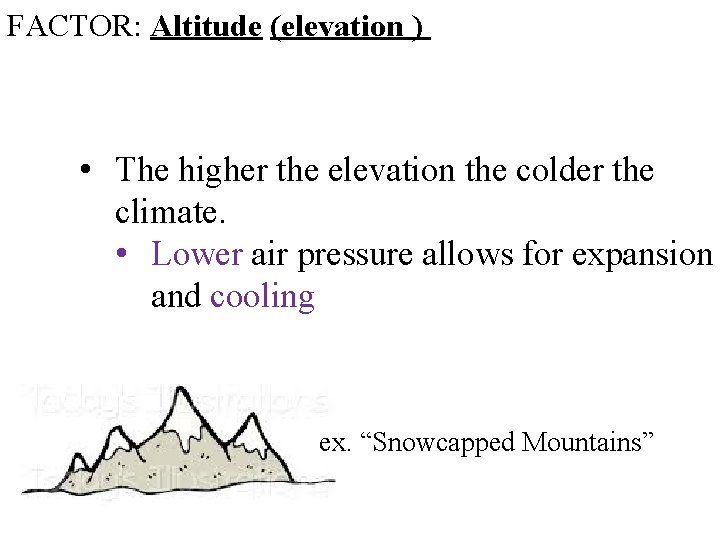
FACTOR: Altitude (elevation ) • The higher the elevation the colder the climate. • Lower air pressure allows for expansion and cooling ex. “Snowcapped Mountains”
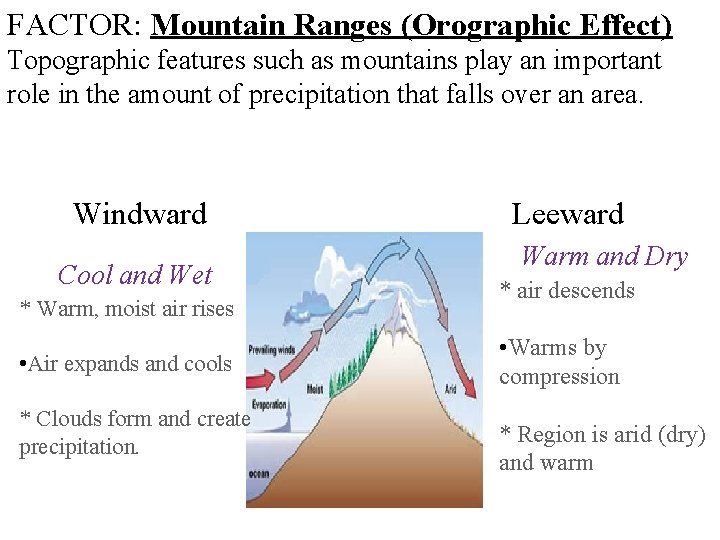
FACTOR: Mountain Ranges (Orographic Effect) Topographic features such as mountains play an important role in the amount of precipitation that falls over an area. Windward Cool and Wet * Warm, moist air rises • Air expands and cools * Clouds form and create precipitation. Leeward Warm and Dry * air descends • Warms by compression * Region is arid (dry) and warm
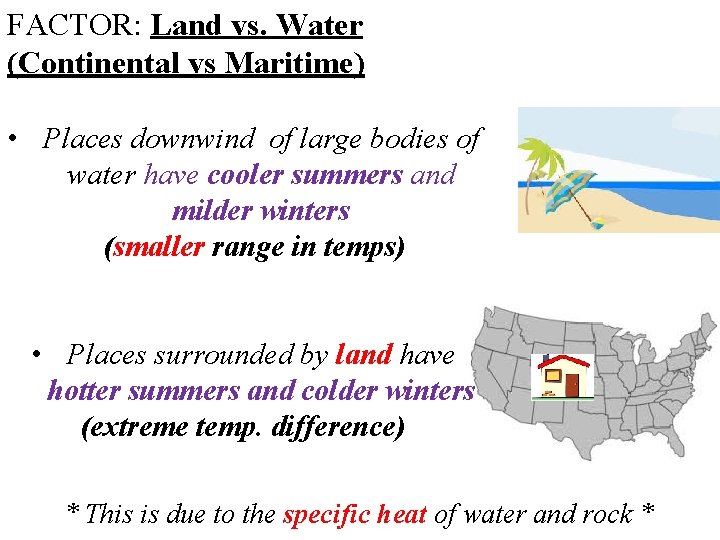
FACTOR: Land vs. Water (Continental vs Maritime) • Places downwind of large bodies of water have cooler summers and milder winters (smaller range in temps) • Places surrounded by land have hotter summers and colder winters (extreme temp. difference) * This is due to the specific heat of water and rock *
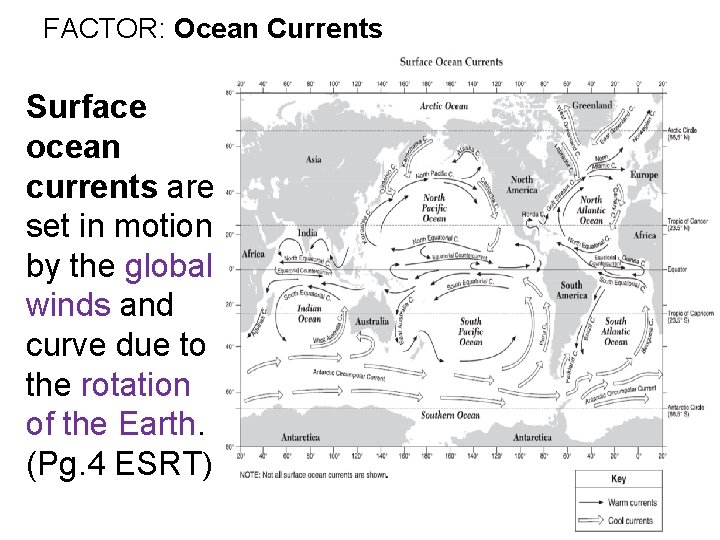
FACTOR: Ocean Currents Surface ocean currents are set in motion by the global winds and curve due to the rotation of the Earth. (Pg. 4 ESRT)
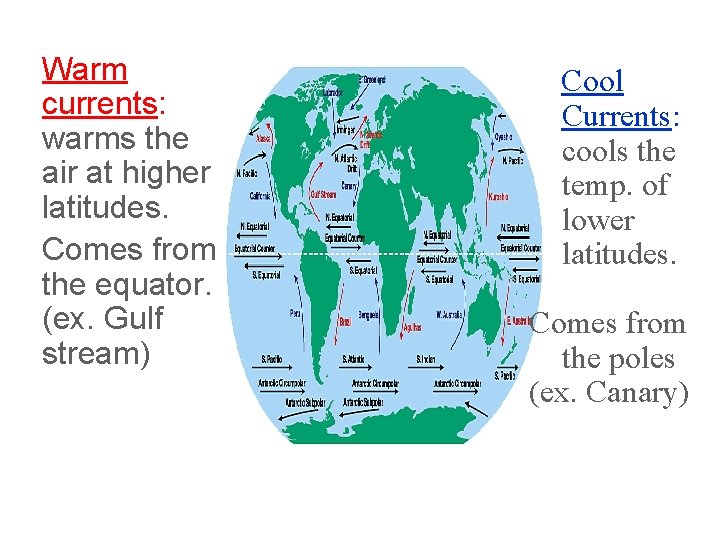
Warm currents: warms the air at higher latitudes. Comes from the equator. (ex. Gulf stream) Cool Currents: cools the temp. of lower latitudes. Comes from the poles (ex. Canary)
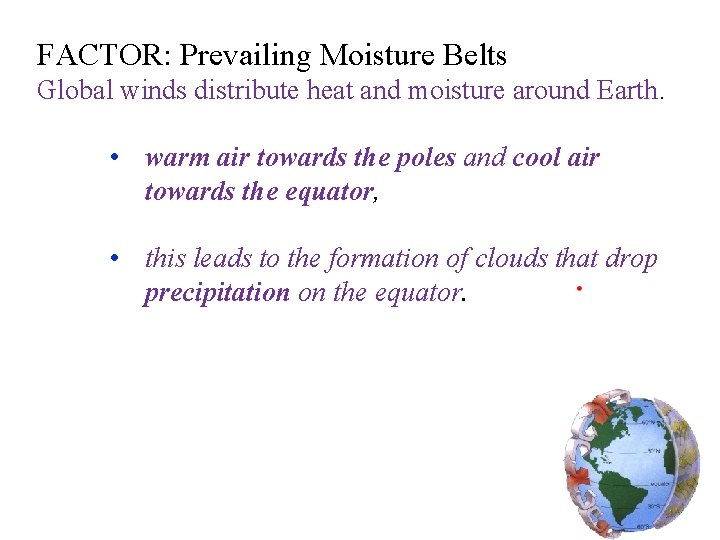
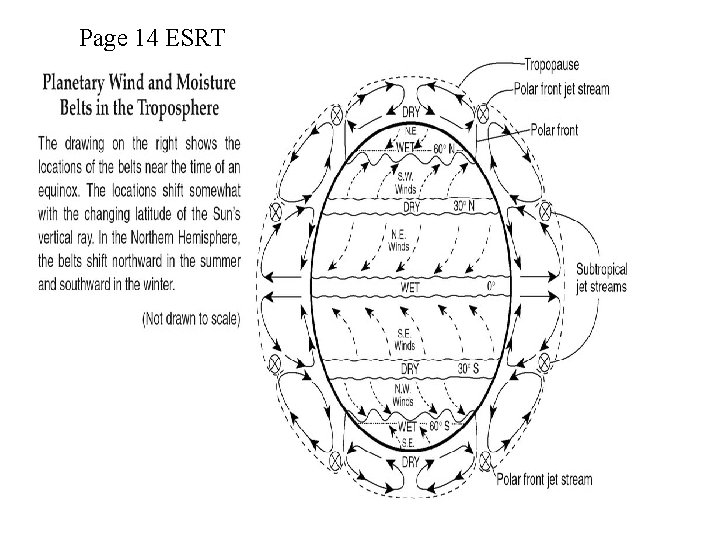
FACTOR: Prevailing Moisture Belts Global winds distribute heat and moisture around Earth. • warm air towards the poles and cool air towards the equator, • this leads to the formation of clouds that drop precipitation on the equator.
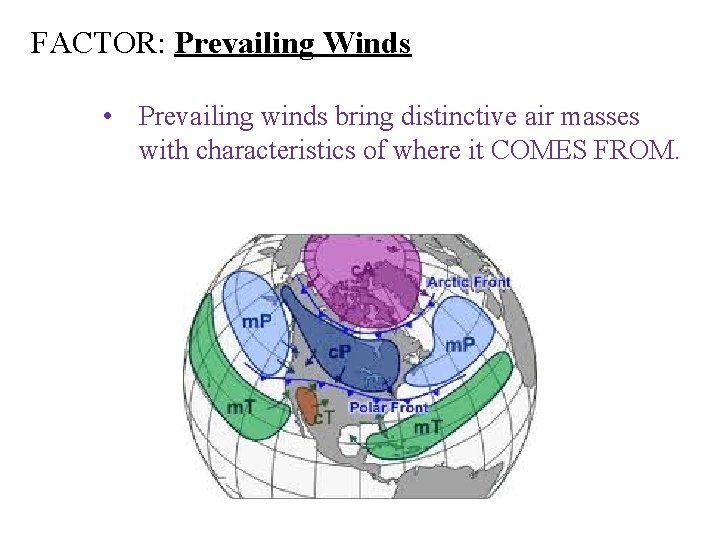
FACTOR: Prevailing Winds • Prevailing winds bring distinctive air masses with characteristics of where it COMES FROM.
Page 14 ESRT
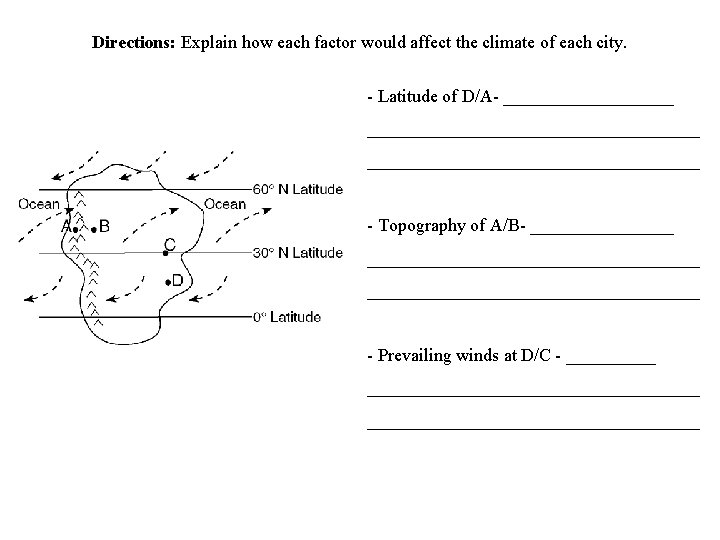
Directions: Explain how each factor would affect the climate of each city. - Latitude of D/A- ____________________________ - Topography of A/B- ___________________________ - Prevailing winds at D/C - ________________________
Climate Events
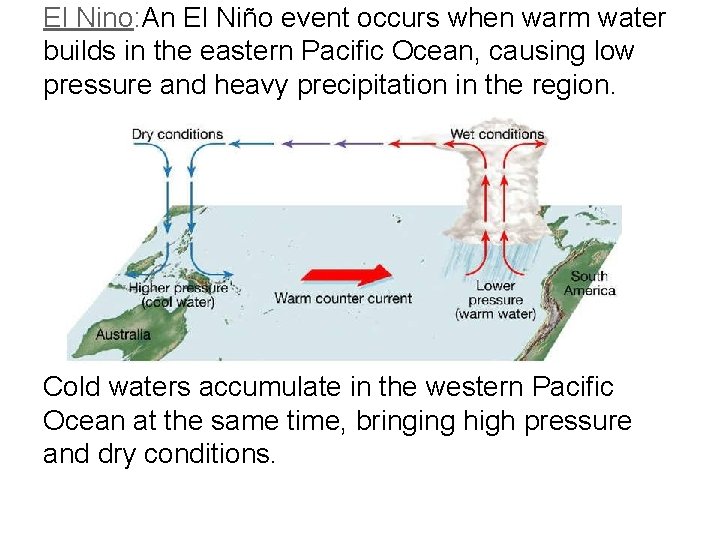
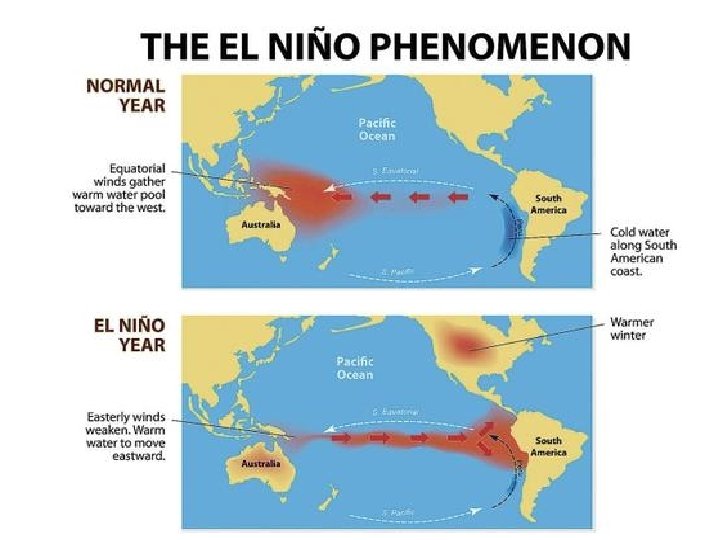
El Nino: An El Niño event occurs when warm water builds in the eastern Pacific Ocean, causing low pressure and heavy precipitation in the region. Cold waters accumulate in the western Pacific Ocean at the same time, bringing high pressure and dry conditions.
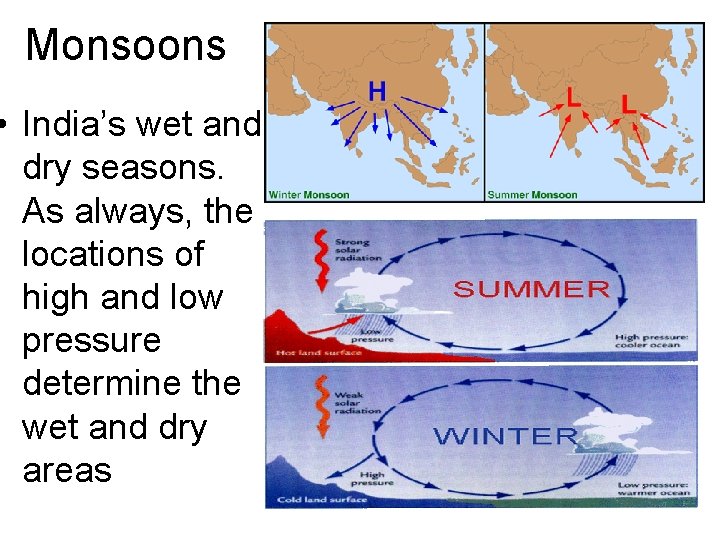
Monsoons • India’s wet and dry seasons. As always, the locations of high and low pressure determine the wet and dry areas
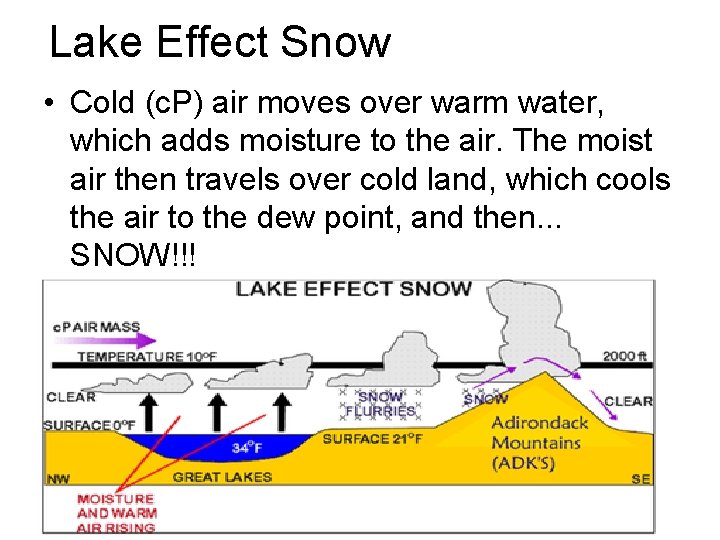
Lake Effect Snow • Cold (c. P) air moves over warm water, which adds moisture to the air. The moist air then travels over cold land, which cools the air to the dew point, and then. . . SNOW!!!