
CLIMATE Study material for class 9 CLIMATIC DIVERSITY



- Slides: 10
CLIMATE Study material for class 9
CLIMATIC DIVERSITY IN INDIA India is home to an extraordinary variety of climatic regions, ranging from tropical in the south to temperate and alpine in the Himalayan north, where elevated regions receive sustained winter snowfall. The nation's climate is strongly influenced by the Himalayas and the Thar Desert.
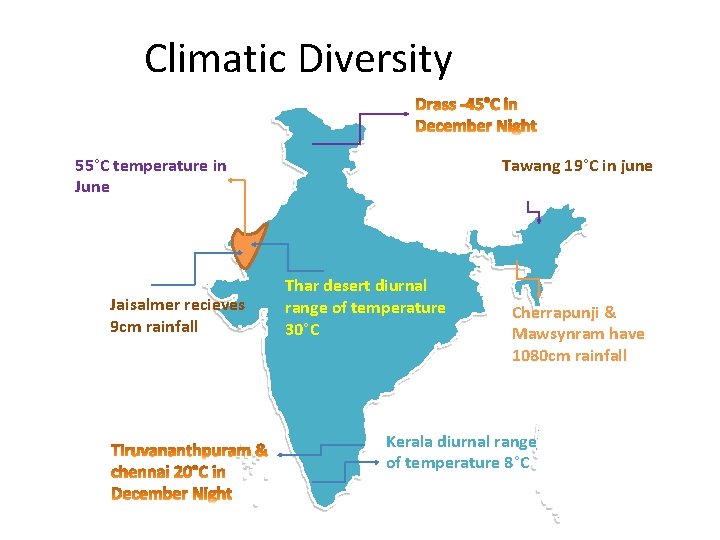
Climatic Diversity 55°C temperature in June Jaisalmer recieves 9 cm rainfall Tawang 19°C in june Thar desert diurnal range of temperature 30°C Cherrapunji & Mawsynram have 1080 cm rainfall Kerala diurnal range of temperature 8°C
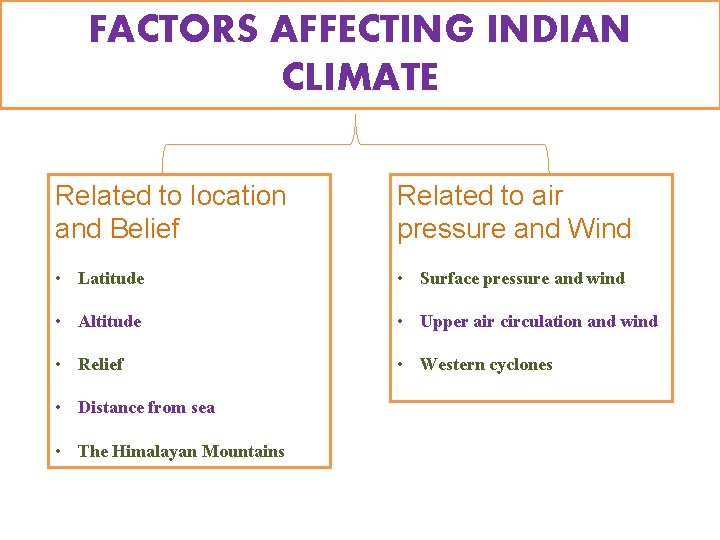
FACTORS AFFECTING INDIAN CLIMATE Related to location and Belief Related to air pressure and Wind • Latitude • Surface pressure and wind • Altitude • Upper air circulation and wind • Relief • Western cyclones • Distance from sea • The Himalayan Mountains
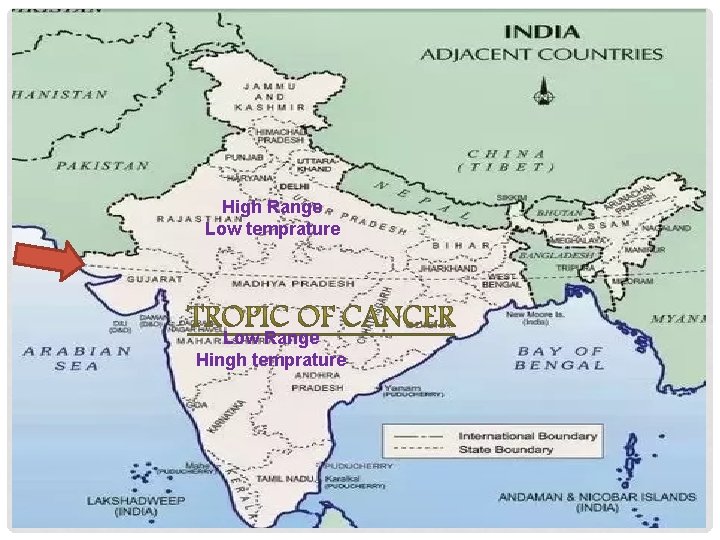
LATITUDE • The Tropic of Cancer passes through the middle of the country from the Rann of Kuchchh to Mizoram. • The region lying in the south of tropic of cancer is tropical whereas the region in north is in sub tropical. Therefore India receives both tropical as well as subtropical climate.
High Range Low temprature Low Range Hingh temprature
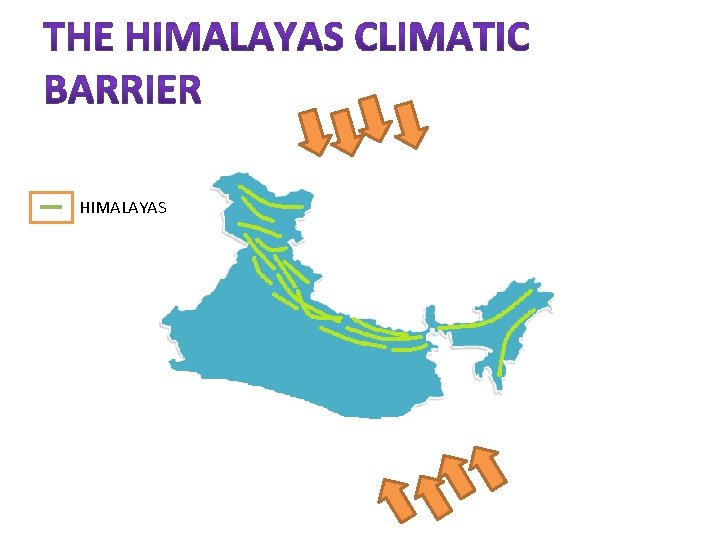
ALTITUDE • India has mountains in north with average height of 6000 m and coast line of about 30 m. • The Himalyas act as a barrier to enter winds in India from Centeral Asia. • That’s why it experiences mild winters as compare to Centeral Asia.
HIMALAYAS
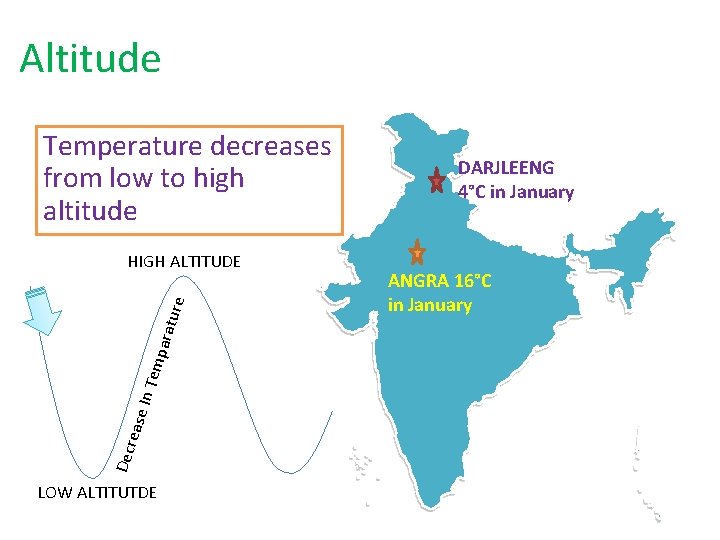
Altitude Temperature decreases from low to high altitude Decr ease In Te mpa ratu re HIGH ALTITUDE LOW ALTITUTDE DARJLEENG 4°C in January ANGRA 16°C in January
THANKS FOR WATCHING v Created By, VIVEK SHAH v Blog address : - vivekshah 1. wordpress. com