
CLIMATE SOIL TRANSPORT MINERAL BASED INDUSTRIES 5 Y
CLIMATE SOIL TRANSPORT MINERAL BASED INDUSTRIES 5 Y N A AGRO BASED INDUSTRIES MINERAL NATURAL VEGETATION WATER RESOURCES
CLIMATE OF INDIA GREAT VARIATION IN TEMPERATURE AND RAINFALL RECEIVE RAIN BY SEASONAL WINDS- MONSOON 2
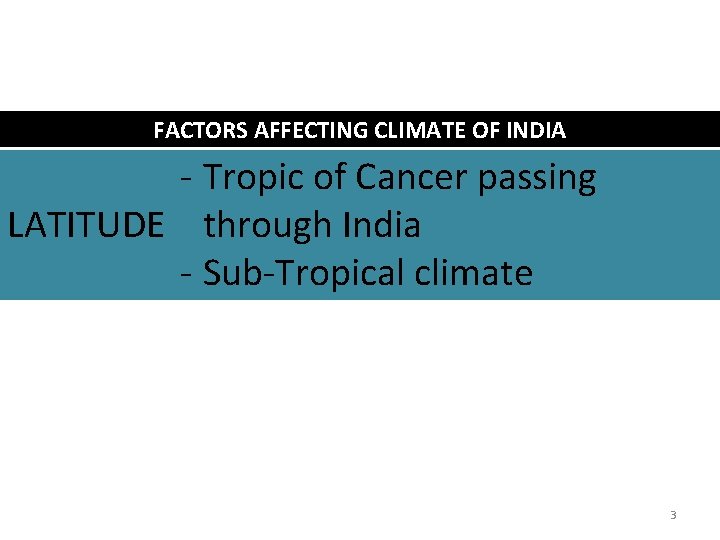
FACTORS AFFECTING CLIMATE OF INDIA - Tropic of Cancer passing LATITUDE through India - Sub-Tropical climate 3
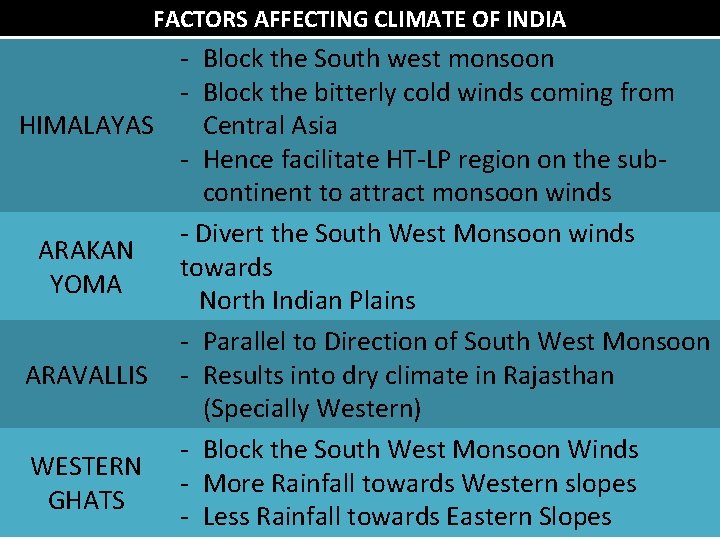
FACTORS AFFECTING CLIMATE OF INDIA - Block the South west monsoon - Block the bitterly cold winds coming from HIMALAYAS Central Asia - Hence facilitate HT-LP region on the subcontinent to attract monsoon winds - Divert the South West Monsoon winds ARAKAN towards YOMA North Indian Plains - Parallel to Direction of South West Monsoon ARAVALLIS - Results into dry climate in Rajasthan (Specially Western) - Block the South West Monsoon Winds WESTERN - More Rainfall towards Western slopes GHATS 4 - Less Rainfall towards Eastern Slopes
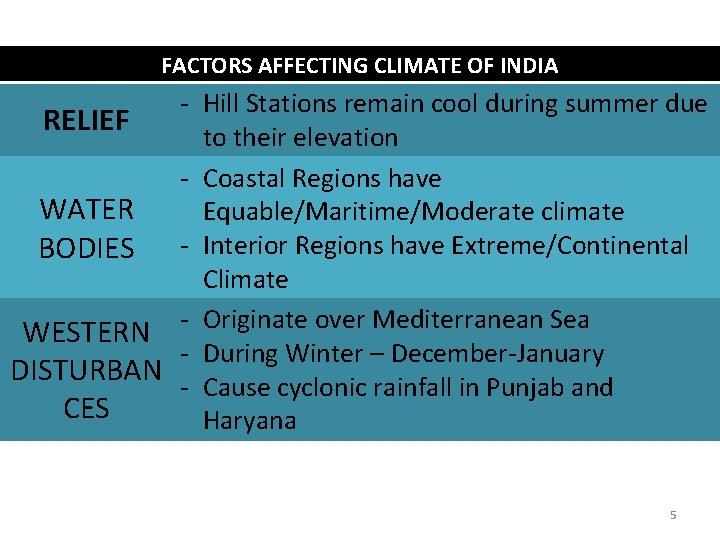
FACTORS AFFECTING CLIMATE OF INDIA - Hill Stations remain cool during summer due RELIEF to their elevation - Coastal Regions have WATER Equable/Maritime/Moderate climate BODIES - Interior Regions have Extreme/Continental Climate WESTERN - Originate over Mediterranean Sea - During Winter – December-January DISTURBAN - Cause cyclonic rainfall in Punjab and CES Haryana 5
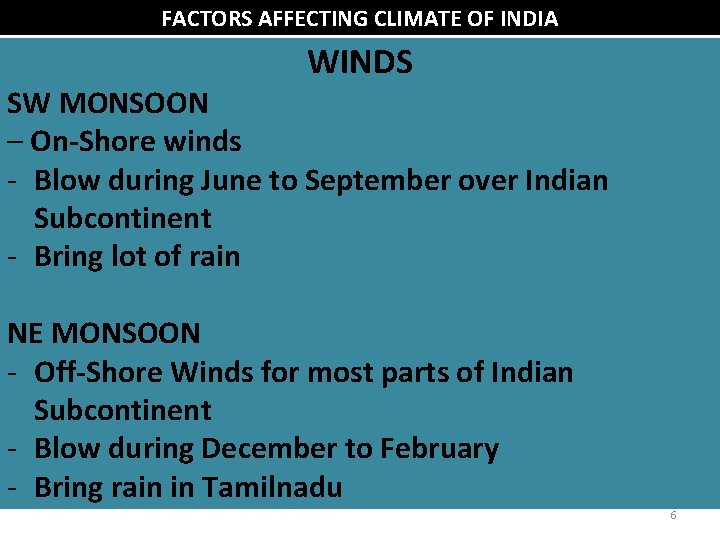
FACTORS AFFECTING CLIMATE OF INDIA WINDS SW MONSOON – On-Shore winds - Blow during June to September over Indian Subcontinent - Bring lot of rain NE MONSOON - Off-Shore Winds for most parts of Indian Subcontinent - Blow during December to February - Bring rain in Tamilnadu 6
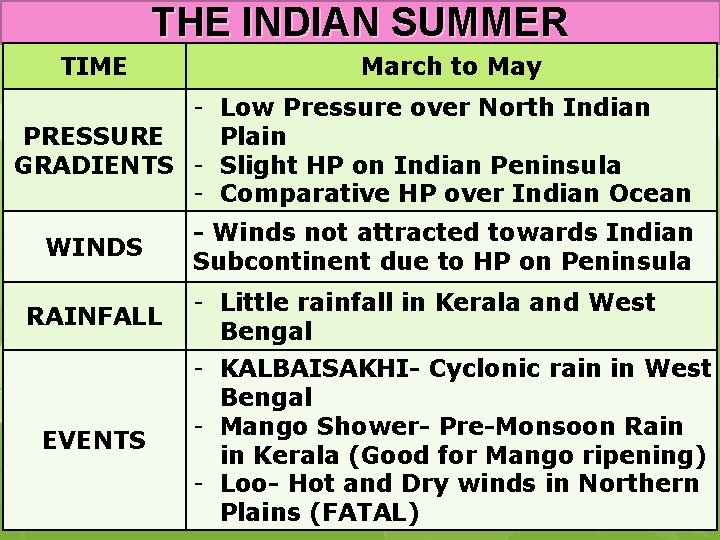
THE INDIAN SUMMER TIME March to May - Low Pressure over North Indian PRESSURE Plain GRADIENTS - Slight HP on Indian Peninsula - Comparative HP over Indian Ocean WINDS RAINFALL EVENTS 7 - Winds not attracted towards Indian Subcontinent due to HP on Peninsula - Little rainfall in Kerala and West Bengal - KALBAISAKHI- Cyclonic rain in West Bengal - Mango Shower- Pre-Monsoon Rain in Kerala (Good for Mango ripening) - Loo- Hot and Dry winds in Northern Plains (FATAL)
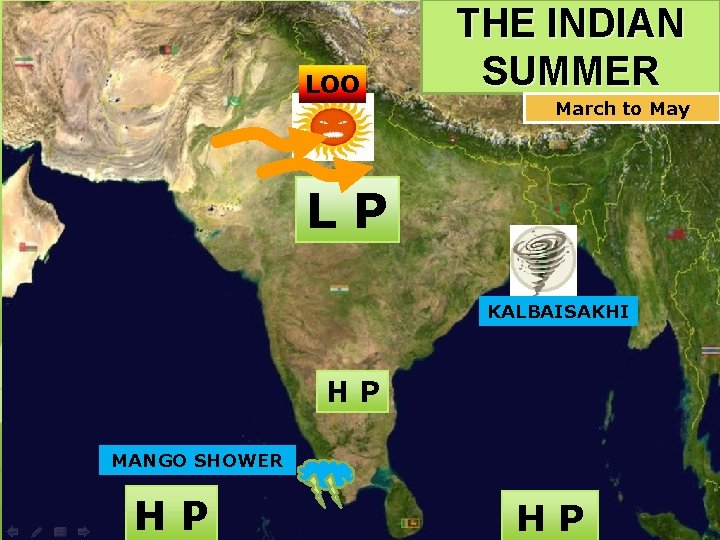
LOO THE INDIAN SUMMER March to May LP KALBAISAKHI HP MANGO SHOWER HP HP
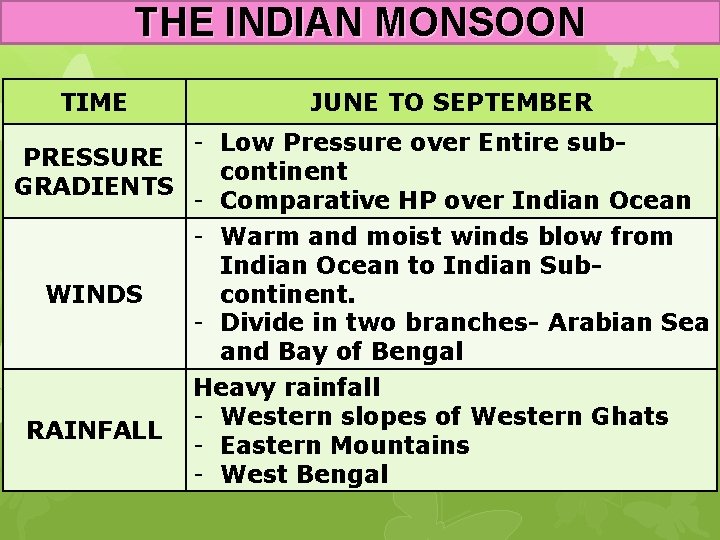
THE INDIAN MONSOON TIME JUNE TO SEPTEMBER - Low Pressure over Entire sub. PRESSURE continent GRADIENTS - Comparative HP over Indian Ocean - Warm and moist winds blow from Indian Ocean to Indian Sub. WINDS continent. - Divide in two branches- Arabian Sea and Bay of Bengal Heavy rainfall - Western slopes of Western Ghats RAINFALL - Eastern Mountains - West Bengal 9
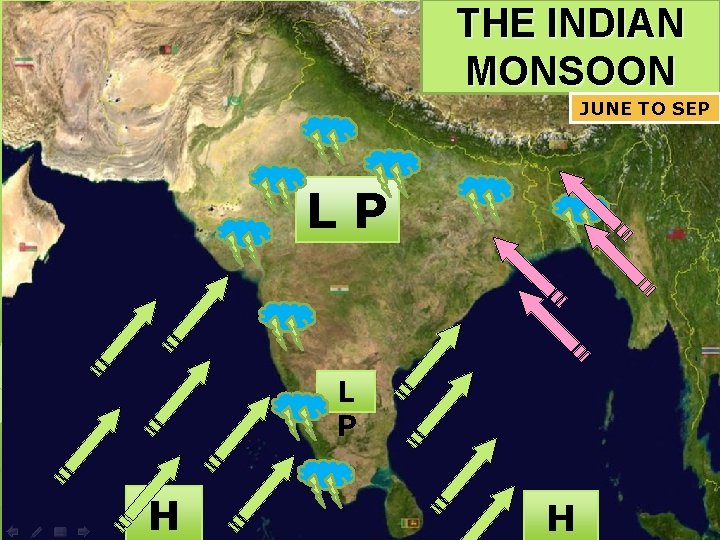
THE INDIAN MONSOON JUNE TO SEP LP L P H H
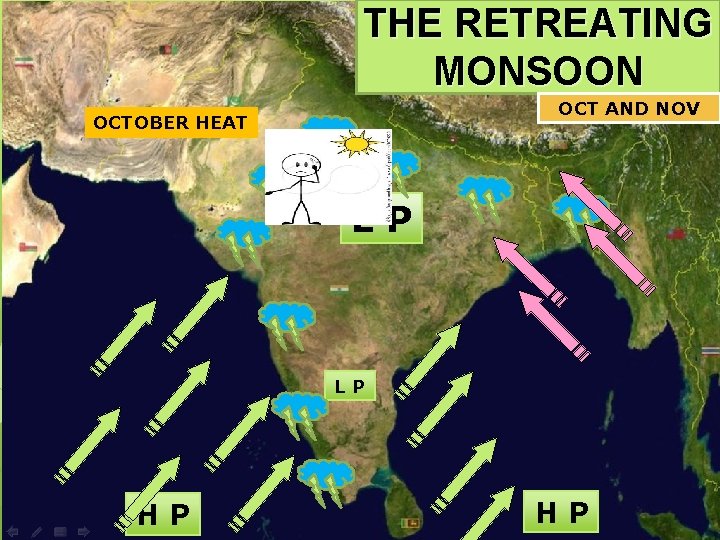
THE RETREATING MONSOON OCT AND NOV OCTOBER HEAT LP LP HP HP
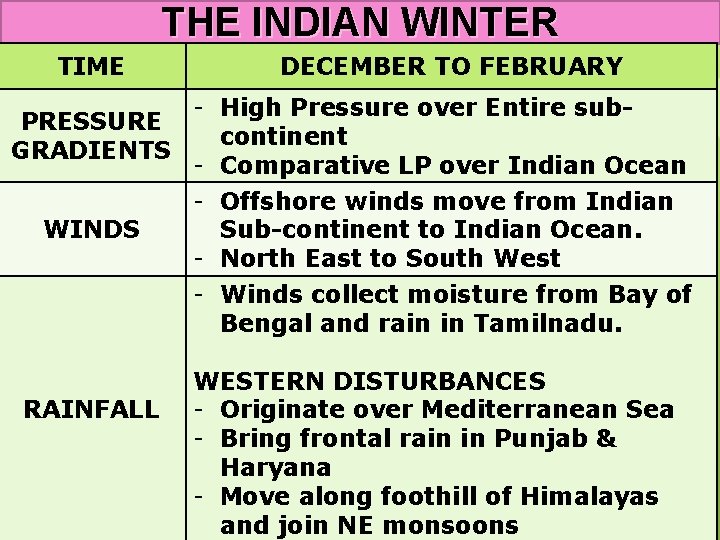
THE INDIAN WINTER TIME DECEMBER TO FEBRUARY - High Pressure over Entire sub. PRESSURE continent GRADIENTS - Comparative LP over Indian Ocean - Offshore winds move from Indian WINDS Sub-continent to Indian Ocean. - North East to South West - Winds collect moisture from Bay of Bengal and rain in Tamilnadu. RAINFALL 12 WESTERN DISTURBANCES - Originate over Mediterranean Sea - Bring frontal rain in Punjab & Haryana - Move along foothill of Himalayas and join NE monsoons
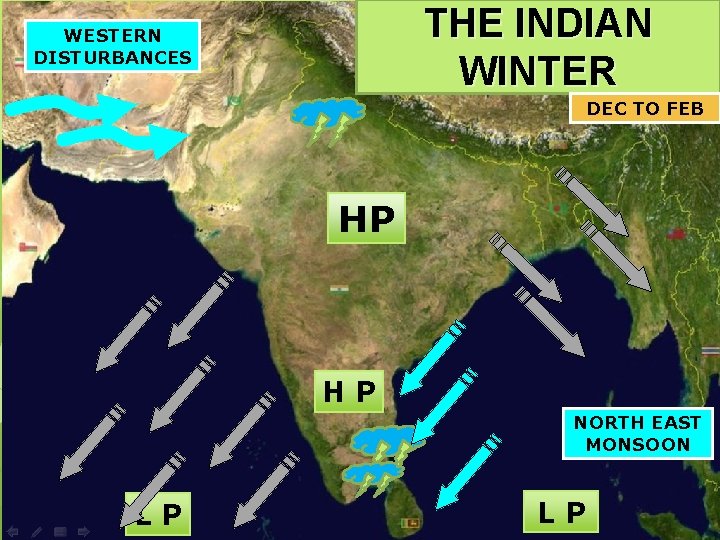
THE INDIAN WINTER WESTERN DISTURBANCES DEC TO FEB HP HP NORTH EAST MONSOON LP LP
CH 02 SOILS OF INDIA
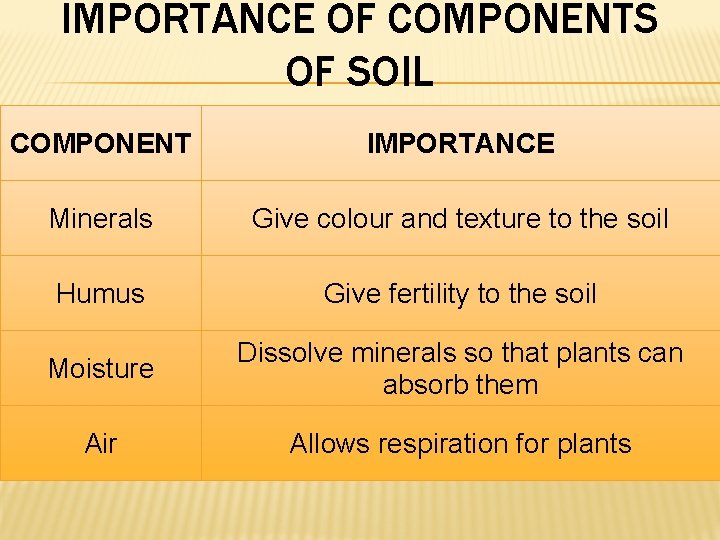
IMPORTANCE OF COMPONENTS OF SOIL COMPONENT IMPORTANCE Minerals Give colour and texture to the soil Humus Give fertility to the soil Moisture Dissolve minerals so that plants can absorb them Air Allows respiration for plants
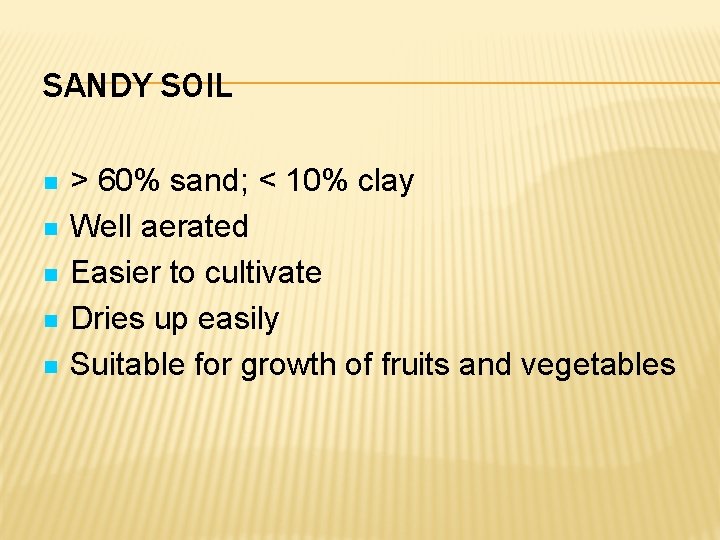
SANDY SOIL > 60% sand; < 10% clay Well aerated Easier to cultivate Dries up easily Suitable for growth of fruits and vegetables
CLAYEY SOIL > 60% clay; < 10% sand Good moisture retention capacity Difficult to cultivate
LOAMY SOIL 50% sand; 50% clay Well aerated Easier to cultivate Good moisture retention capacity Suitable for growth of all kinds of crops
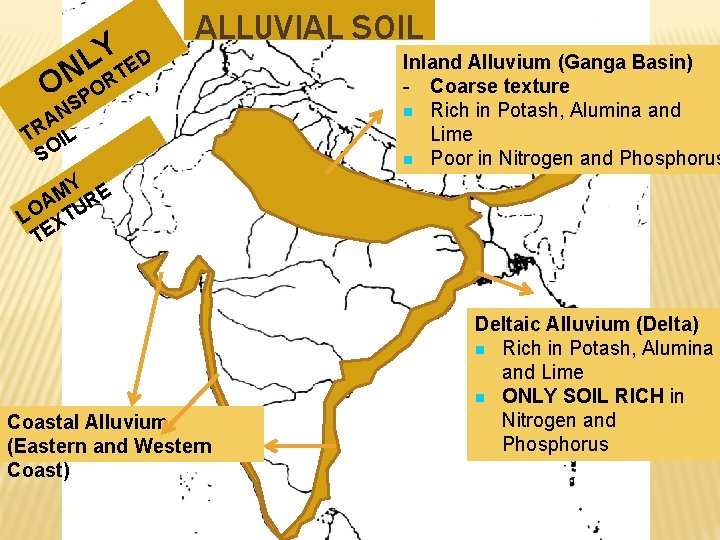
Y ED L N T ALLUVIAL SOIL O SPOR AN R T IL SO Y E M A UR O L XT TE Coastal Alluvium (Eastern and Western Coast) Inland Alluvium (Ganga Basin) - Coarse texture Rich in Potash, Alumina and Lime Poor in Nitrogen and Phosphorus Deltaic Alluvium (Delta) Rich in Potash, Alumina and Lime ONLY SOIL RICH in Nitrogen and Phosphorus
ALLUVIAL SOIL - TYPES Khaddar (Newer alluvium): It is found in the lower lands in the plains. It is loamy, porous and MORE FERTILE than Bhangar as new layers are deposited year after year during floods. Bhangar (Older alluvium): It is found in the higher parts of the plains on river terraces away from rivers. It contains lumps, is clayey, non-porous and LESS FERTILE than Khaddar.
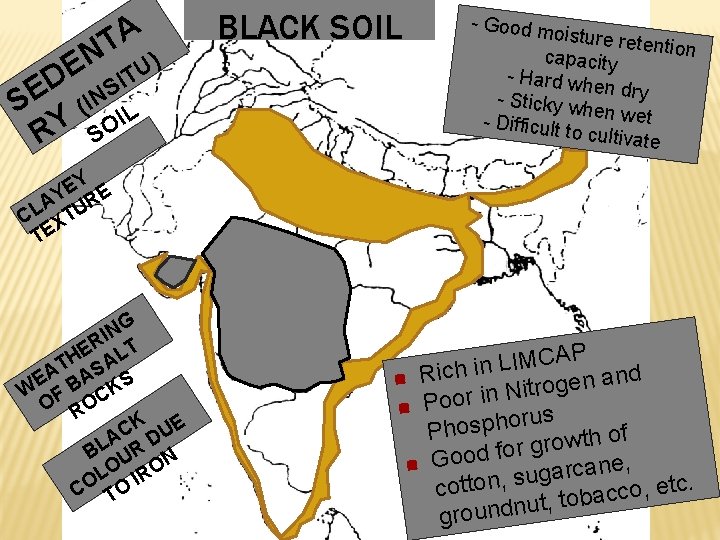
TA N U) E IT D S SE (IN IL RY SO BLACK SOIL - Good m oisture re tention capacity - Hard wh en dry - Sticky w hen wet - Difficult to cultivat e Y E Y RE A CL XTU TE NG I R T E H AL T EA BAS KS W F O ROC K UE C A D L B UR N O RO L I CO TO AP C M I L n i nd a Rich n e g o r n Nit i r o o P us r o h p s o Ph of h t w o r g d for Goo e, n a c r a g u cotton, s tobacco, etc. ut, n d n u o r g
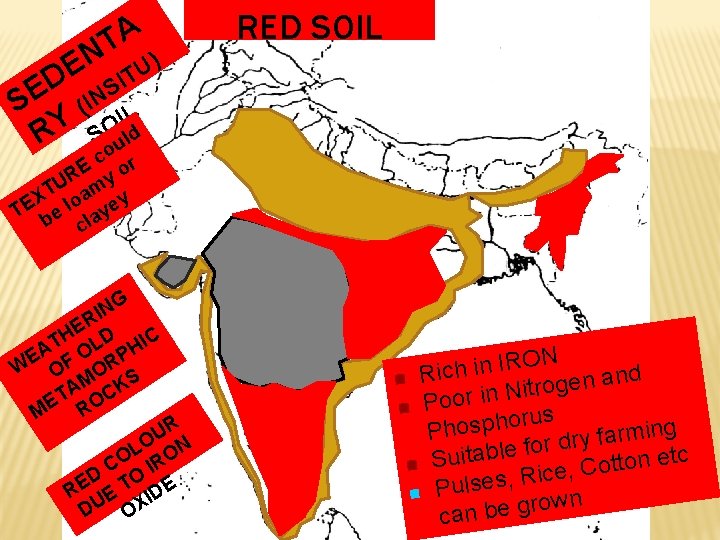
TA N U) E IT D S SE (IN IL RY SOould RED SOIL c r E R yo U T am y X TE be lo laye c NG I ER H D IC T L A E F O RPH W O O M KS A T OC E R M R U O N L O CO IR D TO E E R E ID U X D O ON R I n i h c nd a Ri n e g o r n Nit i r o o P us r o h p s g o n i Ph m r a f y dr r o f e l b a t tc e n o t Sui t o e, C c i R , s e s Pul wn o r g e b can
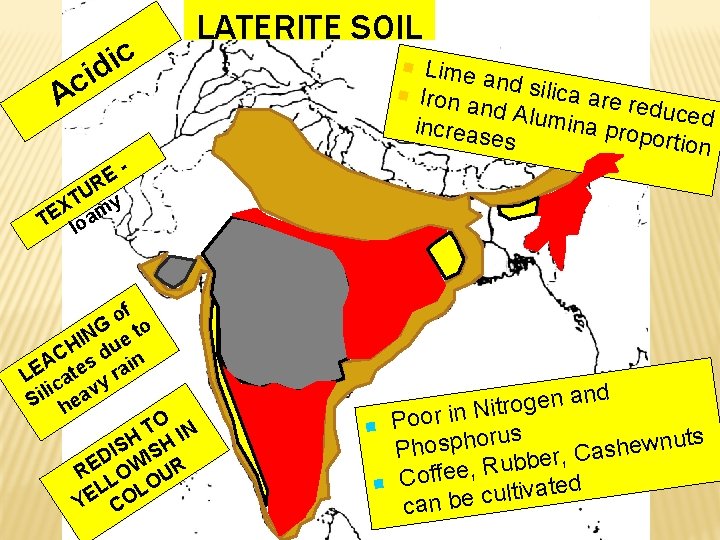
c i id c A E R TU y X TE loam LATERITE SOIL - of NG e to I H du C A es ain E L cat y r li av i S he TO IN SH I D W R E R LO U L LO E Y CO Lime a nd silic Iro a are r n and A educed l u m ina pro increas portion es and n e g o r t i n. N i r o o P rus o h nuts p s w o e h h s P a , C r e b b u R fee, Cof d e t a v i t l u can be c
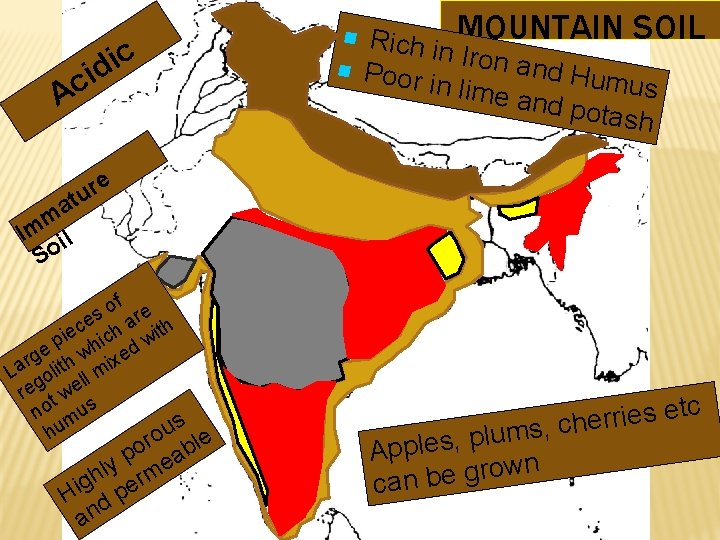
c i id c A Rich in MOUNTAIN SOIL Iron an d Hum Poor in us lime an d potas h e r u t a m m I il So f o s are e c h th i e i c i w p h d e g r ith w ixe a L ol ll m reg t we no mus s u hu ro le o b p ea y l rm h g Hi d pe an tc e s e i r r e ums, ch pl , s e l p p A wn o r g e b can
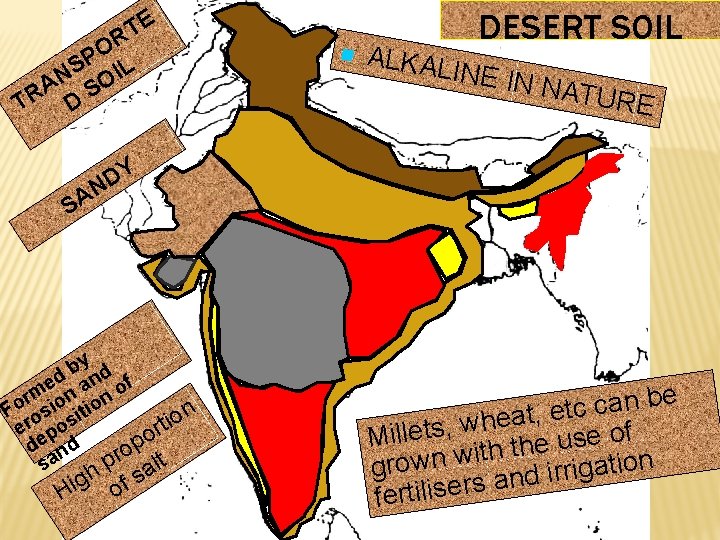
E T R O P L S N OI A S TR D ALKAL DESERT SOIL INE IN NATUR E Y D N SA y b d and f e m on n o r Fo osi sitio n o i r e po rt o e p d nd o r sa h p alt g Hi of s e b n a c c t , e t a e h w , f o e Millets s u e h t i w n n w o i t a gro g i r r i d n a s r e s i fertil
MARSHY SOIL Found in Sunderbans of West Bengal Coastal areas of Orissa, Andhra Pradesh and Tamil Nadu Terai belt of U. P. Constantly waterlogged Contains iron and salts Good for cultivation of jute
CAUSES OF SOIL EROSION Natural Causes Topography Rainfall Nature of Soil Human causes Deforestation Overgrazing Improper farming techniques
CONSERVATION OF SOIL Afforestation Restricted grazing Proper farming techniques Terrace farming Construction of bunds Contour ploughing Strip Cropping Dams for flood control
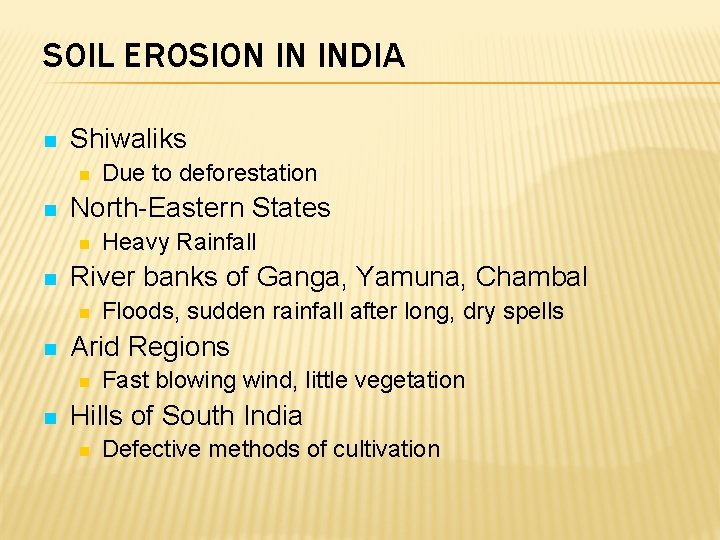
SOIL EROSION IN INDIA Shiwaliks North-Eastern States Floods, sudden rainfall after long, dry spells Arid Regions Heavy Rainfall River banks of Ganga, Yamuna, Chambal Due to deforestation Fast blowing wind, little vegetation Hills of South India Defective methods of cultivation
SOIL CONSERVATION SCHEMES IN INDIA Integrated Watershed Management Reclamation and Development of Ravine areas Control of Shifting agriculture
CH 3: Natural Vegetation • Vegetation that grows – without the interference of man – adapts itself to the limitations of the natural environment Distribution of Natural Vegetation � Climate � Soil � Topography
Utility of Natural Vegetation � Purify air � Transpires moisture � Prevent global warming � Checks soil erosion � Natural habitat for animals � Provides forest products � Aesthetic pleasure
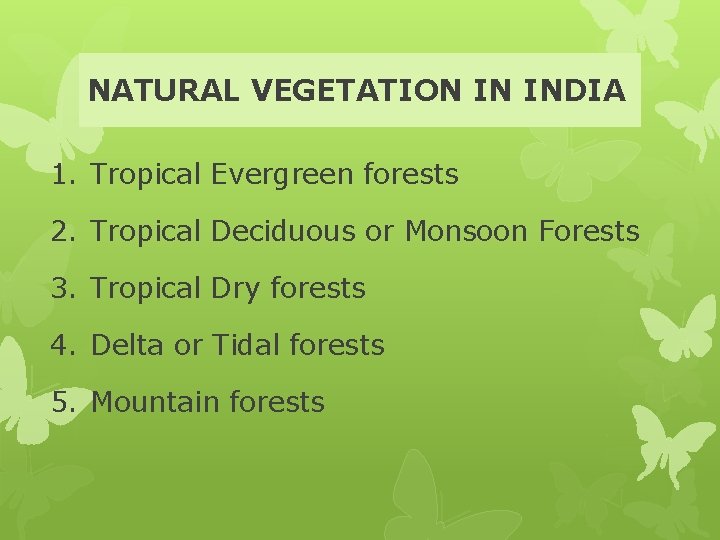
NATURAL VEGETATION IN INDIA 1. Tropical Evergreen forests 2. Tropical Deciduous or Monsoon Forests 3. Tropical Dry forests 4. Delta or Tidal forests 5. Mountain forests
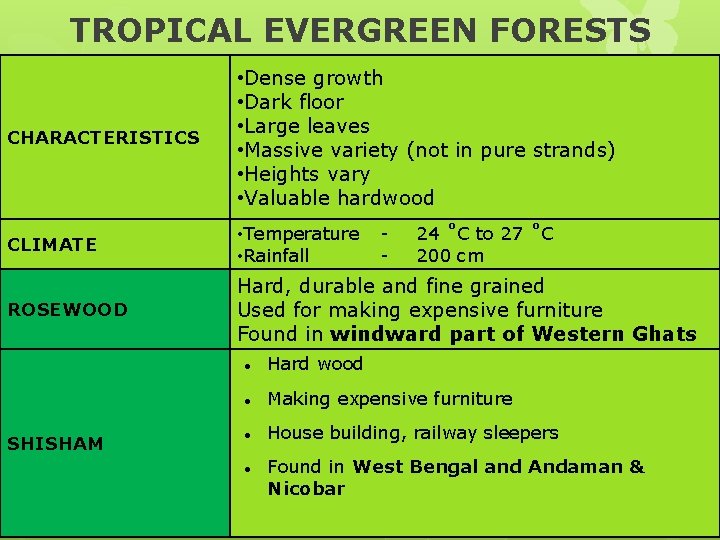
TROPICAL EVERGREEN FORESTS CHARACTERISTICS • Dense growth • Dark floor • Large leaves • Massive variety (not in pure strands) • Heights vary • Valuable hardwood CLIMATE • Temperature • Rainfall ROSEWOOD Hard, durable and fine grained Used for making expensive furniture Found in windward part of Western Ghats SHISHAM - 24 ˚C to 27 ˚C 200 cm Hard wood Making expensive furniture House building, railway sleepers Found in West Bengal and Andaman & Nicobar
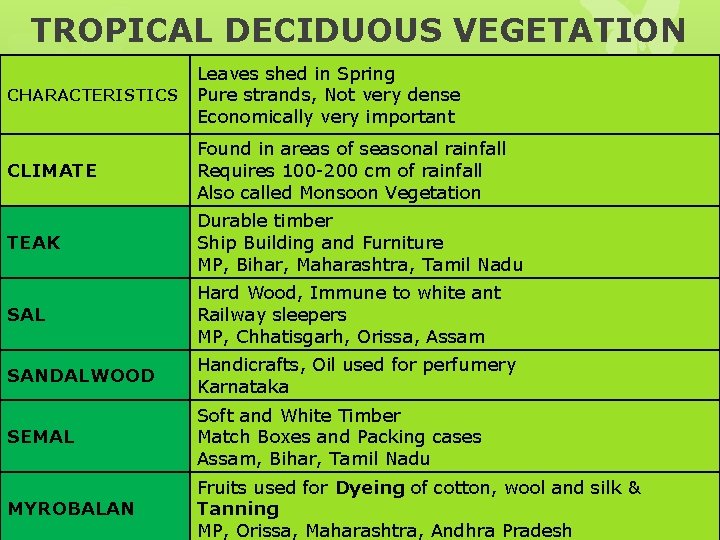
TROPICAL DECIDUOUS VEGETATION CHARACTERISTICS Leaves shed in Spring Pure strands, Not very dense Economically very important CLIMATE Found in areas of seasonal rainfall Requires 100 -200 cm of rainfall Also called Monsoon Vegetation TEAK Durable timber Ship Building and Furniture MP, Bihar, Maharashtra, Tamil Nadu SAL Hard Wood, Immune to white ant Railway sleepers MP, Chhatisgarh, Orissa, Assam SANDALWOOD Handicrafts, Oil used for perfumery Karnataka SEMAL Soft and White Timber Match Boxes and Packing cases Assam, Bihar, Tamil Nadu MYROBALAN Fruits used for Dyeing of cotton, wool and silk & Tanning MP, Orissa, Maharashtra, Andhra Pradesh
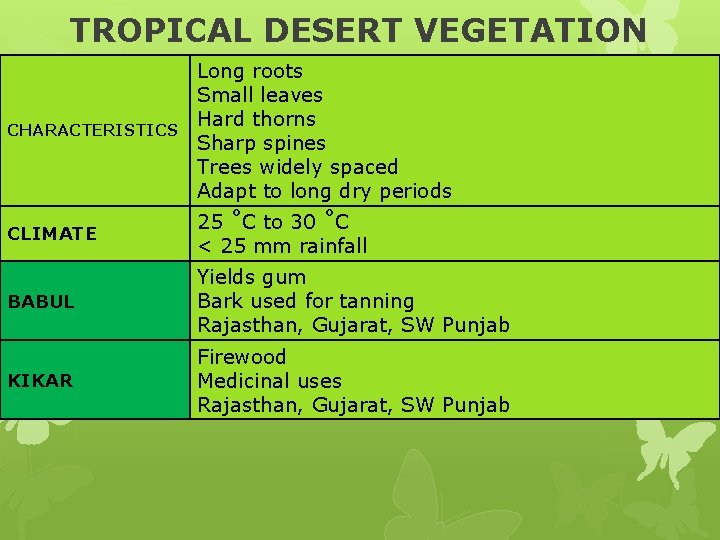
TROPICAL DESERT VEGETATION CHARACTERISTICS Long roots Small leaves Hard thorns Sharp spines Trees widely spaced Adapt to long dry periods CLIMATE 25 ˚C to 30 ˚C < 25 mm rainfall BABUL Yields gum Bark used for tanning Rajasthan, Gujarat, SW Punjab KIKAR Firewood Medicinal uses Rajasthan, Gujarat, SW Punjab
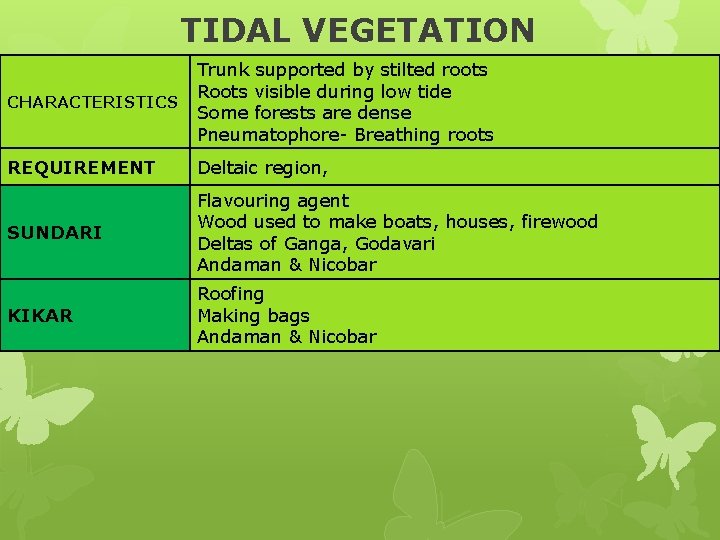
TIDAL VEGETATION CHARACTERISTICS Trunk supported by stilted roots Roots visible during low tide Some forests are dense Pneumatophore- Breathing roots REQUIREMENT Deltaic region, SUNDARI Flavouring agent Wood used to make boats, houses, firewood Deltas of Ganga, Godavari Andaman & Nicobar KIKAR Roofing Making bags Andaman & Nicobar
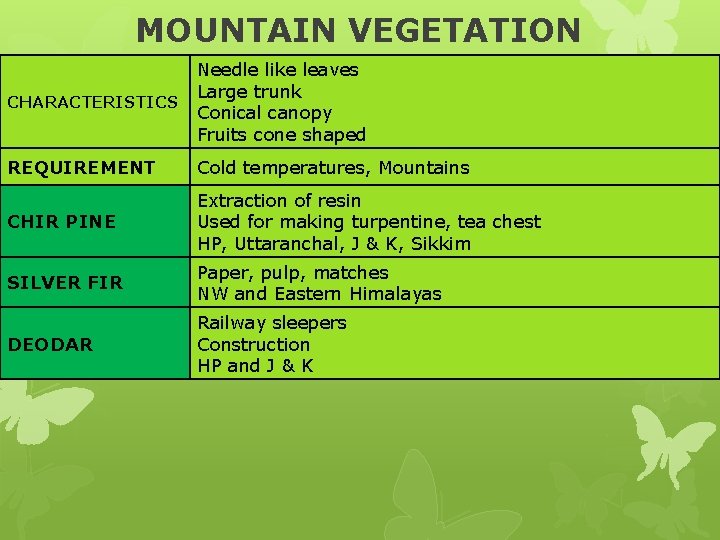
MOUNTAIN VEGETATION CHARACTERISTICS Needle like leaves Large trunk Conical canopy Fruits cone shaped REQUIREMENT Cold temperatures, Mountains CHIR PINE Extraction of resin Used for making turpentine, tea chest HP, Uttaranchal, J & K, Sikkim SILVER FIR Paper, pulp, matches NW and Eastern Himalayas DEODAR Railway sleepers Construction HP and J & K

CONSERVATION OF FORESTS
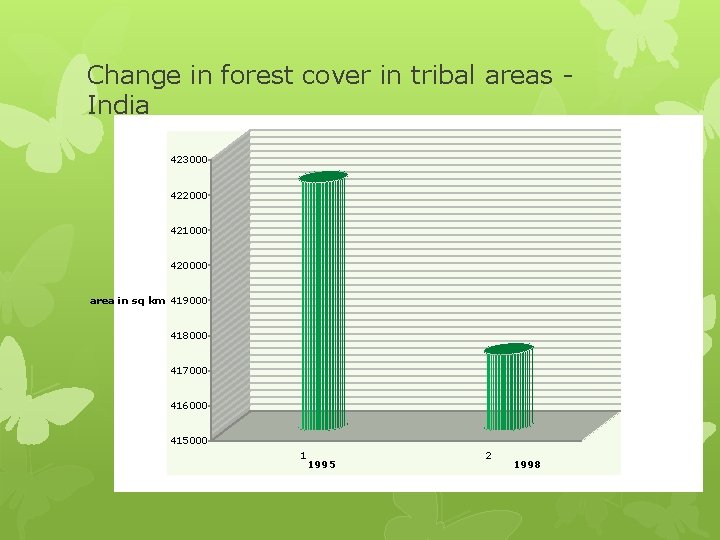
Change in forest cover in tribal areas India 423000 422000 421000 420000 area in sq km 419000 418000 417000 416000 415000 1 1995 2 1998
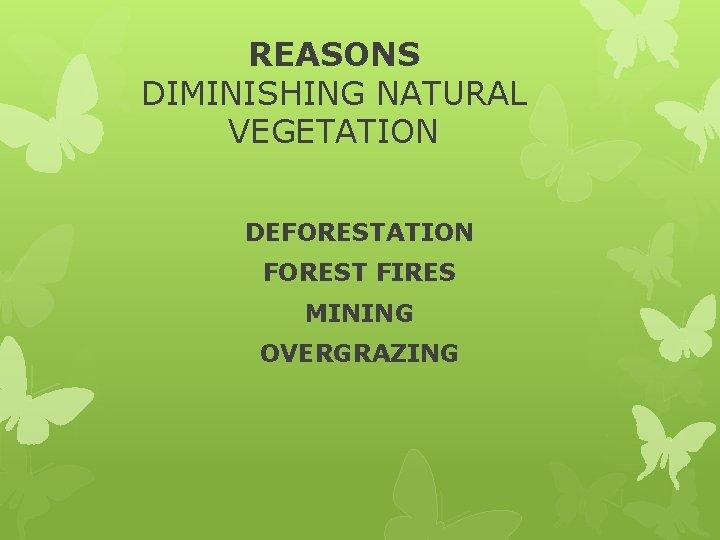
REASONS DIMINISHING NATURAL VEGETATION DEFORESTATION FOREST FIRES MINING OVERGRAZING
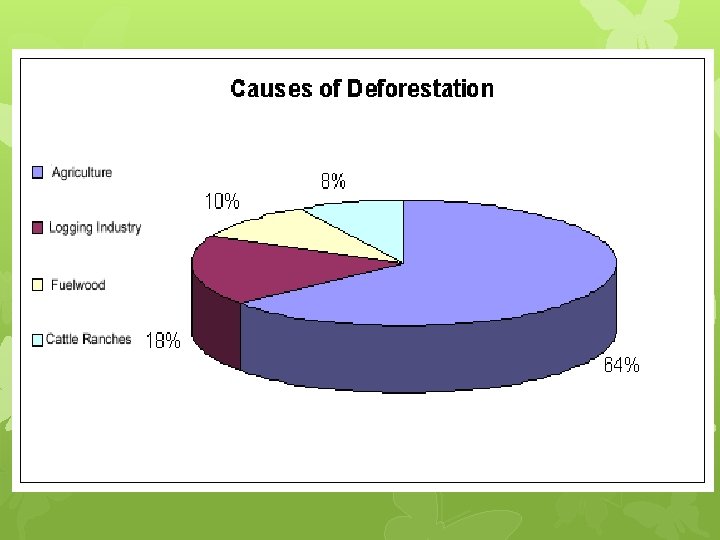
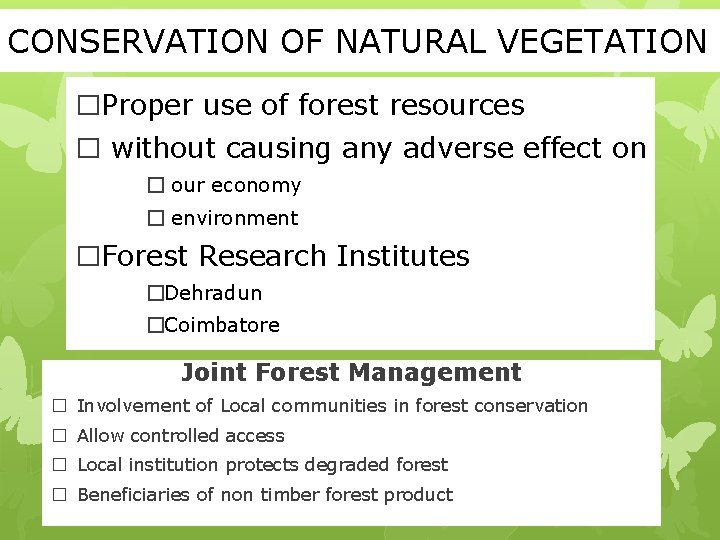
CONSERVATION OF NATURAL VEGETATION �Proper use of forest resources � without causing any adverse effect on � our economy � environment �Forest Research Institutes �Dehradun �Coimbatore Joint Forest Management � Involvement of Local communities in forest conservation � Allow controlled access � Local institution protects degraded forest � Beneficiaries of non timber forest product
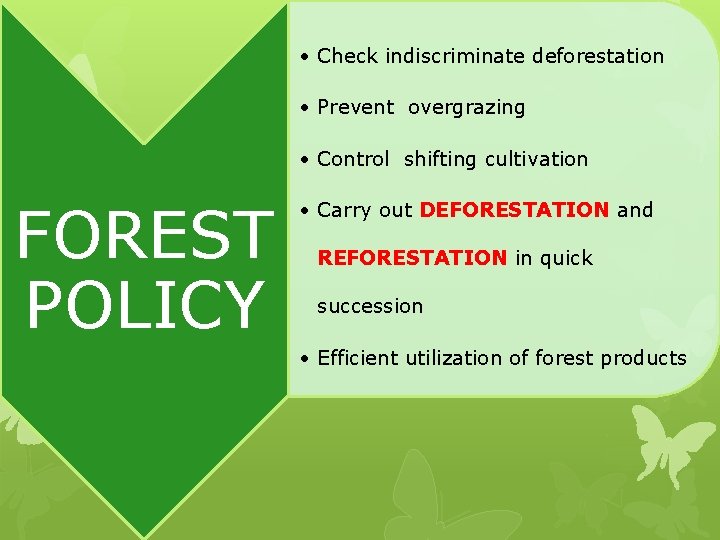
• Check indiscriminate deforestation • Prevent overgrazing • Control shifting cultivation FOREST POLICY • Carry out DEFORESTATION and REFORESTATION in quick succession • Efficient utilization of forest products
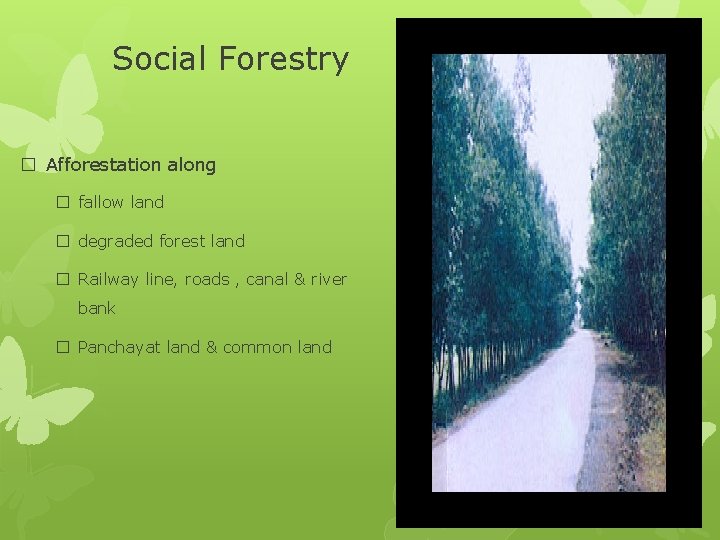
Social Forestry � Afforestation along � fallow land � degraded forest land � Railway line, roads , canal & river bank � Panchayat land & common land
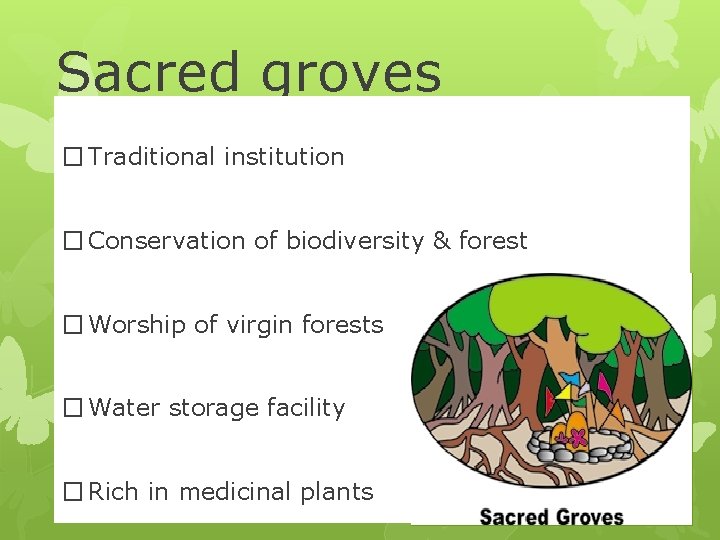
Sacred groves � Traditional institution � Conservation of biodiversity & forest � Worship of virgin forests � Water storage facility � Rich in medicinal plants
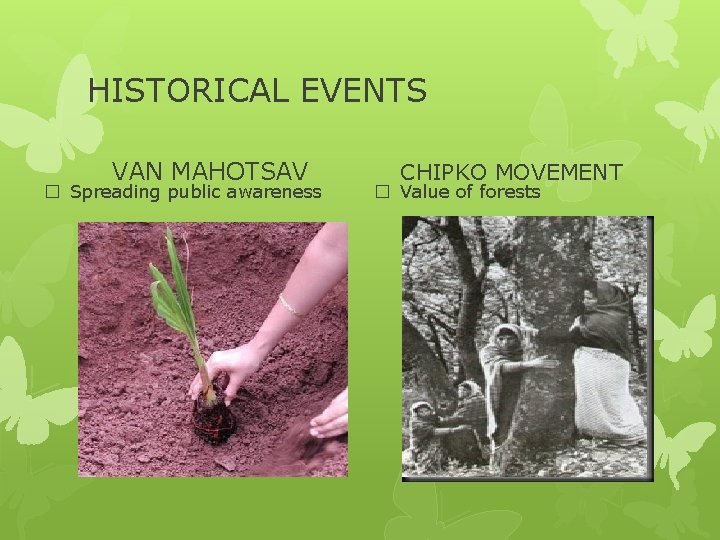
HISTORICAL EVENTS VAN MAHOTSAV � Spreading public awareness CHIPKO MOVEMENT � Value of forests
CH 04 WATER RESOURCES OF INDIA
IMPORTANCE OF WATER � Life line of living being � Essential for agriculture � Industries � Hydro electricity generation � Means of navigation � Sources of sports & recreation
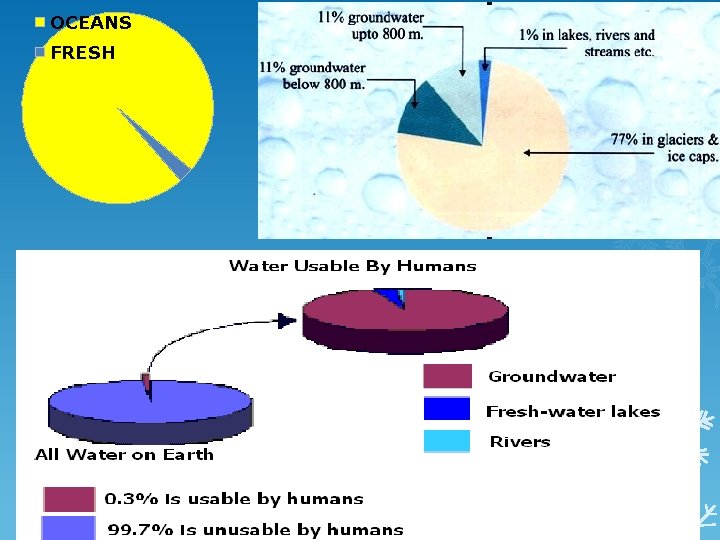
OCEANS FRESH
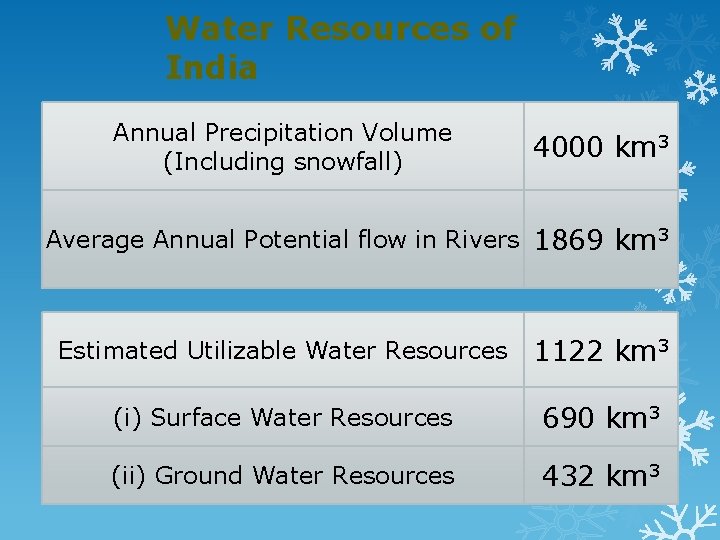
Water Resources of India Annual Precipitation Volume (Including snowfall) 4000 km 3 Average Annual Potential flow in Rivers 1869 km 3 Estimated Utilizable Water Resources 1122 km 3 (i) Surface Water Resources 690 km 3 (ii) Ground Water Resources 432 km 3
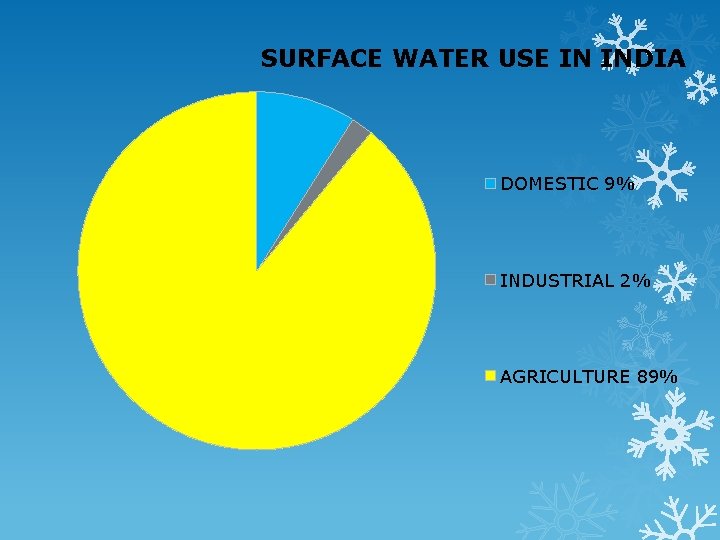
SURFACE WATER USE IN INDIA DOMESTIC 9% INDUSTRIAL 2% AGRICULTURE 89%
WHAT IS THE NEED FOR IRRIGATION? • RAINFALL in India is seasonal, uncertain, uneven and sporadic. • DIFFERENT CROPS have different water requirements. • It is indispensable in SEMI ARID REGIONS of Gujarat, Andhra Pradesh, Rajasthan etc. • It is necessary to extend the frontiers of cultivation in order to fulfill the food requirements of a GROWING POPULATION.
MODES OF IRRIGATION – WELL (PRIMITIVE) COMMON IN NORTHERN PLAINS ADVANTAGES Cheapest source of irrigation. Can be dug at any convenient place. Independent source of irrigation. DISADVANTAGES Fail to provide water during the dry summer months Well can water only 1 to 2 hectares of land. Time consuming. In many parts it is brackish.
MODES OF IRRIGATION – TANK (PRIMITIVE) COMMON IN DECCAN PLATEAU ADVANTAGES Simple, easy & cheap Stores rain water, prevents wastage Helps in raising the underground water level Also provide water for domestic purpose` DISADVANTAGES �Occupies large area which otherwise could have been used for cultivation �Many tanks dry up in the dry months �Silting of tank is a problem �Water is lost by evaporation
Reasons for the predominance of tank irrigation in the Deccan region �Underlying hard rocks does not allow percolation �The undulating surface forms natural depression �Construction of well is difficult in the peninsular region
MODES OF IRRIGATION – INUNDATION CANAL (PRIMITIVE) ADVANTAGES Easily built Cheap Useful in controlling floods DISADVANTAGES Uncertainty of water supply Only low lands areas are irrigated Useful only during floods
MODES OF IRRIGATION – PERINNIAL CANAL (MODERN) ADVANTAGES Perennial source of irrigation Water rich in sediments Although initial cost is high, it is quite cheap in the long run DISADVANTAGES Leads to the problem of water logging if canals are unlined Problem of soil Salinization or ‘reh’ Marshy areas near canal become breeding ground for mosquito resulting in Malaria.
Canal systems in North India � Ganga Canal (GANGA RIVER, UP AND BIHAR) � Nangal Dam Canal (SUTLEJ RIVER, PUNJAB AND HARYANA) � Indira Gandhi Canal (SUTLEJ RIVER, DRY PARTS OF RAJASTHAN) � Chambal Project Canal (CHAMBAL RIVER, MP AND RAJASTHAN) Canal systems in South India � Godavari Canal (GODAVARI RIVER, MAHARASHTRA AND AP) � Tungabhadra Dam Canal (TUNGABHADRA RIVER, KARNATAKA AND AP) � Hirakud Dam Canal (MAHANADI RIVER, ORISSA) � Periyar Project Canal (PERIYAR RIVER, TAMILNADU) � Mettur Project Canal (KAVERI RIVER, TAMILNADU)
ADVANTAGES OF MODERN METHODS OF IRRIGATION �More reliable. �Provide irrigation whenever needed. �Easy to operate. �Irrigate a much larger area. �Large amount of water can be pumped by electric or diesel driven motor.
MULTIPURPOSE PROJECT • Why is it so called? �Store water for irrigation �Generate electricity �Control flood �Provide afforestation in the catchment areas �Soil conservation �Provide drinking water �Use canal for navigation �Develop pisciculture �Develop recreational centre
CONSERVATION OF WATER RESOURCES Need • RAINFALL IS IRREGULAR AND ERRATIC • INCREASING DEMAND WITH INCREASING POPULATION • PER CAPITA WATER IN INDIA IS VERY LOW • AGRICULTURAL DEMAND • WATER POLLUTION
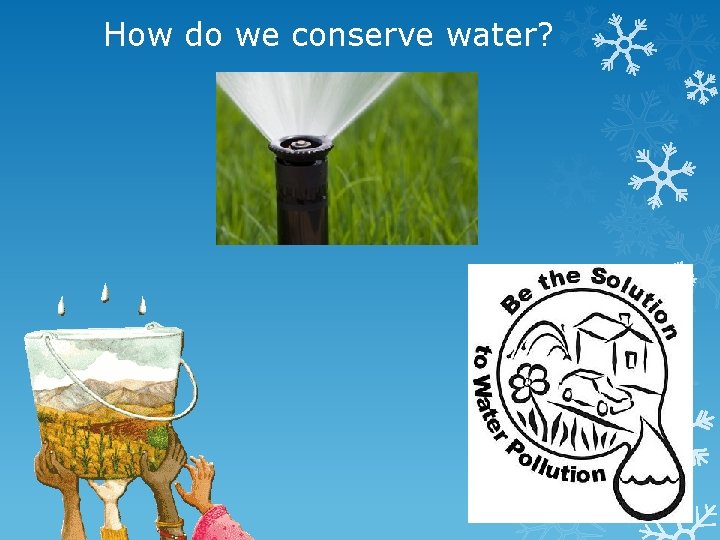
How do we conserve water?
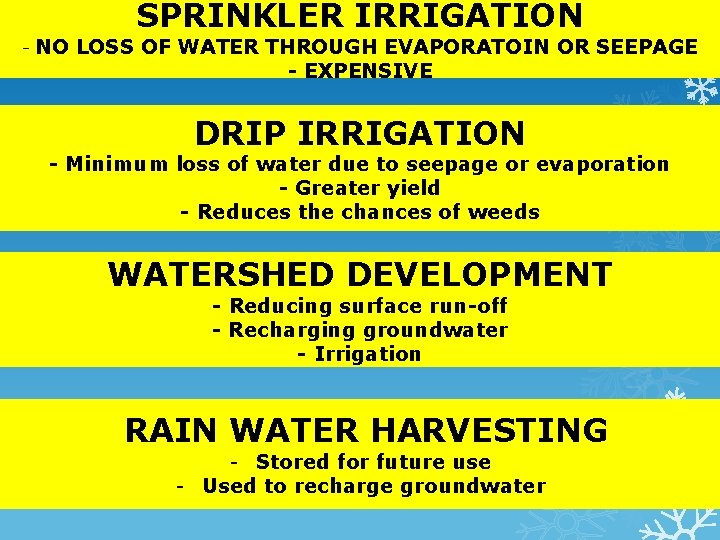
SPRINKLER IRRIGATION - NO LOSS OF WATER THROUGH EVAPORATOIN OR SEEPAGE - EXPENSIVE DRIP IRRIGATION - Minimum loss of water due to seepage or evaporation - Greater yield - Reduces the chances of weeds WATERSHED DEVELOPMENT - Reducing surface run-off - Recharging groundwater - Irrigation RAIN WATER HARVESTING - Stored for future use - Used to recharge groundwater

CH 05 TRANSPORT IN INDIA
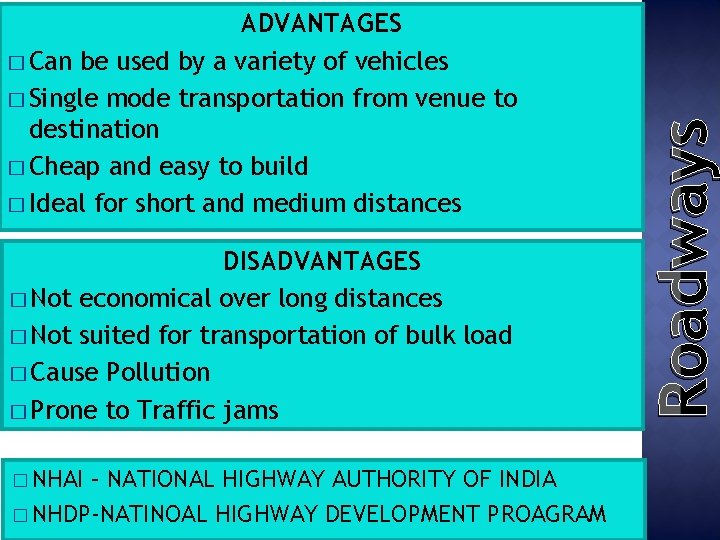
DISADVANTAGES � Not economical over long distances � Not suited for transportation of bulk load � Cause Pollution � Prone to Traffic jams � NHAI – NATIONAL HIGHWAY AUTHORITY OF INDIA � NHDP-NATINOAL HIGHWAY DEVELOPMENT PROAGRAM Roadways ADVANTAGES � Can be used by a variety of vehicles � Single mode transportation from venue to destination � Cheap and easy to build � Ideal for short and medium distances
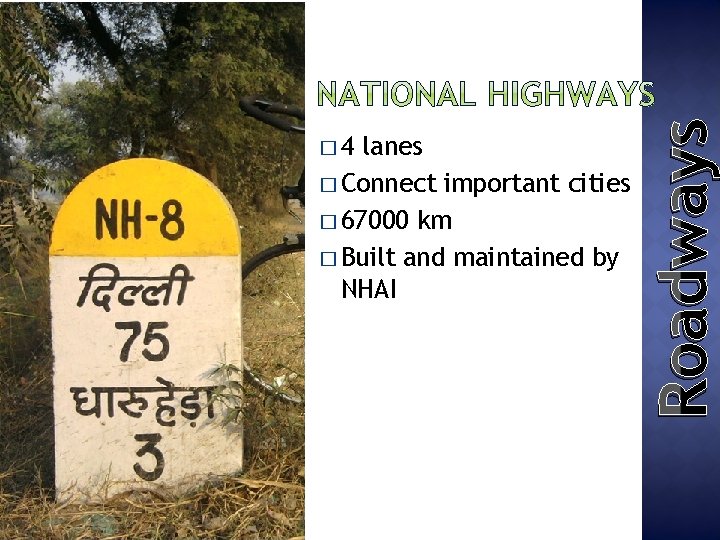
lanes � Connect important cities � 67000 km � Built and maintained by NHAI Roadways � 4
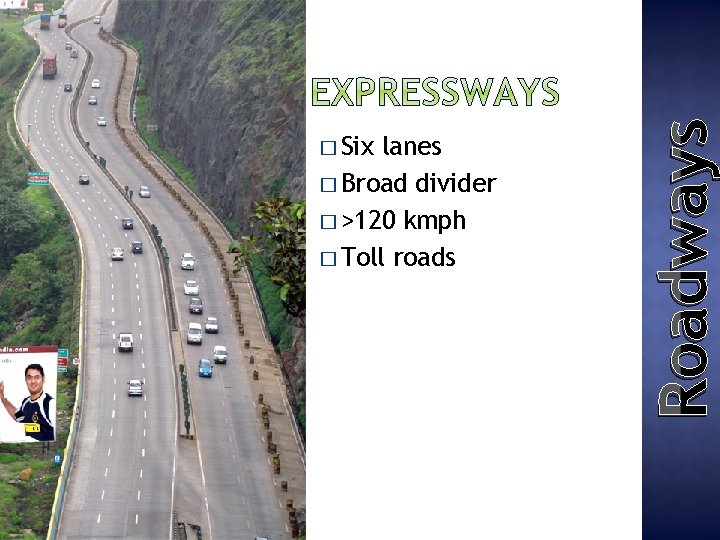
lanes � Broad divider � >120 kmph � Toll roads Roadways � Six
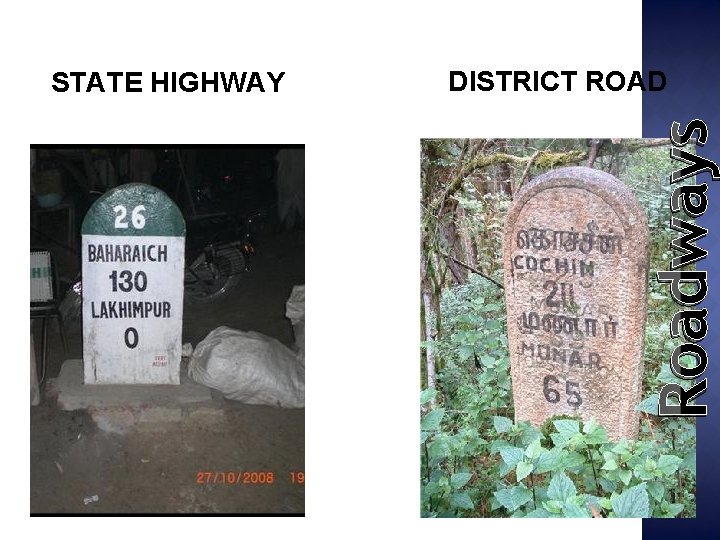
DISTRICT ROAD Roadways STATE HIGHWAY
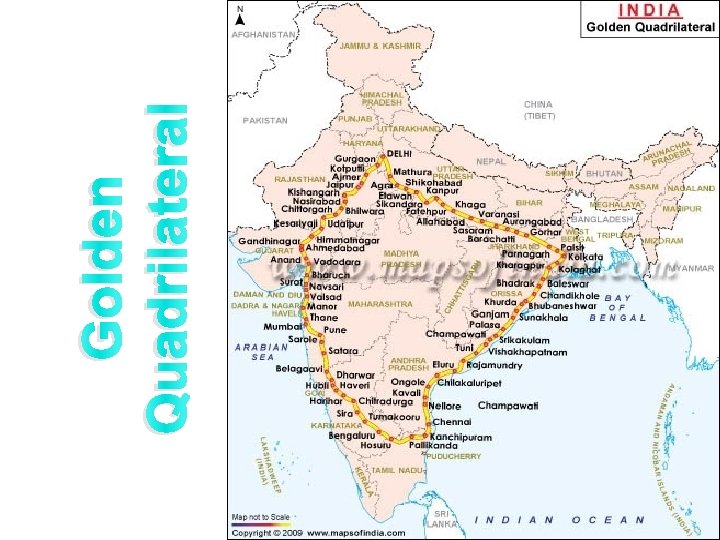
Golden Quadrilateral
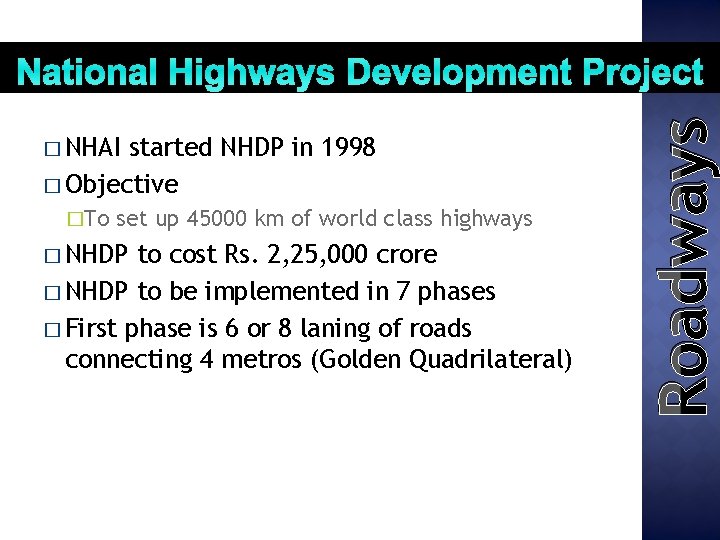
� NHAI started NHDP in 1998 � Objective �To set up 45000 km of world class highways � NHDP to cost Rs. 2, 25, 000 crore � NHDP to be implemented in 7 phases � First phase is 6 or 8 laning of roads connecting 4 metros (Golden Quadrilateral) Roadways National Highways Development Project
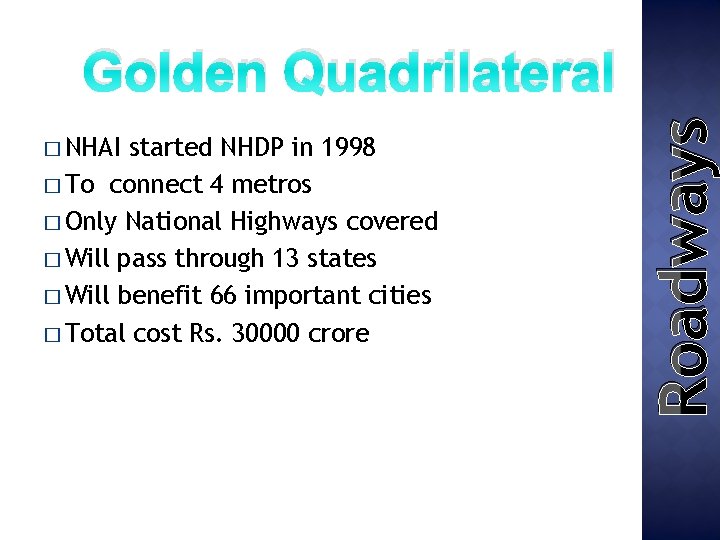
� NHAI started NHDP in 1998 � To connect 4 metros � Only National Highways covered � Will pass through 13 states � Will benefit 66 important cities � Total cost Rs. 30000 crore Roadways Golden Quadrilateral
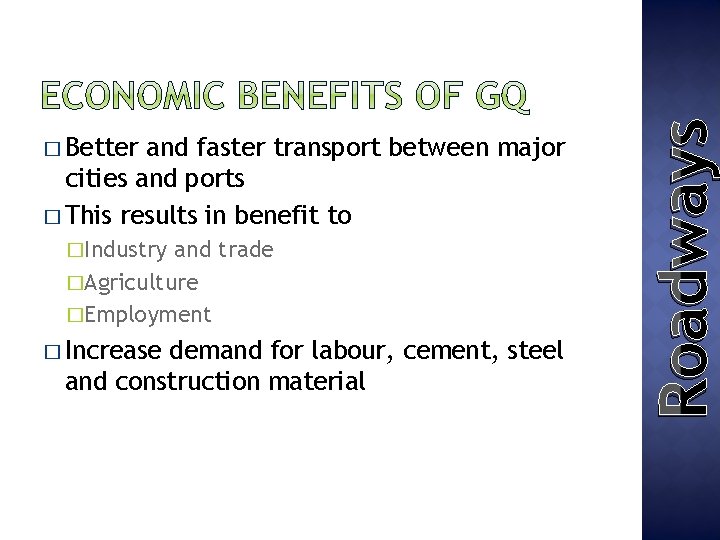
and faster transport between major cities and ports � This results in benefit to �Industry and trade �Agriculture �Employment � Increase demand for labour, cement, steel and construction material Roadways � Better
DISADVANTAGES � Cannot cater to hilly regions � To be supported by roads � High initial investment � Maintenance � NHAI – NATIONAL HIGHWAY AUTHORITY OF INDIA � NHDP-NATINOAL HIGHWAY DEVELOPMENT PROAGRAM Railways ADVANTAGES � Cheap mode of transport � Transportation of bulk goods over long distances � Long and comfortable travel � Can be used by many people at a time
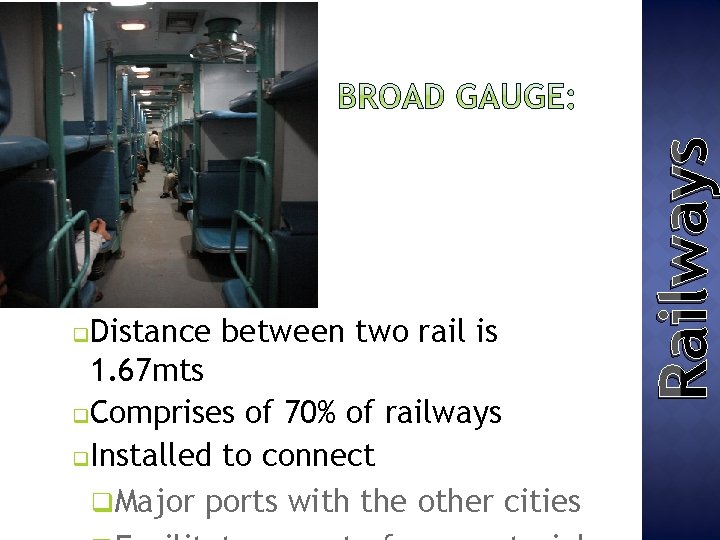
Railways Distance between two rail is 1. 67 mts q. Comprises of 70% of railways q. Installed to connect q. Major ports with the other cities q
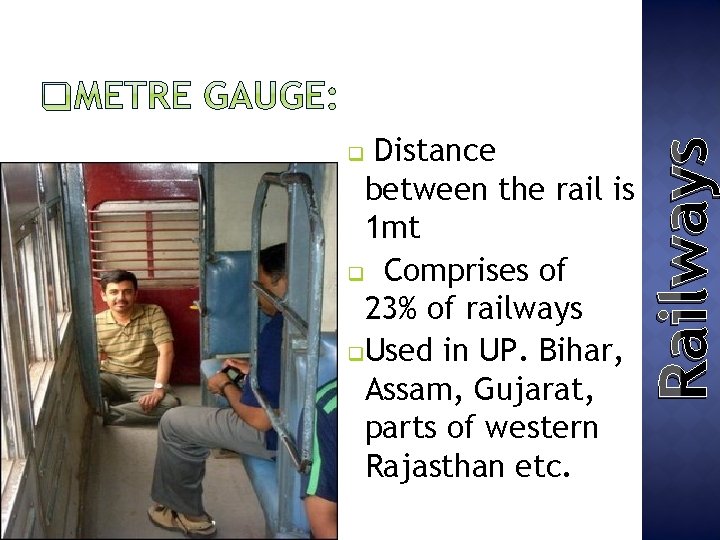
Railways Distance between the rail is 1 mt q Comprises of 23% of railways q. Used in UP. Bihar, Assam, Gujarat, parts of western Rajasthan etc. q
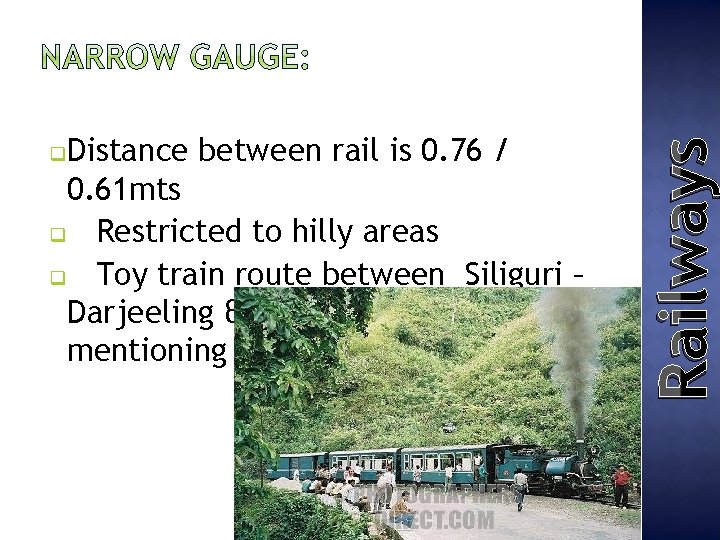
Railways Distance between rail is 0. 76 / 0. 61 mts q Restricted to hilly areas q Toy train route between Siliguri – Darjeeling & Shimla – Kalka are worth mentioning q
gauges converted to broad gauge �Diesel engines replaced the steam engine �Diesel locomotive works- Chittaranjan ( WB) & Varanasi ( UP) �Electrification of all railway tracks undertaken �Priority to high density sections �To enable speed �Volume of traffic Railways �All
engines run with greater speed and cause less pollution �Computerization of ticketing �Metro rail in Kolkata & Delhi �Super Fast Trains Railways �Electrical
competition with road transport � Tremendous pressure of traffic � Unsafe due to poor maintenance � Inefficient image of railways � Frequent changes in policies � Delays in policy implementation � Obsolete machinery, tracks and equipments � Heavy consumption of electricity due to electrification � Unskilled and untrained workforce Railways � Tough
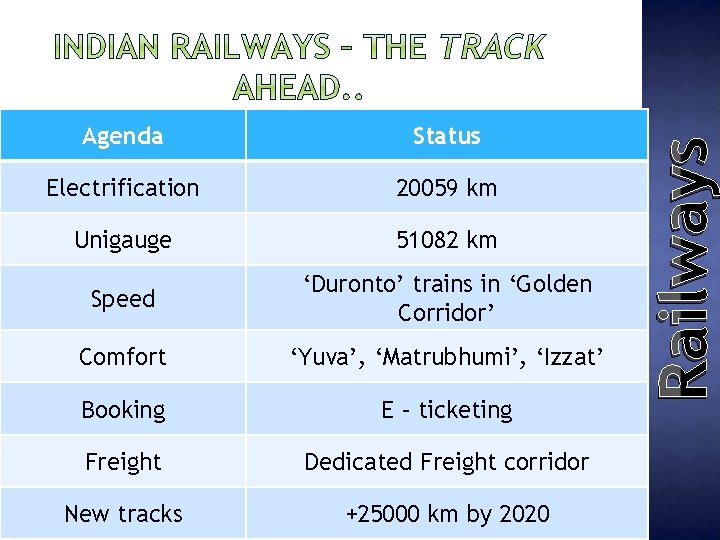
Status Electrification 20059 km Unigauge 51082 km Speed ‘Duronto’ trains in ‘Golden Corridor’ Comfort ‘Yuva’, ‘Matrubhumi’, ‘Izzat’ Booking E – ticketing Freight Dedicated Freight corridor New tracks +25000 km by 2020 Railways Agenda
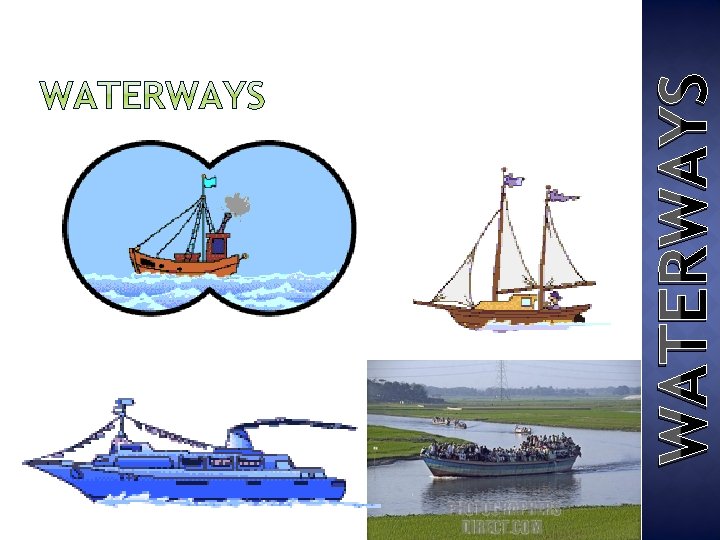
WATERWAYS
WATERWAYS Regular flow of sufficient water Sufficient demand for water ways Depth of river bed should not be reduced by siltation Level of water not to decrease due to diversion canals
� Fuel mode efficient � Suitable for carrying bulky commodities • Can transport only along water routes • To be supported by road or rail transport • Inland waterways require good flowing water WATERWAYS � Cheapest
water transport(CWTC Central Water Transport Corporation) WATERWAYS � Inland CWTC transport goods through: � Ganga � Brahmaputra � Hugli � Sunderban Region IWAI looks after development & regulation of inland waterways (IWAI Inland Water Authority of India) � Coastal shipping
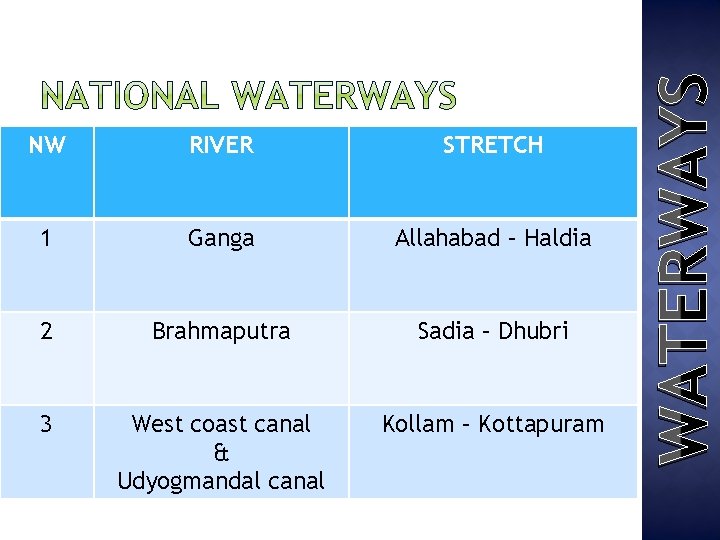
RIVER STRETCH 1 Ganga Allahabad – Haldia 2 Brahmaputra Sadia – Dhubri 3 West coast canal & Udyogmandal canal Kollam – Kottapuram WATERWAYS NW
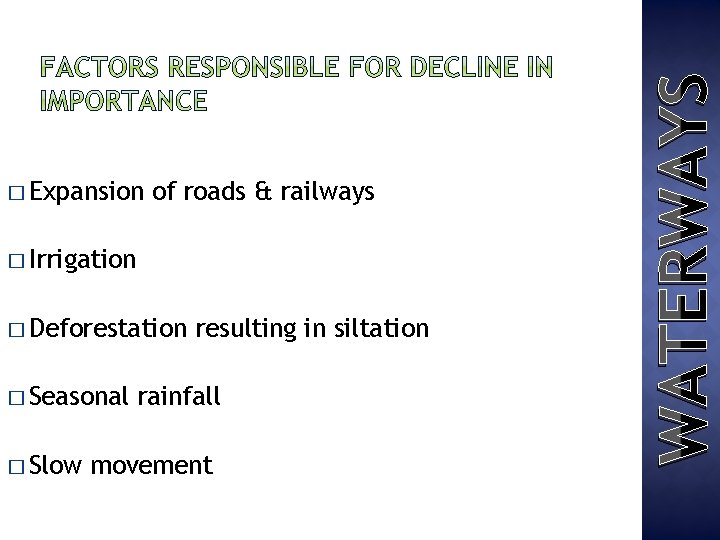
of roads & railways � Irrigation � Deforestation � Seasonal � Slow resulting in siltation rainfall movement WATERWAYS � Expansion
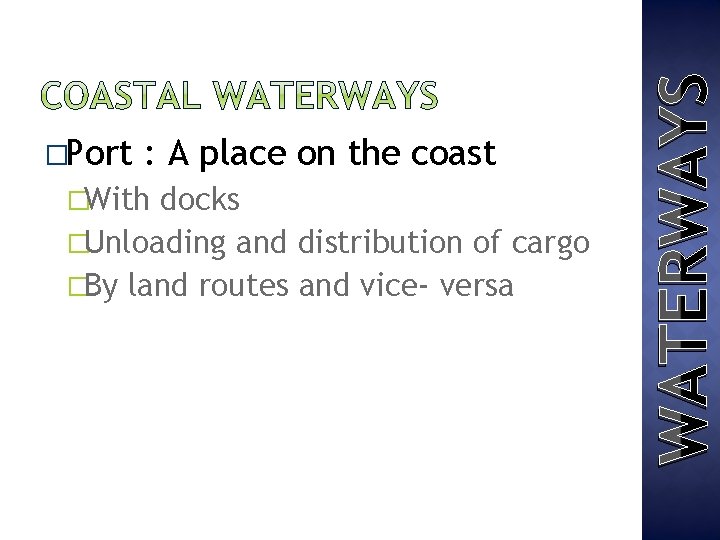
: A place on the coast �With docks �Unloading and distribution of cargo �By land routes and vice- versa WATERWAYS �Port
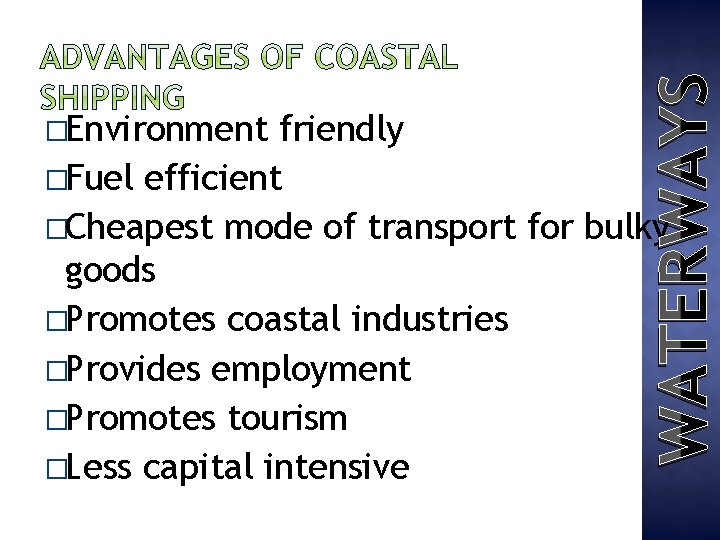
WATERWAYS �Environment friendly �Fuel efficient �Cheapest mode of transport for bulky goods �Promotes coastal industries �Provides employment �Promotes tourism �Less capital intensive
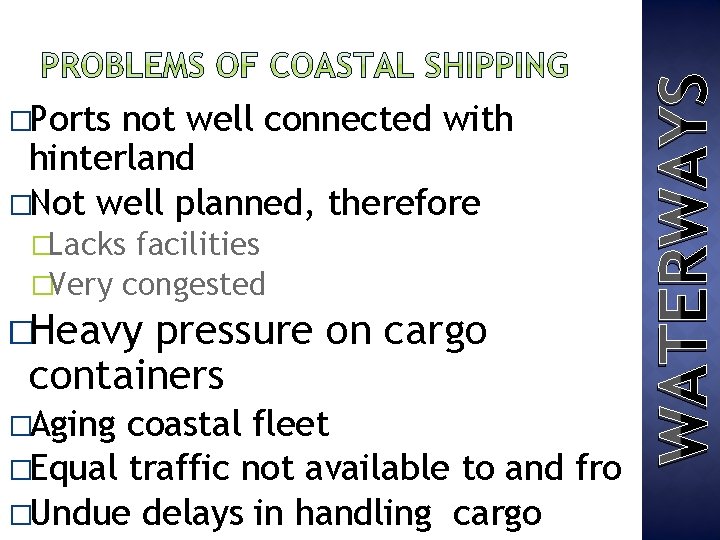
not well connected with hinterland �Not well planned, therefore �Lacks facilities �Very congested �Heavy pressure on cargo containers �Aging coastal fleet �Equal traffic not available to and fro �Undue delays in handling cargo WATERWAYS �Ports
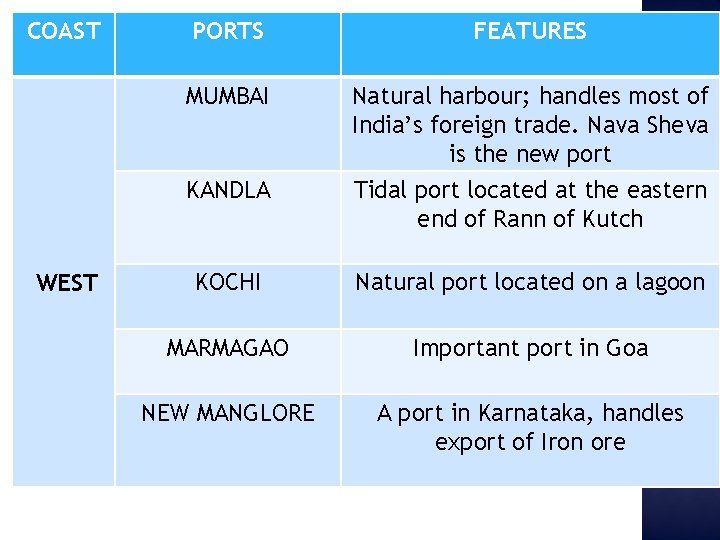
COAST PORTS FEATURES MUMBAI Natural harbour; handles most of India’s foreign trade. Nava Sheva is the new port Tidal port located at the eastern end of Rann of Kutch KANDLA WEST KOCHI Natural port located on a lagoon MARMAGAO Important port in Goa NEW MANGLORE A port in Karnataka, handles export of Iron ore
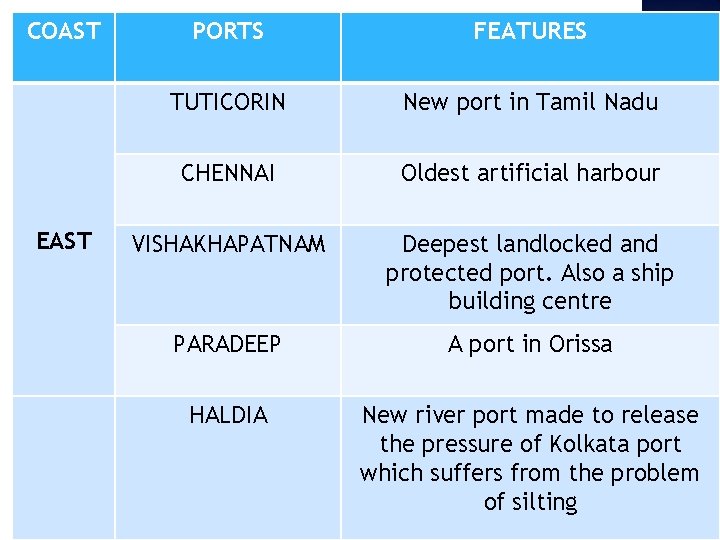
COAST EAST PORTS FEATURES TUTICORIN New port in Tamil Nadu CHENNAI Oldest artificial harbour VISHAKHAPATNAM Deepest landlocked and protected port. Also a ship building centre PARADEEP A port in Orissa HALDIA New river port made to release the pressure of Kolkata port which suffers from the problem of silting

AIRWAYS
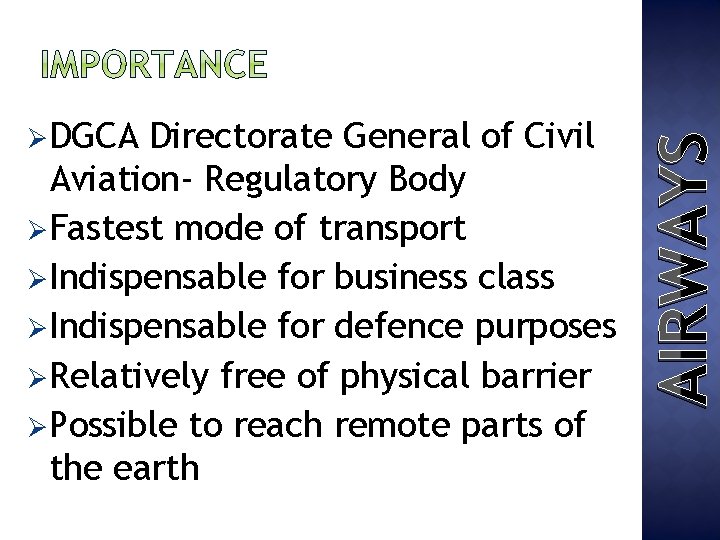
Directorate General of Civil Aviation- Regulatory Body Fastest mode of transport Indispensable for business class Indispensable for defence purposes Relatively free of physical barrier Possible to reach remote parts of the earth AIRWAYS DGCA
carrying capacity Expensive Hampers the schedule during rough weather condition Competition from foreign airlines Efficient services Better facilities Frequent strikes- damages reputation AIRWAYS Limited
�India’s airports international link is maintained by Air India � 12 international airports at present �Domestic �Indian Airports Airlines- major air carrier Operates 5 to 7 domestic stations 17 international stations �Private AIRWAYS �International airlines are gaining importance Air Sahara, Jet Airways, Air Deccan etc.
CH 06 - MINERALS OF INDIA � A substance � Obtained from the earth’s crust � Which is of � Commercial, and � Economic Value Types of Minerals � Metallic � Iron Ore, Manganese, Copper, Bauxite � Non-Metallic � Limestone, Gypsum, Granite, Marble � Power � Coal, Petroleum, Uranium
Importance of Minerals �Provide basis for INDUSTRIALISATION, thereby �Raising �National Income �Providing �Employment Opportunities �Earning �Foreign Exchange �Improving �Standard of Living
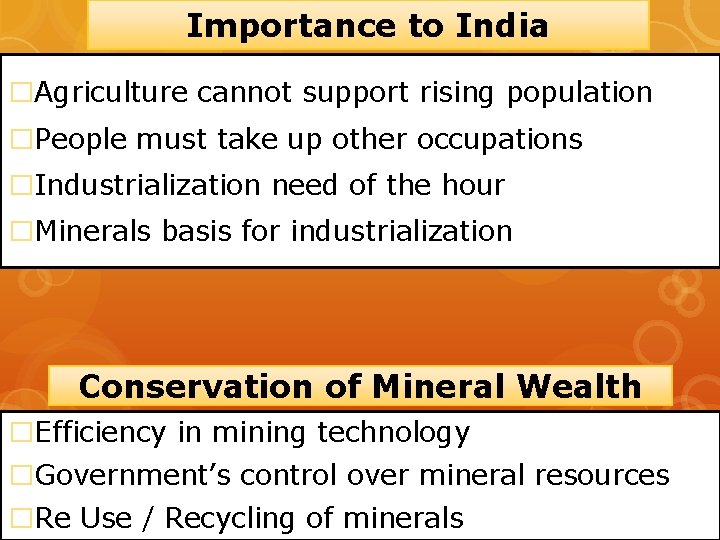
Importance to India �Agriculture cannot support rising population �People must take up other occupations �Industrialization need of the hour �Minerals basis for industrialization Conservation of Mineral Wealth �Efficiency in mining technology �Government’s control over mineral resources �Re Use / Recycling of minerals
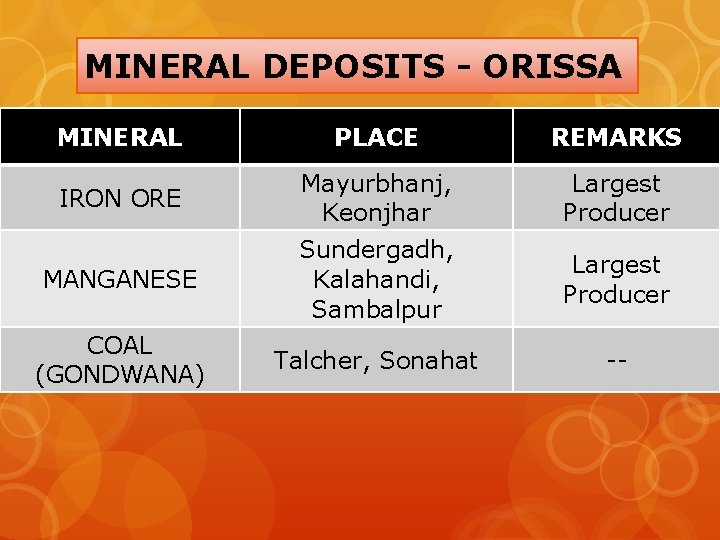
MINERAL DEPOSITS - ORISSA MINERAL PLACE REMARKS IRON ORE Mayurbhanj, Keonjhar Largest Producer MANGANESE Sundergadh, Kalahandi, Sambalpur Largest Producer COAL (GONDWANA) Talcher, Sonahat --
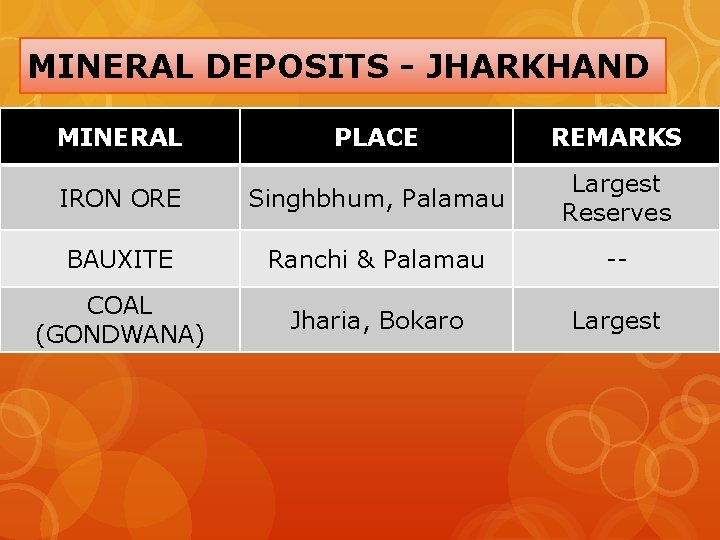
MINERAL DEPOSITS - JHARKHAND MINERAL PLACE REMARKS IRON ORE Singhbhum, Palamau Largest Reserves BAUXITE Ranchi & Palamau -- COAL (GONDWANA) Jharia, Bokaro Largest
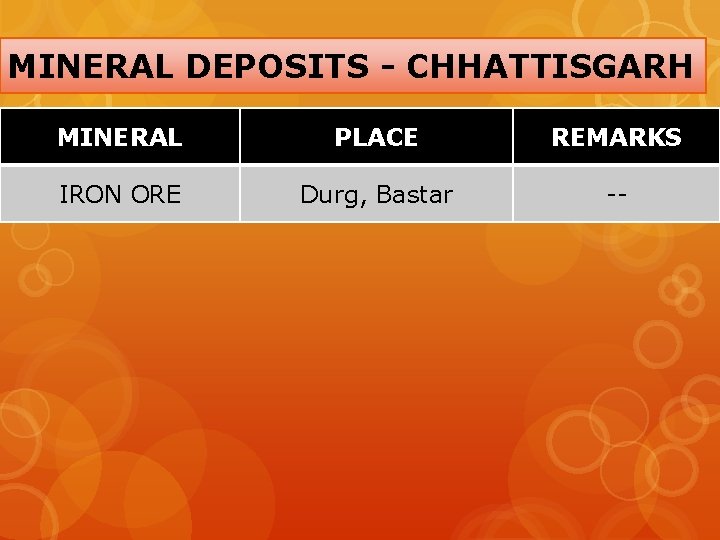
MINERAL DEPOSITS - CHHATTISGARH MINERAL PLACE REMARKS IRON ORE Durg, Bastar --
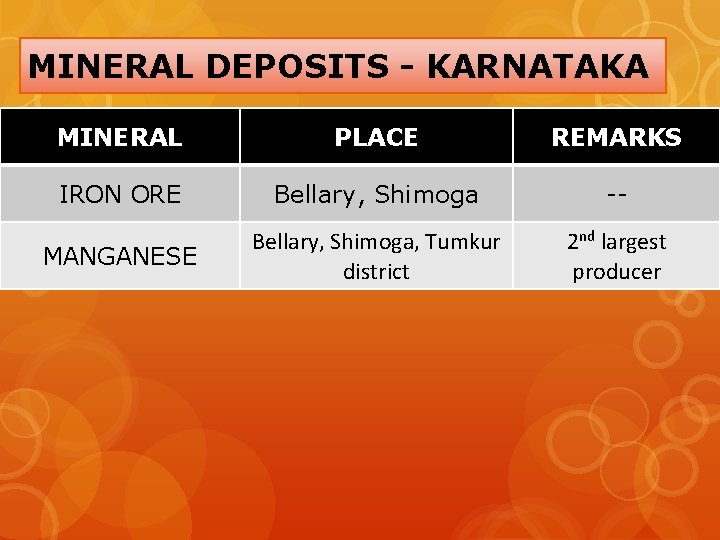
MINERAL DEPOSITS - KARNATAKA MINERAL PLACE REMARKS IRON ORE Bellary, Shimoga -- MANGANESE Bellary, Shimoga, Tumkur district 2 nd largest producer
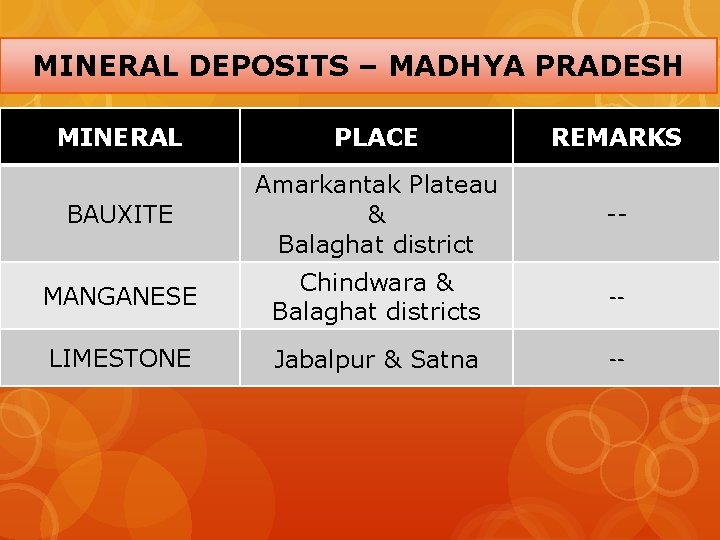
MINERAL DEPOSITS – MADHYA PRADESH MINERAL PLACE REMARKS BAUXITE Amarkantak Plateau & Balaghat district -- MANGANESE Chindwara & Balaghat districts -- LIMESTONE Jabalpur & Satna --
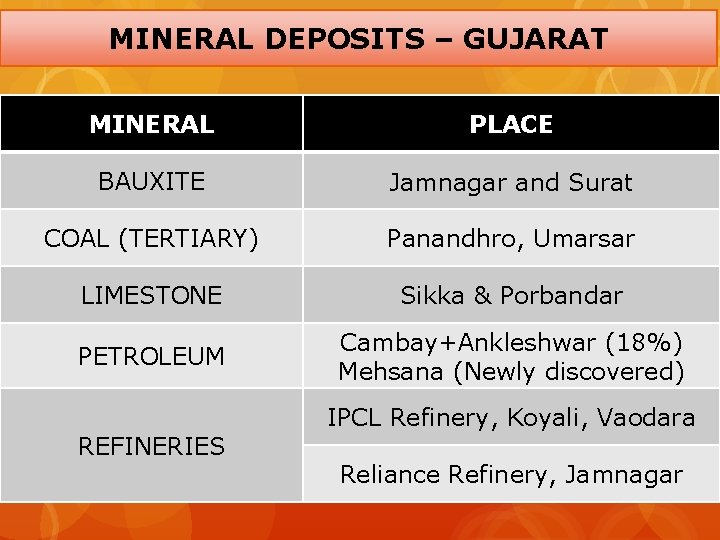
MINERAL DEPOSITS – GUJARAT MINERAL PLACE BAUXITE Jamnagar and Surat COAL (TERTIARY) Panandhro, Umarsar LIMESTONE Sikka & Porbandar PETROLEUM Cambay+Ankleshwar (18%) Mehsana (Newly discovered) REFINERIES IPCL Refinery, Koyali, Vaodara Reliance Refinery, Jamnagar
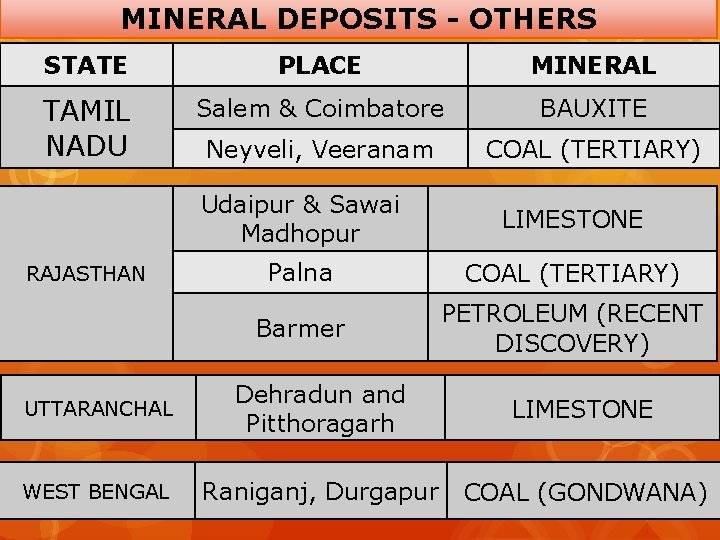
MINERAL DEPOSITS - OTHERS STATE PLACE MINERAL TAMIL NADU Salem & Coimbatore BAUXITE Neyveli, Veeranam COAL (TERTIARY) RAJASTHAN Udaipur & Sawai Madhopur LIMESTONE Palna COAL (TERTIARY) Barmer PETROLEUM (RECENT DISCOVERY) UTTARANCHAL Dehradun and Pitthoragarh LIMESTONE WEST BENGAL Raniganj, Durgapur COAL (GONDWANA)
IMPORTANT POINTS Uses of MINERAL TYPES PROPERTIES (IF ANY) INDIA’S POSITION
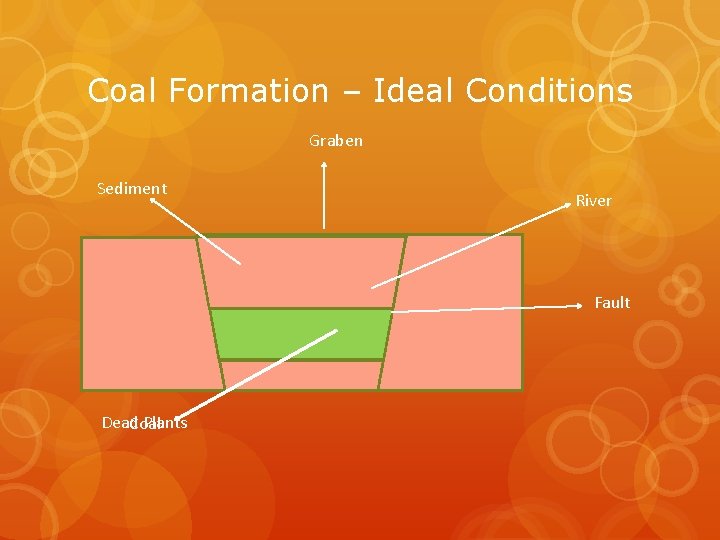
Coal Formation – Ideal Conditions Graben Sediment River Fault Dead Plants Coal
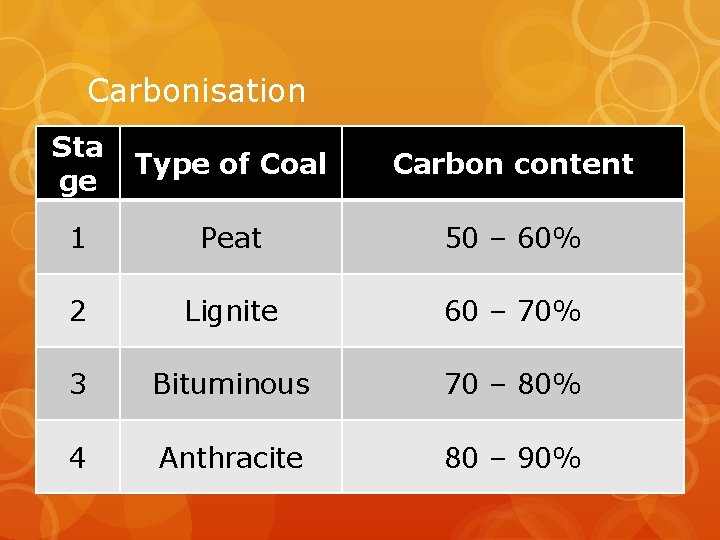
Carbonisation Sta ge Type of Coal Carbon content 1 Peat 50 – 60% 2 Lignite 60 – 70% 3 Bituminous 70 – 80% 4 Anthracite 80 – 90%
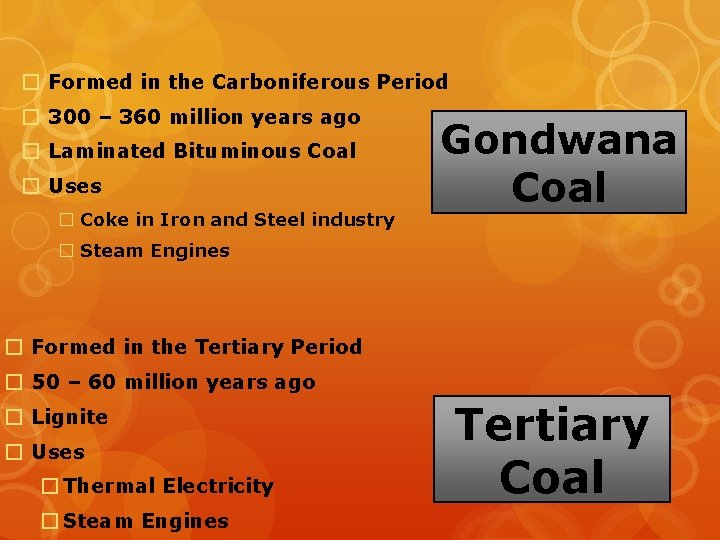
� Formed in the Carboniferous Period � 300 – 360 million years ago � Laminated Bituminous Coal � Uses � Coke in Iron and Steel industry Gondwana Coal � Steam Engines � Formed in the Tertiary Period � 50 – 60 million years ago � Lignite � Uses � Thermal Electricity � Steam Engines Tertiary Coal
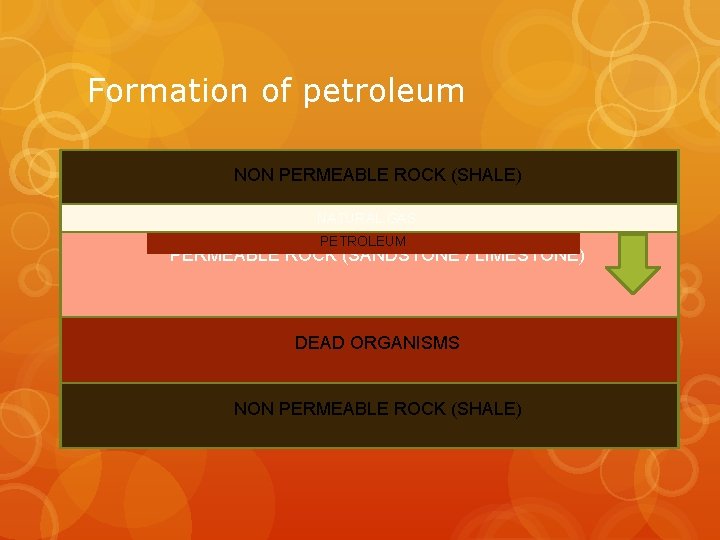
Formation of petroleum NON PERMEABLE ROCK (SHALE) NATURAL GAS PETROLEUM PERMEABLE ROCK (SANDSTONE / LIMESTONE) DEAD ORGANISMS NON PERMEABLE ROCK (SHALE)
CH 07 - INDUSTRIES OF INDIA Role of Industries Convert gifts of nature to finished goods Value addition Create wealth TO PEOPLE Employment opportunities Finished goods available Raises standard of living TO COUNTRY Earns foreign exchange Raises National Income Supports development of Infrastructure and Economy
Can be classified on the basis of 1. Raw material 2. Function 3. Nature of finished goods 4. Extent of investment 5. Location 6. Ownership
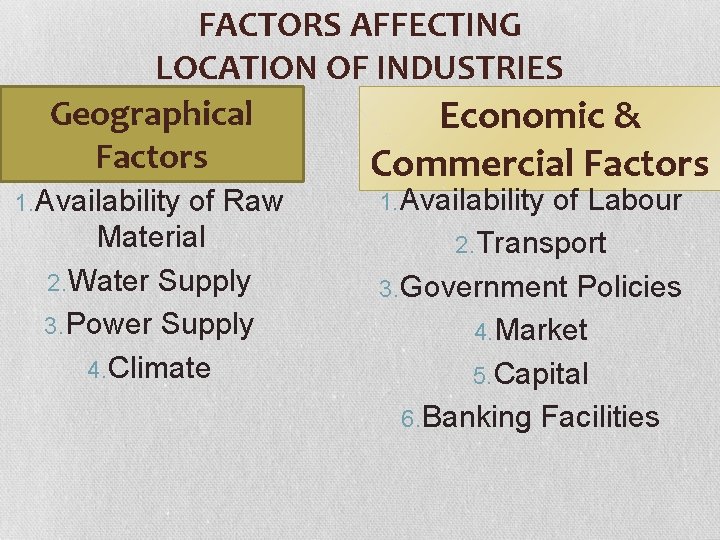
FACTORS AFFECTING LOCATION OF INDUSTRIES Geographical Economic & Factors Commercial Factors 1. Availability of Raw Material 2. Water Supply 3. Power Supply 4. Climate 1. Availability of Labour 2. Transport 3. Government Policies 4. Market 5. Capital 6. Banking Facilities
Producing Cotton Textiles 1. Ginning – separating cotton from seeds 2. Cotton is spun into yarn 3. Yarn woven into cloth 4. Cloth made into garments
Mumbai • Lancashire of India • Raw material readily available • Humid climate • Power readily available • Well connected to rest of country • Labour cheaply available • Huge market for finished goods • Port – import & export possible
Ahmedabad • Manchester of India • Raw material readily available • Humid climate • Power readily available • Well connected to rest of country • Huge market for finished goods • Connected to Kandla and Mumbai ports
Chennai • Raw material readily available • Humid climate • Power readily available • Well connected to rest of country • Huge market for finished goods • Port – import & export possible • Mills specialise in producing yarn
Kolkata • Port – import & export possible • Humid climate • Power readily available • Well connected to rest of country • Labour cheaply available • Huge market for finished goods

COTTON TEXTILE INDUSTRYIMPORTANCE • Provides clothes to consumers • Provides employment • Generates foreign exchange • Supports other industries
COTTON TEXTILE INDUSTRY- PROBLEMS • Irregular supply of raw material • Quality of raw material • Competition from other countries • Competition from other products • Outdated machinery • Sick mills
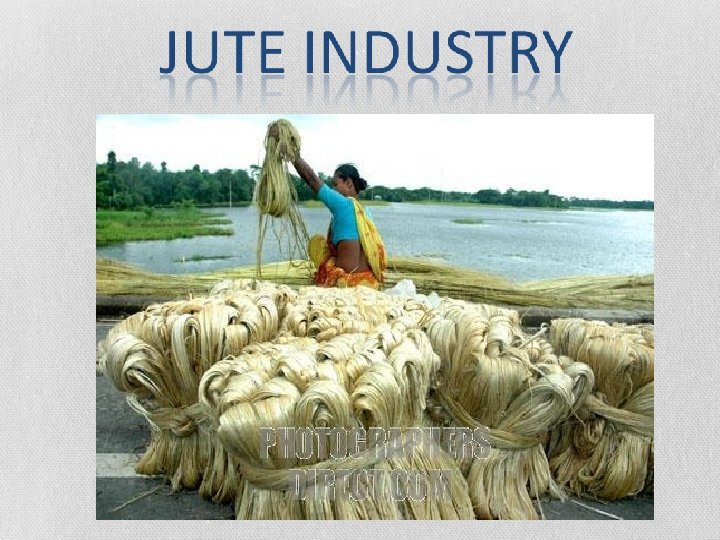
Second most important textile industry Largest foreign exchange earner West Bengal is the most important producer
Started in 1855 near Kolkata Was export oriented Industry suffered setback after independence 81% of jute growing area went to Bangladesh Acute shortage of raw material in India Inefficient mills closed down 73 operating mills at present
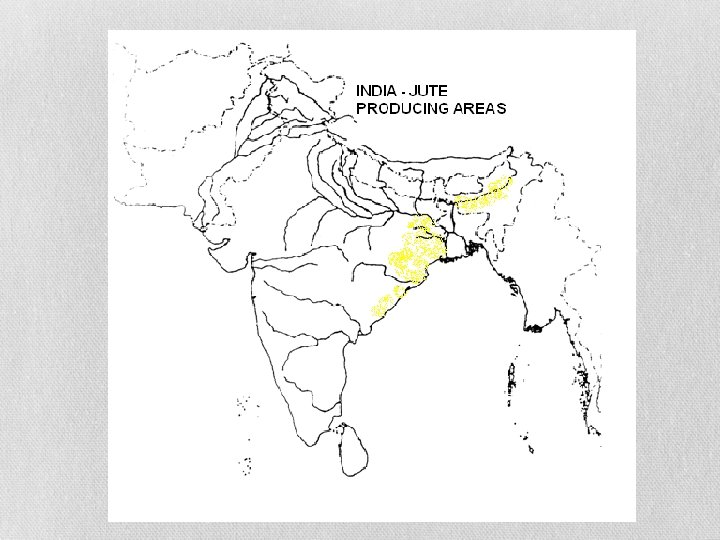
Ganga – Brahmaputra delta; the major jute growing area Coal from DVC & Raniganj Cheap water transport Dense network of road & railways Humid climate favours spinning Fresh water for retting, washing& dying
Kolkata port helps: Import of machinery Export of finished products Easy availability of capital Advantage of early start Cheap labour from WB & Bihar
Shortage of raw material Obsolete machinery High price Competition Foreign countries Synthetic packing material Less demand
Increase jute production Replace old machinery Diversifying the product range Research institutes for development

SILK INDUSTRY
TYPES • MULBERRY SILK • Silk worms feed on mulberry leaves • 90% of total silk output • Produced mainly in Karnataka, WB, J&K, HP • NON MULBERRY SILK • Eri, Muga, & Tussar are non mulberry silk • Produced in Assam, Bihar, Jharkhand & Meghalaya, MP, Orissa,
BANGALORE – MYSORE REGION • Favorable climate for plantation of Bombyx mori • Fresh water free from alkaline salt • New scientific technology • Inherited skill

SUGAR INDUSTRY
BY PRODUCTS • Bagasse • Rejected cane • Earlier used as fuel • Used for manufacturing paper, cardboard & insulation board • Molasses • Dark brown syrup drained during process of sugar making • Used for manufacturing Industrial alcohol, fertilizer, rum &yeast • Press mud • Used for making shoe polish, carbon paper, & extraction of wax
BIHAR & UP- LOCATIONAL FACTOR • Largest sugar producing belt • Coal obtained from Jharkhand • Dense network of railways • Skilled labour • Kanpur is the chief distributing &marketing centre
PROBLEMS • Subtropical climate • Short crushing season • Factories are not within the proximity of the field • Outmoded machinery • Price of sugarcane fixed by government • Low yield, shortage of raw material
SOUTHWARD MIGRATION • Suitable geographic condition • Longer crushing season • Large landholdings • Fertilizer, more commonly used • Factories closer to the fields • Co operative management • Sugar Lobby

Earlier, important as cottage industry Modern industry set up at Kanpur Tropical country; market is seasonal Product is of inferior quality Kashmir famous for carpet making
Availability Demand HEP of raw material – cold winters from Bhakra Nangal Cheap labour
Shortage of raw material Lack of market Lack of modern equipment Low quality of products

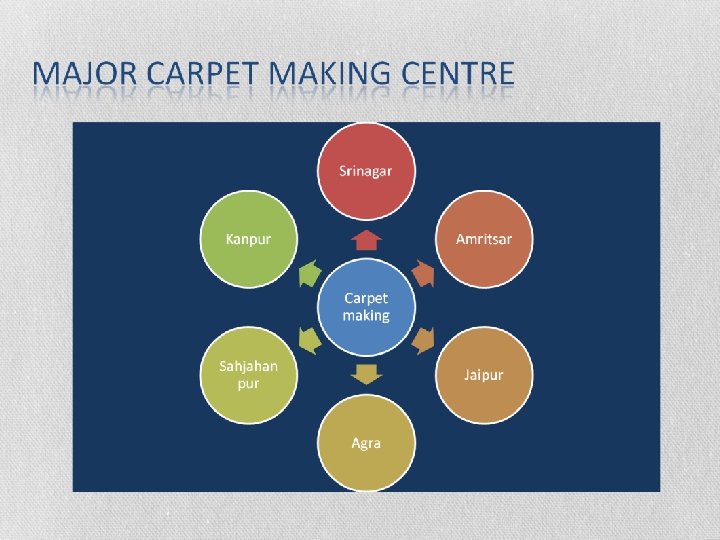
Carpets Sweaters Jerseys Socks Gloves Shawl Pullovers
- Slides: 144