
Climate risk assessment of infrastructure capacity building technology
Climate risk assessment of infrastructure: capacity building, technology transfer and case study in costa rica World Federation of Engineering Organizations Committee on Engineering and the Environment UNFCCC Side Event – TRAM Room June 15, 2011
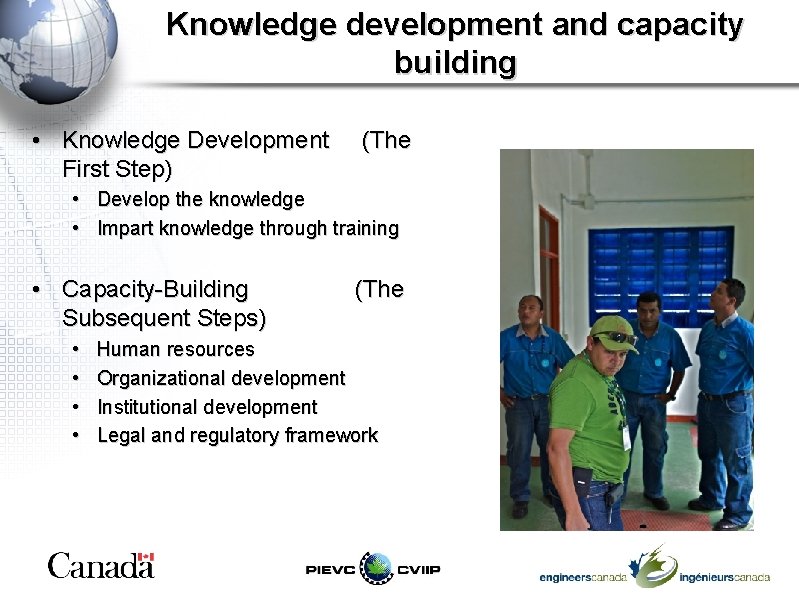
Knowledge development and capacity building • Knowledge Development First Step) (The • Develop the knowledge • Impart knowledge through training • Capacity-Building Subsequent Steps) • • (The Human resources Organizational development Institutional development Legal and regulatory framework
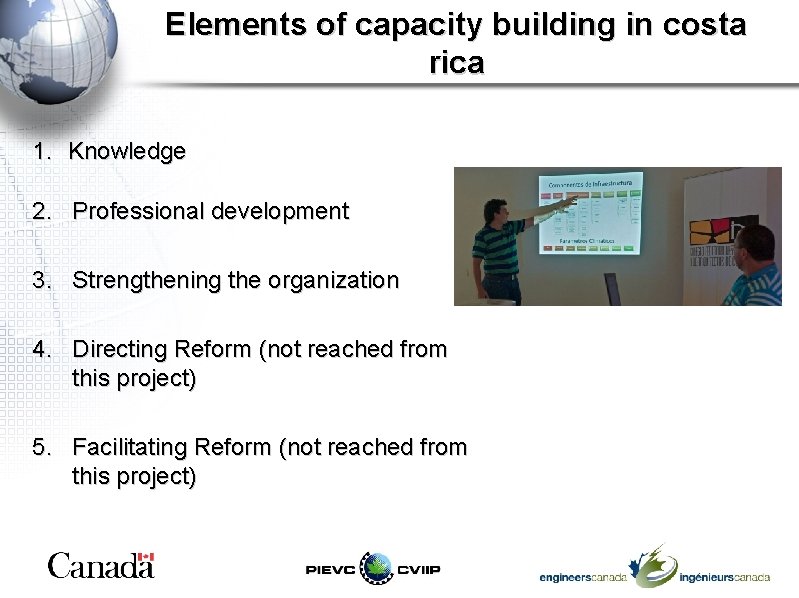
Elements of capacity building in costa rica 1. Knowledge 2. Professional development 3. Strengthening the organization 4. Directing Reform (not reached from this project) 5. Facilitating Reform (not reached from this project)
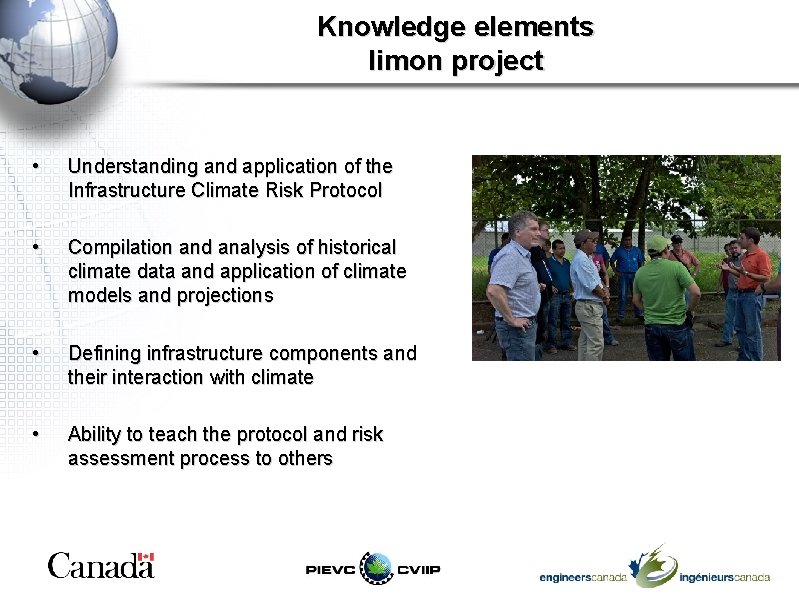
Knowledge elements limon project • Understanding and application of the Infrastructure Climate Risk Protocol • Compilation and analysis of historical climate data and application of climate models and projections • Defining infrastructure components and their interaction with climate • Ability to teach the protocol and risk assessment process to others
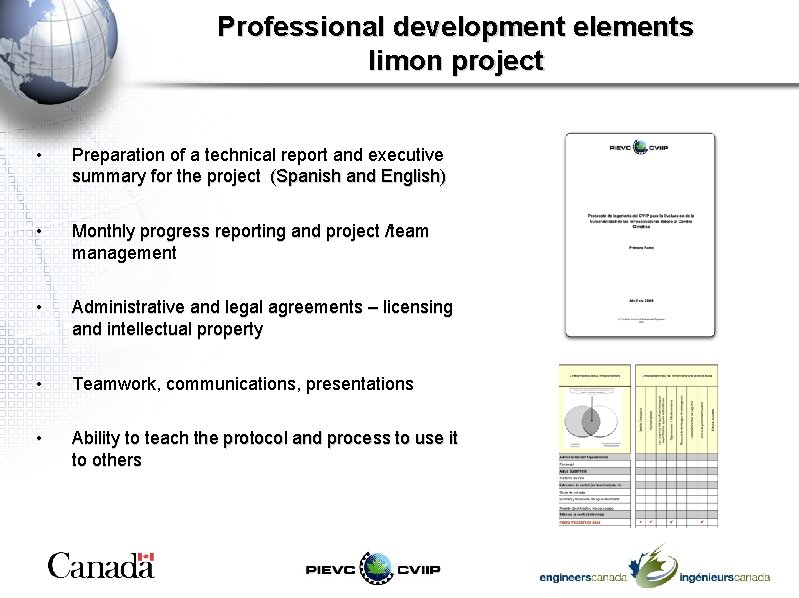
Professional development elements limon project • Preparation of a technical report and executive summary for the project (Spanish and English) • Monthly progress reporting and project /team management • Administrative and legal agreements – licensing and intellectual property • Teamwork, communications, presentations • Ability to teach the protocol and process to use it to others
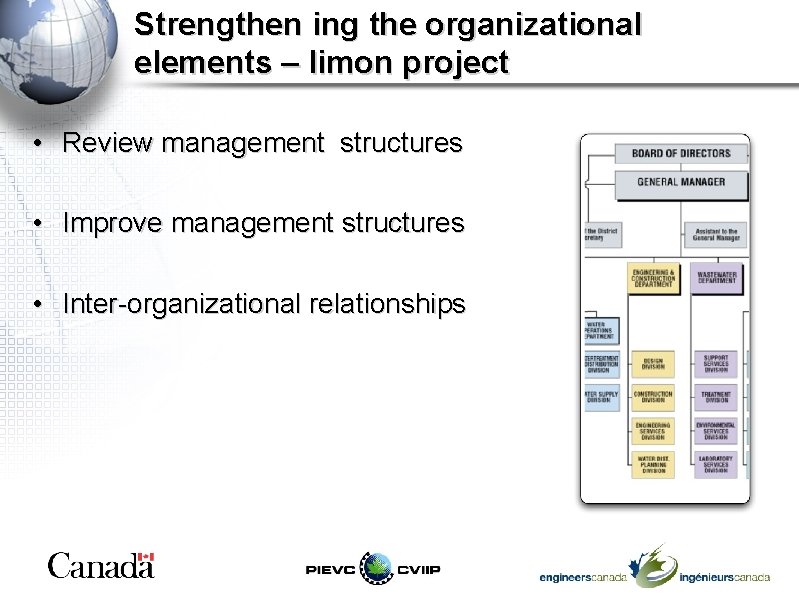
Strengthen ing the organizational elements – limon project • Review management structures • Improve management structures • Inter-organizational relationships
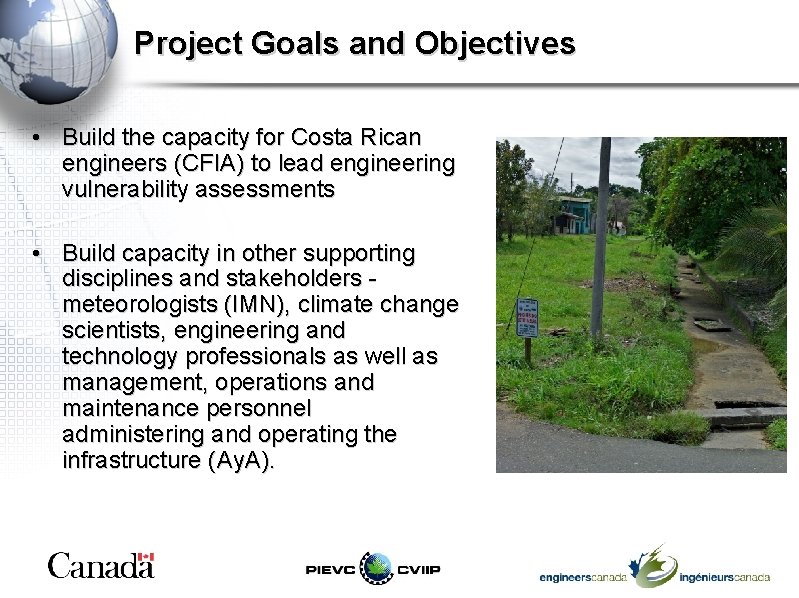
Project Goals and Objectives • Build the capacity for Costa Rican engineers (CFIA) to lead engineering vulnerability assessments • Build capacity in other supporting disciplines and stakeholders meteorologists (IMN), climate change scientists, engineering and technology professionals as well as management, operations and maintenance personnel administering and operating the infrastructure (Ay. A).
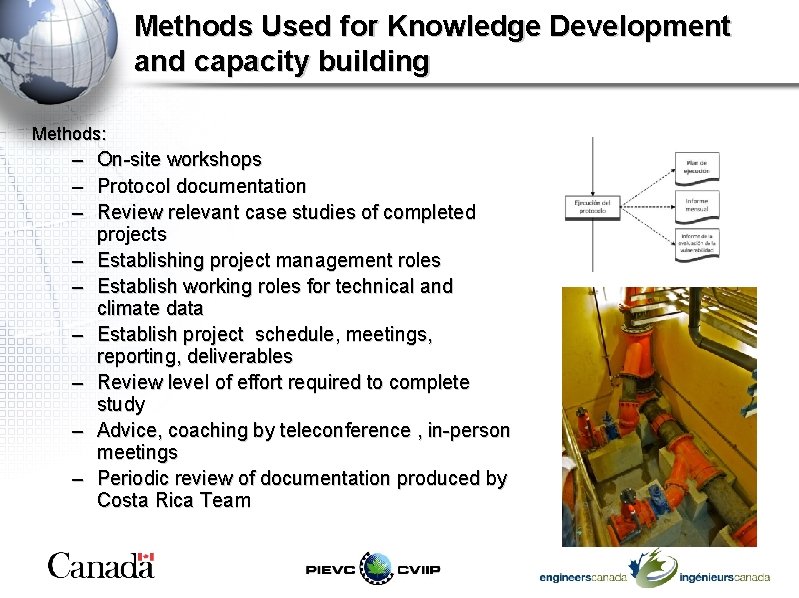
Methods Used for Knowledge Development and capacity building Methods: – On-site workshops – Protocol documentation – Review relevant case studies of completed projects – Establishing project management roles – Establish working roles for technical and climate data – Establish project schedule, meetings, reporting, deliverables – Review level of effort required to complete study – Advice, coaching by teleconference , in-person meetings – Periodic review of documentation produced by Costa Rica Team

Learning The pievc engineering protocol • Workshop #1 – August 2010 – Infrastructure Risk Assessment and the PIEVC Engineering Protocol: An Overview of the Theory and Process • Overview of the PIEVC Engineering Protocol as well as the planning and preparation for a case study Step-by-step description of some of the waterrelated infrastructure case studies from Canada Facilitated session focused on project definition to define the scope of the infrastructure to be assessed, the level of risk assessment and types of climate and infrastructure data • •
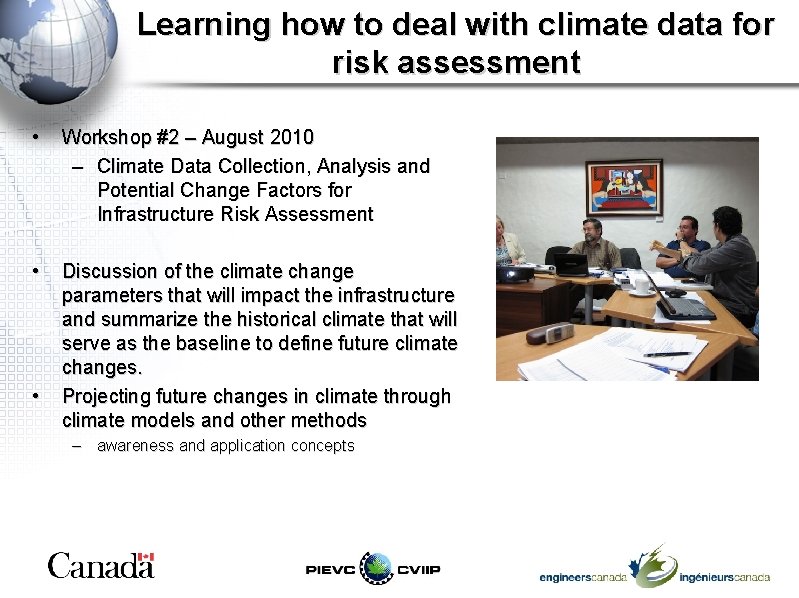
Learning how to deal with climate data for risk assessment • Workshop #2 – August 2010 – Climate Data Collection, Analysis and Potential Change Factors for Infrastructure Risk Assessment • Discussion of the climate change parameters that will impact the infrastructure and summarize the historical climate that will serve as the baseline to define future climate changes. Projecting future changes in climate through climate models and other methods • – awareness and application concepts
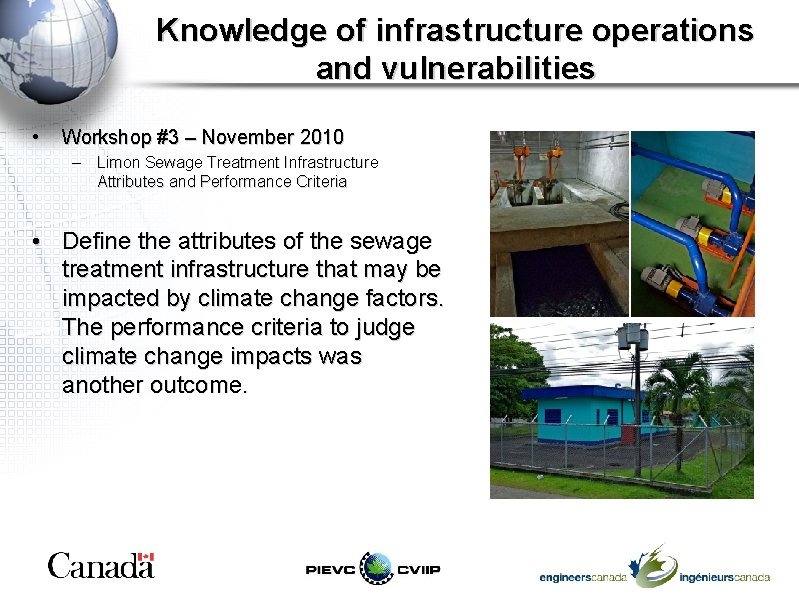
Knowledge of infrastructure operations and vulnerabilities • Workshop #3 – November 2010 – Limon Sewage Treatment Infrastructure Attributes and Performance Criteria • Define the attributes of the sewage treatment infrastructure that may be impacted by climate change factors. The performance criteria to judge climate change impacts was another outcome.

Knowledge of infrastructure operations and vulnerabilities • Workshop # 4 – November 2010 – Infrastructure Component/Climatic Factor Relationship Matrix • Develop the matrix and use it to complete a qualitative estimate of climate change risks. The first day involved the Costa Rican engineering team working with the assistance of the Canadian project team. The second day included management, operations and maintenance personnel to discuss and refine the engineering vulnerabilities.
Conclusions and Recommendations • Workshop #5 – March 2011 – Recommendations and Next Steps • Develop recommendations on remedial and management actions that should be undertaken to address the identified vulnerabilities. Identify any limitations and unknowns. • Development of a work plan to extend this work to other infrastructures in the country.
Capacity Building Lessons Learned • Feedback from the Costa Rican Team: • Following of the Protocol and use of Protocol worksheet tools is key to success of project. Early identification of relevant local climate factors will assist in flow of work. Need to work side by side with technical review of infrastructure and climate specialist. Each needs to understand each others roles and needs. Establishing thresholds on climate effects on infrastructure key. • • • – what intensity of rain does a storm sewer overflow event occur. • Case study examples very helpful in understanding full scope and flow of project
Capacity Building Lessons Learned • Feedback from the Costa Rican Team: • Need to specify the scope of each team specialist early for effective delivery. – – – • • Project Manger Lead Risk Specialist Lead Technical Specialist Lead Operations Specialist Lead Climate Specialist Create relationships with different institutions. These may not have been required historically Team needs to fully understand the level of effort involved in the work in the development stages of the project.
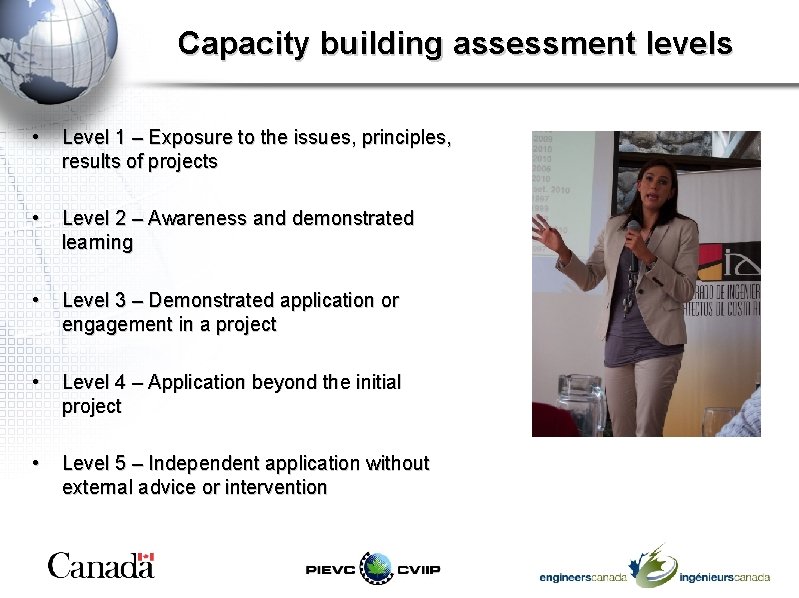
Capacity building assessment levels • Level 1 – Exposure to the issues, principles, results of projects • Level 2 – Awareness and demonstrated learning • Level 3 – Demonstrated application or engagement in a project • Level 4 – Application beyond the initial project • Level 5 – Independent application without external advice or intervention
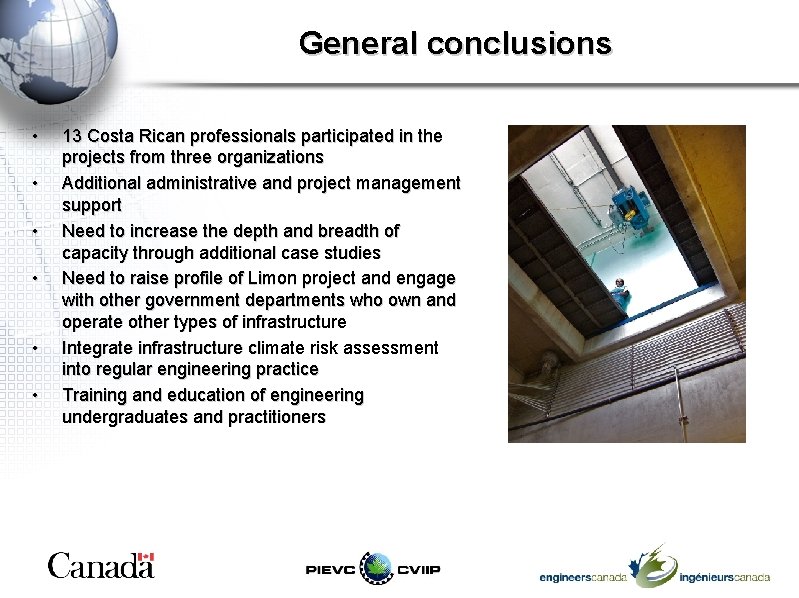
General conclusions • • • 13 Costa Rican professionals participated in the projects from three organizations Additional administrative and project management support Need to increase the depth and breadth of capacity through additional case studies Need to raise profile of Limon project and engage with other government departments who own and operate other types of infrastructure Integrate infrastructure climate risk assessment into regular engineering practice Training and education of engineering undergraduates and practitioners
Questions/Discussion?
- Slides: 18