
Climate over the long term Ch 3 6

- Slides: 49
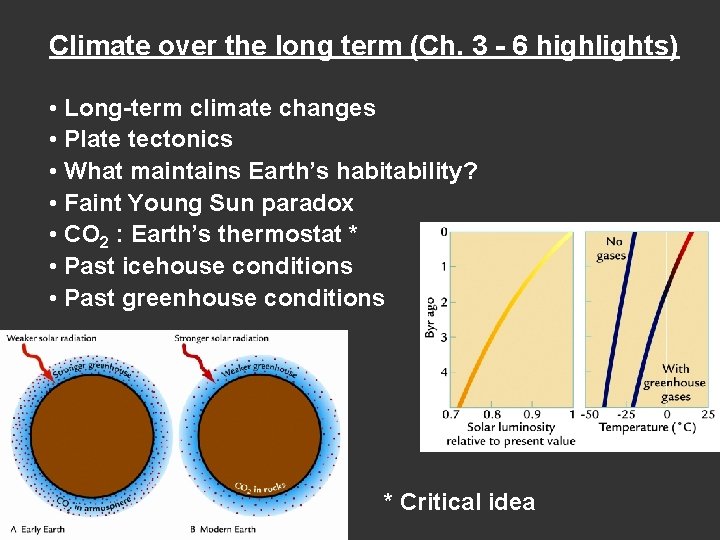
Climate over the long term (Ch. 3 - 6 highlights) • Long-term climate changes • Plate tectonics • What maintains Earth’s habitability? • Faint Young Sun paradox • CO 2 : Earth’s thermostat * • Past icehouse conditions • Past greenhouse conditions * Critical idea
Long-term climate changes Long-term: consider how Earth’s climate has changed over last few hundred m. y. Why study long-term changes? -- Helps us to fundamentally understand how Earth’s climate system works -- If we don’t know this, we can’t evaluate how climate might change in future
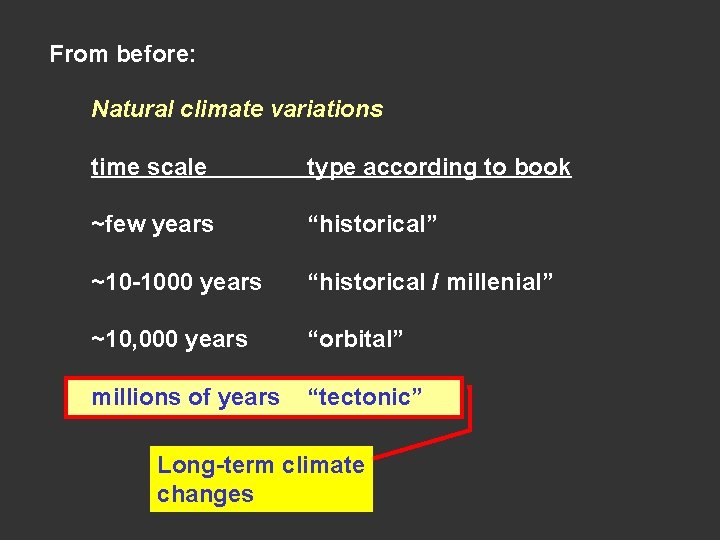
From before: Natural climate variations time scale type according to book ~few years “historical” ~10 -1000 years “historical / millenial” ~10, 000 years “orbital” millions of years “tectonic” Long-term climate changes
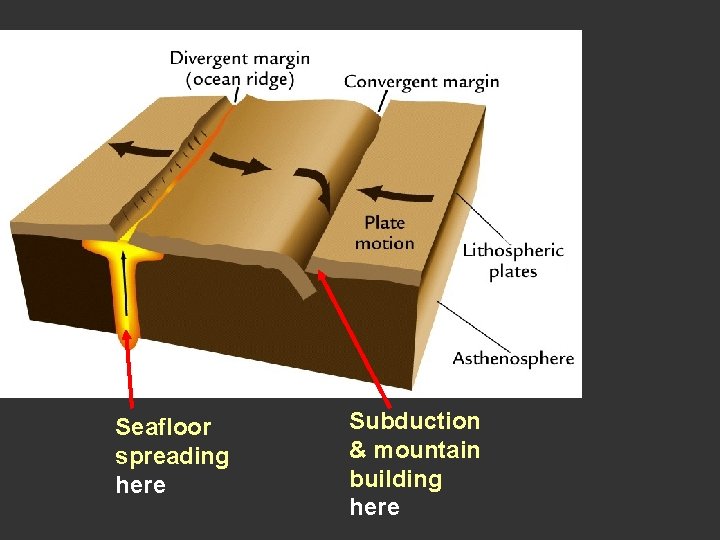
Plate Tectonics • Theory that the upper portion of Earth is subdivided into ~dozen large pieces (lithospheric plates) that move relative to one another • Most volcanic activity occurs at plate boundaries, either where plates are moving apart (divergent margin), or where they are moving towards each other (convergent margin) “tectonic” means any large scale Earth movement
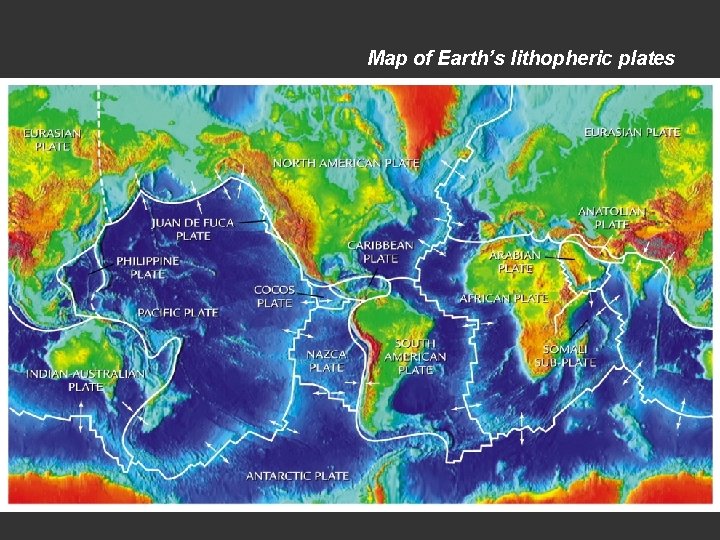
Map of Earth’s lithopheric plates
Seafloor spreading here Subduction & mountain building here
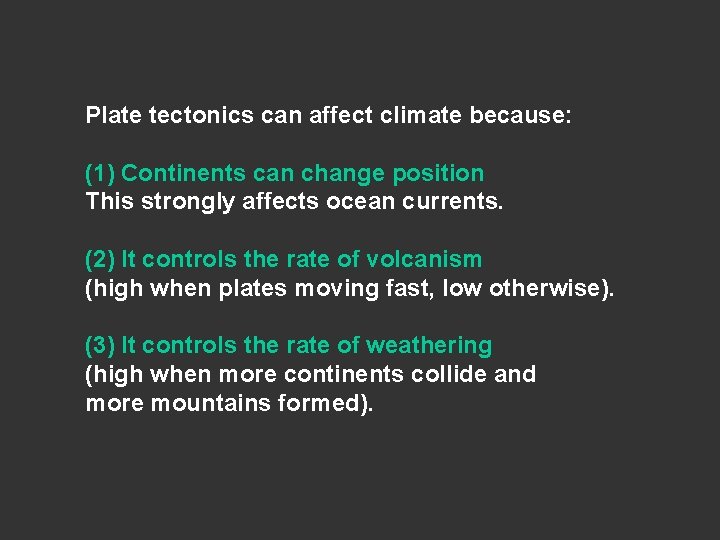
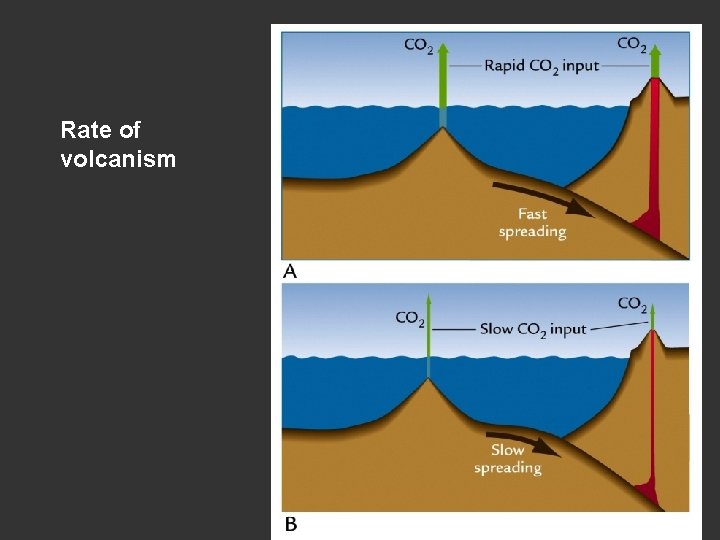
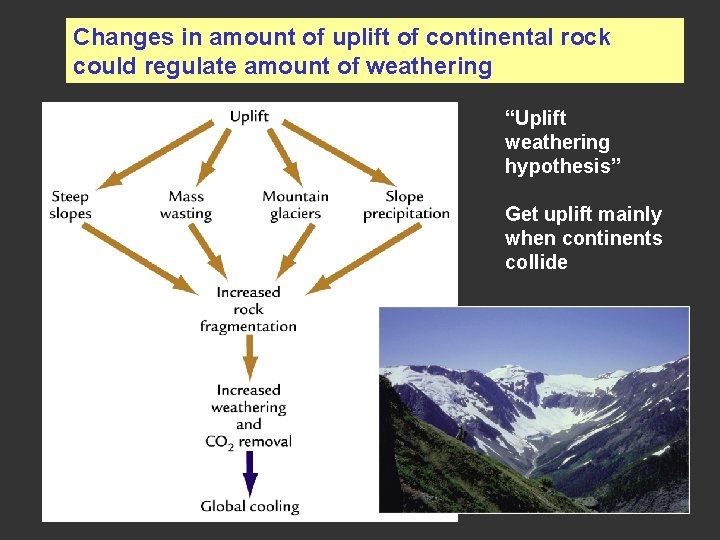
Plate tectonics can affect climate because: (1) Continents can change position This strongly affects ocean currents. (2) It controls the rate of volcanism (high when plates moving fast, low otherwise). (3) It controls the rate of weathering (high when more continents collide and more mountains formed).
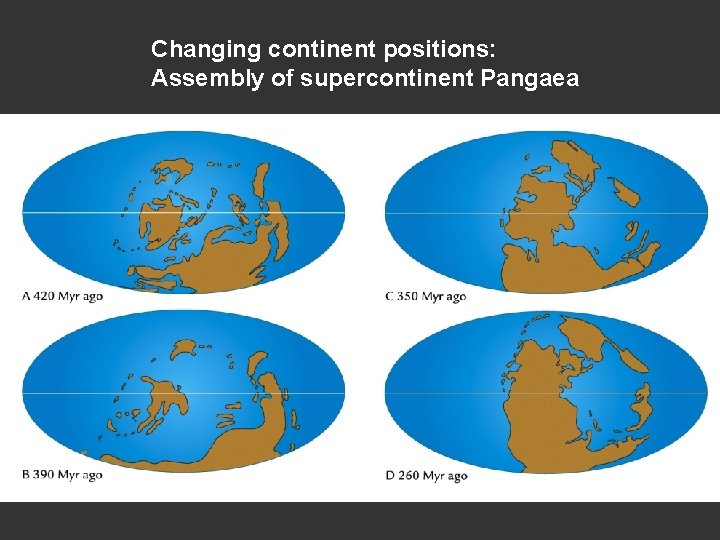
Changing continent positions: Assembly of supercontinent Pangaea
Rate of volcanism
Changes in amount of uplift of continental rock could regulate amount of weathering “Uplift weathering hypothesis” Get uplift mainly when continents collide
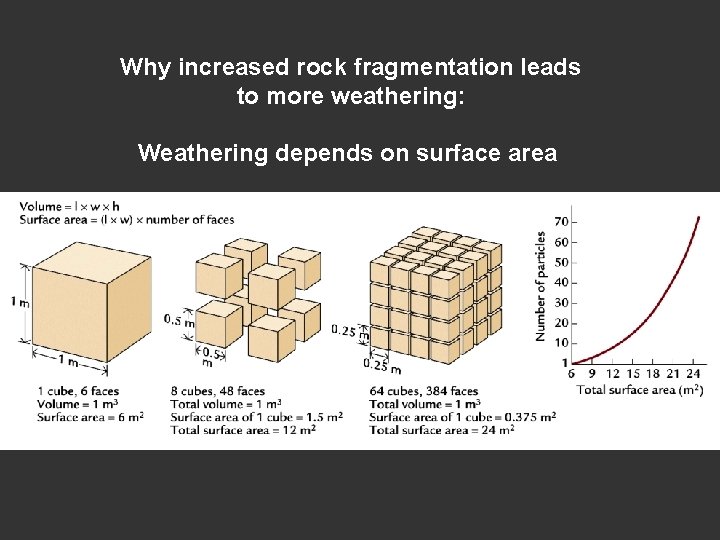
Why increased rock fragmentation leads to more weathering: Weathering depends on surface area
What maintains Earth’s habitability? Earth’s climate “just right” -- at present -- mostly over geologic time geologic evidence (e. g. sedimentary rocks) & biologic evidence (fossils) indicates liquid water stable at surface for most of Earth history -- not always true in past, however
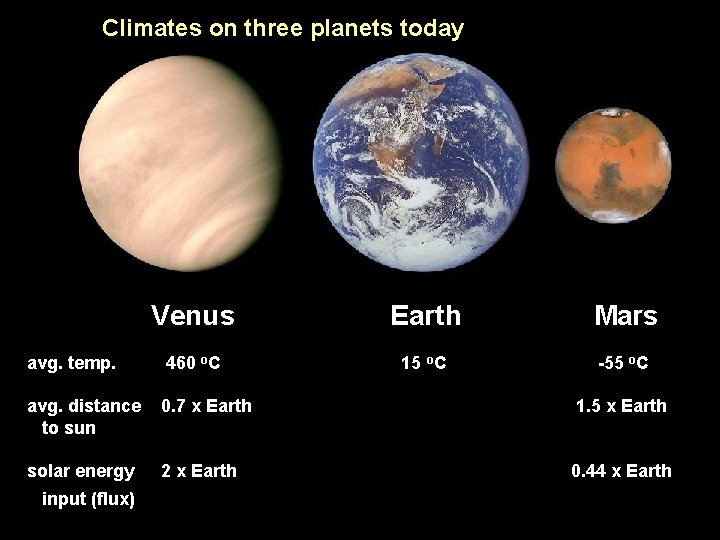
Climates on three planets today Venus Earth Mars avg. temp. 460 o. C 15 o. C -55 o. C avg. distance to sun 0. 7 x Earth 1. 5 x Earth solar energy 2 x Earth 0. 44 x Earth input (flux)
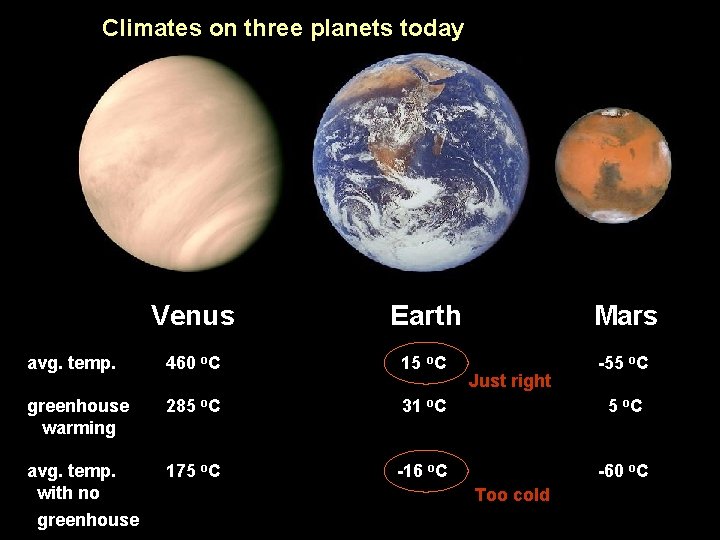
Climates on three planets today Venus Earth Mars avg. temp. 460 o. C 15 o. C -55 o. C greenhouse warming 285 o. C 31 o. C 5 o. C avg. temp. with no 175 o. C -16 o. C -60 o. C greenhouse Just right Too cold
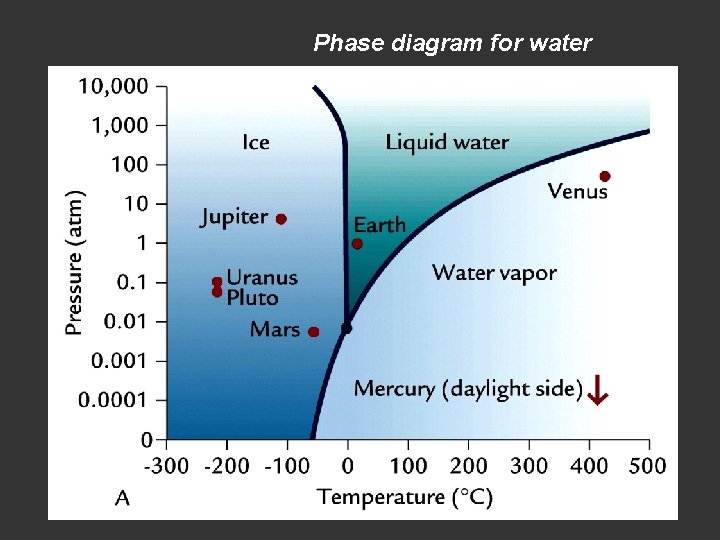
Phase diagram for water
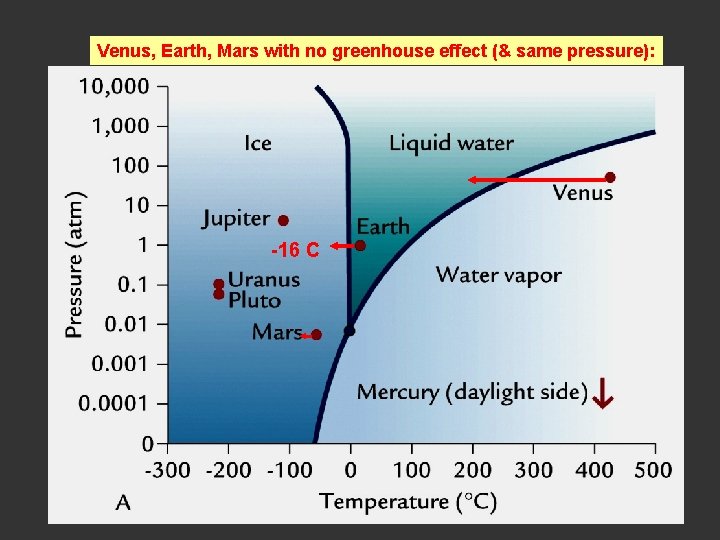
Venus, Earth, Mars with no greenhouse effect (& same pressure): -16 C
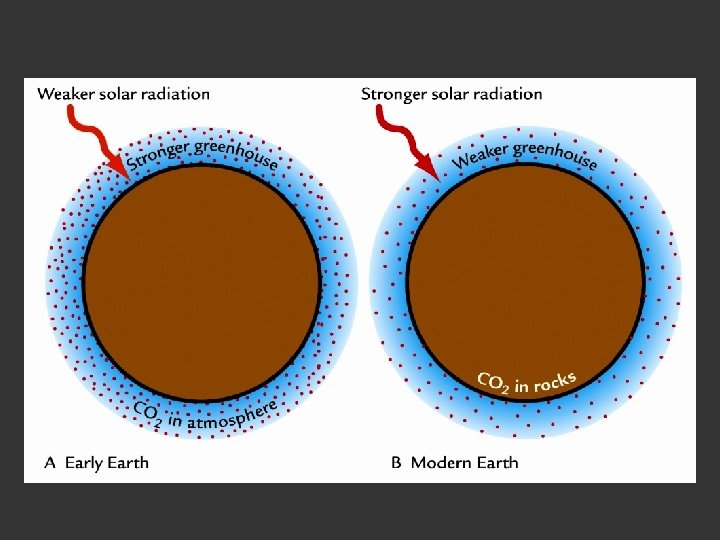
Faint Young Sun paradox (1) Astrophysical models indicate that sun’s brightness should have increased significantly over age of solar system (2) So why wasn’t Earth frozen earlier?
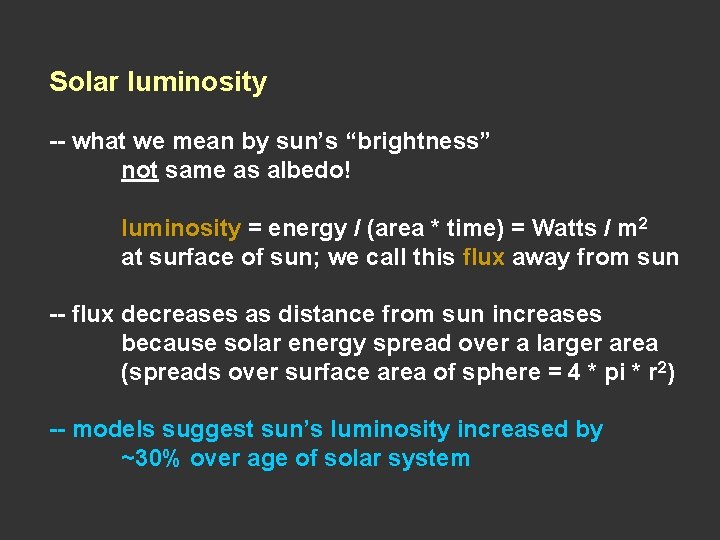
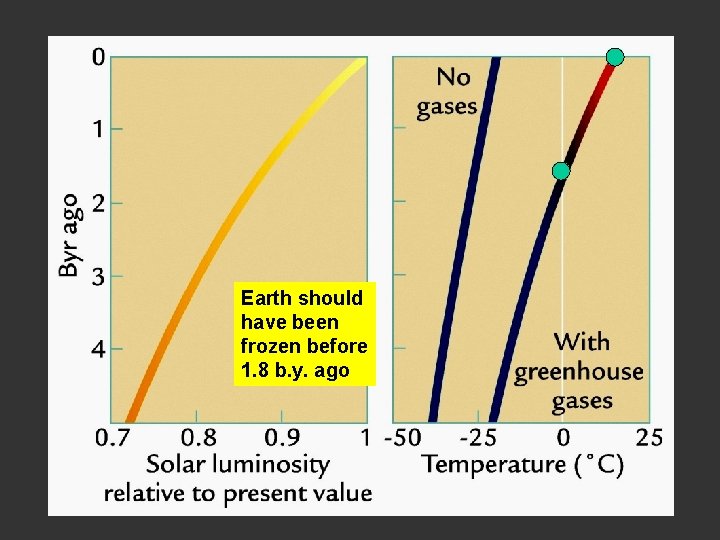
Solar luminosity -- what we mean by sun’s “brightness” not same as albedo! luminosity = energy / (area * time) = Watts / m 2 at surface of sun; we call this flux away from sun -- flux decreases as distance from sun increases because solar energy spread over a larger area (spreads over surface area of sphere = 4 * pi * r 2) -- models suggest sun’s luminosity increased by ~30% over age of solar system
Earth should have been frozen before 1. 8 b. y. ago
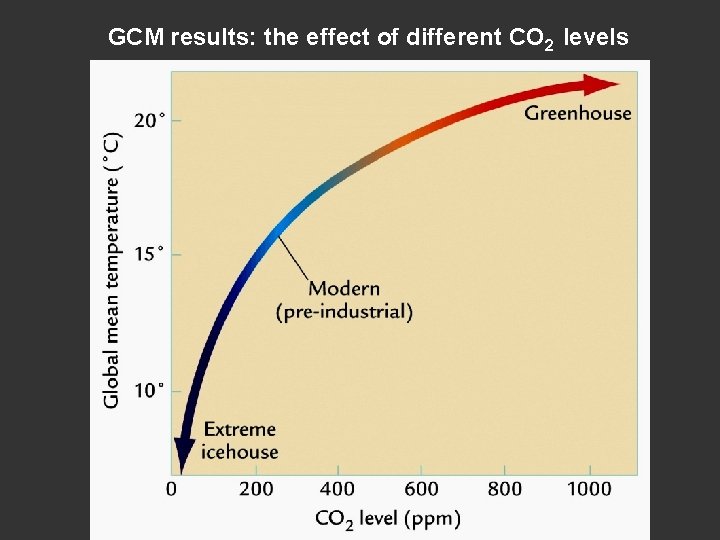
CO 2 : Earth’s thermostat? CO 2 is a greenhouse gas, helping to make Earth habitable today The amount of CO 2 in the atmosphere may have varied in the past to keep Earth comfortable
GCM results: the effect of different CO 2 levels
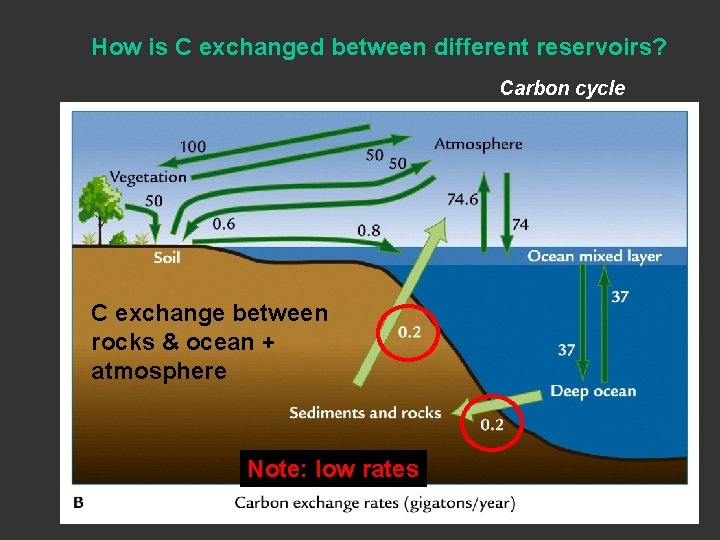
CO 2 as Earth’s thermostat -- where is carbon (C) stored on Earth? -- how is C exchanged between different reservoirs?
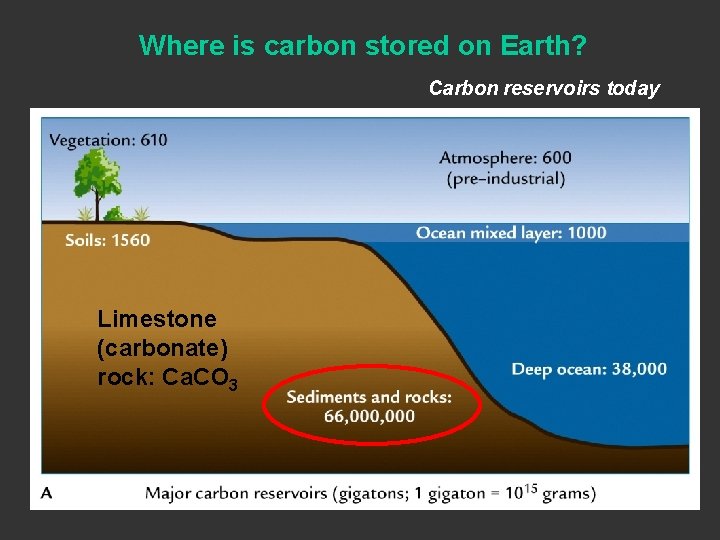
Where is carbon stored on Earth? Carbon reservoirs today Limestone (carbonate) rock: Ca. CO 3
How is C exchanged between different reservoirs? Carbon cycle C exchange between rocks & ocean + atmosphere Note: low rates
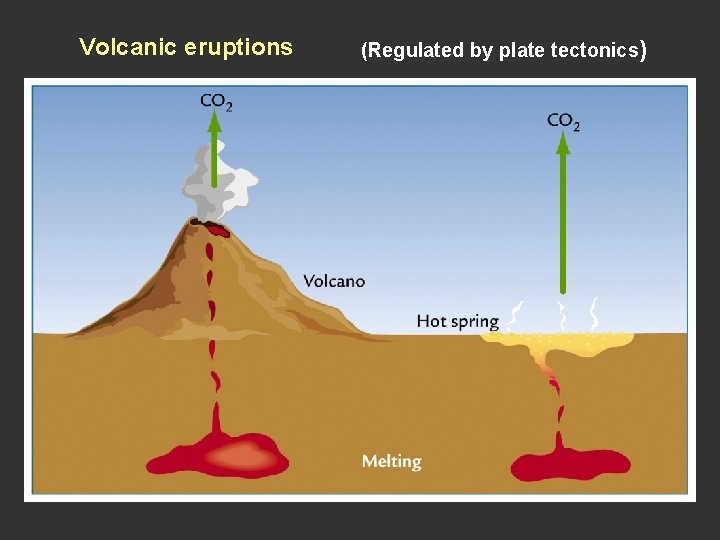
Focus on C exchange between rocks and atmosphere: • volcanic eruptions add C to atmosphere (as CO 2), remove it from rocks • chemical weathering of rocks either adds or removes C from atmosphere, depending on type of rock weathered; we’ll consider removal of C from atmosphere
Volcanic eruptions (Regulated by plate tectonics)
More volcanism earlier in Earth history? -- Yes, more plate tectonic activity -- Could get more CO 2 in atmosphere, stronger greenhouse -- But unlikely that this alone exactly balanced variations in solar luminosity No reason for volcanic activity on Earth to be related to solar luminosity !
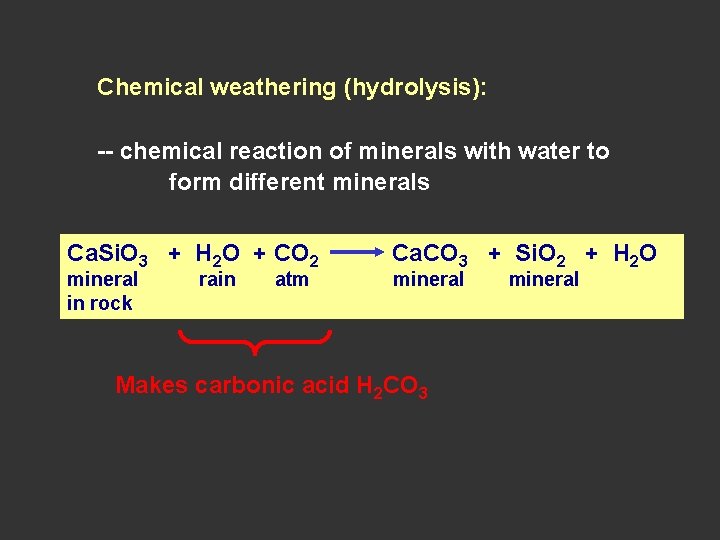
Chemical weathering (hydrolysis): -- chemical reaction of minerals with water to form different minerals Ca. Si. O 3 + H 2 O + CO 2 mineral in rock rain atm Ca. CO 3 + Si. O 2 + H 2 O mineral Makes carbonic acid H 2 CO 3 mineral
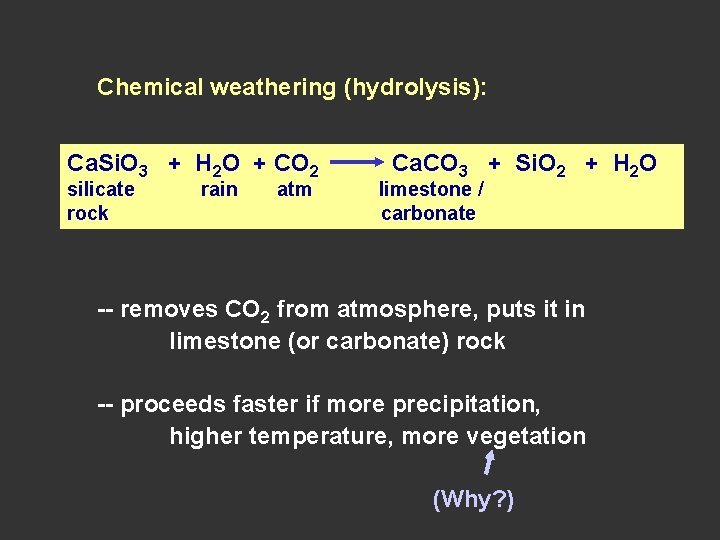
Chemical weathering (hydrolysis): Ca. Si. O 3 + H 2 O + CO 2 silicate rock rain atm Ca. CO 3 + Si. O 2 + H 2 O limestone / carbonate -- removes CO 2 from atmosphere, puts it in limestone (or carbonate) rock -- proceeds faster if more precipitation, higher temperature, more vegetation (Why? )
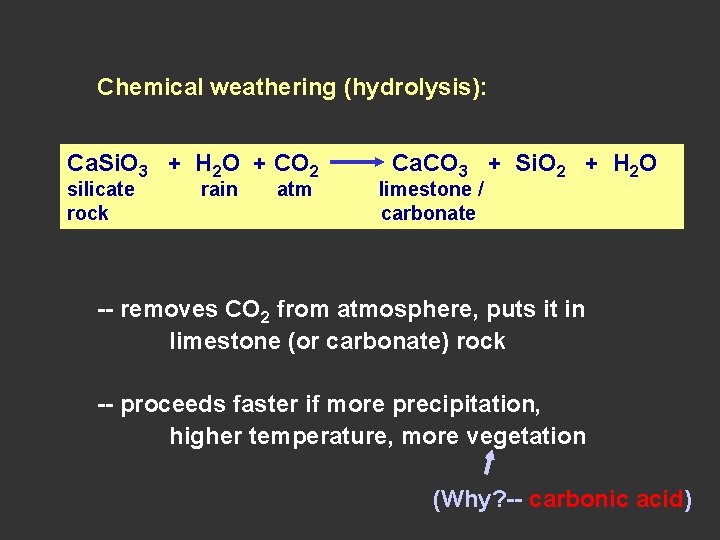
Chemical weathering (hydrolysis): Ca. Si. O 3 + H 2 O + CO 2 silicate rock rain atm Ca. CO 3 + Si. O 2 + H 2 O limestone / carbonate -- removes CO 2 from atmosphere, puts it in limestone (or carbonate) rock -- proceeds faster if more precipitation, higher temperature, more vegetation (Why? -- carbonic acid)
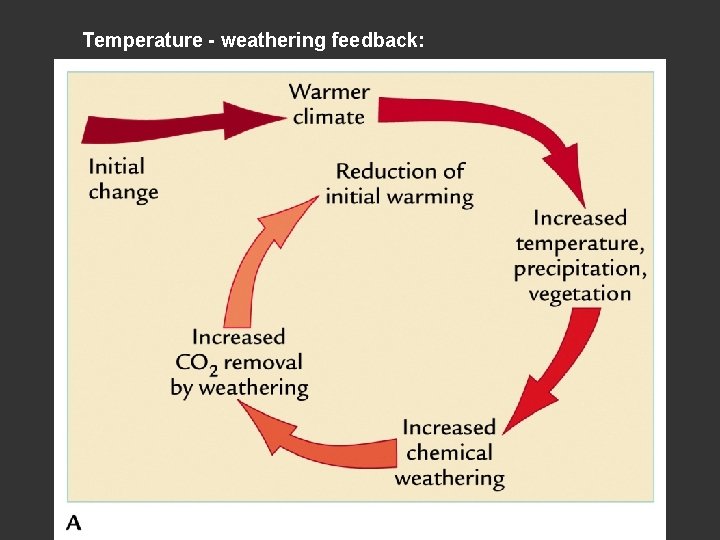
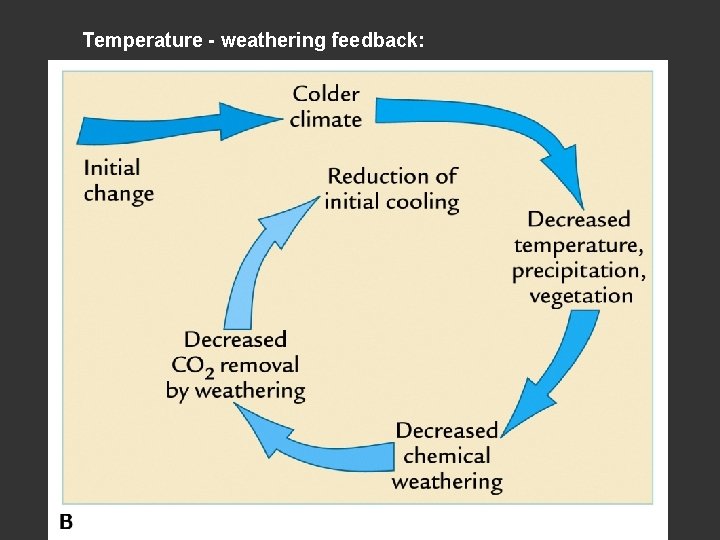
Temperature - weathering feedback:
Temperature - weathering feedback:
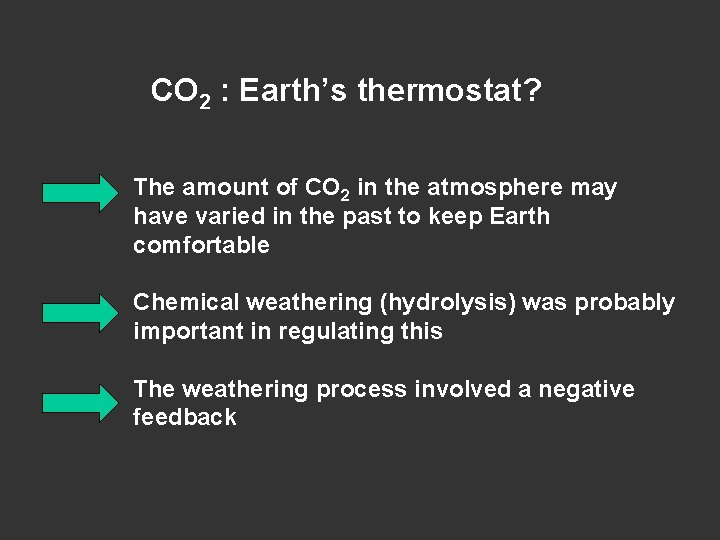
CO 2 : Earth’s thermostat? The amount of CO 2 in the atmosphere may have varied in the past to keep Earth comfortable Chemical weathering (hydrolysis) was probably important in regulating this The weathering process involved a negative feedback
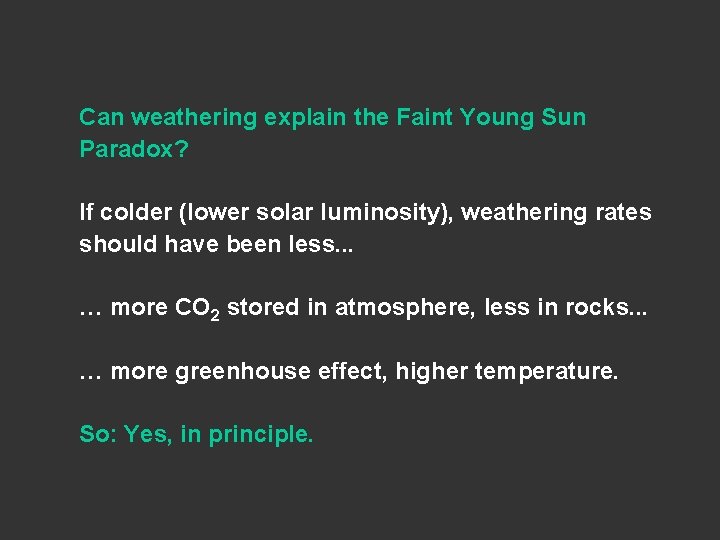
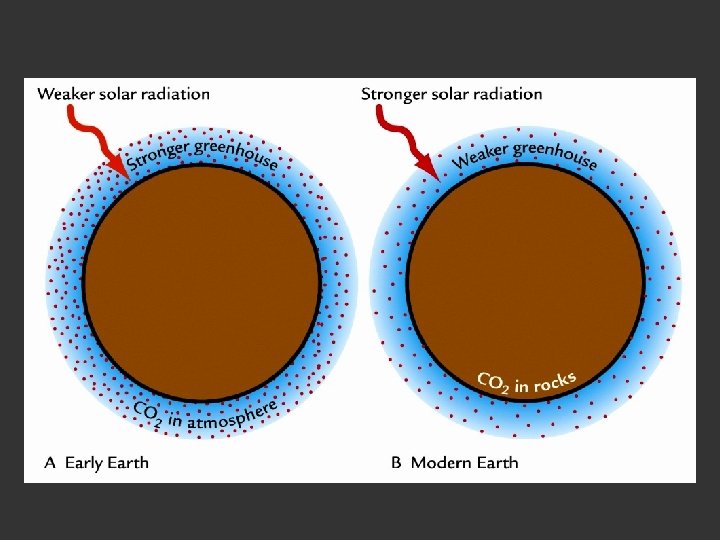
Can weathering explain the Faint Young Sun Paradox? If colder (lower solar luminosity), weathering rates should have been less. . . … more CO 2 stored in atmosphere, less in rocks. . . … more greenhouse effect, higher temperature. So: Yes, in principle.
But there were times in Earth’s history when the (presumed CO 2) thermostat was not so effective. . . This led to icehouse & greenhouse conditions
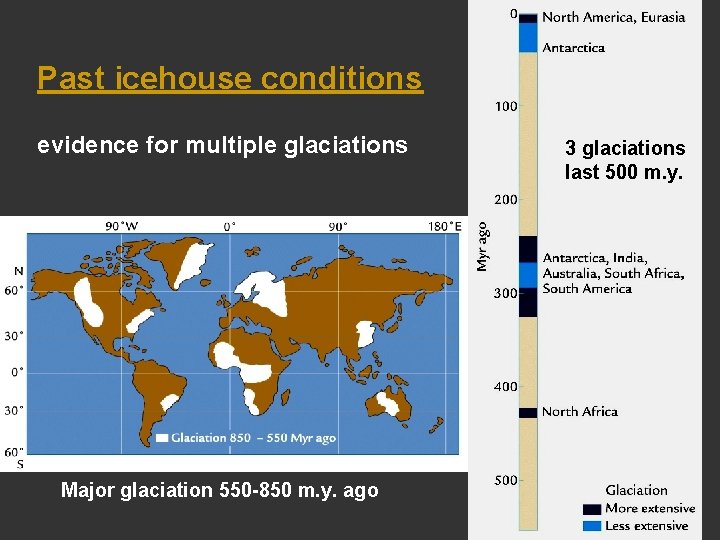
Past icehouse conditions evidence for multiple glaciations Major glaciation 550 -850 m. y. ago 3 glaciations last 500 m. y.
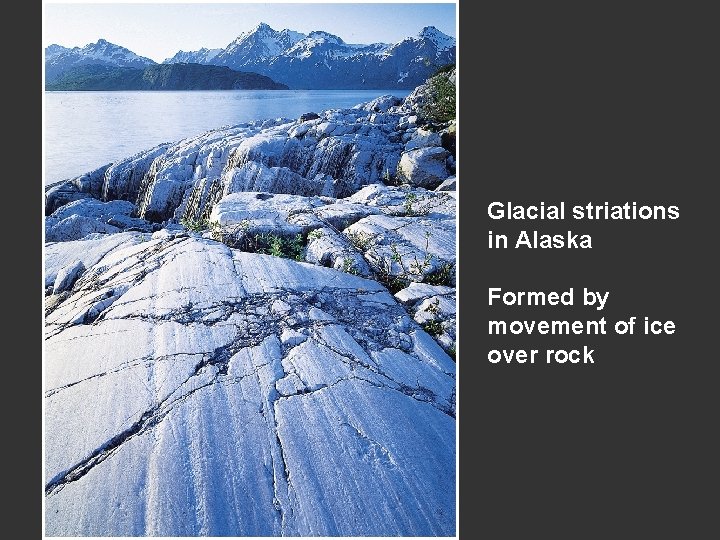
Glacial striations in Alaska Formed by movement of ice over rock
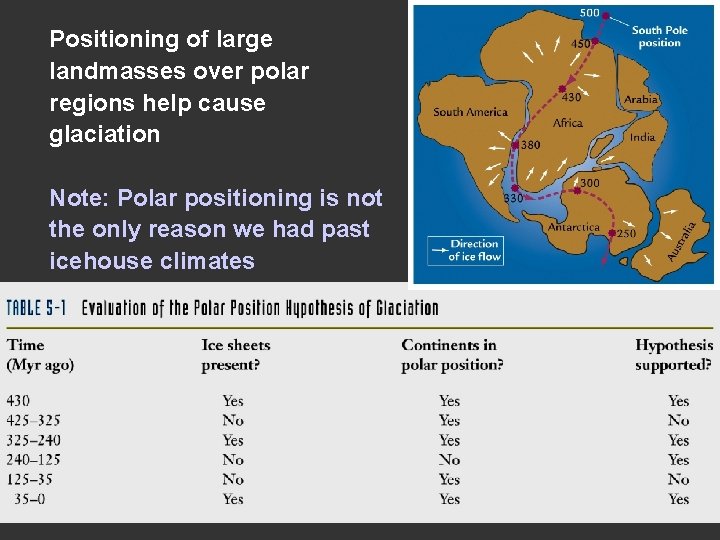
Positioning of large landmasses over polar regions help cause glaciation Note: Polar positioning is not the only reason we had past icehouse climates
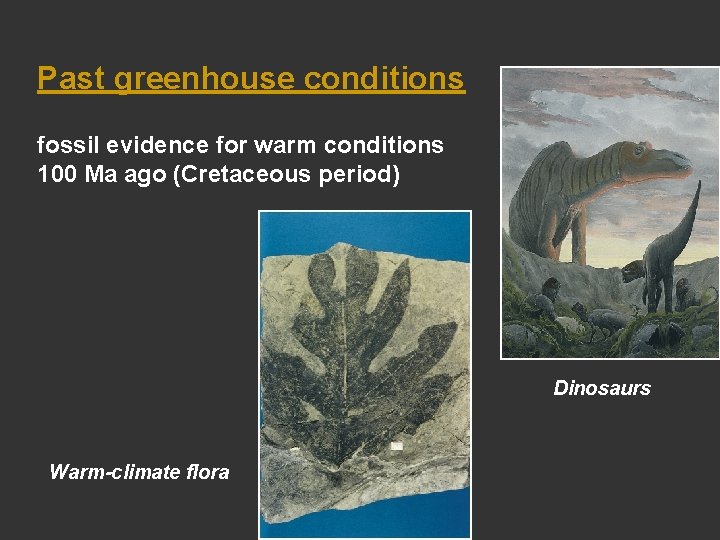
Past greenhouse conditions fossil evidence for warm conditions 100 Ma ago (Cretaceous period) Dinosaurs Warm-climate flora
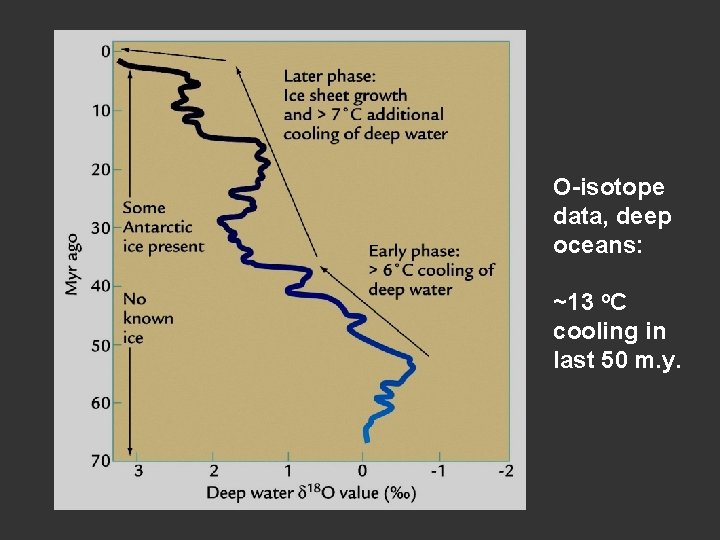
O-isotope data, deep oceans: ~13 o. C cooling in last 50 m. y.
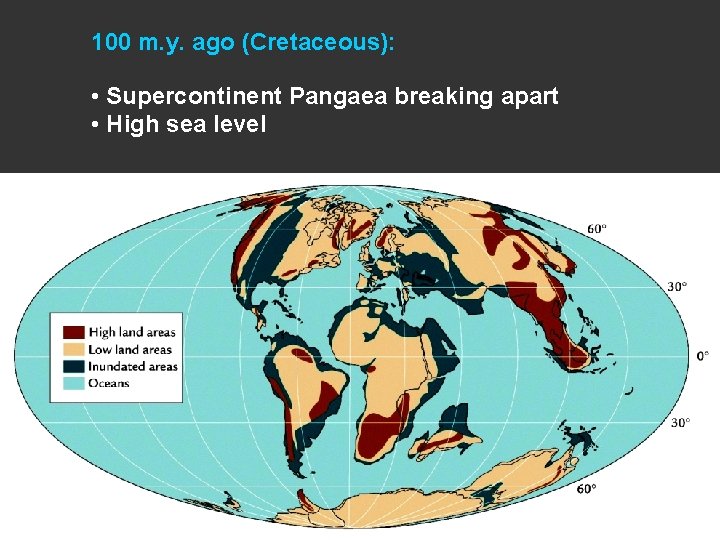
100 m. y. ago (Cretaceous): • Supercontinent Pangaea breaking apart • High sea level
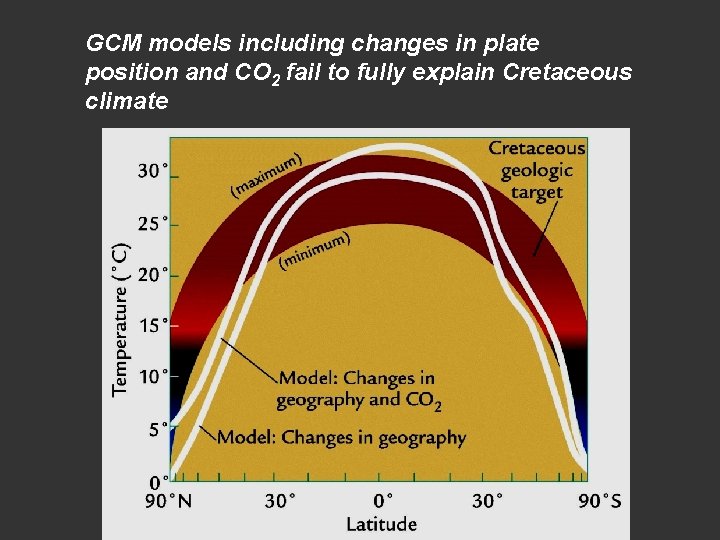
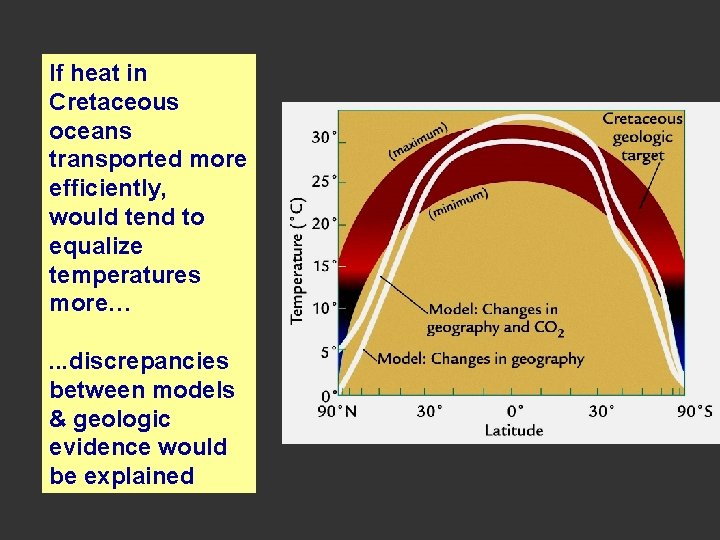
GCM models including changes in plate position and CO 2 fail to fully explain Cretaceous climate
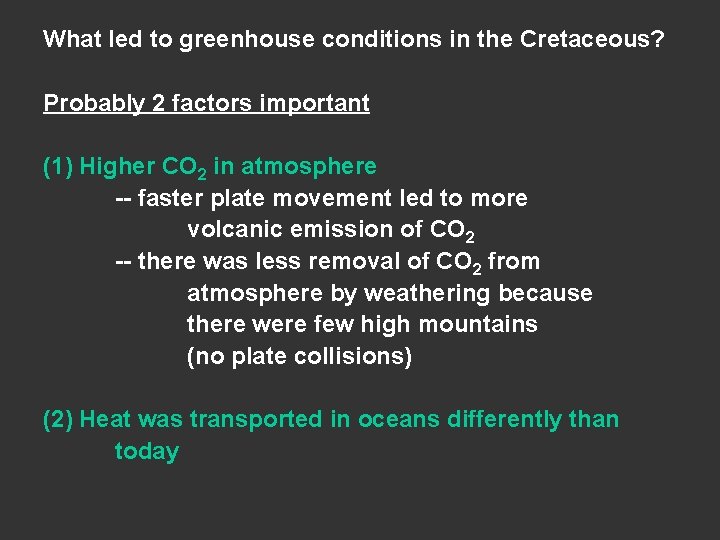
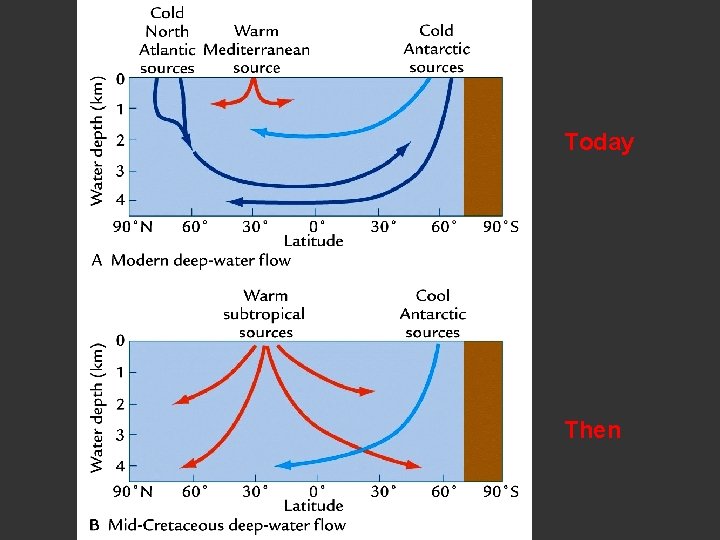
What led to greenhouse conditions in the Cretaceous? Probably 2 factors important (1) Higher CO 2 in atmosphere -- faster plate movement led to more volcanic emission of CO 2 -- there was less removal of CO 2 from atmosphere by weathering because there were few high mountains (no plate collisions) (2) Heat was transported in oceans differently than today
Today Then
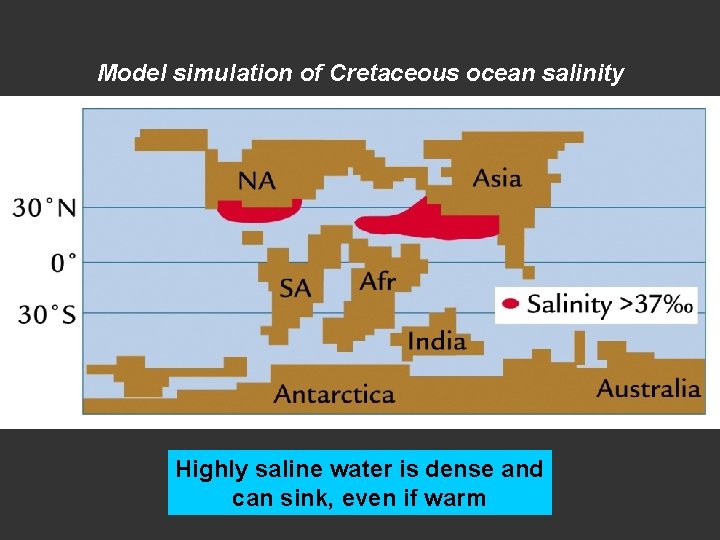
Model simulation of Cretaceous ocean salinity Highly saline water is dense and can sink, even if warm
If heat in Cretaceous oceans transported more efficiently, would tend to equalize temperatures more…. . . discrepancies between models & geologic evidence would be explained