
Climate on Geologic Time Scales The CO 2
![Photosynthetic fractionation of carbon isotopes depends on [CO 2]aq The Rubisco enzymatic photosynthesis pathway](https://slidetodoc.com/presentation_image/18a910d1b526cd8fe20426644460ff23/image-16.jpg "Photosynthetic fractionation of carbon isotopes depends on [CO 2]aq The Rubisco enzymatic photosynthesis pathway")
![Response of stomata to [CO 2] is speciesdependent Limiting SI-derived paleo-CO 2 estimates to](https://slidetodoc.com/presentation_image/18a910d1b526cd8fe20426644460ff23/image-22.jpg "Response of stomata to [CO 2] is speciesdependent Limiting SI-derived paleo-CO 2 estimates to")
- Slides: 57
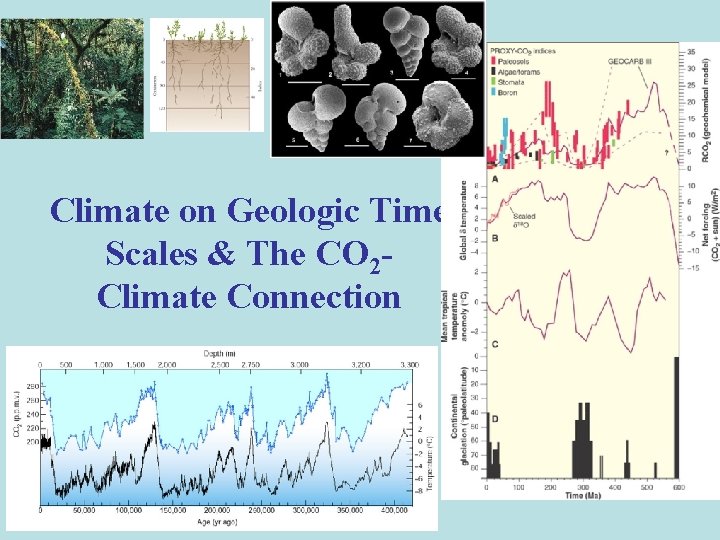
Climate on Geologic Time Scales & The CO 2 Climate Connection
Where We’ve Been & Where We Will Go • Reviewed what processes control CO 2 greenhouse effect over geologic time (i. e. , geochem. C cycle). • And what negative feedbacks (e. g. , T-weathering, CO 2 -weathering) might keep climate system from reaching &/or remaining in extreme states (e. g. , Venus). • But data (geologic evidence) to support theory (strong control of climate by CO 2) is lacking*. • Now turn to geologic evidence for CO 2 -climate link during last 500 Myr. * Prior to ~550 Ma the lack of animals with hard skeletons and vascular plants to date has resulted in little or no fossil evidence of atmospheric CO 2 levels.
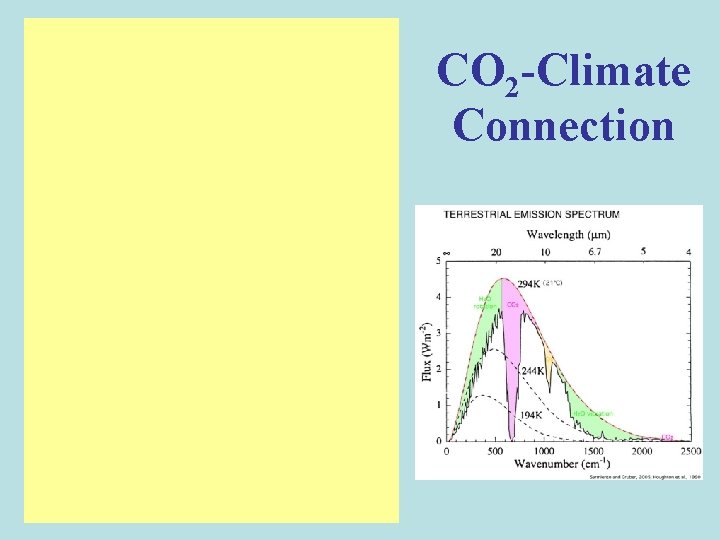
CO 2 -Climate Connection
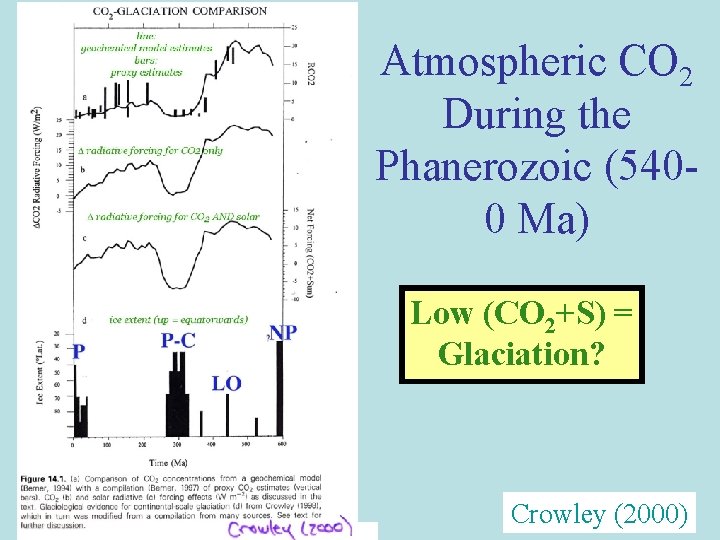
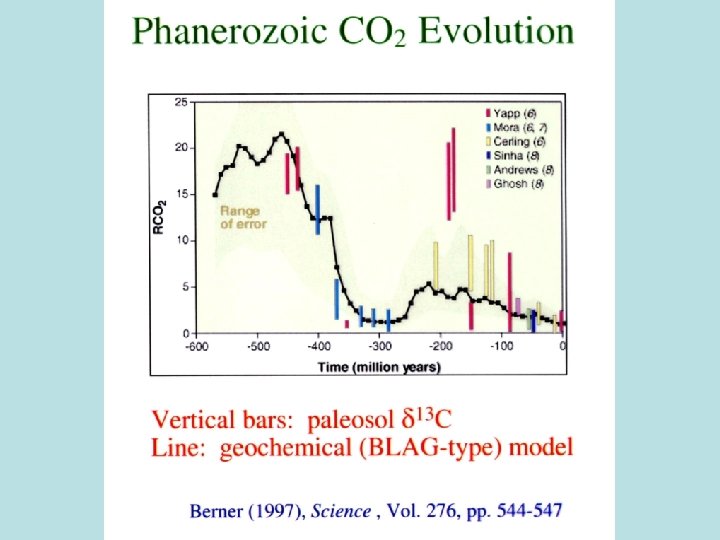
Atmospheric CO 2 During the Phanerozoic (5400 Ma) Low (CO 2+S) = Glaciation? Crowley (2000)
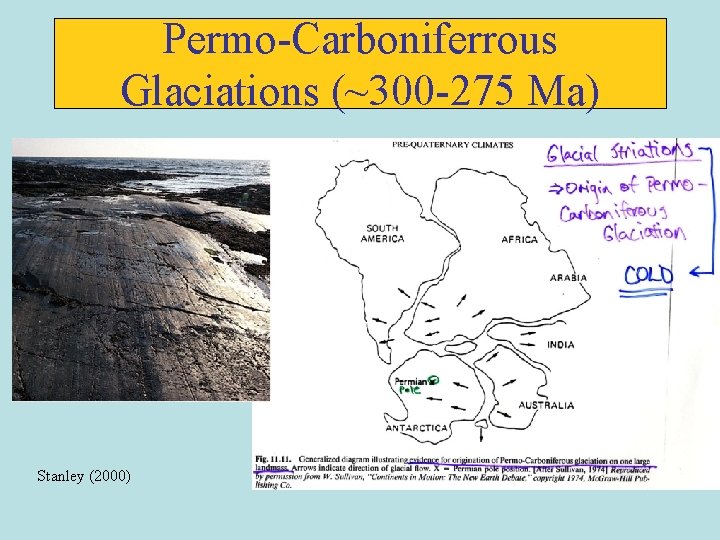
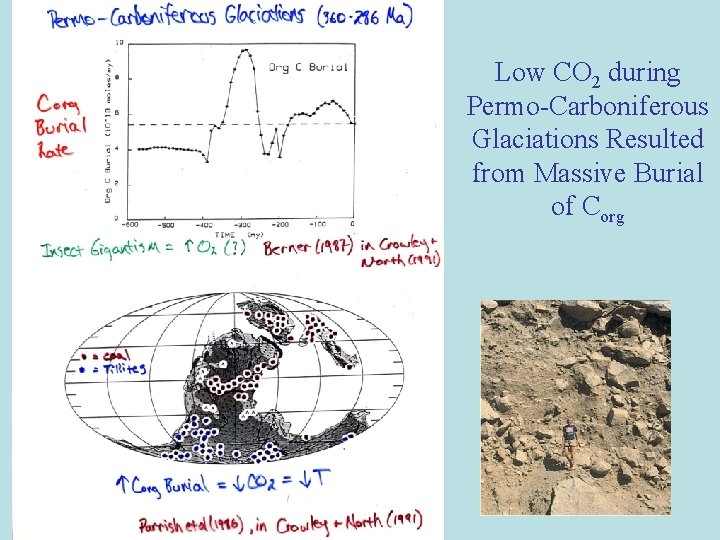
Permo-Carboniferrous Glaciations (~300 -275 Ma) Stanley (2000)
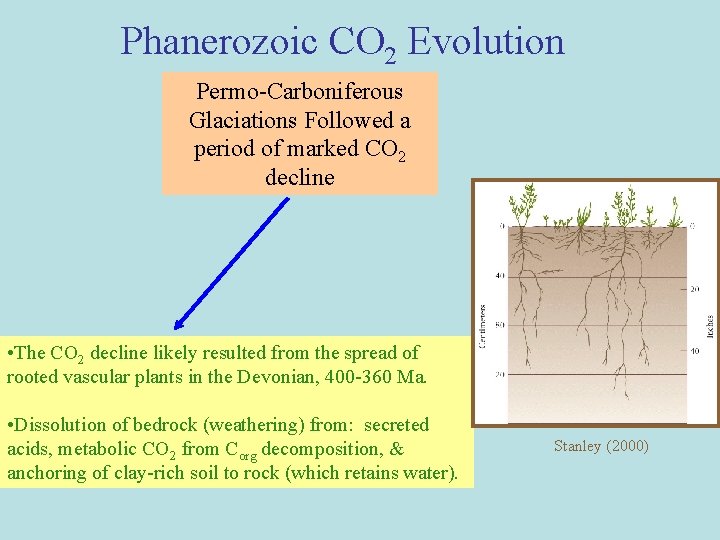
Phanerozoic CO 2 Evolution Permo-Carboniferous Glaciations Followed a period of marked CO 2 decline • The CO 2 decline likely resulted from the spread of rooted vascular plants in the Devonian, 400 -360 Ma. • Dissolution of bedrock (weathering) from: secreted acids, metabolic CO 2 from Corg decomposition, & anchoring of clay-rich soil to rock (which retains water). Stanley (2000)
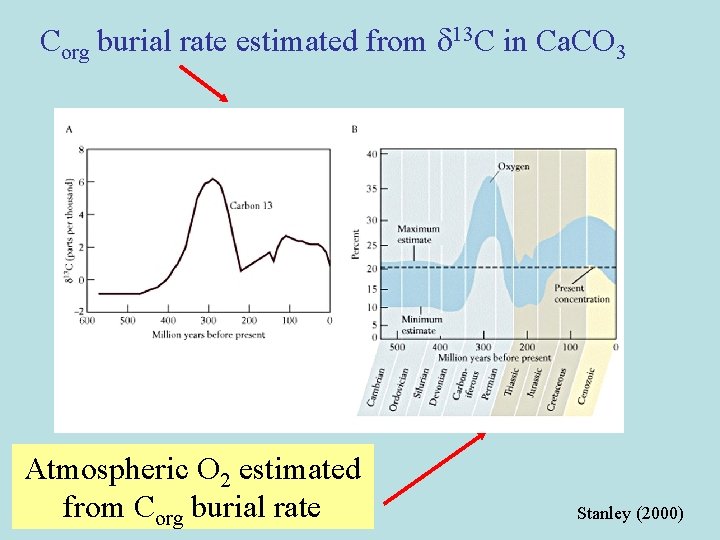
Corg burial rate estimated from d 13 C in Ca. CO 3 Atmospheric O 2 estimated from Corg burial rate Stanley (2000)
Low CO 2 during Permo-Carboniferous Glaciations Resulted from Massive Burial of Corg
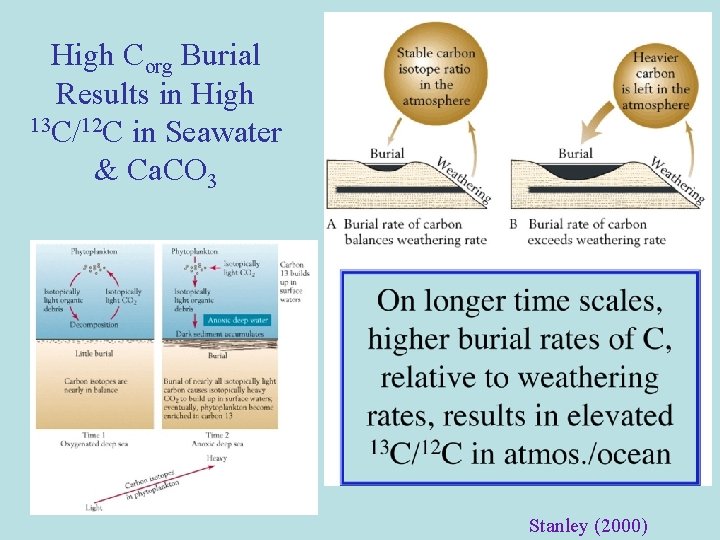
High Corg Burial Results in High 13 C/12 C in Seawater & Ca. CO 3 Stanley (2000)
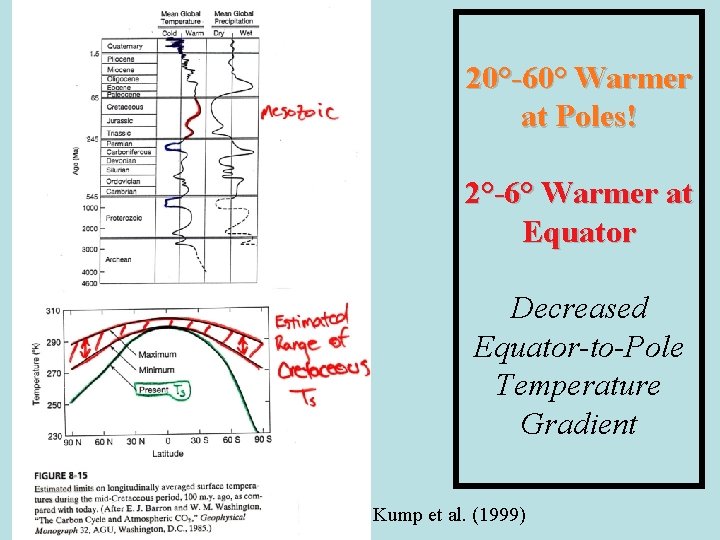
20°-60° Warmer at Poles! 2°-6° Warmer at Equator Decreased Equator-to-Pole Temperature Gradient Kump et al. (1999)
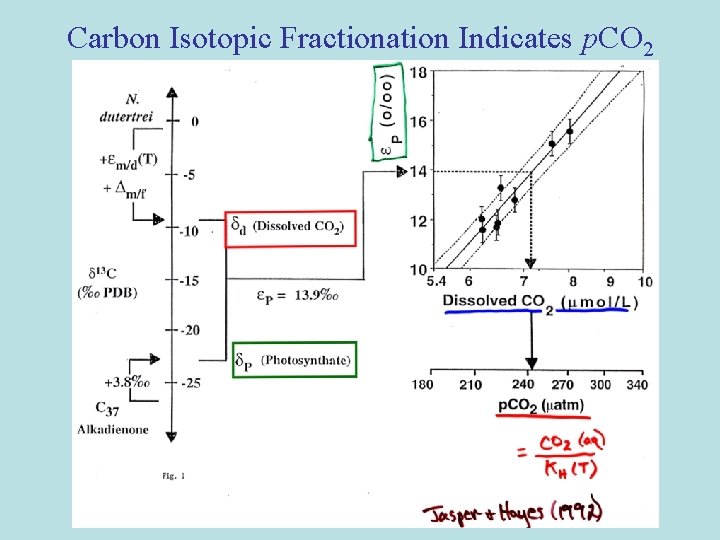
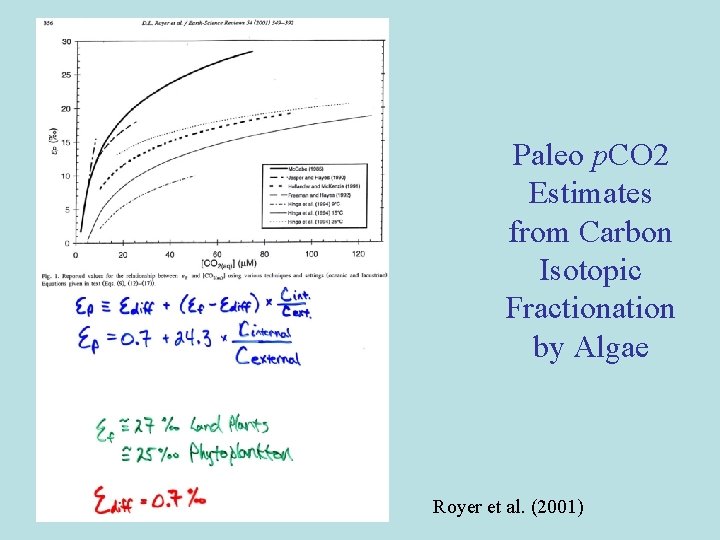
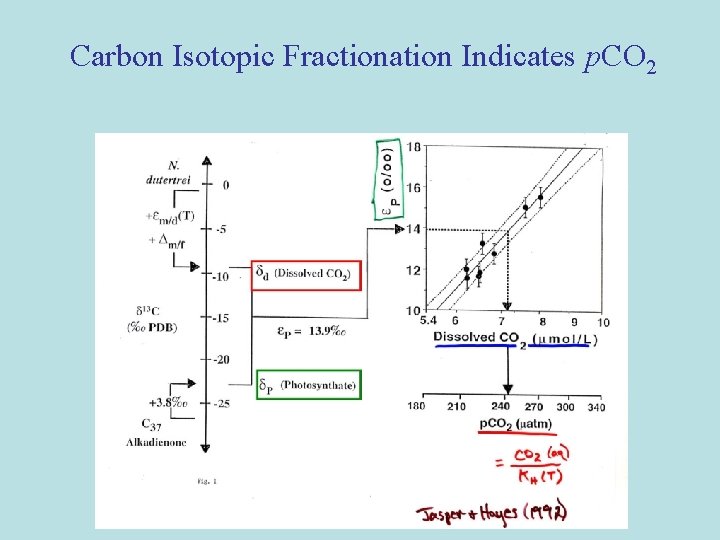
Photosynthetic fractionation of carbon isotopes depends on [CO 2]aq The Rubisco enzymatic photosynthesis pathway can be limited by available free CO 2 within a cell. It seems that many photosynthetic algae uptake carbon by the diffusion of CO 2 across the cell wall. When CO 2 is abundant, this process results in a carbon isotope difference of ~30‰; it only uses a part of the available cellular CO 2 and shows maximal isotopic fractionation. In the limit of extremely scarce aqueous CO 2, the C fixation rate is diffusion limited, and the isotopic composition of the carbon entering the cell is the same as the aqueous dissolved CO 2 (i. e. , ~ -7‰). So as aqueous CO 2 becomes more limiting, the isotopic composition of organic matter is shifted to more positive values.
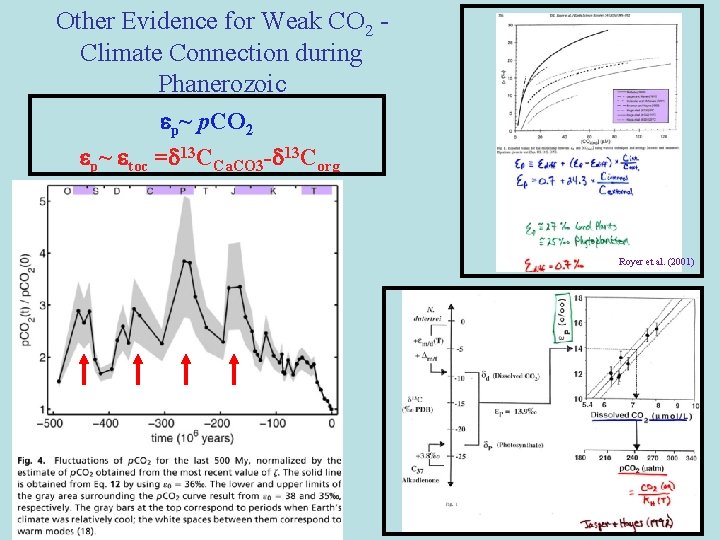
Carbon Isotopic Fractionation Indicates p. CO 2
Paleo p. CO 2 Estimates from Carbon Isotopic Fractionation by Algae Royer et al. (2001)
Carbon Isotopic Fractionation Indicates p. CO 2
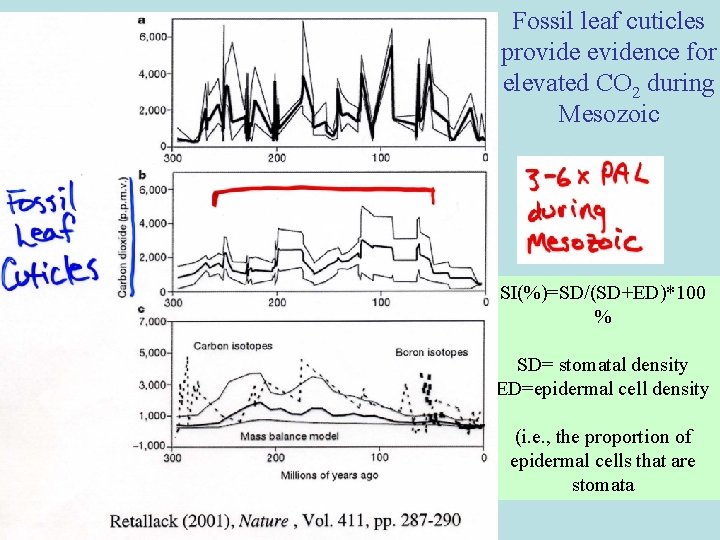
Fossil leaf cuticles provide evidence for elevated CO 2 during Mesozoic SI(%)=SD/(SD+ED)*100 % SD= stomatal density ED=epidermal cell density (i. e. , the proportion of epidermal cells that are stomata
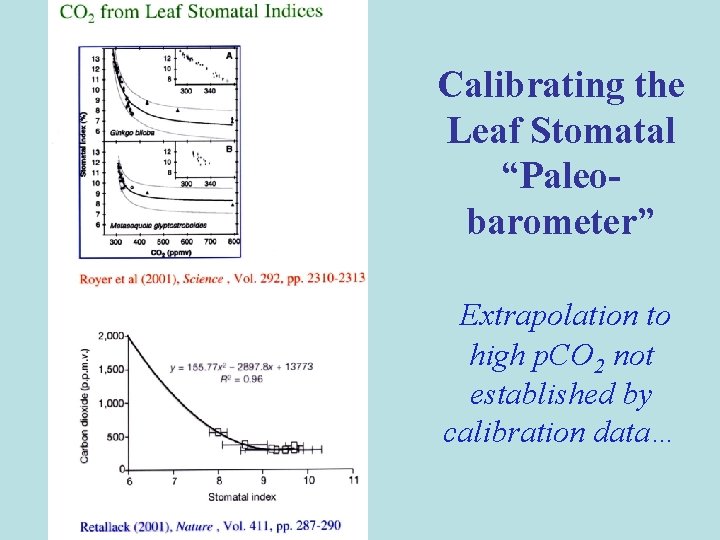
Calibrating the Leaf Stomatal “Paleobarometer” Extrapolation to high p. CO 2 not established by calibration data…
Response of stomata to [CO 2] is speciesdependent Limiting SI-derived paleo-CO 2 estimates to times and places when fossilized leaves from extant species exist…
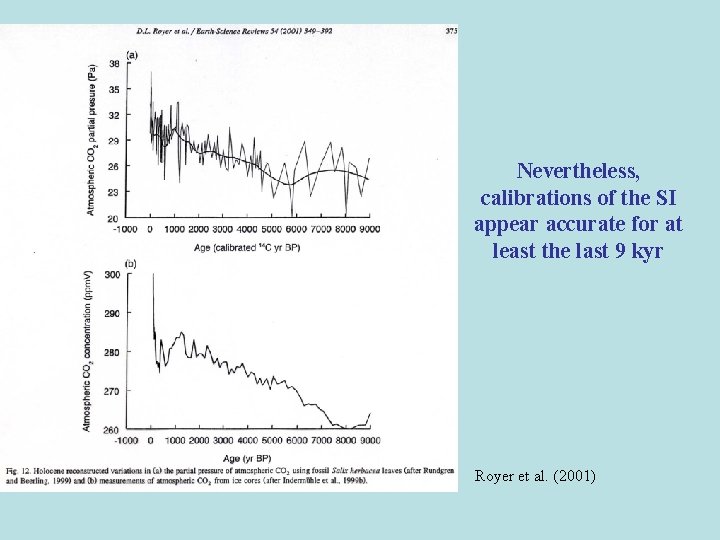
Nevertheless, calibrations of the SI appear accurate for at least the last 9 kyr Royer et al. (2001)
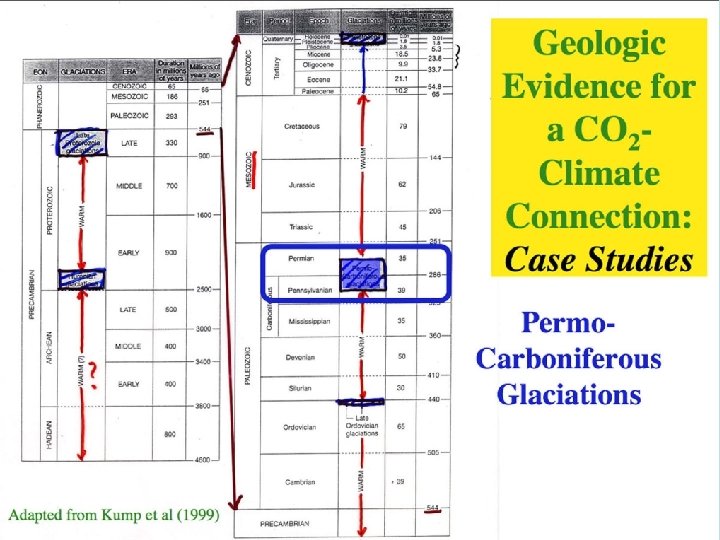
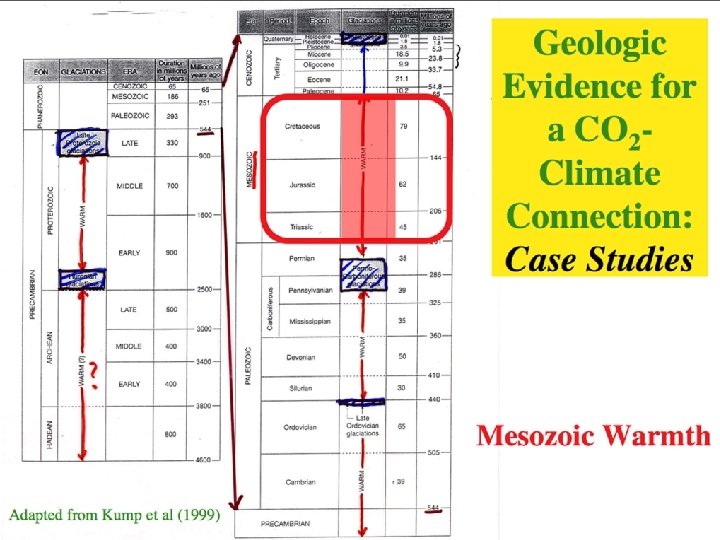
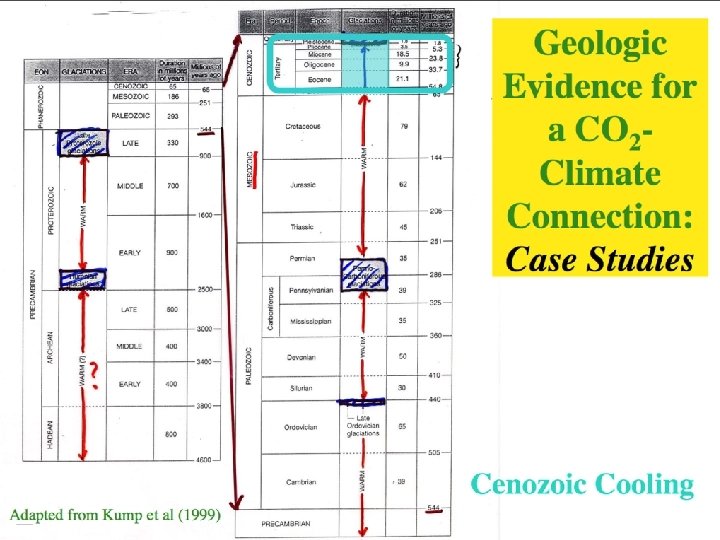
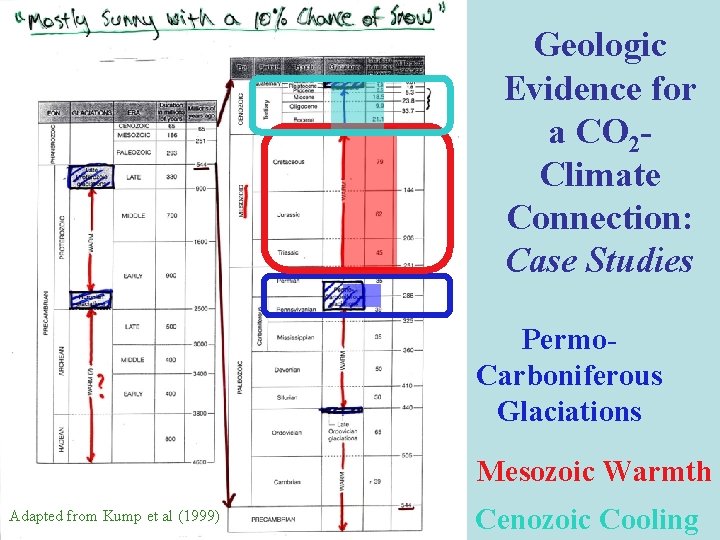
Geologic Evidence for a CO 2 Climate Connection: Case Studies Permo. Carboniferous Glaciations Mesozoic Warmth Adapted from Kump et al (1999) Cenozoic Cooling
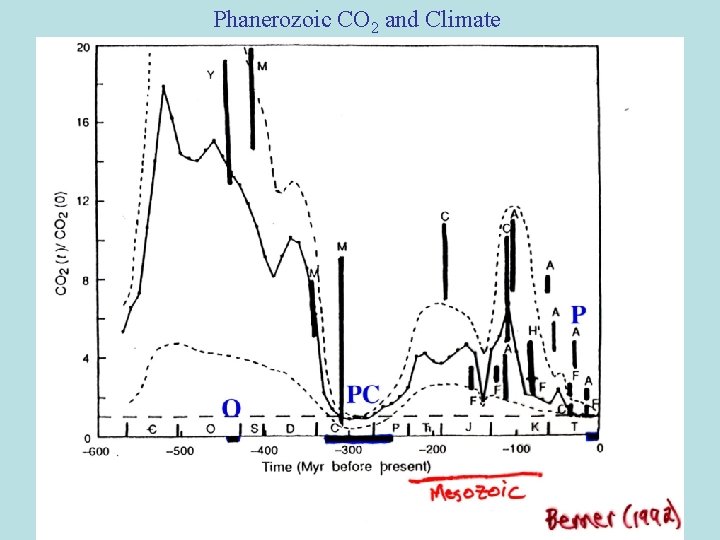
Phanerozoic CO 2 and Climate
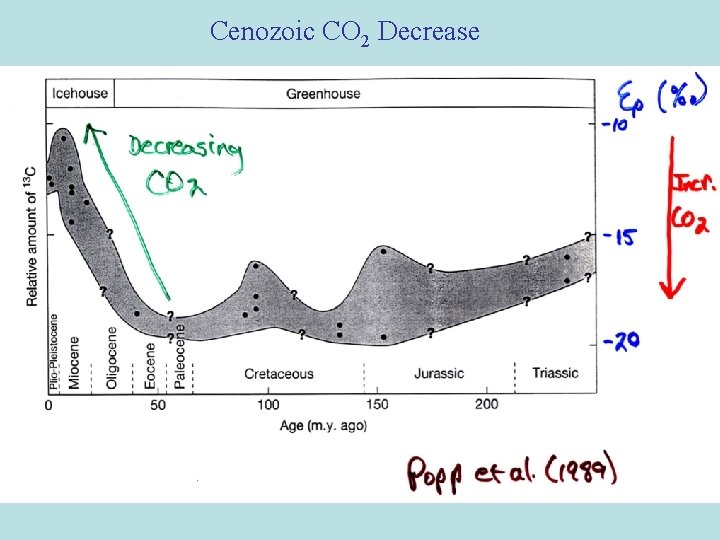
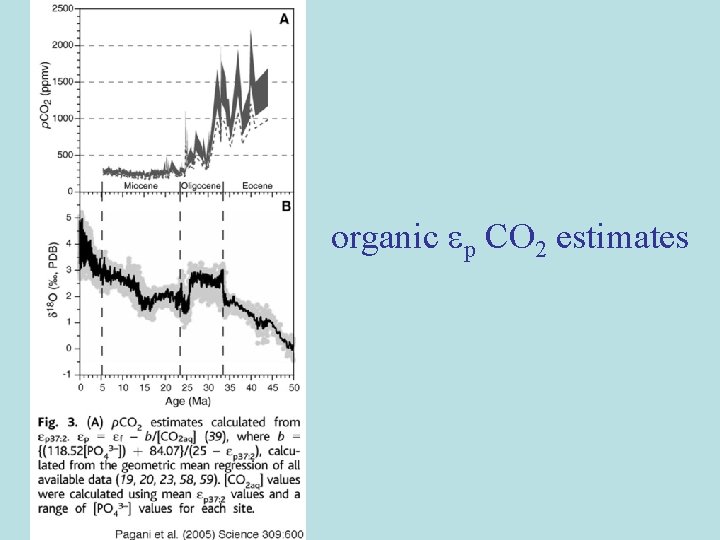
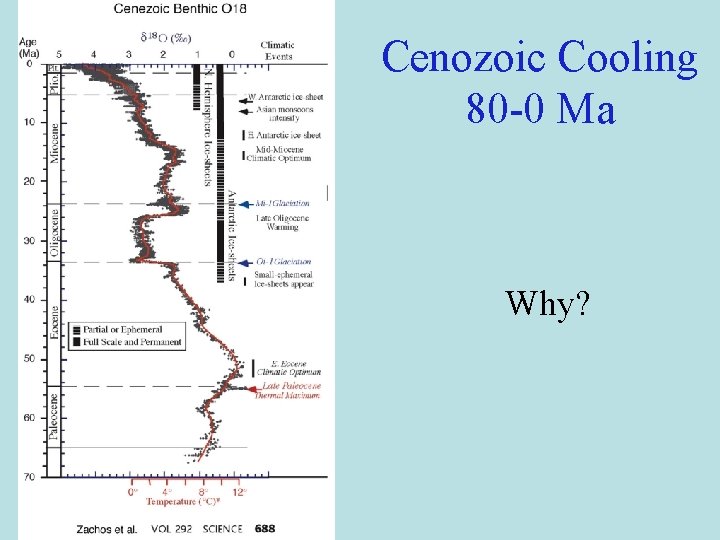
Cenozoic CO 2 Decrease
organic p CO 2 estimates
Boron Isotope paleo-p. H method
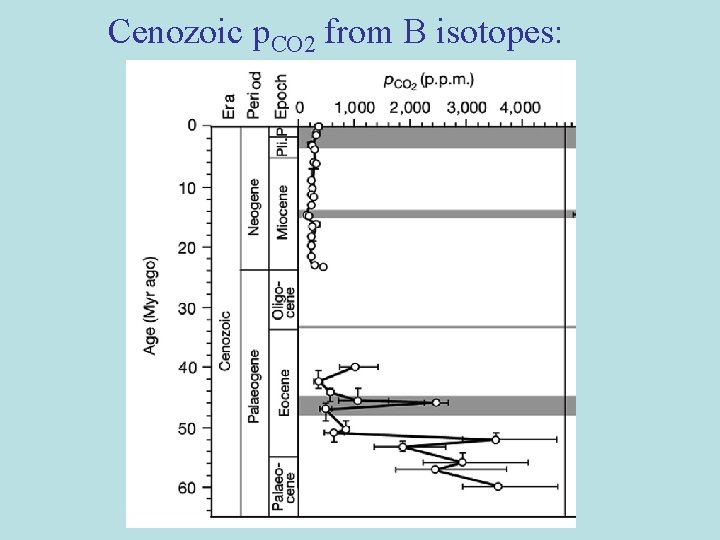
Cenozoic p. CO 2 from B isotopes:
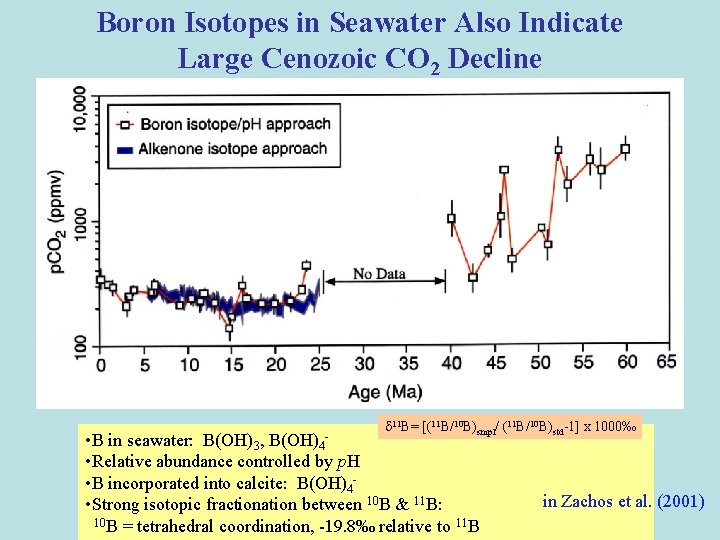
Boron Isotopes in Seawater Also Indicate Large Cenozoic CO 2 Decline d 11 B= [(11 B/10 B)smpl/ (11 B/10 B)std-1] x 1000‰ • B in seawater: B(OH)3, B(OH)4 • Relative abundance controlled by p. H • B incorporated into calcite: B(OH)4 • Strong isotopic fractionation between 10 B & 11 B: 10 B = tetrahedral coordination, -19. 8‰ relative to 11 B in Zachos et al. (2001)
Cenozoic Cooling 80 -0 Ma Why?
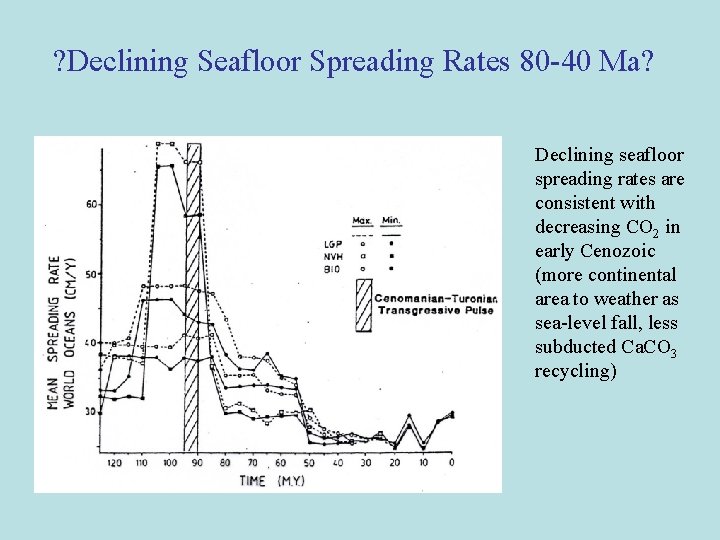
? Declining Seafloor Spreading Rates 80 -40 Ma? Declining seafloor spreading rates are consistent with decreasing CO 2 in early Cenozoic (more continental area to weather as sea-level fall, less subducted Ca. CO 3 recycling)
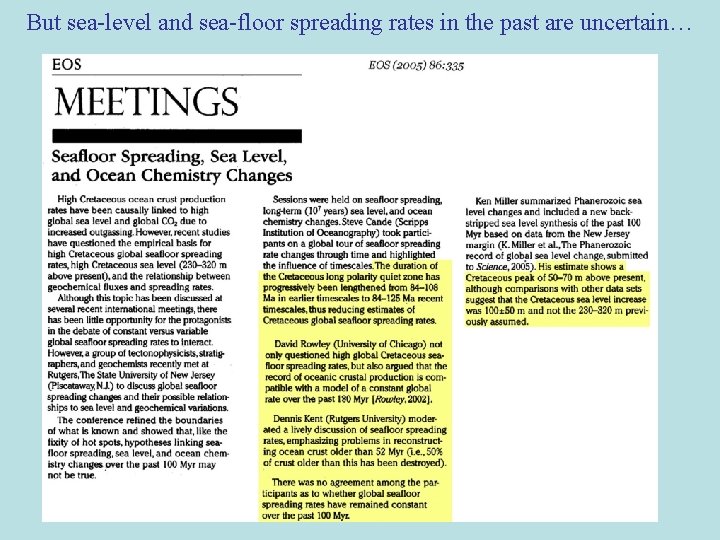
But sea-level and sea-floor spreading rates in the past are uncertain…
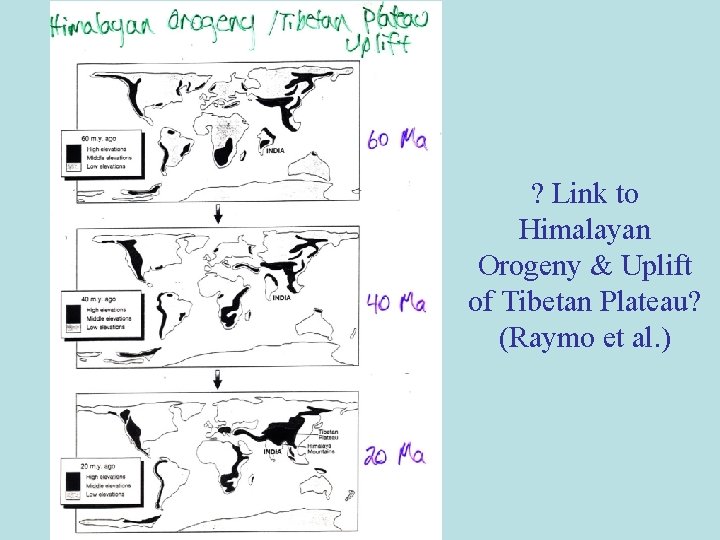
? Link to Himalayan Orogeny & Uplift of Tibetan Plateau? (Raymo et al. )
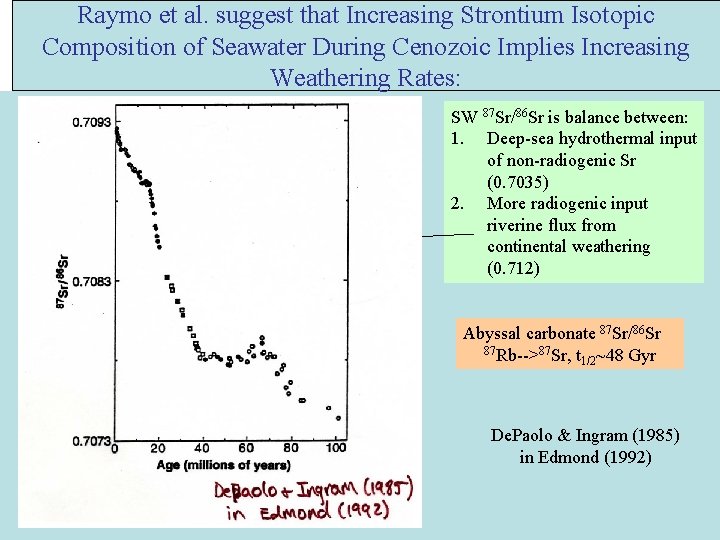
Raymo et al. suggest that Increasing Strontium Isotopic Composition of Seawater During Cenozoic Implies Increasing Weathering Rates: SW 87 Sr/86 Sr is balance between: 1. Deep-sea hydrothermal input of non-radiogenic Sr (0. 7035) 2. More radiogenic input riverine flux from continental weathering (0. 712) Abyssal carbonate 87 Sr/86 Sr 87 Rb-->87 Sr, t ~48 Gyr 1/2 De. Paolo & Ingram (1985) in Edmond (1992)
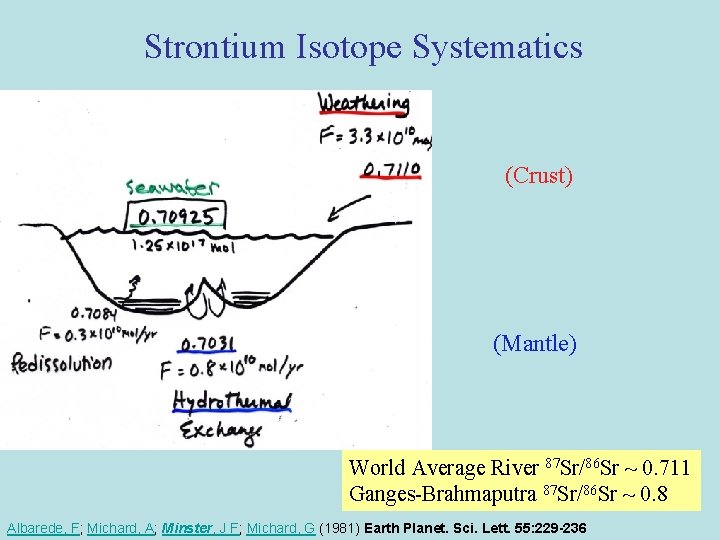
Strontium Isotope Systematics (Crust) (Mantle) World Average River 87 Sr/86 Sr ~ 0. 711 Ganges-Brahmaputra 87 Sr/86 Sr ~ 0. 8 Albarede, F; Michard, A; Minster, J F; Michard, G (1981) Earth Planet. Sci. Lett. 55: 229 -236
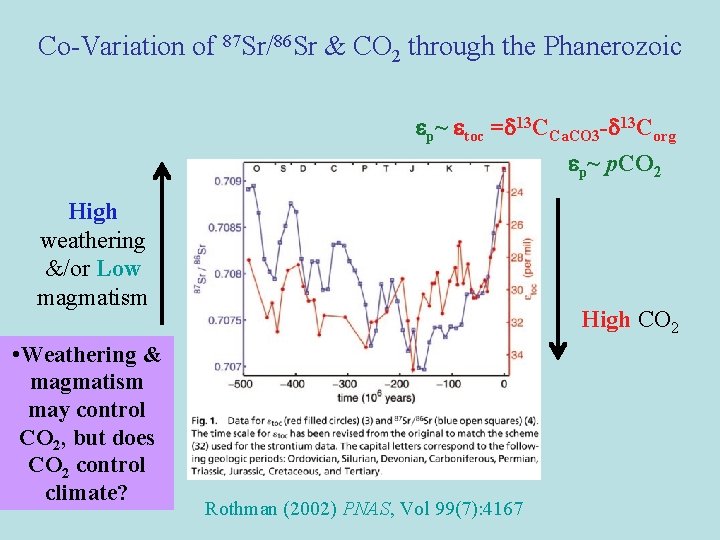
Co-Variation of 87 Sr/86 Sr & CO 2 through the Phanerozoic p~ toc =d 13 CCa. CO 3 -d 13 Corg p~ p. CO 2 High weathering &/or Low magmatism • Weathering & magmatism may control CO 2, but does CO 2 control climate? High CO 2 Rothman (2002) PNAS, Vol 99(7): 4167
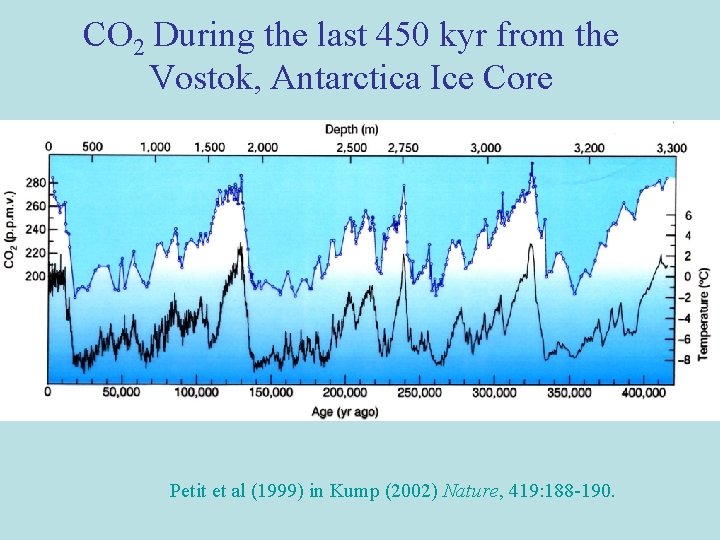
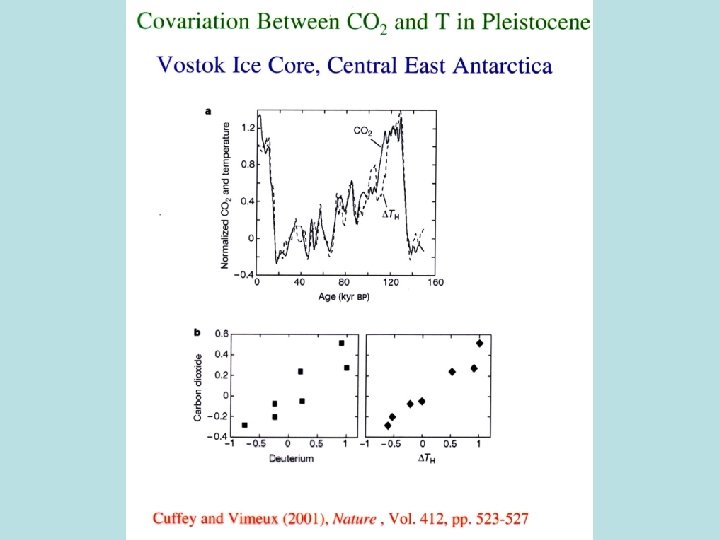
CO 2 During the last 450 kyr from the Vostok, Antarctica Ice Core Petit et al (1999) in Kump (2002) Nature, 419: 188 -190.
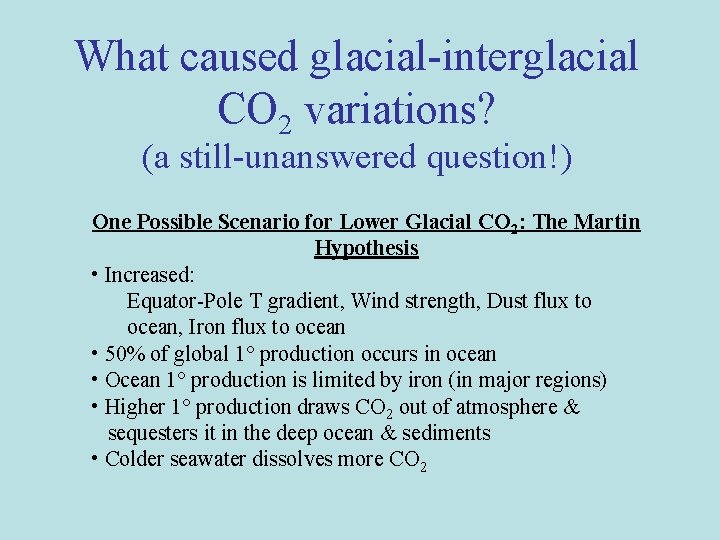
What caused glacial-interglacial CO 2 variations? (a still-unanswered question!) One Possible Scenario for Lower Glacial CO 2: The Martin Hypothesis • Increased: Equator-Pole T gradient, Wind strength, Dust flux to ocean, Iron flux to ocean • 50% of global 1° production occurs in ocean • Ocean 1° production is limited by iron (in major regions) • Higher 1° production draws CO 2 out of atmosphere & sequesters it in the deep ocean & sediments • Colder seawater dissolves more CO 2
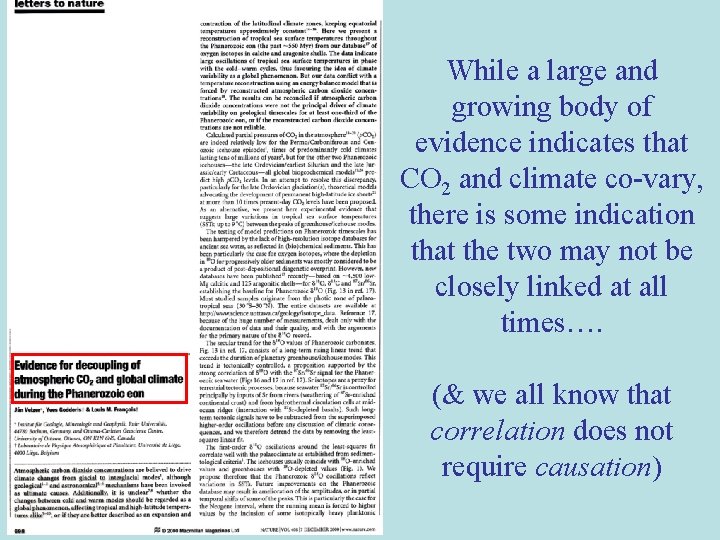
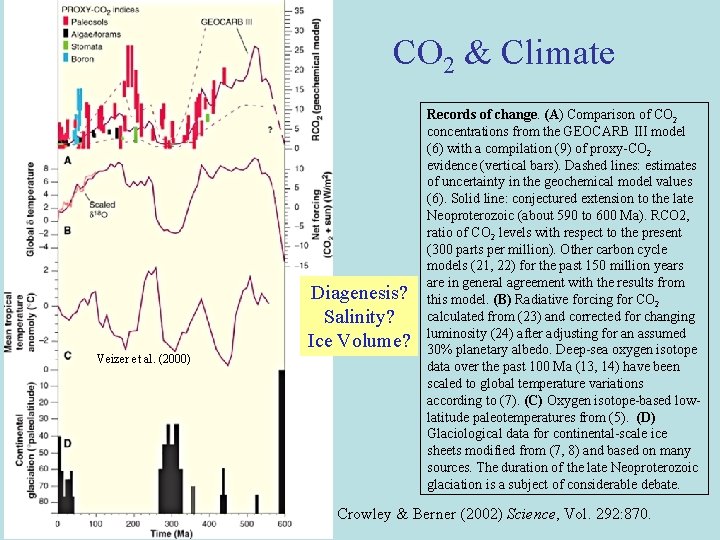
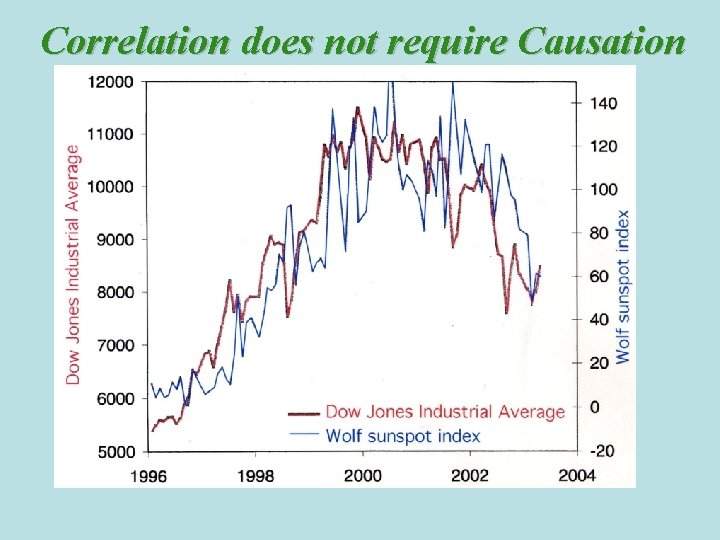
While a large and growing body of evidence indicates that CO 2 and climate co-vary, there is some indication that the two may not be closely linked at all times…. (& we all know that correlation does not require causation)
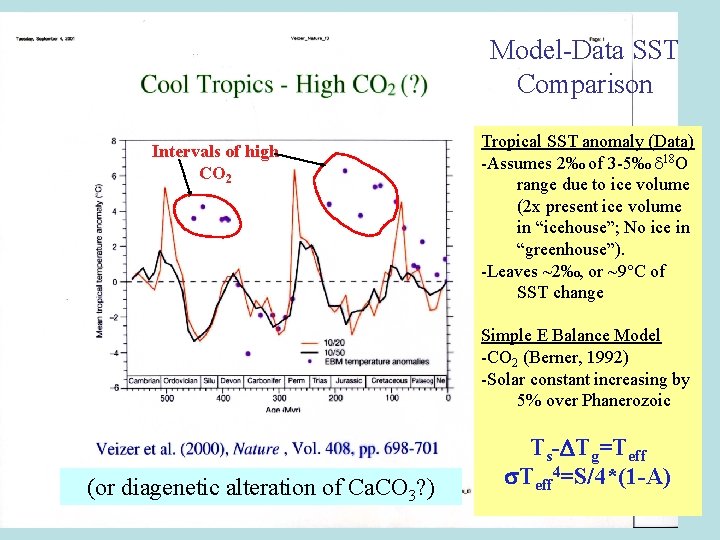
Model-Data SST Comparison Intervals of high CO 2 Tropical SST anomaly (Data) -Assumes 2‰ of 3 -5‰ d 18 O range due to ice volume (2 x present ice volume in “icehouse”; No ice in “greenhouse”). -Leaves ~2‰, or ~9°C of SST change Simple E Balance Model -CO 2 (Berner, 1992) -Solar constant increasing by 5% over Phanerozoic (or diagenetic alteration of Ca. CO 3? ) Ts-DTg=Teff s. Teff 4=S/4*(1 -A)
CO 2 & Climate Diagenesis? Salinity? Ice Volume? Veizer et al. (2000) Records of change. (A) Comparison of CO 2 concentrations from the GEOCARB III model (6) with a compilation (9) of proxy-CO 2 evidence (vertical bars). Dashed lines: estimates of uncertainty in the geochemical model values (6). Solid line: conjectured extension to the late Neoproterozoic (about 590 to 600 Ma). RCO 2, ratio of CO 2 levels with respect to the present (300 parts per million). Other carbon cycle models (21, 22) for the past 150 million years are in general agreement with the results from this model. (B) Radiative forcing for CO 2 calculated from (23) and corrected for changing luminosity (24) after adjusting for an assumed 30% planetary albedo. Deep-sea oxygen isotope data over the past 100 Ma (13, 14) have been scaled to global temperature variations according to (7). (C) Oxygen isotope-based lowlatitude paleotemperatures from (5). (D) Glaciological data for continental-scale ice sheets modified from (7, 8) and based on many sources. The duration of the late Neoproterozoic glaciation is a subject of considerable debate. Crowley & Berner (2002) Science, Vol. 292: 870.
Other Evidence for Weak CO 2 Climate Connection during Phanerozoic p~ p. CO 2 p~ toc =d 13 CCa. CO 3 -d 13 Corg Cold intervals Royer et al. (2001) Rothman (2002) PNAS
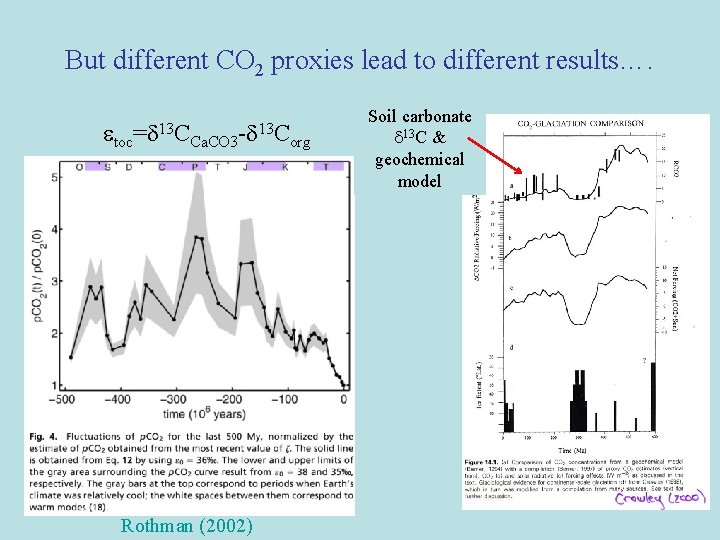
But different CO 2 proxies lead to different results…. toc =d 13 C Ca. CO 3 -d 13 C Rothman (2002) org Soil carbonate d 13 C & geochemical model
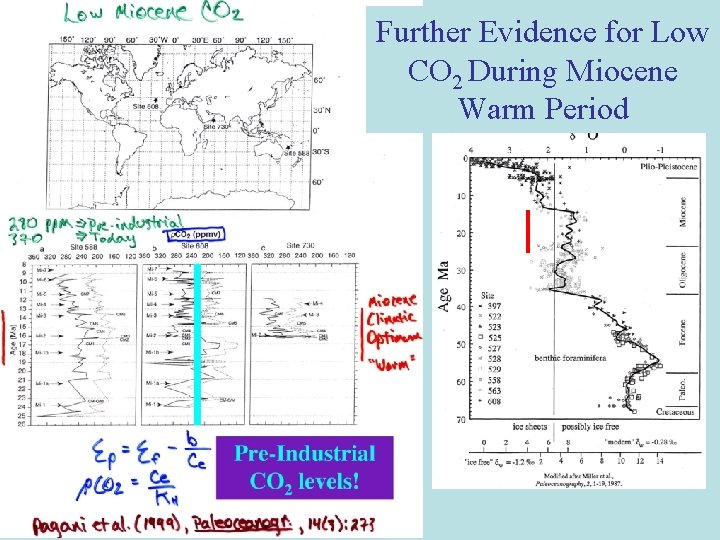
Further Evidence for Low CO 2 During Miocene Warm Period
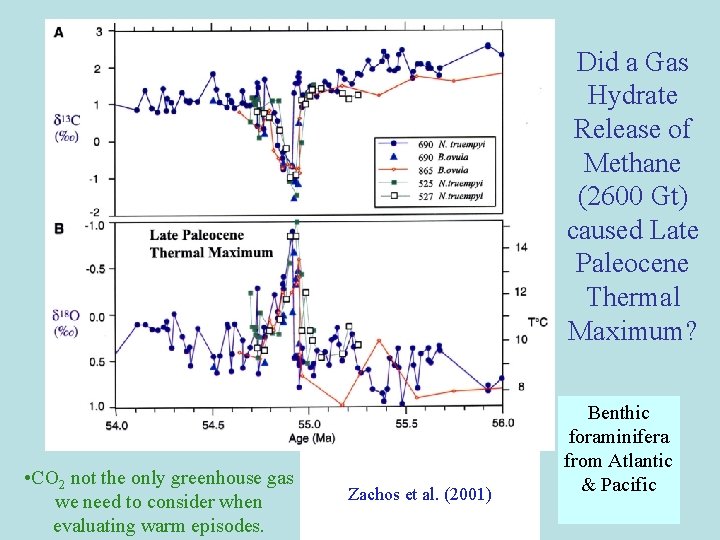
Did a Gas Hydrate Release of Methane (2600 Gt) caused Late Paleocene Thermal Maximum? • CO 2 not the only greenhouse gas we need to consider when evaluating warm episodes. Zachos et al. (2001) Benthic foraminifera from Atlantic & Pacific
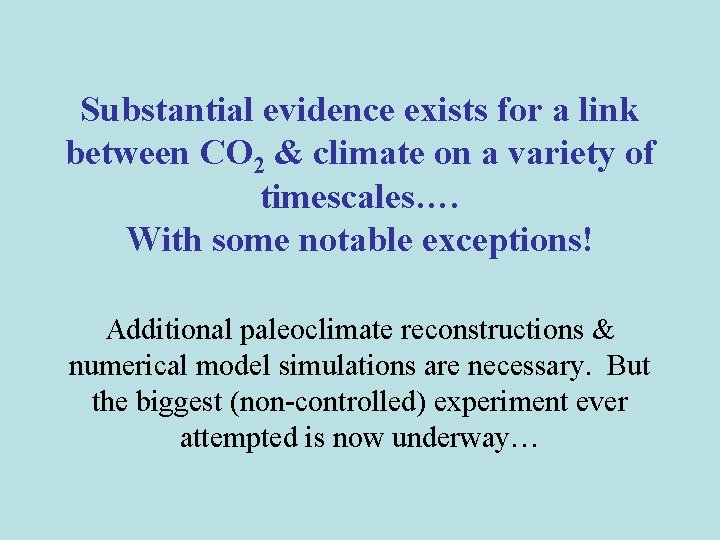
Substantial evidence exists for a link between CO 2 & climate on a variety of timescales…. With some notable exceptions! Additional paleoclimate reconstructions & numerical model simulations are necessary. But the biggest (non-controlled) experiment ever attempted is now underway…
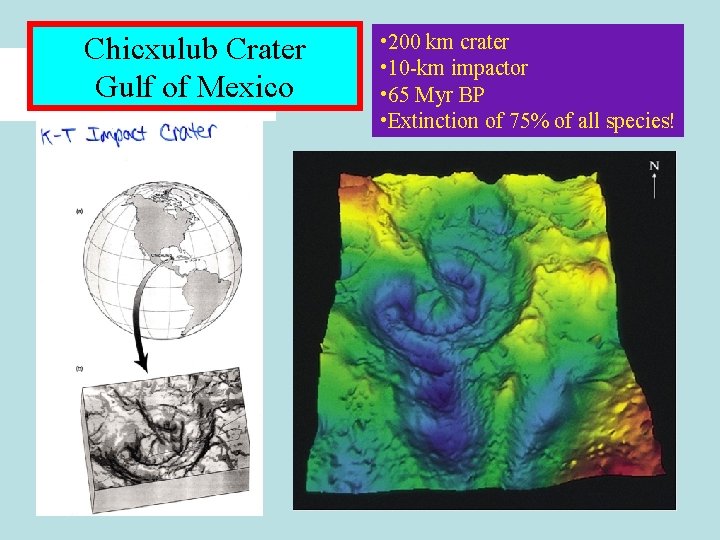
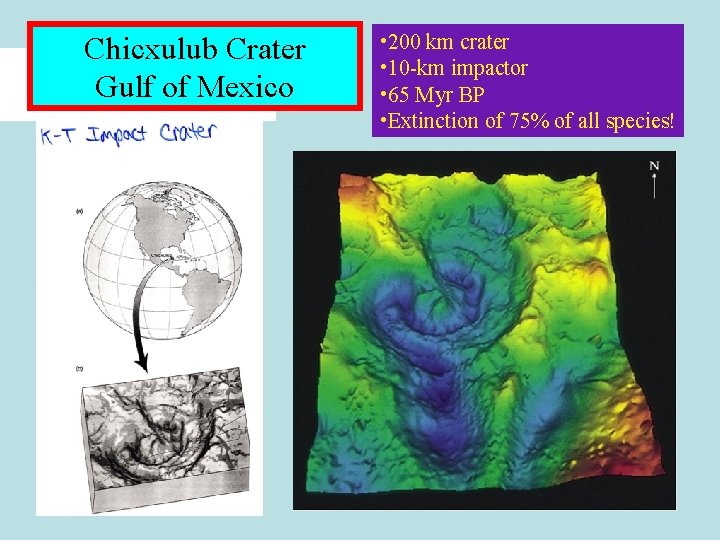
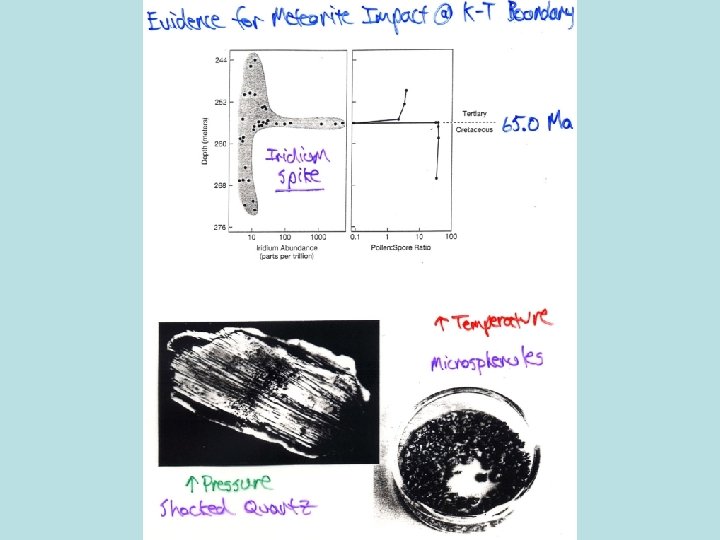
Chicxulub Crater Gulf of Mexico • 200 km crater • 10 -km impactor • 65 Myr BP • Extinction of 75% of all species!
Chicxulub Crater Gulf of Mexico • 200 km crater • 10 -km impactor • 65 Myr BP • Extinction of 75% of all species!
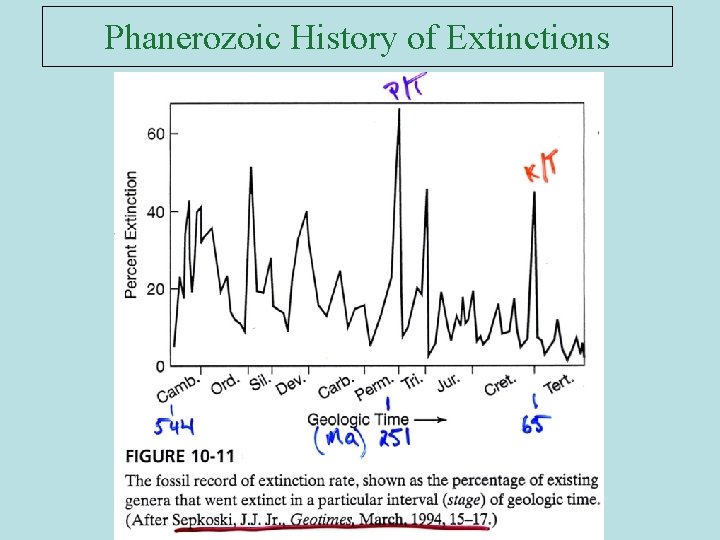
Phanerozoic History of Extinctions
But: Stigler and Wagner (1987) Science 238: 940 say that the 26 million year period is an artifact of how the time scale is organized.
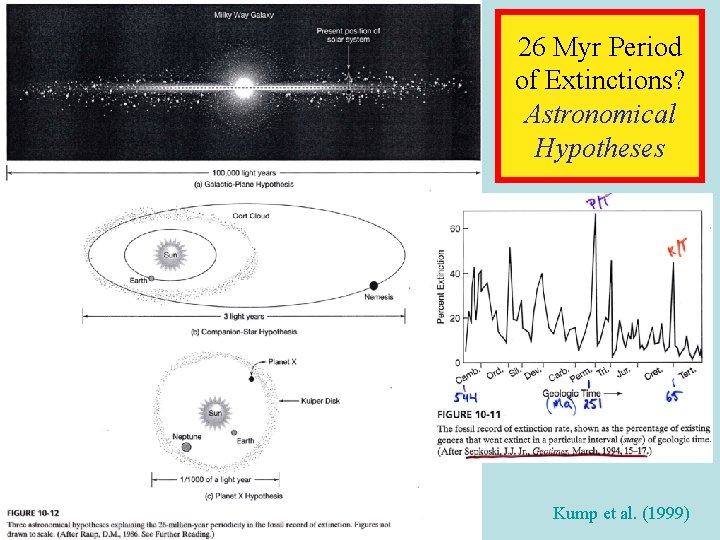
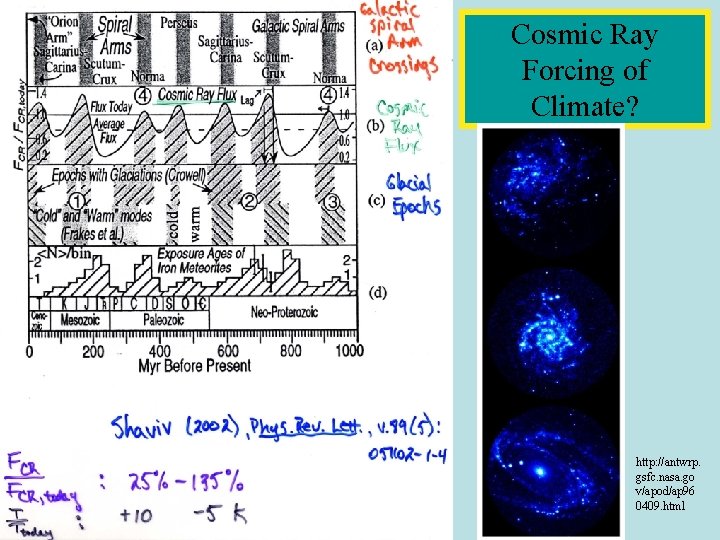
26 Myr Period of Extinctions? Astronomical Hypotheses Kump et al. (1999)
Cosmic Ray Forcing of Climate? http: //antwrp. gsfc. nasa. go v/apod/ap 96 0409. html
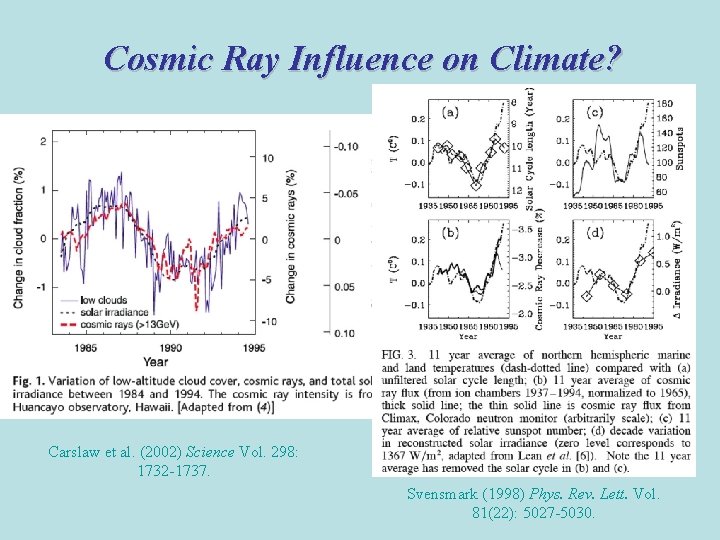
Cosmic Ray Influence on Climate? Carslaw et al. (2002) Science Vol. 298: 1732 -1737. Svensmark (1998) Phys. Rev. Lett. Vol. 81(22): 5027 -5030.
Correlation does not require Causation