
Climate of Mesoamerica and Caribbean Prepared by Adam
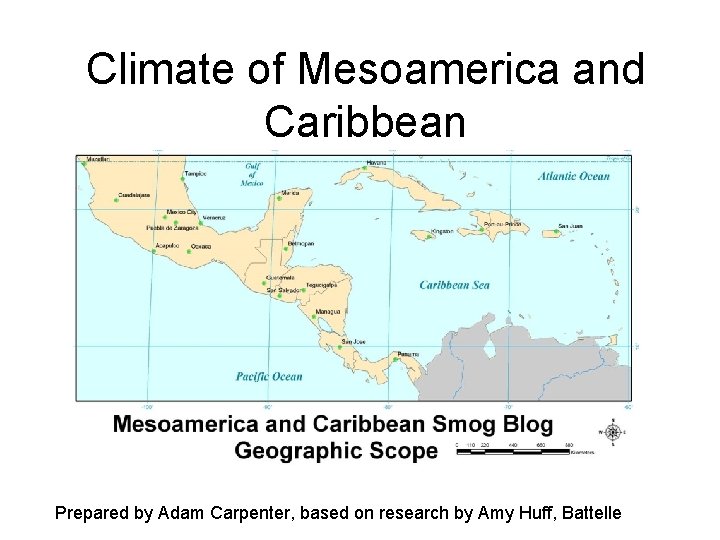
Climate of Mesoamerica and Caribbean Prepared by Adam Carpenter, based on research by Amy Huff, Battelle
Climate Overview • Subtropical to tropical • Rainfall 150 cm (60 in) to 380 cm (150 in) • Dry and rainy seasons, based on the Intertropical Convergence Zone (ITCZ)
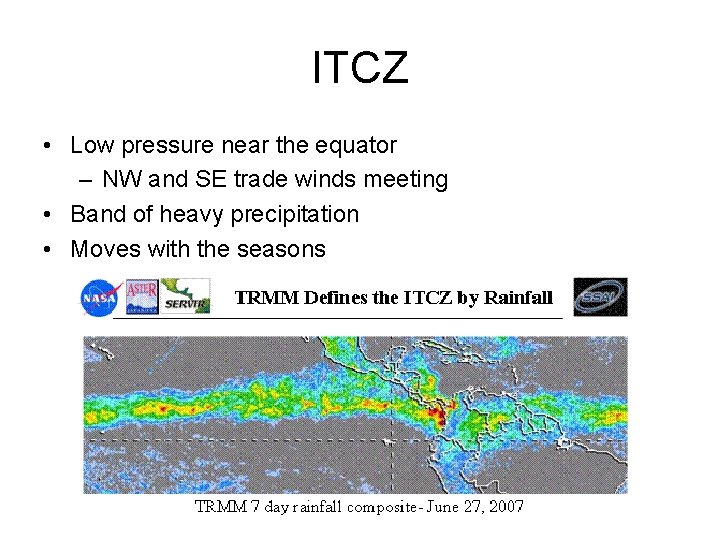
ITCZ • Low pressure near the equator – NW and SE trade winds meeting • Band of heavy precipitation • Moves with the seasons
Seasons • April to November: Rainy Season • November to February: Transition Period • February to April: Dry Season
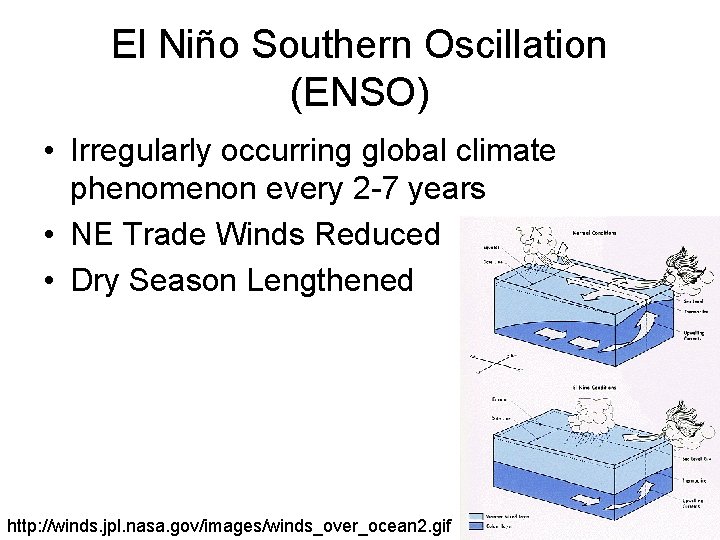
El Niño Southern Oscillation (ENSO) • Irregularly occurring global climate phenomenon every 2 -7 years • NE Trade Winds Reduced • Dry Season Lengthened http: //winds. jpl. nasa. gov/images/winds_over_ocean 2. gif
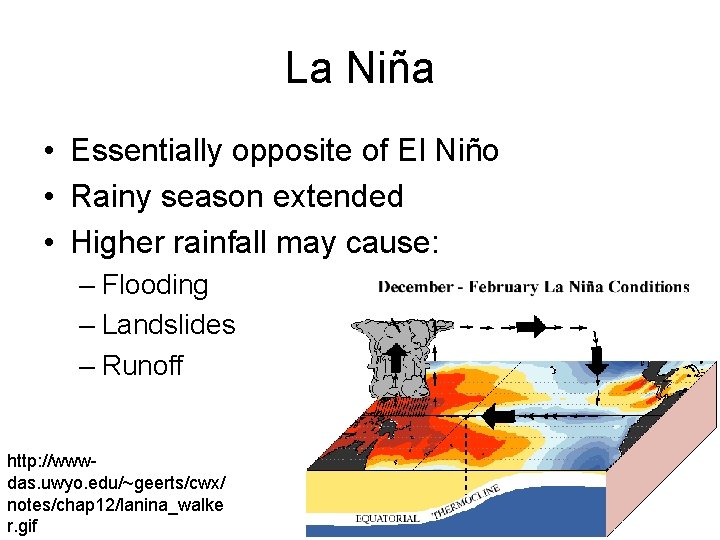
La Niña • Essentially opposite of El Niño • Rainy season extended • Higher rainfall may cause: – Flooding – Landslides – Runoff http: //wwwdas. uwyo. edu/~geerts/cwx/ notes/chap 12/lanina_walke r. gif
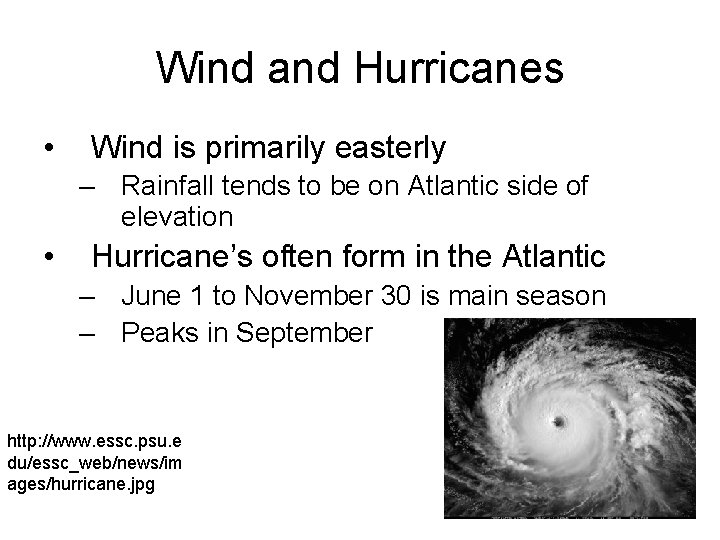
Wind and Hurricanes • Wind is primarily easterly – Rainfall tends to be on Atlantic side of elevation • Hurricane’s often form in the Atlantic – June 1 to November 30 is main season – Peaks in September http: //www. essc. psu. e du/essc_web/news/im ages/hurricane. jpg
Weather Characteristics • In the Caribbean, often heavy rain in afternoon due to on-shore flow • Wider temperature changes inland, both day-to-night and over the year
Regional Overview of Aerosol Optical Depth (AOD) for Mesoamerica and the Caribbean
AOD & PM Overview • Aerosol Optical Depth (AOD) measures absorbed/reflected light by particulate matter (PM) • Major PM sources – Local Agricultural Fires: April-May Peak – Smoke and Dust from Africa & South America: June-July Peak – Reduced PM during rainy season
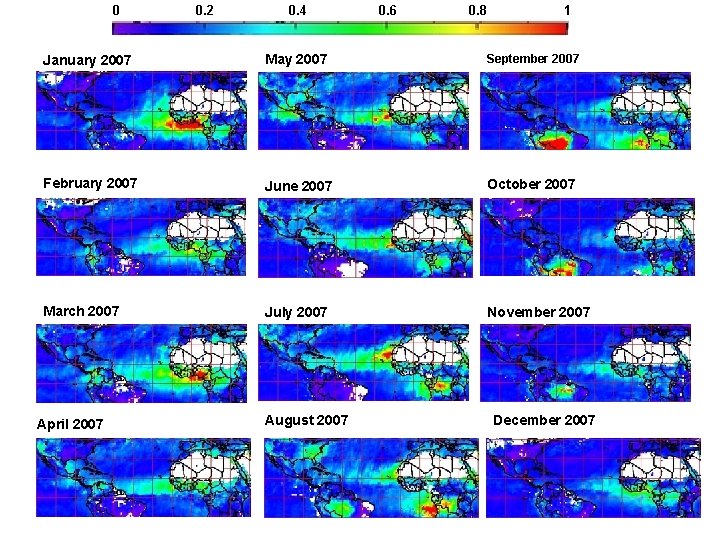
0 0. 2 0. 4 0. 6 0. 8 1 January 2007 May 2007 September 2007 February 2007 June 2007 October 2007 March 2007 July 2007 November 2007 April 2007 August 2007 December 2007
General Guidelines: Interpreting Air Quality based on Meteorology
Main Components of AQ • Concentration of Pollutants • Factors that increase or decrease pollutants • Air mass
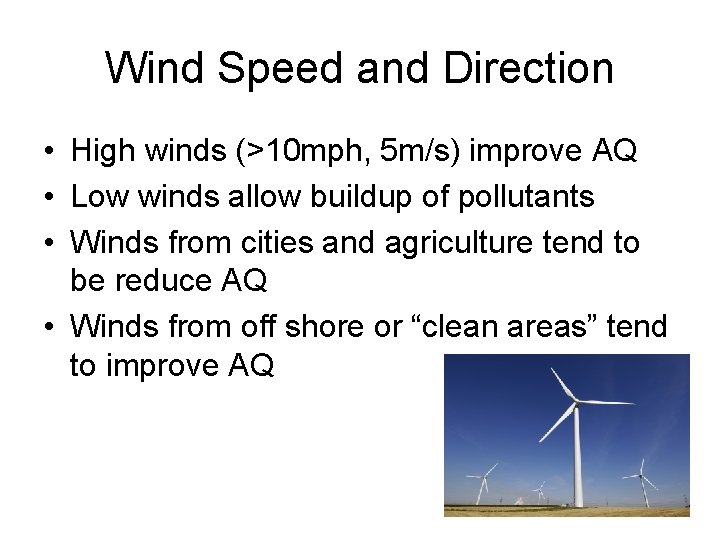
Wind Speed and Direction • High winds (>10 mph, 5 m/s) improve AQ • Low winds allow buildup of pollutants • Winds from cities and agriculture tend to be reduce AQ • Winds from off shore or “clean areas” tend to improve AQ
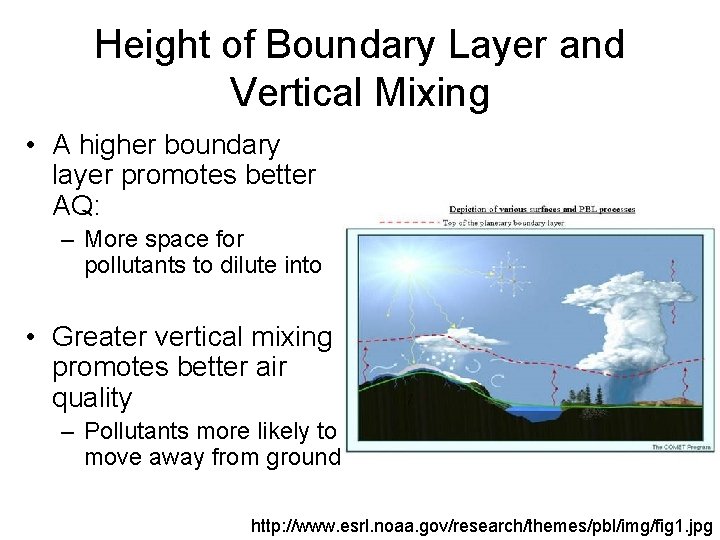
Height of Boundary Layer and Vertical Mixing • A higher boundary layer promotes better AQ: – More space for pollutants to dilute into • Greater vertical mixing promotes better air quality – Pollutants more likely to move away from ground http: //www. esrl. noaa. gov/research/themes/pbl/img/fig 1. jpg
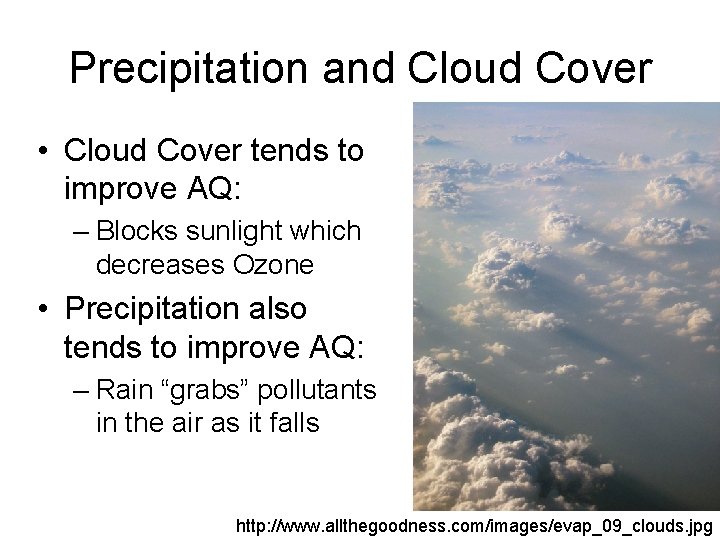
Precipitation and Cloud Cover • Cloud Cover tends to improve AQ: – Blocks sunlight which decreases Ozone • Precipitation also tends to improve AQ: – Rain “grabs” pollutants in the air as it falls http: //www. allthegoodness. com/images/evap_09_clouds. jpg
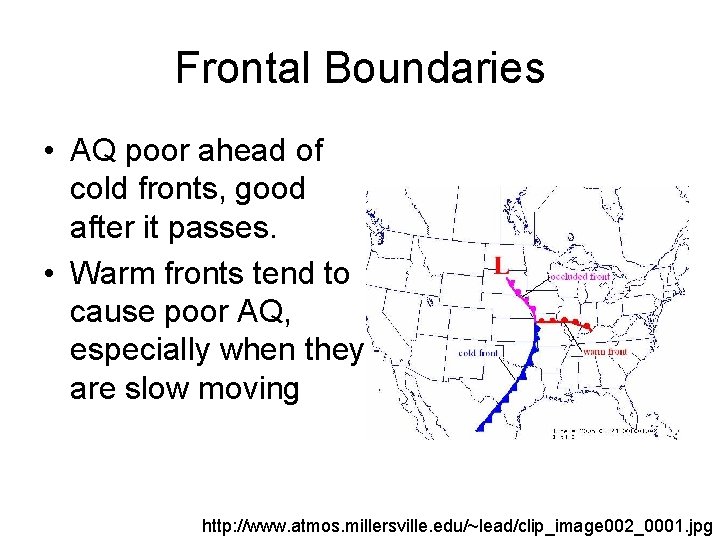
Frontal Boundaries • AQ poor ahead of cold fronts, good after it passes. • Warm fronts tend to cause poor AQ, especially when they are slow moving http: //www. atmos. millersville. edu/~lead/clip_image 002_0001. jpg
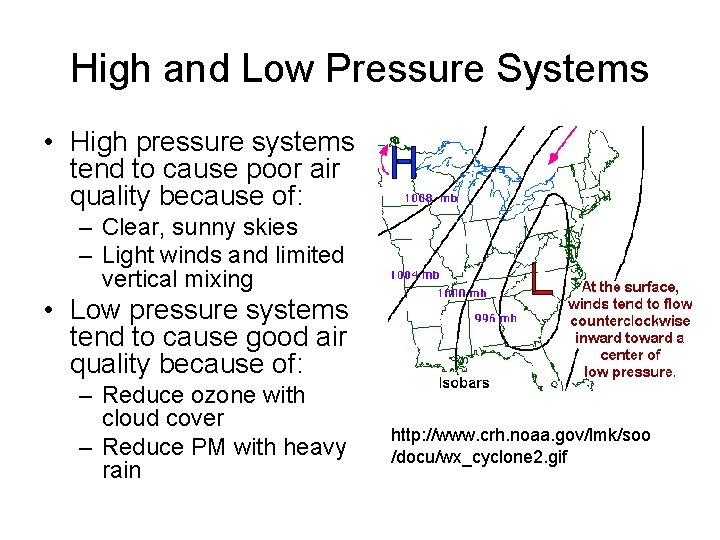
High and Low Pressure Systems • High pressure systems tend to cause poor air quality because of: – Clear, sunny skies – Light winds and limited vertical mixing • Low pressure systems tend to cause good air quality because of: – Reduce ozone with cloud cover – Reduce PM with heavy rain http: //www. crh. noaa. gov/lmk/soo /docu/wx_cyclone 2. gif
- Slides: 18