
Climate Notes Part 1 What are the two
- Slides: 11
Climate Notes Part 1
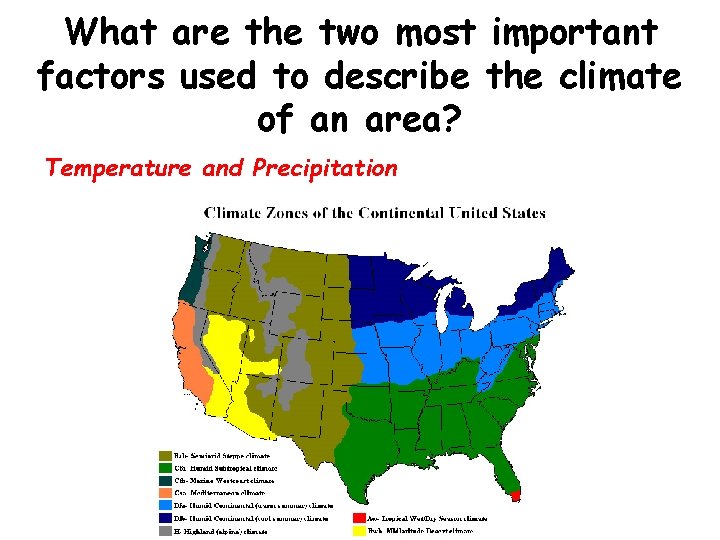
What are the two most important factors used to describe the climate of an area? Temperature and Precipitation
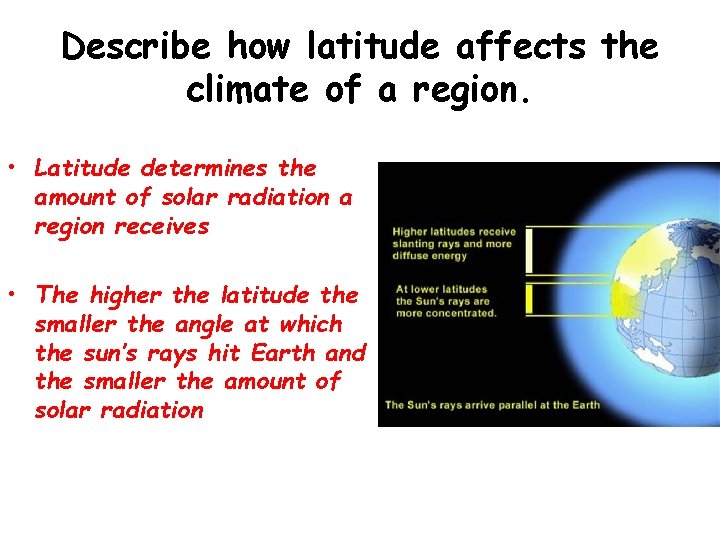
Describe how latitude affects the climate of a region. • Latitude determines the amount of solar radiation a region receives • The higher the latitude the smaller the angle at which the sun’s rays hit Earth and the smaller the amount of solar radiation
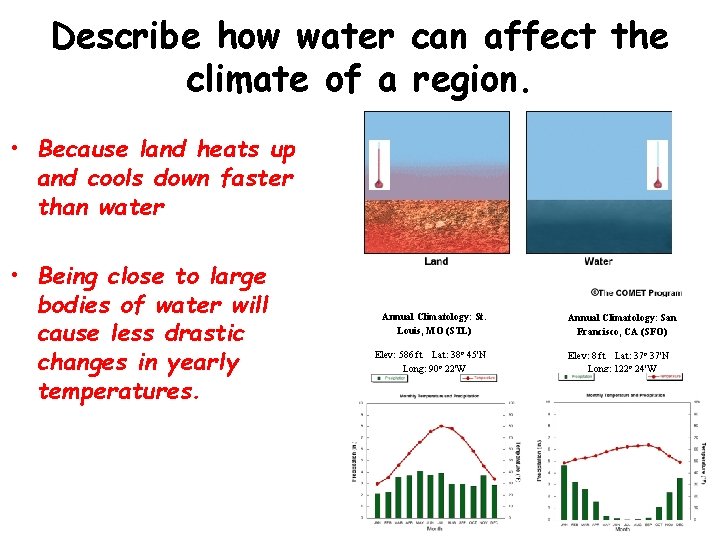
Describe how water can affect the climate of a region. • Because land heats up and cools down faster than water • Being close to large bodies of water will cause less drastic changes in yearly temperatures. Annual Climatology: St. Louis, MO (STL) Elev: 586 ft Lat: 38 o 45'N Long: 90 o 22'W Annual Climatology: San Francisco, CA (SFO) Elev: 8 ft Lat: 37 o 37'N Long: 122 o 24'W
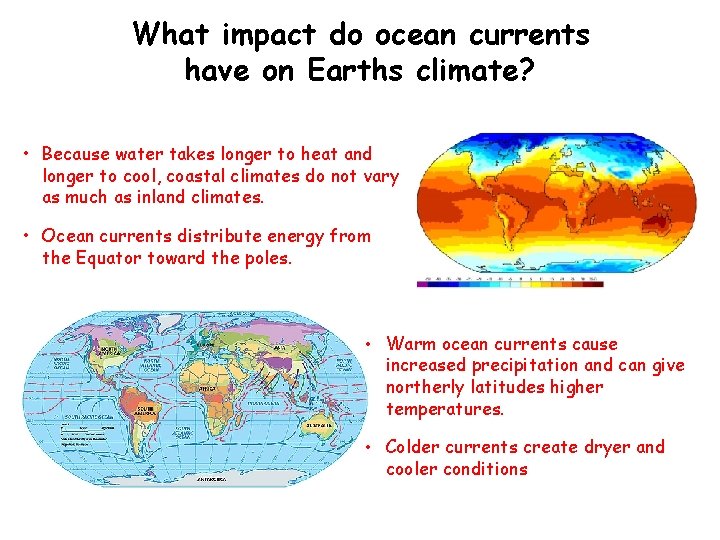
What impact do ocean currents have on Earths climate? • Because water takes longer to heat and longer to cool, coastal climates do not vary as much as inland climates. • Ocean currents distribute energy from the Equator toward the poles. • Warm ocean currents cause increased precipitation and can give northerly latitudes higher temperatures. • Colder currents create dryer and cooler conditions
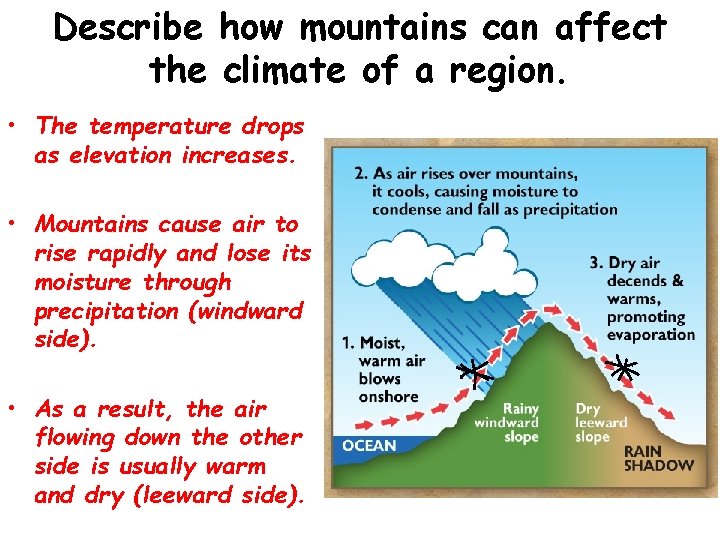
Describe how mountains can affect the climate of a region. • The temperature drops as elevation increases. • Mountains cause air to rise rapidly and lose its moisture through precipitation (windward side). • As a result, the air flowing down the other side is usually warm and dry (leeward side).
Climate Notes Part 2
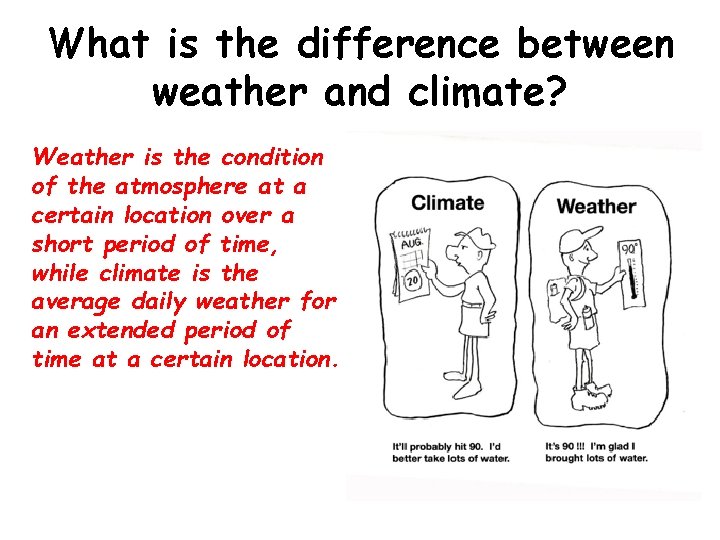
What is the difference between weather and climate? Weather is the condition of the atmosphere at a certain location over a short period of time, while climate is the average daily weather for an extended period of time at a certain location.
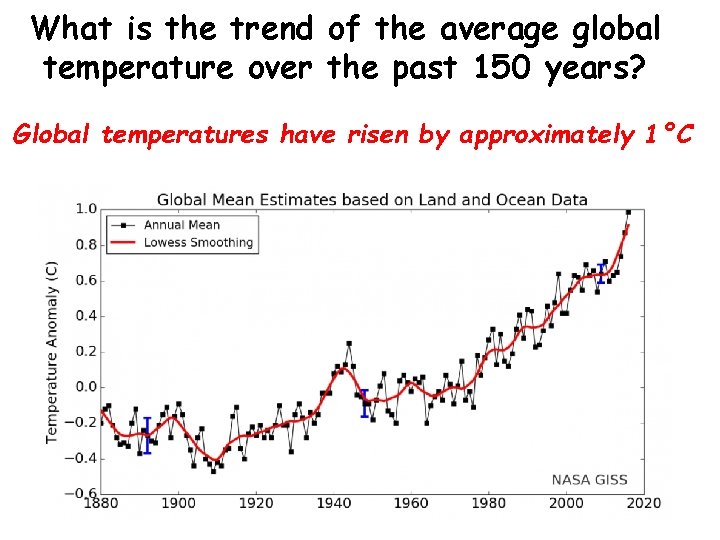
What is the trend of the average global temperature over the past 150 years? Global temperatures have risen by approximately 1°C
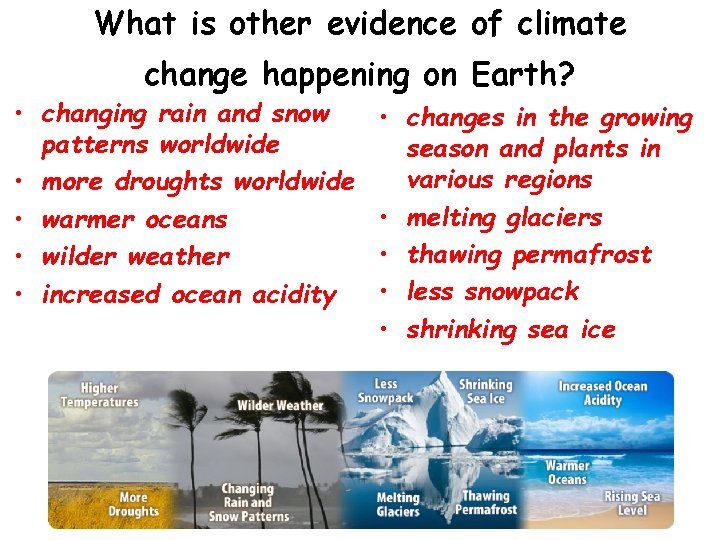
What is other evidence of climate change happening on Earth? • changing rain and snow patterns worldwide • more droughts worldwide • warmer oceans • wilder weather • increased ocean acidity • changes in the growing season and plants in various regions • melting glaciers • thawing permafrost • less snowpack • shrinking sea ice
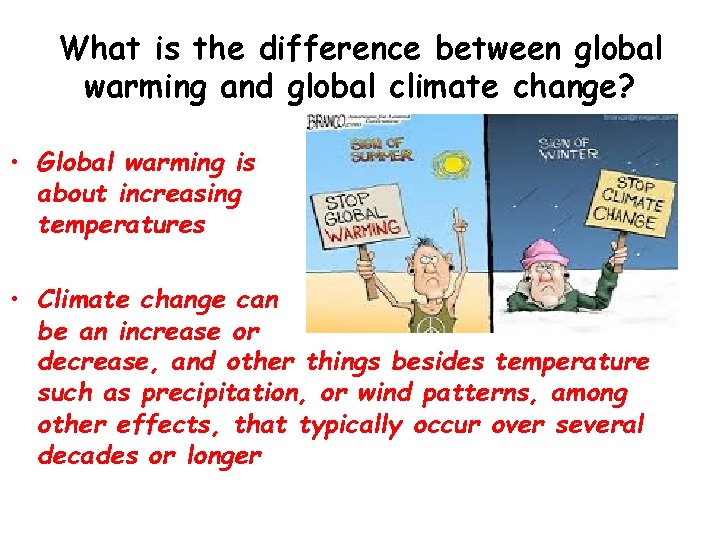
What is the difference between global warming and global climate change? • Global warming is about increasing temperatures • Climate change can be an increase or decrease, and other things besides temperature such as precipitation, or wind patterns, among other effects, that typically occur over several decades or longer