
Climate Factors that affect our Climate Weather The
- Slides: 19
Climate Factors that affect our Climate
Weather • The day-to-day characteristics of temperature, rain, cloud cover and wind • Why is it important to know/inquire about weather? - Short term plans (cottage, Canada’s Wonderland, camping)
Climate • Long-term patterns of weather – e. g. Cool/rainy summers – Mild & dry winters • Why is it important to know about the climate of an area? – Long term plans (travelling) – Determines where we live, what we wear, what we grow
Factors that affect climate in Canada • Canada extends for a great distance from north to south • Different elevations produce different climate conditions • Coastal regions have different climate from inland regions • Wind and pressure systems move weather from one part of the country to another
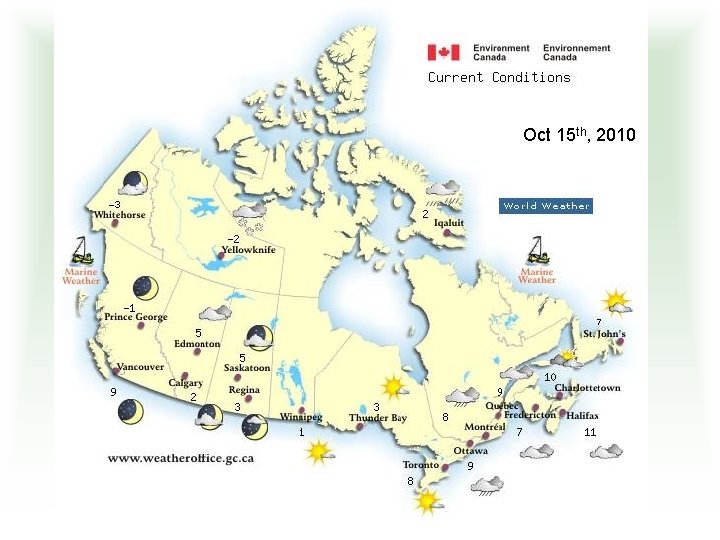
Oct 15 th, 2010
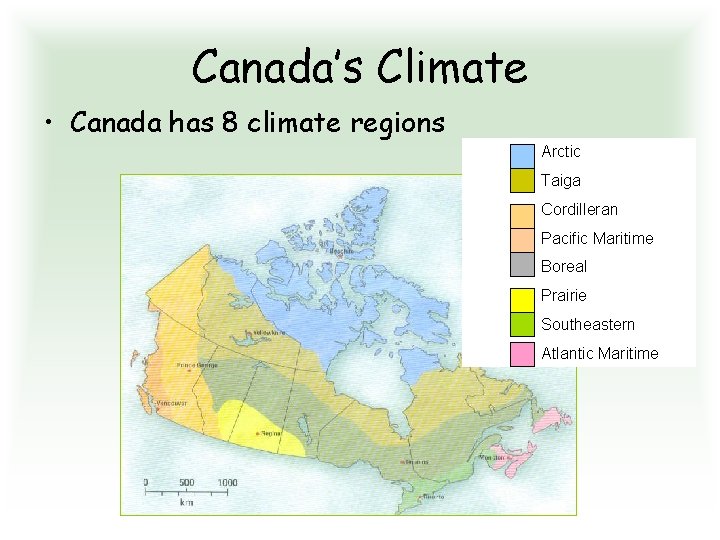
Canada’s Climate • Canada has 8 climate regions Arctic Taiga Cordilleran Pacific Maritime Boreal Prairie Southeastern Atlantic Maritime
LOWERN L = Latitude O = Ocean Currents W = Wind E = Elevation R = Relief N = Nearness to Water
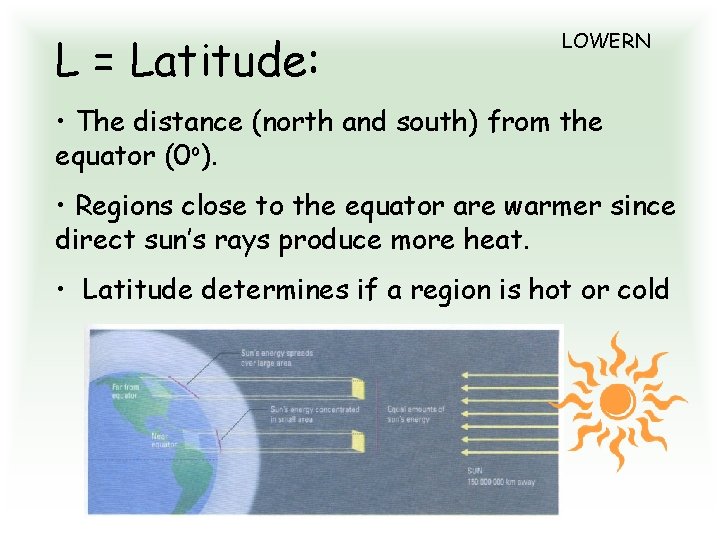
L = Latitude: LOWERN • The distance (north and south) from the equator (0 o). • Regions close to the equator are warmer since direct sun’s rays produce more heat. • Latitude determines if a region is hot or cold
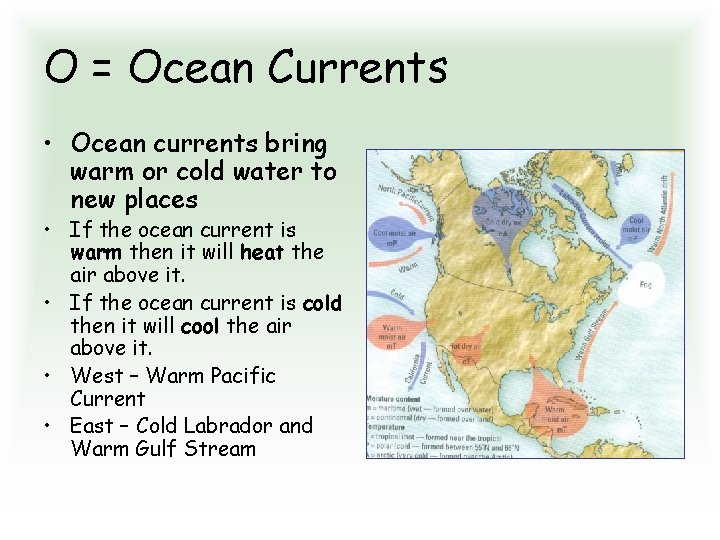
O = Ocean Currents • Ocean currents bring warm or cold water to new places • If the ocean current is warm then it will heat the air above it. • If the ocean current is cold then it will cool the air above it. • West – Warm Pacific Current • East – Cold Labrador and Warm Gulf Stream
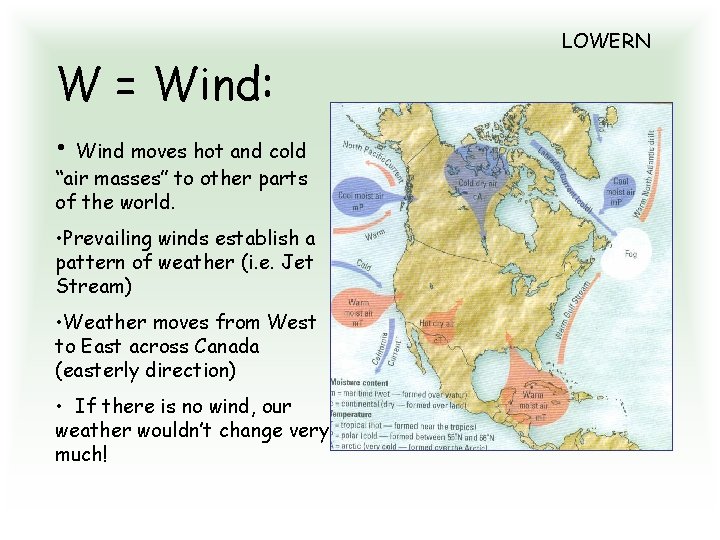
W = Wind: • Wind moves hot and cold “air masses” to other parts of the world. • Prevailing winds establish a pattern of weather (i. e. Jet Stream) • Weather moves from West to East across Canada (easterly direction) • If there is no wind, our weather wouldn’t change very much! LOWERN
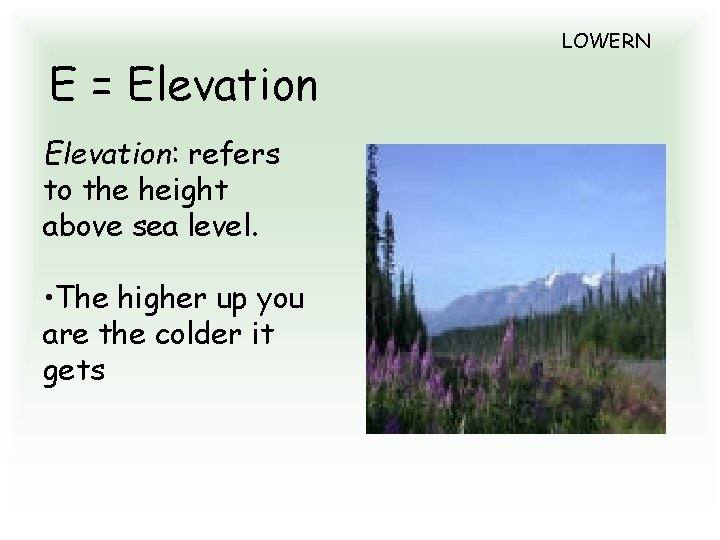
E = Elevation: refers to the height above sea level. • The higher up you are the colder it gets LOWERN
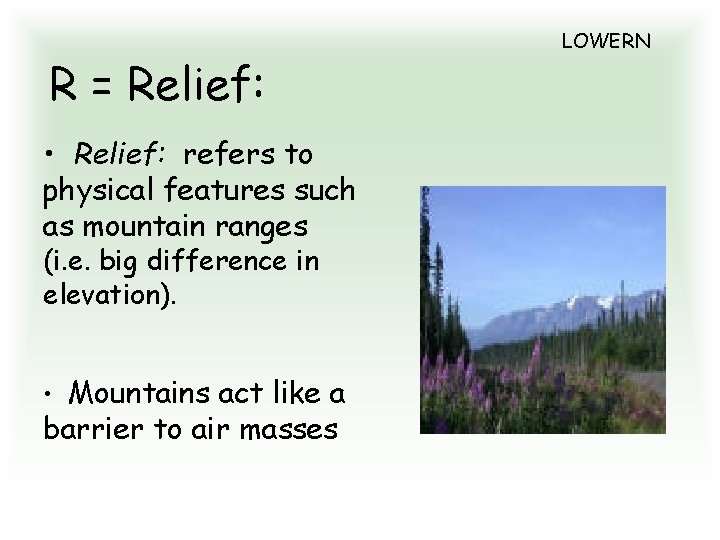
R = Relief: • Relief: refers to physical features such as mountain ranges (i. e. big difference in elevation). • Mountains act like a barrier to air masses LOWERN
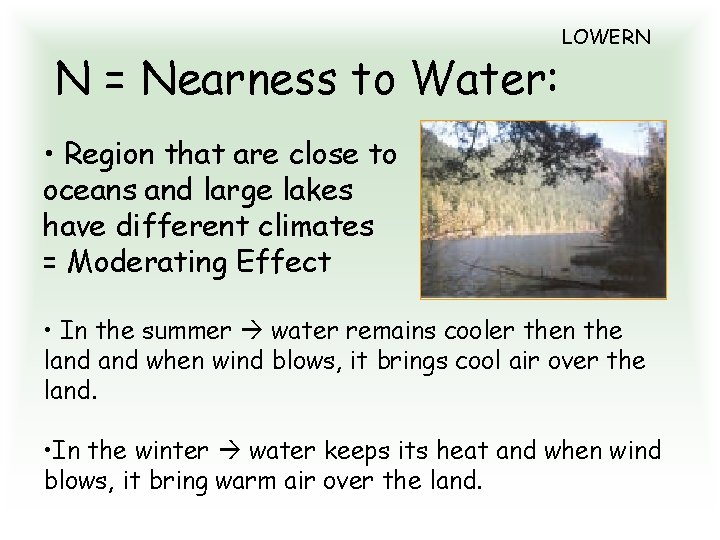
N = Nearness to Water: LOWERN • Region that are close to oceans and large lakes have different climates = Moderating Effect • In the summer water remains cooler then the land when wind blows, it brings cool air over the land. • In the winter water keeps its heat and when wind blows, it bring warm air over the land.
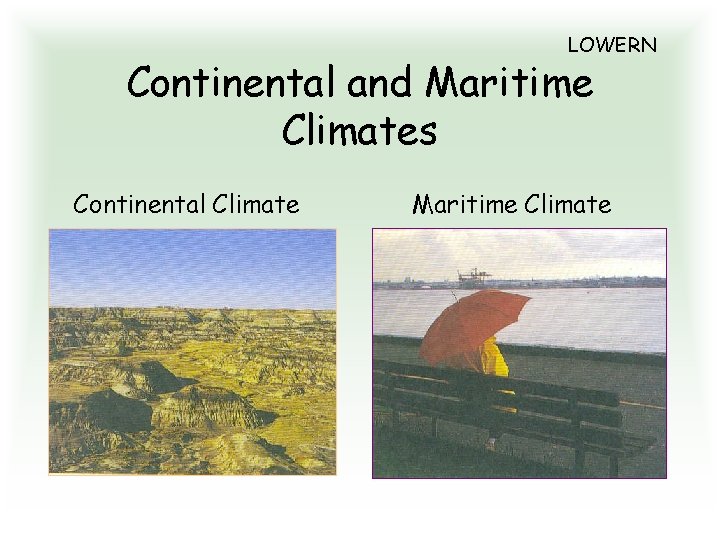
LOWERN Continental and Maritime Climates Continental Climate Maritime Climate
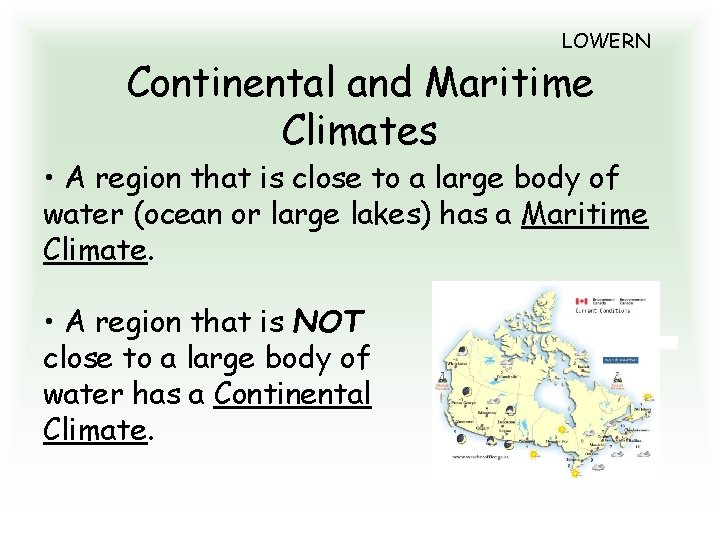
LOWERN Continental and Maritime Climates • A region that is close to a large body of water (ocean or large lakes) has a Maritime Climate. • A region that is NOT close to a large body of water has a Continental Climate.
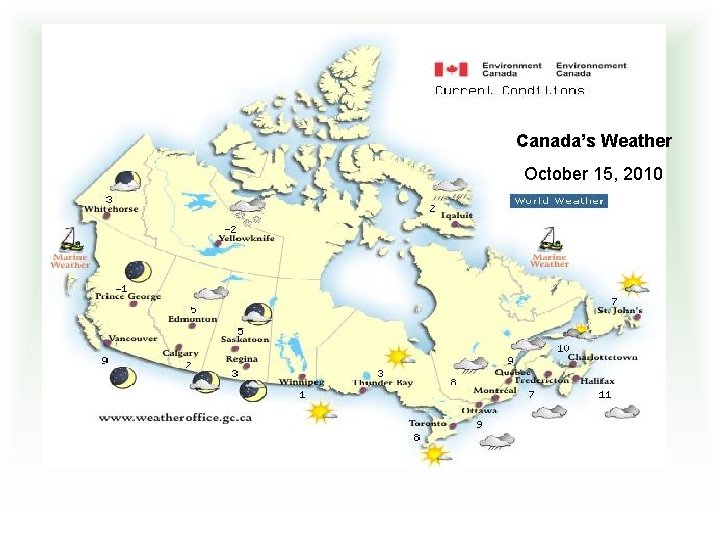
Canada’s Weather October 15, 2010
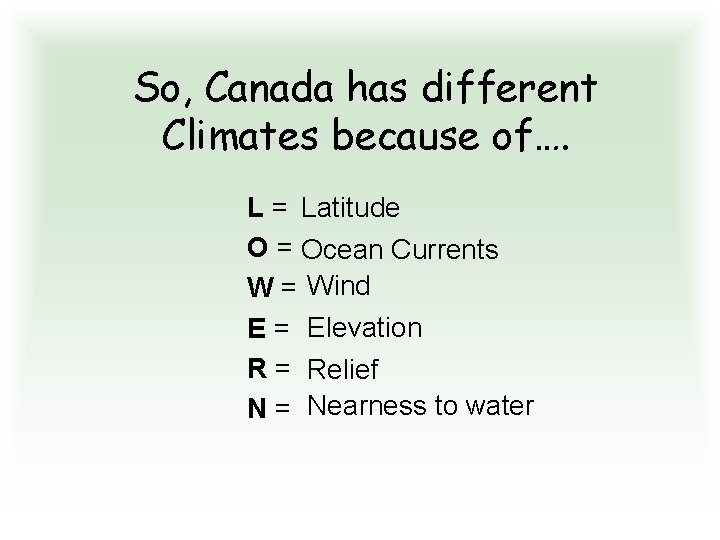
So, Canada has different Climates because of…. L = Latitude O = Ocean Currents W = Wind E = Elevation R = Relief N = Nearness to water
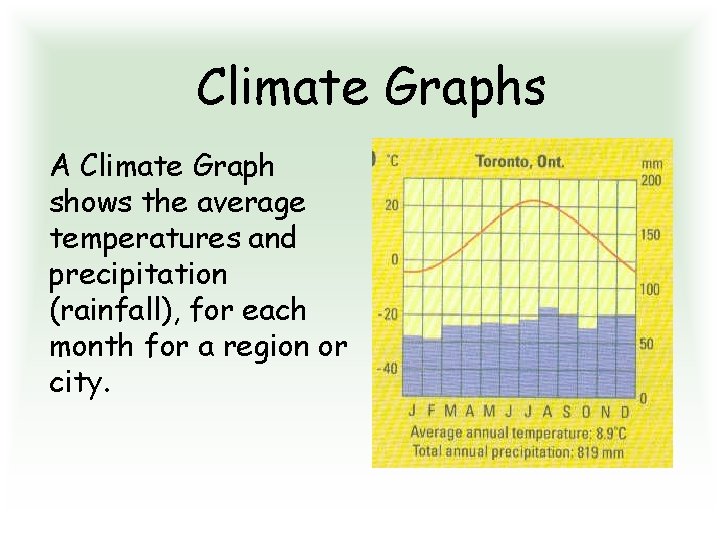
Climate Graphs A Climate Graph shows the average temperatures and precipitation (rainfall), for each month for a region or city.
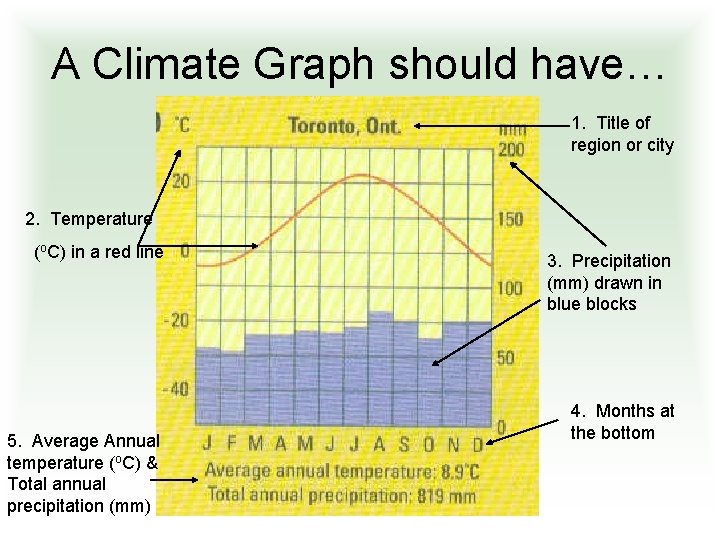
A Climate Graph should have… 1. Title of region or city 2. Temperature (o. C) in a red line 5. Average Annual temperature (o. C) & Total annual precipitation (mm) 3. Precipitation (mm) drawn in blue blocks 4. Months at the bottom