
CLIMATE CHANGE Whats all the fuss about anyway
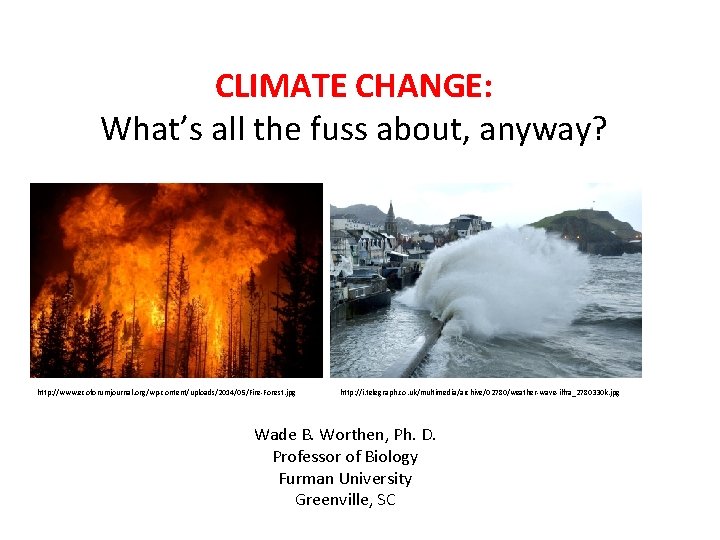
CLIMATE CHANGE: What’s all the fuss about, anyway? http: //www. ecoforumjournal. org/wp-content/uploads/2014/05/Fire-Forest. jpg http: //i. telegraph. co. uk/multimedia/archive/02780/weather-wave-ilfra_2780330 k. jpg Wade B. Worthen, Ph. D. Professor of Biology Furman University Greenville, SC
OVERVIEW: What causes climatic conditions? Why does climate change? Does human activity affect climate change? What are the consequences of climate change? What is all the fuss about?

Climate refers to the typical atmospheric conditions (temperature and precipitation) –or variation in conditions—over a long period of time – years or decades
What causes climatic conditions? I. SOLAR RADIATION
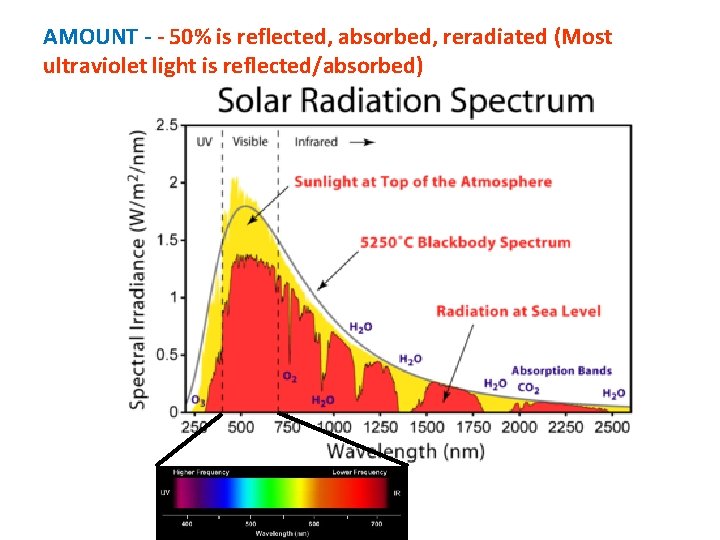
AMOUNT - - 50% is reflected, absorbed, reradiated (Most ultraviolet light is reflected/absorbed)
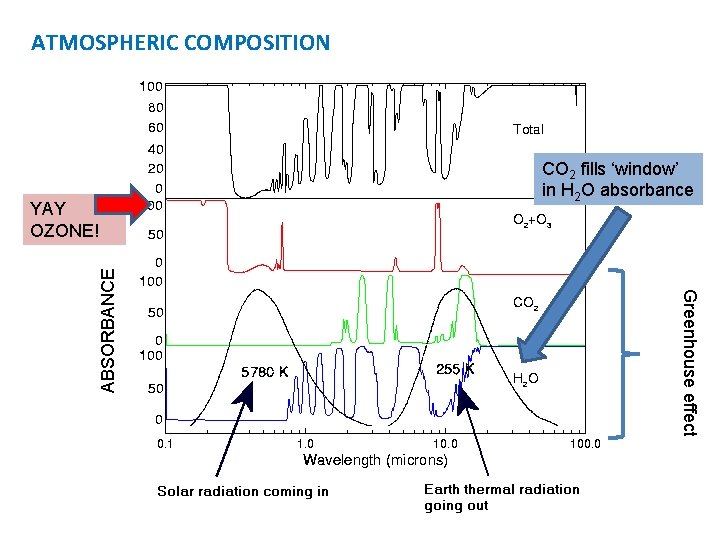
ATMOSPHERIC COMPOSITION Greenhouse effect ABSORBANCE YAY OZONE! CO 2 fills ‘window’ in H 2 O absorbance
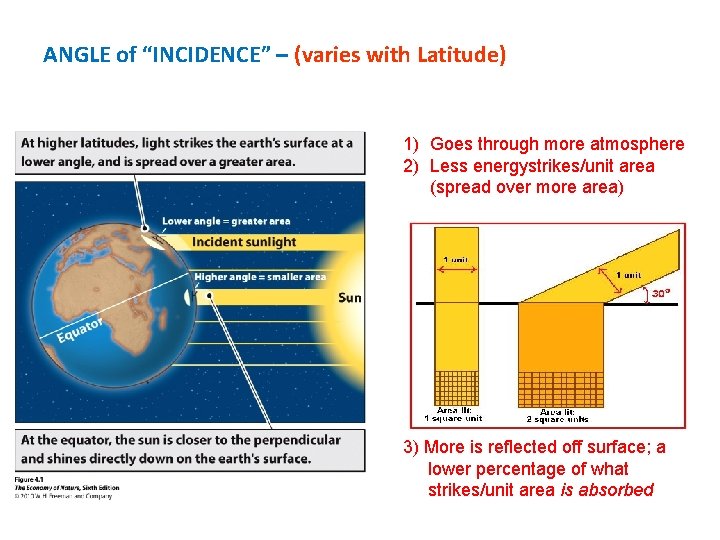
ANGLE of “INCIDENCE” – (varies with Latitude) 1) Goes through more atmosphere 2) Less energystrikes/unit area (spread over more area) 3) More is reflected off surface; a lower percentage of what strikes/unit area is absorbed
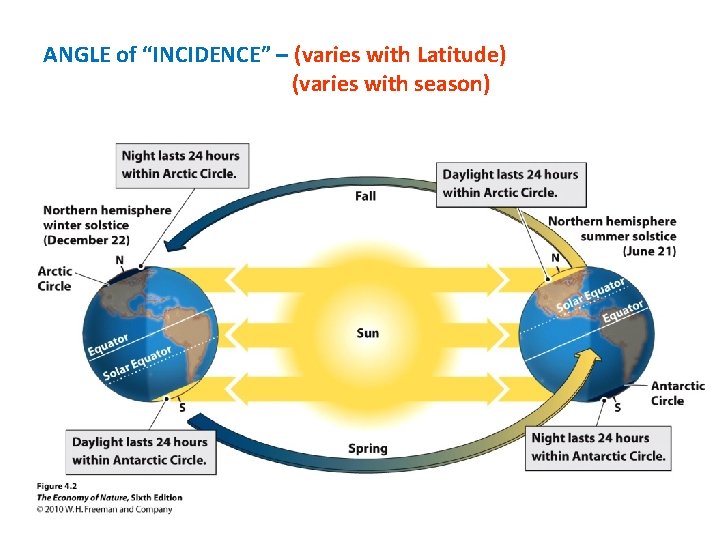
ANGLE of “INCIDENCE” – (varies with Latitude) (varies with season)
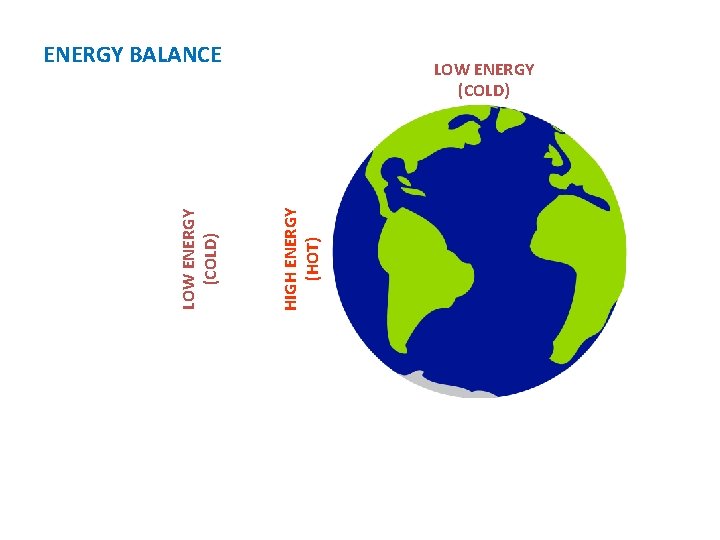
HIGH ENERGY (HOT) LOW ENERGY (COLD) ENERGY BALANCE LOW ENERGY (COLD)
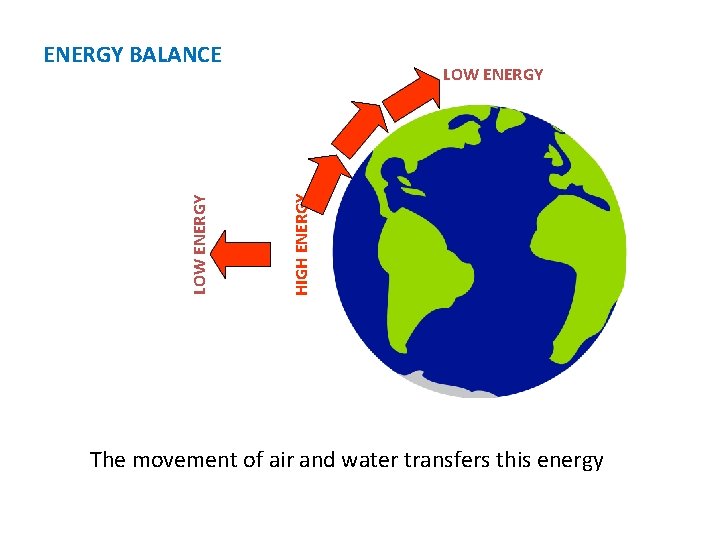
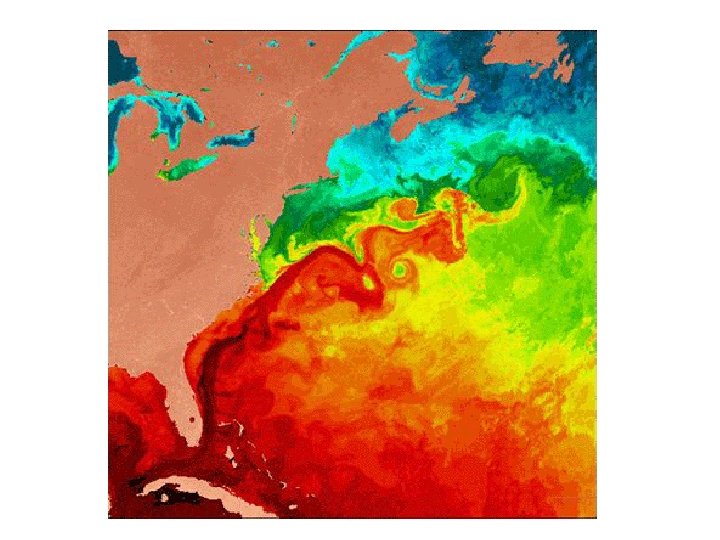
LOW ENERGY HIGH ENERGY LOW ENERGY BALANCE The movement of air and water transfers this energy
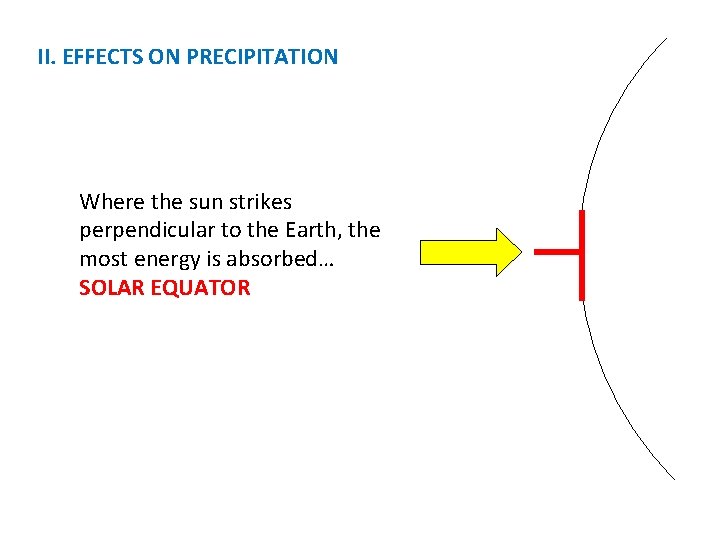
II. EFFECTS ON PRECIPITATION Where the sun strikes perpendicular to the Earth, the most energy is absorbed… SOLAR EQUATOR
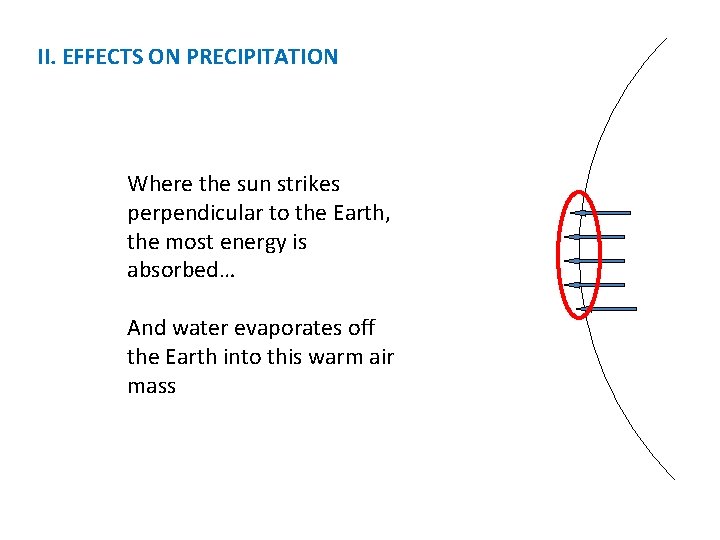
II. EFFECTS ON PRECIPITATION Where the sun strikes perpendicular to the Earth, the most energy is absorbed… And water evaporates off the Earth into this warm air mass
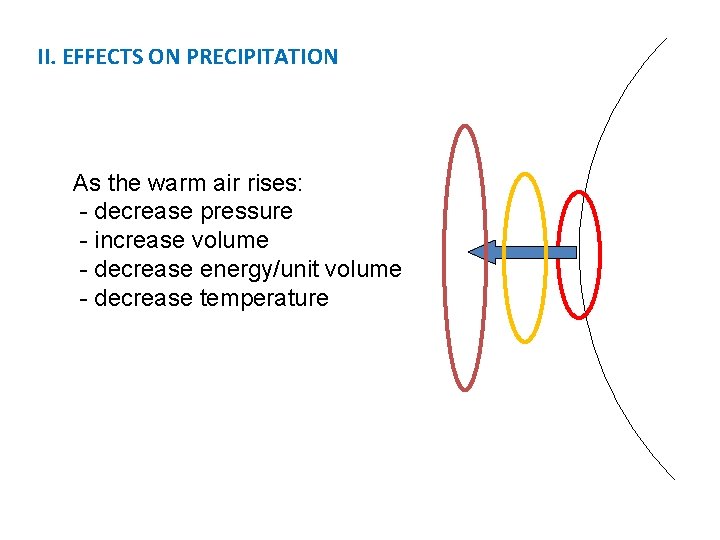
II. EFFECTS ON PRECIPITATION As the warm air rises: - decrease pressure - increase volume - decrease energy/unit volume - decrease temperature
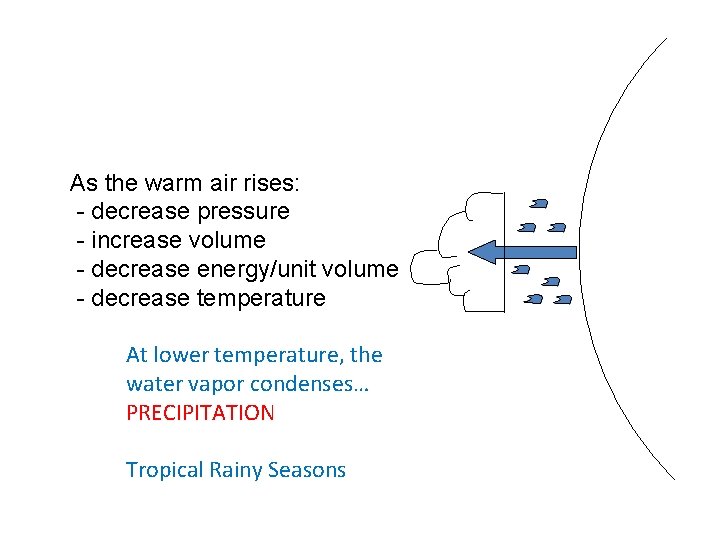
As the warm air rises: - decrease pressure - increase volume - decrease energy/unit volume - decrease temperature At lower temperature, the water vapor condenses… PRECIPITATION Tropical Rainy Seasons
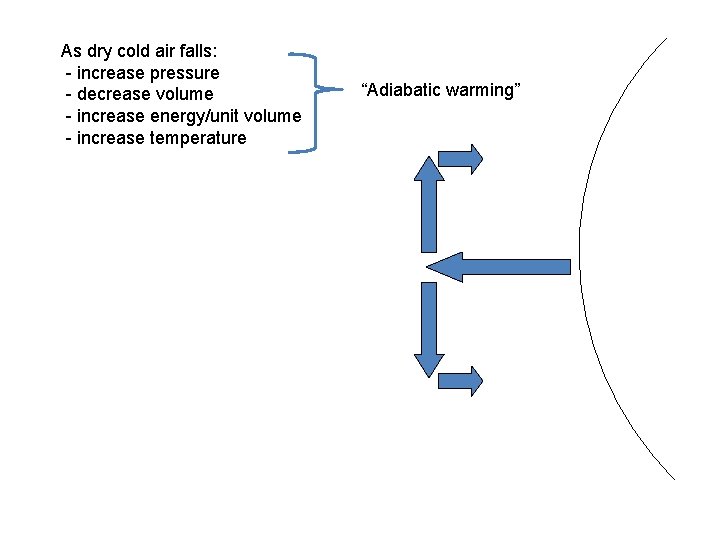
As dry cold air falls: - increase pressure - decrease volume - increase energy/unit volume - increase temperature “Adiabatic warming”
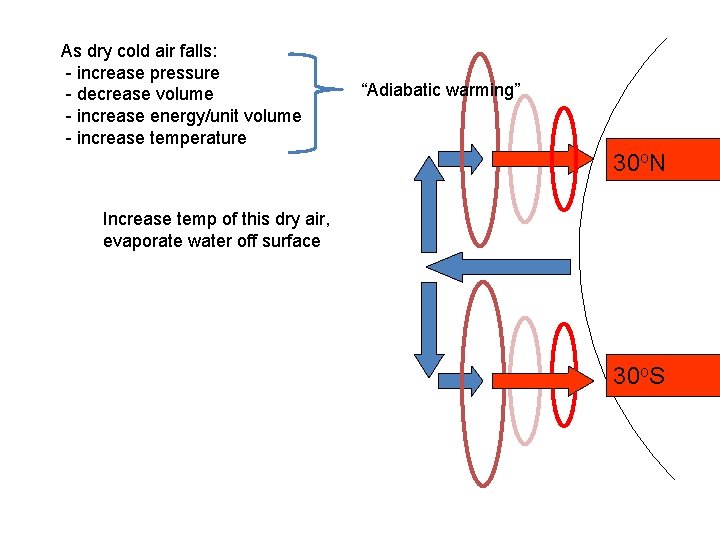
As dry cold air falls: - increase pressure - decrease volume - increase energy/unit volume - increase temperature “Adiabatic warming” 30 o. N Increase temp of this dry air, evaporate water off surface 30 o. S
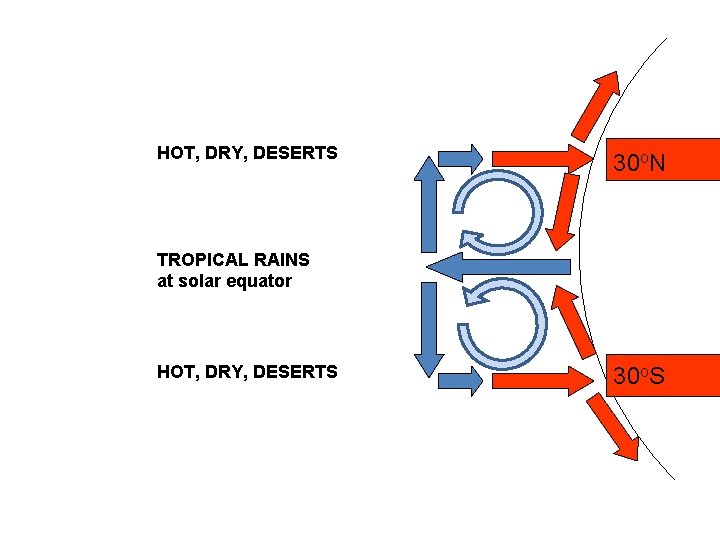
HOT, DRY, DESERTS 30 o. N TROPICAL RAINS at solar equator HOT, DRY, DESERTS 30 o. S
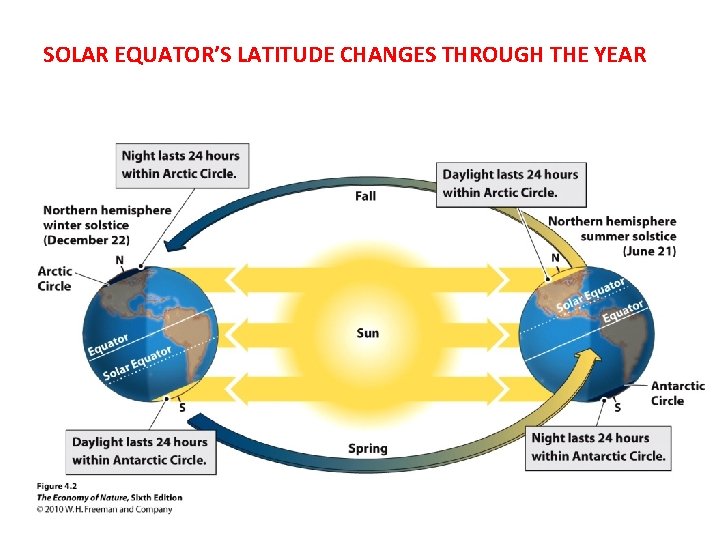
SOLAR EQUATOR’S LATITUDE CHANGES THROUGH THE YEAR
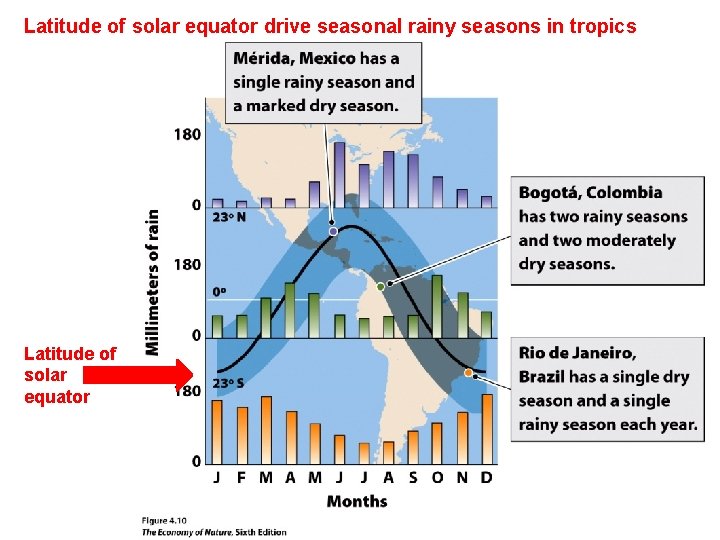
Latitude of solar equator drive seasonal rainy seasons in tropics Latitude of solar equator
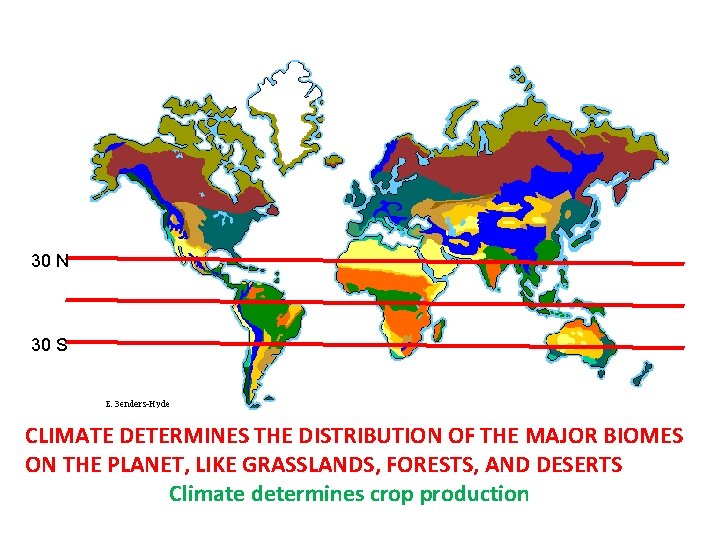
30 N 30 S CLIMATE DETERMINES THE DISTRIBUTION OF THE MAJOR BIOMES ON THE PLANET, LIKE GRASSLANDS, FORESTS, AND DESERTS Climate determines crop production
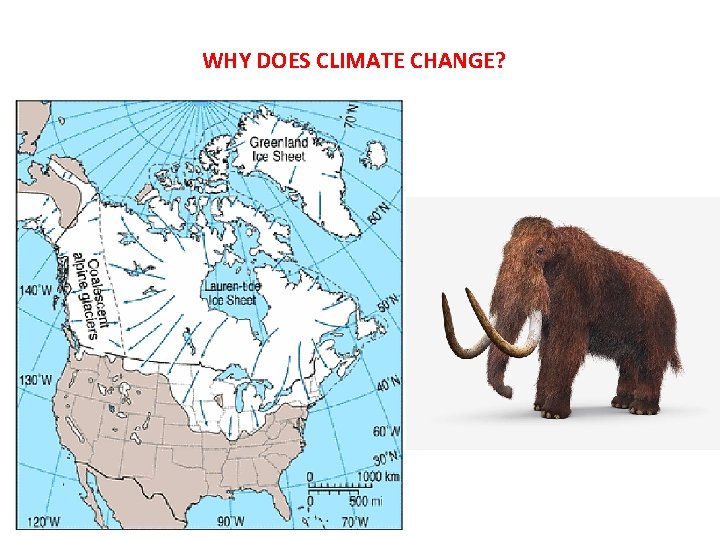
WHY DOES CLIMATE CHANGE?
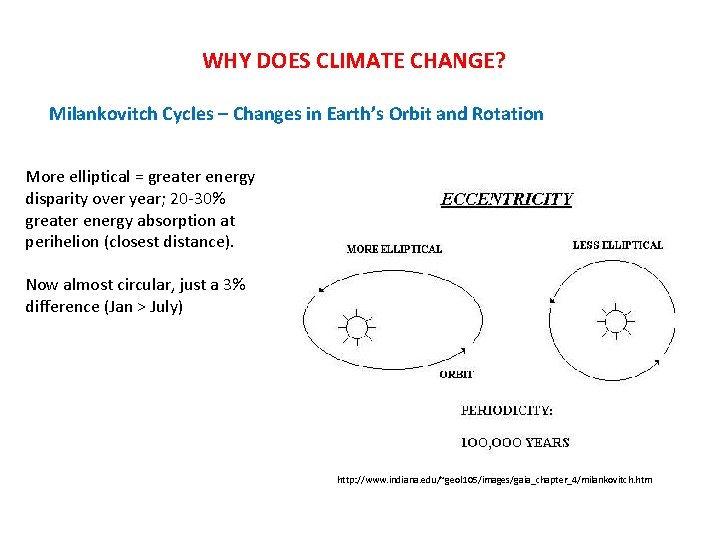
WHY DOES CLIMATE CHANGE? Milankovitch Cycles – Changes in Earth’s Orbit and Rotation More elliptical = greater energy disparity over year; 20 -30% greater energy absorption at perihelion (closest distance). Now almost circular, just a 3% difference (Jan > July) http: //www. indiana. edu/~geol 105/images/gaia_chapter_4/milankovitch. htm
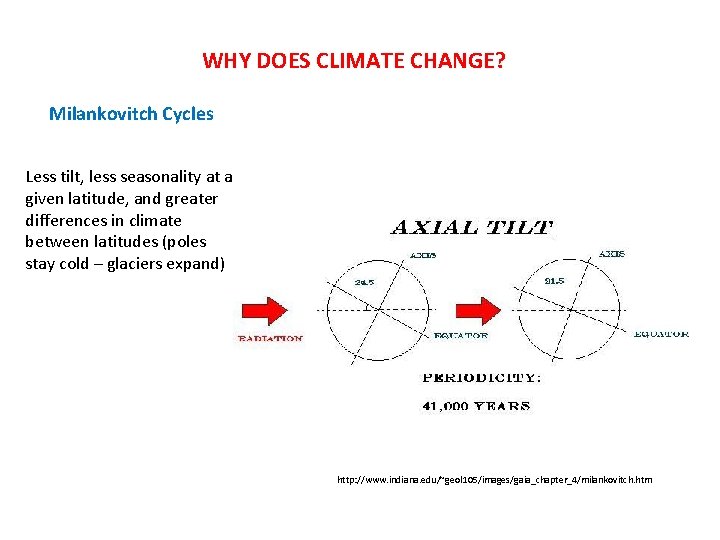
WHY DOES CLIMATE CHANGE? Milankovitch Cycles Less tilt, less seasonality at a given latitude, and greater differences in climate between latitudes (poles stay cold – glaciers expand) http: //www. indiana. edu/~geol 105/images/gaia_chapter_4/milankovitch. htm
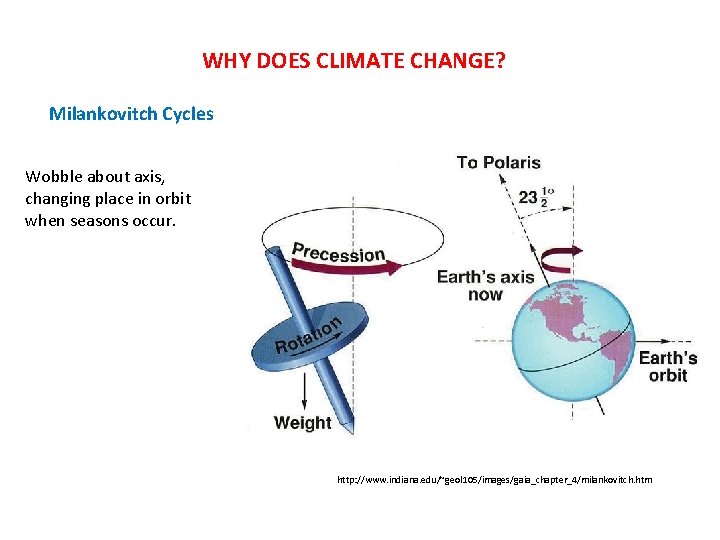
WHY DOES CLIMATE CHANGE? Milankovitch Cycles Wobble about axis, changing place in orbit when seasons occur. http: //www. indiana. edu/~geol 105/images/gaia_chapter_4/milankovitch. htm
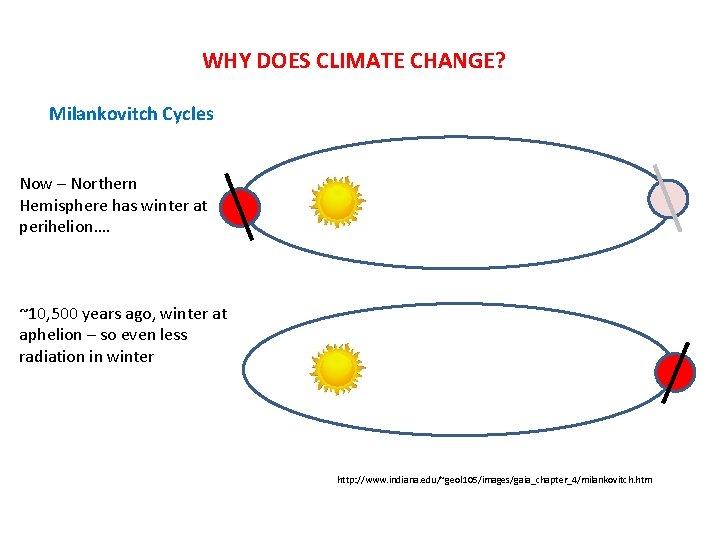
WHY DOES CLIMATE CHANGE? Milankovitch Cycles Now – Northern Hemisphere has winter at perihelion…. ~10, 500 years ago, winter at aphelion – so even less radiation in winter http: //www. indiana. edu/~geol 105/images/gaia_chapter_4/milankovitch. htm
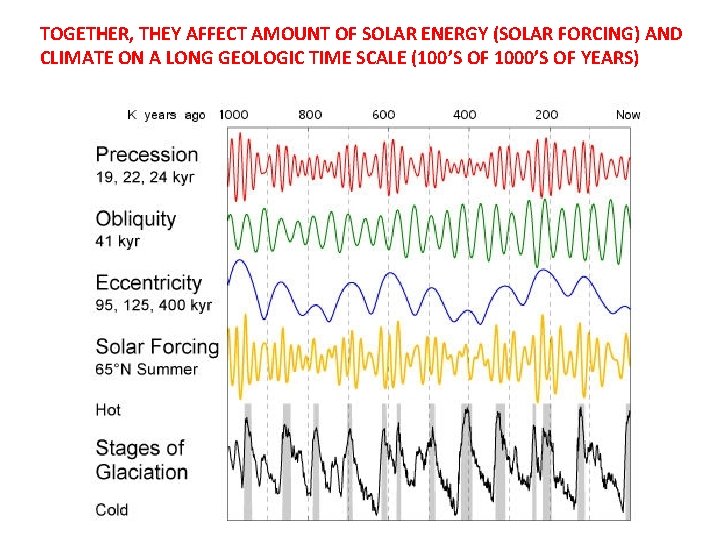
TOGETHER, THEY AFFECT AMOUNT OF SOLAR ENERGY (SOLAR FORCING) AND CLIMATE ON A LONG GEOLOGIC TIME SCALE (100’S OF 1000’S OF YEARS)
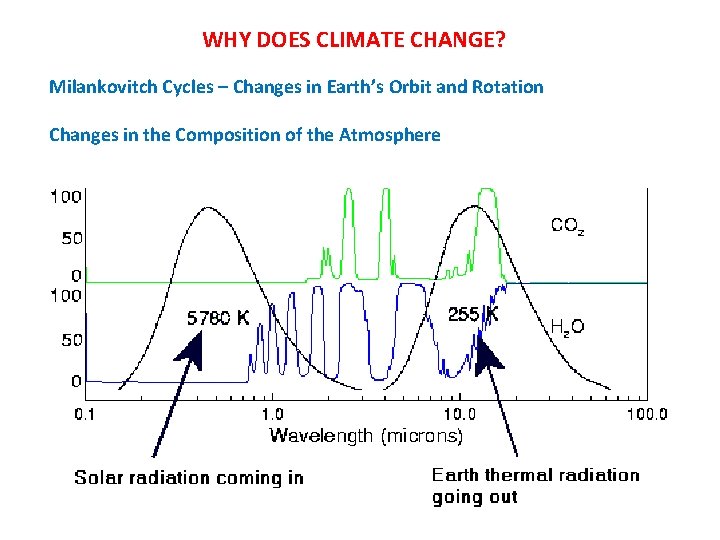
WHY DOES CLIMATE CHANGE? Milankovitch Cycles – Changes in Earth’s Orbit and Rotation Changes in the Composition of the Atmosphere
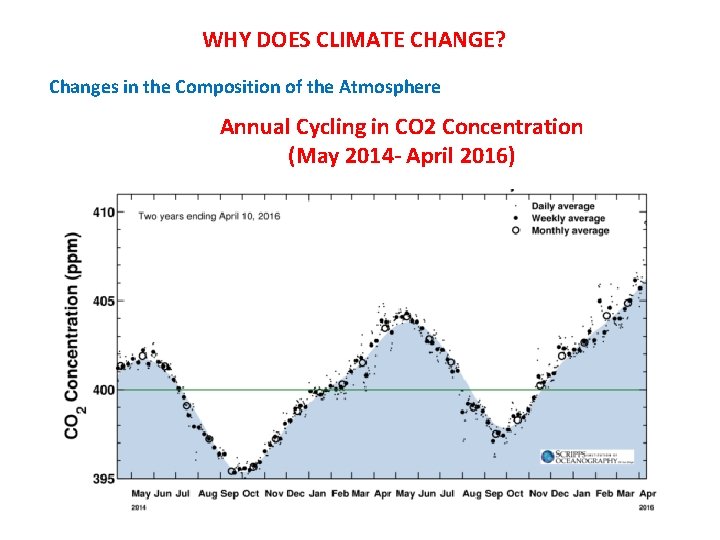
WHY DOES CLIMATE CHANGE? Changes in the Composition of the Atmosphere Annual Cycling in CO 2 Concentration (May 2014 - April 2016)
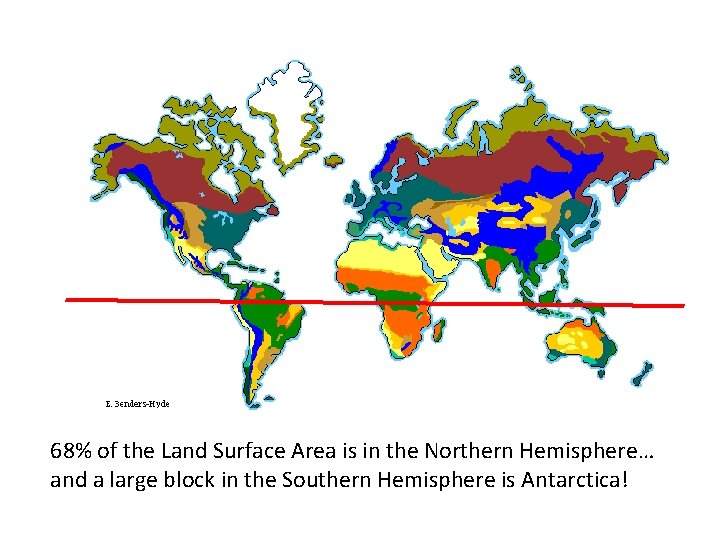
68% of the Land Surface Area is in the Northern Hemisphere… and a large block in the Southern Hemisphere is Antarctica!
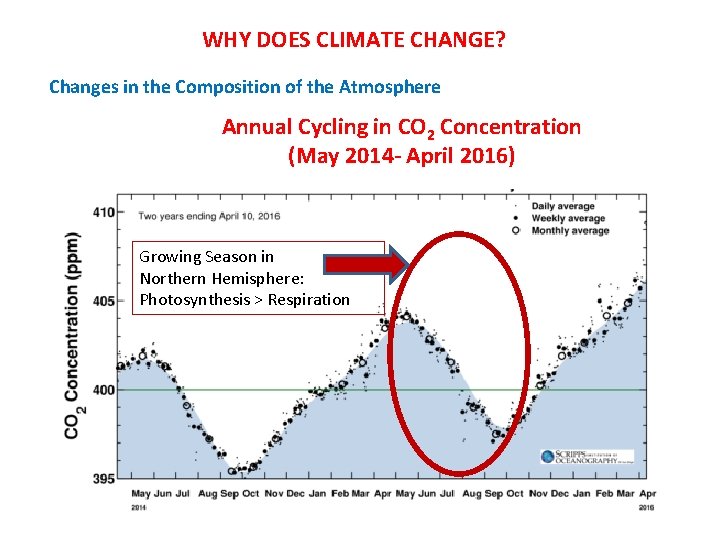
WHY DOES CLIMATE CHANGE? Changes in the Composition of the Atmosphere Annual Cycling in CO 2 Concentration (May 2014 - April 2016) Growing Season in Northern Hemisphere: Photosynthesis > Respiration
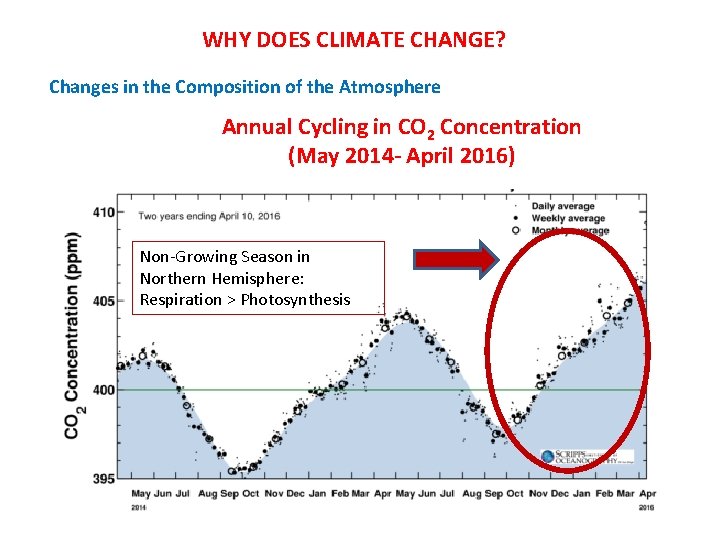
WHY DOES CLIMATE CHANGE? Changes in the Composition of the Atmosphere Annual Cycling in CO 2 Concentration (May 2014 - April 2016) Non-Growing Season in Northern Hemisphere: Respiration > Photosynthesis
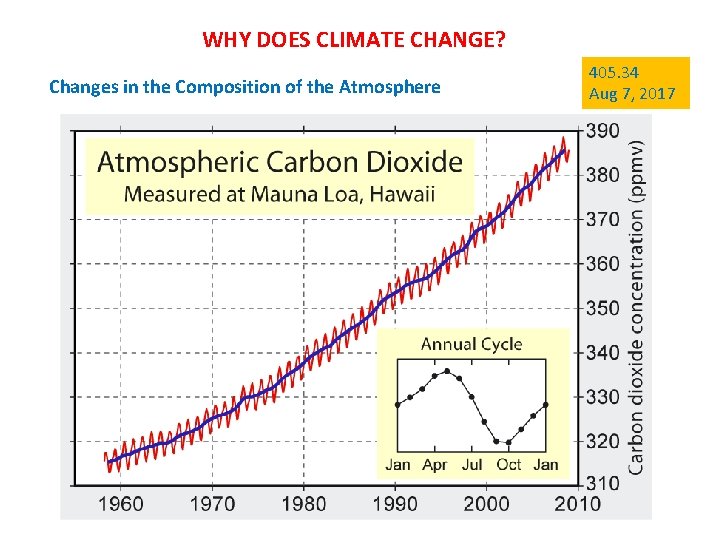
WHY DOES CLIMATE CHANGE? Changes in the Composition of the Atmosphere 405. 34 Aug 7, 2017
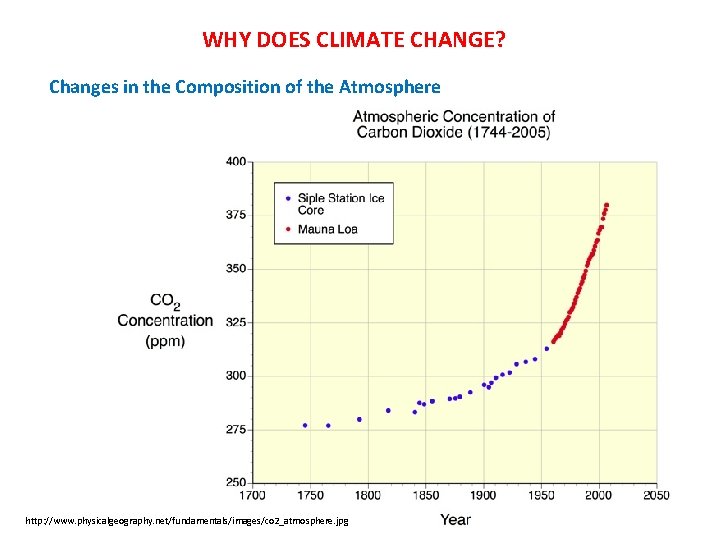
WHY DOES CLIMATE CHANGE? Changes in the Composition of the Atmosphere http: //www. physicalgeography. net/fundamentals/images/co 2_atmosphere. jpg
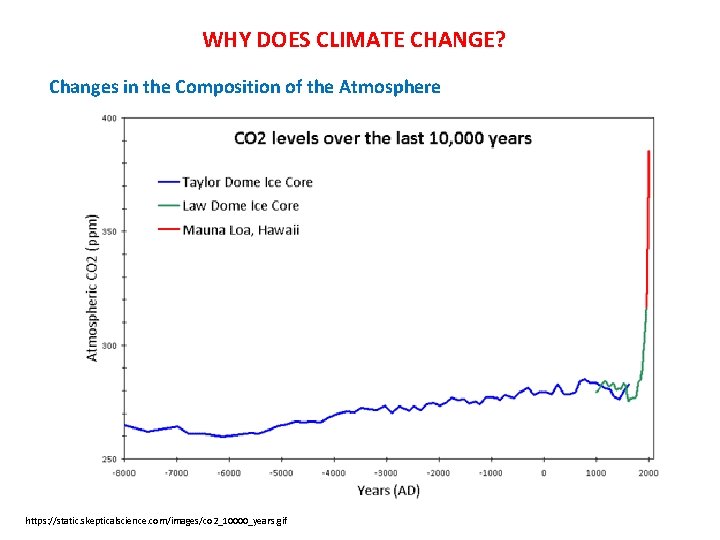
WHY DOES CLIMATE CHANGE? Changes in the Composition of the Atmosphere https: //static. skepticalscience. com/images/co 2_10000_years. gif
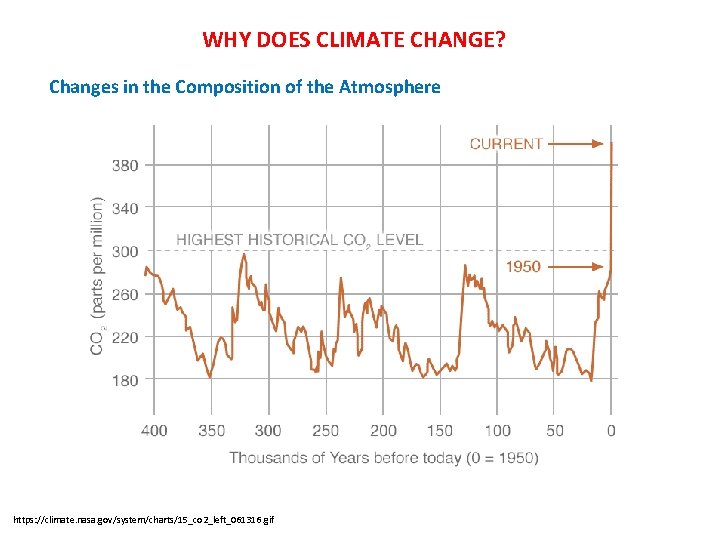
WHY DOES CLIMATE CHANGE? Changes in the Composition of the Atmosphere https: //climate. nasa. gov/system/charts/15_co 2_left_061316. gif
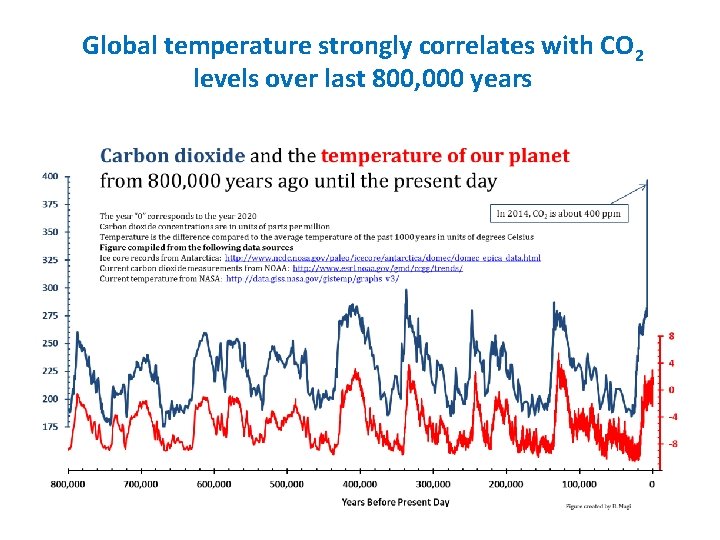
Global temperature strongly correlates with CO 2 levels over last 800, 000 years
Does human activity affect climate change?
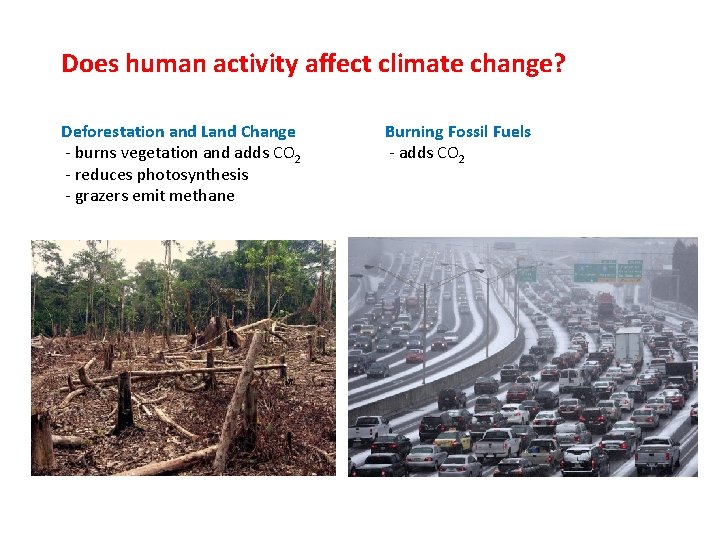
Does human activity affect climate change? Deforestation and Land Change - burns vegetation and adds CO 2 - reduces photosynthesis - grazers emit methane Burning Fossil Fuels - adds CO 2
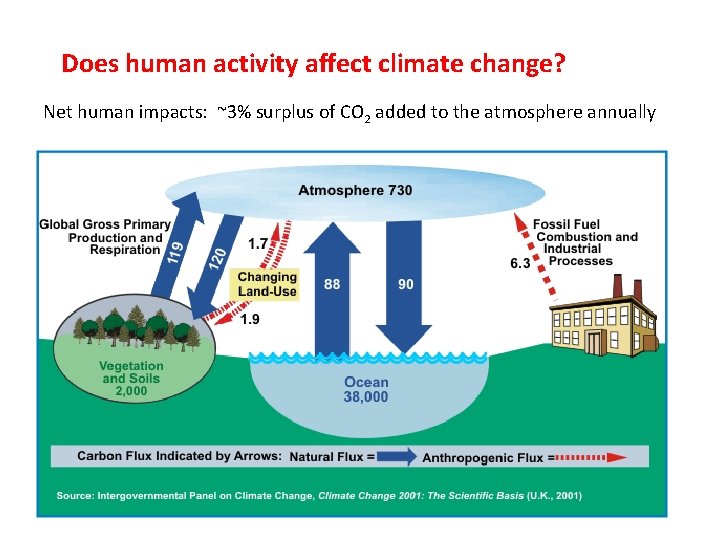
Does human activity affect climate change? Net human impacts: ~3% surplus of CO 2 added to the atmosphere annually
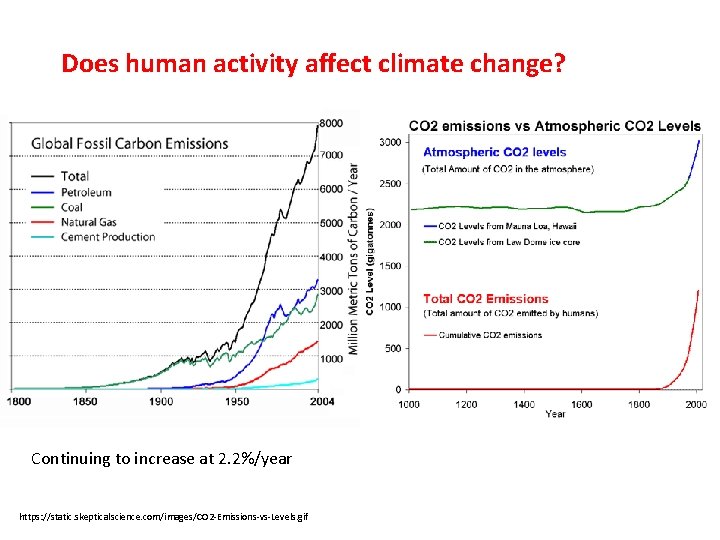
Does human activity affect climate change? Continuing to increase at 2. 2%/year https: //static. skepticalscience. com/images/CO 2 -Emissions-vs-Levels. gif
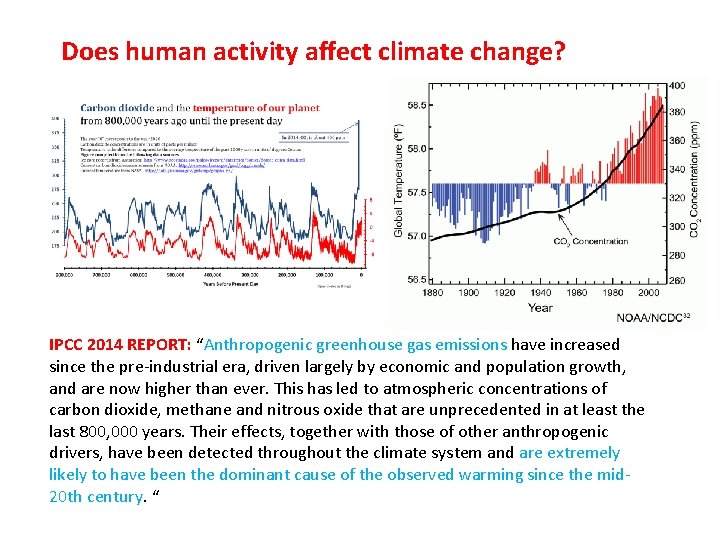
Does human activity affect climate change? IPCC 2014 REPORT: “Anthropogenic greenhouse gas emissions have increased since the pre-industrial era, driven largely by economic and population growth, and are now higher than ever. This has led to atmospheric concentrations of carbon dioxide, methane and nitrous oxide that are unprecedented in at least the last 800, 000 years. Their effects, together with those of other anthropogenic drivers, have been detected throughout the climate system and are extremely likely to have been the dominant cause of the observed warming since the mid 20 th century. “
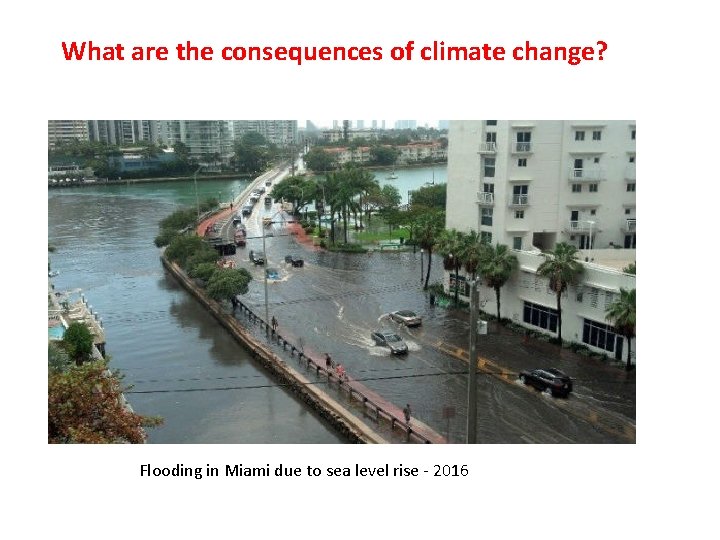
What are the consequences of climate change? Flooding in Miami due to sea level rise - 2016
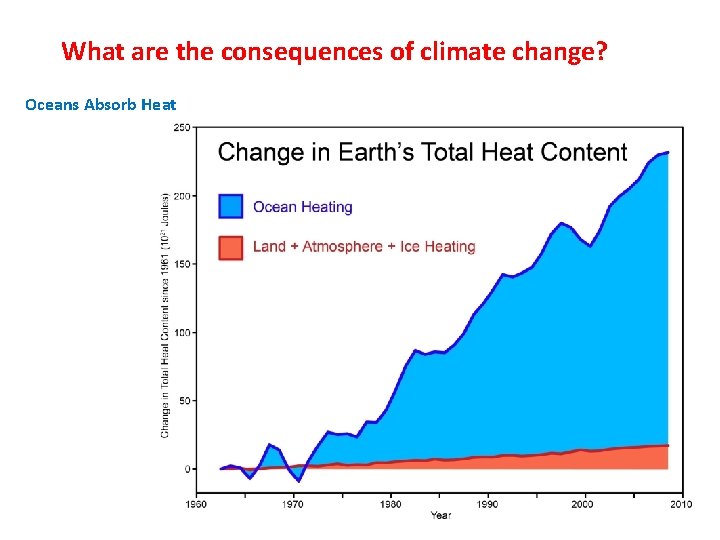
What are the consequences of climate change? Oceans Absorb Heat
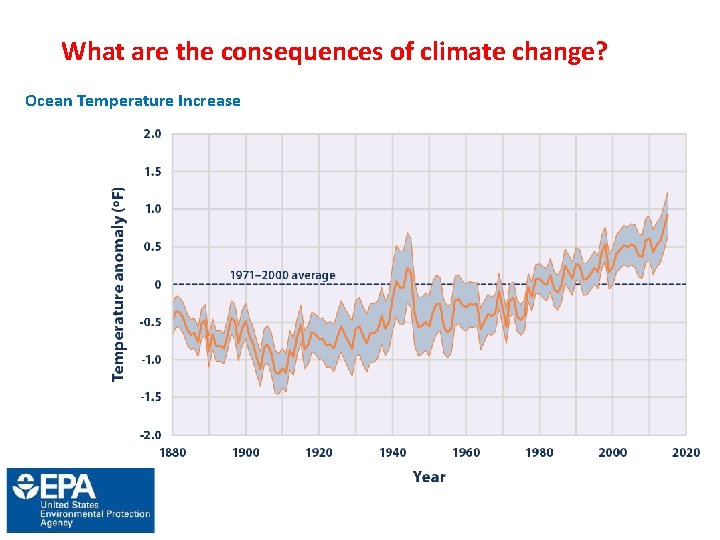
What are the consequences of climate change? Ocean Temperature Increase
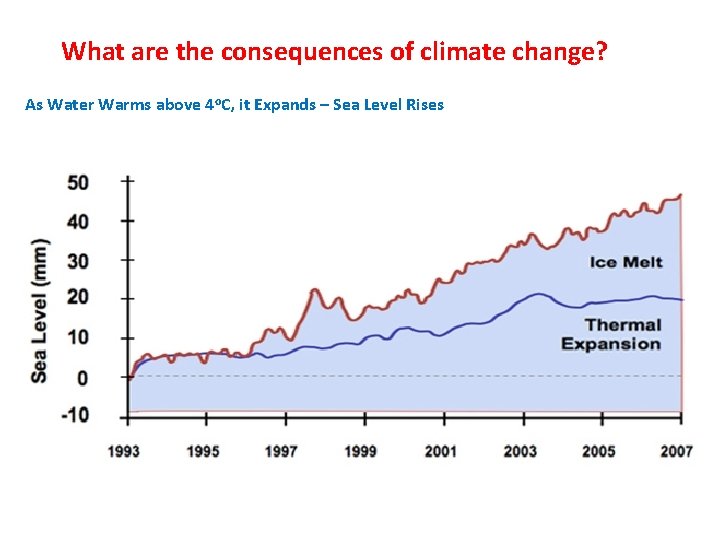
What are the consequences of climate change? As Water Warms above 4 o. C, it Expands – Sea Level Rises
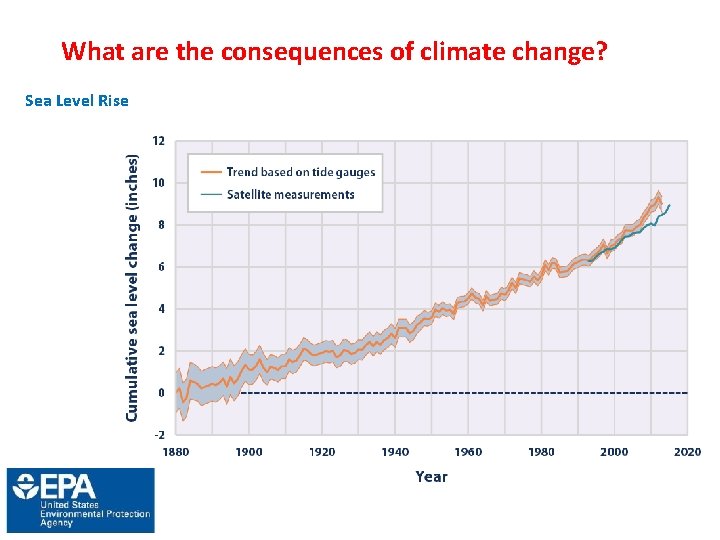
What are the consequences of climate change? Sea Level Rise
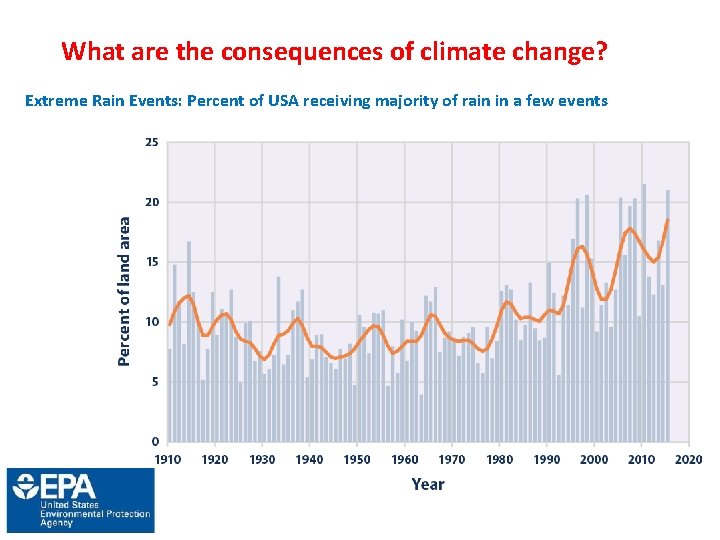
What are the consequences of climate change? Extreme Rain Events: Percent of USA receiving majority of rain in a few events
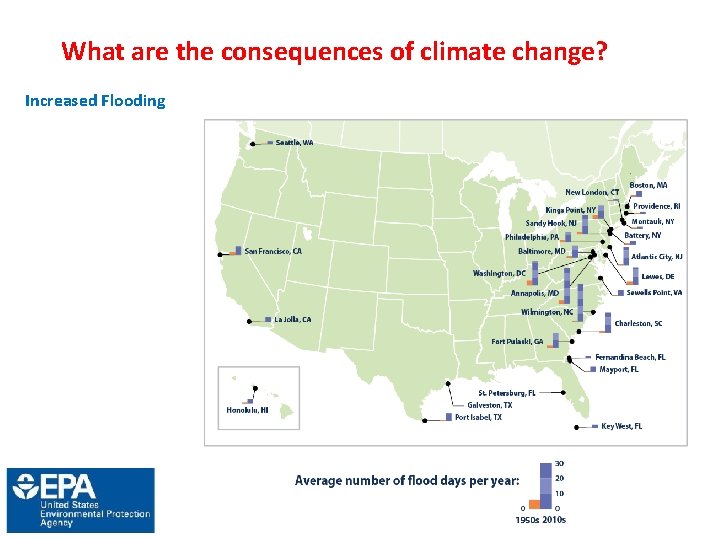
What are the consequences of climate change? Increased Flooding
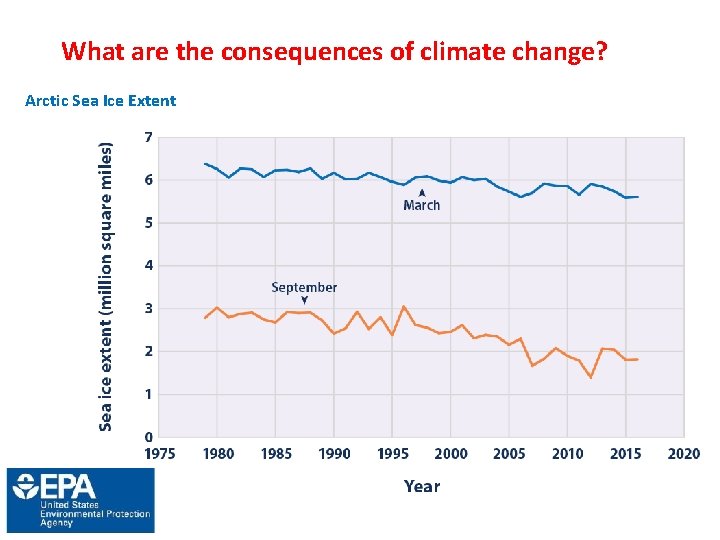
What are the consequences of climate change? Arctic Sea Ice Extent
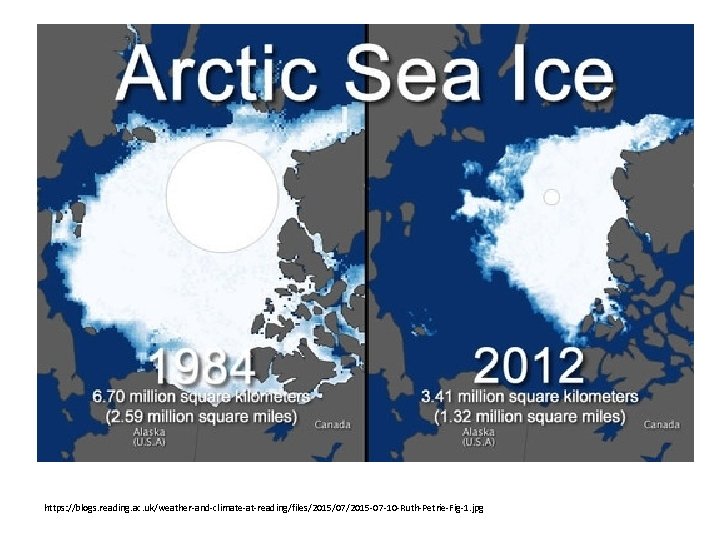
https: //blogs. reading. ac. uk/weather-and-climate-at-reading/files/2015/07/2015 -07 -10 -Ruth-Petrie-Fig-1. jpg
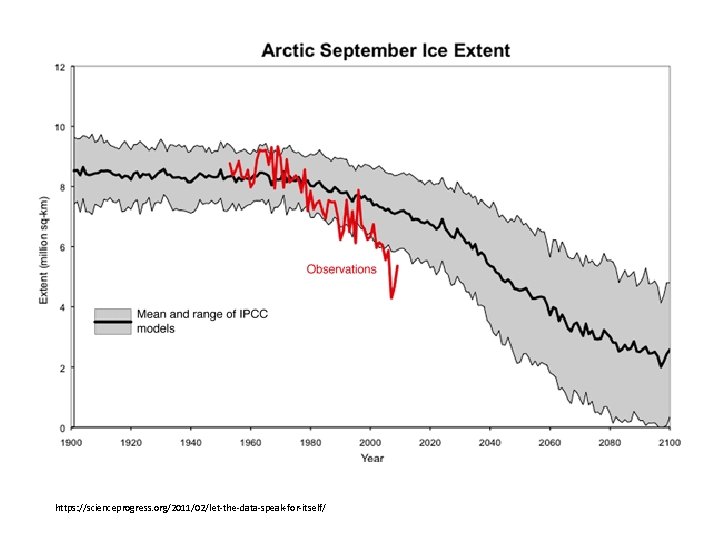
https: //scienceprogress. org/2011/02/let-the-data-speak-for-itself/
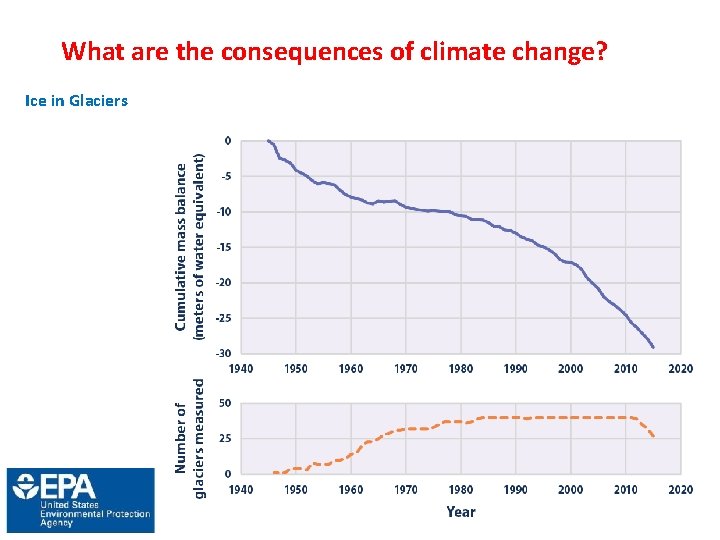
What are the consequences of climate change? Ice in Glaciers
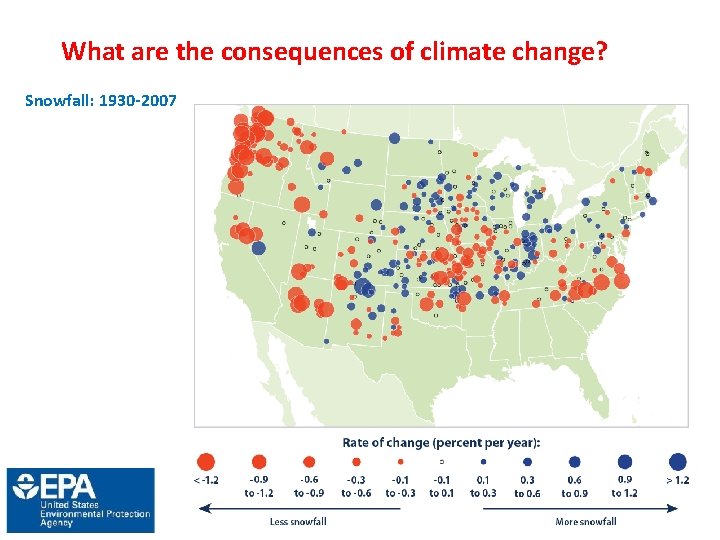
What are the consequences of climate change? Snowfall: 1930 -2007
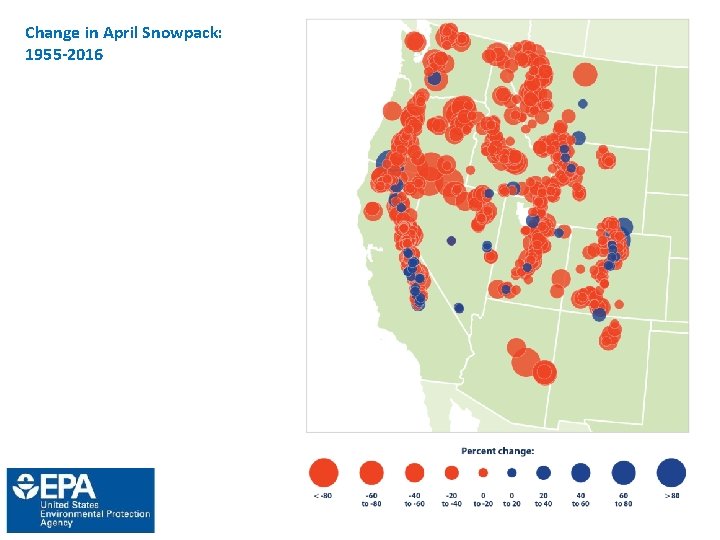
Change in April Snowpack: 1955 -2016
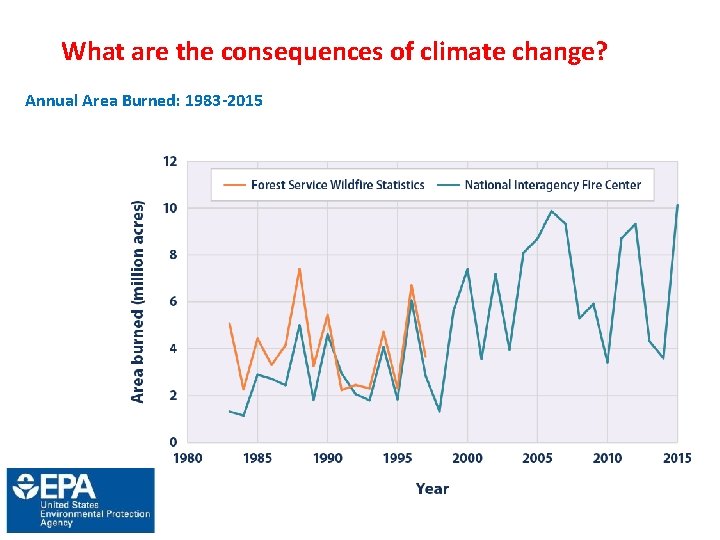
What are the consequences of climate change? Annual Area Burned: 1983 -2015
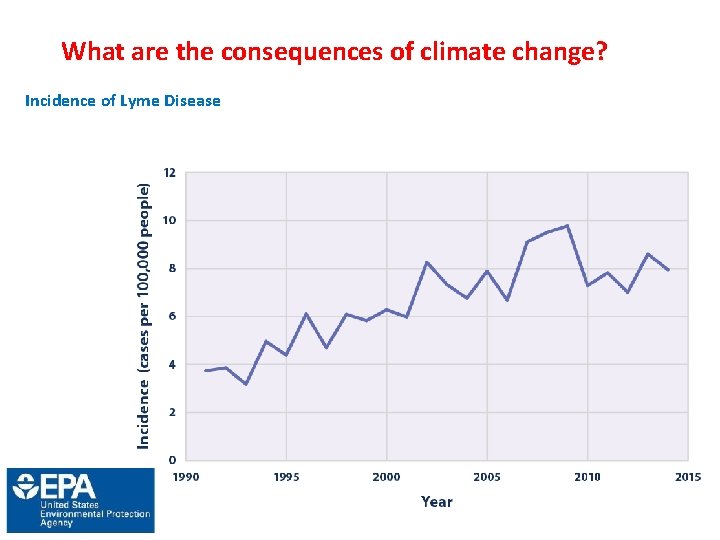
What are the consequences of climate change? Incidence of Lyme Disease
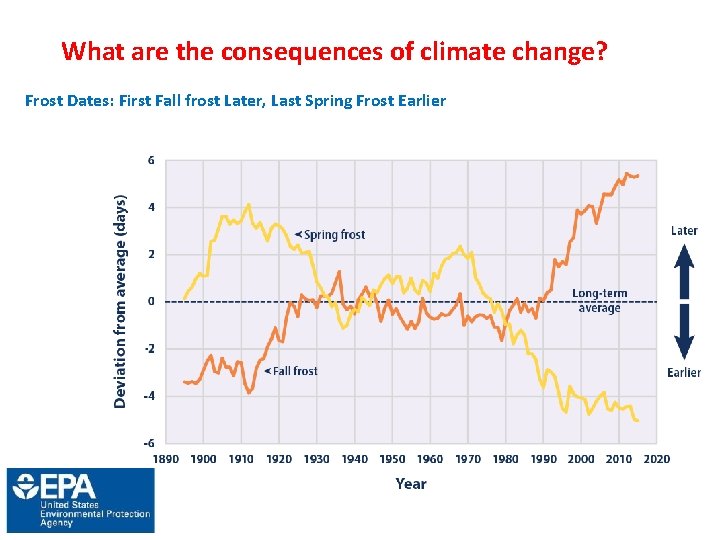
What are the consequences of climate change? Frost Dates: First Fall frost Later, Last Spring Frost Earlier
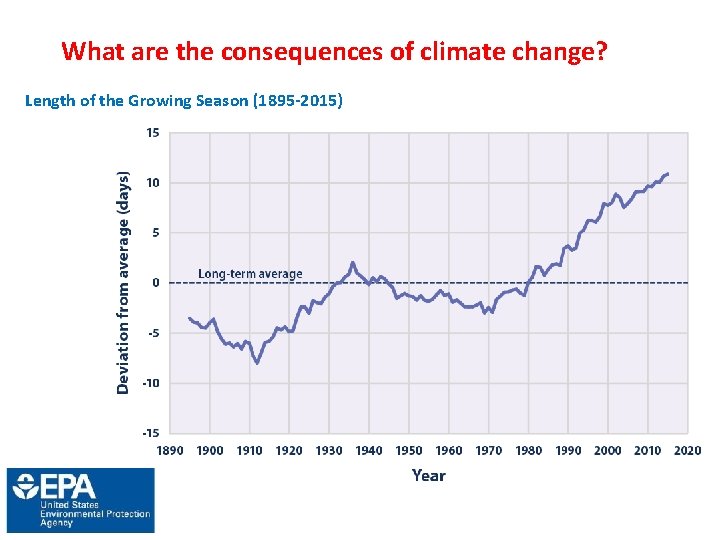
What are the consequences of climate change? Length of the Growing Season (1895 -2015)
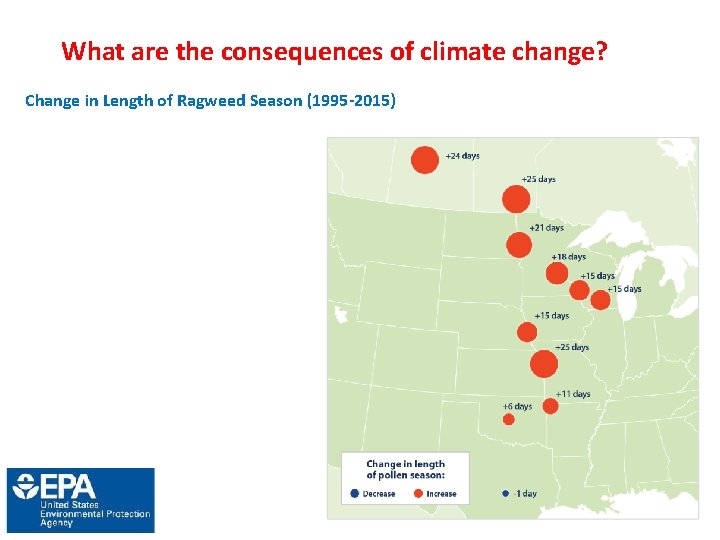
What are the consequences of climate change? Change in Length of Ragweed Season (1995 -2015)
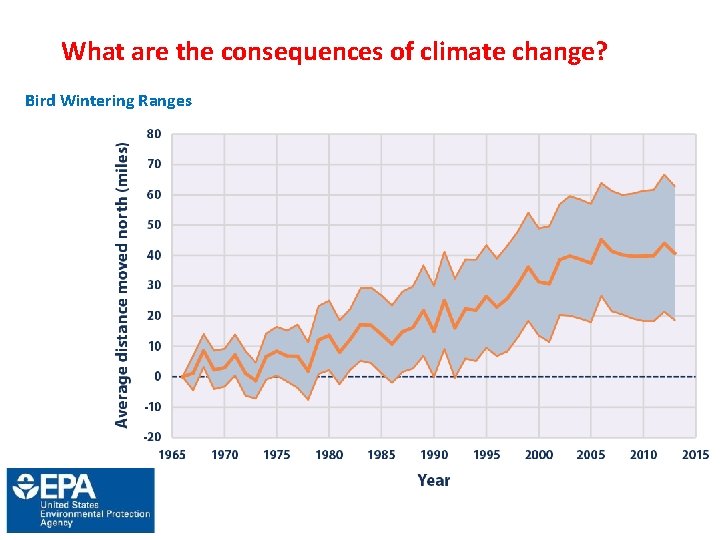
What are the consequences of climate change? Bird Wintering Ranges
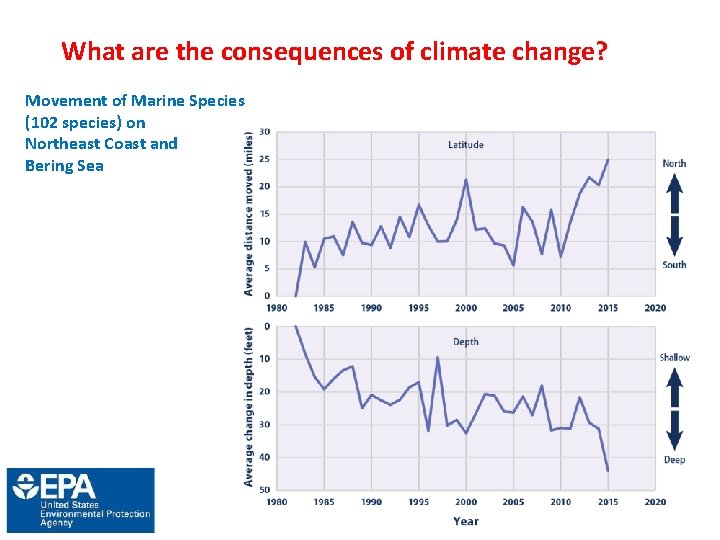
What are the consequences of climate change? Movement of Marine Species (102 species) on Northeast Coast and Bering Sea
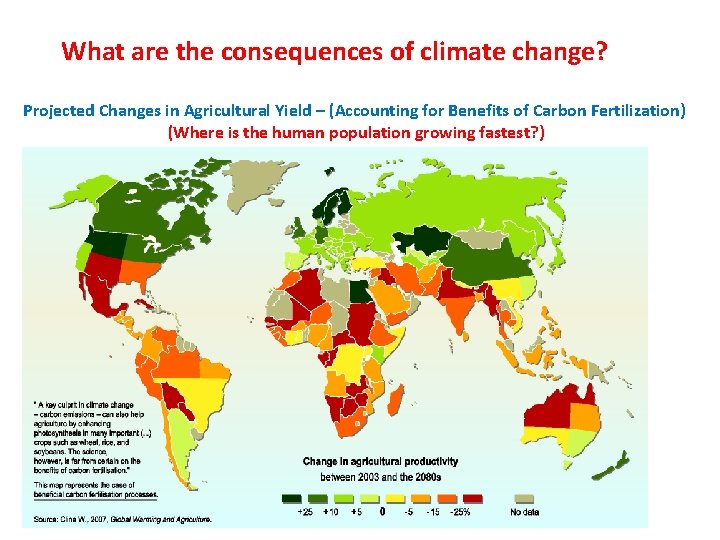
What are the consequences of climate change? Projected Changes in Agricultural Yield – (Accounting for Benefits of Carbon Fertilization) (Where is the human population growing fastest? )
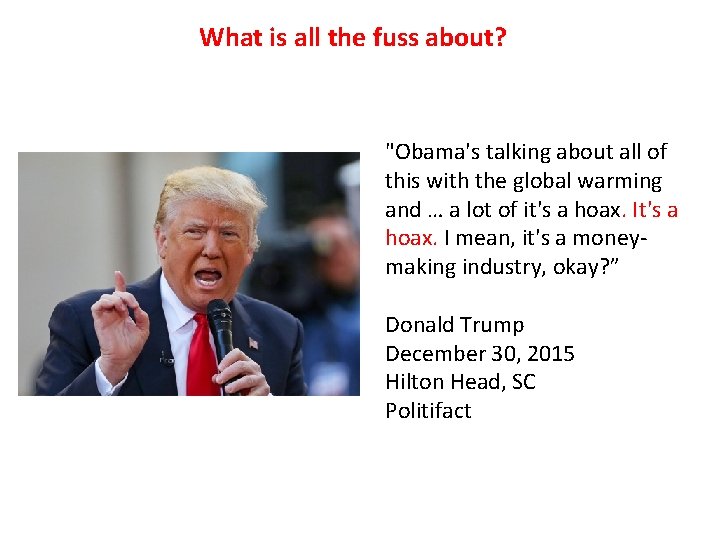
What is all the fuss about? "Obama's talking about all of this with the global warming and … a lot of it's a hoax. I mean, it's a moneymaking industry, okay? ” Donald Trump December 30, 2015 Hilton Head, SC Politifact
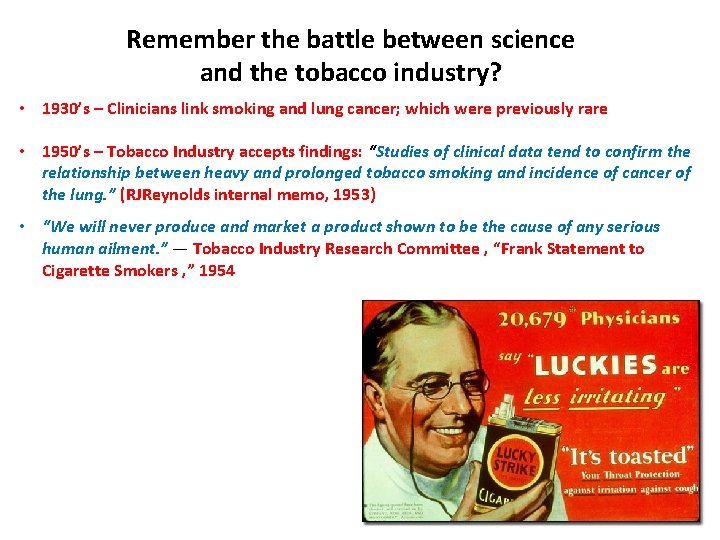
Remember the battle between science and the tobacco industry? • 1930’s – Clinicians link smoking and lung cancer; which were previously rare • 1950’s – Tobacco Industry accepts findings: “Studies of clinical data tend to confirm the relationship between heavy and prolonged tobacco smoking and incidence of cancer of the lung. ” (RJReynolds internal memo, 1953) • “We will never produce and market a product shown to be the cause of any serious human ailment. ” — Tobacco Industry Research Committee , “Frank Statement to Cigarette Smokers , ” 1954
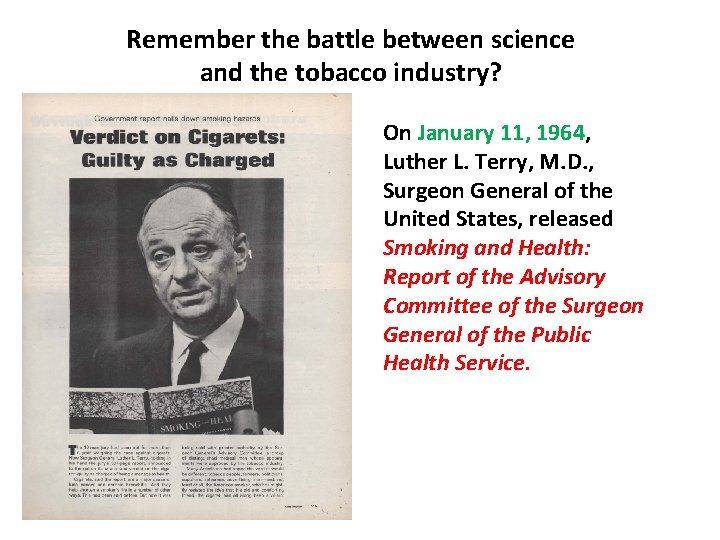
Remember the battle between science and the tobacco industry? On January 11, 1964, Luther L. Terry, M. D. , Surgeon General of the United States, released Smoking and Health: Report of the Advisory Committee of the Surgeon General of the Public Health Service.
Remember the battle between science and the tobacco industry? • 1969 - “Doubt is our product, since it is the best means of competing with the ‘body of fact’ that exists in the minds of the general public. It is also the means of establishing a controversy. ”—Brown & Williamson Smoking and health proposal – internal document. • 1998 - The Tobacco Master Settlement Agreement (MSA) between the four largest manufacturers and the attorneys general of 46 states. The states settled their Medicaid lawsuits against the tobacco industry for recovery of their tobacco-related health-care costs. In the MSA, the original participating manufacturers (OPM) agreed to pay a minimum of $206 billion over the first twenty-five years of the agreement. 1964 – Surgeon General’s Report 1998 – MSA 35 years of denial and obfuscation by the Tobacco Lobby
History of Climate Science 1859 Tyndall discovers that some gases block infrared radiation. He suggests that changes in the concentration of the gases could bring climate change. 1896 Arrhenius publishes first calculation of global warming from human emissions of CO 2. 1938 Callendar argues that CO 2 greenhouse global warming is underway, reviving interest in the question. 1960 Keeling accurately measures CO 2 in the Earth's atmosphere and detects an annual rise. The level is 315 ppm. Mean global temperature (five-year average) is 13. 9°C. 1970 Aerosols from human activity are shown to be increasing swiftly. Bryson claims they counteract global warming and may bring serious cooling 1976 Studies show that CFCs (1975) and also methane and ozone (1976) can make a serious contribution to the greenhouse effect 1979 US National Academy of Sciences report finds it highly credible that doubling CO 2 will bring 1. 5 -4. 5°C global warming. Exxon conducts independent study and finds same thing.
1985 Villach Conference declares consensus among experts that some global warming seems inevitable, calls on governments to consider international agreements to restrict emissions. 1988 Toronto conference calls for strict, specific limits on greenhouse gas emissions; UK Prime Minister Thatcher is first major leader to call for action. - Intergovernmental Panel on Climate Change (IPCC) is established. 1989 -1998 Fossil-fuel and other U. S. industries form Global Climate Coalition to tell politicians and the public that climate science is too uncertain to justify action. Victory will be achieved when average citizens “understand” (recognize) uncertainties in climate science. —internal memo by the American Petroleum Institute , 1998 Movie – “Merchants of Doubt”
Intergovernmental Panel on Climate Change – IPCC Established by UN Environmental Program and World Meteorological Organization in 1988 1990 – First Report: “global mean surface air temperature has increased by 0. 3 to 0. 6 o. C over the last 100 years. . . ; The size of this warming is broadly consistent with predictions of climate models, but it is also of the same magnitude as natural climate variability. Thus the observed increase could be largely due to this natural variability; alternatively this variability and other human factors could have offset a still larger human-induced greenhouse warming. The unequivocal detection of the enhanced greenhouse effect is not likely for a decade or more. ”
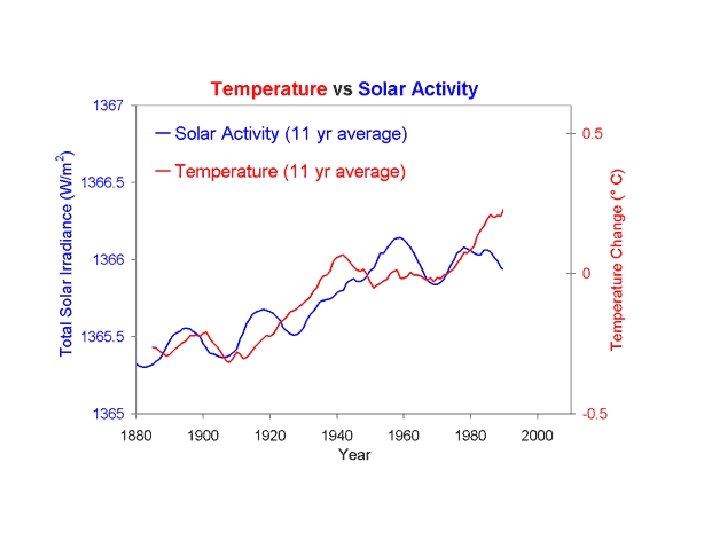
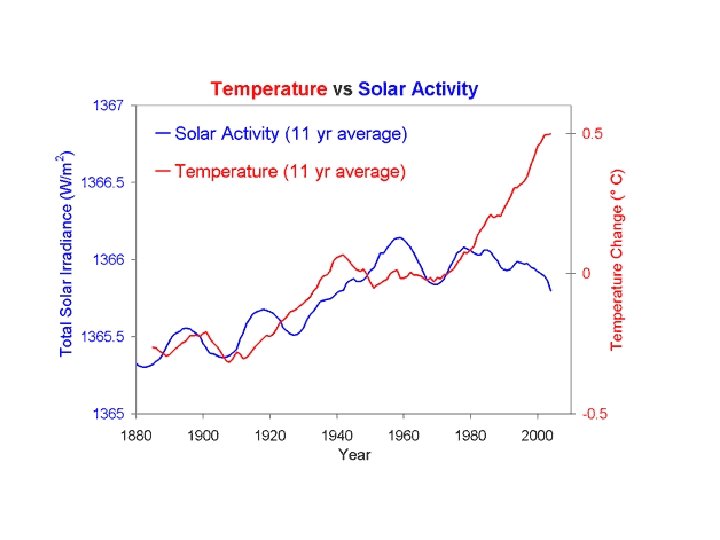
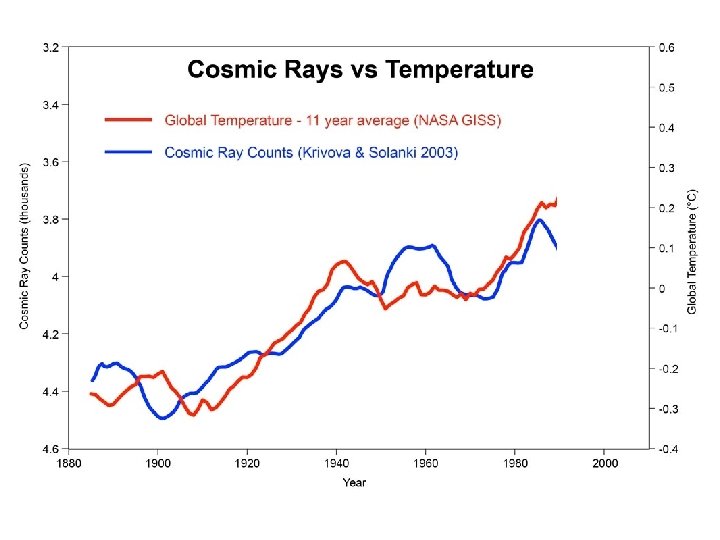
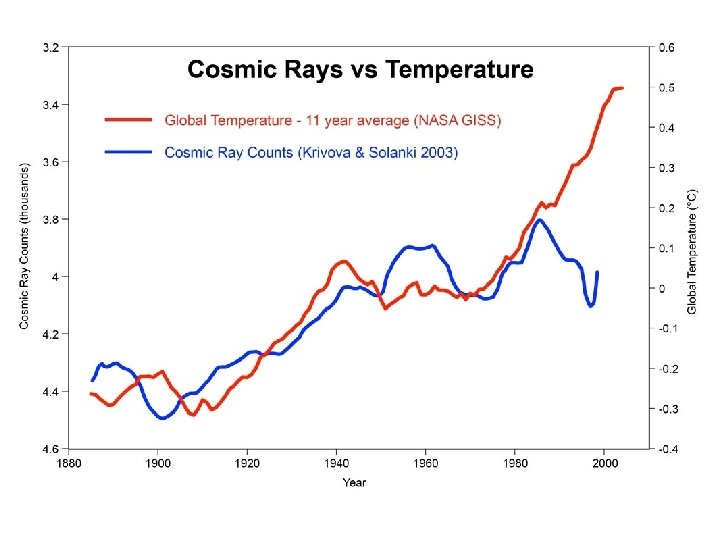
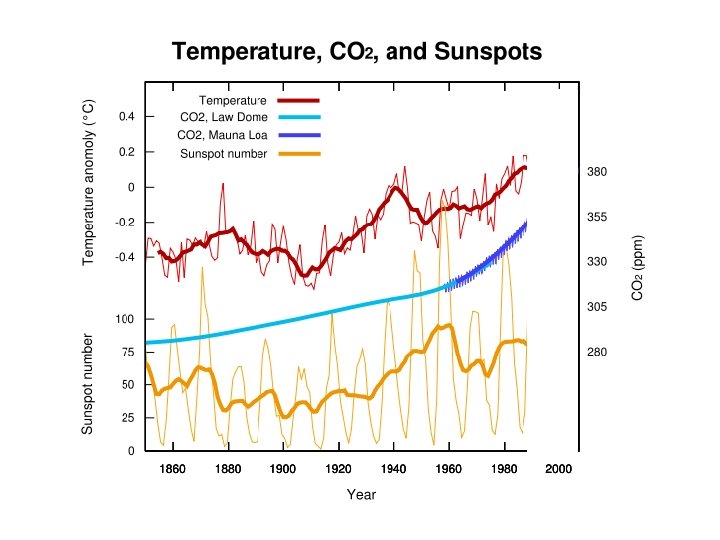
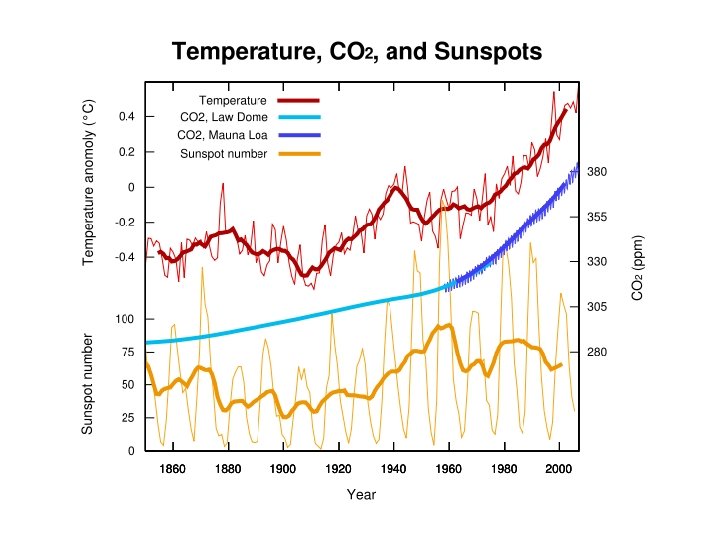
IPCC 2014 REPORT: “Anthropogenic greenhouse gas emissions have increased since the pre-industrial era, driven largely by economic and population growth, and are now higher than ever. This has led to atmospheric concentrations of carbon dioxide, methane and nitrous oxide that are unprecedented in at least the last 800, 000 years. Their effects, together with those of other anthropogenic drivers, have been detected throughout the climate system and are extremely likely to have been the dominant cause of the observed warming since the mid 20 th century. “
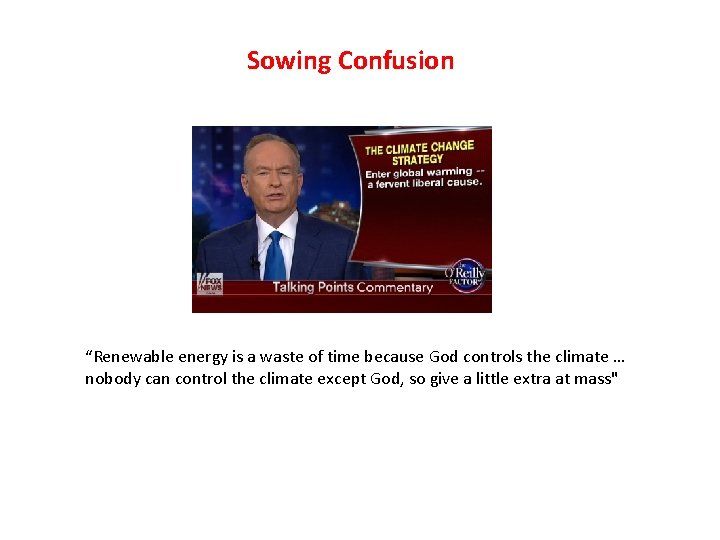
Sowing Confusion “Renewable energy is a waste of time because God controls the climate … nobody can control the climate except God, so give a little extra at mass"
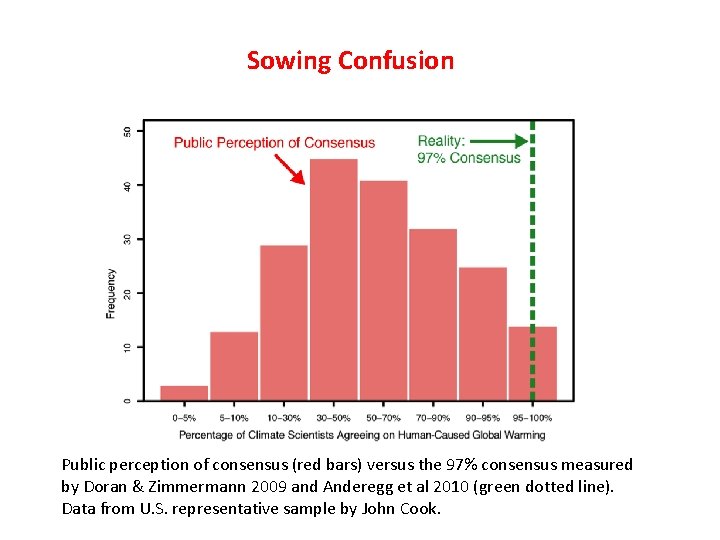
Sowing Confusion Public perception of consensus (red bars) versus the 97% consensus measured by Doran & Zimmermann 2009 and Anderegg et al 2010 (green dotted line). Data from U. S. representative sample by John Cook.
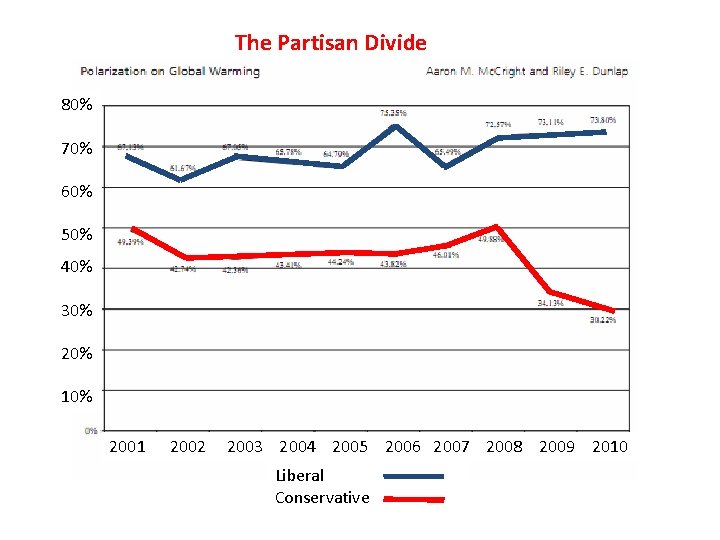
The Partisan Divide 80% 70% 60% 50% 40% 30% 20% 10% 2001 2002 2003 2004 2005 2006 2007 2008 2009 2010 Liberal Conservative
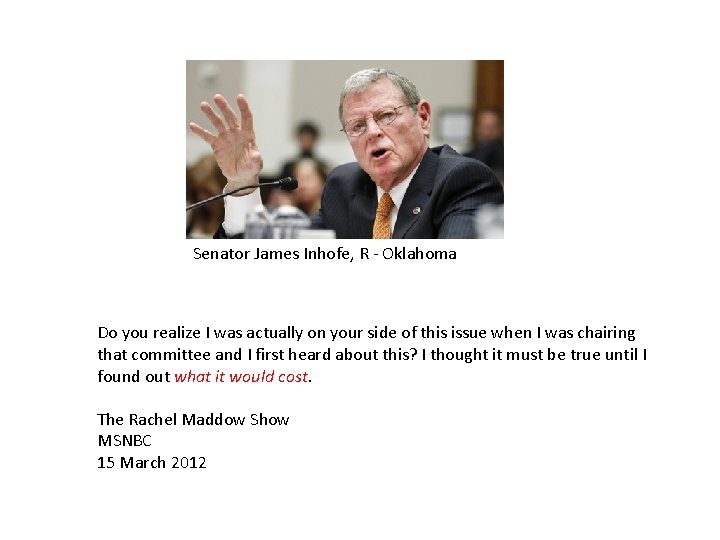
Senator James Inhofe, R - Oklahoma Do you realize I was actually on your side of this issue when I was chairing that committee and I first heard about this? I thought it must be true until I found out what it would cost. The Rachel Maddow Show MSNBC 15 March 2012
What is all the fuss about? The U. S. Global Change Research Program Climate Science Special Report (compiled by scientists from 13 federal agencies): it was "extremely likely that more than half of the global mean temperature increase since 1951 was caused by human influence on climate. . . A change in the frequency, duration and/or magnitude of extreme weather events is one of the most important consequences of a warming climate“ August 8, 2017 New York Times "Obama's talking about all of this with the global warming and … a lot of it's a hoax. I mean, it's a money-making industry, okay? ” Donald Trump December 30, 2015 Hilton Head, SC Politifact
What is all the fuss about? Yesterday (10 August 2017): NOAA Report Confirms: 2016 – hottest year on record • Greenhouse gases were the highest on record. • Sea-surface temperatures were the highest on record. • Global upper ocean heat content near-record high. • Global sea level was the highest on record. • Antarctic had a record low sea ice extent.
- Slides: 83