
Climate Change What is Climate n Climate average
- Slides: 34
Climate Change
What is Climate? n Climate - average weather at a given point & time of year, over a long period (typically 30 years). n Weather changes a lot from day to day, but climate remains relatively constant. n If it’s not constant, we call it climate change.
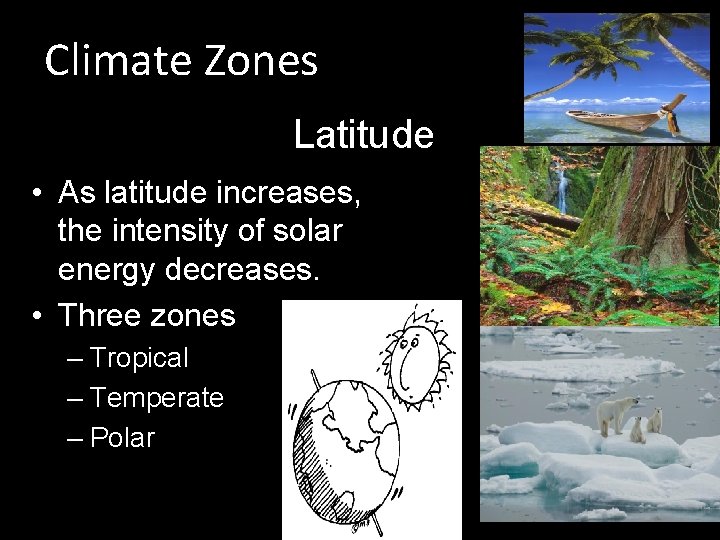
Climate Zones Latitude • As latitude increases, the intensity of solar energy decreases. • Three zones – Tropical – Temperate – Polar
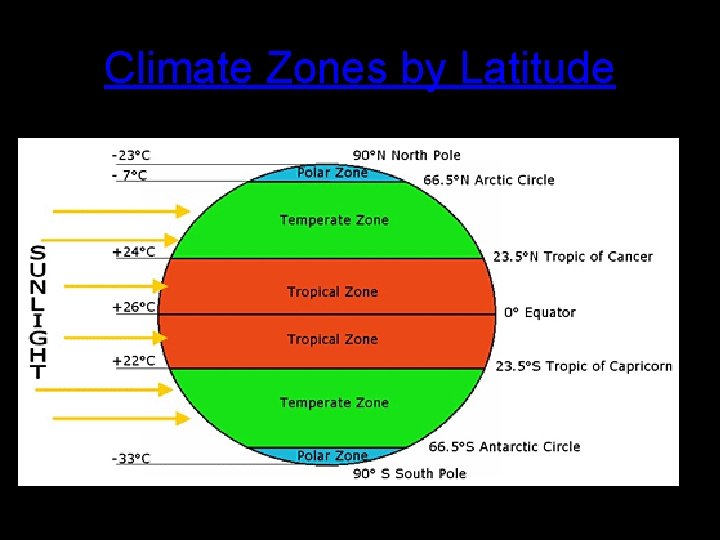
Climate Zones by Latitude
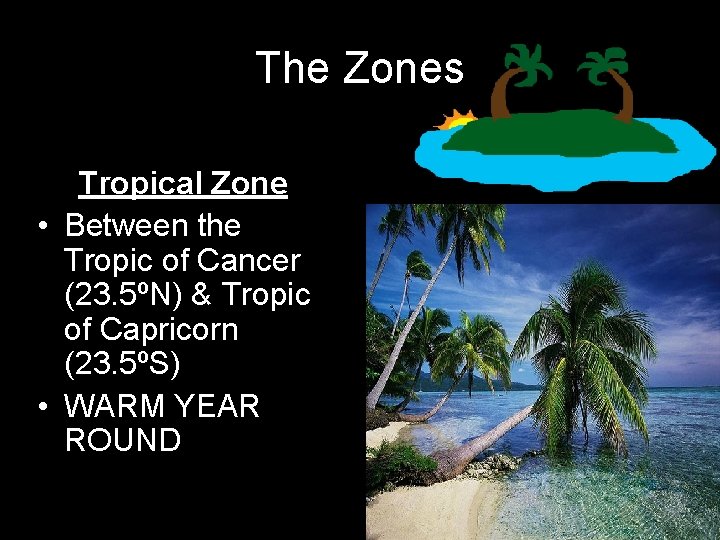
The Zones Tropical Zone • Between the Tropic of Cancer (23. 5ºN) & Tropic of Capricorn (23. 5ºS) • WARM YEAR ROUND
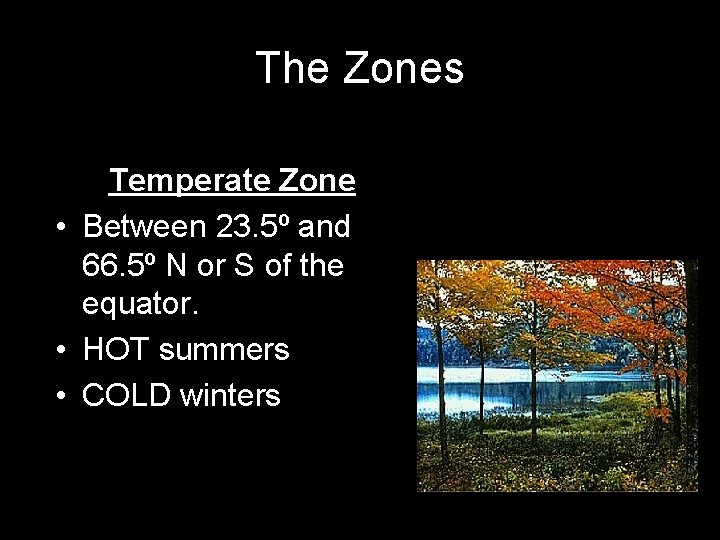
The Zones Temperate Zone • Between 23. 5º and 66. 5º N or S of the equator. • HOT summers • COLD winters
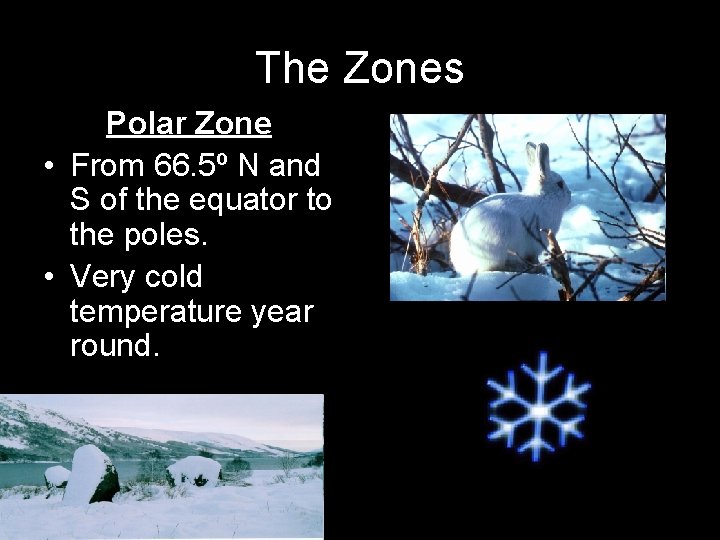
The Zones Polar Zone • From 66. 5º N and S of the equator to the poles. • Very cold temperature year round.
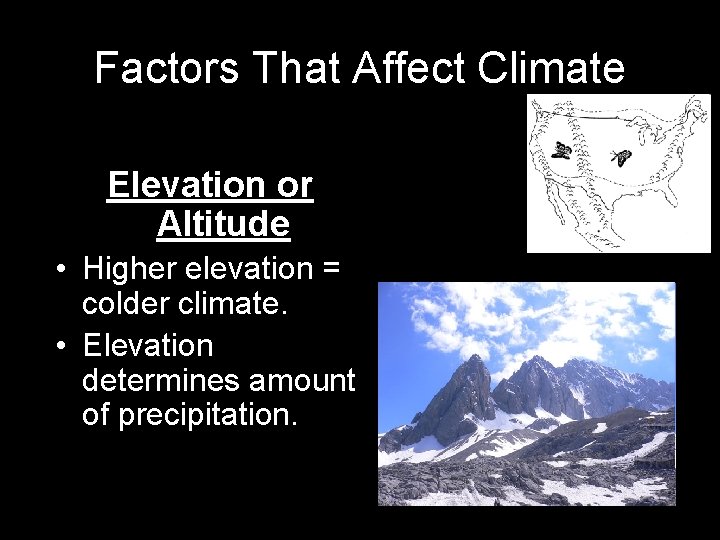
Factors That Affect Climate Elevation or Altitude • Higher elevation = colder climate. • Elevation determines amount of precipitation.
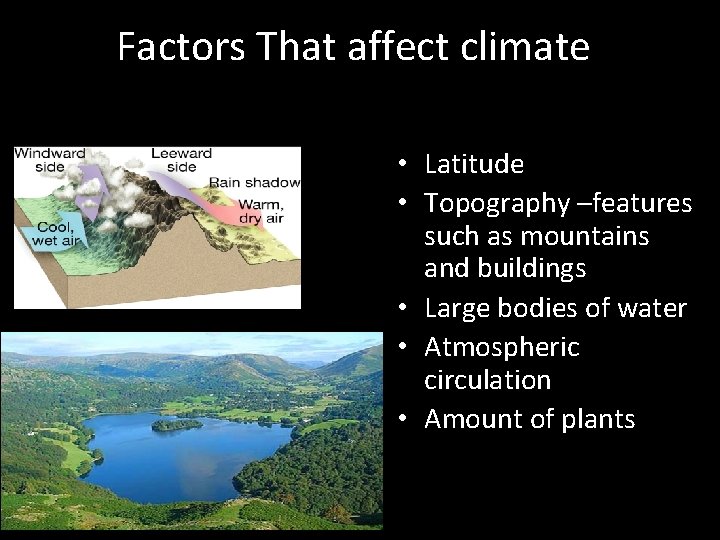
Factors That affect climate • Latitude • Topography –features such as mountains and buildings • Large bodies of water • Atmospheric circulation • Amount of plants
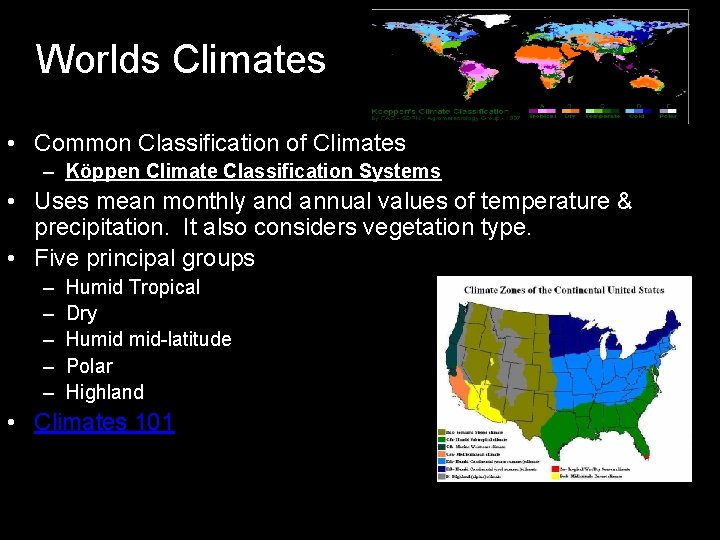
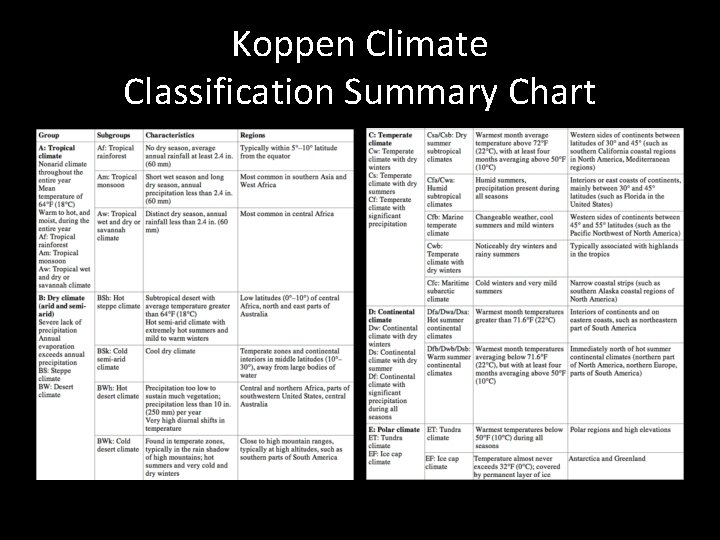
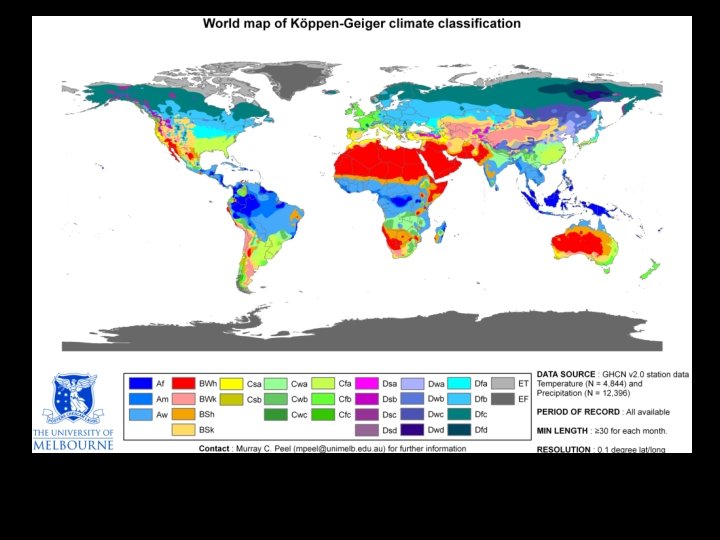
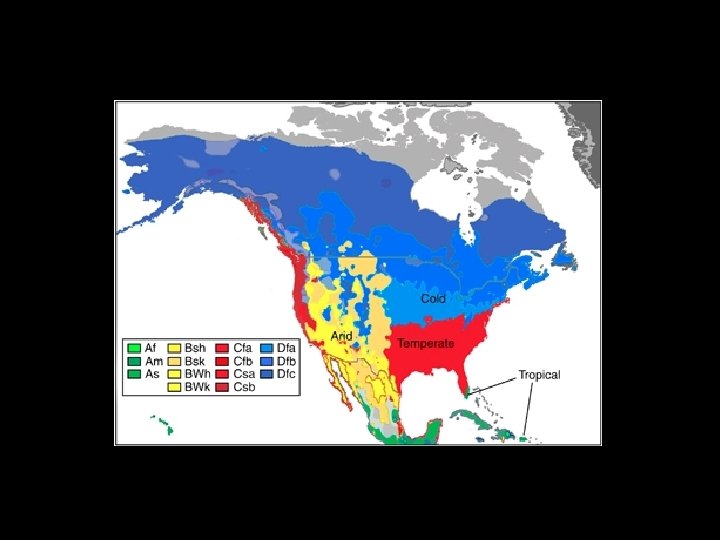
Worlds Climates • Common Classification of Climates – Köppen Climate Classification Systems • Uses mean monthly and annual values of temperature & precipitation. It also considers vegetation type. • Five principal groups – – – Humid Tropical Dry Humid mid-latitude Polar Highland • Climates 101
Koppen Climate Classification System *Don’t Write This* A classification system based on vegetation, temperature, precipitation, and seasonal differences in precipitation. The 5 Categories are: A. Humid tropical. Winterless climates; all months having a mean temperature of 18 o. C (64. 4 F). B. Dry. Climates where evaporation exceeds precipitation; there is a constant water deficiency. C. Humid middle-latitude (25 – 50 Degrees lat. ). Mild winters; the average temperature of the coldest months is below 18 o. C (64. 4 F) but above -3 o. C (26. 6 F). D. Humid middle-latitude (50 degrees lat. ). Severe winters; the average temperature of the coldest month is below -3 o. C (26. 6 F). and the warmest monthly mean exceeds 10 o. C (50 F). E. Polar. Summerless climates; the average temperature of the warmest month is below 10 o. C (50 F).
Koppen Subdivisions *Don’t Write This* The five categories are subdivided using the following criteria and symbols: • In A, C, and D (Humid) climates lowercase letters f, w, and s are used to distinguish precipitation patterns. For example, in category, A - Tropical Moist Climates, the subcategories are: Af – Tropical Wet, Aw – Tropical Wet and Dry, Am – Tropical Monsoon. • Dry Climates (B) are subdivided into uppercase W and S identify desert (arid) or steppe (semiarid) climate subtypes, lowercase letter h identifies a subtropical location where average annual temperature is above 18°C (64°F). Cooler mid-latitude Dry Climates are distinguished with a lowercase k. • C (Temperate) and D (Continental)climates the letters a, b, c, and d are used to distinguish different monthly temperature characteristics. • Polar Climates (E), are subdivided into uppercase F and T distinguish if its covered by permanent ice fields and glaciers or free of snow and ice during the summer season.
Koppen Climate Classification Summary Chart
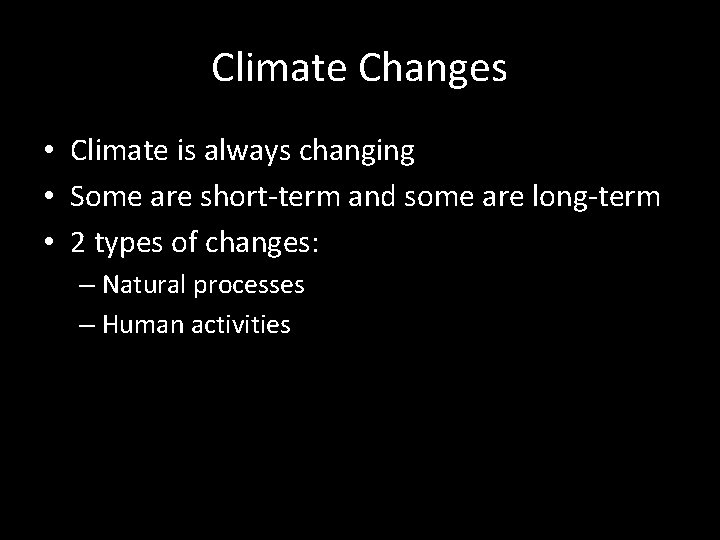
Climate Changes • Climate is always changing • Some are short-term and some are long-term • 2 types of changes: – Natural processes – Human activities
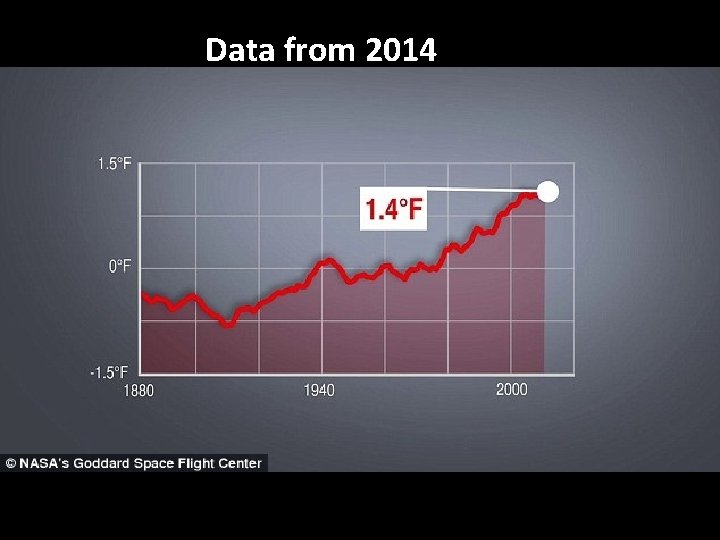
Data from 2014
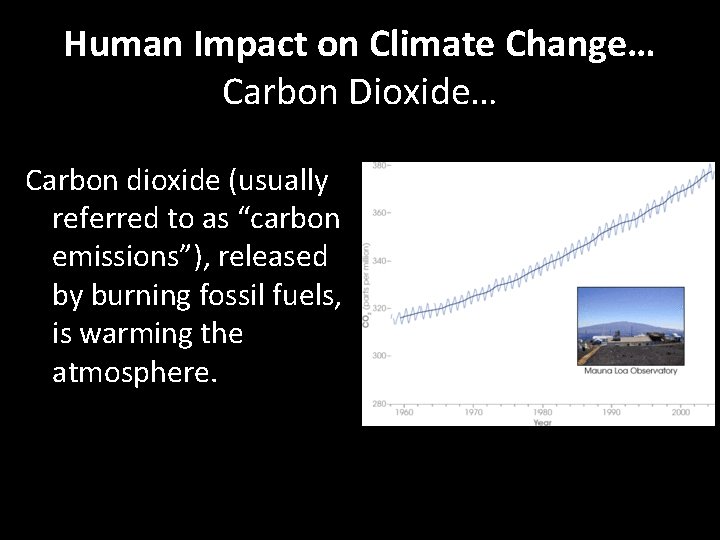
Human Impact on Climate Change… Carbon Dioxide… Carbon dioxide (usually referred to as “carbon emissions”), released by burning fossil fuels, is warming the atmosphere.
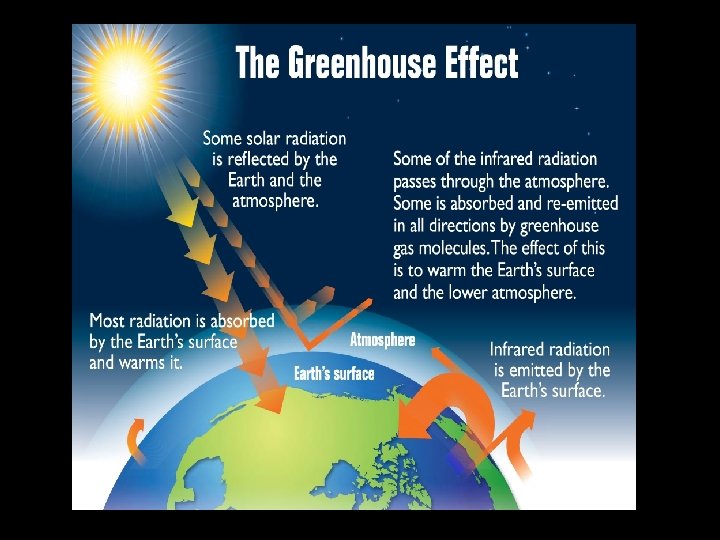
A Natural Process Affected by Humans • The Greenhouse Effect: A Good Thing – A natural warming of both Earth’s lower atmosphere and Earth’s surface – Greenhouse gases: • CO 2 • Water Vapor – H 2 O(v) • Methane – CH 4 – Human activity for the past 200 years have had a huge impact on the greenhouse effect – Carbon dioxide levels have increased in the atmosphere – NASA Video
Human Impact • Global Warming: A Bad Thing – As a result of increase in carbon dioxide levels, as well as other greenhouse gases, global temperatures have increased. – Effects: • Warmer surface temperatures increase evaporation • Temperature increases will also cause sea ice to melt • Weather patterns will change
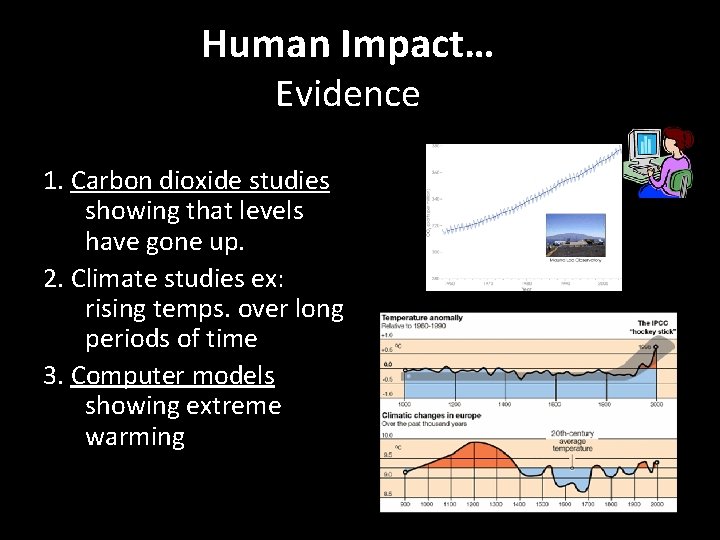
Human Impact… Evidence 1. Carbon dioxide studies showing that levels have gone up. 2. Climate studies ex: rising temps. over long periods of time 3. Computer models showing extreme warming
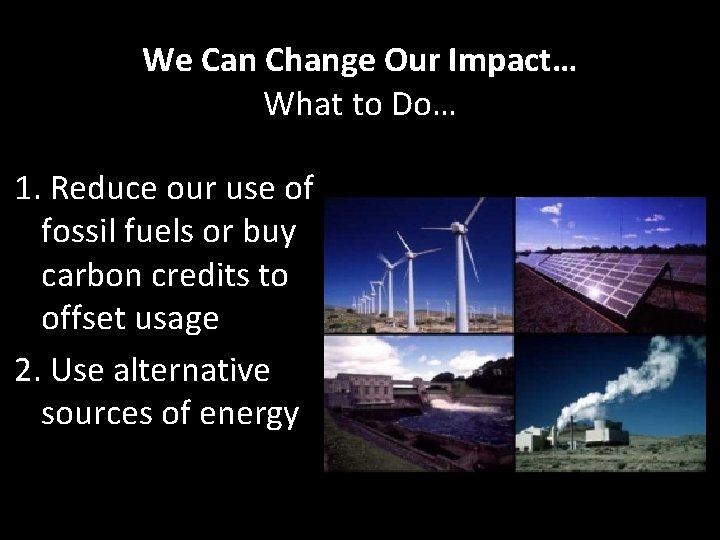
We Can Change Our Impact… What to Do… 1. Reduce our use of fossil fuels or buy carbon credits to offset usage 2. Use alternative sources of energy
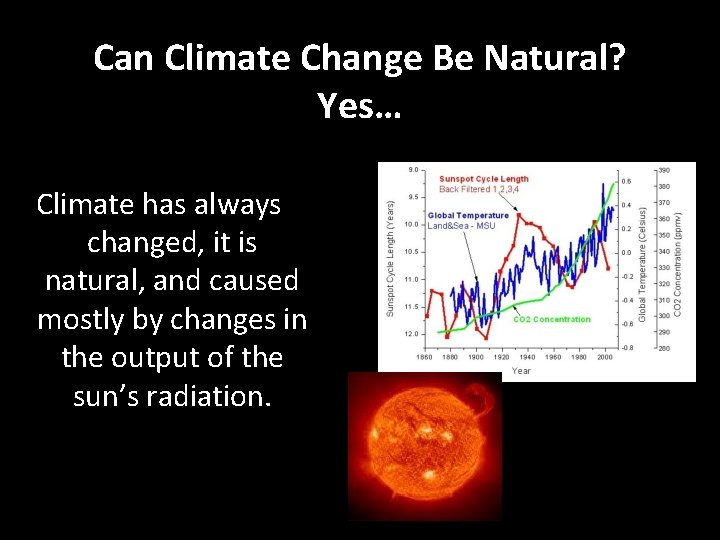
Can Climate Change Be Natural? Yes… Climate has always changed, it is natural, and caused mostly by changes in the output of the sun’s radiation.
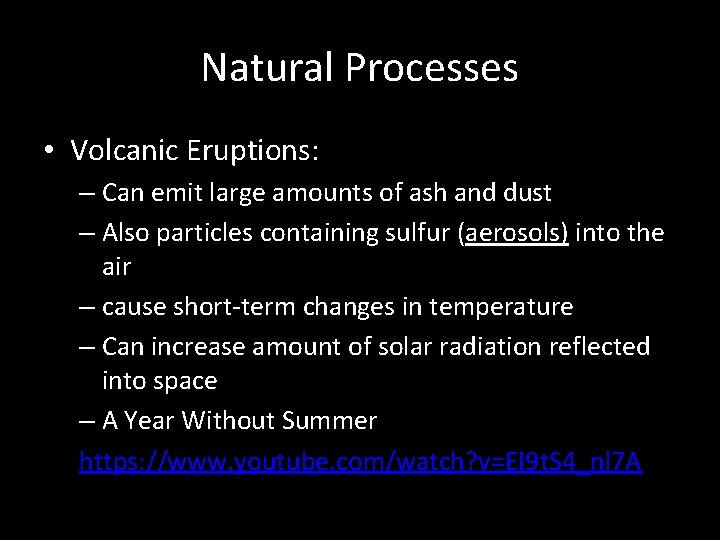
Natural Processes • Volcanic Eruptions: – Can emit large amounts of ash and dust – Also particles containing sulfur (aerosols) into the air – cause short-term changes in temperature – Can increase amount of solar radiation reflected into space – A Year Without Summer https: //www. youtube. com/watch? v=EI 9 t. S 4_nl 7 A
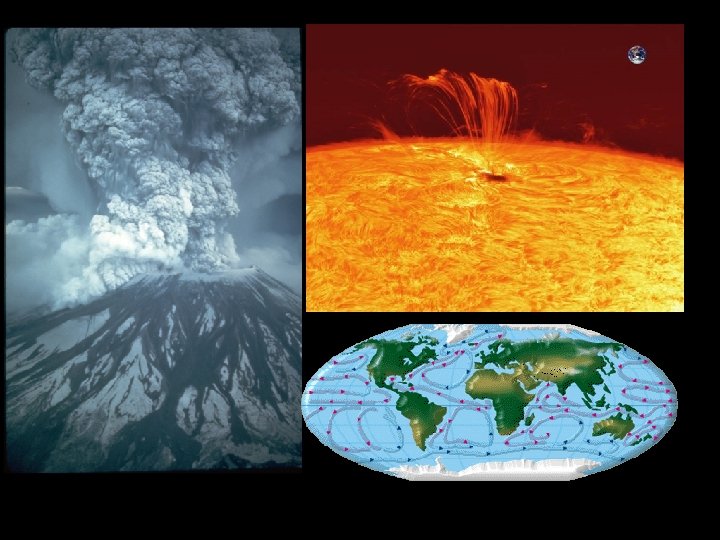
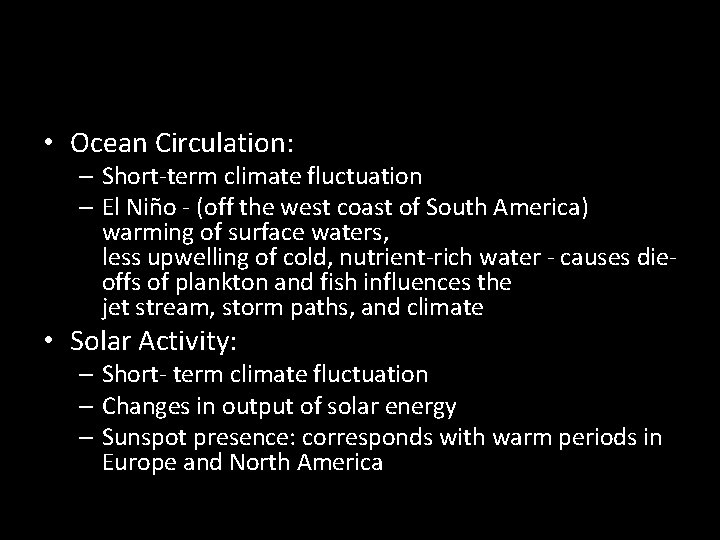
• Ocean Circulation: – Short-term climate fluctuation – El Niño - (off the west coast of South America) warming of surface waters, less upwelling of cold, nutrient-rich water - causes dieoffs of plankton and fish influences the jet stream, storm paths, and climate • Solar Activity: – Short- term climate fluctuation – Changes in output of solar energy – Sunspot presence: corresponds with warm periods in Europe and North America
• Earth Motions: – Long-term changes – Tectonic activity – Changes in the slope of Earth’s orbit and the tilt of Earth on its axis – Earth’s path around the sun is elliptical which changes how far it is towards the sun
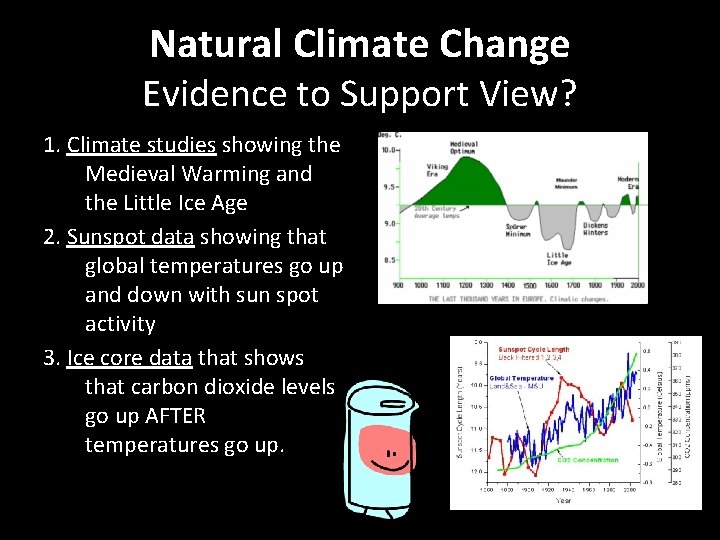
Natural Climate Change Evidence to Support View? 1. Climate studies showing the Medieval Warming and the Little Ice Age 2. Sunspot data showing that global temperatures go up and down with sun spot activity 3. Ice core data that shows that carbon dioxide levels go up AFTER temperatures go up.
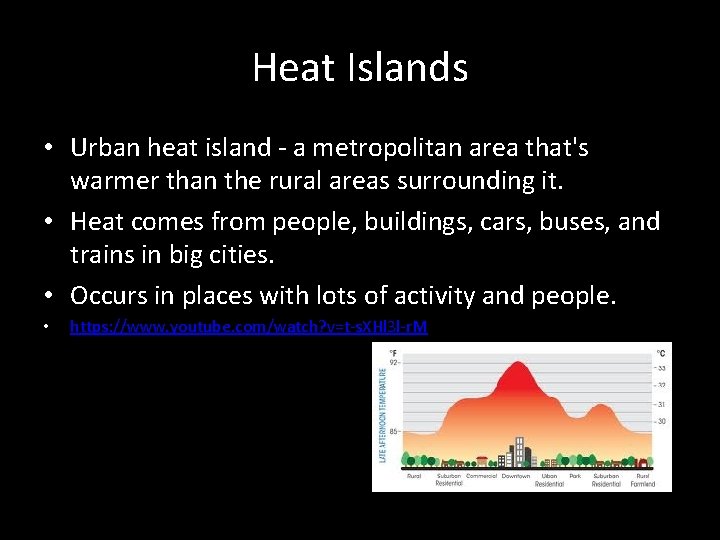
Heat Islands • Urban heat island - a metropolitan area that's warmer than the rural areas surrounding it. • Heat comes from people, buildings, cars, buses, and trains in big cities. • Occurs in places with lots of activity and people. • https: //www. youtube. com/watch? v=t-s. XHl 3 l-r. M
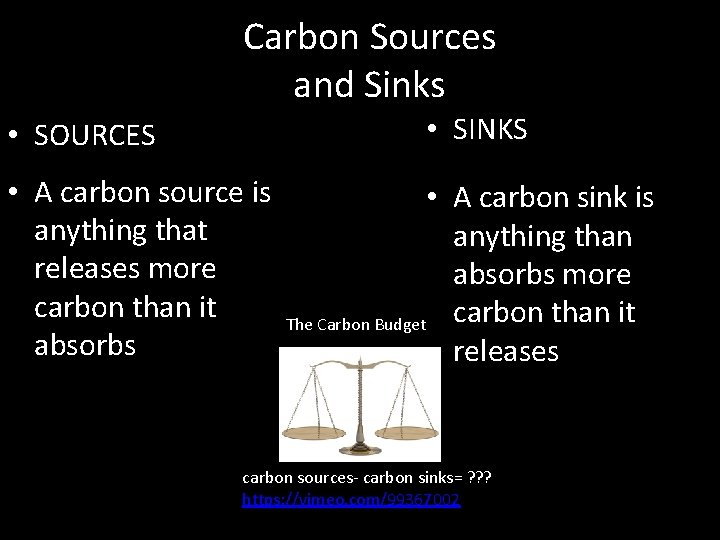
Carbon Sources and Sinks • SINKS • SOURCES • A carbon source is anything that releases more carbon than it absorbs • A carbon sink is anything than absorbs more carbon than it The Carbon Budget releases carbon sources- carbon sinks= ? ? ? https: //vimeo. com/99367002
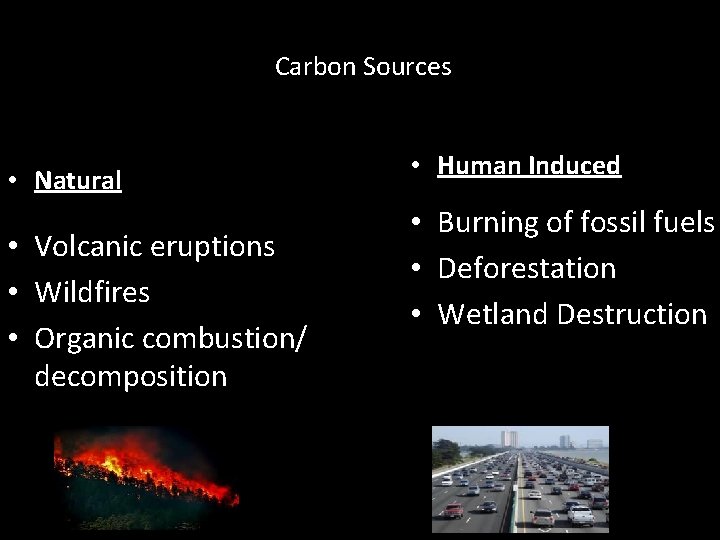
Carbon Sources • Natural • Volcanic eruptions • Wildfires • Organic combustion/ decomposition • Human Induced • Burning of fossil fuels • Deforestation • Wetland Destruction
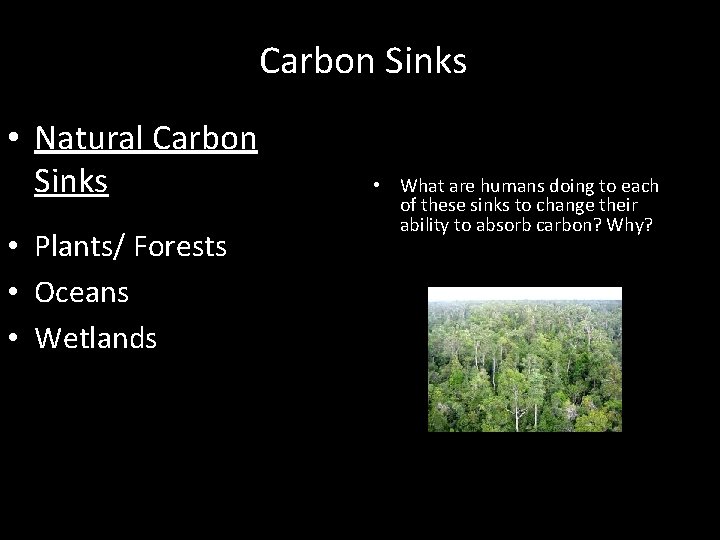
Carbon Sinks • Natural Carbon Sinks • Plants/ Forests • Oceans • Wetlands • What are humans doing to each of these sinks to change their ability to absorb carbon? Why?