
Climate Change Simulations with the Parallel Climate Model




- Slides: 28
Climate Change Simulations with the Parallel Climate Model Warren M. Washington National Center for Atmospheric Research Boulder, Colorado May 2003
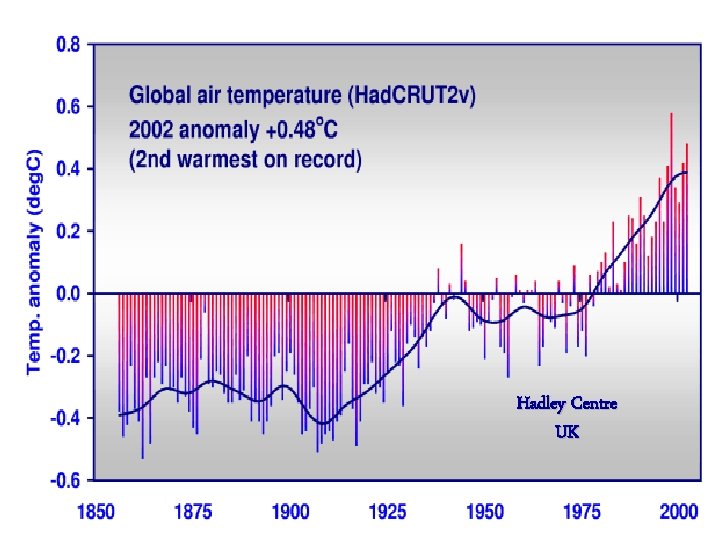
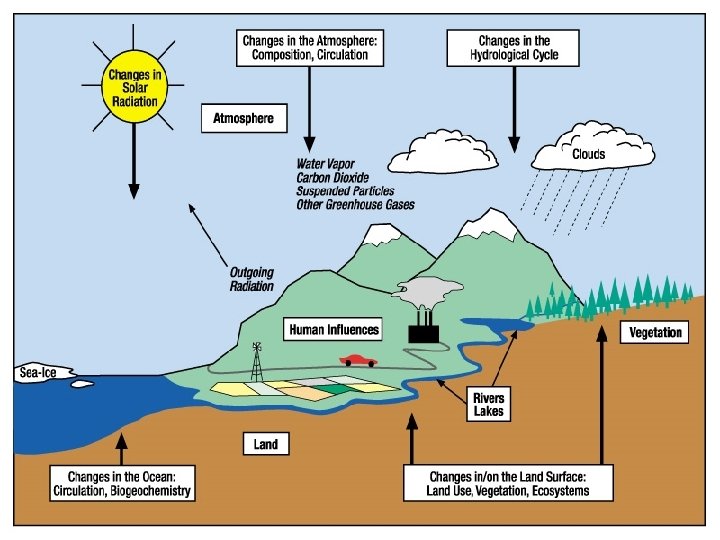
From M. Prather University of California at Irvine
Hadley Centre UK
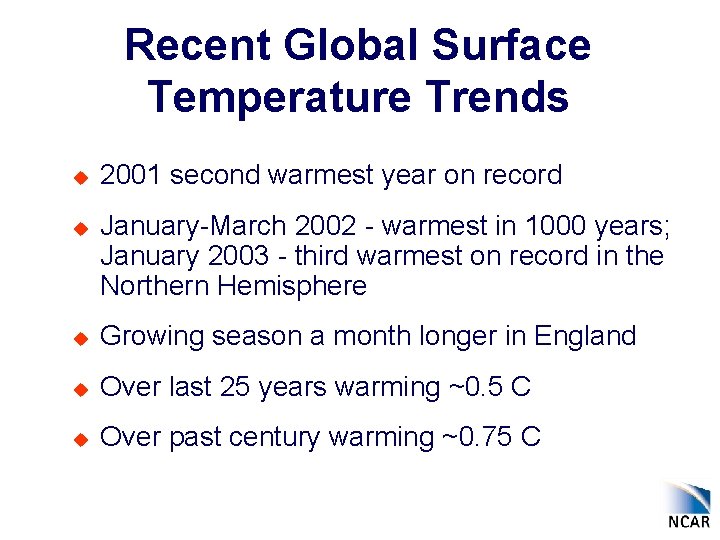
Recent Global Surface Temperature Trends u u 2001 second warmest year on record January-March 2002 - warmest in 1000 years; January 2003 - third warmest on record in the Northern Hemisphere u Growing season a month longer in England u Over last 25 years warming ~0. 5 C u Over past century warming ~0. 75 C
What is in a computer model of the climate system?
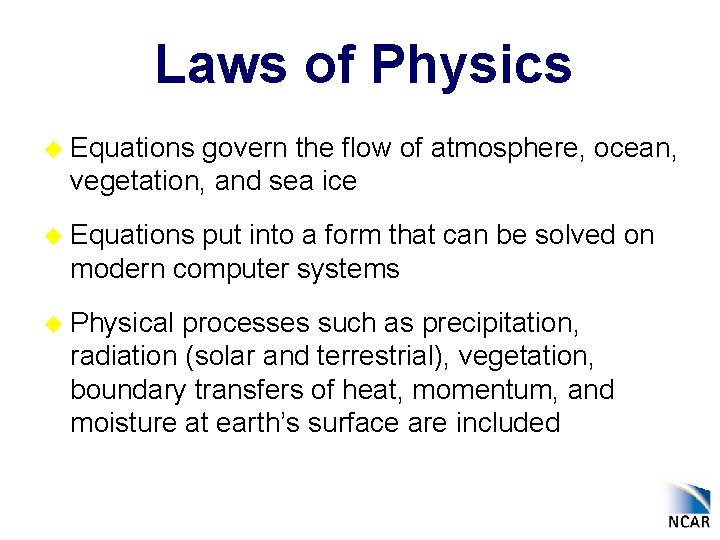
Laws of Physics u Equations govern the flow of atmosphere, ocean, vegetation, and sea ice u Equations put into a form that can be solved on modern computer systems u Physical processes such as precipitation, radiation (solar and terrestrial), vegetation, boundary transfers of heat, momentum, and moisture at earth’s surface are included
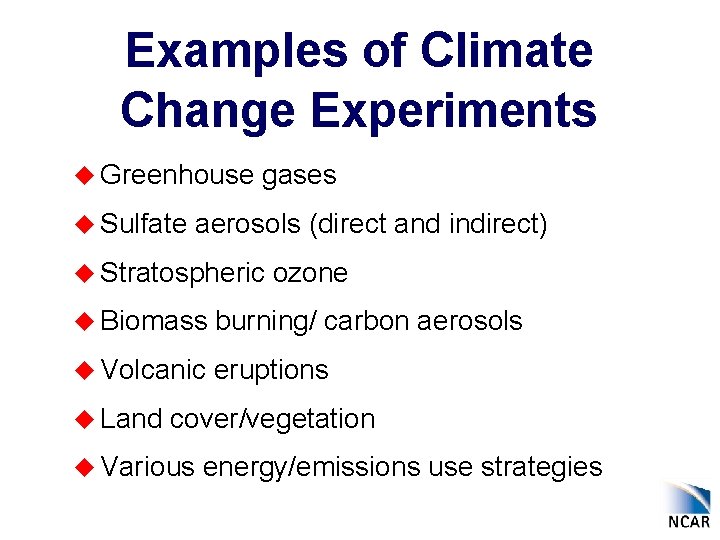
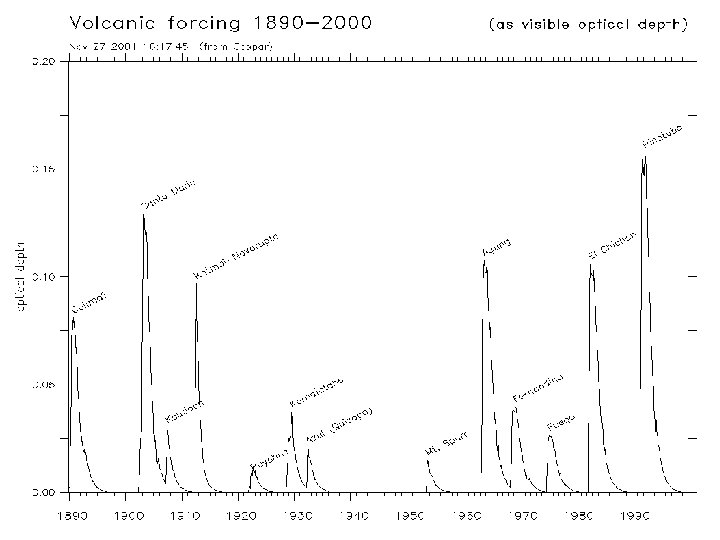
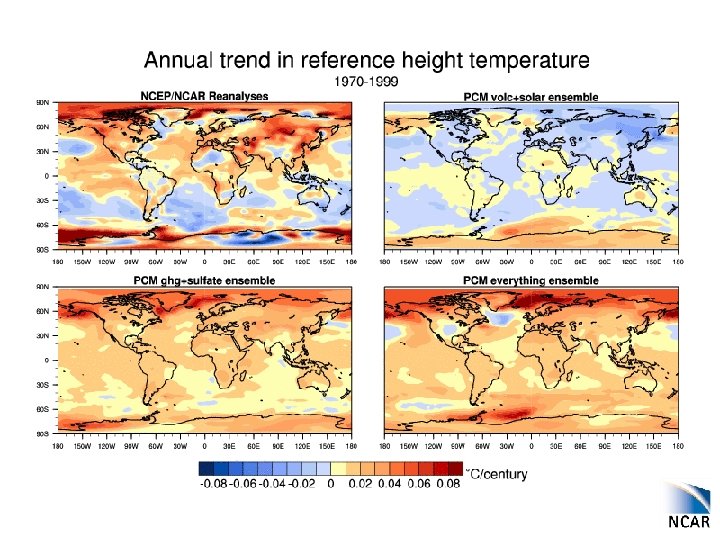
Examples of Climate Change Experiments u Greenhouse u Sulfate gases aerosols (direct and indirect) u Stratospheric ozone u Biomass burning/ carbon aerosols u Volcanic eruptions u Land cover/vegetation u Various energy/emissions use strategies
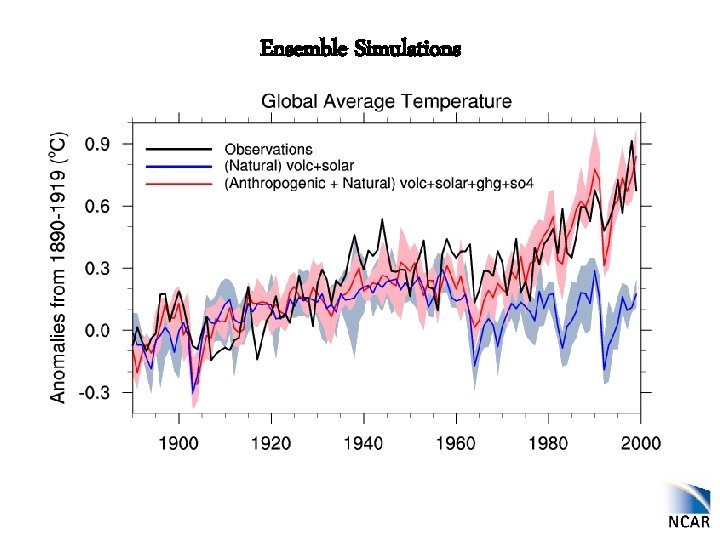
Ensemble Simulations
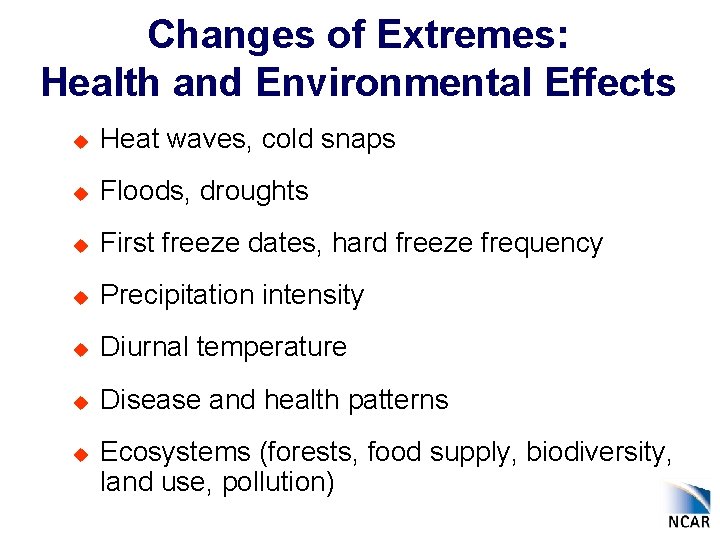
Changes of Extremes: Health and Environmental Effects u Heat waves, cold snaps u Floods, droughts u First freeze dates, hard freeze frequency u Precipitation intensity u Diurnal temperature u Disease and health patterns u Ecosystems (forests, food supply, biodiversity, land use, pollution)
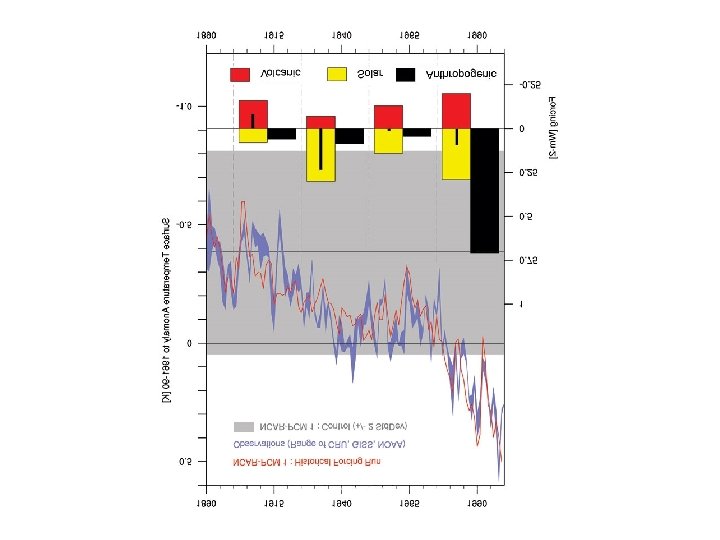
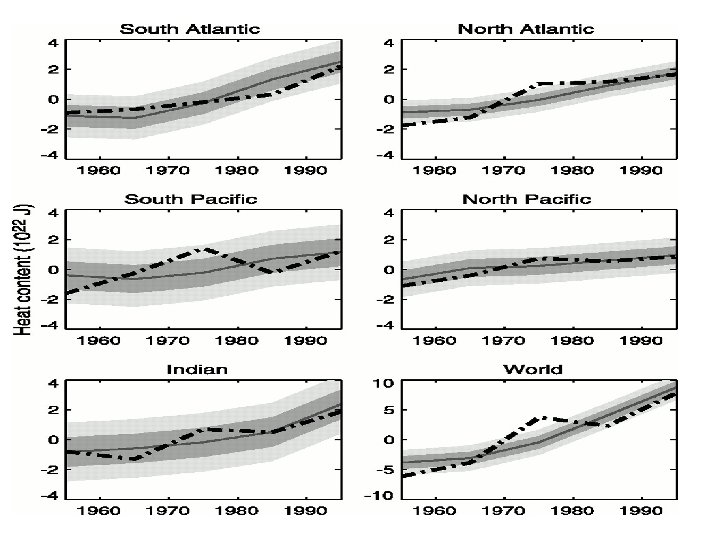
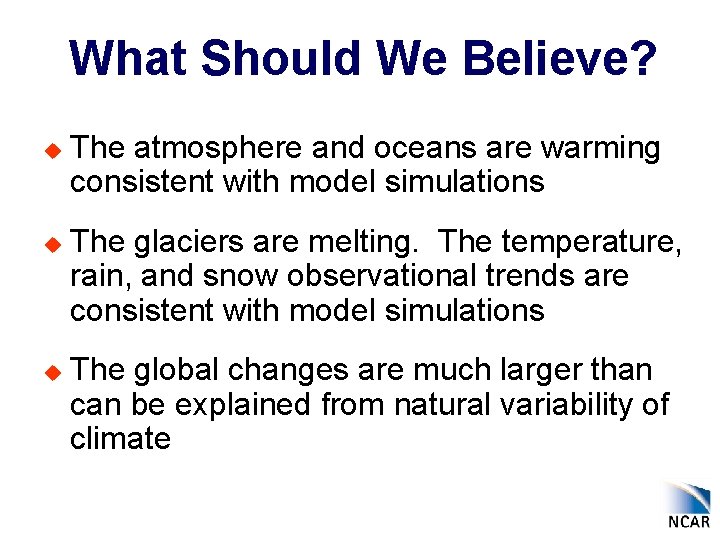
What Should We Believe? u u u The atmosphere and oceans are warming consistent with model simulations The glaciers are melting. The temperature, rain, and snow observational trends are consistent with model simulations The global changes are much larger than can be explained from natural variability of climate
IPCC WGI Third Assessment Report u u u “An increasing body of observations gives a collective picture of a warming world and other changes in the climate system” “Emissions of greenhouse gases and aerosols due to human activities continue to alter the atmosphere in ways that are expected to affect the climate” “Confidence in the ability of models to project future climate has increased”
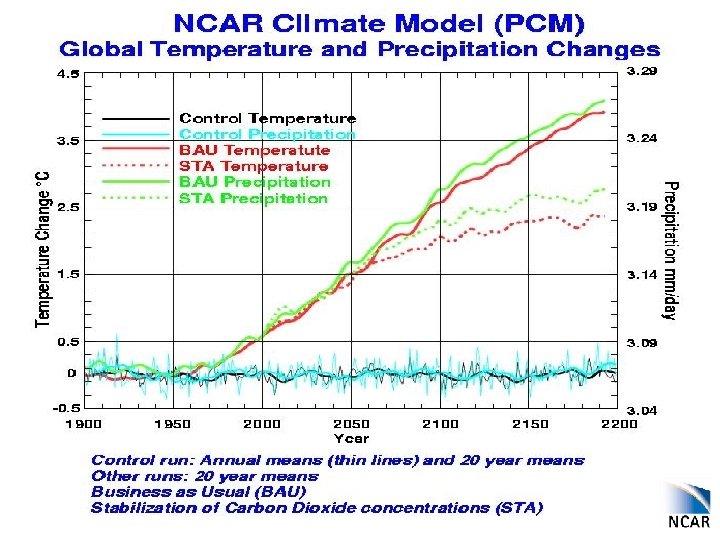
IPCC WGI Third Assessment Report u u “There is new and stronger evidence that most of the warming observed over the last 50 years is attributable to human activities” “Human influences will continue to change atmospheric composition throughout the 21 st century” “Global average temperature and sea level are projected to rise under all IPCC SRES scenarios” “Anthropogenic climate change will persist for many centuries”
National Academy of Sciences 2001 report: Climate Change Science: An Analysis of Some Key Questions u u “Greenhouse gases are accumulating in the Earth’s atmosphere as a result of human activities, causing surface air temperatures and subsurface ocean temperatures to rise. Temperatures are, in fact, rising. The changes observed are most likely due to human activities, but we cannot rule out that some significant part of these changes are also a reflection of natural variability…. ” “Despite the uncertainties, there is general agreement that the observed warming is real and particularly strong within the past 20 years. ”
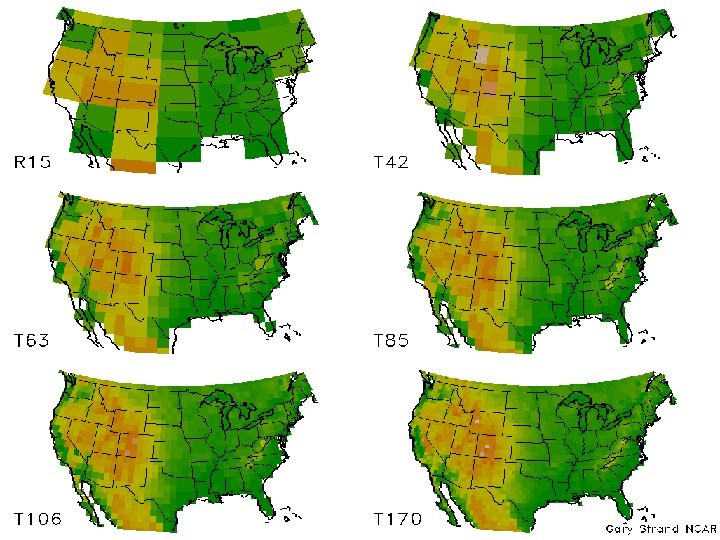
Future Climate Modeling Needs u u Higher resolution (a partial answer) Improved physical processes (e. g. DOE Atmospheric Radiation Measurement -especially clouds-radiative effects) u Interactive chemistry (e. g. carbon cycle model) u Ecological modeling u u u Model diagnosis (comparison with observed data --especially satellite and in situ data) Virtual model groups (e. g. Community Climate System Model) Development of new generation of climate scientists and computer experts
Ongoing and Future Developments with CCSM 1. Merging of the Parallel Climate Model and Climate System Model into Community Climate System Model (CCSM) 2. Higher resolution, especially important near mountains and coast lines 3. Full hydrological coupling including river transport 4. Better vegetation and land surface treatments with ecological interactions
Animation Credits u u u The atmospheric animation is from the Community Climate Model at T 170 resolution. This model was developed by the NCAR Climate Modeling Section. The graphics were prepared by Don Middleton of NCAR. The ocean animation makes use of the LANL POP model and was prepared by the scientists at the Naval Postgraduate School (NPS) The sea animation uses the Zhang model of the NPS.
Credits u Biological and Environmental Research Program (BER), U. S. Department of Energy, Cooperative Agreement No. DEFC 03 -97 ER 62402 u National Science Foundation u National Center for Atmospheric Research - Climate Simulation Laboratory u Los Alamos National Laboratory u National Energy Research Supercomputing Center (NERSC) u Oak Ridge National Laboratory Computation Center u Arctic Region Supercomputing Center u G. Meehl, J. Arblaster, D. Easterling
The End