
Climate Change Projections for India and Assessment of
- Slides: 55
Climate Change Projections for India and Assessment of the Associated Agricultural and Human Health Impacts (A NATCOM Project) Principal Investigators K. Rupa Kumar and K. Krishna Kumar Co-Principal Investigators Nayana R. Deshpande and Savita K. Patwardhan Project Assistant V. Prasanna NATCOM Project Mid-term Evaluation - 27. 02. 2003
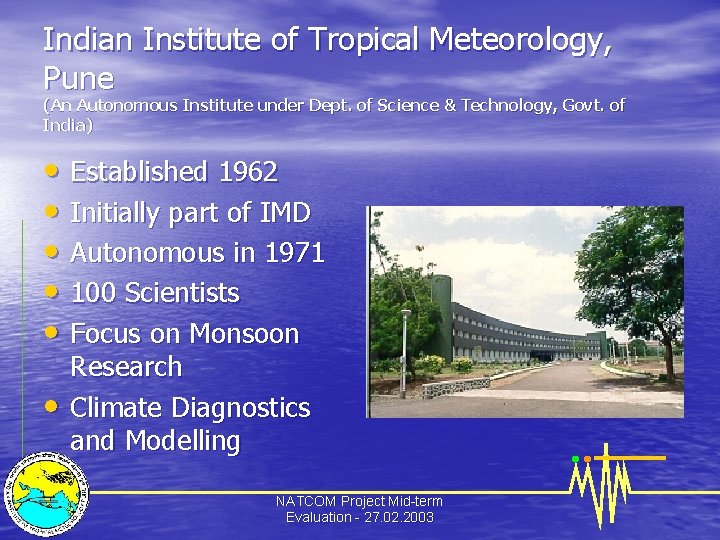
Indian Institute of Tropical Meteorology, Pune (An Autonomous Institute under Dept. of Science & Technology, Govt. of India) • Established 1962 • Initially part of IMD • Autonomous in 1971 • 100 Scientists • Focus on Monsoon • Research Climate Diagnostics and Modelling NATCOM Project Mid-term Evaluation - 27. 02. 2003
Main Activities Proposed • Development of Climate Change Scenarios of • • • Rainfall and Temperature over India V&A in the Indian Agricultural Sector Climate and Malaria High-resolution Climate Change Scenarios NATCOM Project Mid-term Evaluation - 27. 02. 2003
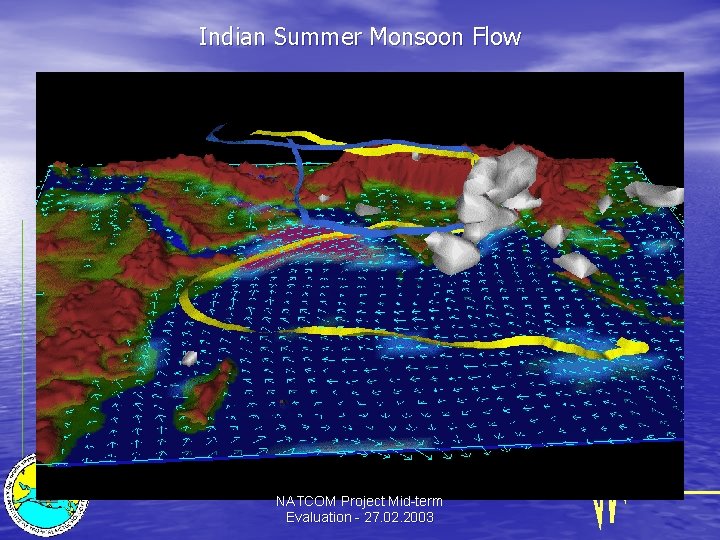
Indian Summer Monsoon Flow NATCOM Project Mid-term Evaluation - 27. 02. 2003
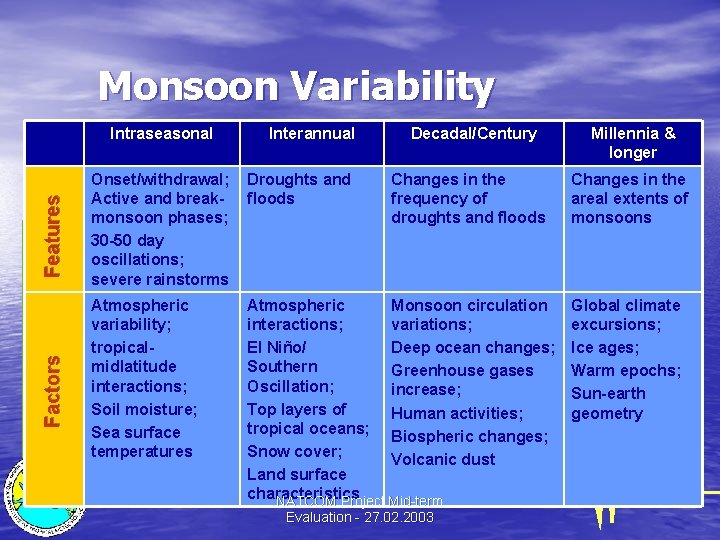
Monsoon Variability Factors Features Intraseasonal Interannual Decadal/Century Onset/withdrawal; Active and breakmonsoon phases; 30 -50 day oscillations; severe rainstorms Droughts and floods Changes in the frequency of droughts and floods Atmospheric variability; tropicalmidlatitude interactions; Soil moisture; Sea surface temperatures Atmospheric Monsoon circulation interactions; variations; El Niño/ Deep ocean changes; Southern Greenhouse gases Oscillation; increase; Top layers of Human activities; tropical oceans; Biospheric changes; Snow cover; Volcanic dust Land surface characteristics NATCOM Project Mid-term Evaluation - 27. 02. 2003 Millennia & longer Changes in the areal extents of monsoons Global climate excursions; Ice ages; Warm epochs; Sun-earth geometry
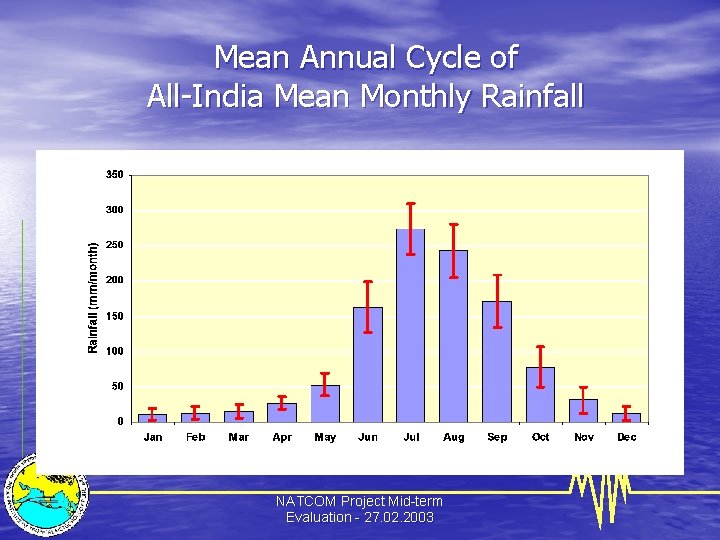
Mean Annual Cycle of All-India Mean Monthly Rainfall NATCOM Project Mid-term Evaluation - 27. 02. 2003
The Stability of the Indian Summer Monsoon NATCOM Project Mid-term Evaluation - 27. 02. 2003
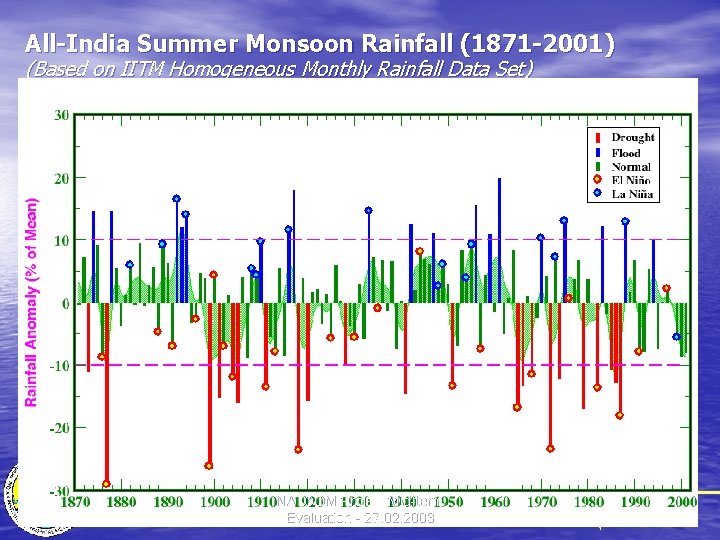
All-India Summer Monsoon Rainfall (1871 -2001) (Based on IITM Homogeneous Monthly Rainfall Data Set) NATCOM Project Mid-term Evaluation - 27. 02. 2003
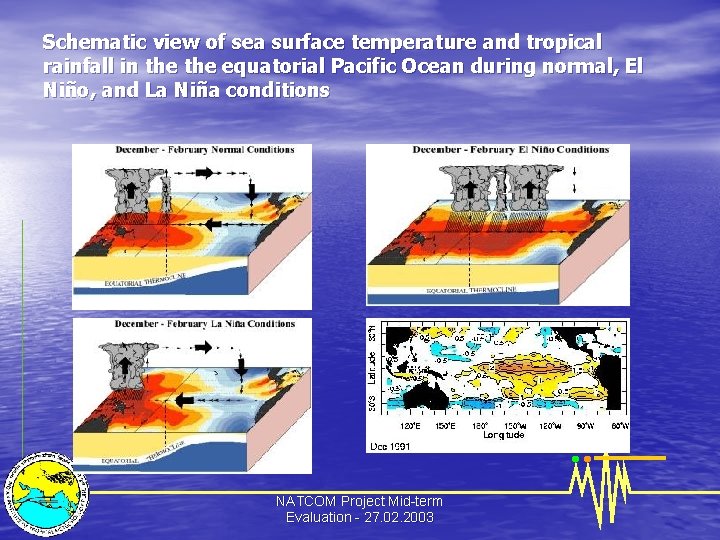
Schematic view of sea surface temperature and tropical rainfall in the equatorial Pacific Ocean during normal, El Niño, and La Niña conditions . NATCOM Project Mid-term Evaluation - 27. 02. 2003
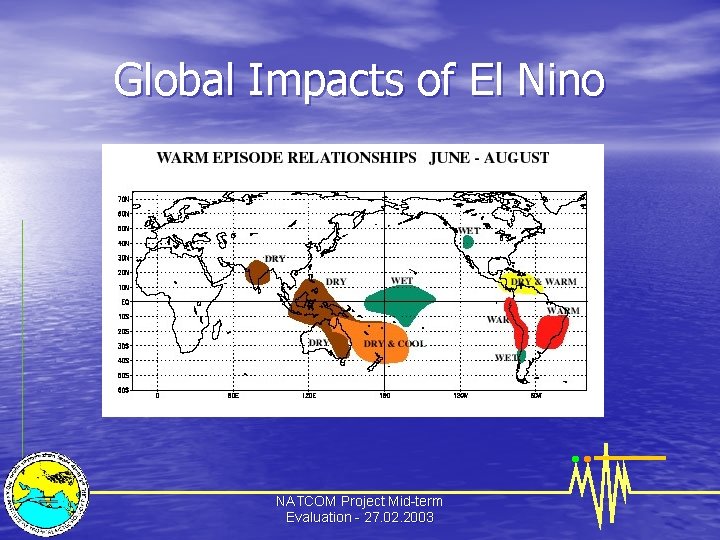
Global Impacts of El Nino NATCOM Project Mid-term Evaluation - 27. 02. 2003
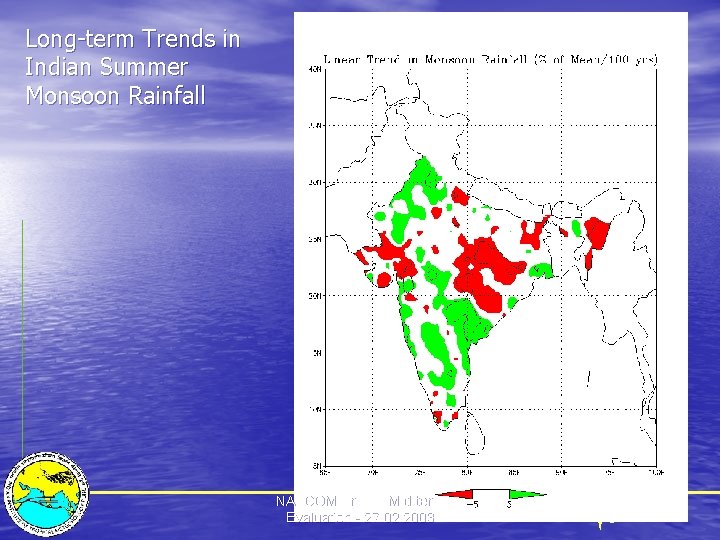
Long-term Trends in Indian Summer Monsoon Rainfall NATCOM Project Mid-term Evaluation - 27. 02. 2003
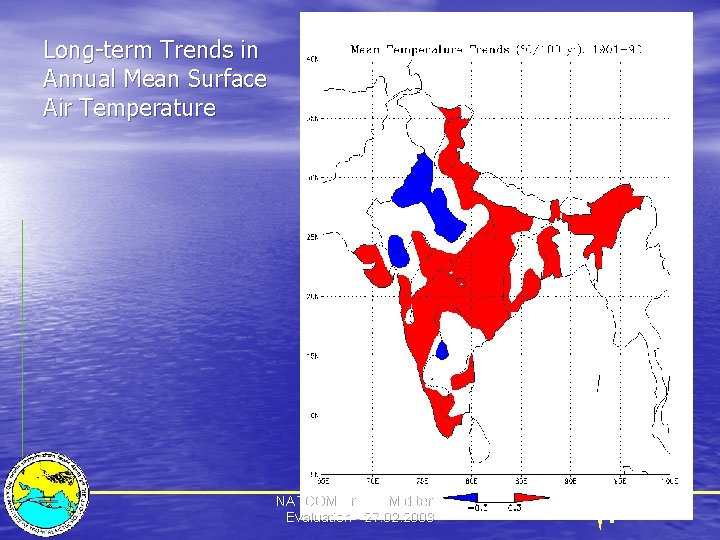
Long-term Trends in Annual Mean Surface Air Temperature NATCOM Project Mid-term Evaluation - 27. 02. 2003
Climate Scenarios: What are they ? A climate scenario is a plausible representation of future climate that has been constructed for explicit use in investigating the potential impacts of anthropogenic climate change. NATCOM Project Mid-term Evaluation - 27. 02. 2003
Uncertainties in Climate Scenarios • Specifying alternative emissions futures • Uncertainties in converting emissions to • • • concentrations Uncertainties in converting concentrations to radiative forcing Uncertainties in modelling the climate response to a given radiative forcing Uncertainties in converting model response into inputs for impact studies NATCOM Project Mid-term Evaluation - 27. 02. 2003
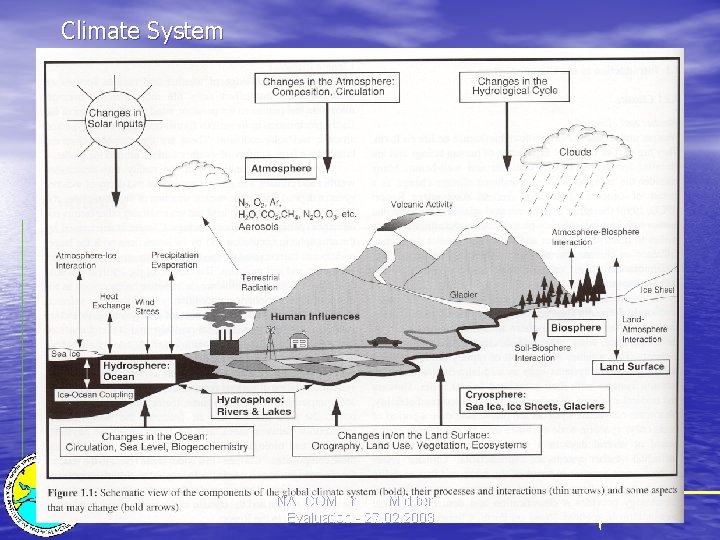
Climate System NATCOM Project Mid-term Evaluation - 27. 02. 2003
Climate Models • Simplified mathematical representation of the Earth’s climate system • Skill depends on the level of our understanding of the physical, • • geophysical, chemical and biological processes that govern the climate system Substantial improvements over the last two decades Sub-models : atmosphere, ocean, land surface, cryosphere, biosphere Typical Resolution of global models (atmosphere) : Horizontal - 250 km; Vertical – 1 km Small-scale processes : Parameterization Coupled models (e. g. , atmosphere-ocean) Sensitivity studies/Future projections Internal variability/Ensemble runs NATCOM Project Mid-term Evaluation - 27. 02. 2003
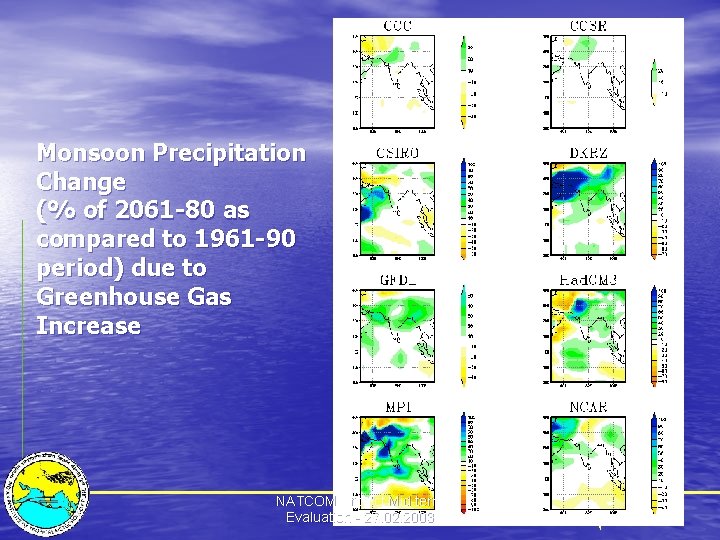
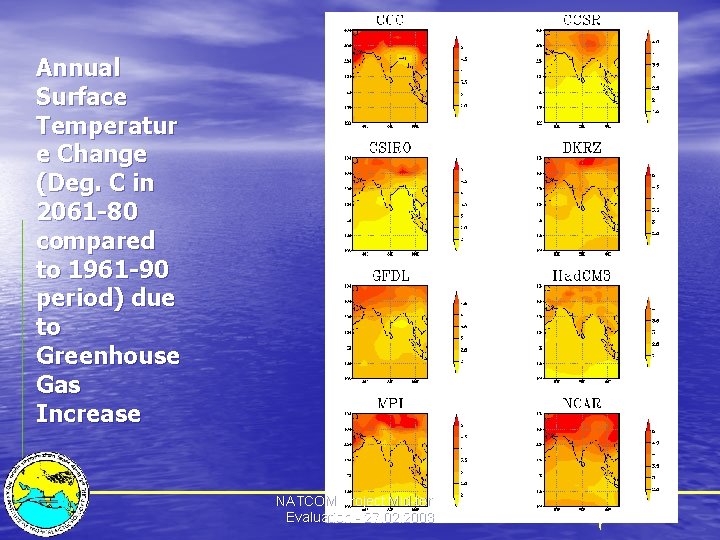
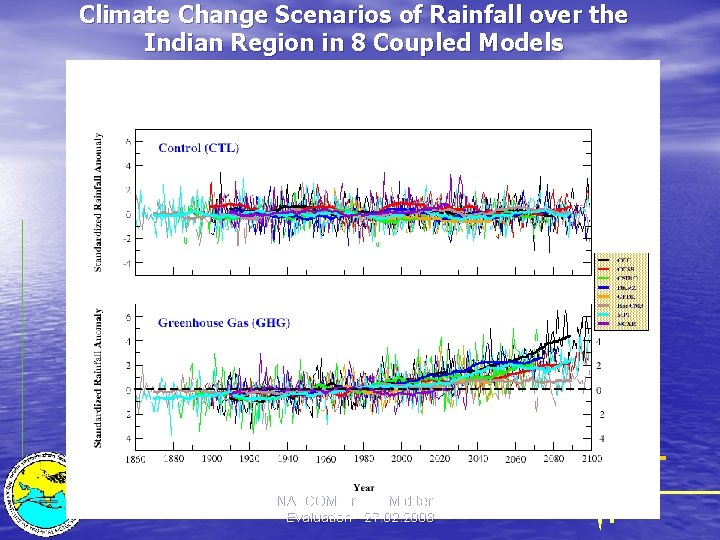
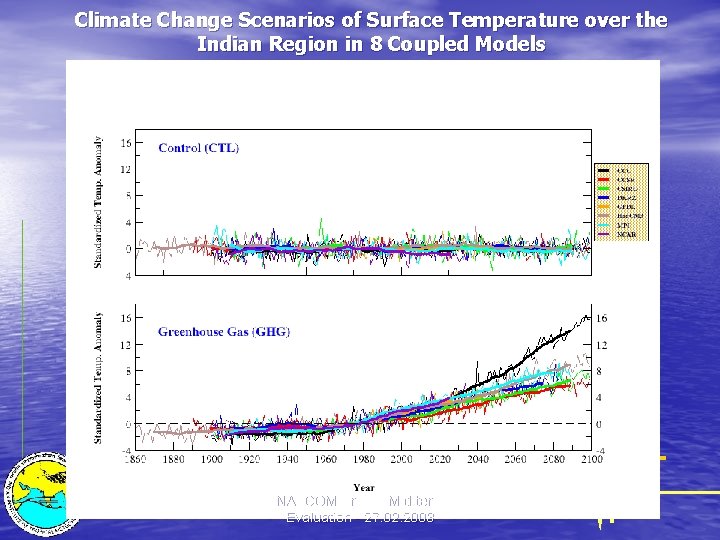
IS 92 A Scenarios of Rainfall and Temperature over India Using greenhouse gas forced (following IS 92 A scenarios) simulations of 8 different coupled ocean-atmopshere general circulation models, the rainfall and temperature scenarios for 2061 -80 compared to the baseline period of 1961 -90 are presented in the following figures for the Indian region. The simulations of eight models used are: 1. 2. 3. Canadian Center for Climate modeling (CCC) model. Center for Climate Research studies (CCSR) model. Australia's Commonwealth Scientific and Industrial Research Organization (CSIRO) model. 4. 5. 6. 7. 8. Deutsches Kilma Rechen Zentrum (DKRZ) model. Geophysical Fluid Dynamics Laboratory (GFDL) model. Hadley Centered model. (Had. CM 3) Max-planck Institute(MPI) model. National Center for Atmospheric Research (NCAR) model. NATCOM Project Mid-term Evaluation - 27. 02. 2003
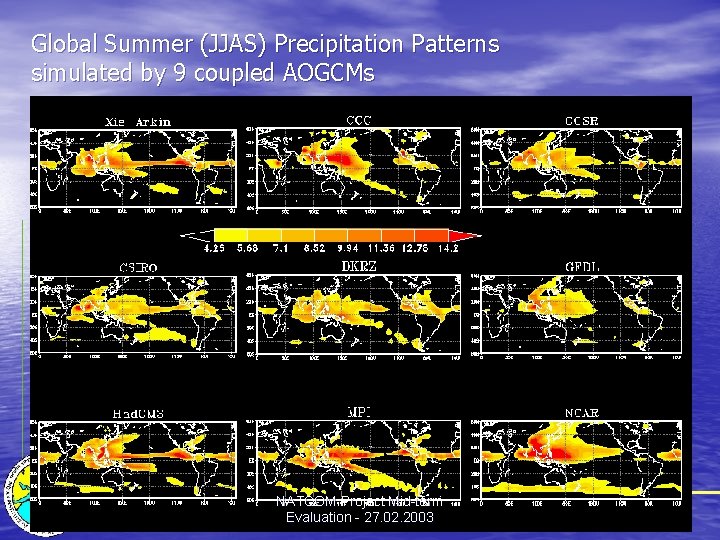
Global Summer (JJAS) Precipitation Patterns simulated by 9 coupled AOGCMs NATCOM Project Mid-term Evaluation - 27. 02. 2003
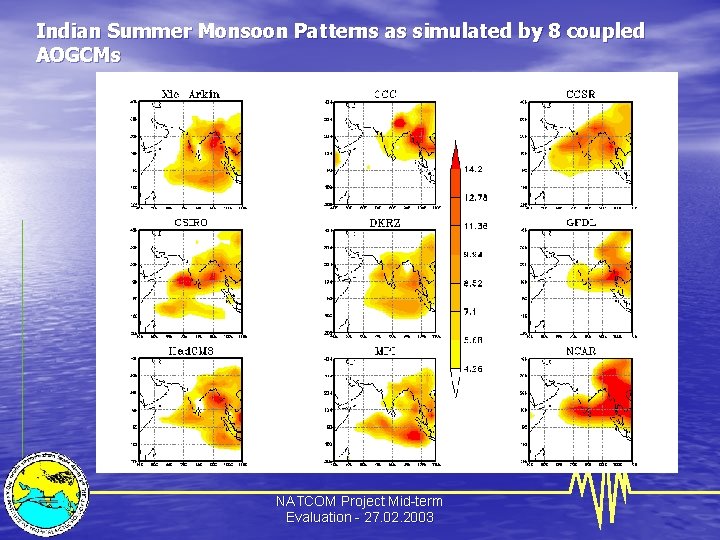
Indian Summer Monsoon Patterns as simulated by 8 coupled AOGCMs NATCOM Project Mid-term Evaluation - 27. 02. 2003
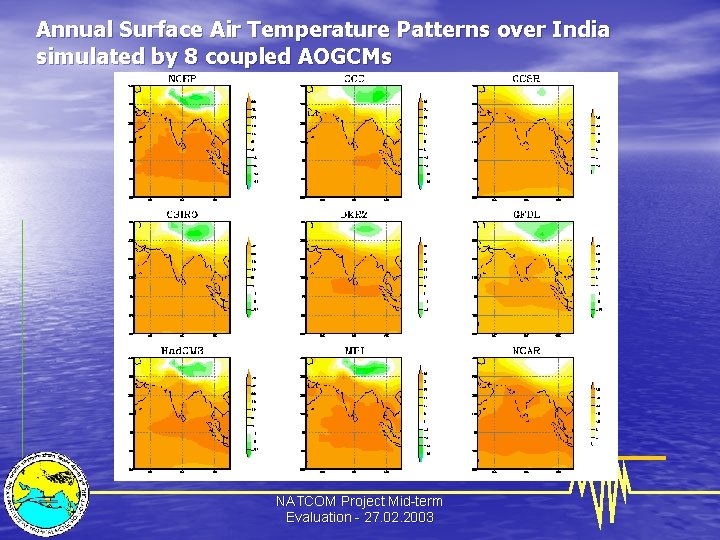
Annual Surface Air Temperature Patterns over India simulated by 8 coupled AOGCMs NATCOM Project Mid-term Evaluation - 27. 02. 2003
Monsoon Precipitation Change (% of 2061 -80 as compared to 1961 -90 period) due to Greenhouse Gas Increase NATCOM Project Mid-term Evaluation - 27. 02. 2003
Annual Surface Temperatur e Change (Deg. C in 2061 -80 compared to 1961 -90 period) due to Greenhouse Gas Increase NATCOM Project Mid-term Evaluation - 27. 02. 2003
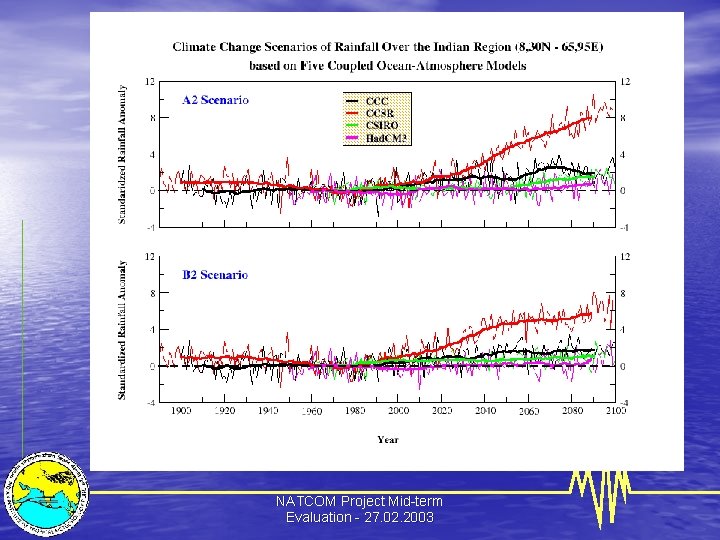
Climate Change Scenarios of Rainfall over the Indian Region in 8 Coupled Models NATCOM Project Mid-term Evaluation - 27. 02. 2003
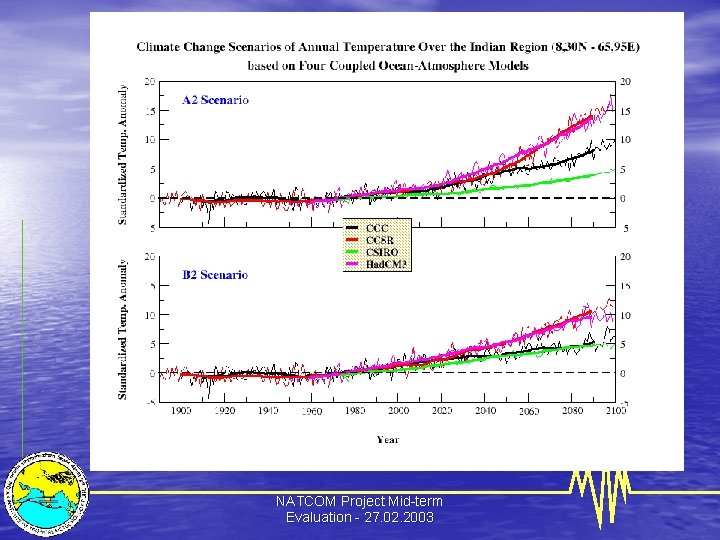
Climate Change Scenarios of Surface Temperature over the Indian Region in 8 Coupled Models NATCOM Project Mid-term Evaluation - 27. 02. 2003
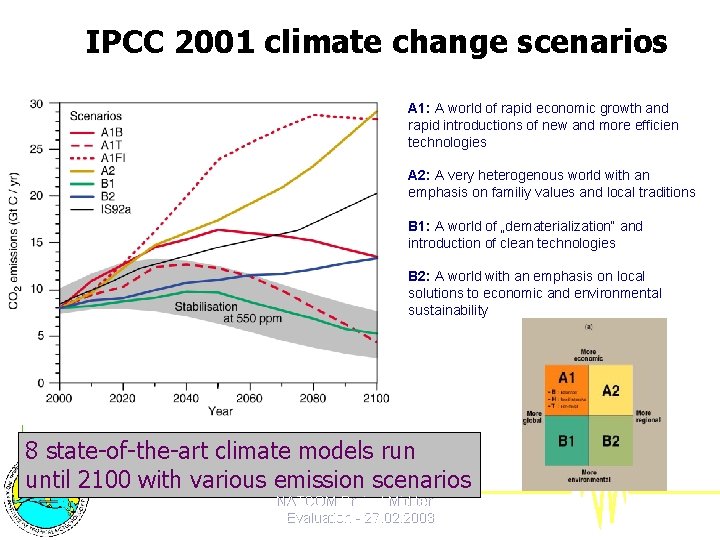
IPCC 2001 climate change scenarios A 1: A world of rapid economic growth and rapid introductions of new and more efficien technologies A 2: A very heterogenous world with an emphasis on familiy values and local traditions B 1: A world of „dematerialization“ and introduction of clean technologies B 2: A world with an emphasis on local solutions to economic and environmental sustainability 8 state-of-the-art climate models run until 2100 with various emission scenarios NATCOM Project Mid-term Evaluation - 27. 02. 2003
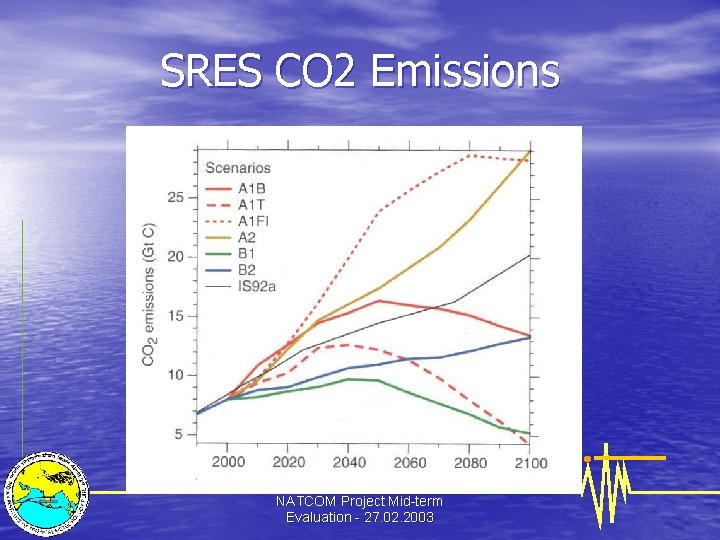
SRES CO 2 Emissions NATCOM Project Mid-term Evaluation - 27. 02. 2003
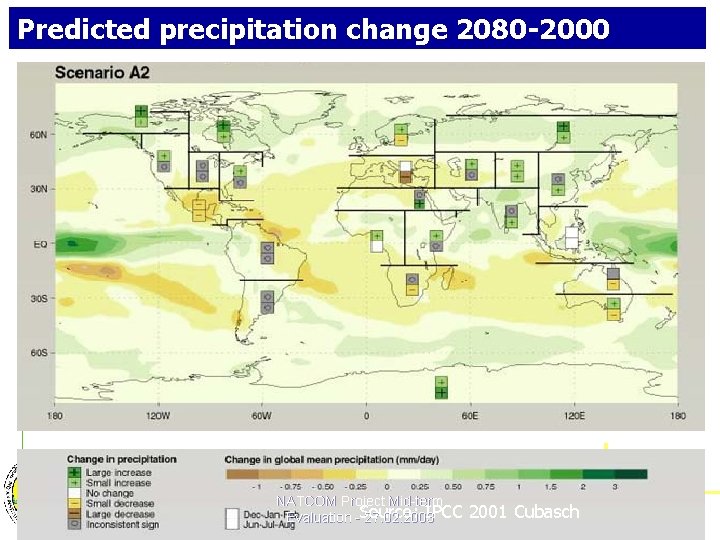
Predicted precipitation change 2080 -2000 NATCOM Project Mid-term IPCC Evaluation -Source: 27. 02. 2003 2001 Cubasch
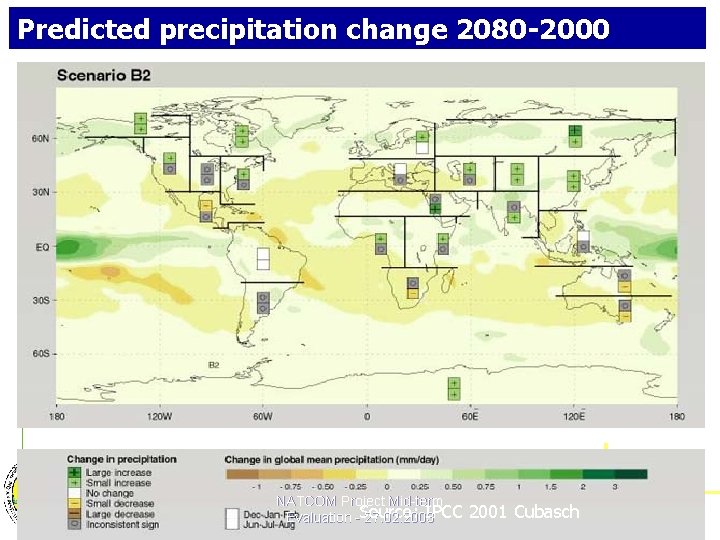
Predicted precipitation change 2080 -2000 NATCOM Project Mid-term IPCC Evaluation -Source: 27. 02. 2003 2001 Cubasch
NATCOM Project Mid-term Evaluation - 27. 02. 2003
NATCOM Project Mid-term Evaluation - 27. 02. 2003
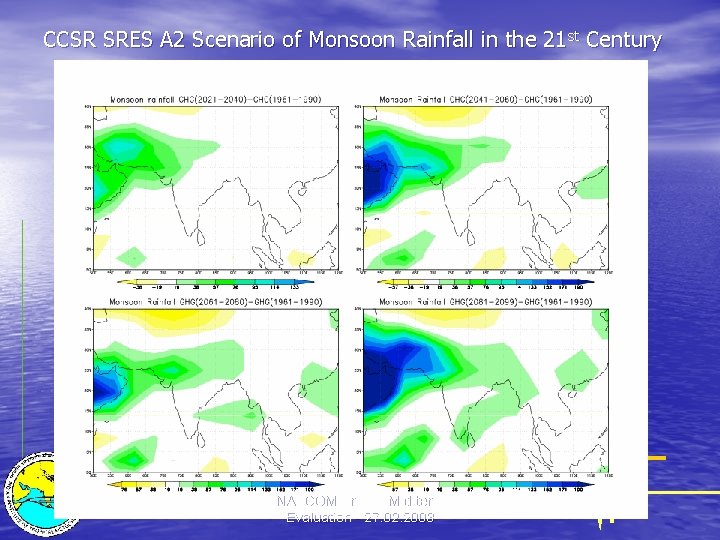
CCSR SRES A 2 Scenario of Monsoon Rainfall in the 21 st Century NATCOM Project Mid-term Evaluation - 27. 02. 2003
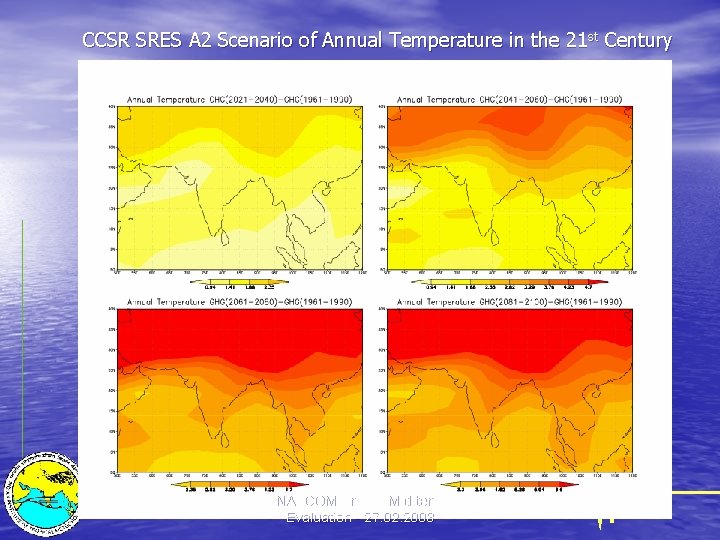
CCSR SRES A 2 Scenario of Annual Temperature in the 21 st Century NATCOM Project Mid-term Evaluation - 27. 02. 2003
Climate Signal in Indian Agriculture NATCOM Project Mid-term Evaluation - 27. 02. 2003
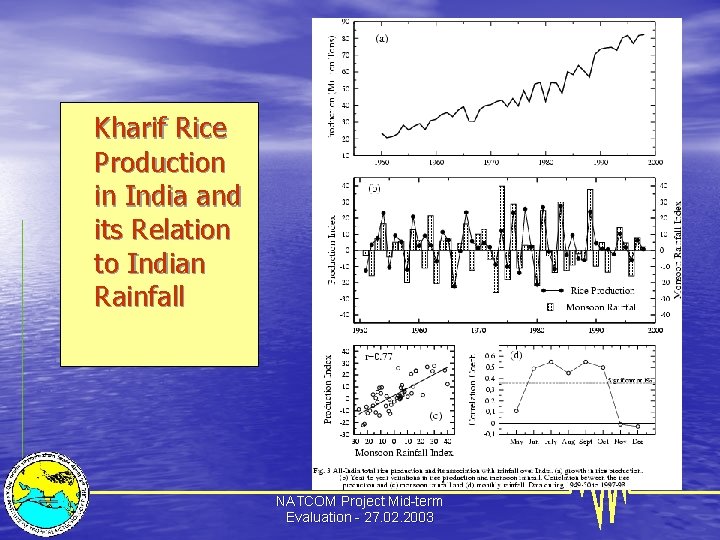
Kharif Rice Production in India and its Relation to Indian Rainfall NATCOM Project Mid-term Evaluation - 27. 02. 2003
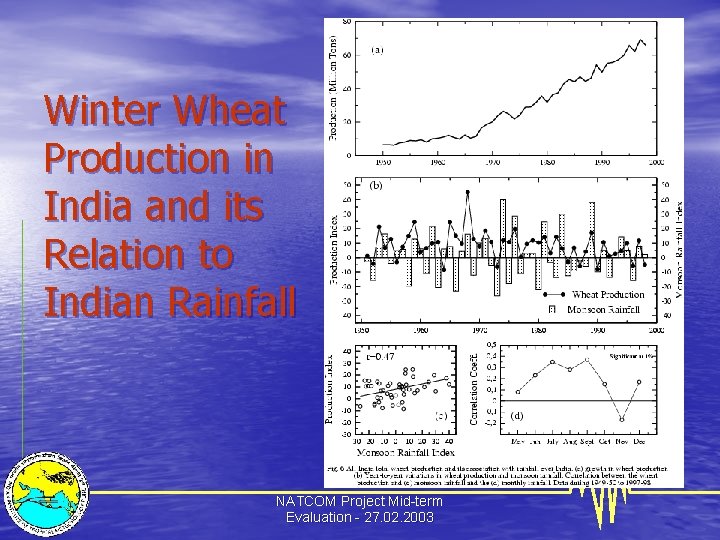
Winter Wheat Production in India and its Relation to Indian Rainfall NATCOM Project Mid-term Evaluation - 27. 02. 2003
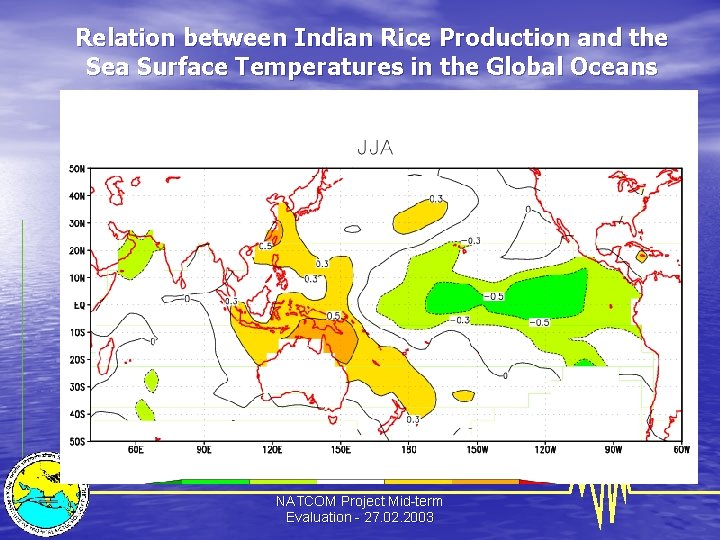
Relation between Indian Rice Production and the Sea Surface Temperatures in the Global Oceans NATCOM Project Mid-term Evaluation - 27. 02. 2003
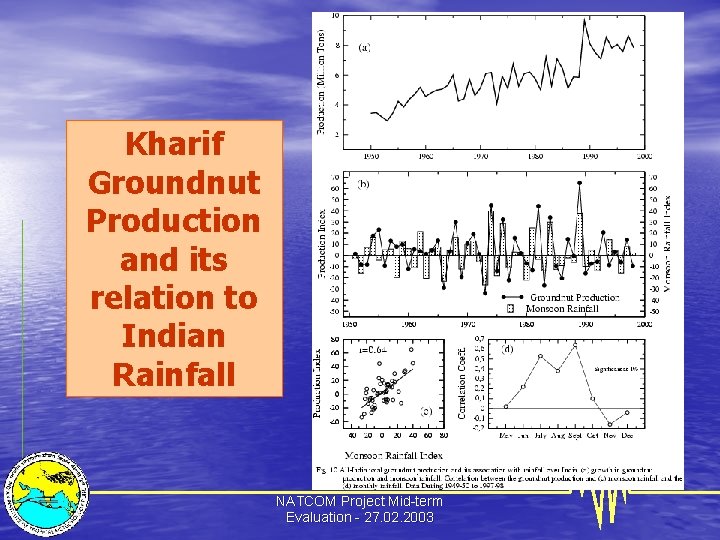
Kharif Groundnut Production and its relation to Indian Rainfall NATCOM Project Mid-term Evaluation - 27. 02. 2003
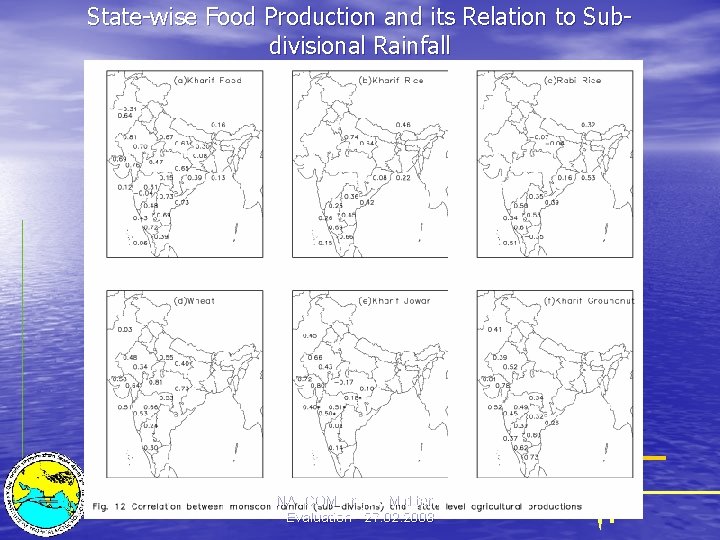
State-wise Food Production and its Relation to Subdivisional Rainfall NATCOM Project Mid-term Evaluation - 27. 02. 2003
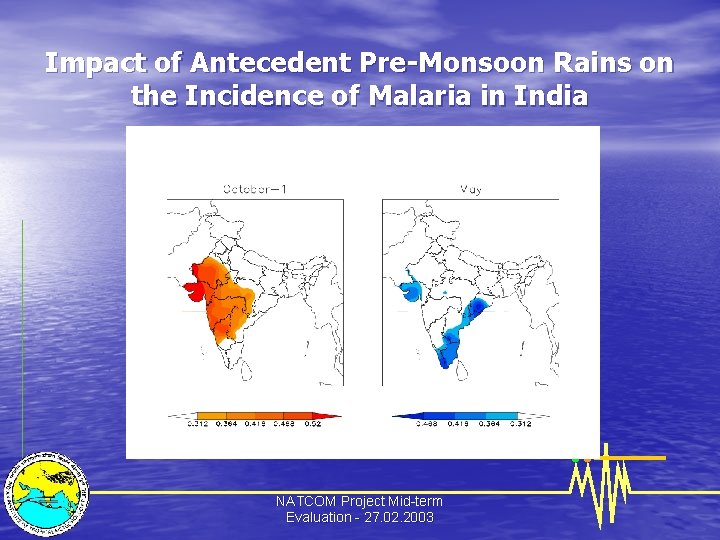
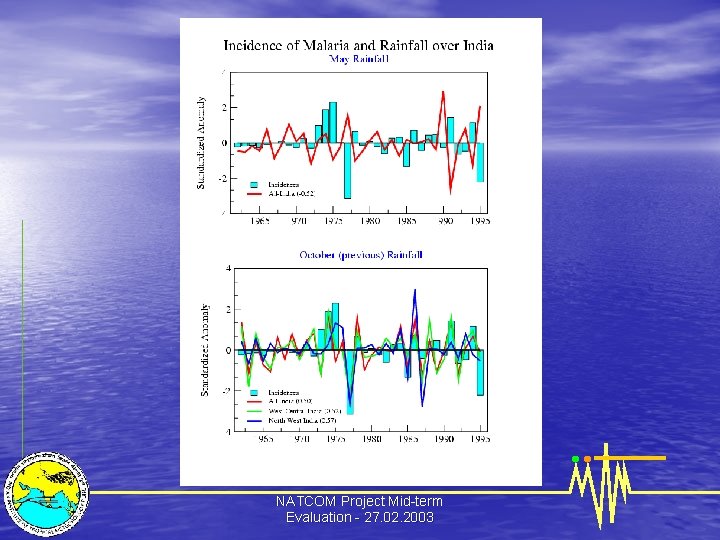
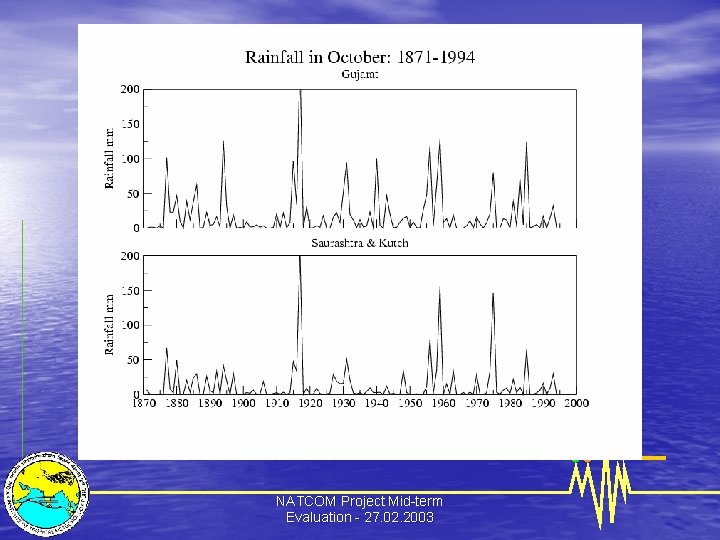
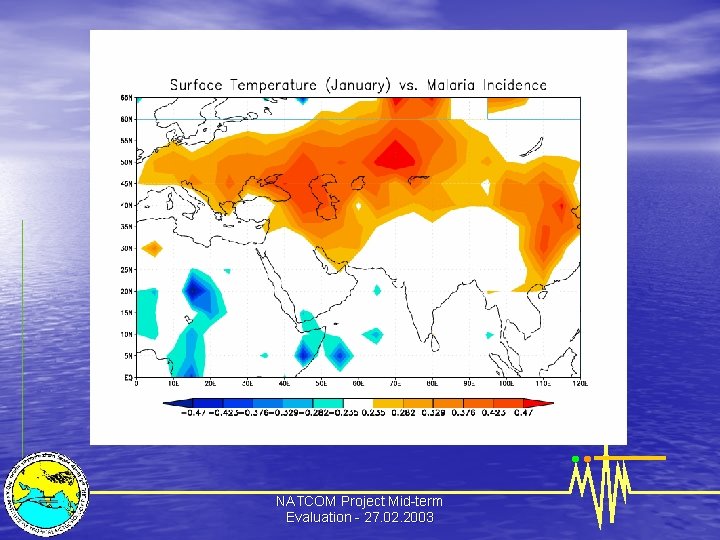
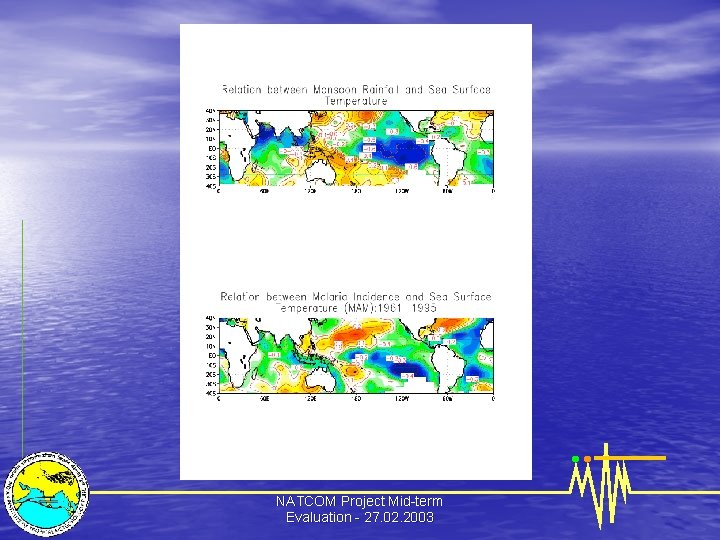
Climate Impacts on Malaria NATCOM Project Mid-term Evaluation - 27. 02. 2003
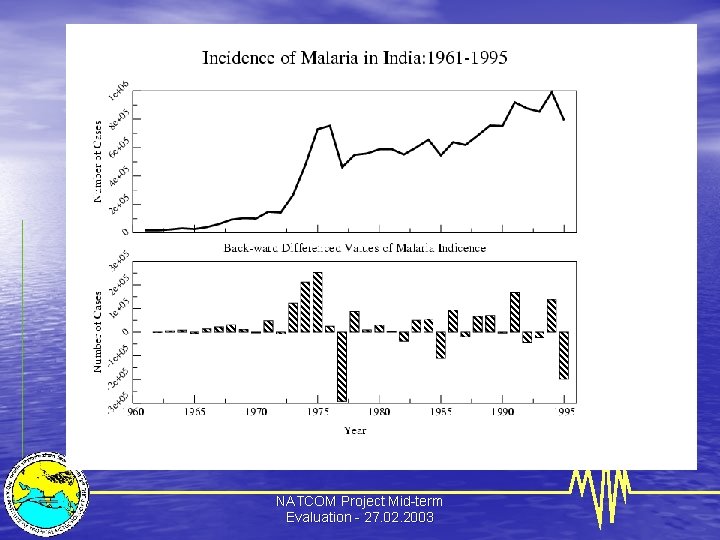
NATCOM Project Mid-term Evaluation - 27. 02. 2003
Impact of Antecedent Pre-Monsoon Rains on the Incidence of Malaria in India NATCOM Project Mid-term Evaluation - 27. 02. 2003
NATCOM Project Mid-term Evaluation - 27. 02. 2003
NATCOM Project Mid-term Evaluation - 27. 02. 2003
NATCOM Project Mid-term Evaluation - 27. 02. 2003
NATCOM Project Mid-term Evaluation - 27. 02. 2003
The Hadley Centre Regional Climate Models (Had. RM 2/Had. RM 3) • High-resolution limited area model driven at its lateral and sea • • • surface boundaries by output from Had. CM Formulation identical to Had. AM Grid : 0. 44° x 0. 44° One-way nesting Joint Indo-UK Collaborative research programme on climate change impacts in India Climate change simulations performed by the Hadley Centre using Had. RM 2 for the Indian region (the output is being currently analysed by IITM) Had. RM 3 installed at IITM; Climate change simulations and scenario development will be performed at IITM NATCOM Project Mid-term Evaluation - 27. 02. 2003
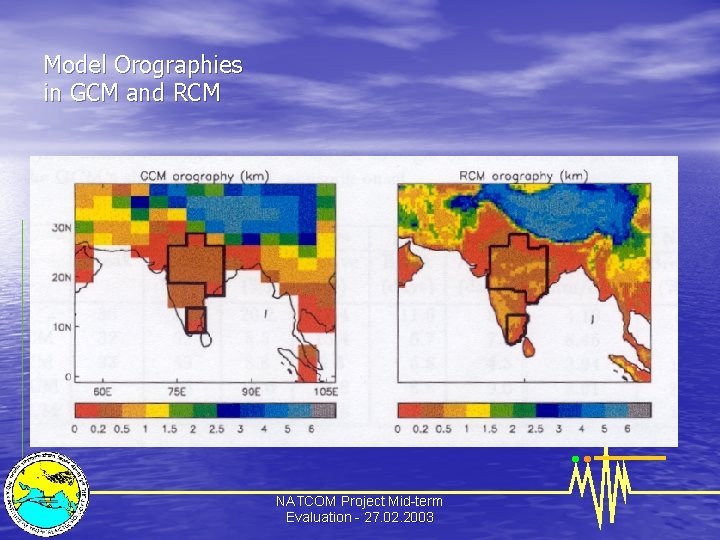
Model Orographies in GCM and RCM NATCOM Project Mid-term Evaluation - 27. 02. 2003
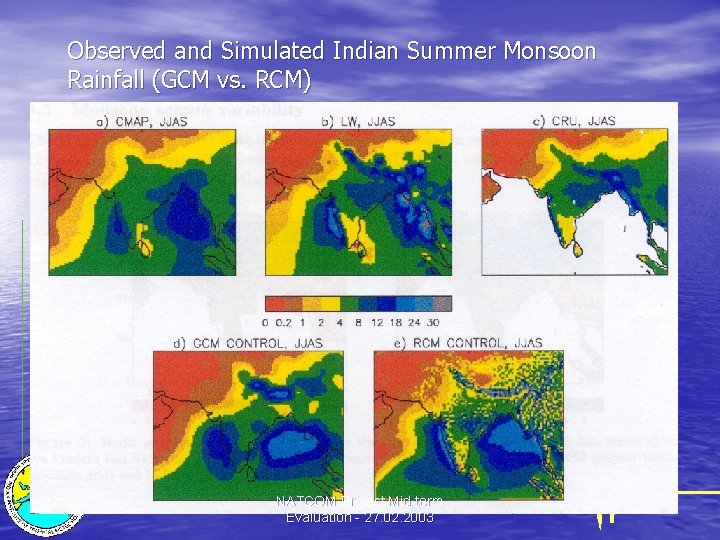
Observed and Simulated Indian Summer Monsoon Rainfall (GCM vs. RCM) NATCOM Project Mid-term Evaluation - 27. 02. 2003
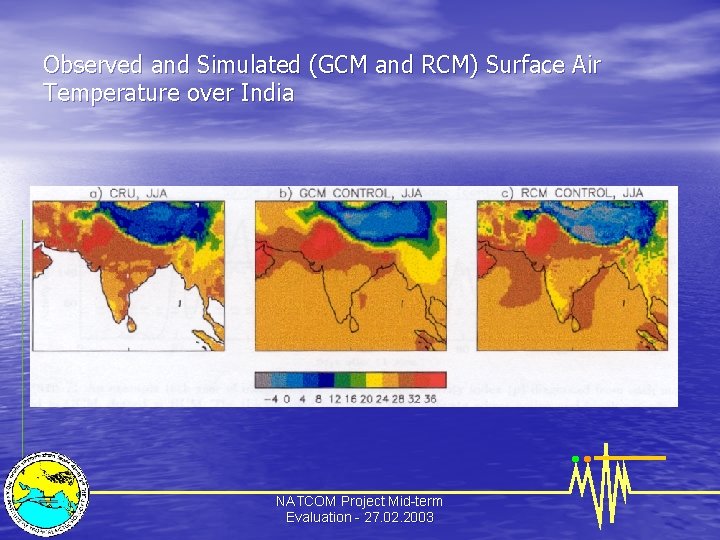
Observed and Simulated (GCM and RCM) Surface Air Temperature over India NATCOM Project Mid-term Evaluation - 27. 02. 2003
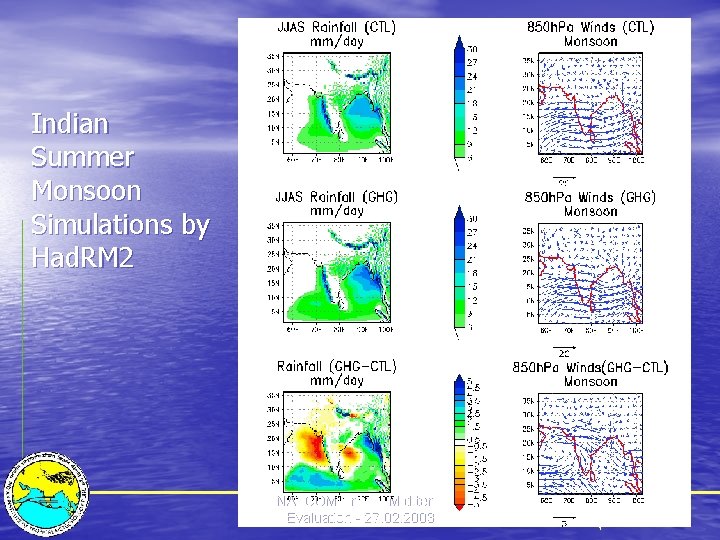
Indian Summer Monsoon Simulations by Had. RM 2 NATCOM Project Mid-term Evaluation - 27. 02. 2003
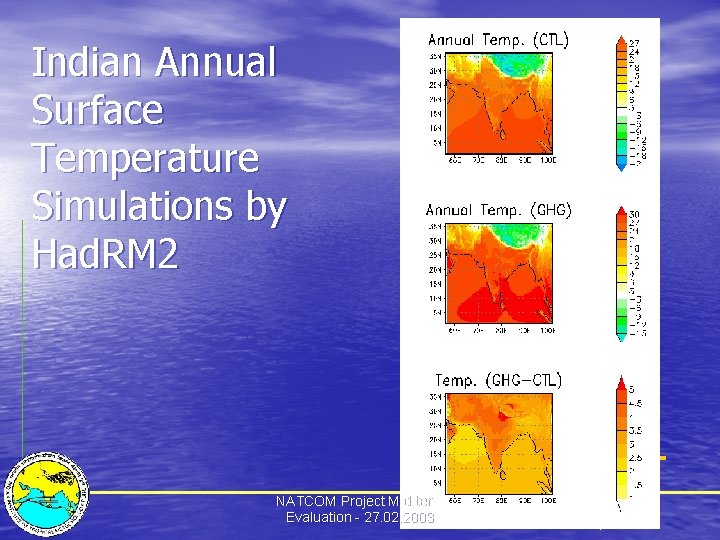
Indian Annual Surface Temperature Simulations by Had. RM 2 NATCOM Project Mid-term Evaluation - 27. 02. 2003
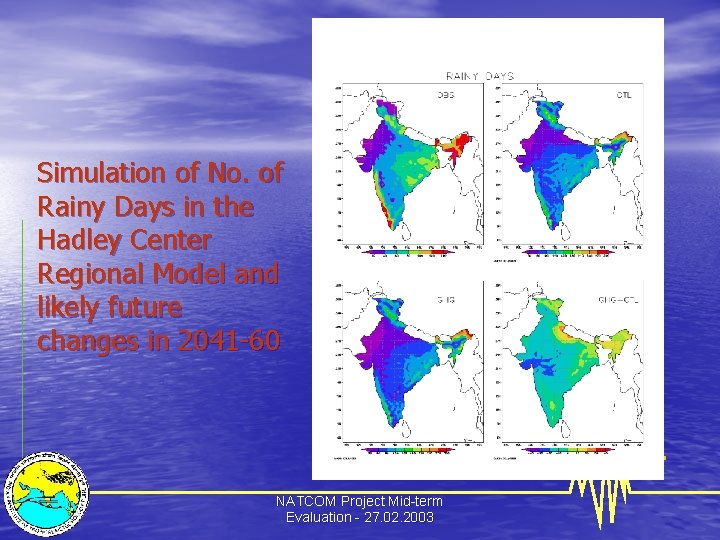
Simulation of No. of Rainy Days in the Hadley Center Regional Model and likely future changes in 2041 -60 NATCOM Project Mid-term Evaluation - 27. 02. 2003
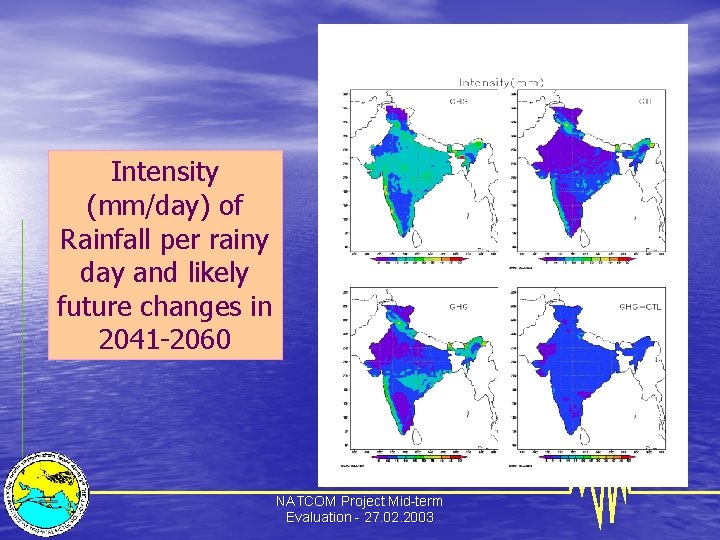
Intensity (mm/day) of Rainfall per rainy day and likely future changes in 2041 -2060 NATCOM Project Mid-term Evaluation - 27. 02. 2003
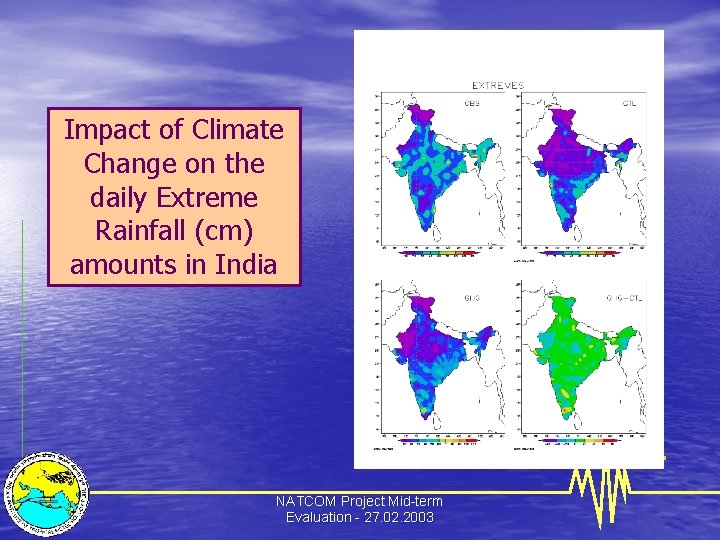
Impact of Climate Change on the daily Extreme Rainfall (cm) amounts in India NATCOM Project Mid-term Evaluation - 27. 02. 2003
Acknowledgements We wish to place on record our sincere thanks to UNFCC/GEF/UNDP/MOEF/GOI for necessary financial support to undertake this project under the India’s initial National Communication (NATCOM) being co-ordinated through Winrock International India, New Delhi NATCOM Project Mid-term Evaluation - 27. 02. 2003