
Climate Change Lesson 4 Physical Effects of Climate
- Slides: 11
Climate Change Lesson # 4: Physical Effects of Climate Change (8. 2 of Textbook)
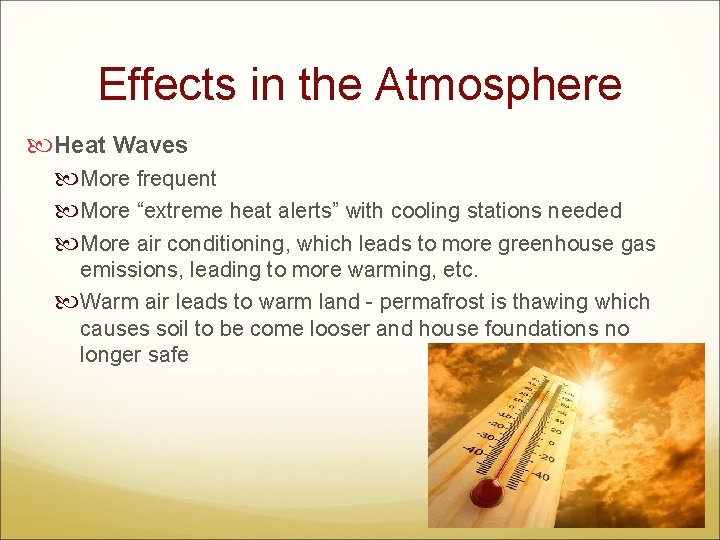
Effects in the Atmosphere Heat Waves More frequent More “extreme heat alerts” with cooling stations needed More air conditioning, which leads to more greenhouse gas emissions, leading to more warming, etc. Warm air leads to warm land - permafrost is thawing which causes soil to be come looser and house foundations no longer safe
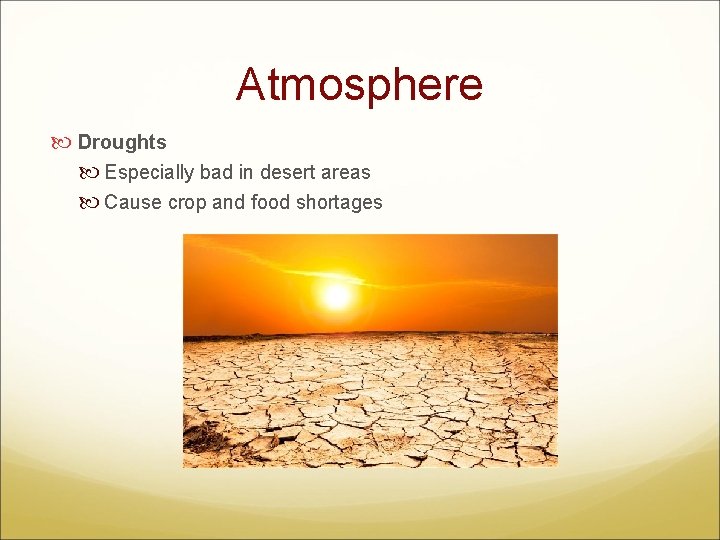
Atmosphere Droughts Especially bad in desert areas Cause crop and food shortages
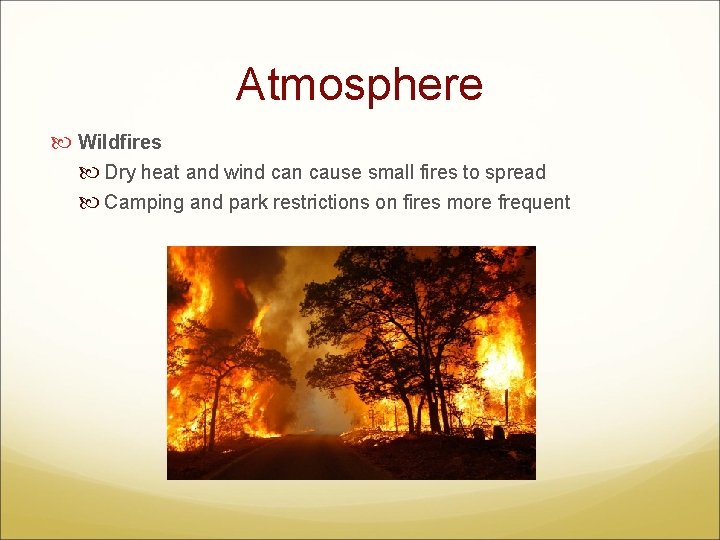
Atmosphere Wildfires Dry heat and wind can cause small fires to spread Camping and park restrictions on fires more frequent
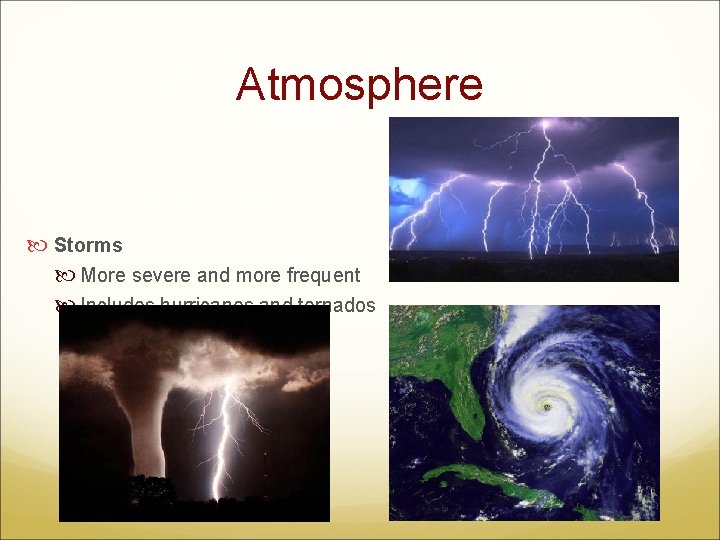
Atmosphere Storms More severe and more frequent Includes hurricanes and tornados
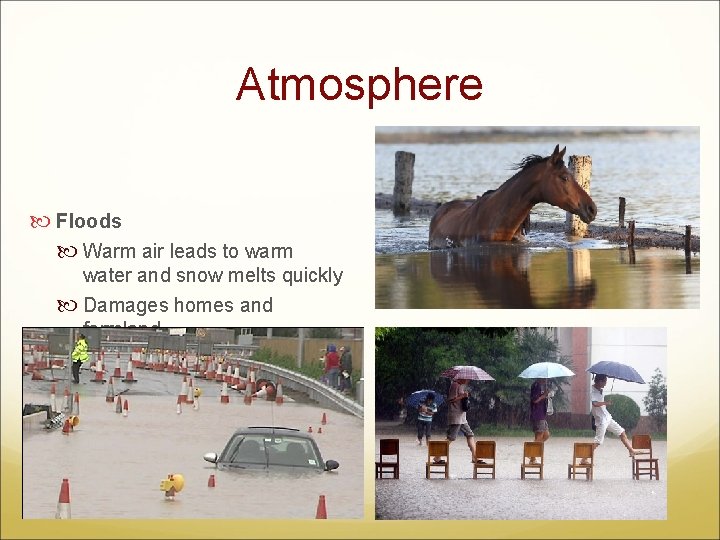
Atmosphere Floods Warm air leads to warm water and snow melts quickly Damages homes and farmland
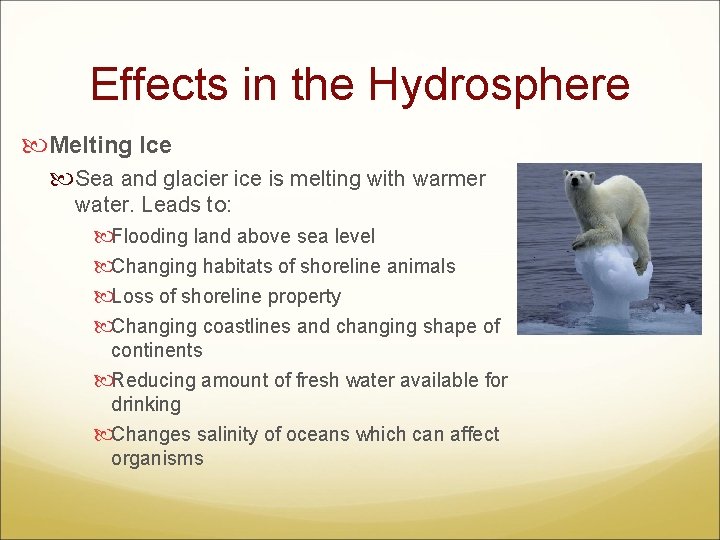
Effects in the Hydrosphere Melting Ice Sea and glacier ice is melting with warmer water. Leads to: Flooding land above sea level Changing habitats of shoreline animals Loss of shoreline property Changing coastlines and changing shape of continents Reducing amount of fresh water available for drinking Changes salinity of oceans which can affect organisms
Hydrosphere (continued) Ocean Warming Warm water expands causing higher sea levels Less CO 2 absorbed – less of a carbon sink Less plankton growth (they perform photosynthesis) to start the aquatic food chain More intense hurricanes Ocean Current Changes Change in heat transfer - speed and direction Could global warming lead to global cooling?
Effects on Wildlife Range Shifts A range is where an organism lives Organisms are being found living in different areas Grey Jays (birds) are now found more north so that their stored food can last longer before going bad Many bird migration patterns have changed – they don’t need to fly as south as they used to and some lose their groups along the way Ticks, which can carry Lyme diseases, are now being found in northern areas where they were not found before
Wildlife (continued) Threatened Species Between 40 -70% of all species are at risk of extinction if the global temperature increases only by 3. 3°C. Corals are threatened with increasing CO 2 emissions (increasing acidity) and ocean warming Pacific salmon fish stock declining – reduces jobs and food Polar bears finding it harder to hunt seals with limited ice to stand on, and starving Frogs, toads, salamanders decreasing – why these species? Organisms that Benefit Large jellyfish now can live worldwide with warmer temperatures – increased population
Homework Page 319 # 2 -7, 9 -17 Watch Videos on Wildlife & Climate Change & Bees Climate Change & Oceans Climate Change & Heat Waves