
Climate Change in the context of Sustainable Development
Climate Change in the context of Sustainable Development Department of Environmental Affairs and Development Planning Provincial Government of the Western Cape Republic of South Africa Dipolelo Elford
Western Cape Context • 5. 3 Million citizens, 90% live in cities and towns • Growing economy and lower unemployment rate than national average • Home to two Biodiversity Hotspots – Cape Floristic Region and Succulent Karoo • Western Cape is an important tourist destination. In 2002/03 foreign direct investment from tourism = >R 550 million • Bordered by >1000 km of coastline • Energy security – key economic concern
Sustainable Development Imperative • Vision - A sustainable home for all – now and forever • Sustainable Development Declaration • Sustainable Development Implementation Plan - Will be achieved through implementing integrated governance systems that promote economic growth in a manner that contributes to greater social equity and that maintains the ongoing capacity of the natural environment to provide the ecological services upon which socio -economic development depends
Sustainable Development in the Province • Challenge: Balancing economic growth and environmental integrity • Western Cape Provincial Growth and Development Strategy (PGDS) recognises that growth must take place within a sustainable development framework • The SDIP is one of several provincial strategies and plans that seeks to give expression to the Province’s vision of shared growth and integrated development.
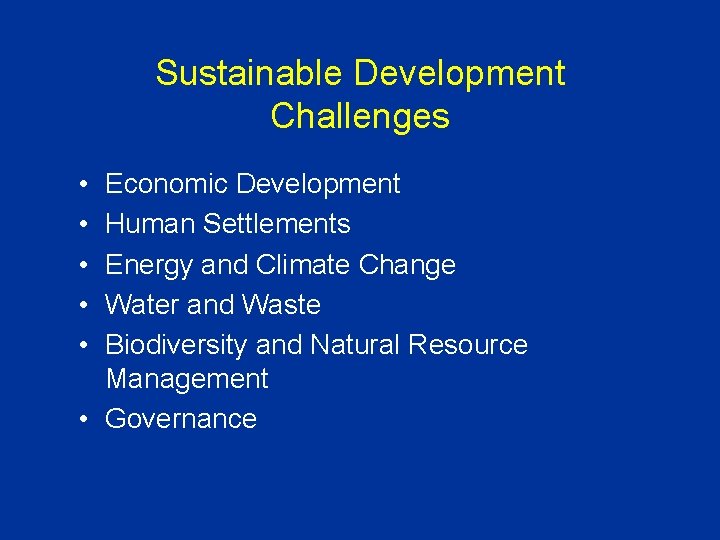
Sustainable Development Challenges • • • Economic Development Human Settlements Energy and Climate Change Water and Waste Biodiversity and Natural Resource Management • Governance
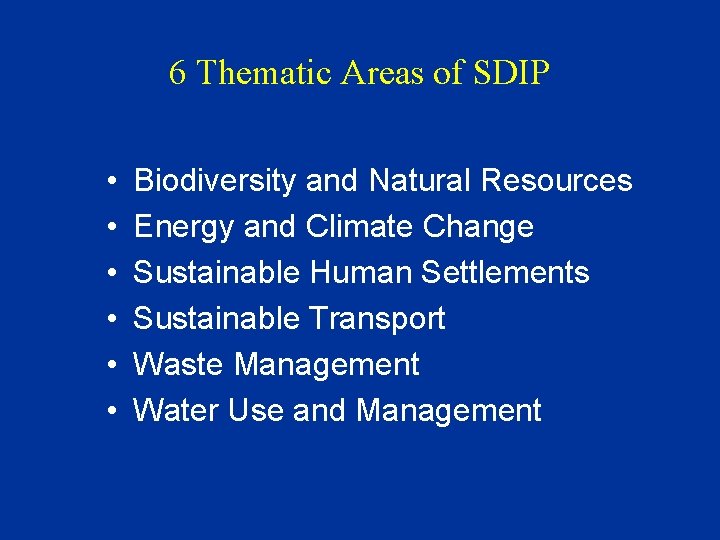
6 Thematic Areas of SDIP • • • Biodiversity and Natural Resources Energy and Climate Change Sustainable Human Settlements Sustainable Transport Waste Management Water Use and Management
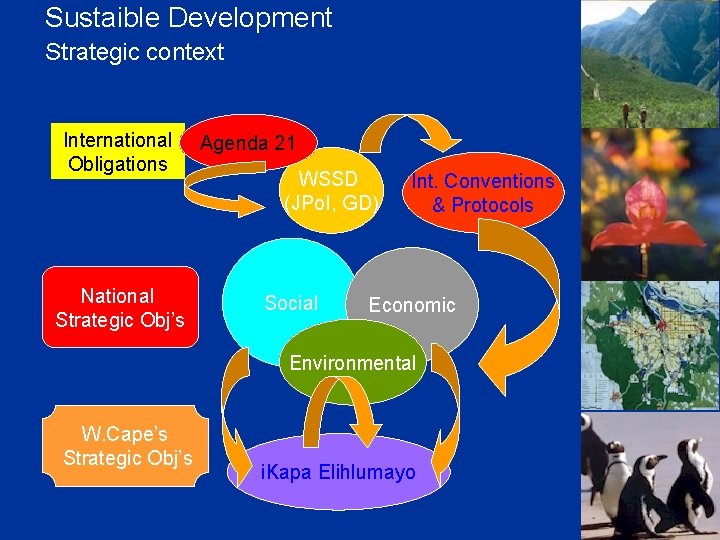
Sustaible Development Strategic context International Obligations National Strategic Obj’s Agenda 21 WSSD (JPo. I, GD) Social Int. Conventions & Protocols Economic Environmental W. Cape’s Strategic Obj’s i. Kapa Elihlumayo
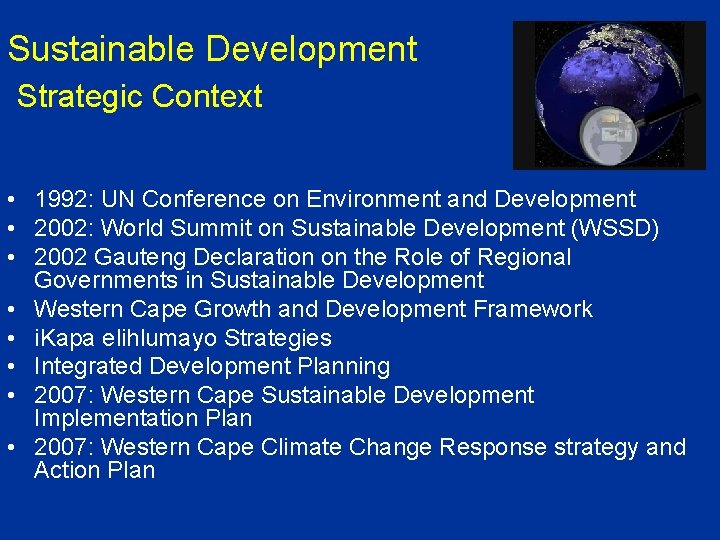
Sustainable Development Strategic Context • 1992: UN Conference on Environment and Development • 2002: World Summit on Sustainable Development (WSSD) • 2002 Gauteng Declaration on the Role of Regional Governments in Sustainable Development • Western Cape Growth and Development Framework • i. Kapa elihlumayo Strategies • Integrated Development Planning • 2007: Western Cape Sustainable Development Implementation Plan • 2007: Western Cape Climate Change Response strategy and Action Plan
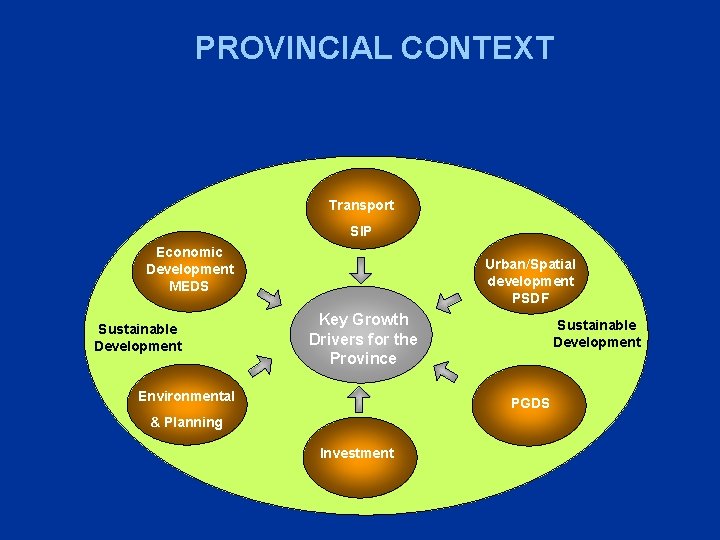
PROVINCIAL CONTEXT Transport SIP Economic Development MEDS Sustainable Development Urban/Spatial development PSDF Key Growth Drivers for the Province Environmental Sustainable Development PGDS & Planning Investment
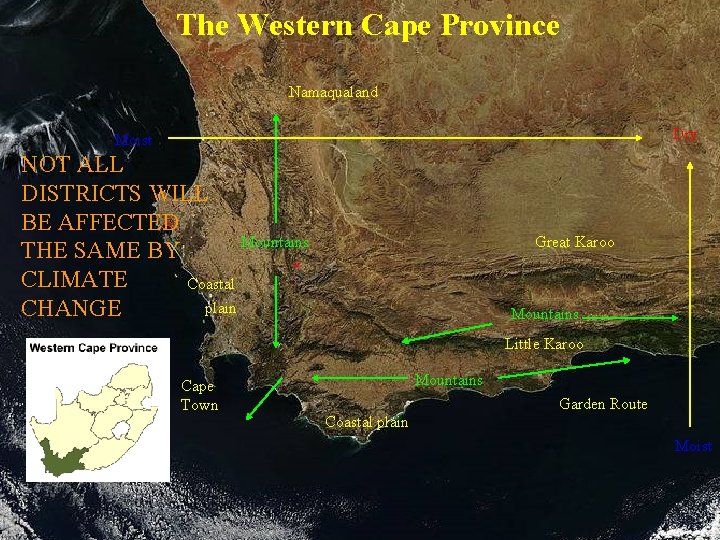
The Western Cape Province Namaqualand Dry Moist NOT ALL DISTRICTS WILL BE AFFECTED Mountains THE SAME BY CLIMATE Coastal plain CHANGE Great Karoo Mountains Little Karoo Cape Town Mountains Garden Route Coastal plain Moist
Key Predictions about Climate Change in the Western Cape • Changes are detectable and attributable • Warmer temperatures more so in the interior. • Drier conditions in the shoulder seasons, especially away from mountains • weaker cold fronts, (longer burn season). • Increased humidity and greater persistence of stronger southerly winds. • increased rainfall intensity and extreme events • Possible increases in inter-annual variability
Climate Change threats to Sustainable Development in the Province • The 2005 - Climate Change Status Quo and vulnerability assessment Report which shows that climate change will have double the global average impact in the Western Cape. • Hotter and drier weather will lead to: - More fires, floods and drought - Changes and drop in agricultural production - Less water - Increased vulnerability of the poor
The Western Cape Climate Change Response Strategy and Action Plan
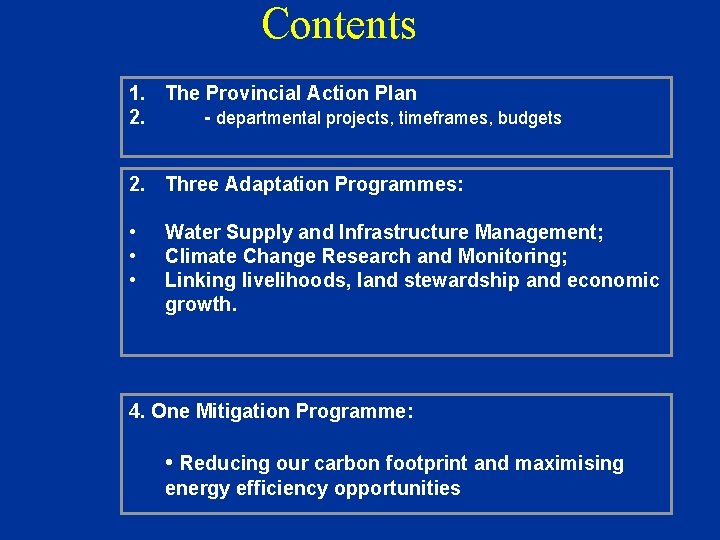
Contents 1. The Provincial Action Plan 2. - departmental projects, timeframes, budgets 2. Three Adaptation Programmes: • • • Water Supply and Infrastructure Management; Climate Change Research and Monitoring; Linking livelihoods, land stewardship and economic growth. 4. One Mitigation Programme: • Reducing our carbon footprint and maximising energy efficiency opportunities
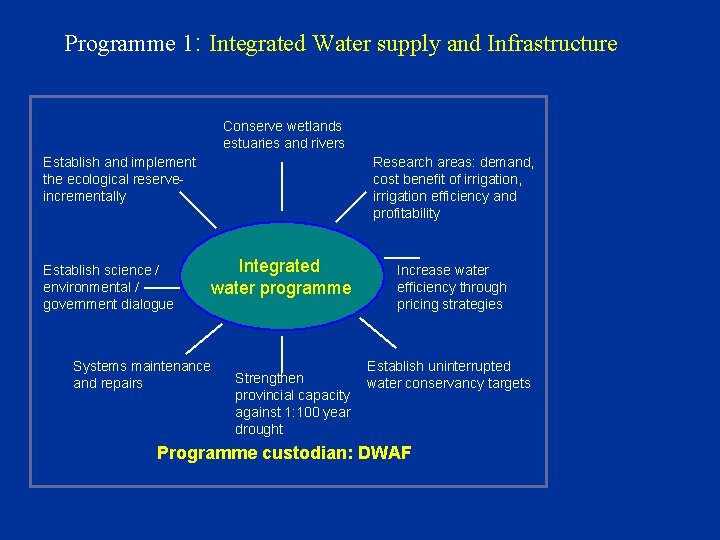
Programme 1: Integrated Water supply and Infrastructure Conserve wetlands estuaries and rivers Establish and implement the ecological reserveincrementally Establish science / environmental / government dialogue Systems maintenance and repairs Research areas: demand, cost benefit of irrigation, irrigation efficiency and profitability Integrated water programme Strengthen provincial capacity against 1: 100 year drought Increase water efficiency through pricing strategies Establish uninterrupted water conservancy targets Programme custodian: DWAF
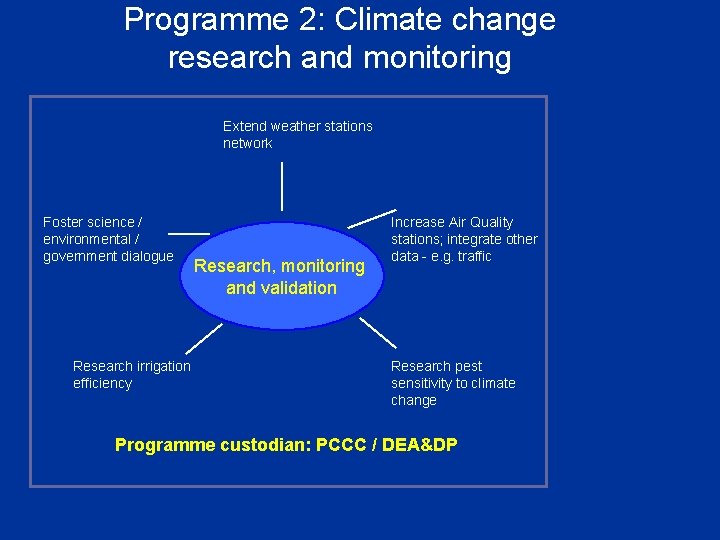
Programme 2: Climate change research and monitoring Extend weather stations network Foster science / environmental / government dialogue Research irrigation efficiency Research, monitoring and validation Increase Air Quality stations; integrate other data - e. g. traffic Research pest sensitivity to climate change Programme custodian: PCCC / DEA&DP
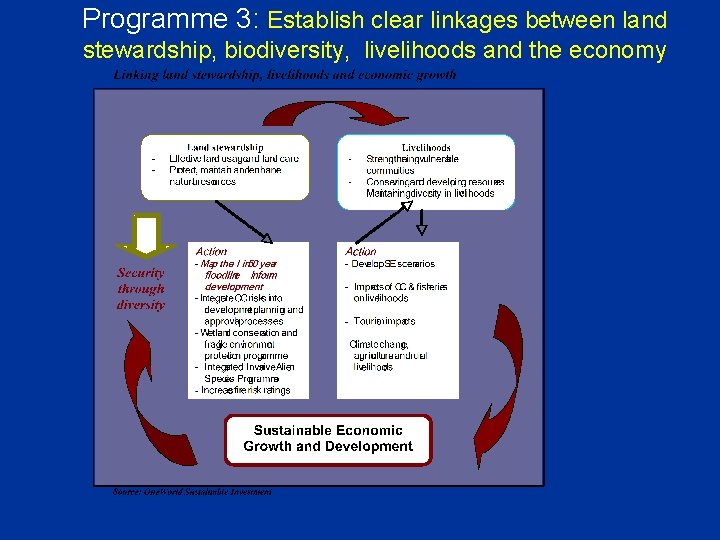
Programme 3: Establish clear linkages between land stewardship, biodiversity, livelihoods and the economy
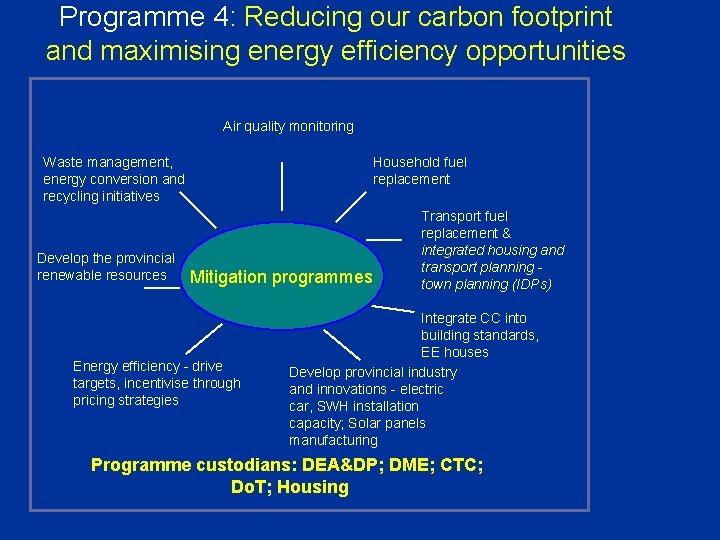
Programme 4: Reducing our carbon footprint and maximising energy efficiency opportunities Air quality monitoring Waste management, energy conversion and recycling initiatives Develop the provincial renewable resources Household fuel replacement Mitigation programmes Energy efficiency - drive targets, incentivise through pricing strategies Transport fuel replacement & integrated housing and transport planning town planning (IDPs) Integrate CC into building standards, EE houses Develop provincial industry and innovations - electric car, SWH installation capacity; Solar panels manufacturing Programme custodians: DEA&DP; DME; CTC; Do. T; Housing
Environmental Authorisations • • Reducing the cumulative impacts on water sources; Water and energy efficiency measures; Transport focus on public transport measures; Development setbacks in coastal zones and flood prone areas; • Avoiding damage to wetlands, aquatic systems, forests, other fragile environments and biodiversity hotspots and corridors; • Avoiding development of high potential agricultural land; • Avoiding impacts and promoting environmental rights of socio-economically disadvantaged communities
Conclusion • Climate change poses a particular challenge over and above the already existing challenge of achieving sustainable development • Key imperative is to adapt our provincial development initiatives and activities to minimise the impact of adverse climate trends on our citizen’s socioeconomic development and on natural resource conservation • Need to limit green house gas emissions and improve energy security • Need to act sooner rather than later
Thank You
- Slides: 21