
Climate Change Greenhouse Gases 101 Whats going on

- Slides: 61
Climate Change & Greenhouse Gases 101 What’s going on, how did we get here, and what now? Stephanie Arnold, University of Prince Edward Island Presented in Charlottetown, PE January 11, 2018
Overview • What’s going on? How did we get here? – Basics of climate change – Climate change impacts • What now? – Responding to climate change Trivia
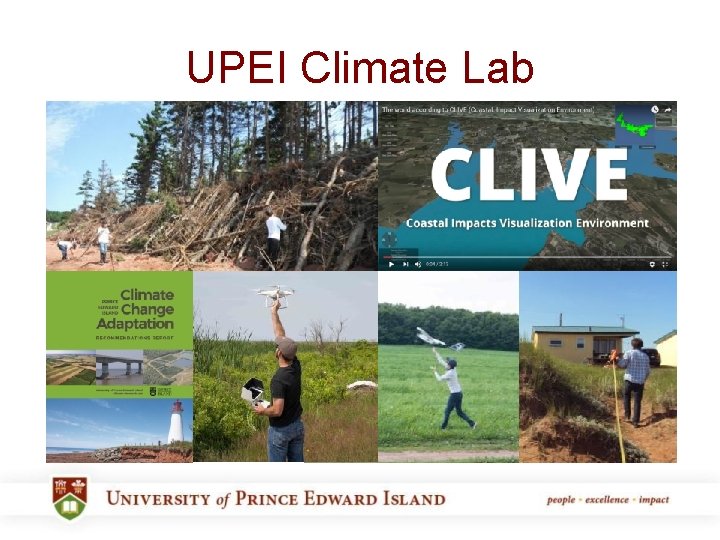
UPEI Climate Lab
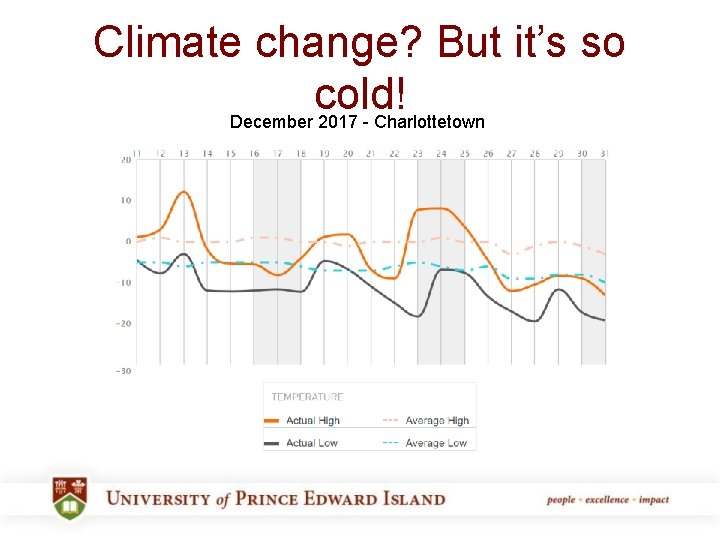
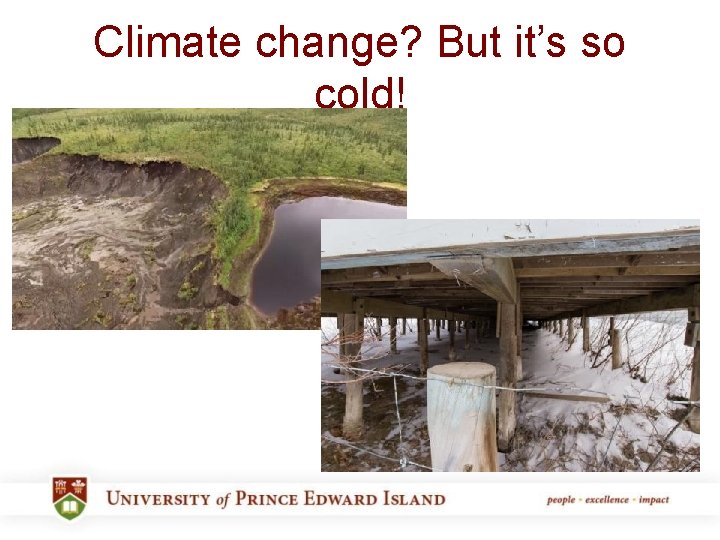
Climate change? But it’s so cold! December 2017 - Charlottetown
Climate change? But it’s so cold!
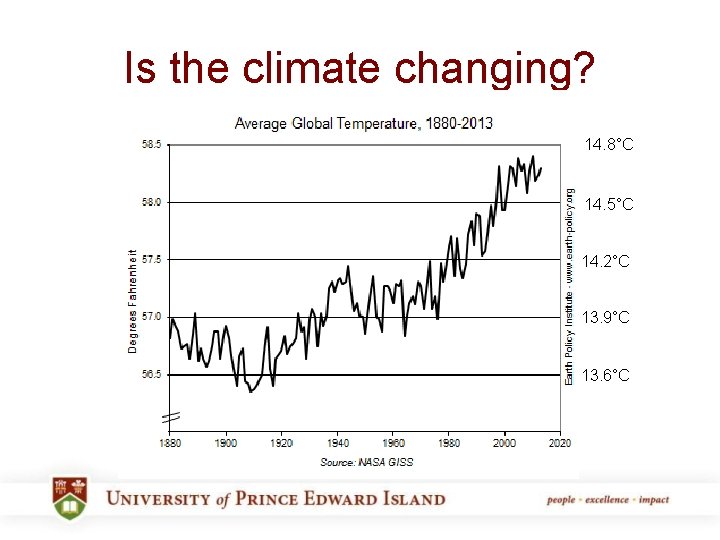
Is the climate changing? 14. 8°C 14. 5°C 14. 2°C 13. 9°C 13. 6°C
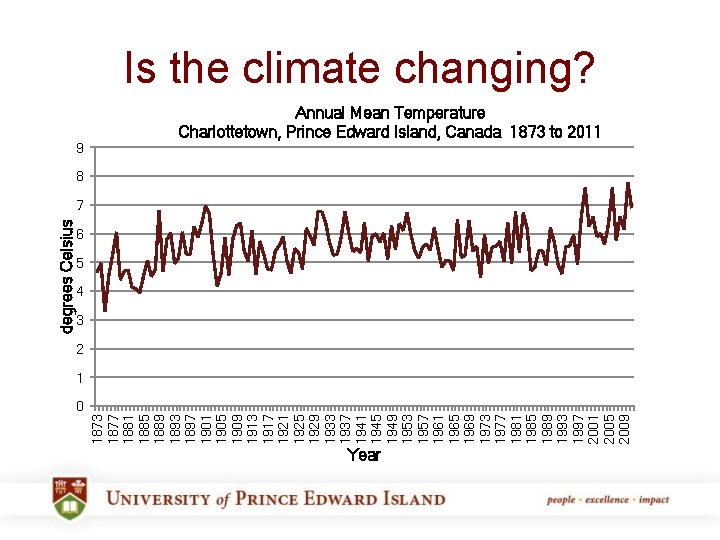
9 0 1873 1877 1881 1885 1889 1893 1897 1901 1905 1909 1913 1917 1921 1925 1929 1933 1937 1941 1945 1949 1953 1957 1961 1965 1969 1973 1977 1981 1985 1989 1993 1997 2001 2005 2009 degrees Celsius Is the climate changing? Annual Mean Temperature Charlottetown, Prince Edward Island, Canada 1873 to 2011 8 7 6 5 4 3 2 1 Year
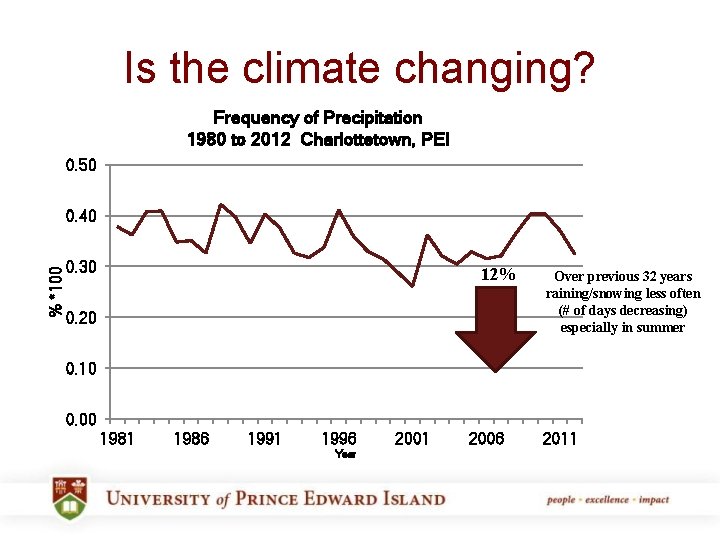
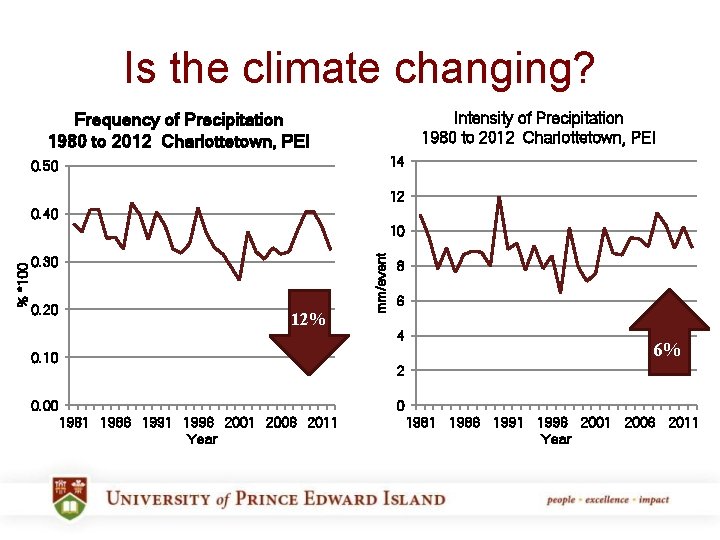
Is the climate changing? Frequency of Precipitation 1980 to 2012 Charlottetown, PEI 0. 50 % *100 0. 40 0. 30 12% 0. 20 Over previous 32 years raining/snowing less often (# of days decreasing) especially in summer 0. 10 0. 00 1981 1986 1991 1996 Year 2001 2006 2011
Is the climate changing? Intensity of Precipitation 1980 to 2012 Charlottetown, PEI Frequency of Precipitation 1980 to 2012 Charlottetown, PEI 14 0. 50 12 0. 40 0. 30 0. 20 12% 0. 10 mm/event % *100 10 8 6 4 6% 2 0. 00 0 1981 1986 1991 1996 2001 2006 2011 Year
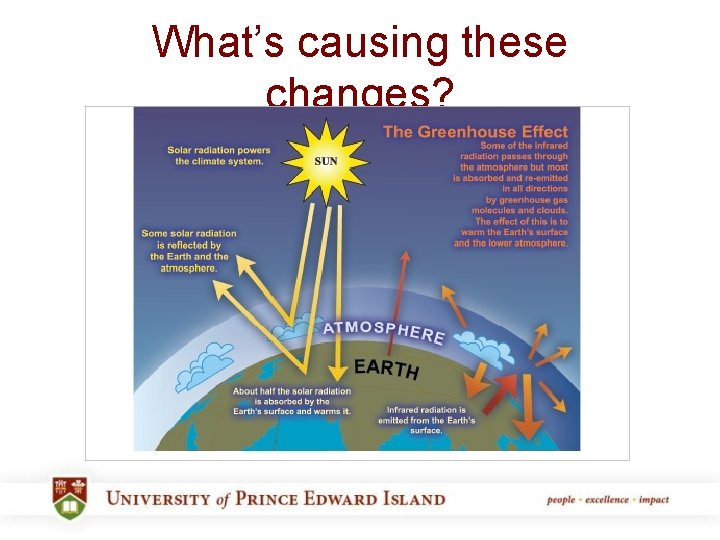
What’s causing these changes?
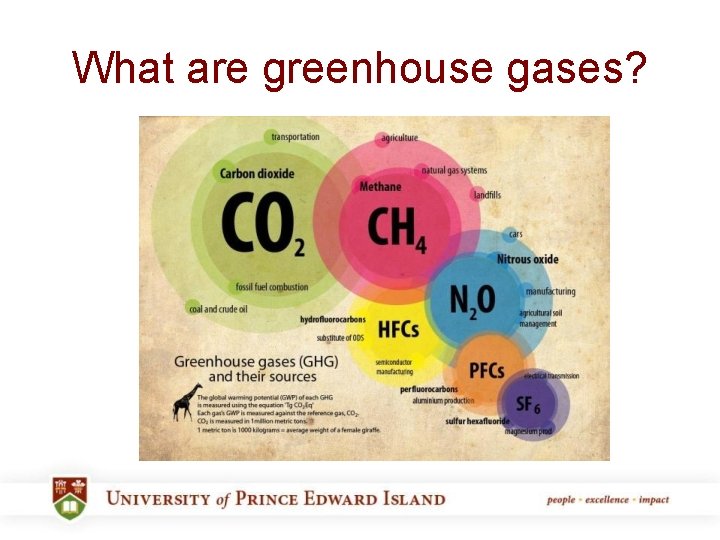
What are greenhouse gases?
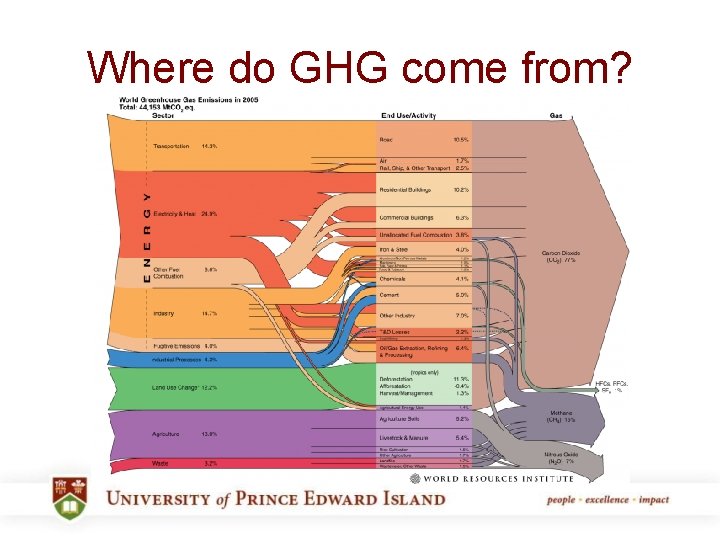
Where do GHG come from?
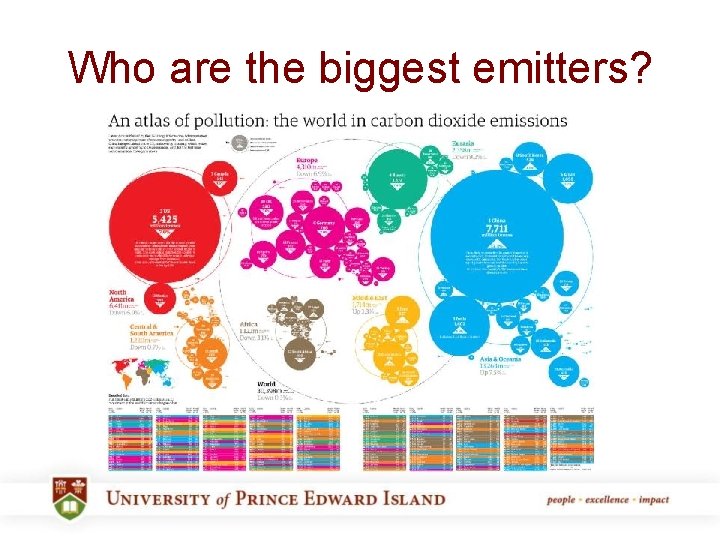
Who are the biggest emitters?
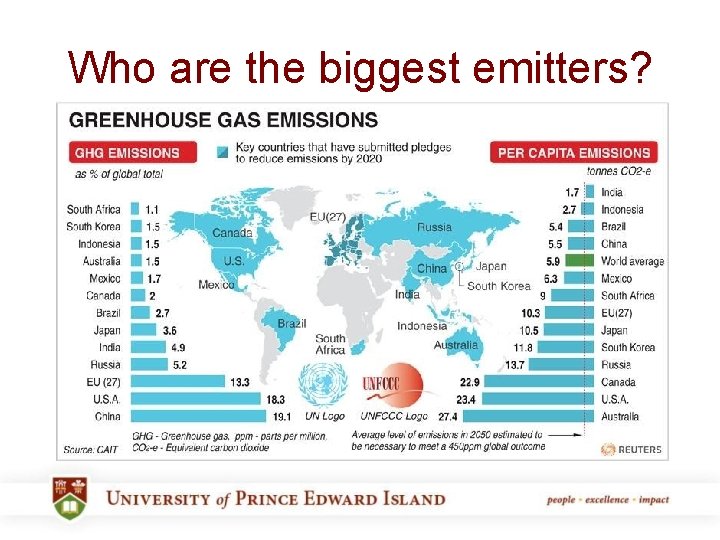
Trivia Q 1 • Question: Which country was the biggest emitter of GHG per capita in 2010?
Who are the biggest emitters?
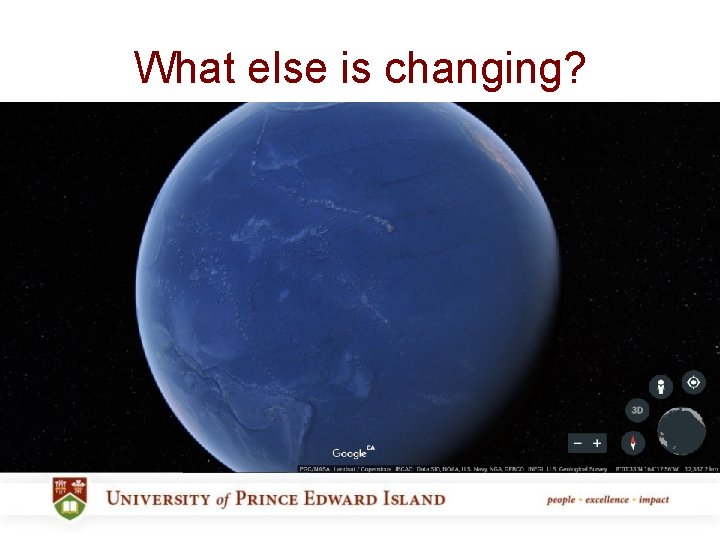
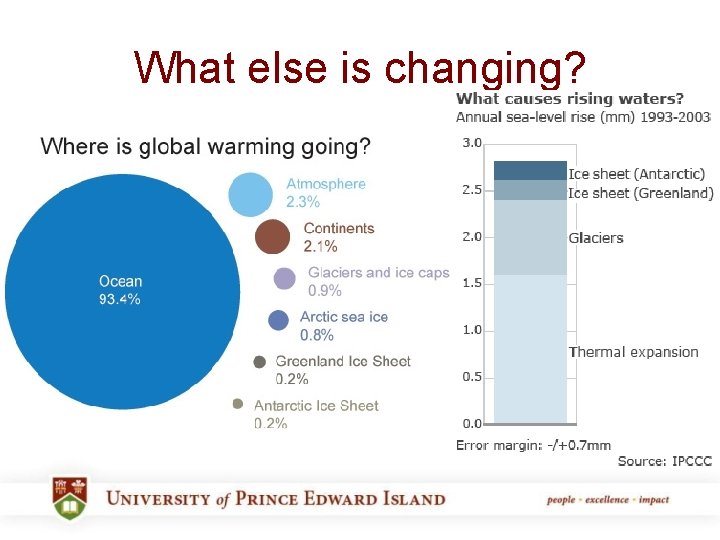
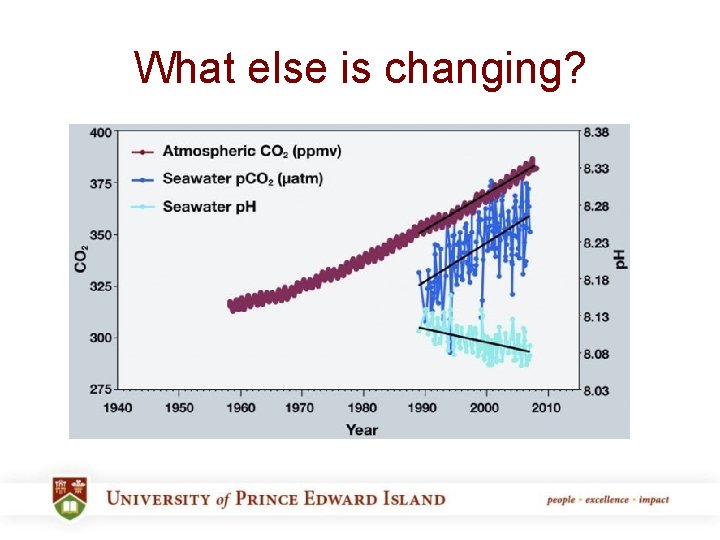
What else is changing?
What else is changing?
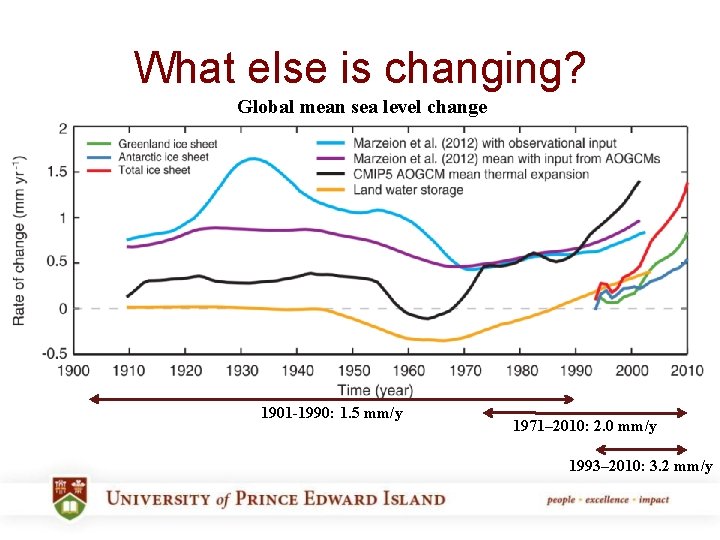
What else is changing? Global mean sea level change 1901 -1990: 1. 5 mm/y 1971– 2010: 2. 0 mm/y 1993– 2010: 3. 2 mm/y
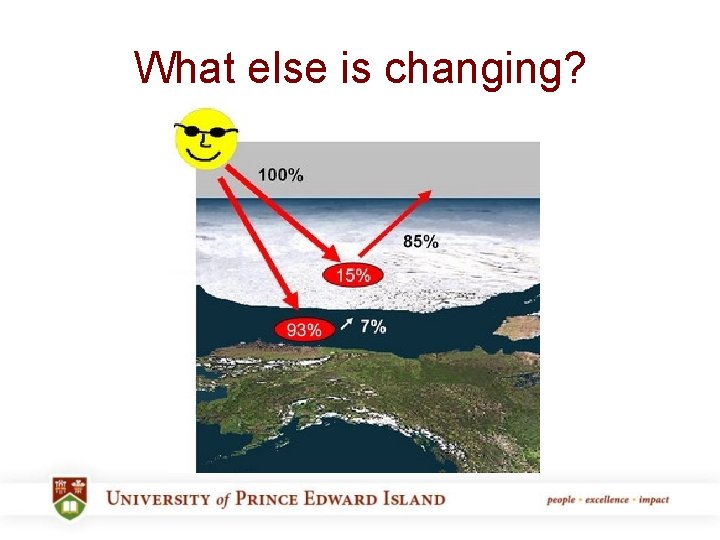
What else is changing?
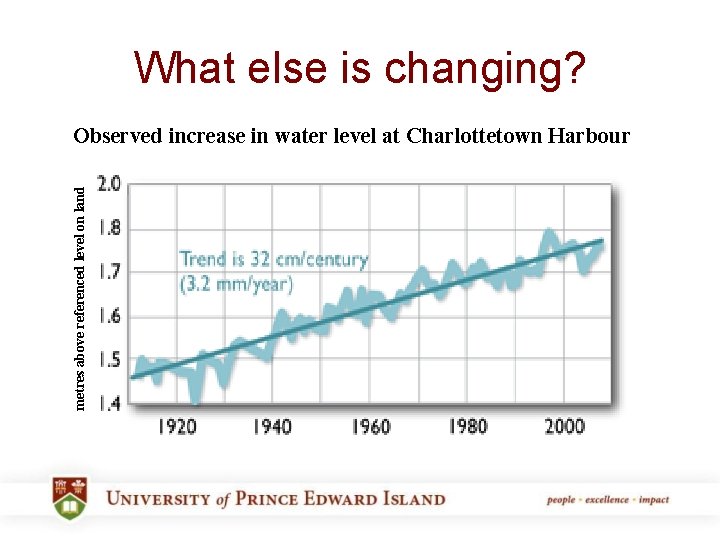
What else is changing? metres above referenced level on land Observed increase in water level at Charlottetown Harbour
What else is changing?
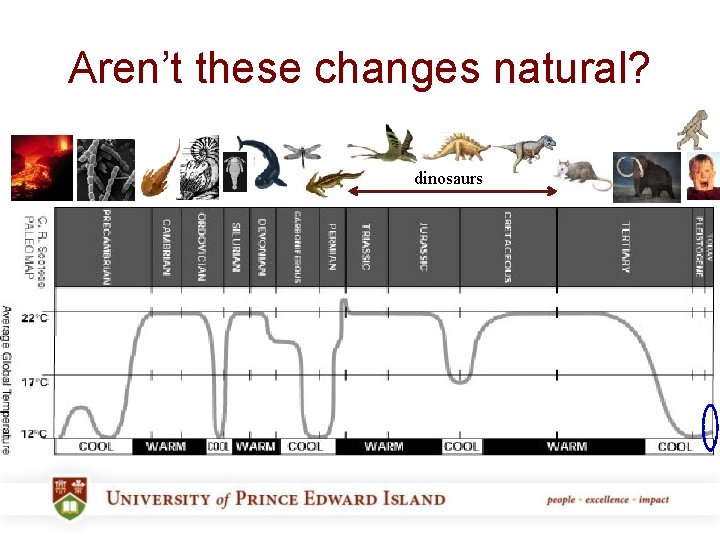
Aren’t these changes natural? dinosaurs
Aren’t these changes natural?
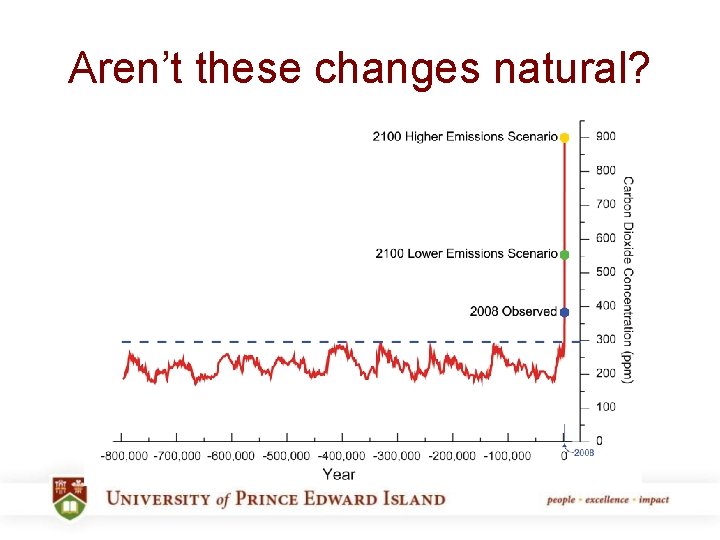
Aren’t these changes natural?
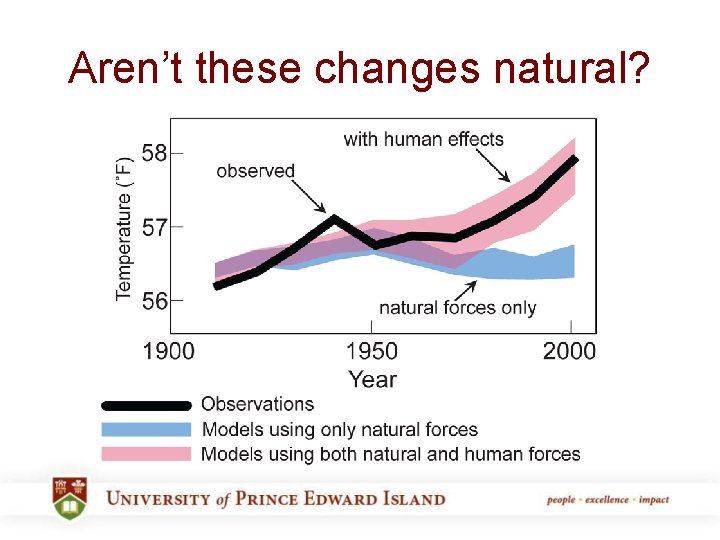
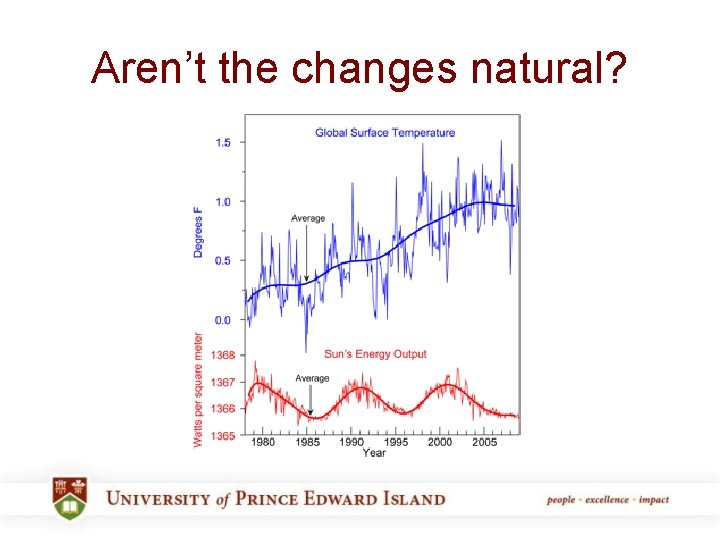
Aren’t the changes natural?
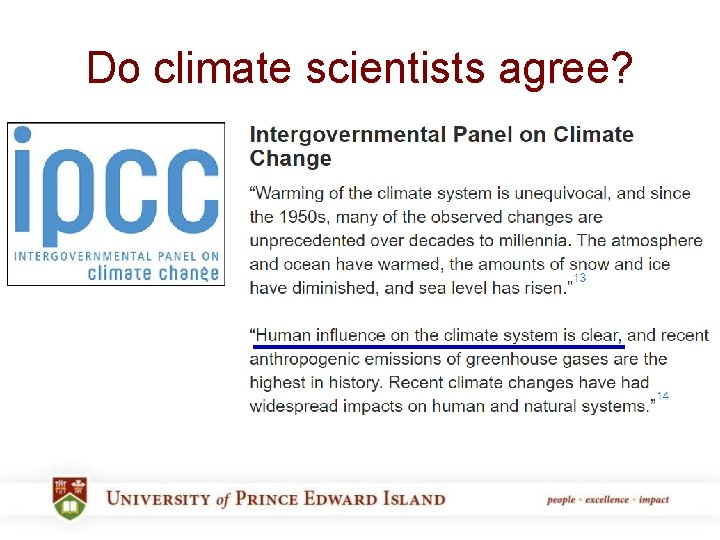
Do climate scientists agree?
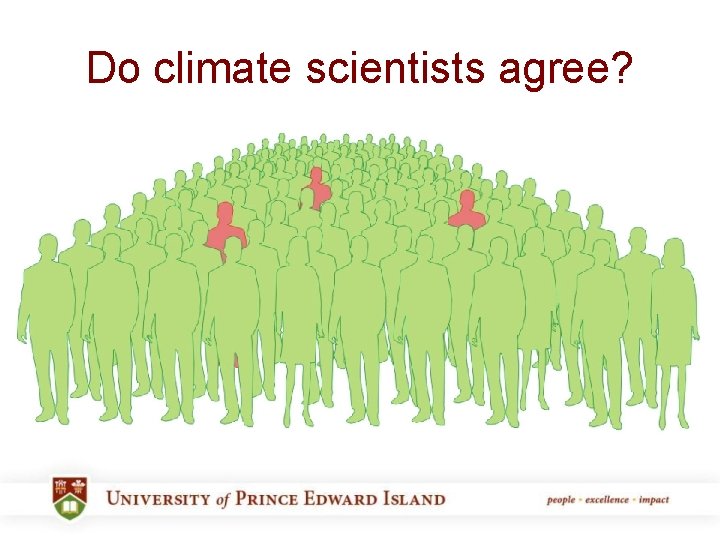
Do climate scientists agree?
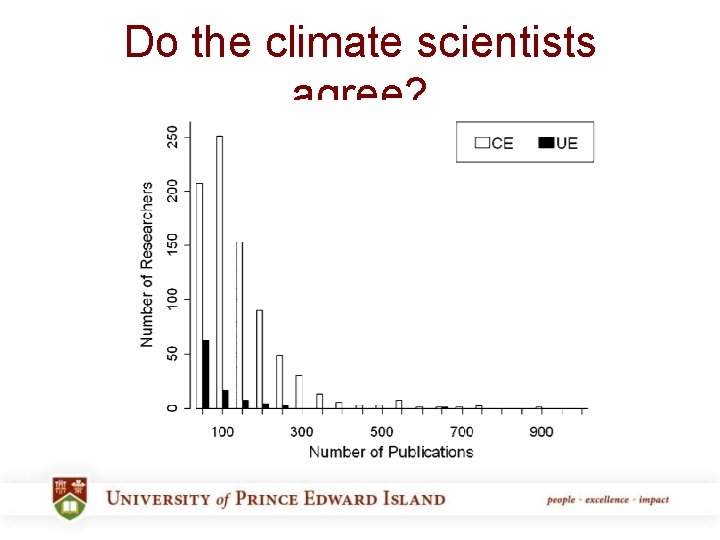
Do the climate scientists agree?
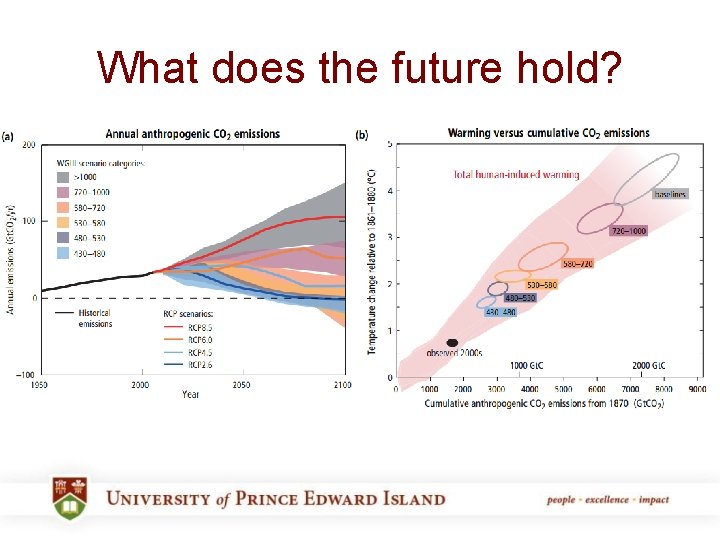
What does the future hold?
Trivia Q 2 • Question: What is the surface area of the earth in m 2? • Answer: 510 trillion m 2
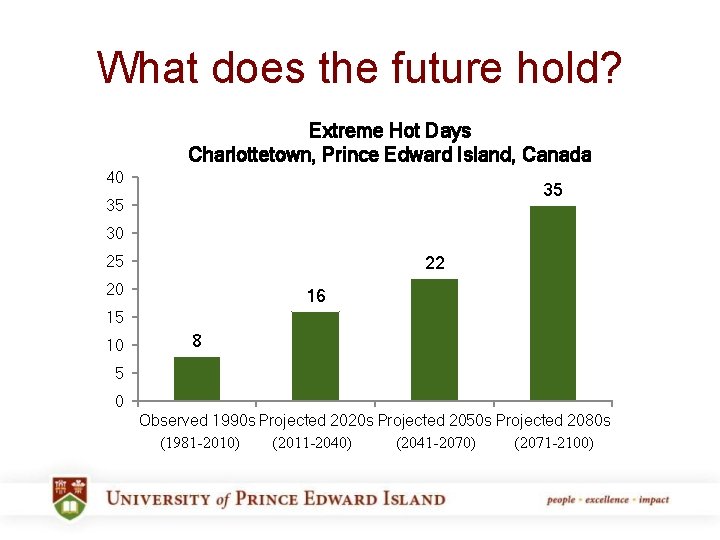
What does the future hold? Extreme Hot Days Charlottetown, Prince Edward Island, Canada 40 35 35 30 22 25 20 16 15 10 8 5 0 Observed 1990 s Projected 2020 s Projected 2050 s Projected 2080 s (1981 -2010) (2011 -2040) (2041 -2070) (2071 -2100)
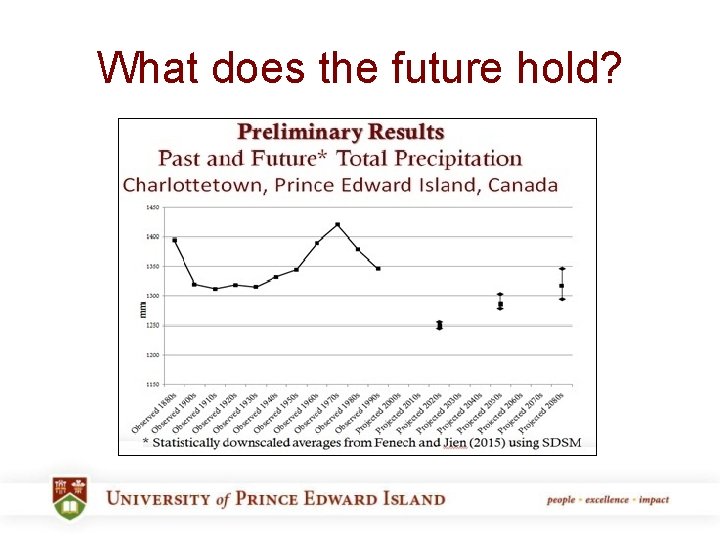
What does the future hold?
So what? • Opportunities – Tourism – Agriculture
So what? • Challenges – New pests, pathogens, diseases, invasive species (agriculture, fish, forestry, human health, water) – Shifting range of current species (agriculture, fish, forestry) – Decoupling important ecological relationships (agriculture, fish, forestry and biodiversity) – Increasing water requirements for crops
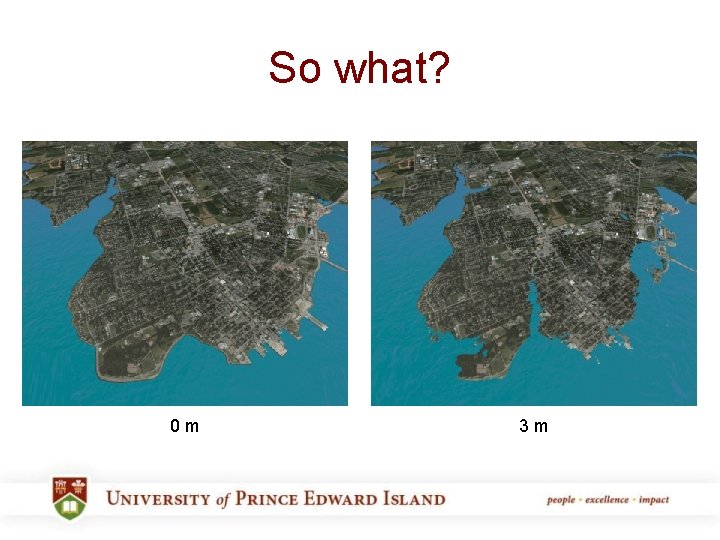
So what? • Challenges (con’t) – Marine life will struggle in acidic waters – Lower air quality – Change in timing and rate of aquifer recharge – More runoff (water quality, fish kills, anoxic events, infrastructure damage) – More properties and infrastructure at risk of wind damage, flooding and erosion
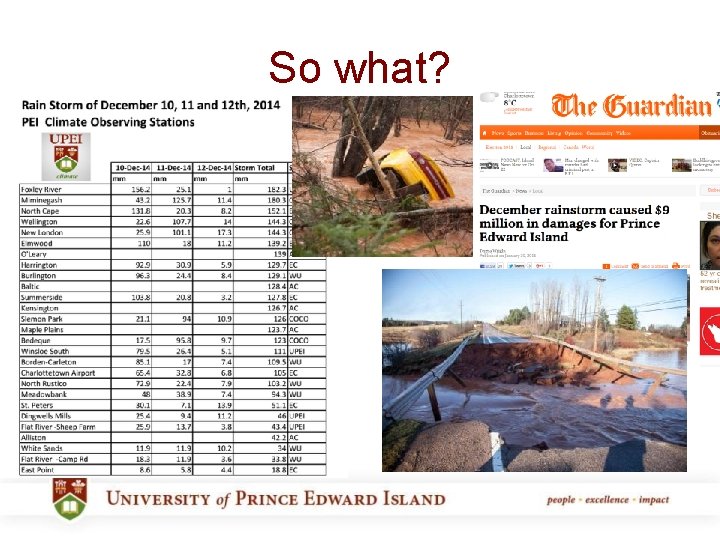
So what?
So what? 0 m 3 m
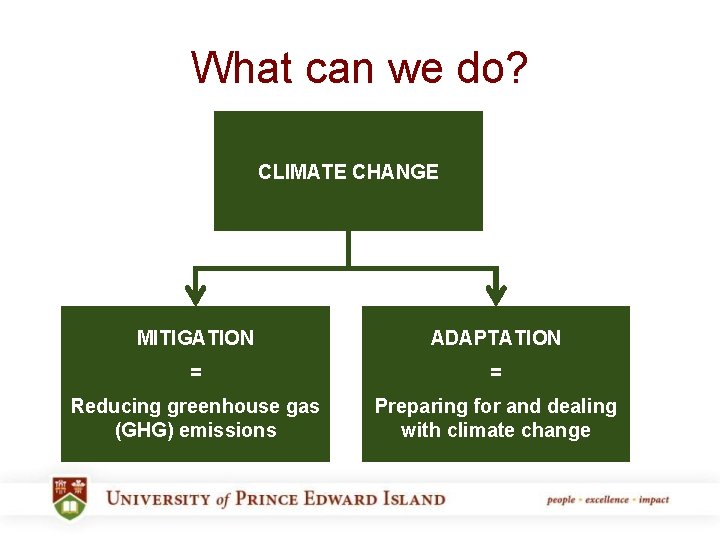
What can we do? CLIMATE CHANGE MITIGATION ADAPTATION = = Reducing greenhouse gas (GHG) emissions Preparing for and dealing with climate change
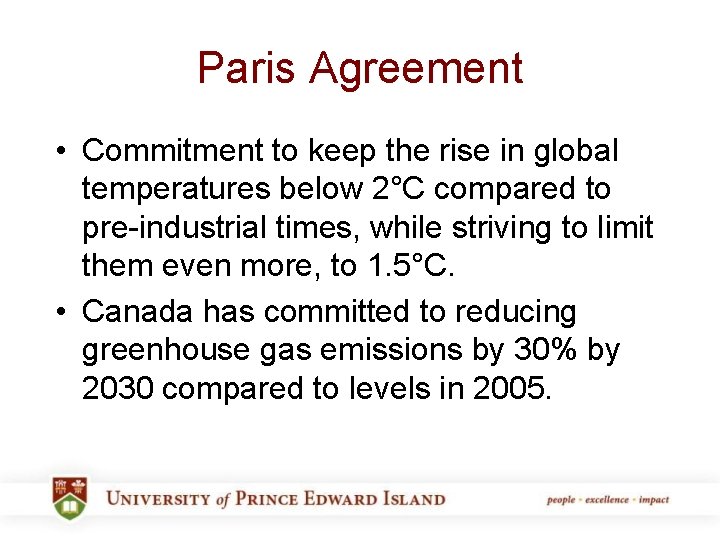
Paris Agreement • Commitment to keep the rise in global temperatures below 2°C compared to pre-industrial times, while striving to limit them even more, to 1. 5°C. • Canada has committed to reducing greenhouse gas emissions by 30% by 2030 compared to levels in 2005.
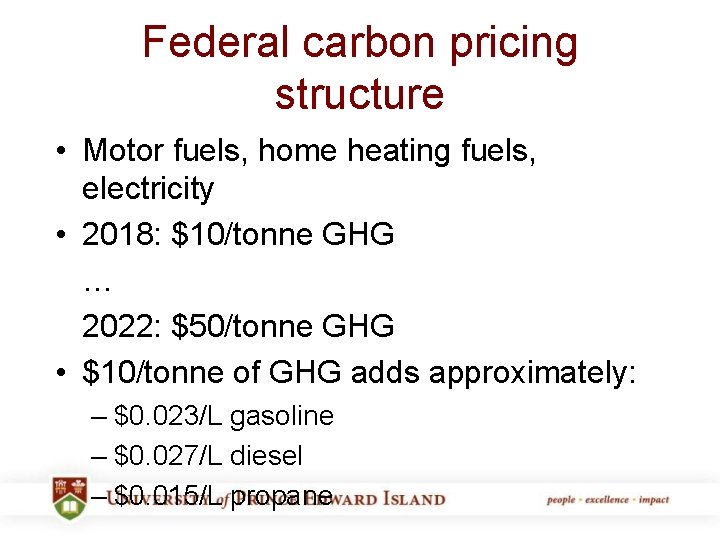
Federal carbon pricing structure • Motor fuels, home heating fuels, electricity • 2018: $10/tonne GHG … 2022: $50/tonne GHG • $10/tonne of GHG adds approximately: – $0. 023/L gasoline – $0. 027/L diesel – $0. 015/L propane
NEGECP • In 2015, the group developed voluntary targets to reduce emissions by 35 -45% below 1990 levels by 2030. • Prince Edward Island has signed on to this agreement and the Government is committed to playing its part
Trivia Q 3 • Question: What was PEI’s GHG emissions in 1990? • Answer: 2 million tonnes
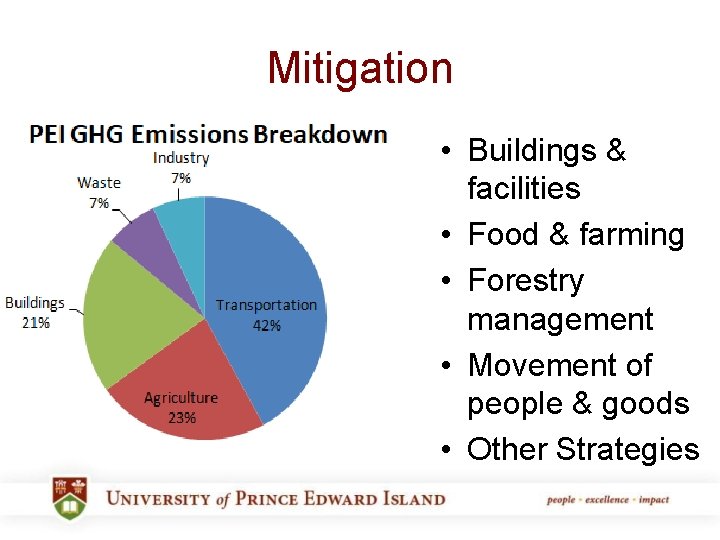
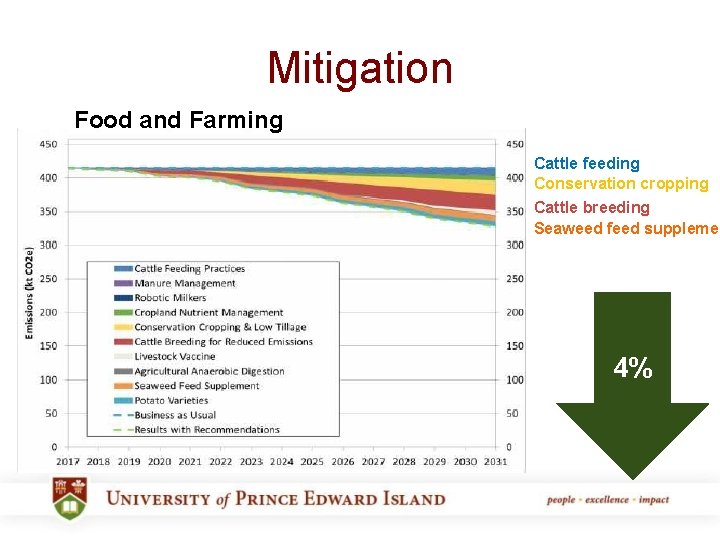
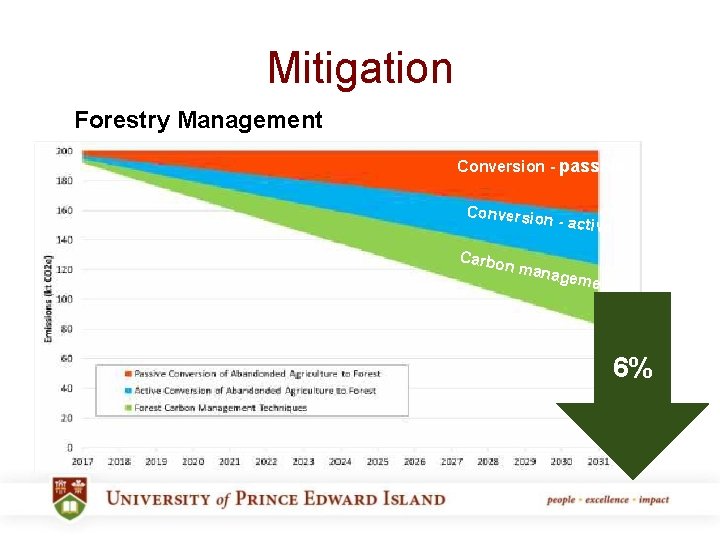
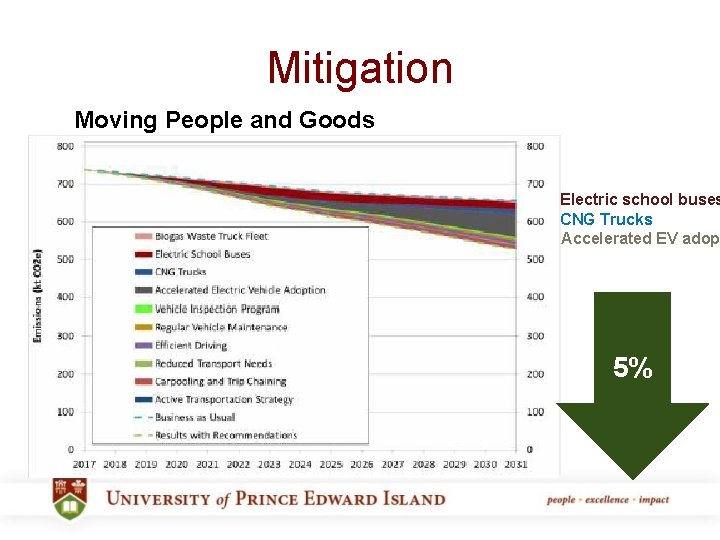
Mitigation • Buildings & facilities • Food & farming • Forestry management • Movement of people & goods • Other Strategies
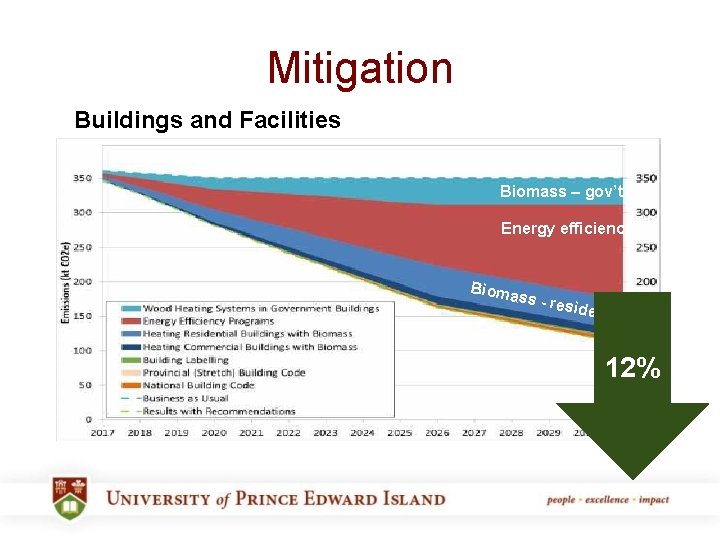
Mitigation Buildings and Facilities Biomass – gov’t Energy efficiency Bioma ss - re sident ial 12%
Mitigation Food and Farming Cattle feeding Conservation cropping Cattle breeding Seaweed feed supplemen 4%
Mitigation Forestry Management Conversion - passive Conversio n - active Carbo n man ageme nt 6%
Mitigation Moving People and Goods Conversion - passive Conversio n - active Electric school buses CNG Trucks Carbo nm Accelerated EV adop anage ment 5%
Mitigation Other Strategies – On-site composting option for rural residents – Education and outreach campaign focused on behaviour change – Local food strategy – Support municipalities
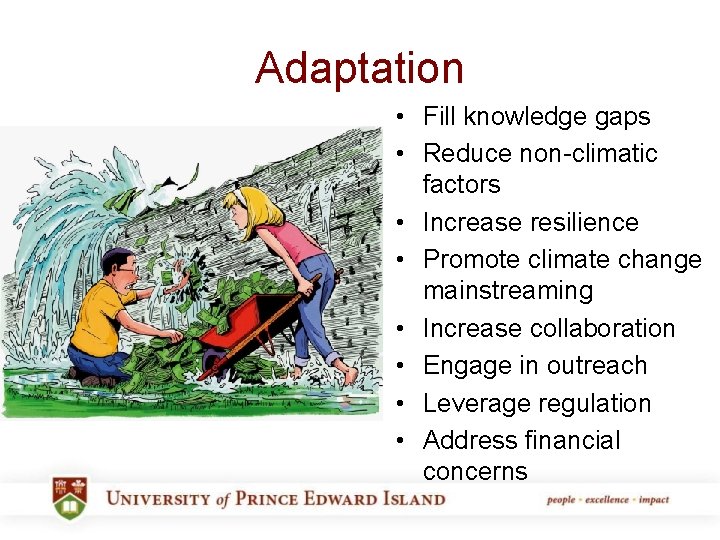
Adaptation • Fill knowledge gaps • Reduce non-climatic factors • Increase resilience • Promote climate change mainstreaming • Increase collaboration • Engage in outreach • Leverage regulation • Address financial concerns
Adaptation • Fill knowledge gaps – Build an understanding of water requirements and common methods to address them – Identify potential diseases and pathogens and how they can be managed – Make availability risk maps available – Develop guidelines on shore stabilization and flood mitigation techniques – Increase capacity within governments
Adaptation • Reduce non-climatic factors, increase resilience – Decentralize, diversify, and increase redundancy in energy infrastructure – Reduce runoff – Relocate buildings and infrastructure – Increase connectivity among natural areas – Utilize green infrastructure to manage stormwater – Actively maintain, restore, enhance and create wetlands
Adaptation • Promote climate change mainstreaming – Update design standards – Add flexibility to regulations – Incorporate climate change in school curriculum – Integrate climate change impacts in all management activities, policies, programs
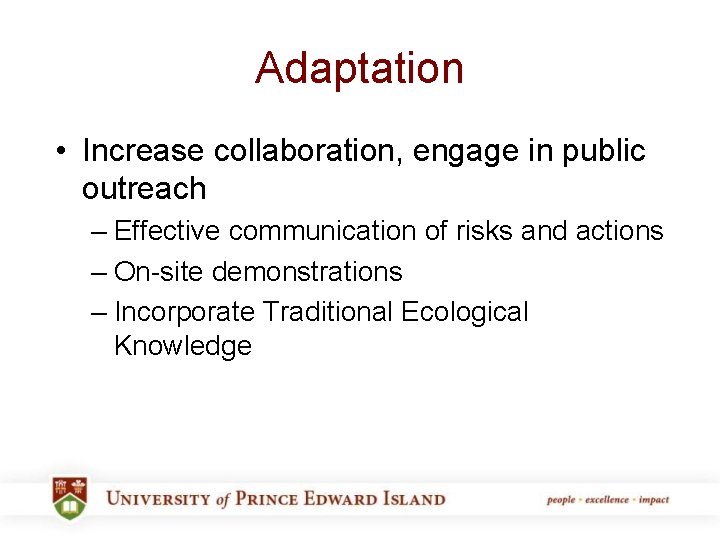
Adaptation • Increase collaboration, engage in public outreach – Effective communication of risks and actions – On-site demonstrations – Incorporate Traditional Ecological Knowledge
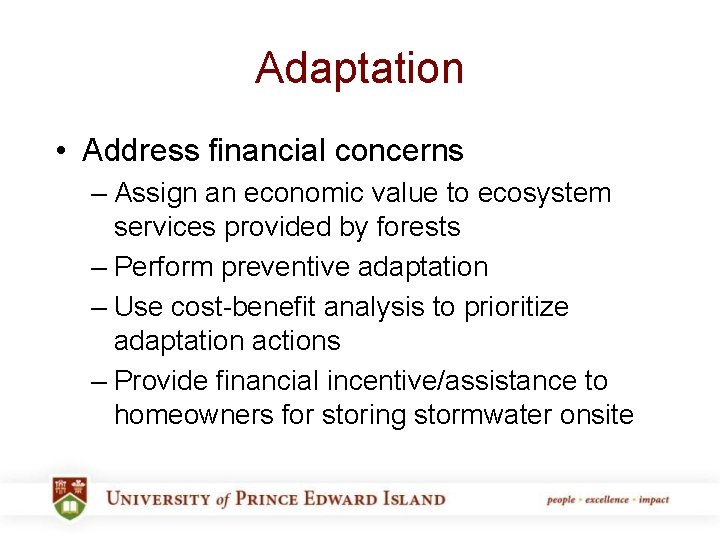
Adaptation • Address financial concerns – Assign an economic value to ecosystem services provided by forests – Perform preventive adaptation – Use cost-benefit analysis to prioritize adaptation actions – Provide financial incentive/assistance to homeowners for storing stormwater onsite
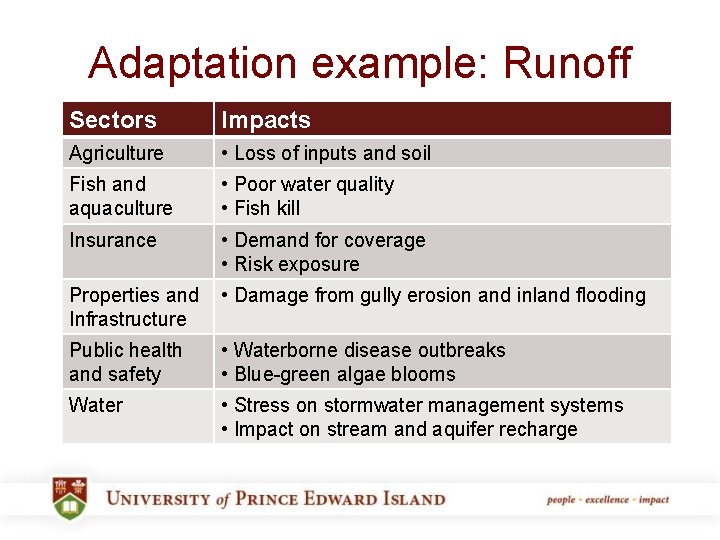
Adaptation example: Runoff Sectors Impacts Agriculture • Loss of inputs and soil Fish and aquaculture • Poor water quality • Fish kill Insurance • Demand for coverage • Risk exposure Properties and • Damage from gully erosion and inland flooding Infrastructure Public health and safety • Waterborne disease outbreaks • Blue-green algae blooms Water • Stress on stormwater management systems • Impact on stream and aquifer recharge
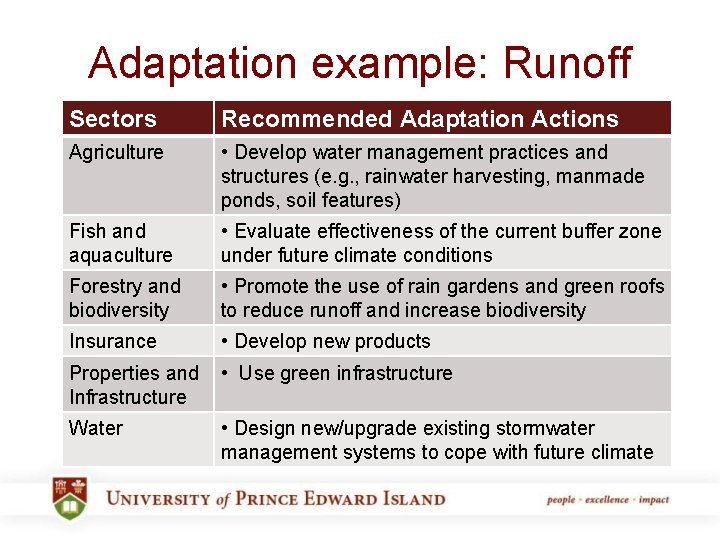
Adaptation example: Runoff Sectors Recommended Adaptation Actions Agriculture • Develop water management practices and structures (e. g. , rainwater harvesting, manmade ponds, soil features) Fish and aquaculture • Evaluate effectiveness of the current buffer zone under future climate conditions Forestry and biodiversity • Promote the use of rain gardens and green roofs to reduce runoff and increase biodiversity Insurance • Develop new products Properties and • Use green infrastructure Infrastructure Water • Design new/upgrade existing stormwater management systems to cope with future climate
Challenges • • Creeping climate change Bigger than self Uncertainty Lack of funding Insufficient incentive Lack of guidance High level of coordination
Trivia Q 4 • Question: In what year was this closing statement of the World Conference on the Changing Atmosphere made? “Humanity is conducting an unintended, uncontrolled, globally pervasive experiment, whose ultimate consequences are second only to global nuclear war. ” • Answer: 1988
It’s a collective endeavour, it’s collective accountability and it may not be too late. Christine Lagarde
Further Questions Contact: Stephanie Arnold starnold@upei. ca 902 -894 -2852