
Climate Change CAUSES Greenhouse Gases Greenhouse gases build

Climate Change CAUSES
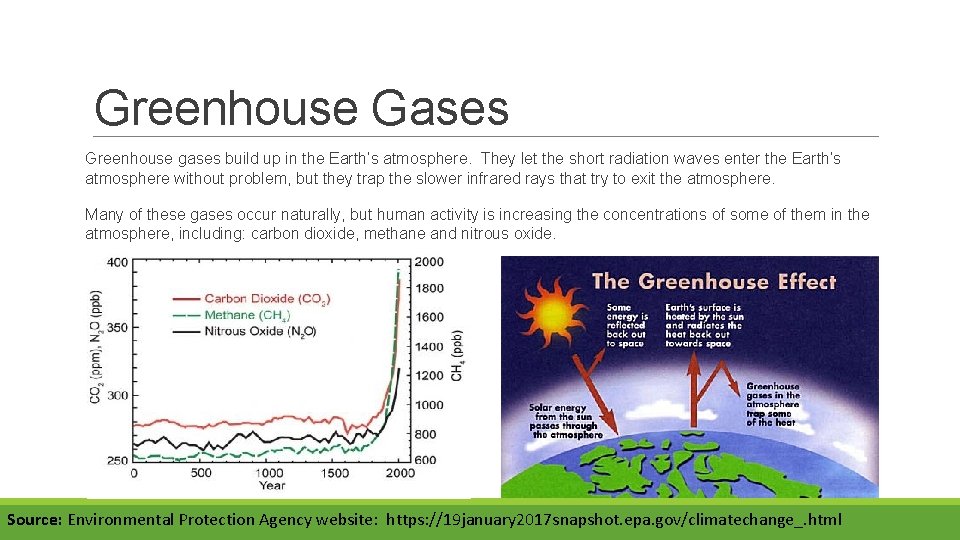
Greenhouse Gases Greenhouse gases build up in the Earth’s atmosphere. They let the short radiation waves enter the Earth’s atmosphere without problem, but they trap the slower infrared rays that try to exit the atmosphere. Many of these gases occur naturally, but human activity is increasing the concentrations of some of them in the atmosphere, including: carbon dioxide, methane and nitrous oxide. Source: Environmental Protection Agency website: https: //19 january 2017 snapshot. epa. gov/climatechange_. html
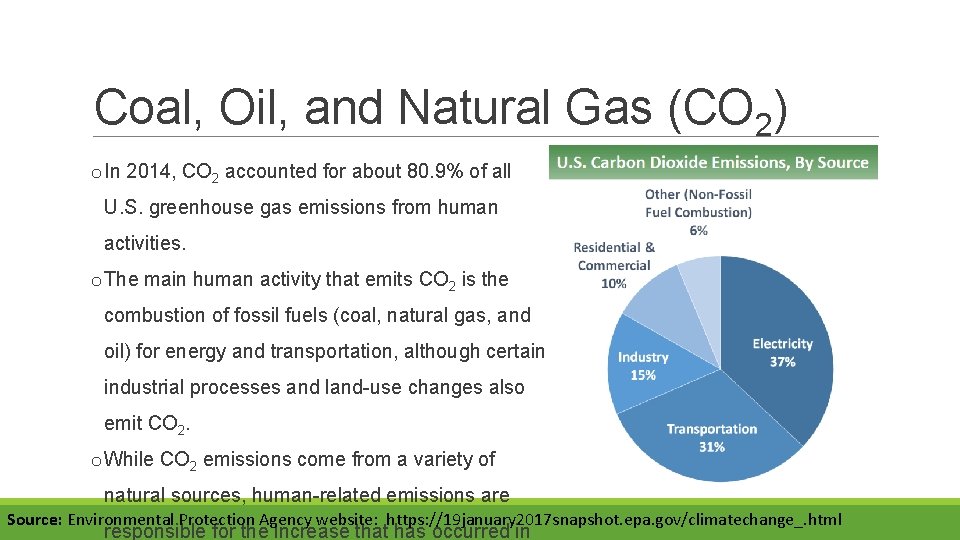
Coal, Oil, and Natural Gas (CO 2) o In 2014, CO 2 accounted for about 80. 9% of all U. S. greenhouse gas emissions from human activities. o The main human activity that emits CO 2 is the combustion of fossil fuels (coal, natural gas, and oil) for energy and transportation, although certain industrial processes and land-use changes also emit CO 2. o While CO 2 emissions come from a variety of natural sources, human-related emissions are Source: Environmental Protection Agency website: https: //19 january 2017 snapshot. epa. gov/climatechange_. html responsible for the increase that has occurred in
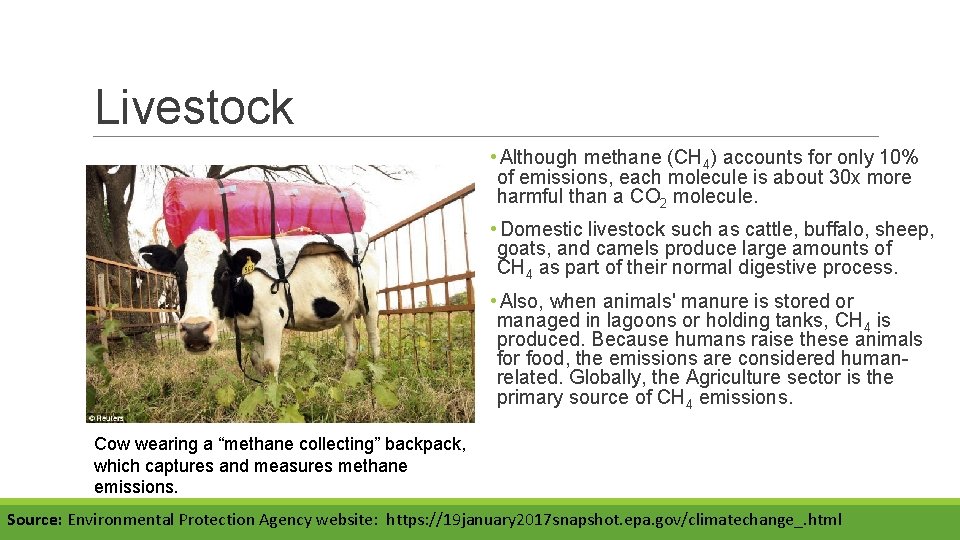
Livestock • Although methane (CH 4) accounts for only 10% of emissions, each molecule is about 30 x more harmful than a CO 2 molecule. • Domestic livestock such as cattle, buffalo, sheep, goats, and camels produce large amounts of CH 4 as part of their normal digestive process. • Also, when animals' manure is stored or managed in lagoons or holding tanks, CH 4 is produced. Because humans raise these animals for food, the emissions are considered humanrelated. Globally, the Agriculture sector is the primary source of CH 4 emissions. Cow wearing a “methane collecting” backpack, which captures and measures methane emissions. Source: Environmental Protection Agency website: https: //19 january 2017 snapshot. epa. gov/climatechange_. html
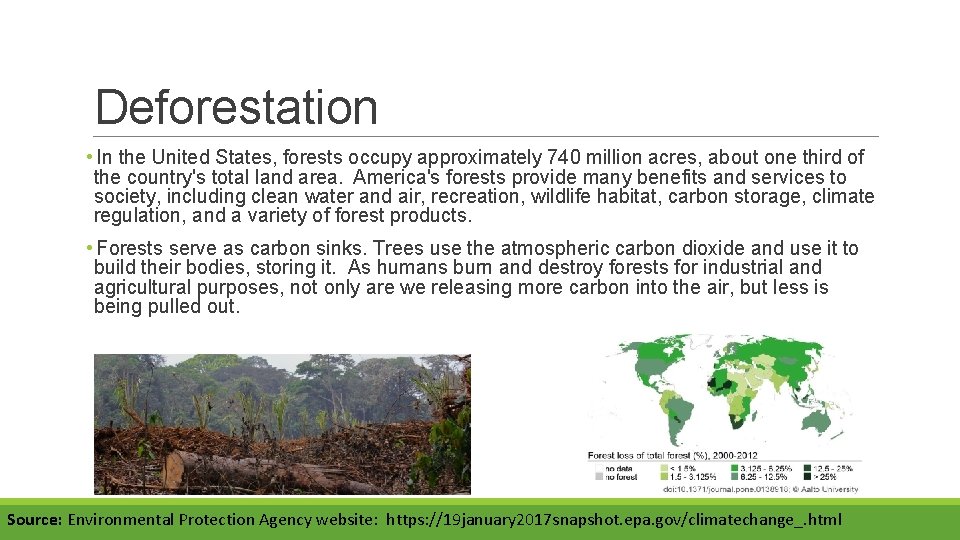
Deforestation • In the United States, forests occupy approximately 740 million acres, about one third of the country's total land area. America's forests provide many benefits and services to society, including clean water and air, recreation, wildlife habitat, carbon storage, climate regulation, and a variety of forest products. • Forests serve as carbon sinks. Trees use the atmospheric carbon dioxide and use it to build their bodies, storing it. As humans burn and destroy forests for industrial and agricultural purposes, not only are we releasing more carbon into the air, but less is being pulled out. Source: Environmental Protection Agency website: https: //19 january 2017 snapshot. epa. gov/climatechange_. html
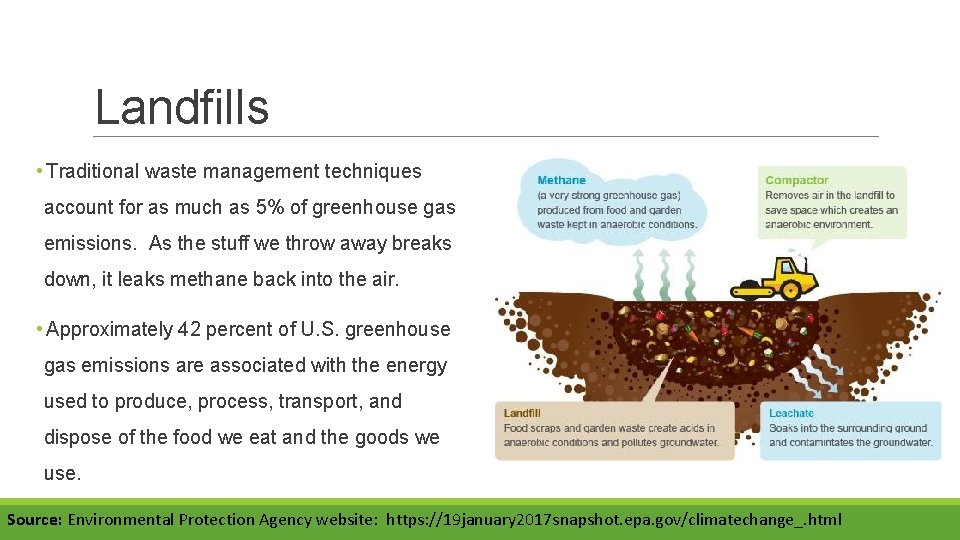
Landfills • Traditional waste management techniques account for as much as 5% of greenhouse gas emissions. As the stuff we throw away breaks down, it leaks methane back into the air. • Approximately 42 percent of U. S. greenhouse gas emissions are associated with the energy used to produce, process, transport, and dispose of the food we eat and the goods we use. Source: Environmental Protection Agency website: https: //19 january 2017 snapshot. epa. gov/climatechange_. html
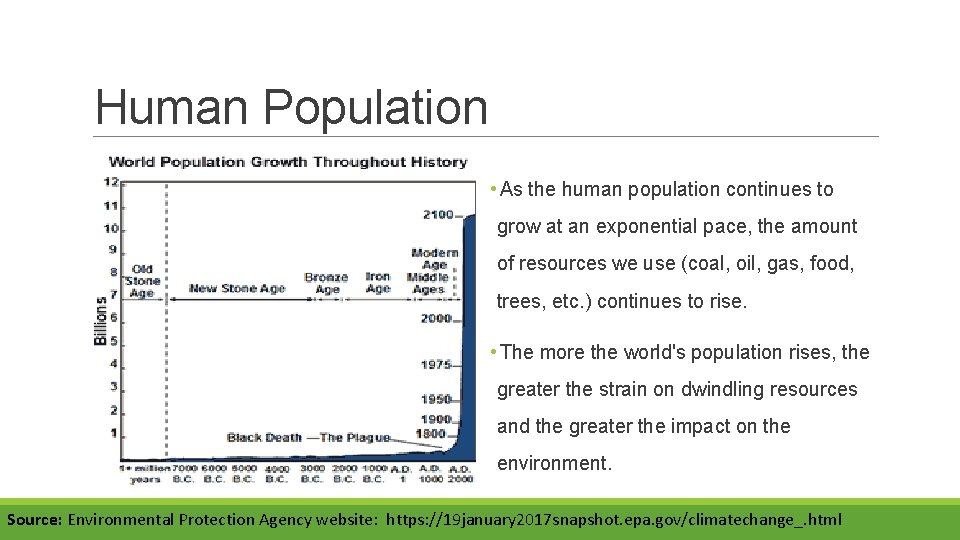
Human Population • As the human population continues to grow at an exponential pace, the amount of resources we use (coal, oil, gas, food, trees, etc. ) continues to rise. • The more the world's population rises, the greater the strain on dwindling resources and the greater the impact on the environment. Source: Environmental Protection Agency website: https: //19 january 2017 snapshot. epa. gov/climatechange_. html
Climate Change EFFECTS
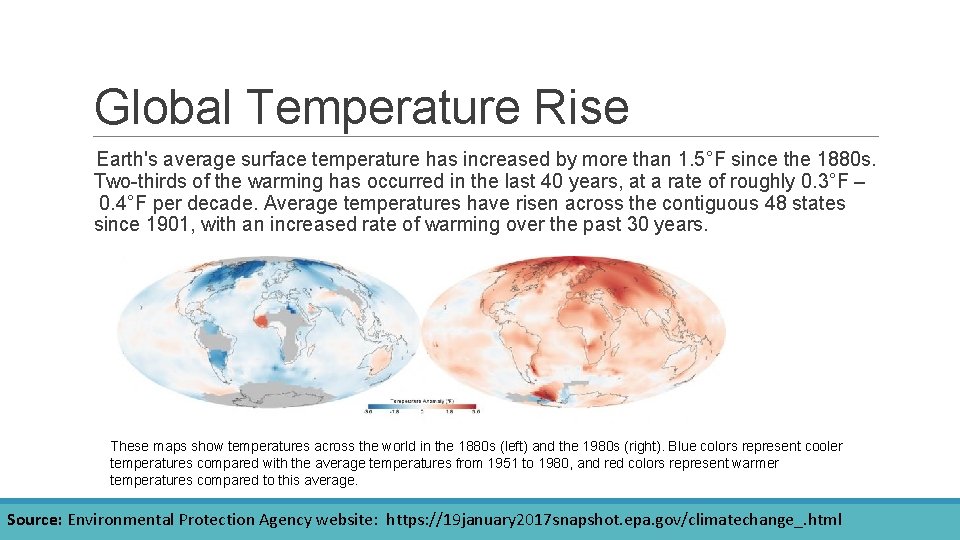
Global Temperature Rise Earth's average surface temperature has increased by more than 1. 5°F since the 1880 s. Two-thirds of the warming has occurred in the last 40 years, at a rate of roughly 0. 3°F – 0. 4°F per decade. Average temperatures have risen across the contiguous 48 states since 1901, with an increased rate of warming over the past 30 years. These maps show temperatures across the world in the 1880 s (left) and the 1980 s (right). Blue colors represent cooler temperatures compared with the average temperatures from 1951 to 1980, and red colors represent warmer temperatures compared to this average. Source: Environmental Protection Agency website: https: //19 january 2017 snapshot. epa. gov/climatechange_. html
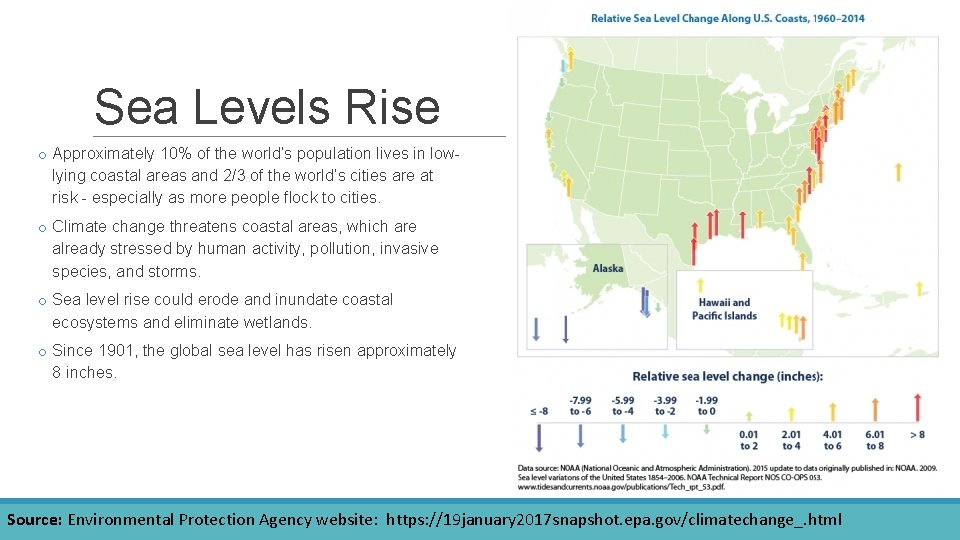
Sea Levels Rise o Approximately 10% of the world’s population lives in lowlying coastal areas and 2/3 of the world’s cities are at risk - especially as more people flock to cities. o Climate change threatens coastal areas, which are already stressed by human activity, pollution, invasive species, and storms. o Sea level rise could erode and inundate coastal ecosystems and eliminate wetlands. o Since 1901, the global sea level has risen approximately 8 inches. Source: Environmental Protection Agency website: https: //19 january 2017 snapshot. epa. gov/climatechange_. html
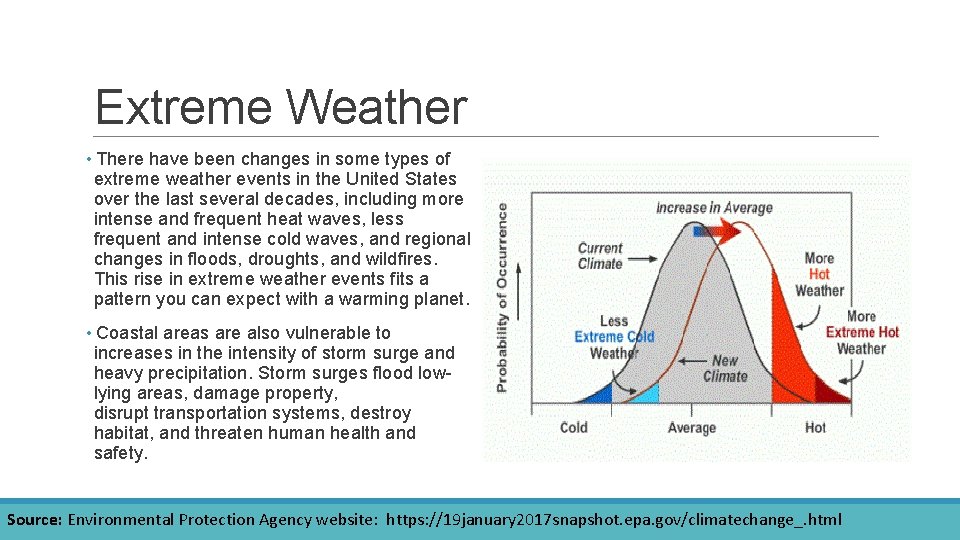
Extreme Weather • There have been changes in some types of extreme weather events in the United States over the last several decades, including more intense and frequent heat waves, less frequent and intense cold waves, and regional changes in floods, droughts, and wildfires. This rise in extreme weather events fits a pattern you can expect with a warming planet. • Coastal areas are also vulnerable to increases in the intensity of storm surge and heavy precipitation. Storm surges flood lowlying areas, damage property, disrupt transportation systems, destroy habitat, and threaten human health and safety. Source: Environmental Protection Agency website: https: //19 january 2017 snapshot. epa. gov/climatechange_. html
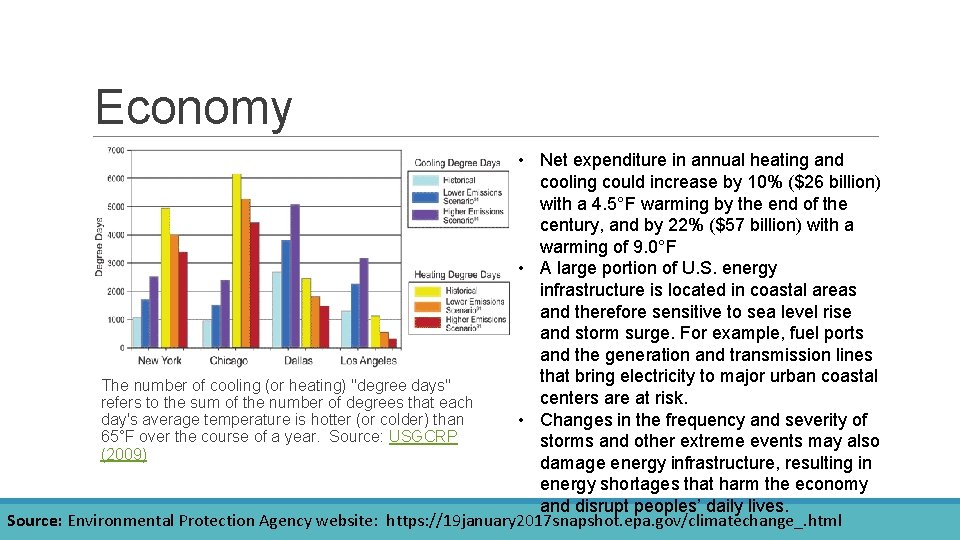
Economy • Net expenditure in annual heating and cooling could increase by 10% ($26 billion) with a 4. 5°F warming by the end of the century, and by 22% ($57 billion) with a warming of 9. 0°F • A large portion of U. S. energy infrastructure is located in coastal areas and therefore sensitive to sea level rise and storm surge. For example, fuel ports and the generation and transmission lines that bring electricity to major urban coastal The number of cooling (or heating) "degree days" centers are at risk. refers to the sum of the number of degrees that each day's average temperature is hotter (or colder) than • Changes in the frequency and severity of 65°F over the course of a year. Source: USGCRP storms and other extreme events may also (2009) damage energy infrastructure, resulting in energy shortages that harm the economy and disrupt peoples’ daily lives. Source: Environmental Protection Agency website: https: //19 january 2017 snapshot. epa. gov/climatechange_. html
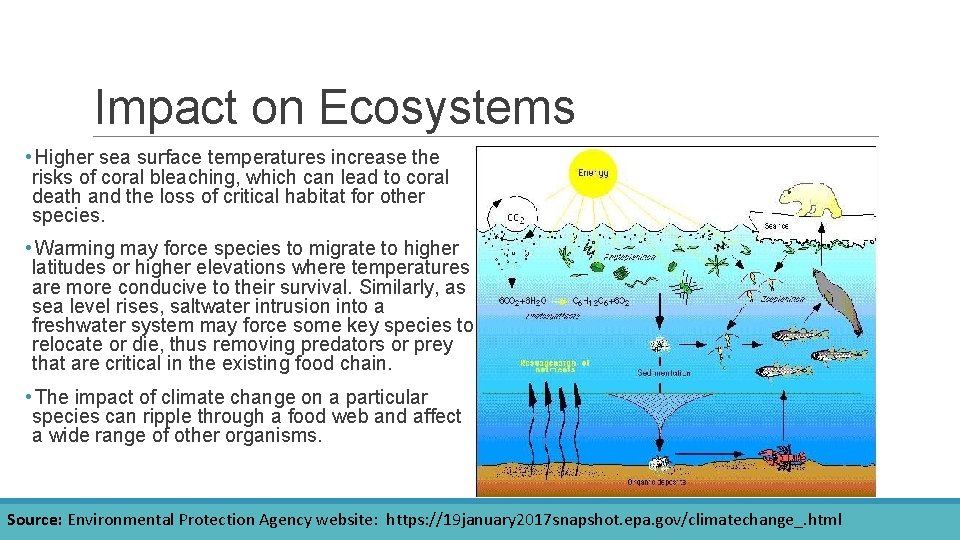
Impact on Ecosystems • Higher sea surface temperatures increase the risks of coral bleaching, which can lead to coral death and the loss of critical habitat for other species. • Warming may force species to migrate to higher latitudes or higher elevations where temperatures are more conducive to their survival. Similarly, as sea level rises, saltwater intrusion into a freshwater system may force some key species to relocate or die, thus removing predators or prey that are critical in the existing food chain. • The impact of climate change on a particular species can ripple through a food web and affect a wide range of other organisms. Source: Environmental Protection Agency website: https: //19 january 2017 snapshot. epa. gov/climatechange_. html
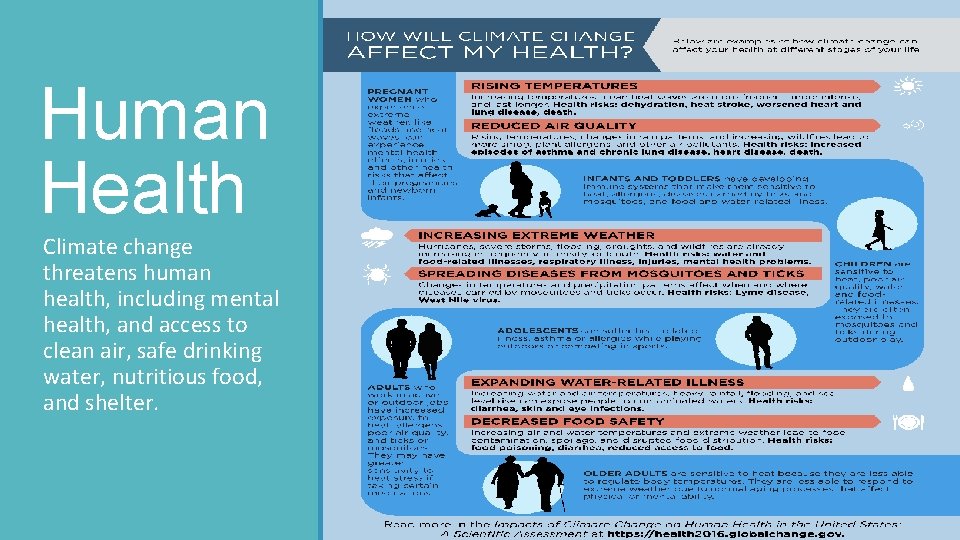
Human Health Climate change threatens human health, including mental health, and access to clean air, safe drinking water, nutritious food, and shelter.
Climate Change SOLUTIONS
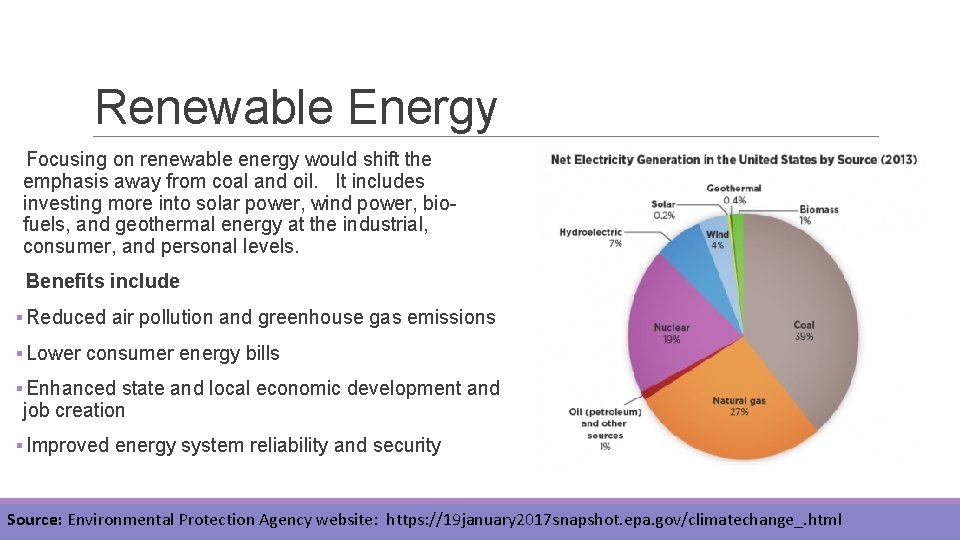
Renewable Energy Focusing on renewable energy would shift the emphasis away from coal and oil. It includes investing more into solar power, wind power, biofuels, and geothermal energy at the industrial, consumer, and personal levels. Benefits include ▪ Reduced air pollution and greenhouse gas emissions ▪ Lower consumer energy bills ▪ Enhanced state and local economic development and job creation ▪ Improved energy system reliability and security Source: Environmental Protection Agency website: https: //19 january 2017 snapshot. epa. gov/climatechange_. html
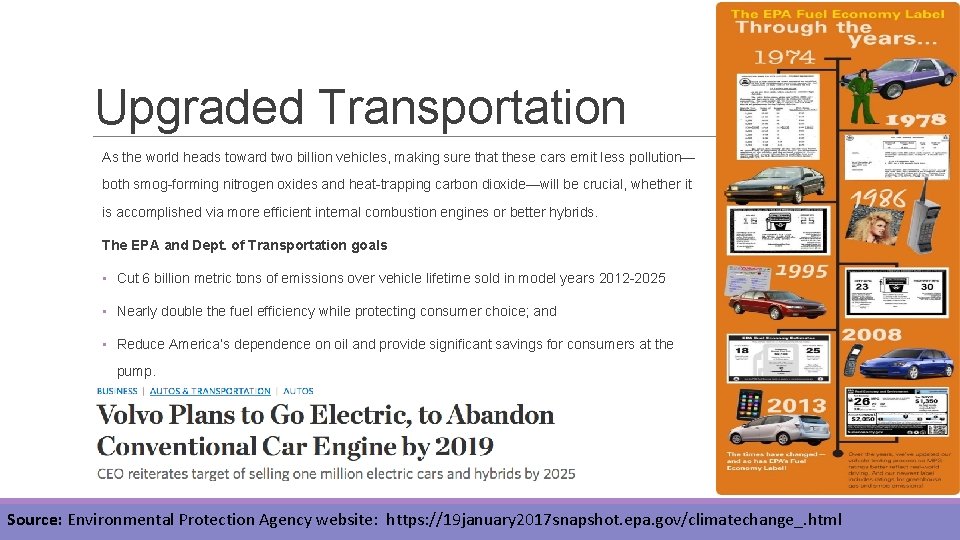
Upgraded Transportation As the world heads toward two billion vehicles, making sure that these cars emit less pollution— both smog-forming nitrogen oxides and heat-trapping carbon dioxide—will be crucial, whether it is accomplished via more efficient internal combustion engines or better hybrids. The EPA and Dept. of Transportation goals ▪ Cut 6 billion metric tons of emissions over vehicle lifetime sold in model years 2012 -2025 ▪ Nearly double the fuel efficiency while protecting consumer choice; and ▪ Reduce America’s dependence on oil and provide significant savings for consumers at the pump. Source: Environmental Protection Agency website: https: //19 january 2017 snapshot. epa. gov/climatechange_. html
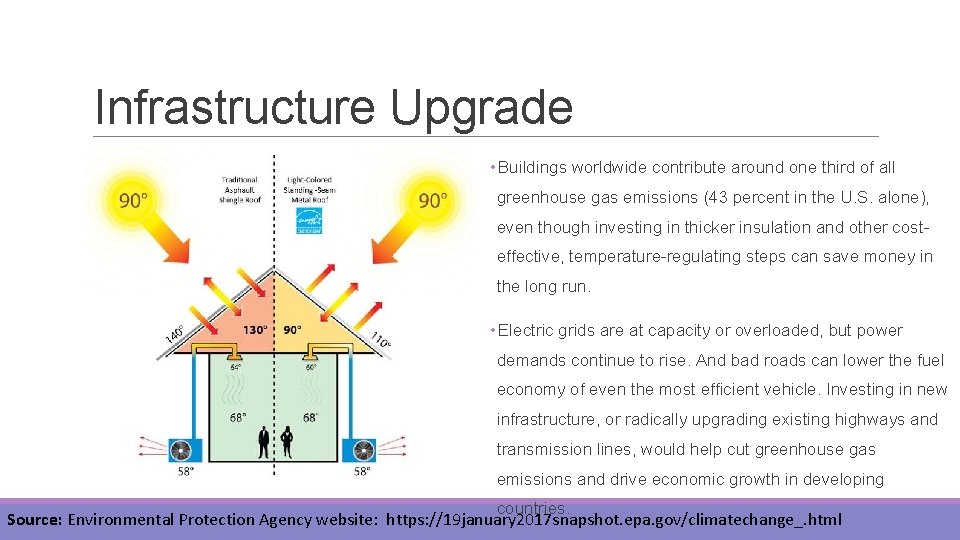
Infrastructure Upgrade • Buildings worldwide contribute around one third of all greenhouse gas emissions (43 percent in the U. S. alone), even though investing in thicker insulation and other costeffective, temperature-regulating steps can save money in the long run. • Electric grids are at capacity or overloaded, but power demands continue to rise. And bad roads can lower the fuel economy of even the most efficient vehicle. Investing in new infrastructure, or radically upgrading existing highways and transmission lines, would help cut greenhouse gas emissions and drive economic growth in developing countries. Source: Environmental Protection Agency website: https: //19 january 2017 snapshot. epa. gov/climatechange_. html
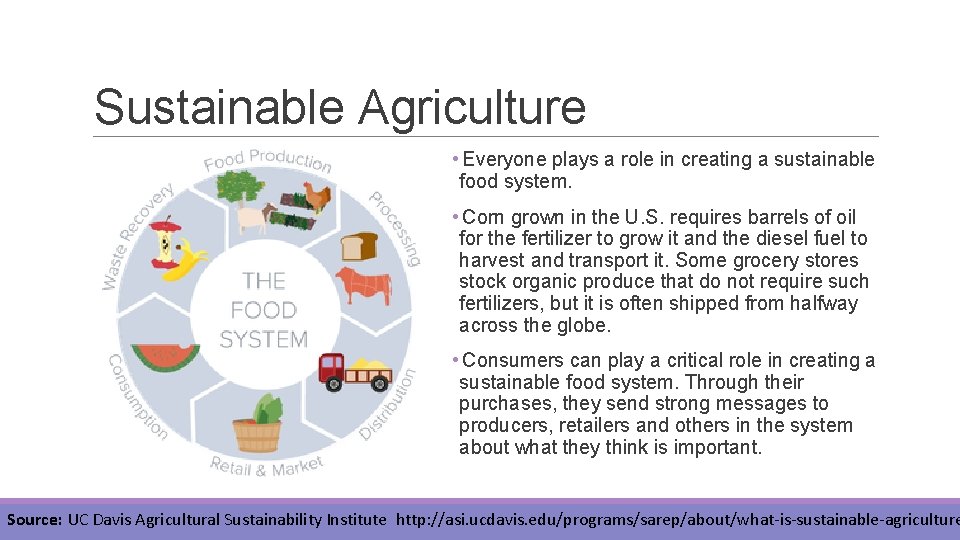
Sustainable Agriculture • Everyone plays a role in creating a sustainable food system. • Corn grown in the U. S. requires barrels of oil for the fertilizer to grow it and the diesel fuel to harvest and transport it. Some grocery stores stock organic produce that do not require such fertilizers, but it is often shipped from halfway across the globe. • Consumers can play a critical role in creating a sustainable food system. Through their purchases, they send strong messages to producers, retailers and others in the system about what they think is important. Source: UC Davis Agricultural Sustainability Institute http: //asi. ucdavis. edu/programs/sarep/about/what-is-sustainable-agriculture
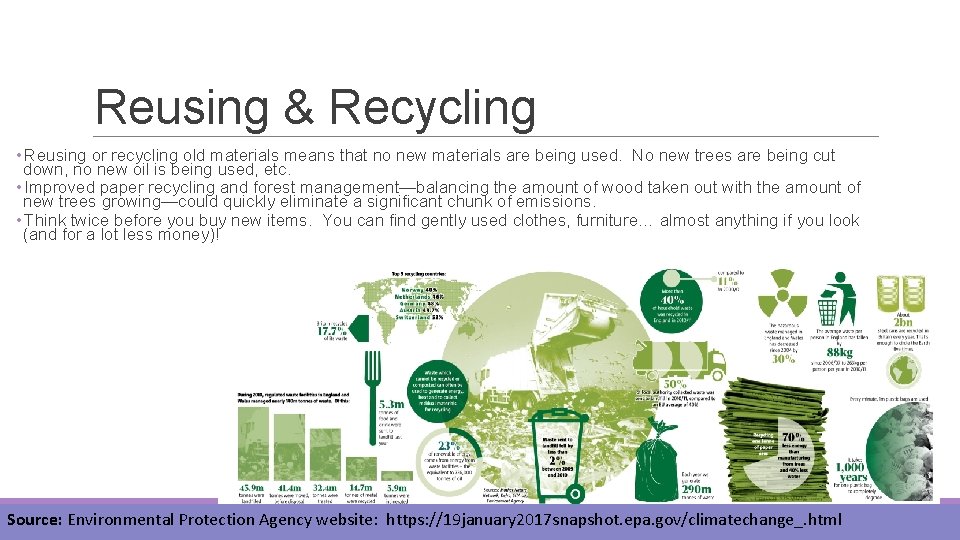
Reusing & Recycling • Reusing or recycling old materials means that no new materials are being used. No new trees are being cut down, no new oil is being used, etc. • Improved paper recycling and forest management—balancing the amount of wood taken out with the amount of new trees growing—could quickly eliminate a significant chunk of emissions. • Think twice before you buy new items. You can find gently used clothes, furniture… almost anything if you look (and for a lot less money)! Source: Environmental Protection Agency website: https: //19 january 2017 snapshot. epa. gov/climatechange_. html
- Slides: 20