
Climate change and vectorborne disease How do we
Climate change and vector-borne disease How do we know what we know? Richard S. Ostfeld Cary Institute of Ecosystem Studies Millbrook, New York
“As the atmosphere has warmed over the past century, droughts…and precipitation bursts…have promoted by various means the emergence, resurgence, and spread of infectious disease. ” --P. Epstein, Sci. Am. 2000
“As the atmosphere has warmed over the past century, droughts…and precipitation bursts…have promoted by various means the emergence, resurgence, and spread of infectious disease. ” --P. Epstein, Sci. Am. 2000
“Predictions that global warming will spark epidemics have little basis… [because] public health measures will inevitably outweigh effects of climate. ” --G. Taubes, Science, 1997
“Predictions that global warming will spark epidemics have little basis… [because] public health measures will inevitably outweigh effects of climate. ” --G. Taubes, Science, 1997
Hypothesis: Global climate change will increase the global burden of infectious disease
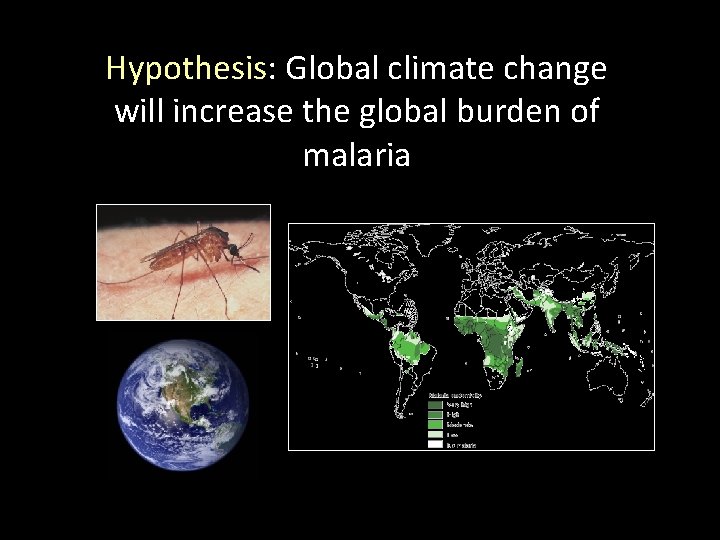
Hypothesis: Global climate change will increase the global burden of malaria

“The scientific method”
The way science really works Experiments Correlations Models
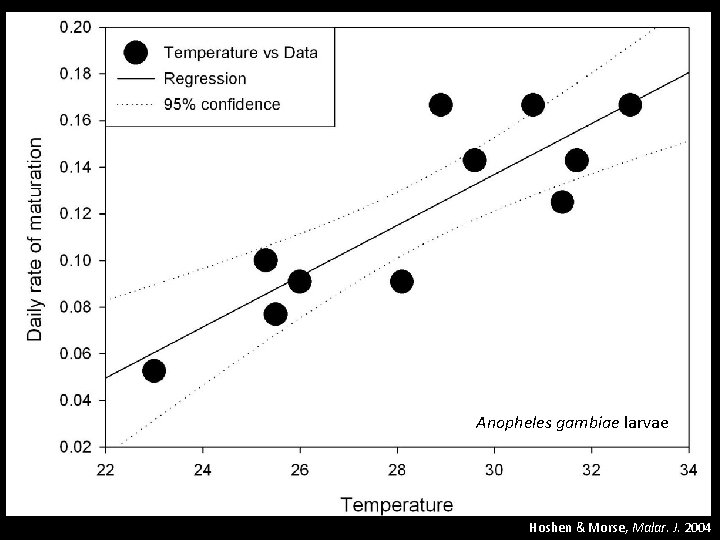
Resolution: standard / high Figure 2. Larvae maturation. Rate of development of larvae as a fraction of the complete development cycle as a function of the water temperature in Celsius. Data based on that of Jepson et al. Line best fit by least squares. X-axis average water temperature, Yaxis: rate of development (in 1/days) as the reciprocal of length of cycle. Hoshen and Morse Malaria Journal 2004 3: 32 doi: 10. 1186/1475 -2875 -3 -32 Download authors' original image Anopheles gambiae larvae Hoshen & Morse, Malar. J. 2004
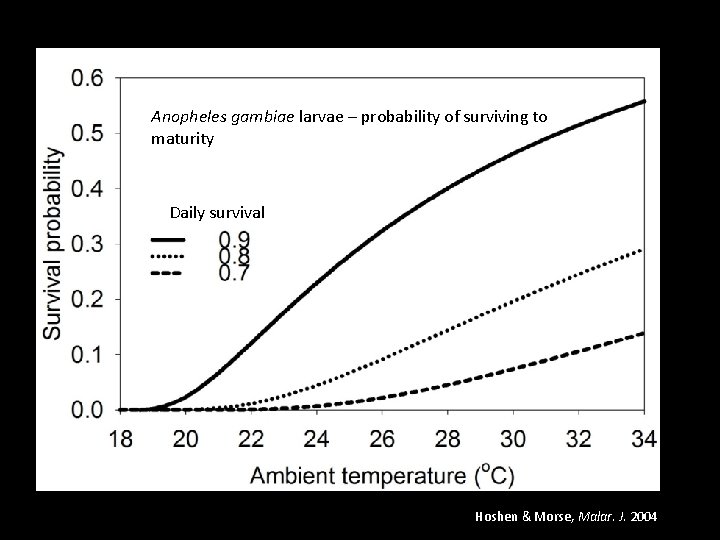
Anopheles gambiae larvae – probability of surviving to maturity Daily survival Hoshen & Morse, Malar. J. 2004
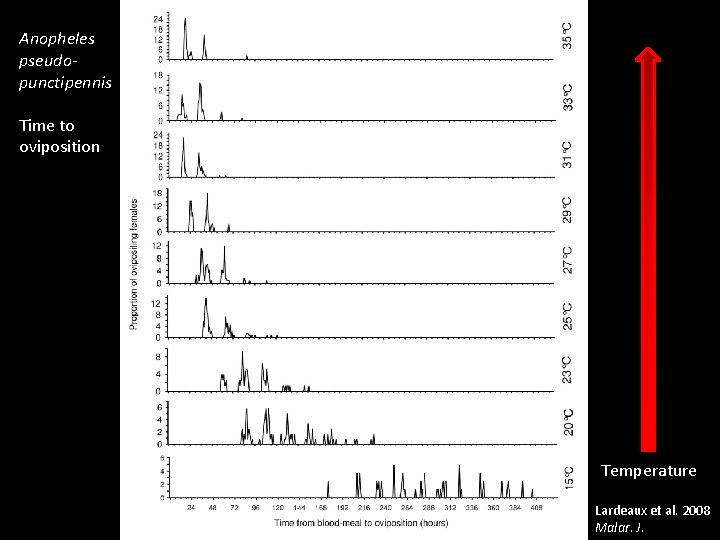
Anopheles pseudopunctipennis Time to oviposition Temperature Lardeaux et al. 2008 Malar. J.
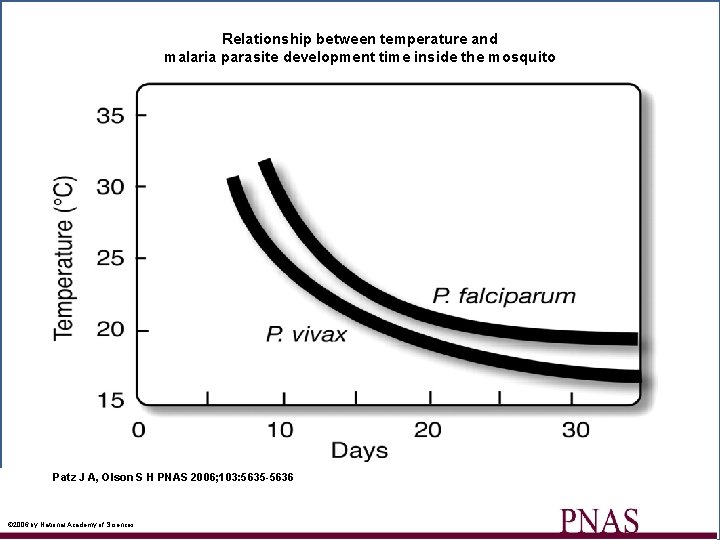
Relationship between temperature and malaria parasite development time inside the mosquito Patz J A, Olson S H PNAS 2006; 103: 5635 -5636 © 2006 by National Academy of Sciences
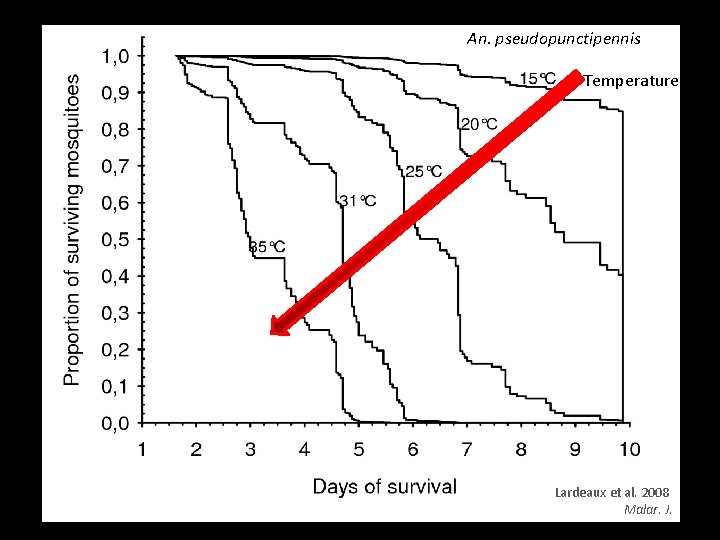
An. pseudopunctipennis Temperature Lardeaux et al. 2008 Malar. J.
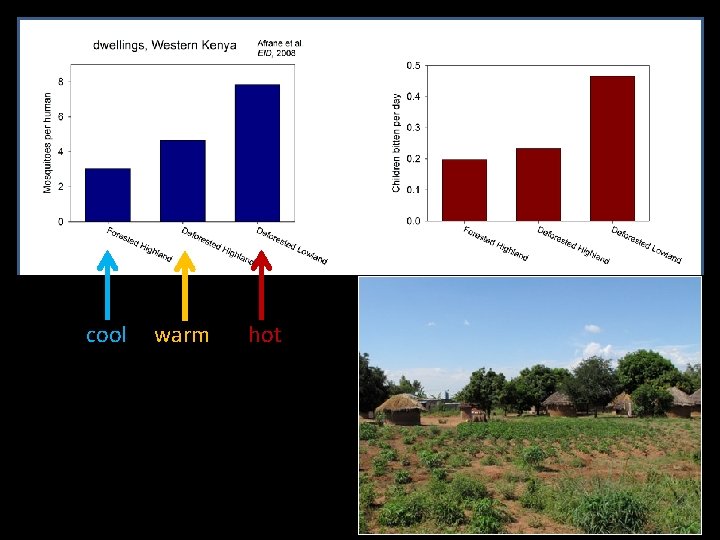
cool warm hot
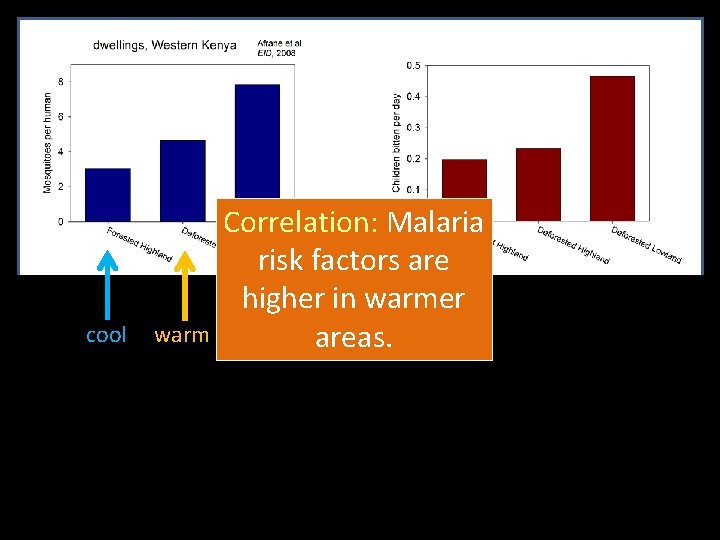
Correlation: Malaria risk factors are higher in warmer cool warm hot areas.
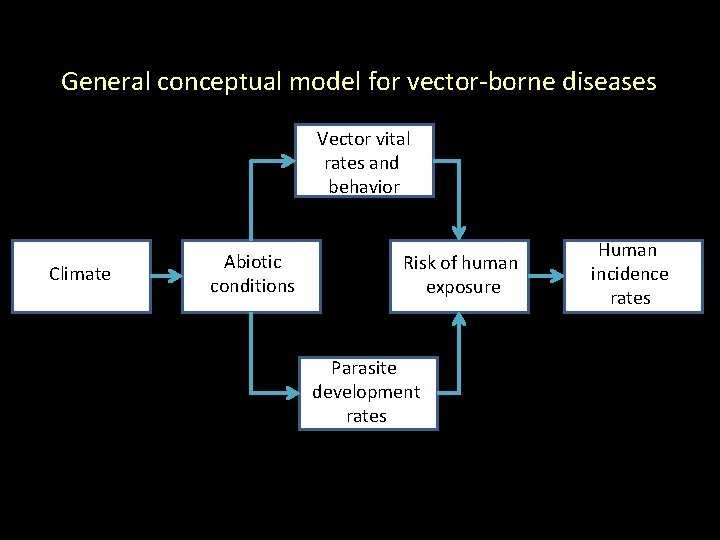
General conceptual model for vector-borne diseases Vector vital rates and behavior Climate Abiotic conditions Risk of human exposure Parasite development rates Human incidence rates
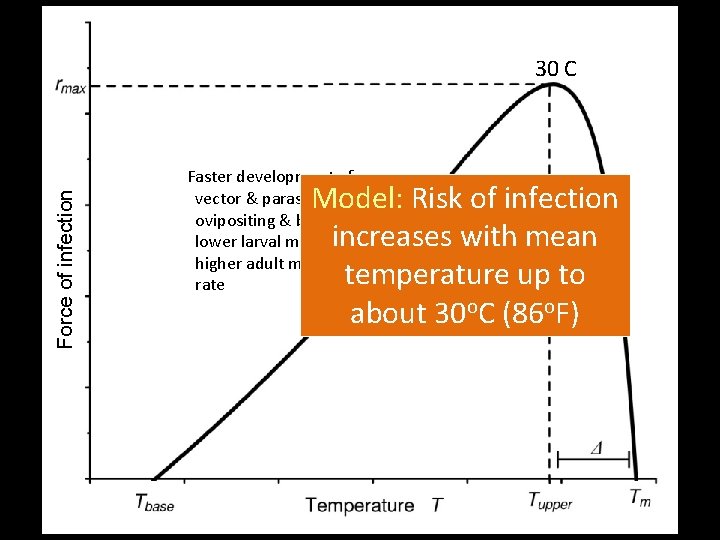
Force of infection 30 C Faster development of vector & parasite, faster ovipositing & biting rate, lower larval mortality, higher adult mortality rate Model: Risk of infection increases with mean temperature up to about 30 o. C (86 o. F)
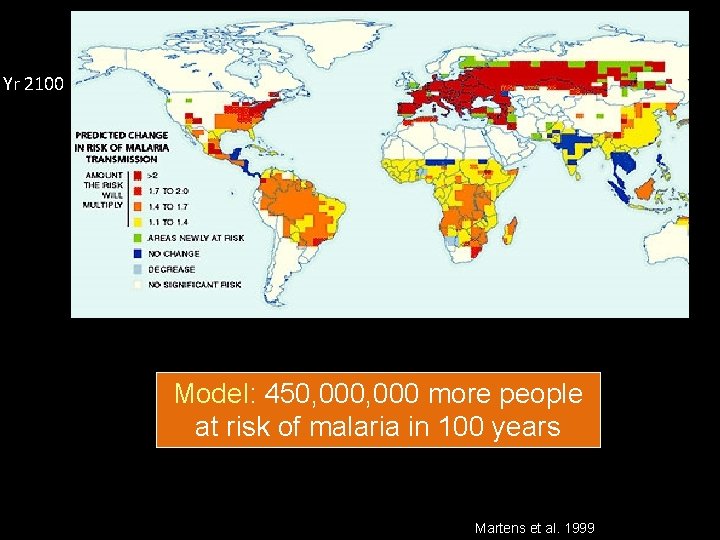
Yr 2100 Model: 450, 000 more people at risk of malaria in 100 years Martens et al. 1999
The way science really works Experiments Correlations Models
Challenging a model’s predictions using correlations
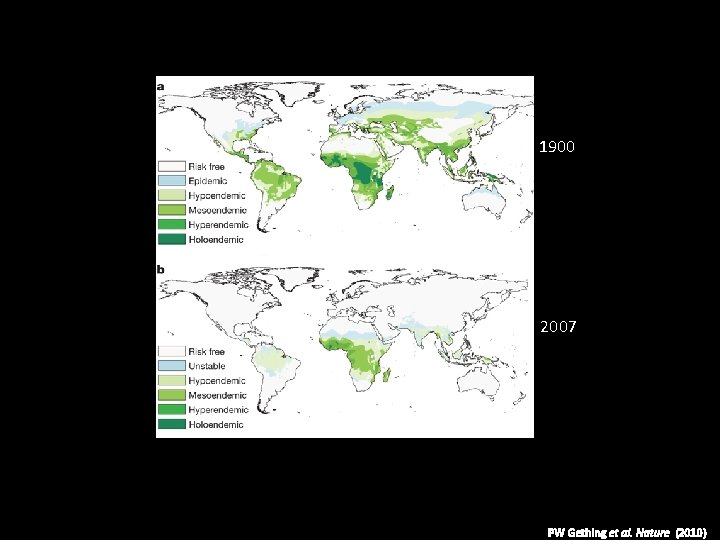
1900 2007 PW Gething et al. Nature (2010)
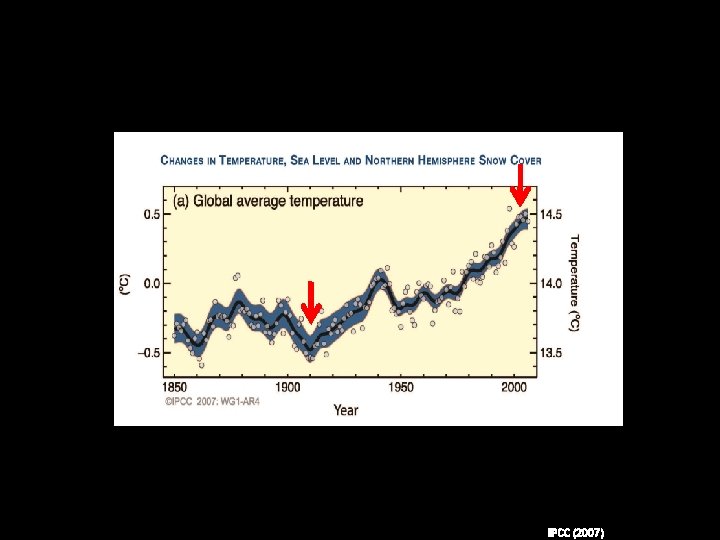
IPCC (2007)
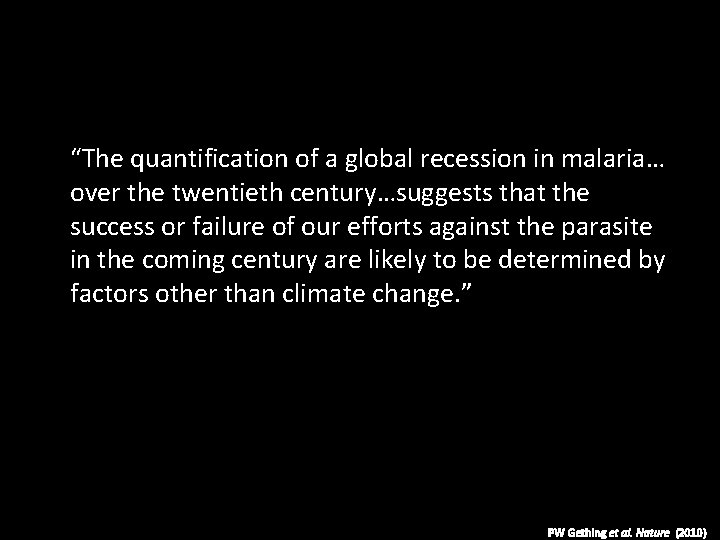
“The quantification of a global recession in malaria… over the twentieth century…suggests that the success or failure of our efforts against the parasite in the coming century are likely to be determined by factors other than climate change. ” PW Gething et al. Nature (2010)
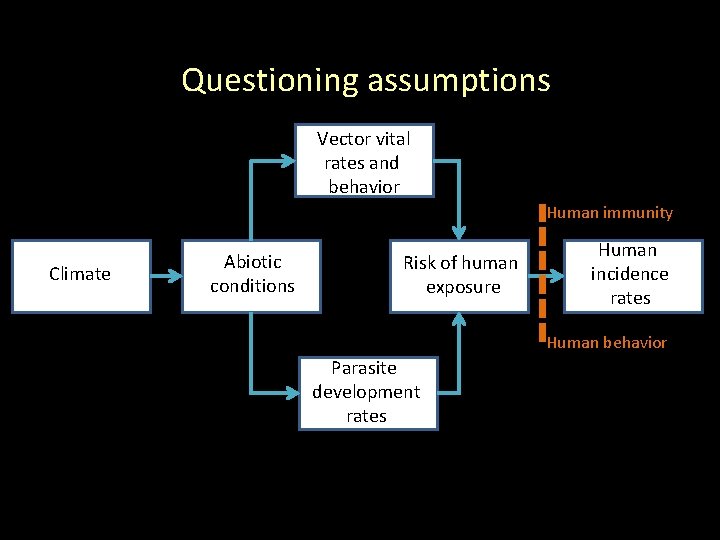
Questioning assumptions Vector vital rates and behavior Human immunity Climate Abiotic conditions Risk of human exposure Human incidence rates Human behavior Parasite development rates
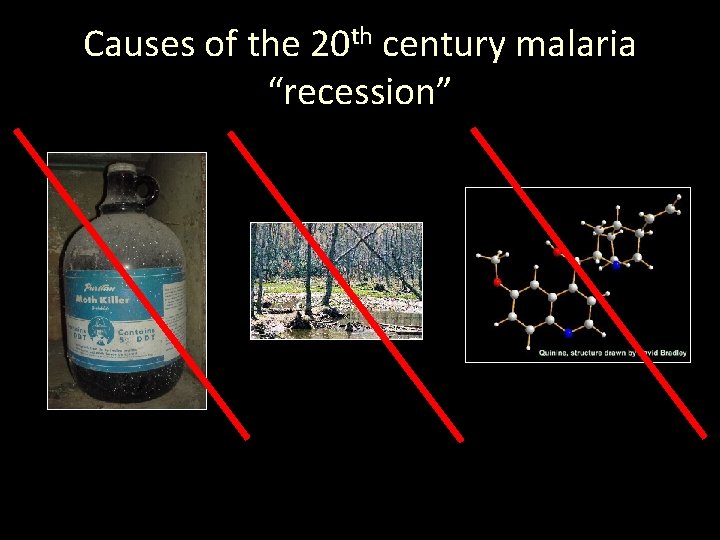
Causes of the 20 th century malaria “recession”
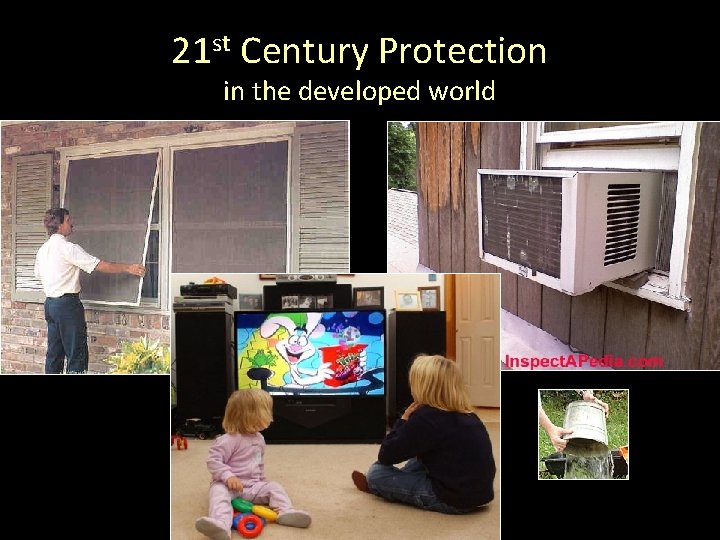
21 st Century Protection in the developed world
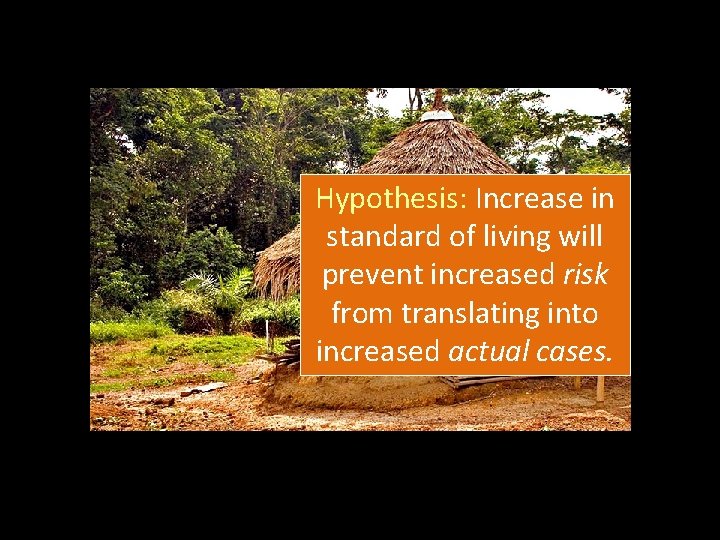
Hypothesis: Increase in standard of living will prevent increased risk from translating into increased actual cases.
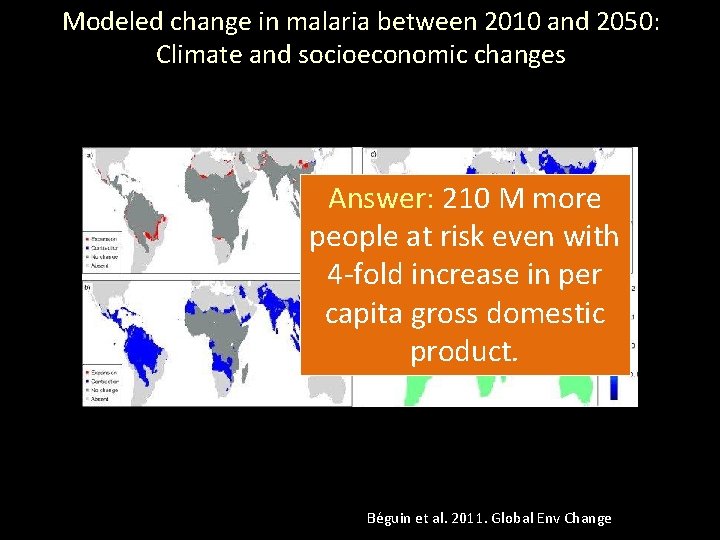
Modeled change in malaria between 2010 and 2050: Climate and socioeconomic changes Answer: 210 M more people at risk even with 4 -fold increase in per capita gross domestic product. Béguin et al. 2011. Global Env Change
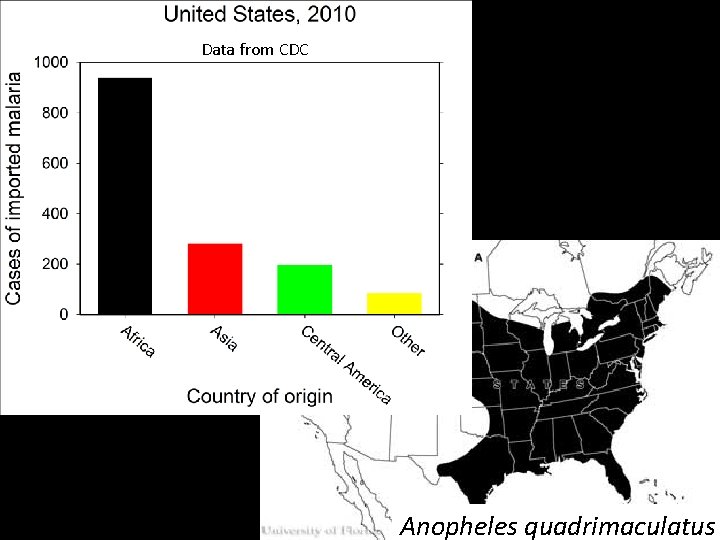
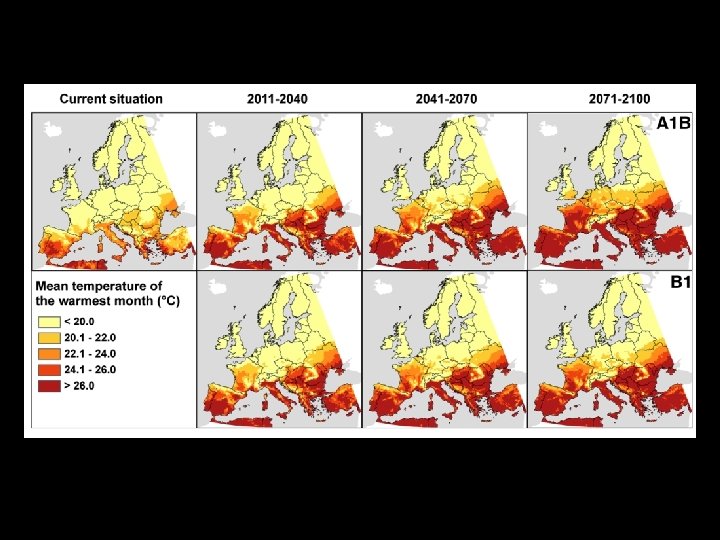
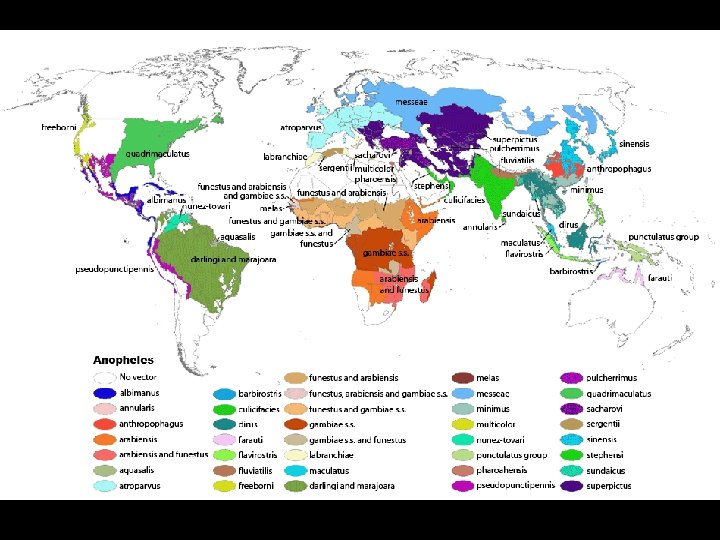
Data from CDC Will malaria re-enter the US? Anopheles quadrimaculatus
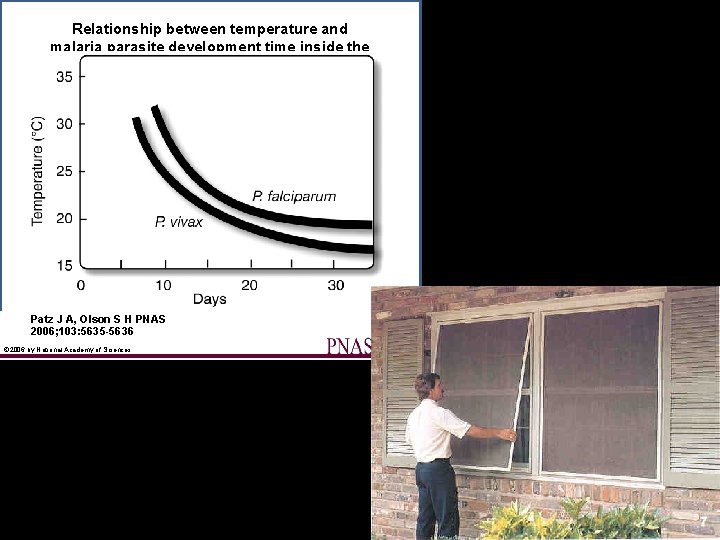
Relationship between temperature and malaria parasite development time inside the mosquito Patz J A, Olson S H PNAS 2006; 103: 5635 -5636 © 2006 by National Academy of Sciences
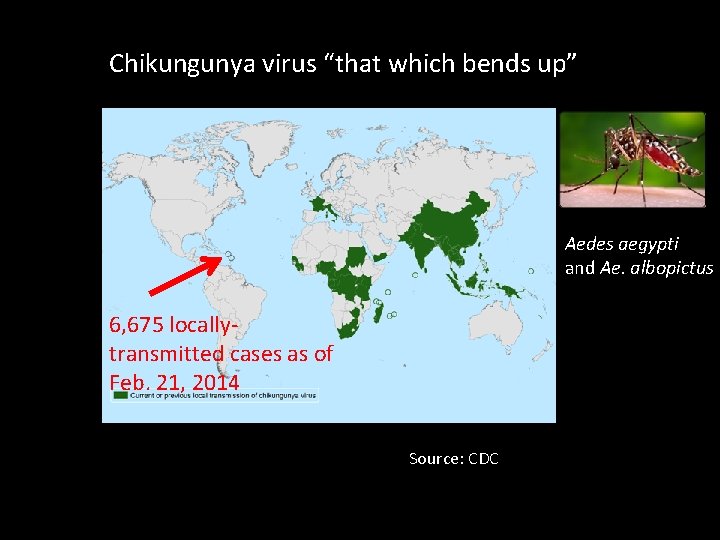
Chikungunya virus “that which bends up” Aedes aegypti and Ae. albopictus 6, 675 locallytransmitted cases as of Feb. 21, 2014 Source: CDC
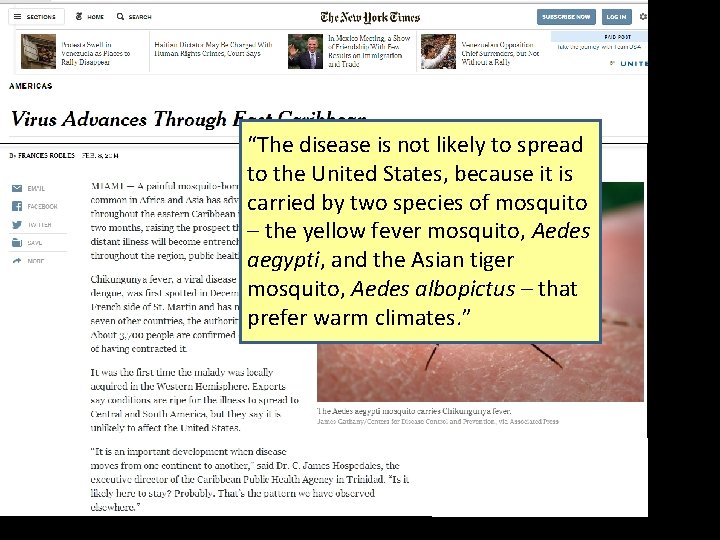
“The disease is not likely to spread to the United States, because it is carried by two species of mosquito – the yellow fever mosquito, Aedes aegypti, and the Asian tiger mosquito, Aedes albopictus – that prefer warm climates. ”
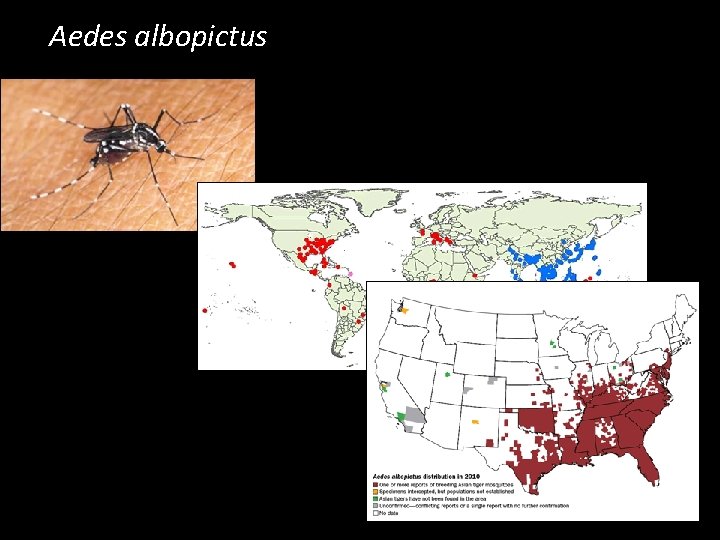
Aedes albopictus
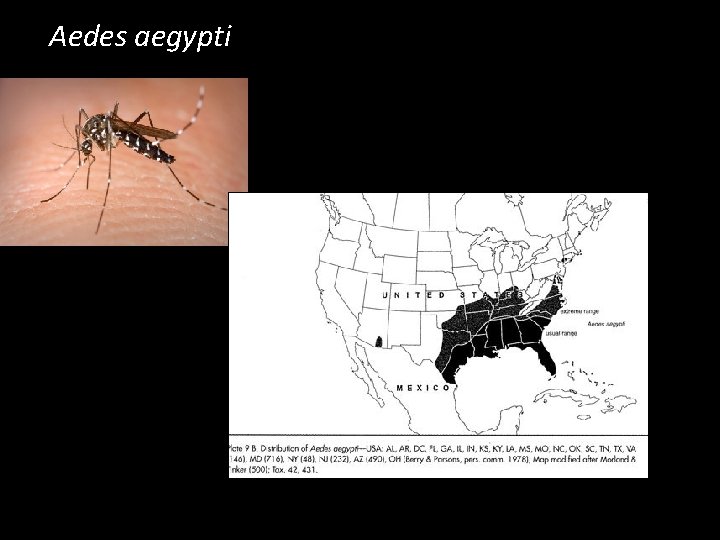
Aedes aegypti
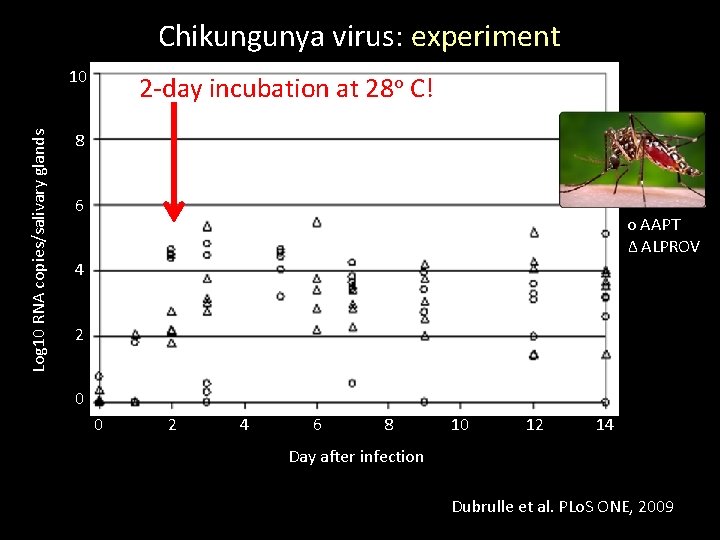
Chikungunya virus: experiment Log 10 RNA copies/salivary glands 10 2 -day incubation at 28 o C! 8 6 o AAPT Δ ALPROV 4 2 0 0 2 4 6 8 10 12 14 Day after infection Dubrulle et al. PLo. S ONE, 2009
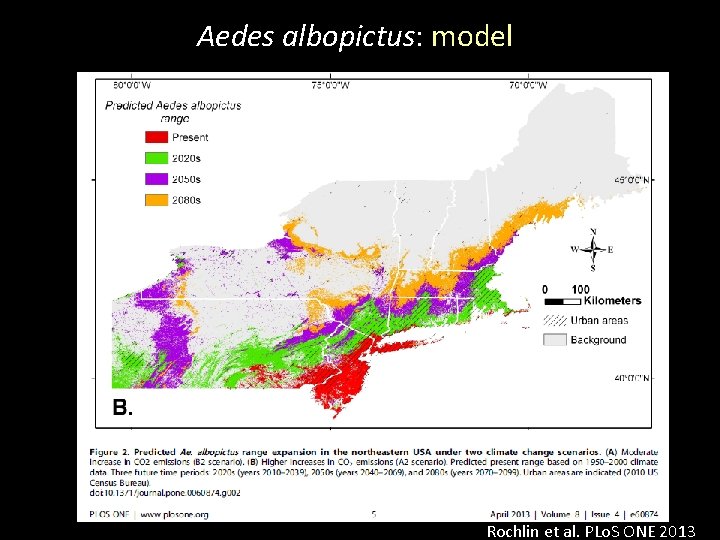
Aedes albopictus: model Rochlin et al. PLo. S ONE 2013
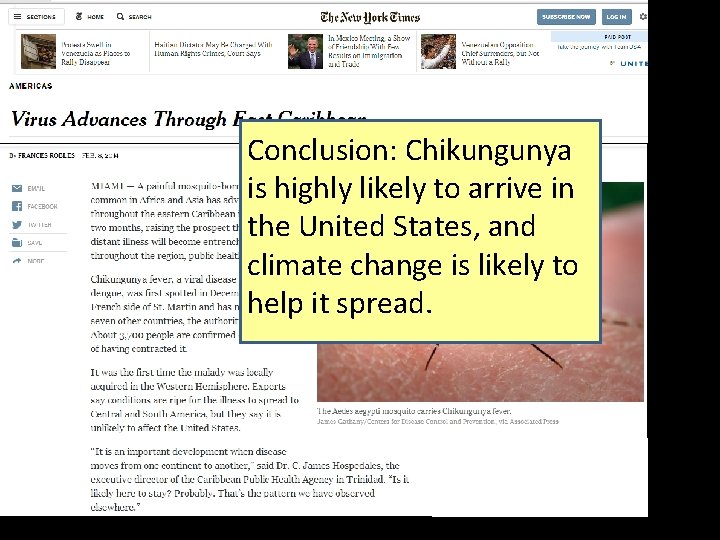
Conclusion: Chikungunya is highly likely to arrive in the United States, and climate change is likely to help it spread.
Wrap-up • Warming increases risk • Infrastructure protects in some cases • In others, warming will increase disease


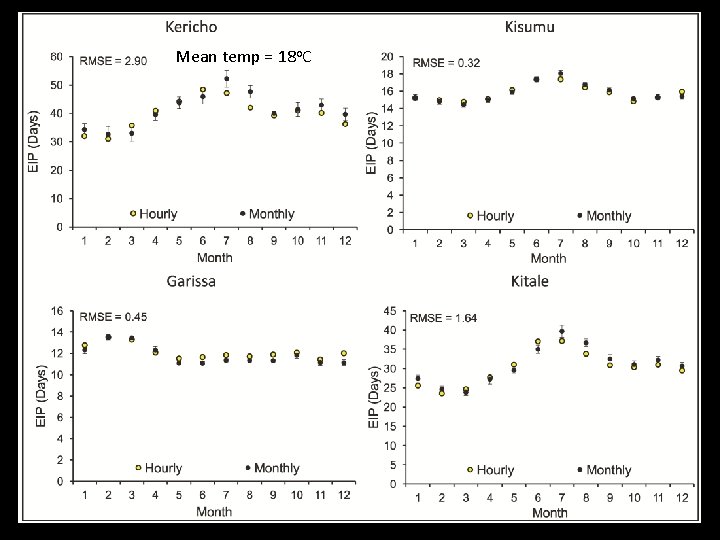
Mean temp = 18 o. C
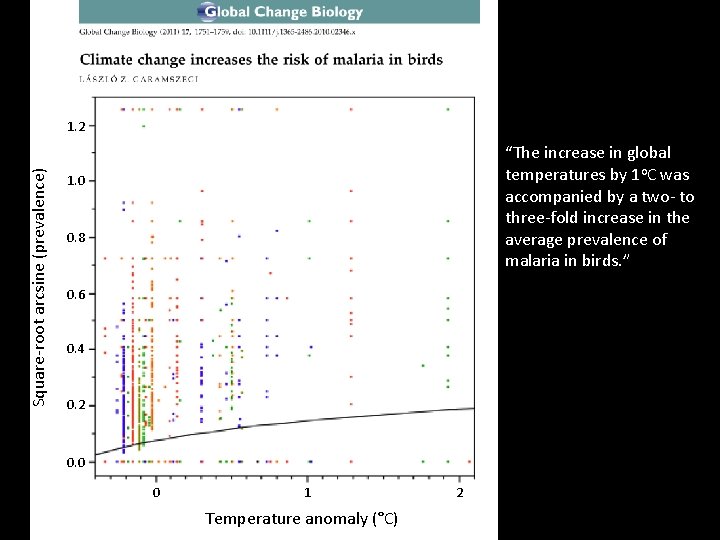
Square-root arcsine (prevalence) 1. 2 “The increase in global temperatures by 1 o. C was accompanied by a two- to three-fold increase in the average prevalence of malaria in birds. ” 1. 0 0. 8 0. 6 0. 4 0. 2 0. 0 0 1 Temperature anomaly (°C) 2
- Slides: 49