
Climate Change and Impact on Corn and Grain
- Slides: 36
Climate Change and Impact on Corn and Grain Quality Eugene S. Takle Professor of Agricultural Meteorology, Department of Agronomy Professor of Atmospheric Science, Department of Geological and Atmospheric Sciences Director, Climate Science Initiative Iowa State University gstakle@iastate. edu 49 th Annual Corn Dry Milling Conference, 29 -30 May 2008, Peoria, IL
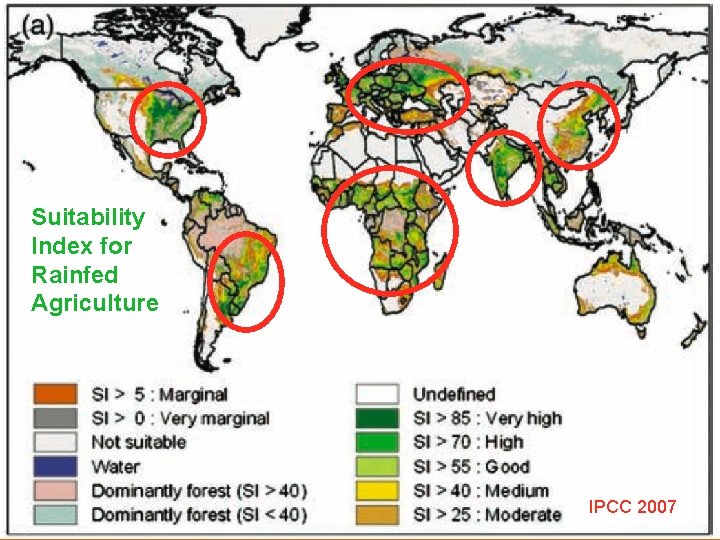
Outline • Comparison of natural variability of climate and human induced climate change • Projections of future climate change • Impact of climate change on “regions suitable for rainfed agriculture”, including the US Midwest • What does this mean for agriculture and corn production in the US Midwest?
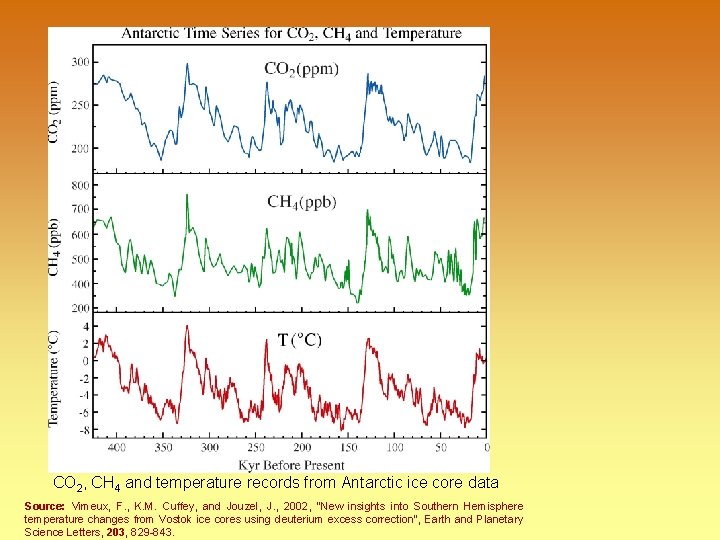
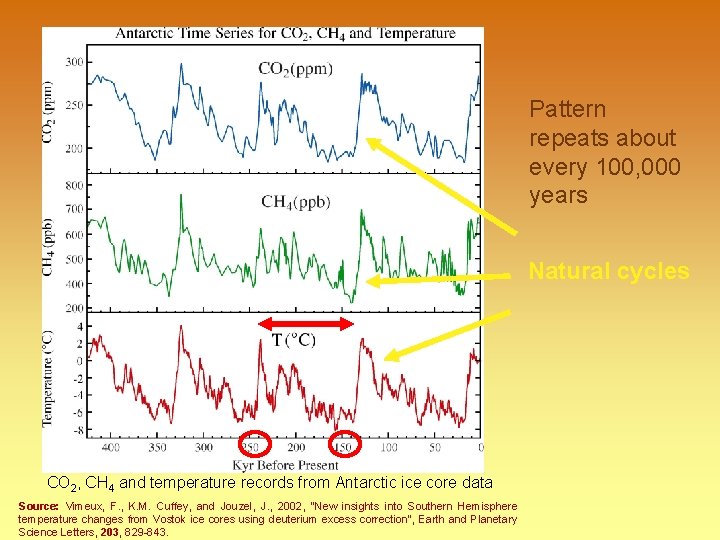
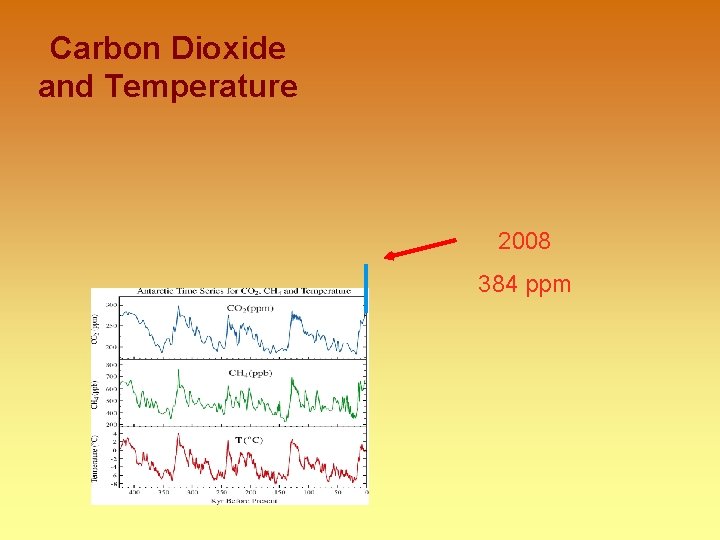
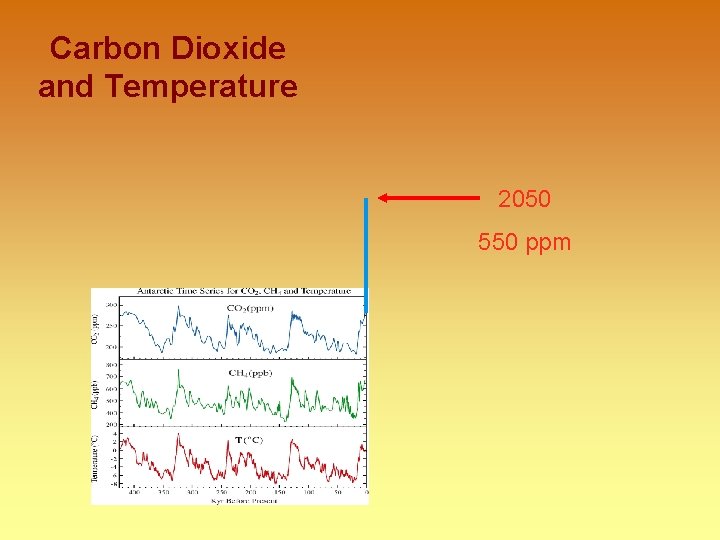
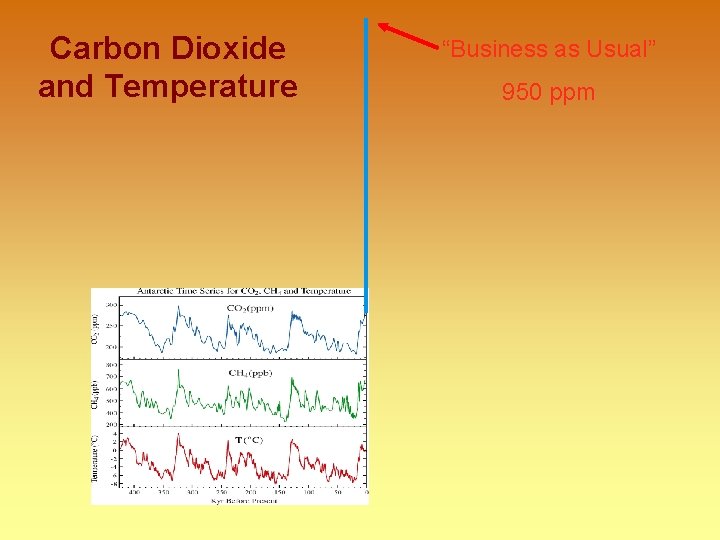
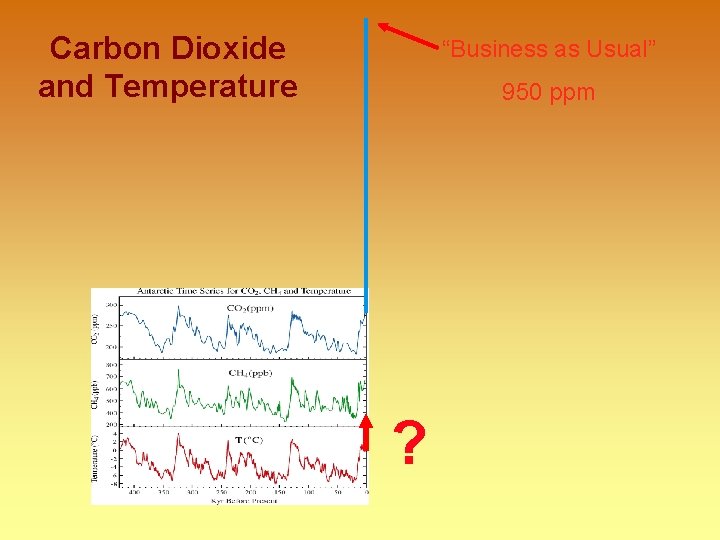
CO 2, CH 4 and temperature records from Antarctic ice core data Source: Vimeux, F. , K. M. Cuffey, and Jouzel, J. , 2002, "New insights into Southern Hemisphere temperature changes from Vostok ice cores using deuterium excess correction", Earth and Planetary Science Letters, 203, 829 -843.
Pattern repeats about every 100, 000 years Natural cycles CO 2, CH 4 and temperature records from Antarctic ice core data Source: Vimeux, F. , K. M. Cuffey, and Jouzel, J. , 2002, "New insights into Southern Hemisphere temperature changes from Vostok ice cores using deuterium excess correction", Earth and Planetary Science Letters, 203, 829 -843.
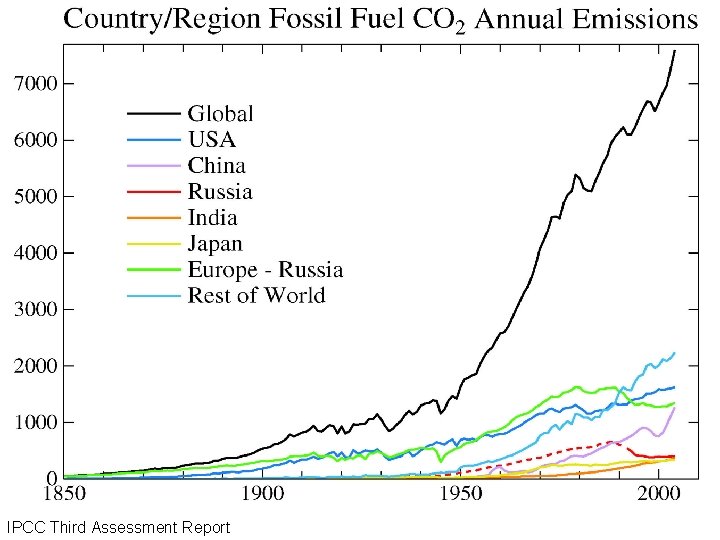
IPCC Third Assessment Report
Carbon Dioxide and Temperature 2008 384 ppm
Carbon Dioxide and Temperature 2050 550 ppm
Carbon Dioxide and Temperature “Business as Usual” 950 ppm
Carbon Dioxide and Temperature “Business as Usual” 950 ppm ?
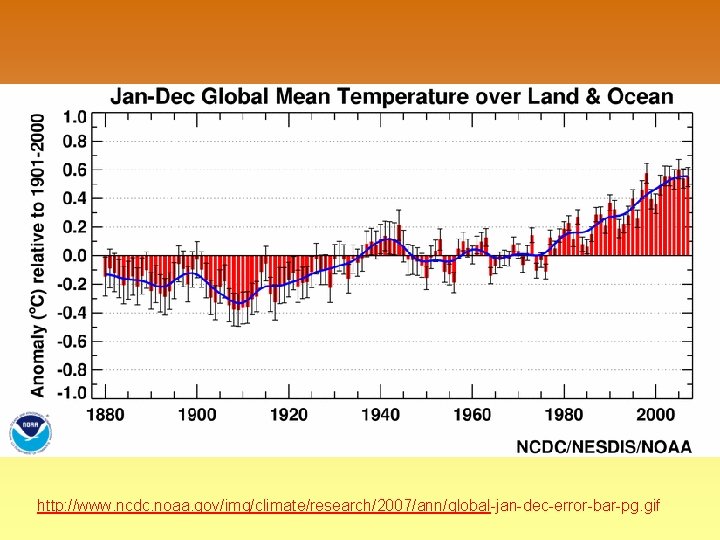
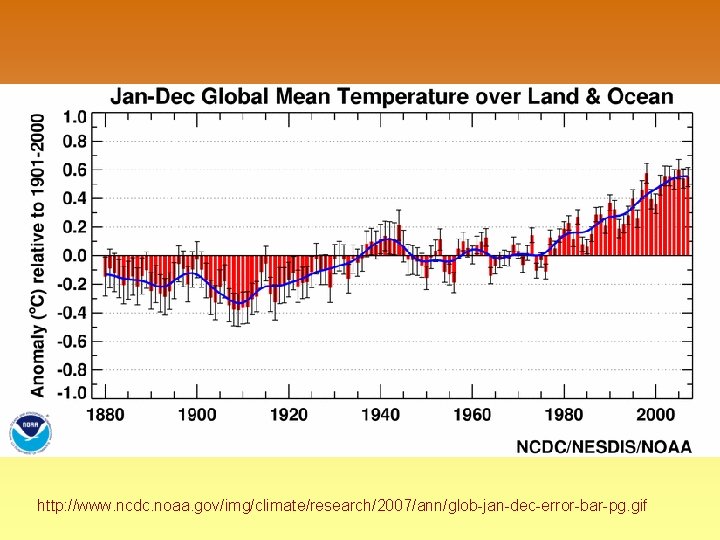
http: //www. ncdc. noaa. gov/img/climate/research/2007/ann/global-jan-dec-error-bar-pg. gif
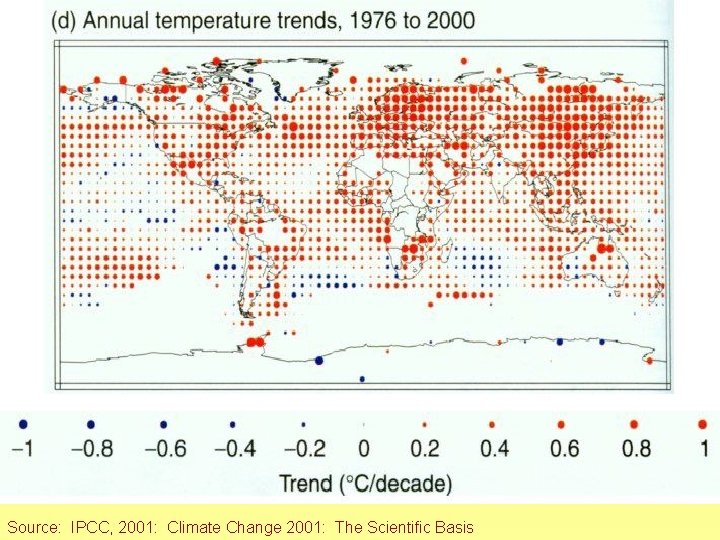
Source: IPCC, 2001: Climate Change 2001: The Scientific Basis
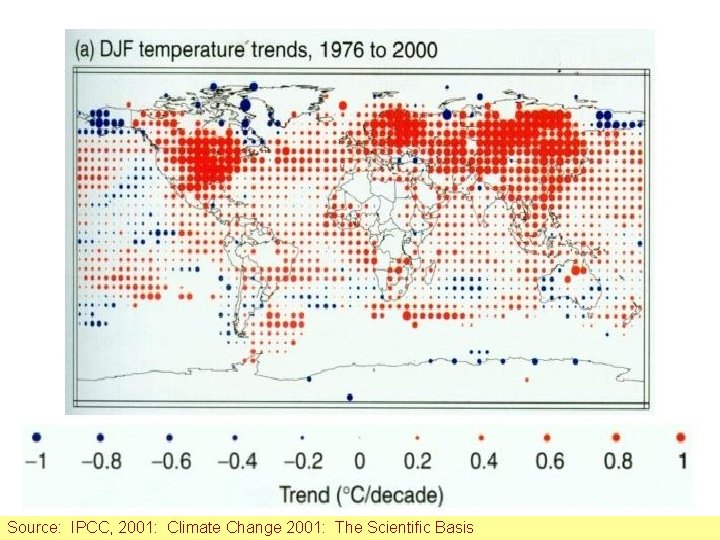
Source: IPCC, 2001: Climate Change 2001: The Scientific Basis
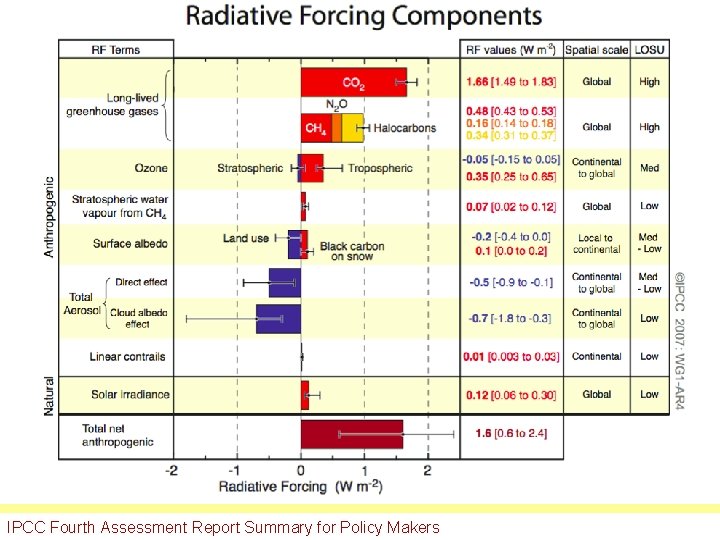
IPCC Fourth Assessment Report Summary for Policy Makers
http: //www. ncdc. noaa. gov/img/climate/research/2007/ann/glob-jan-dec-error-bar-pg. gif
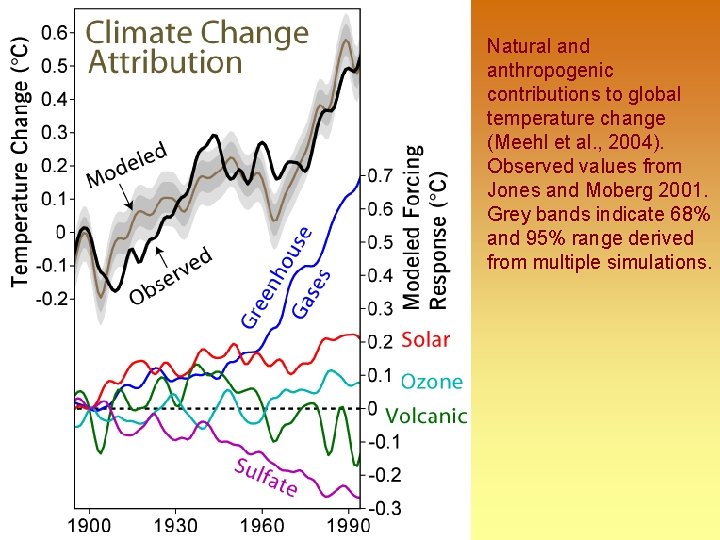
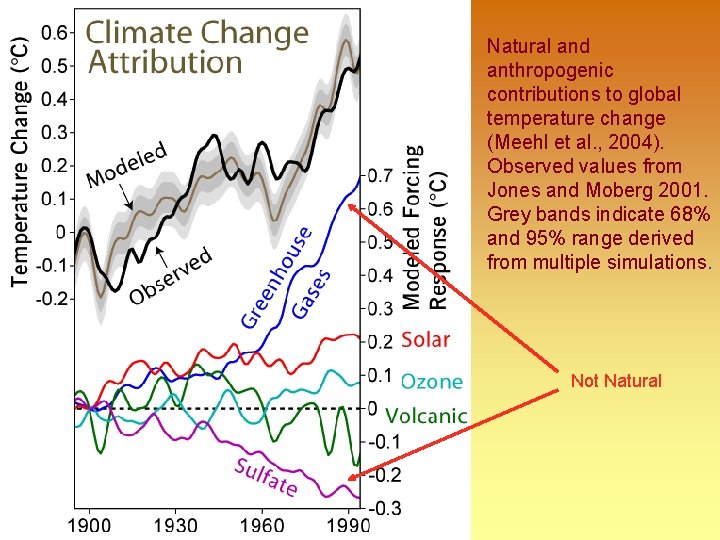
Natural and anthropogenic contributions to global temperature change (Meehl et al. , 2004). Observed values from Jones and Moberg 2001. Grey bands indicate 68% and 95% range derived from multiple simulations.
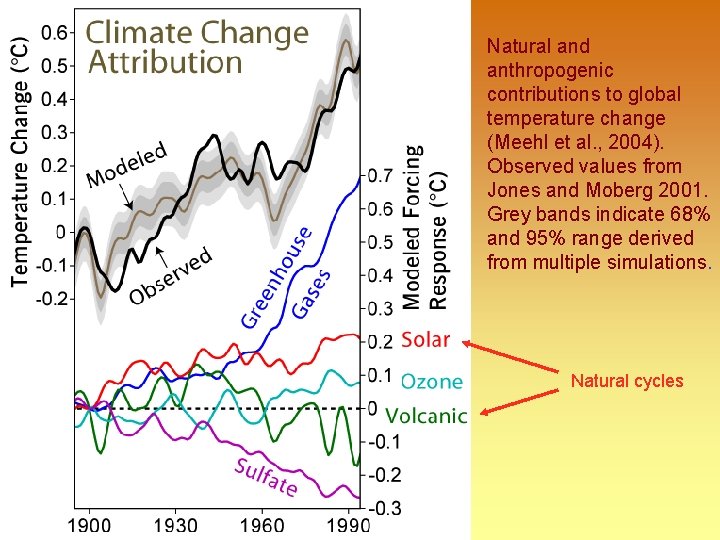
Natural and anthropogenic contributions to global temperature change (Meehl et al. , 2004). Observed values from Jones and Moberg 2001. Grey bands indicate 68% and 95% range derived from multiple simulations. Natural cycles
Natural and anthropogenic contributions to global temperature change (Meehl et al. , 2004). Observed values from Jones and Moberg 2001. Grey bands indicate 68% and 95% range derived from multiple simulations. Not Natural
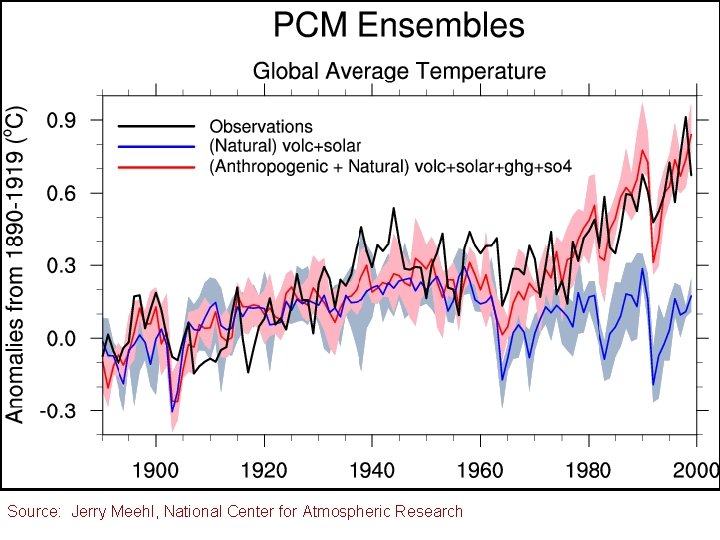
Source: Jerry Meehl, National Center for Atmospheric Research
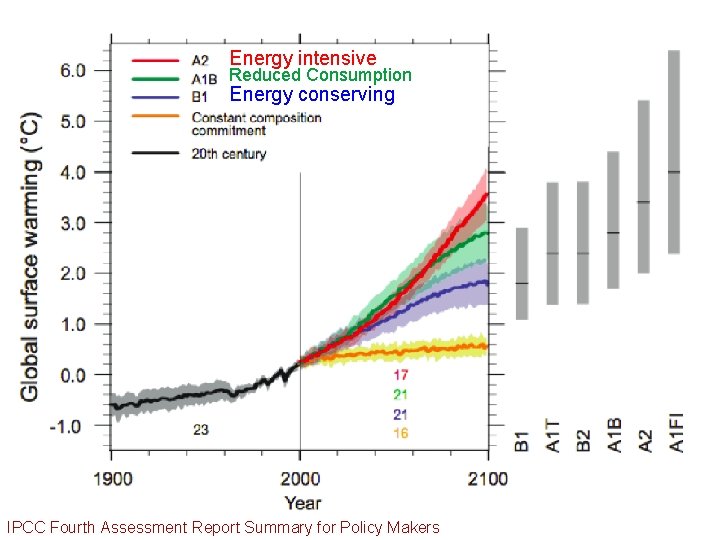
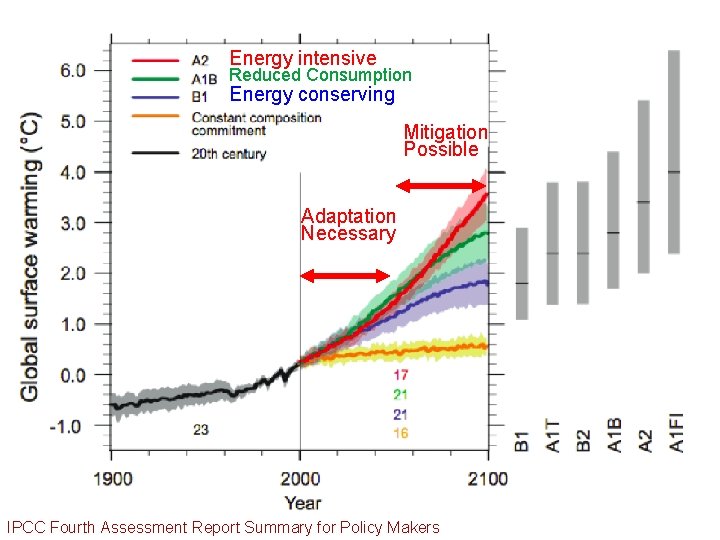
Energy intensive Reduced Consumption Energy conserving IPCC Fourth Assessment Report Summary for Policy Makers
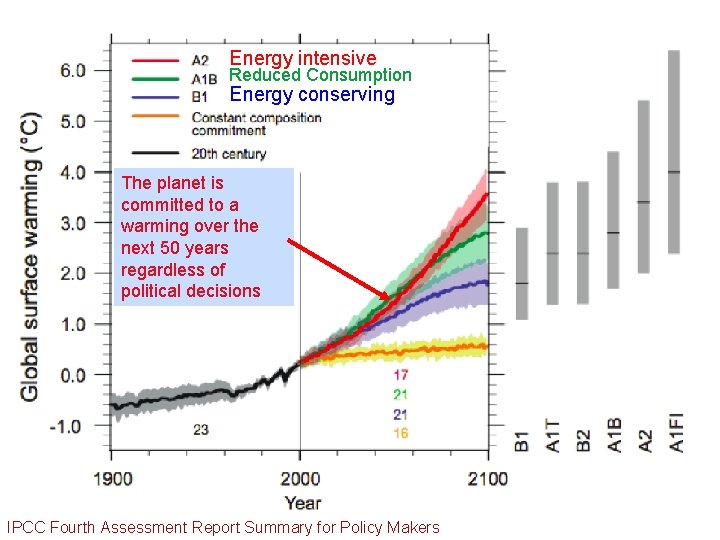
Energy intensive Reduced Consumption Energy conserving The planet is committed to a warming over the next 50 years regardless of political decisions IPCC Fourth Assessment Report Summary for Policy Makers
Energy intensive Reduced Consumption Energy conserving Mitigation Possible Adaptation Necessary IPCC Fourth Assessment Report Summary for Policy Makers
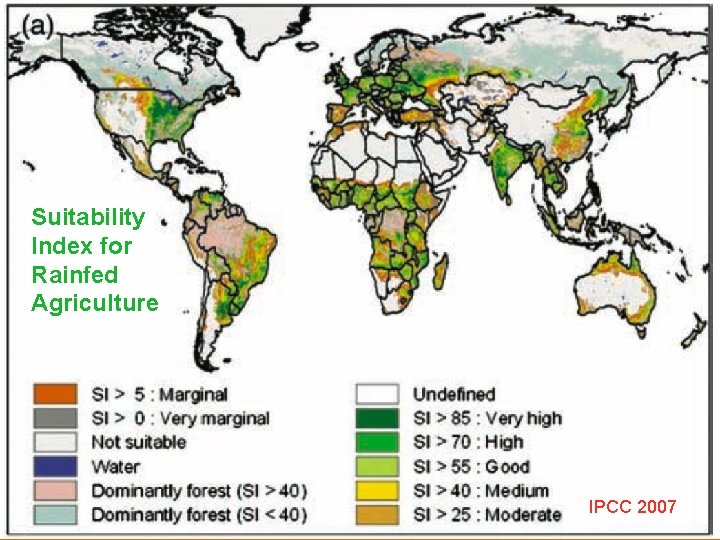
Suitability Index for Rainfed Agriculture IPCC 2007
Suitability Index for Rainfed Agriculture IPCC 2007
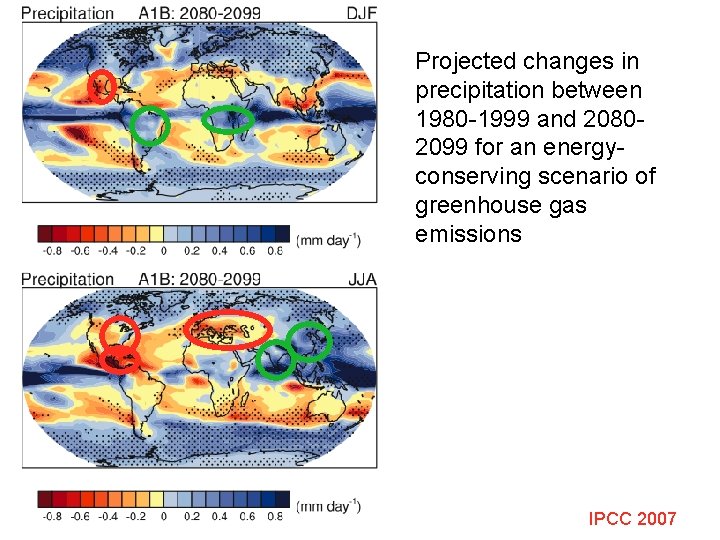
Projected changes in precipitation between 1980 -1999 and 20802099 for an energyconserving scenario of greenhouse gas emissions IPCC 2007
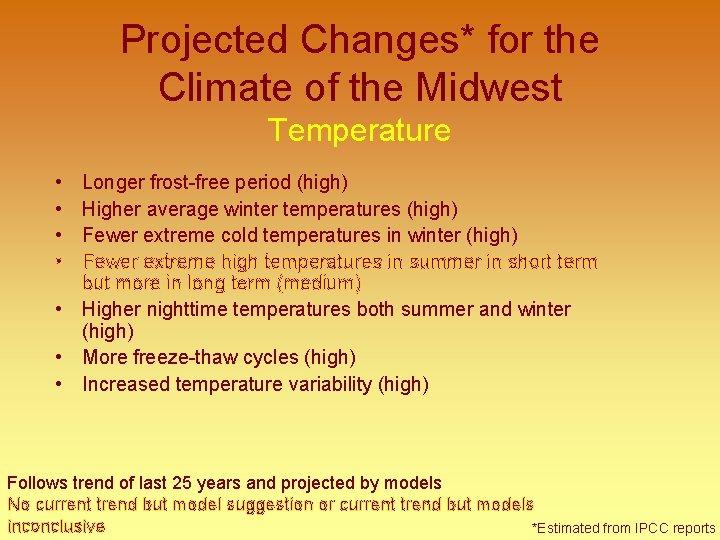
Projected Changes* for the Climate of the Midwest Temperature • • Longer frost-free period (high) Higher average winter temperatures (high) Fewer extreme cold temperatures in winter (high) Fewer extreme high temperatures in summer in short term but more in long term (medium) • Higher nighttime temperatures both summer and winter (high) • More freeze-thaw cycles (high) • Increased temperature variability (high) Follows trend of last 25 years and projected by models No current trend but model suggestion or current trend but models inconclusive *Estimated from IPCC reports
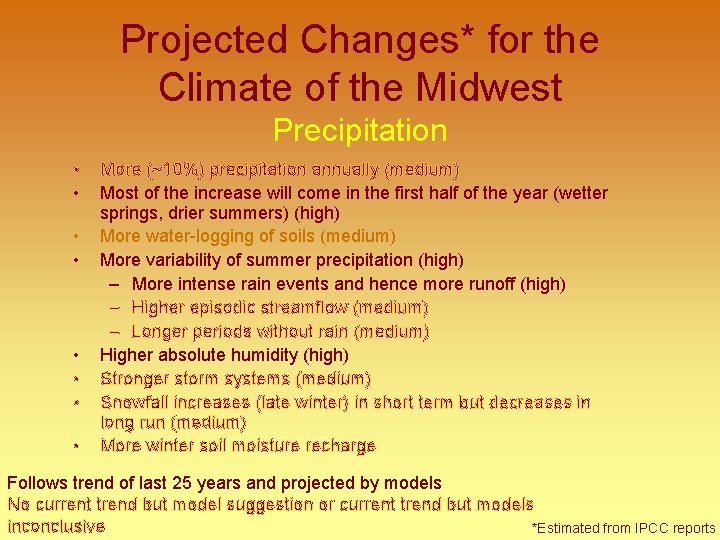
Projected Changes* for the Climate of the Midwest Precipitation • • More (~10%) precipitation annually (medium) Most of the increase will come in the first half of the year (wetter springs, drier summers) (high) More water-logging of soils (medium) More variability of summer precipitation (high) – More intense rain events and hence more runoff (high) – Higher episodic streamflow (medium) – Longer periods without rain (medium) Higher absolute humidity (high) Stronger storm systems (medium) Snowfall increases (late winter) in short term but decreases in long run (medium) More winter soil moisture recharge Follows trend of last 25 years and projected by models No current trend but model suggestion or current trend but models inconclusive *Estimated from IPCC reports
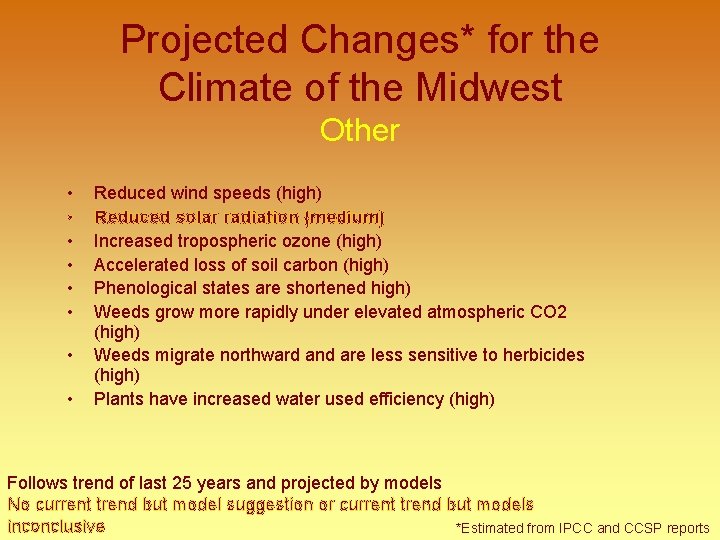
Projected Changes* for the Climate of the Midwest Other • • Reduced wind speeds (high) Reduced solar radiation (medium) Increased tropospheric ozone (high) Accelerated loss of soil carbon (high) Phenological states are shortened high) Weeds grow more rapidly under elevated atmospheric CO 2 (high) Weeds migrate northward and are less sensitive to herbicides (high) Plants have increased water used efficiency (high) Follows trend of last 25 years and projected by models No current trend but model suggestion or current trend but models inconclusive *Estimated from IPCC and CCSP reports
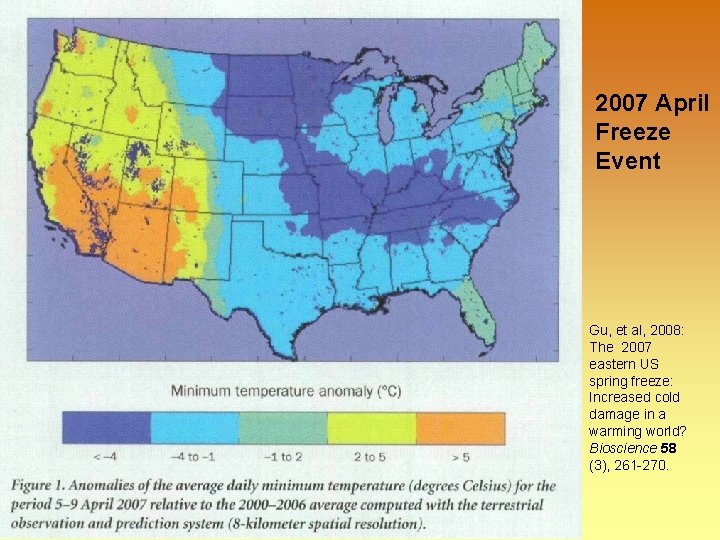
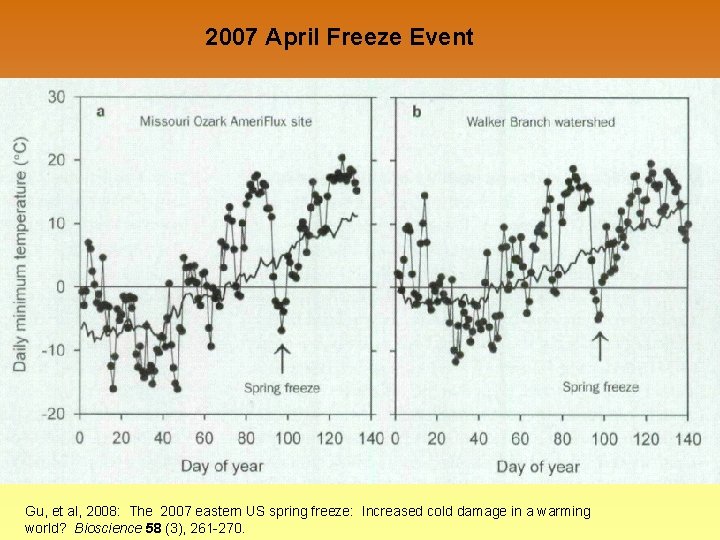
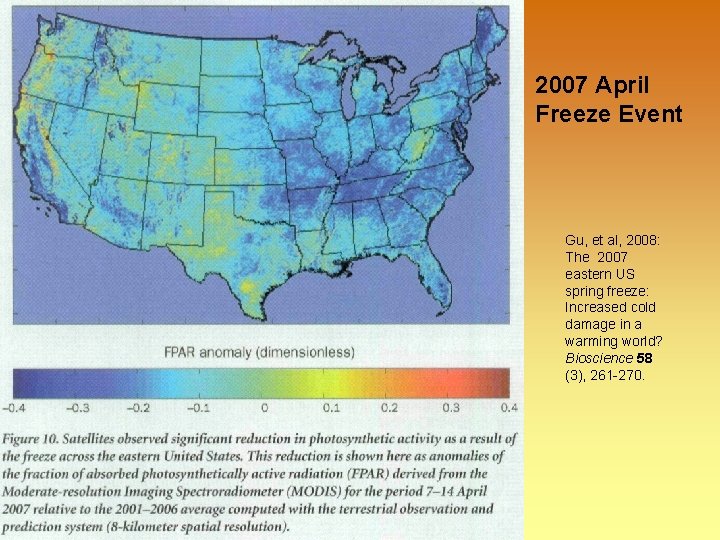
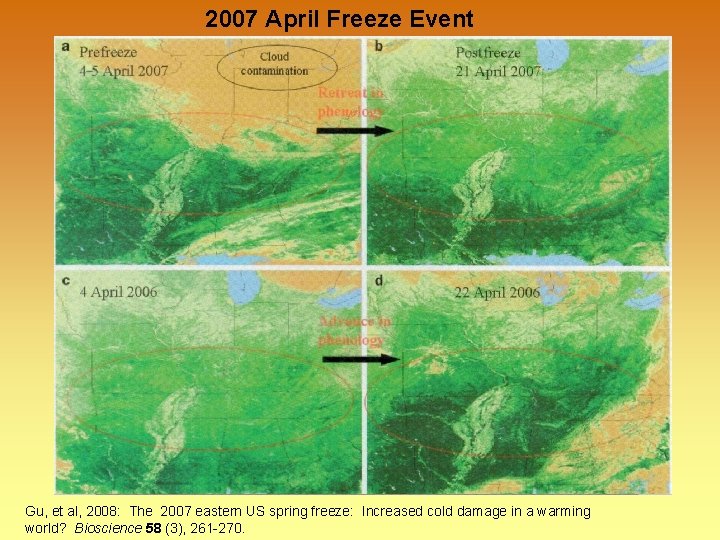
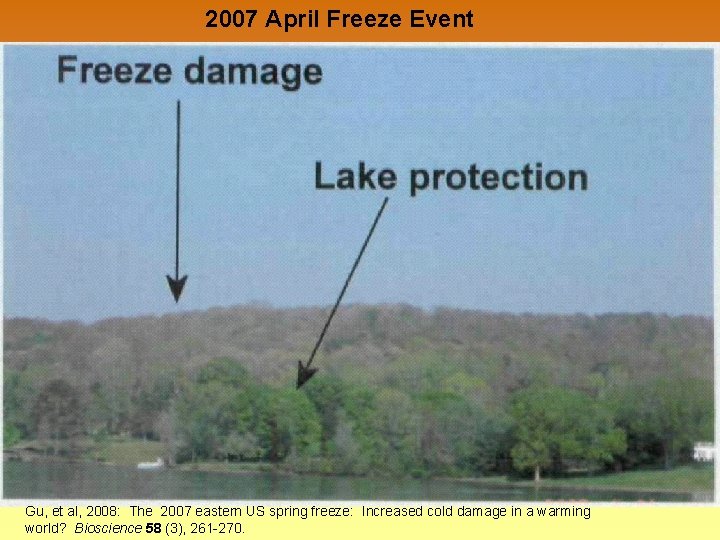
2007 April Freeze Event Gu, et al, 2008: The 2007 eastern US spring freeze: Increased cold damage in a warming world? Bioscience 58 (3), 261 -270.
2007 April Freeze Event Gu, et al, 2008: The 2007 eastern US spring freeze: Increased cold damage in a warming world? Bioscience 58 (3), 261 -270.
2007 April Freeze Event Gu, et al, 2008: The 2007 eastern US spring freeze: Increased cold damage in a warming world? Bioscience 58 (3), 261 -270.
2007 April Freeze Event Gu, et al, 2008: The 2007 eastern US spring freeze: Increased cold damage in a warming world? Bioscience 58 (3), 261 -270.
2007 April Freeze Event Gu, et al, 2008: The 2007 eastern US spring freeze: Increased cold damage in a warming world? Bioscience 58 (3), 261 -270.
Summary • Climate change since the 1970 s cannot be explained on the basis of natural variation alone (consensus) • Greenhouse gases emitted from burning fossil fuels account for more than half of the current warming (consensus) • The warming already introduced will persist for more than a century (consensus) • Corn production will encounter some benefits and numerous challenges (my assessment based on consensus) • The US Midwest likely will suffer less adverse effects of climate change than many other major rain-fed agricultural areas (my assessment based on consensus)