
Climate and Weather Suzana J Camargo Weather Climate
- Slides: 41
Climate and Weather Suzana J. Camargo
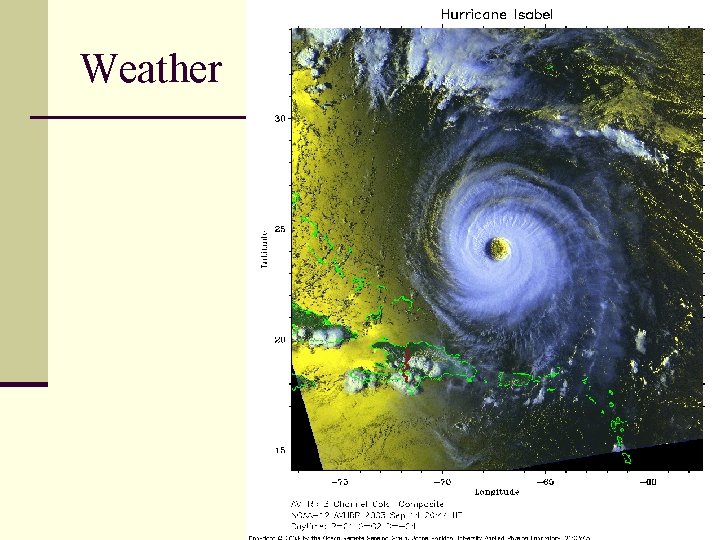
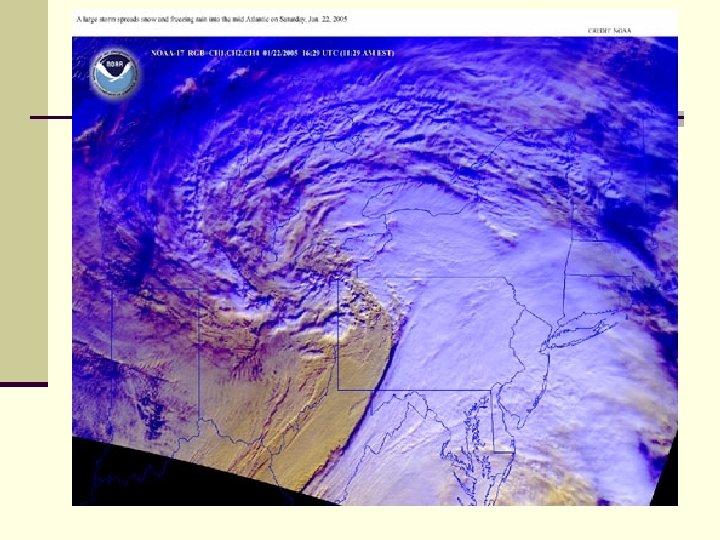
Weather
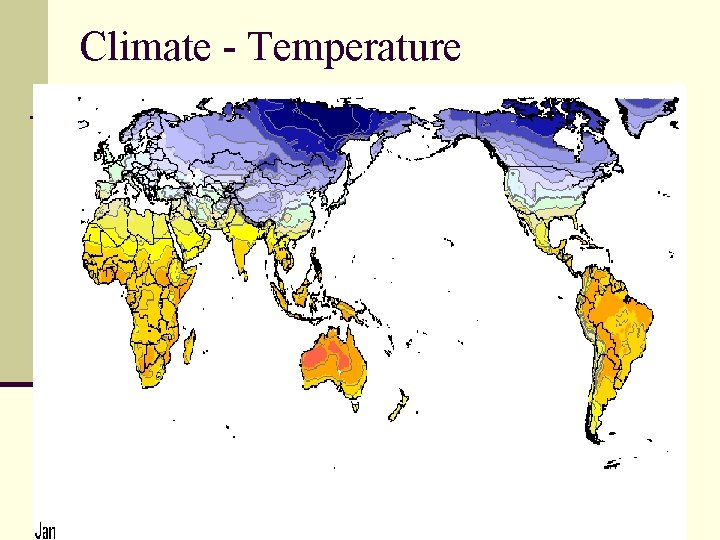
Climate - Temperature
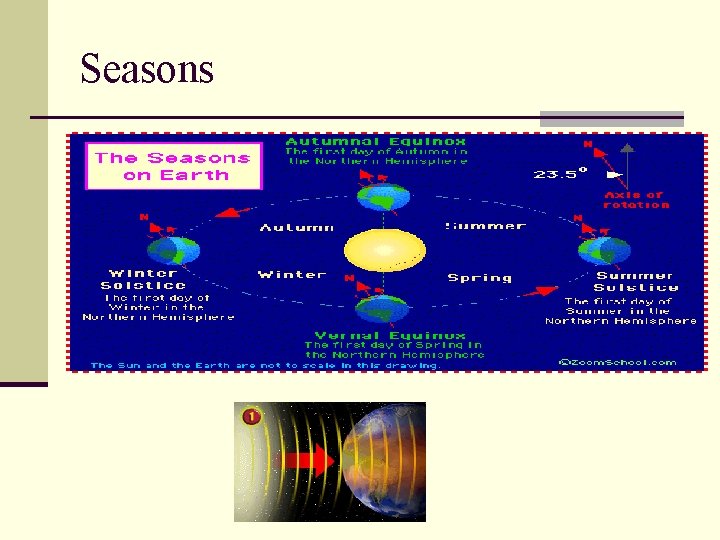
Seasons
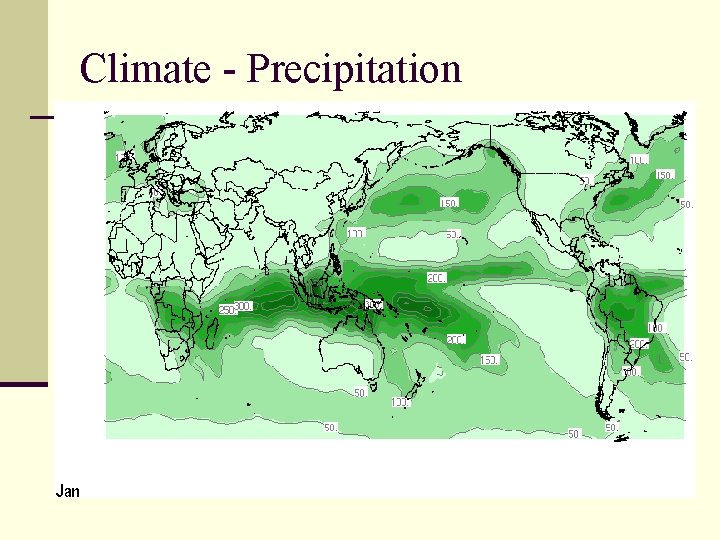
Climate - Precipitation
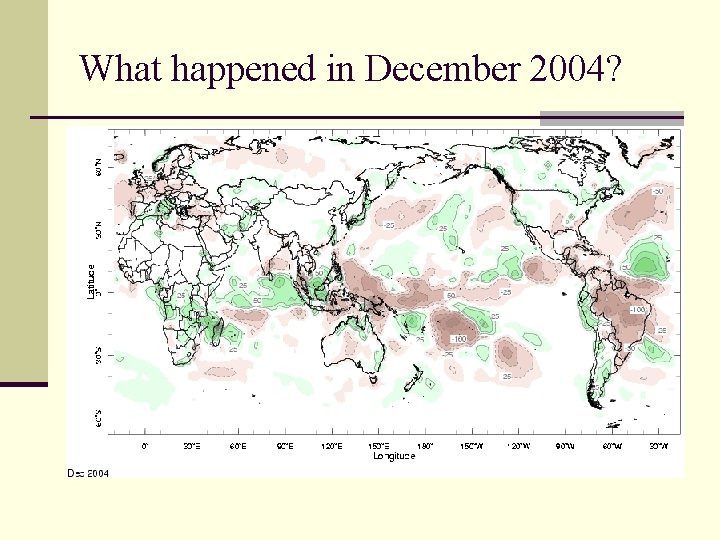
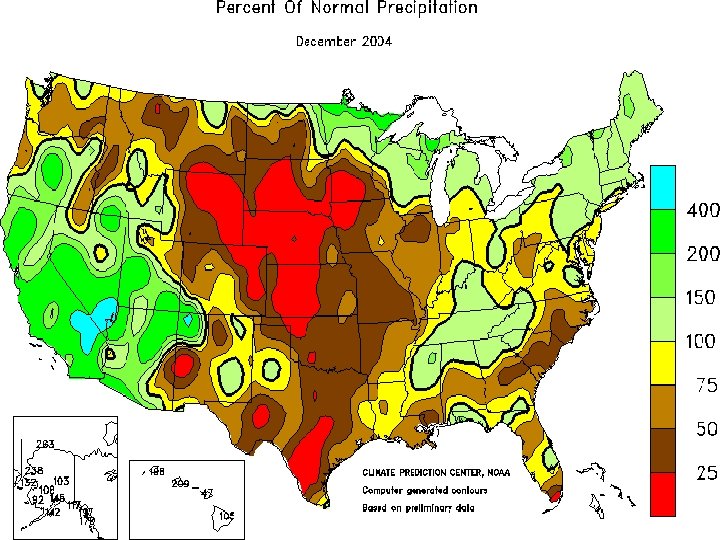
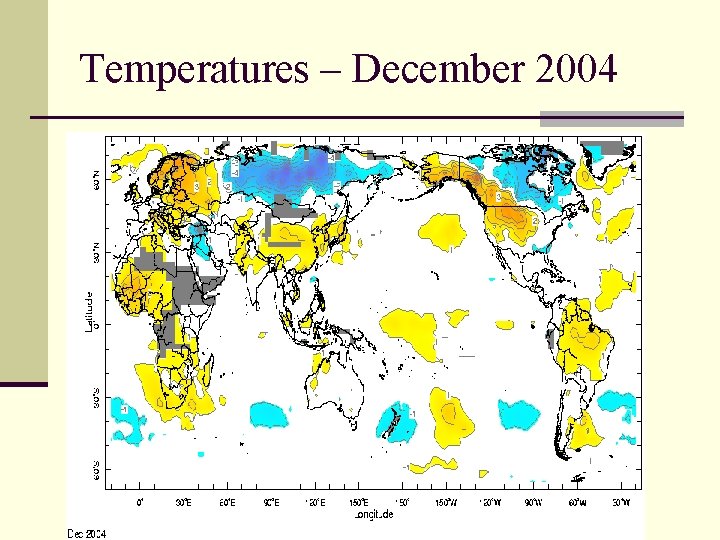
What happened in December 2004?
Temperatures – December 2004
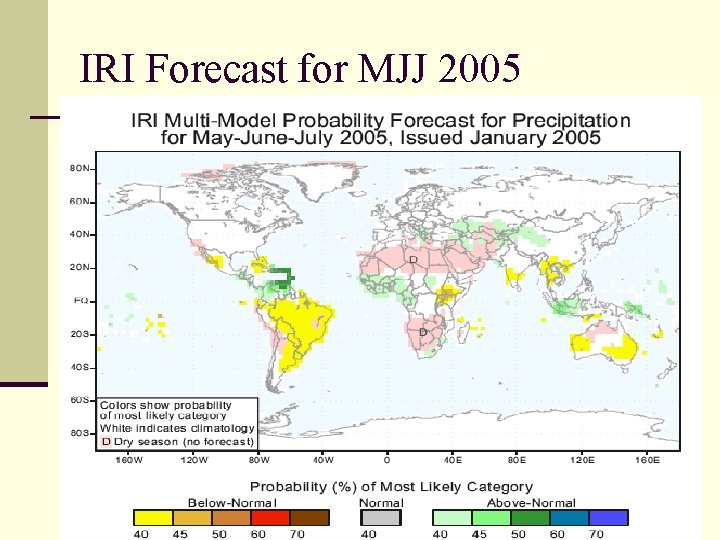
IRI Forecast for MJJ 2005
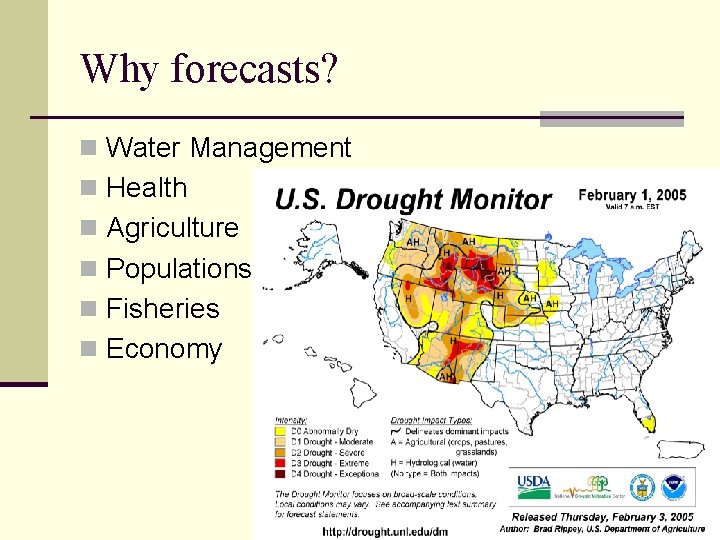
Why forecasts? n Water Management n Health n Agriculture n Populations n Fisheries n Economy
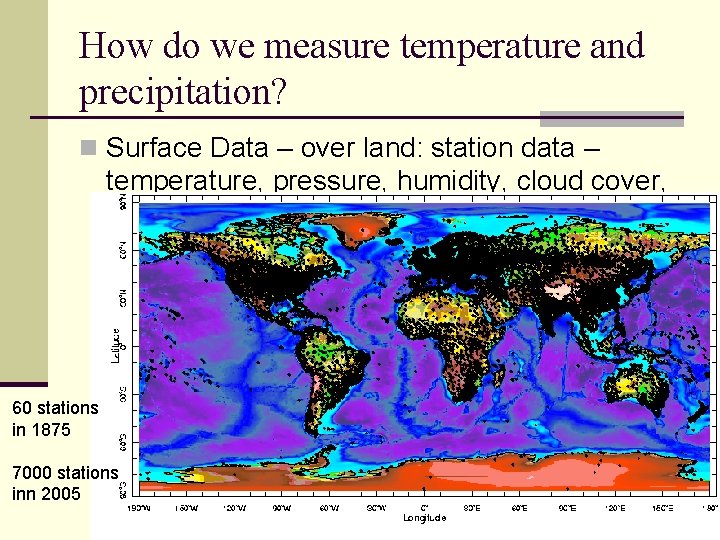
How do we measure temperature and precipitation? n Surface Data – over land: station data – temperature, pressure, humidity, cloud cover, rate of precipitation… 60 stations in 1875 7000 stations inn 2005
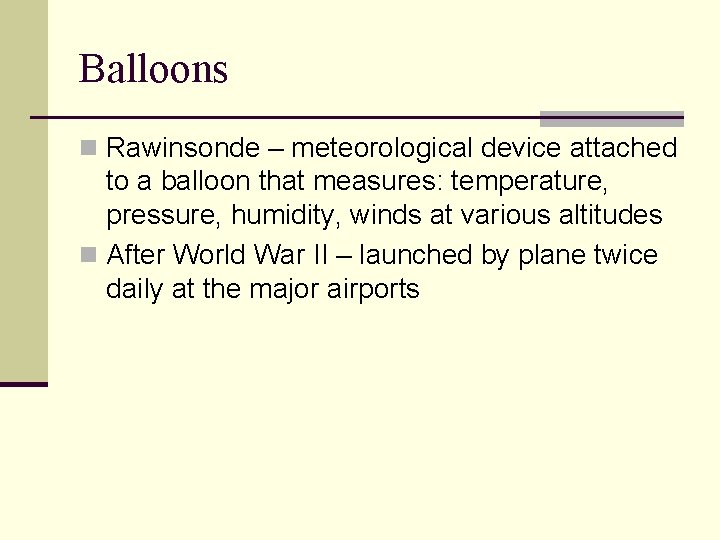
Balloons n Rawinsonde – meteorological device attached to a balloon that measures: temperature, pressure, humidity, winds at various altitudes n After World War II – launched by plane twice daily at the major airports
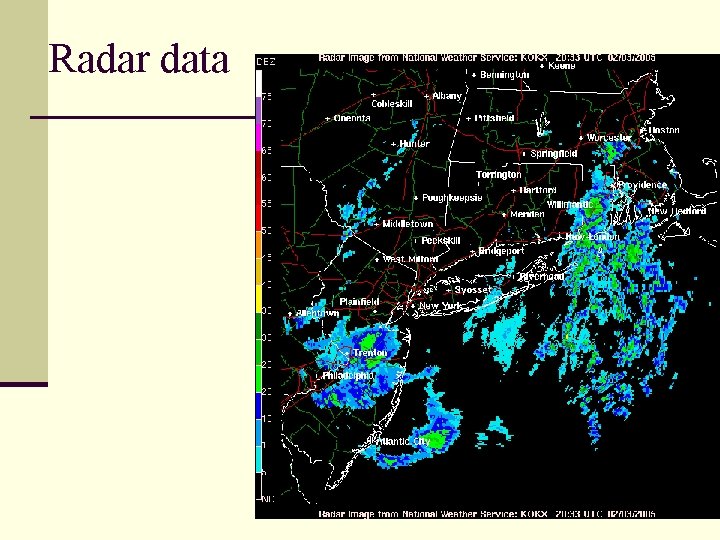
Radar data
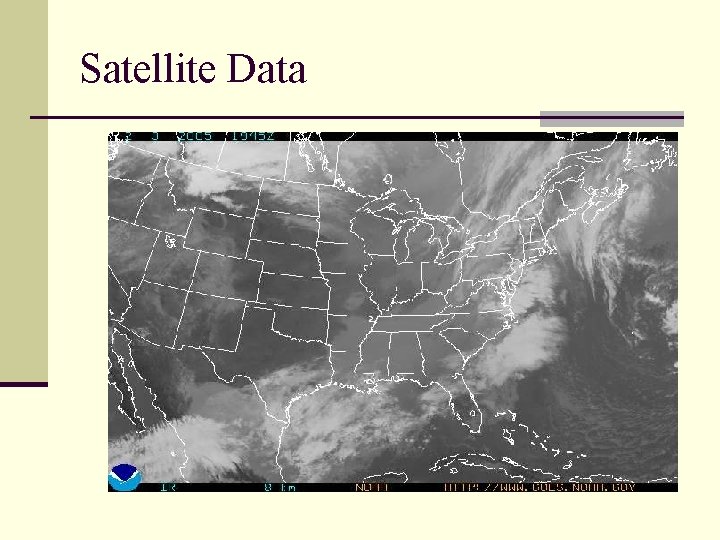
Satellite Data
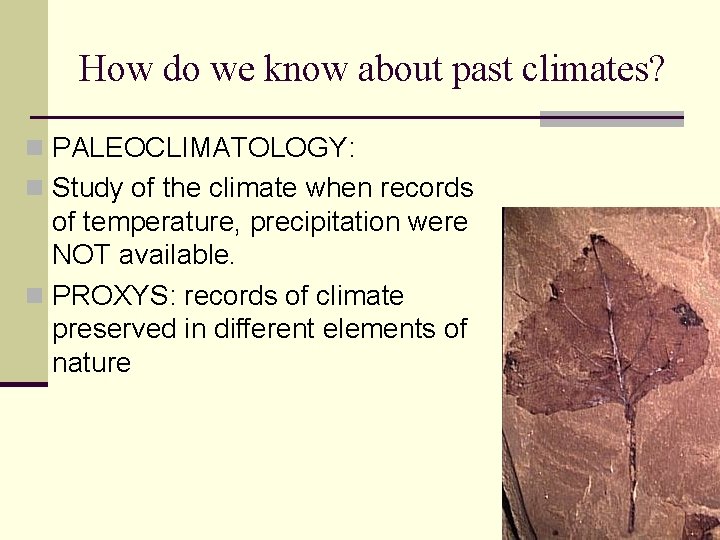
How do we know about past climates? n PALEOCLIMATOLOGY: n Study of the climate when records of temperature, precipitation were NOT available. n PROXYS: records of climate preserved in different elements of nature
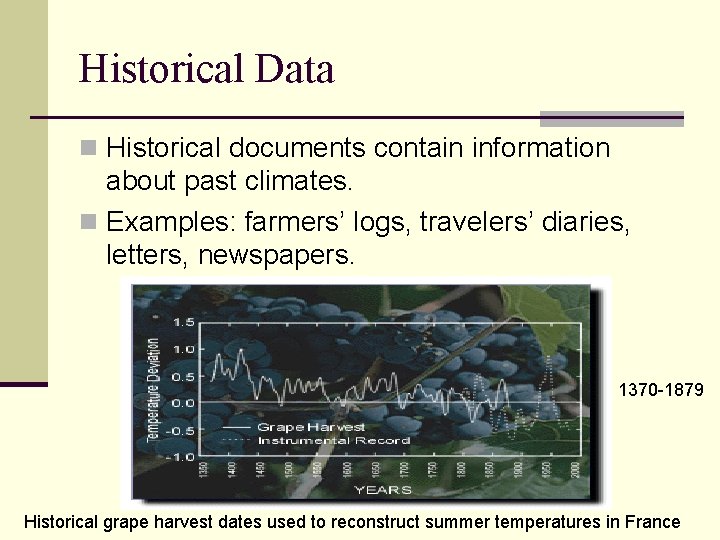
Historical Data n Historical documents contain information about past climates. n Examples: farmers’ logs, travelers’ diaries, letters, newspapers. 1370 -1879 Historical grape harvest dates used to reconstruct summer temperatures in France
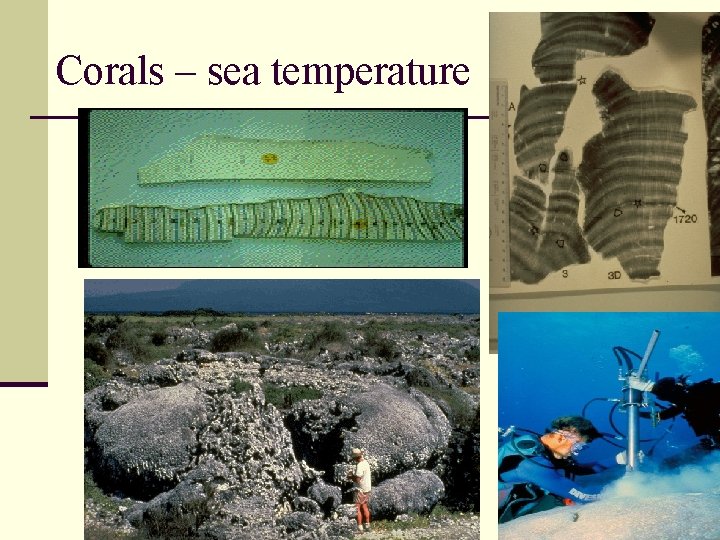
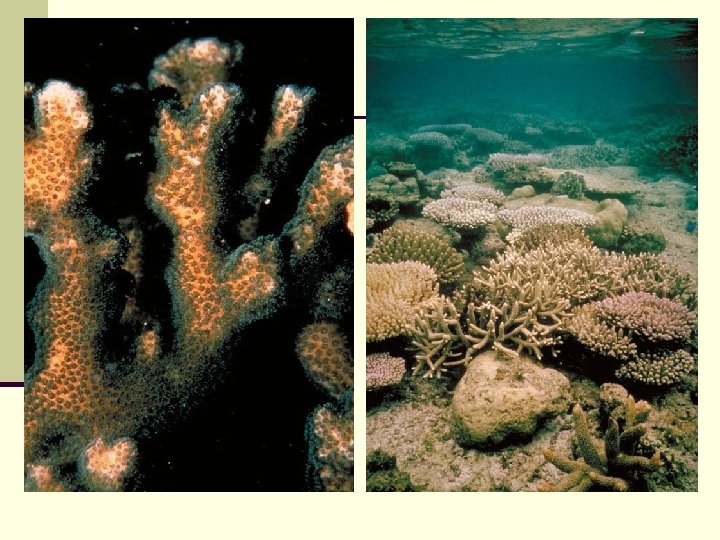
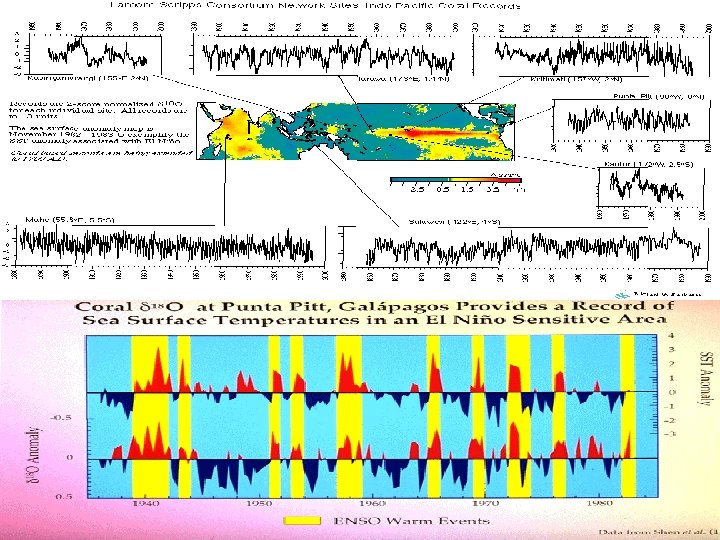
Corals – sea temperature
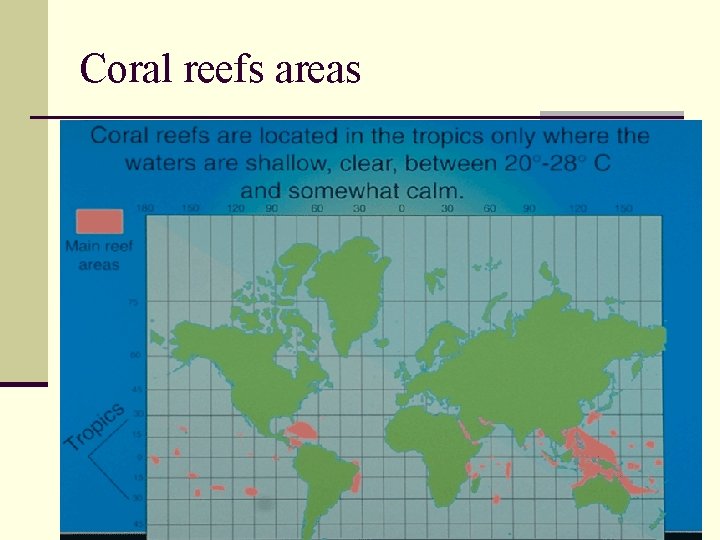
Coral reefs areas
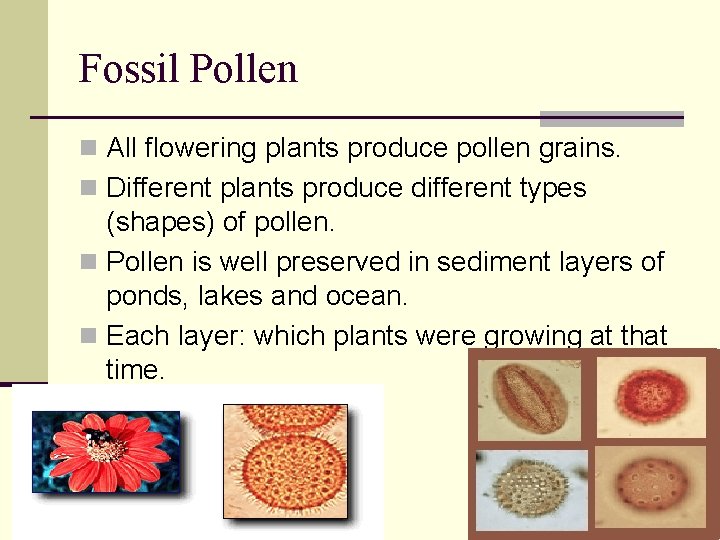
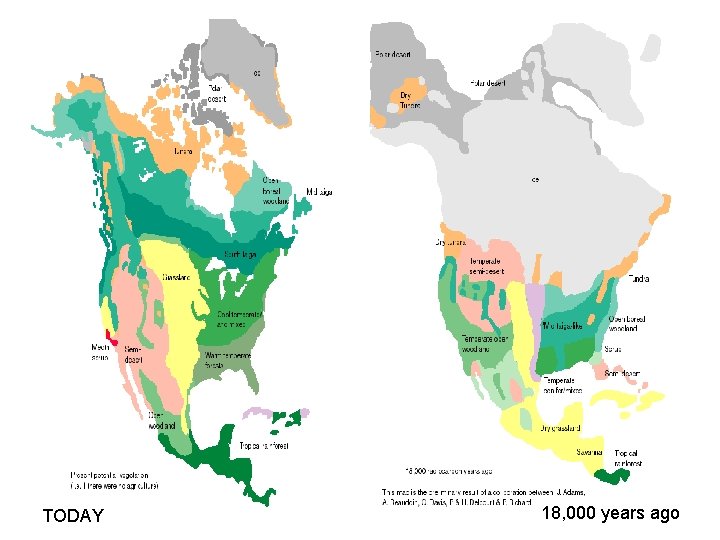
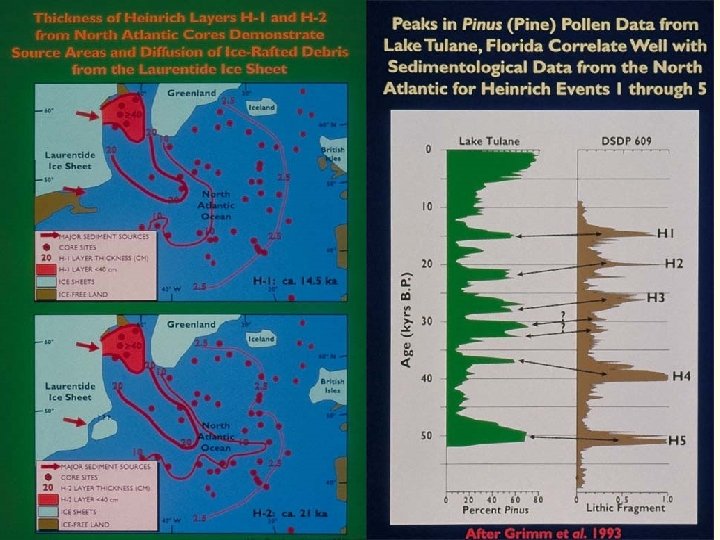
Fossil Pollen n All flowering plants produce pollen grains. n Different plants produce different types (shapes) of pollen. n Pollen is well preserved in sediment layers of ponds, lakes and ocean. n Each layer: which plants were growing at that time.
TODAY 18, 000 years ago
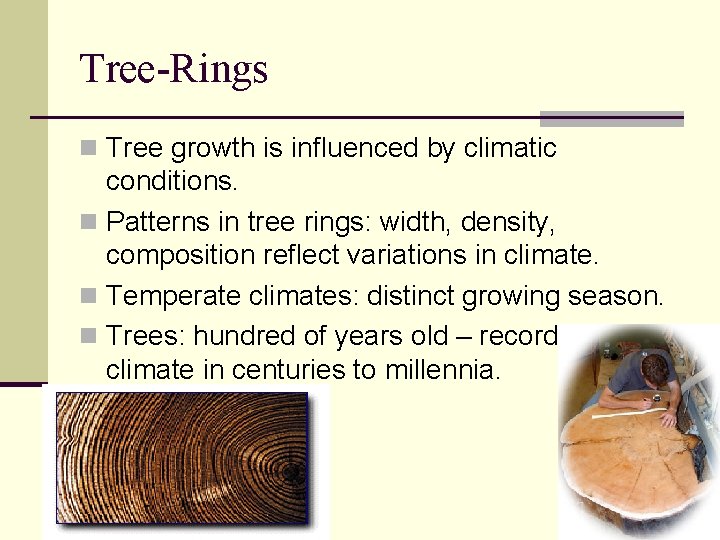
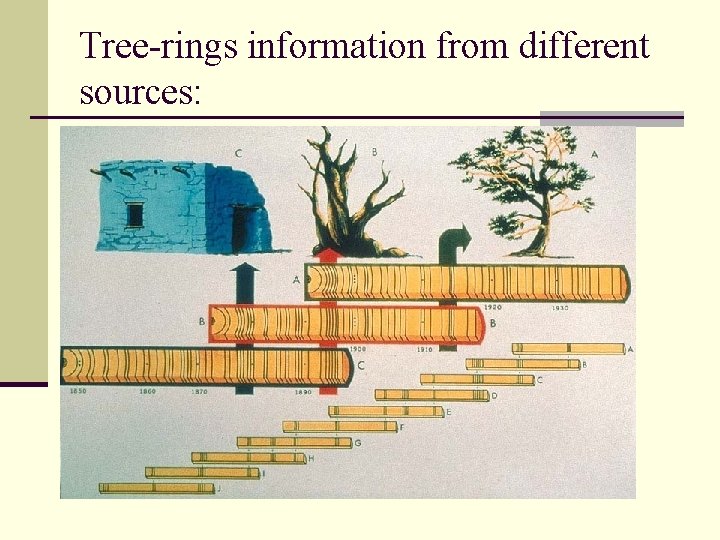
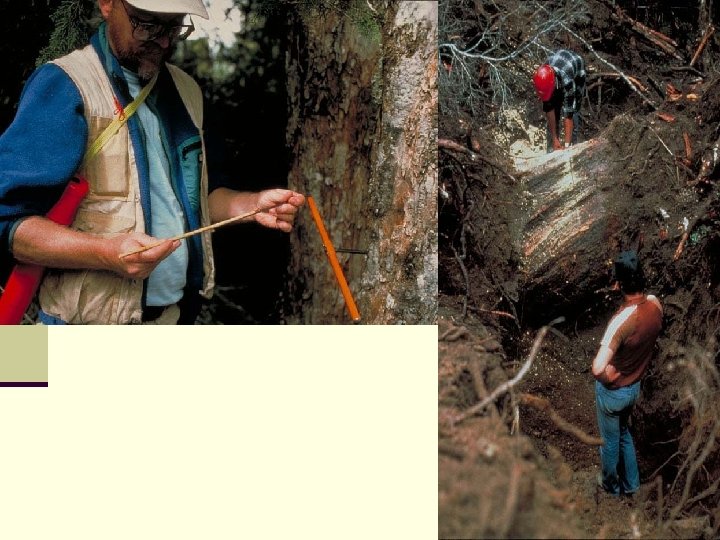
Tree-Rings n Tree growth is influenced by climatic conditions. n Patterns in tree rings: width, density, composition reflect variations in climate. n Temperate climates: distinct growing season. n Trees: hundred of years old – record of climate in centuries to millennia.
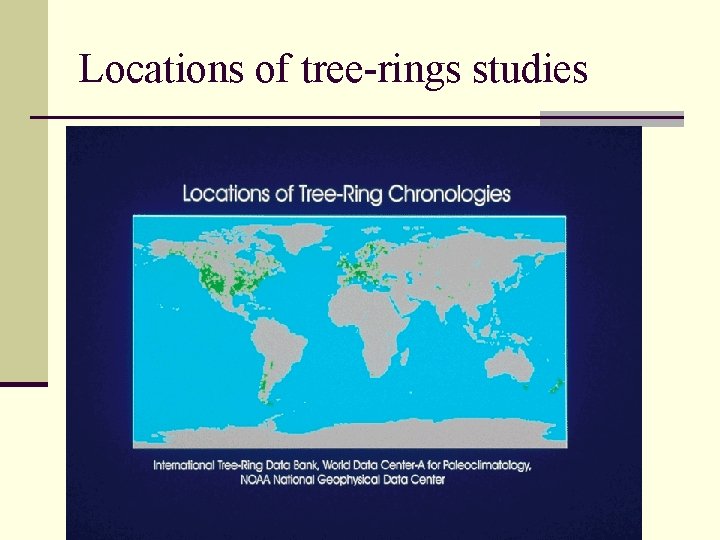
Locations of tree-rings studies
Tree-rings information from different sources:
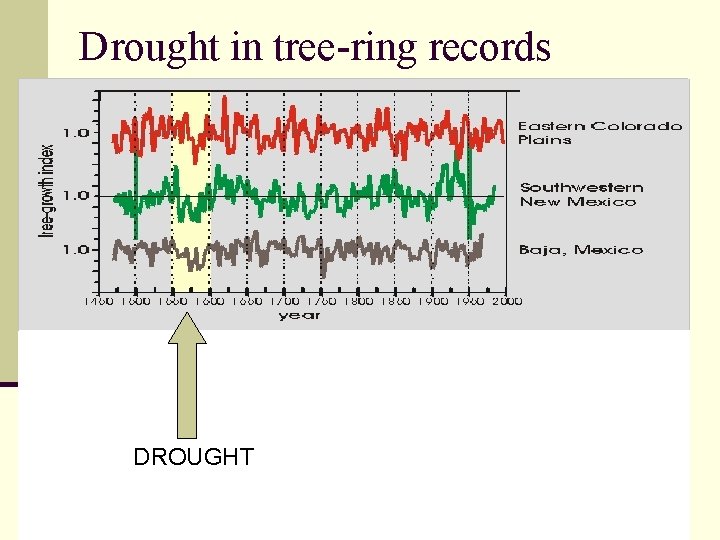
Drought in tree-ring records DROUGHT
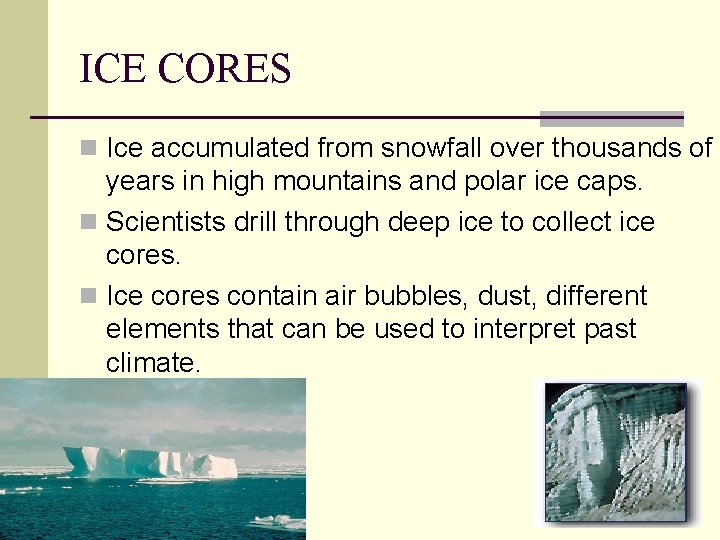
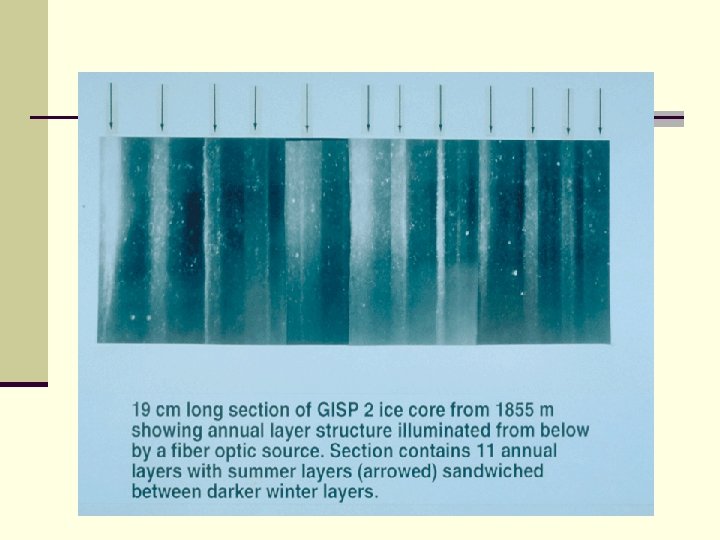
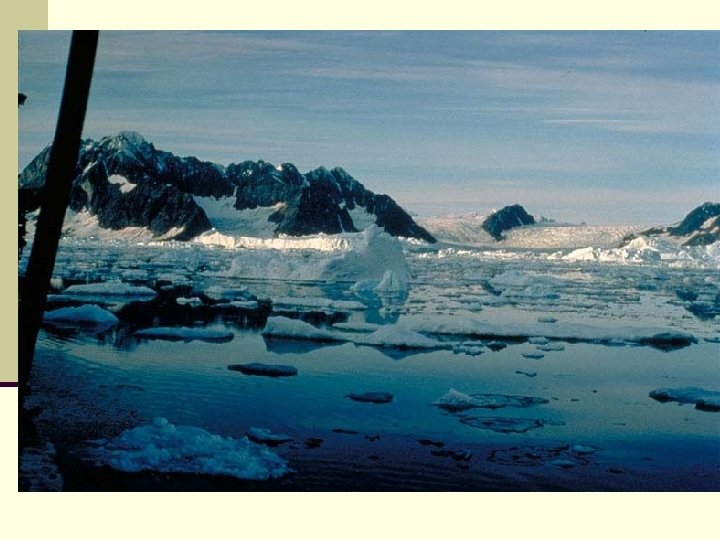
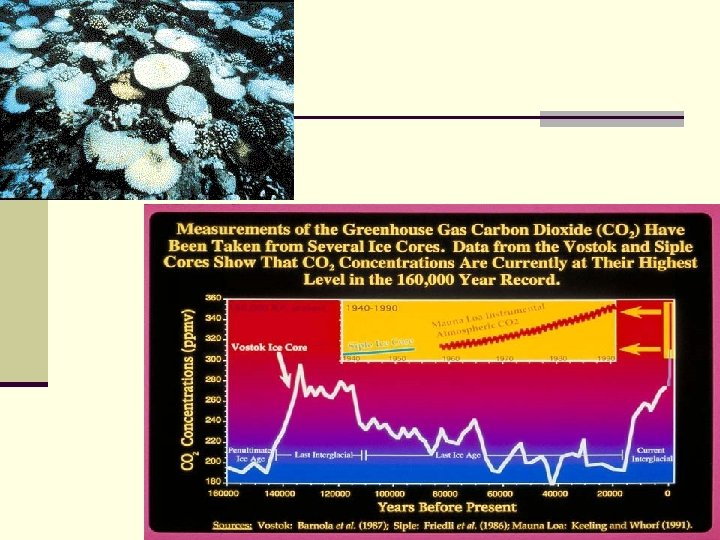
ICE CORES n Ice accumulated from snowfall over thousands of years in high mountains and polar ice caps. n Scientists drill through deep ice to collect ice cores. n Ice cores contain air bubbles, dust, different elements that can be used to interpret past climate.
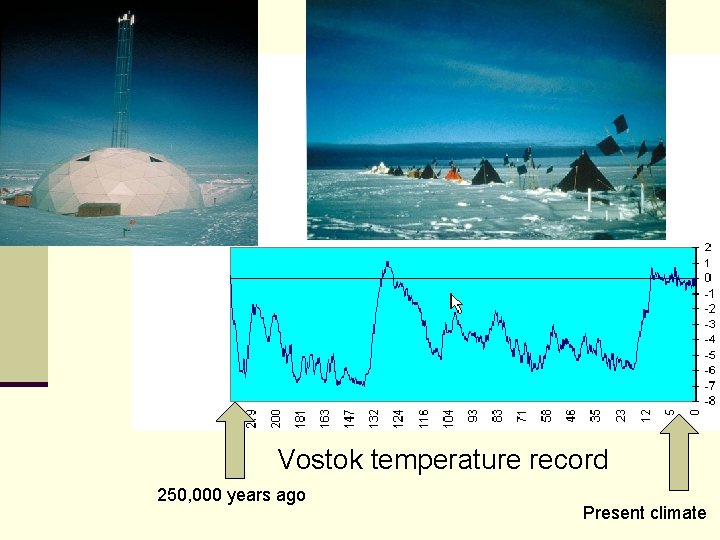
Vostok temperature record 250, 000 years ago Present climate
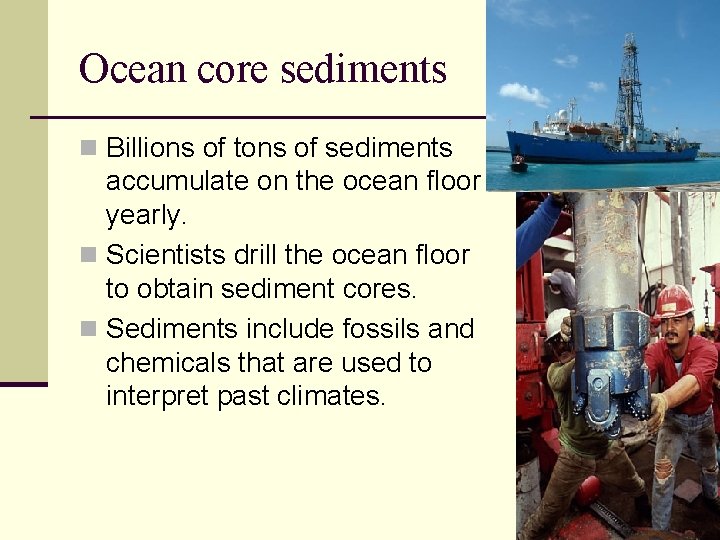
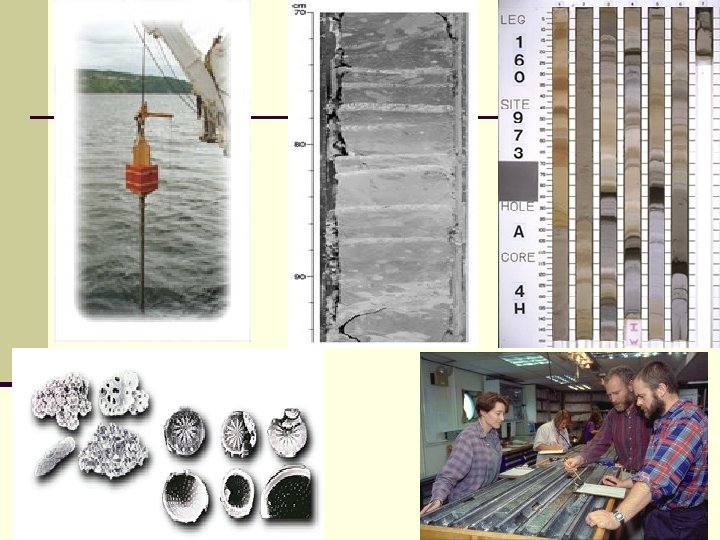
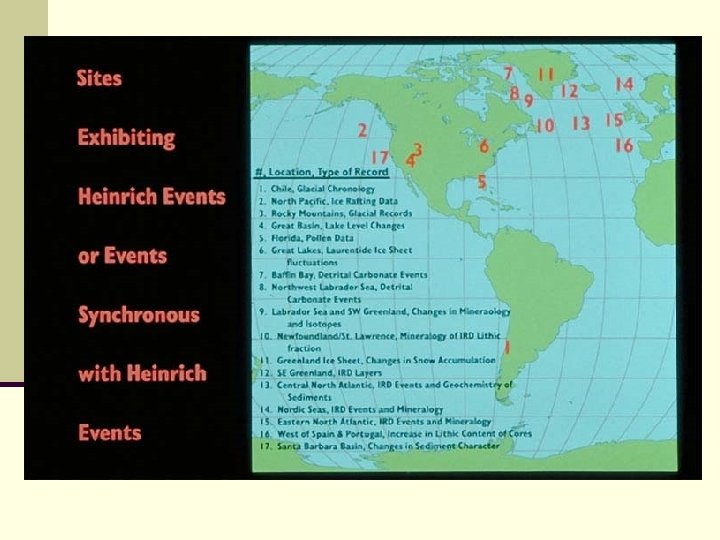
Ocean core sediments n Billions of tons of sediments accumulate on the ocean floor yearly. n Scientists drill the ocean floor to obtain sediment cores. n Sediments include fossils and chemicals that are used to interpret past climates.
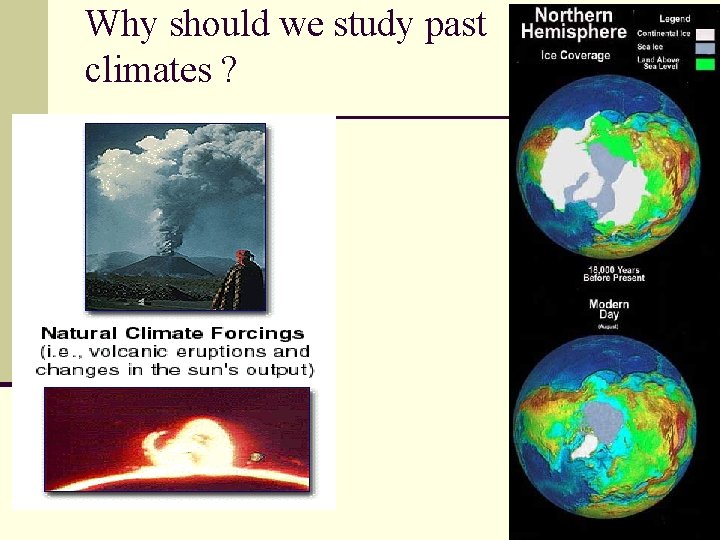
Why should we study past climates ?
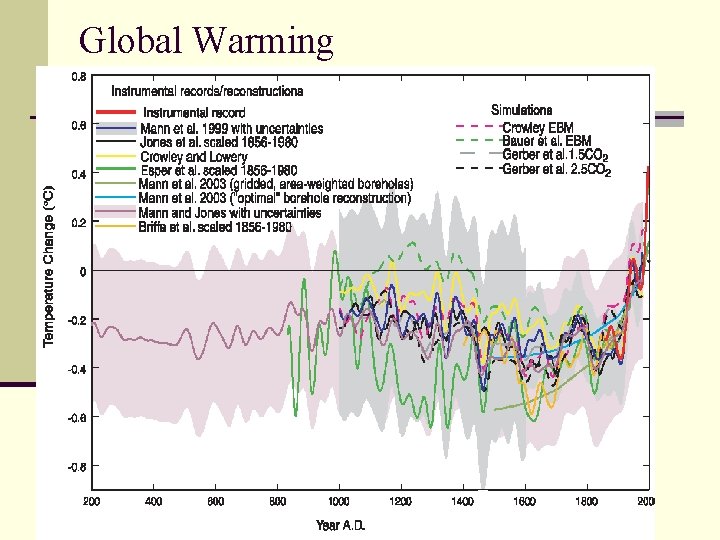
Global Warming
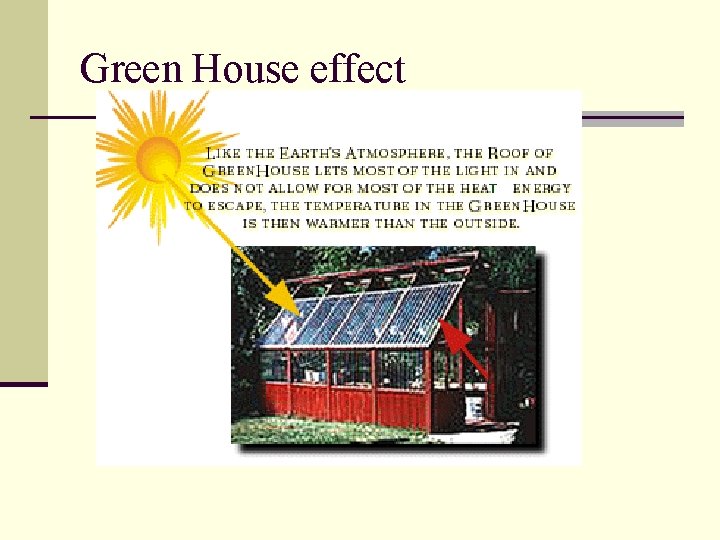
Green House effect
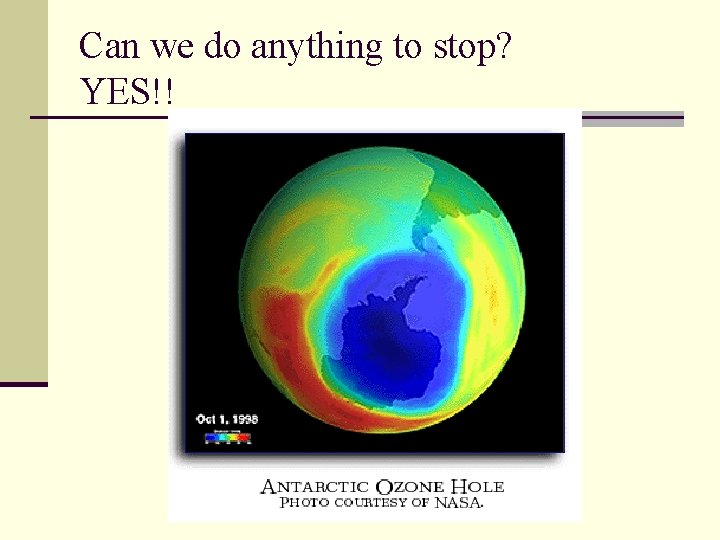
Can we do anything to stop? YES!!