
CLIMATE AND TOPOGRAPHY n Temperature Inversions n Temperature
- Slides: 7
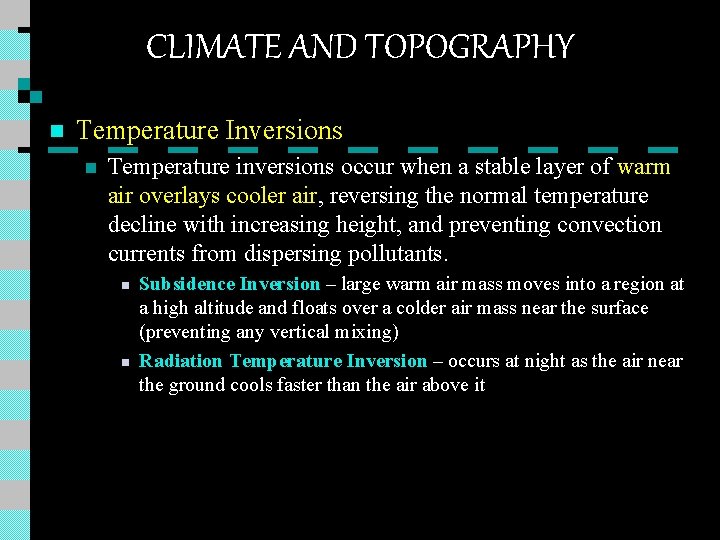
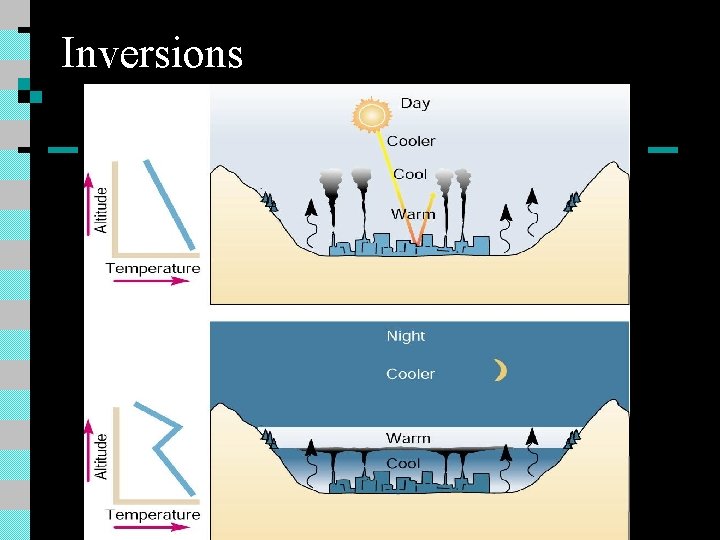
CLIMATE AND TOPOGRAPHY n Temperature Inversions n Temperature inversions occur when a stable layer of warm air overlays cooler air, reversing the normal temperature decline with increasing height, and preventing convection currents from dispersing pollutants. n n Subsidence Inversion – large warm air mass moves into a region at a high altitude and floats over a colder air mass near the surface (preventing any vertical mixing) Radiation Temperature Inversion – occurs at night as the air near the ground cools faster than the air above it n
Inversions
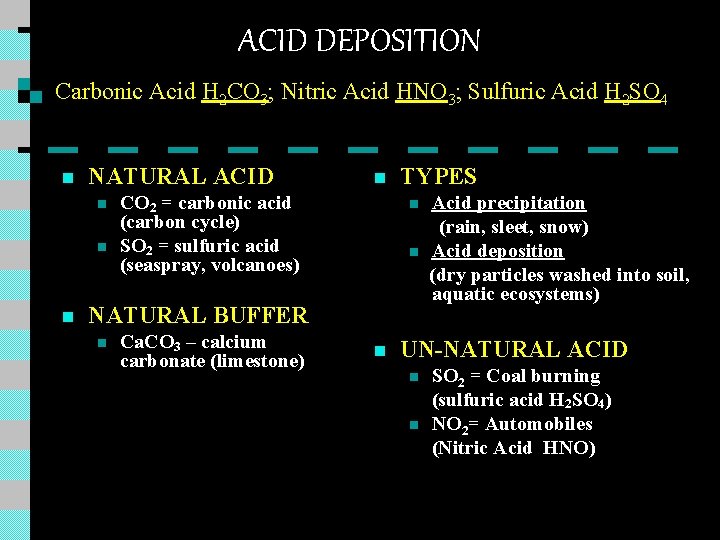
ACID DEPOSITION Carbonic Acid H 2 CO 3; Nitric Acid HNO 3; Sulfuric Acid H 2 SO 4 n NATURAL ACID n n CO 2 = carbonic acid (carbon cycle) SO 2 = sulfuric acid (seaspray, volcanoes) TYPES n n NATURAL BUFFER n Ca. CO 3 – calcium carbonate (limestone) n Acid precipitation (rain, sleet, snow) Acid deposition (dry particles washed into soil, aquatic ecosystems) UN-NATURAL ACID n n SO 2 = Coal burning (sulfuric acid H 2 SO 4) NO 2= Automobiles (Nitric Acid HNO)
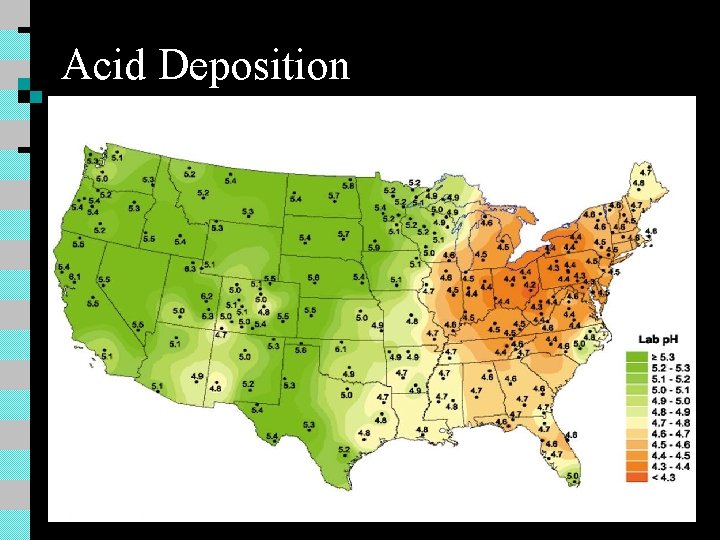
Acid Deposition
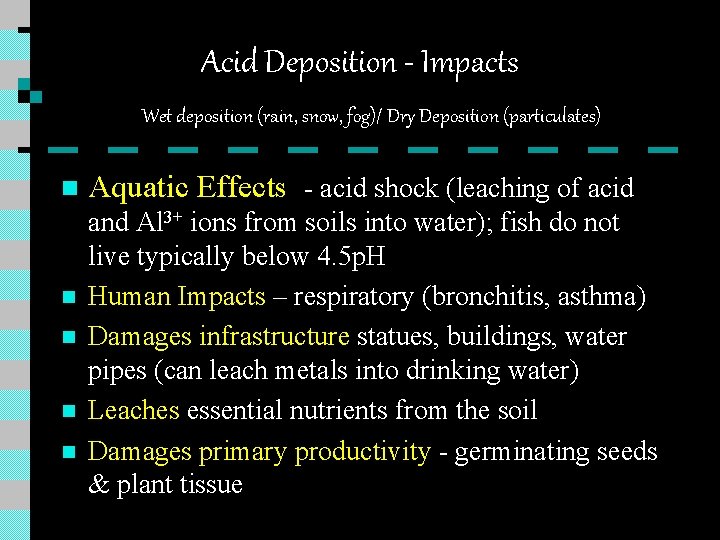
Acid Deposition - Impacts Wet deposition (rain, snow, fog)/ Dry Deposition (particulates) n n n Aquatic Effects - acid shock (leaching of acid and Al 3+ ions from soils into water); fish do not live typically below 4. 5 p. H Human Impacts – respiratory (bronchitis, asthma) Damages infrastructure statues, buildings, water pipes (can leach metals into drinking water) Leaches essential nutrients from the soil Damages primary productivity - germinating seeds & plant tissue
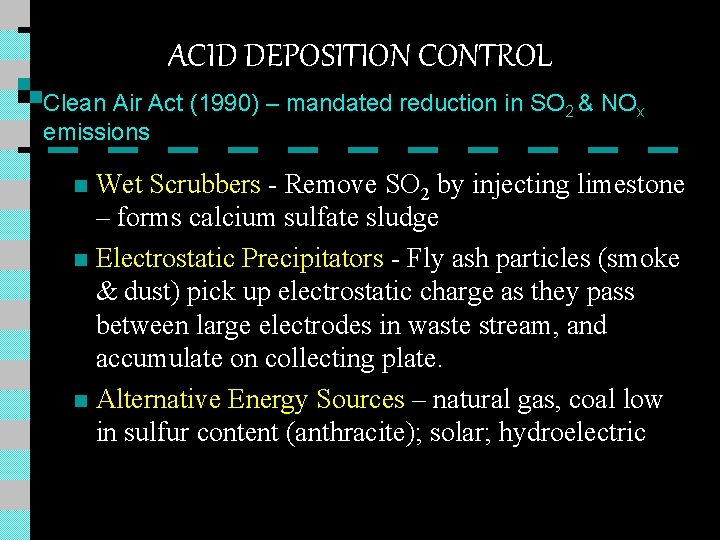
ACID DEPOSITION CONTROL Clean Air Act (1990) – mandated reduction in SO 2 & NOx emissions Wet Scrubbers - Remove SO 2 by injecting limestone – forms calcium sulfate sludge n Electrostatic Precipitators - Fly ash particles (smoke & dust) pick up electrostatic charge as they pass between large electrodes in waste stream, and accumulate on collecting plate. n Alternative Energy Sources – natural gas, coal low in sulfur content (anthracite); solar; hydroelectric n
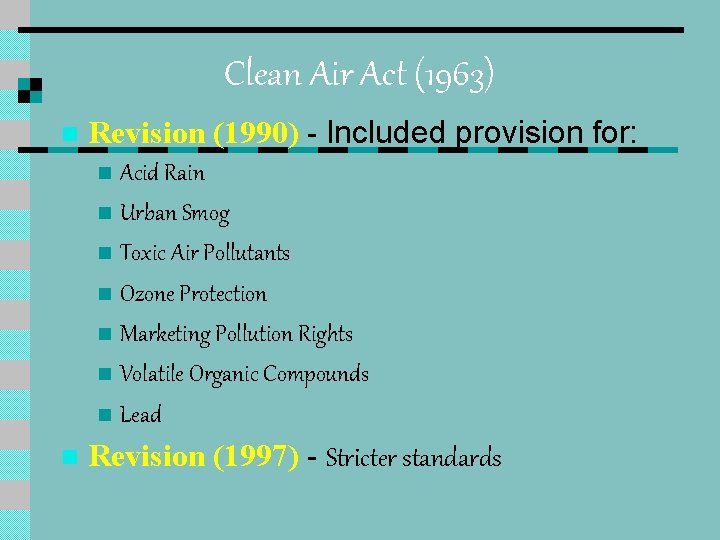
Clean Air Act (1963) n Revision (1990) - Included provision for: Acid Rain n Urban Smog n Toxic Air Pollutants n Ozone Protection n Marketing Pollution Rights n Volatile Organic Compounds n Lead n n Revision (1997) - Stricter standards