
Climate and Climate Change 13 1 Weather state
- Slides: 22
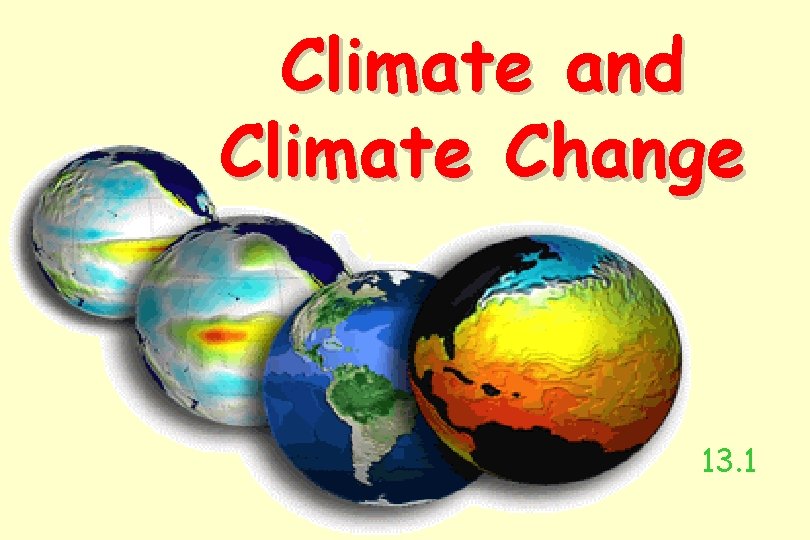
Climate and Climate Change 13. 1
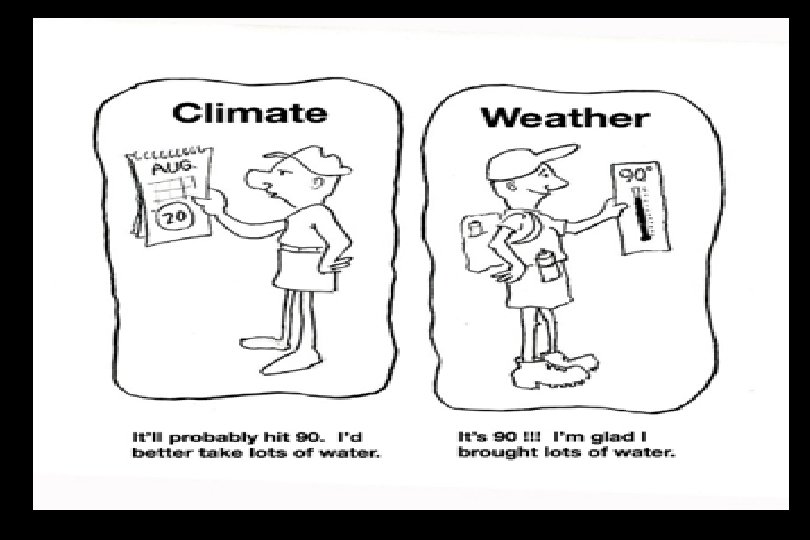
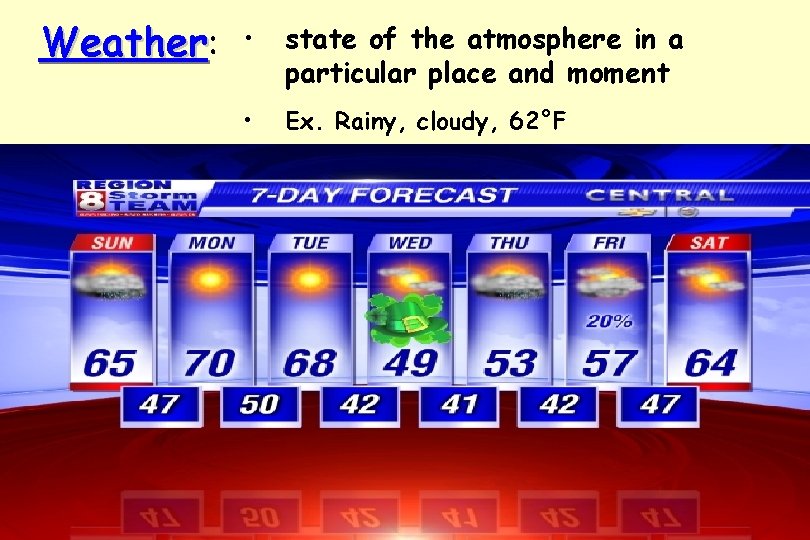
Weather: • state of the atmosphere in a particular place and moment • Ex. Rainy, cloudy, 62°F
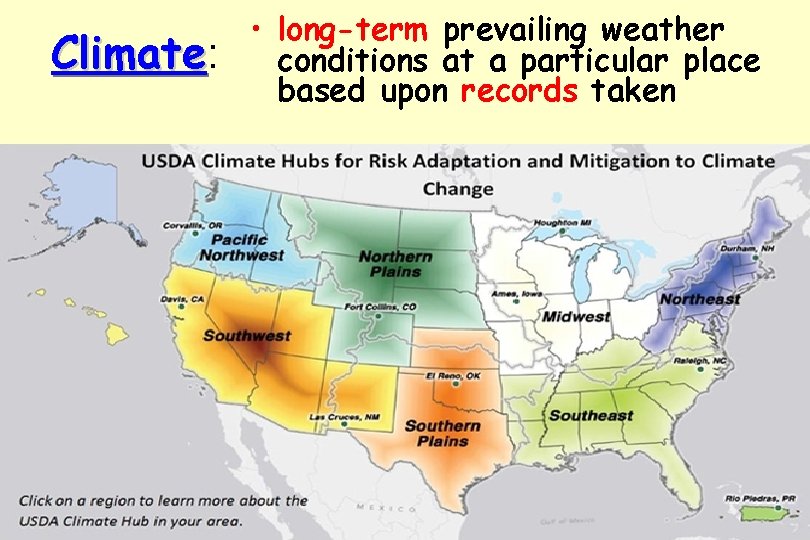
Climate: Climate • long-term prevailing weather conditions at a particular place based upon records taken
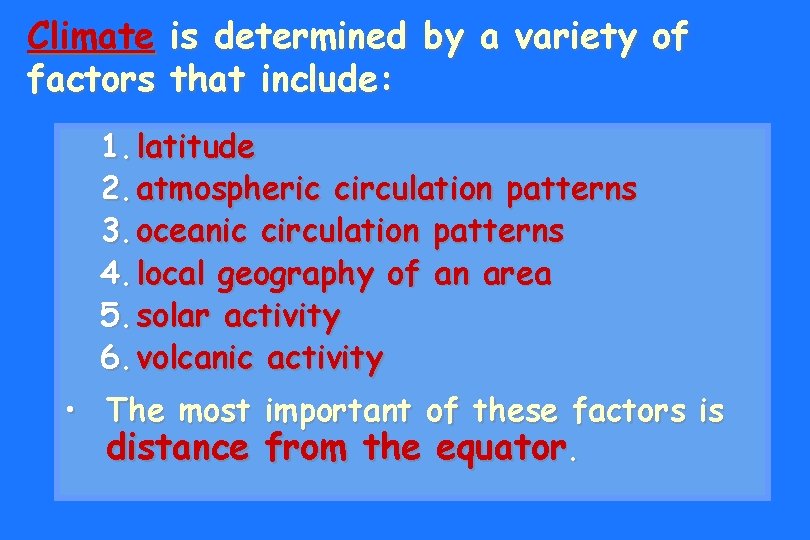
Climate factors is determined by a variety of that include: 1. latitude 2. atmospheric circulation patterns 3. oceanic circulation patterns 4. local geography of an area 5. solar activity 6. volcanic activity • The most important of these factors is distance from the equator.
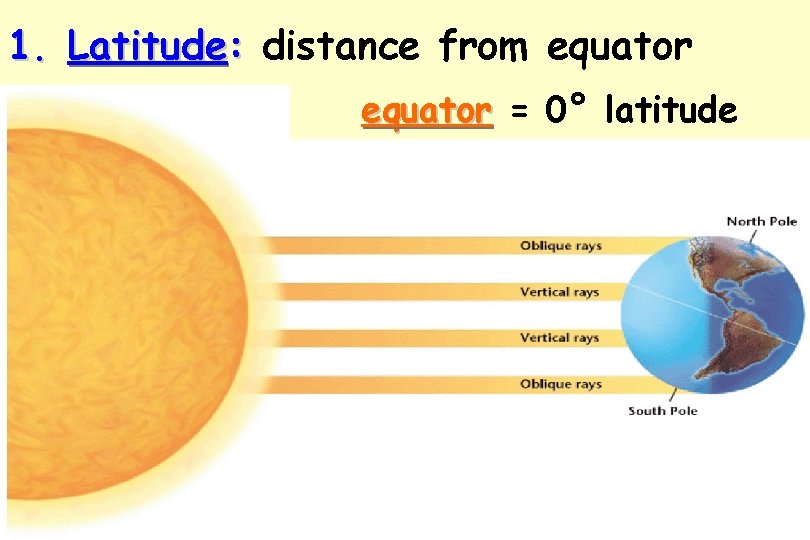
1. Latitude: distance from equator = 0° latitude
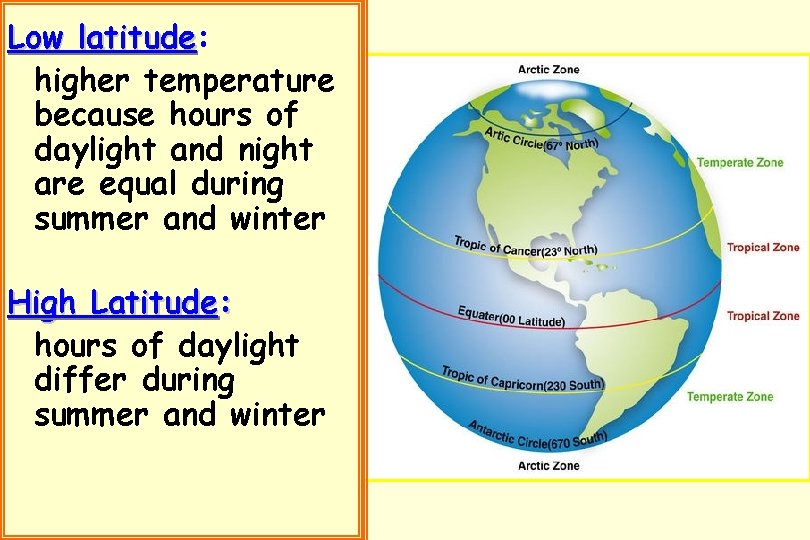
Low latitude: latitude higher temperature because hours of daylight and night are equal during summer and winter High Latitude: hours of daylight differ during summer and winter
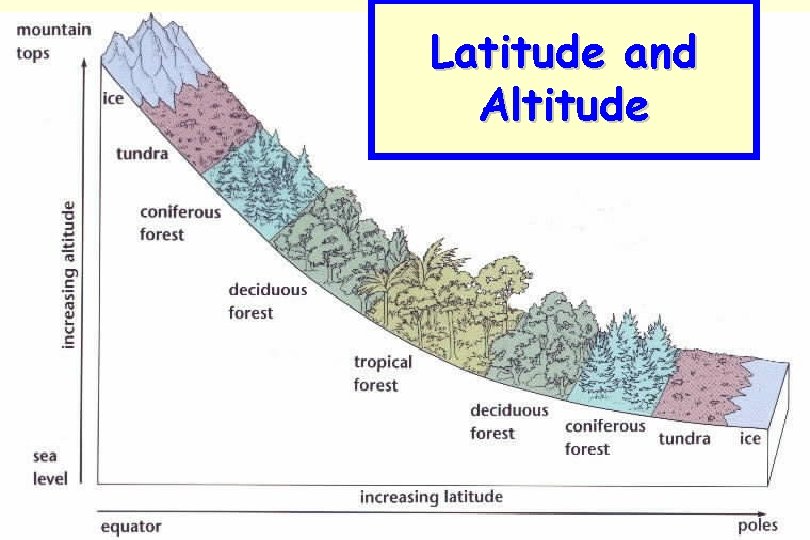
Latitude and Altitude
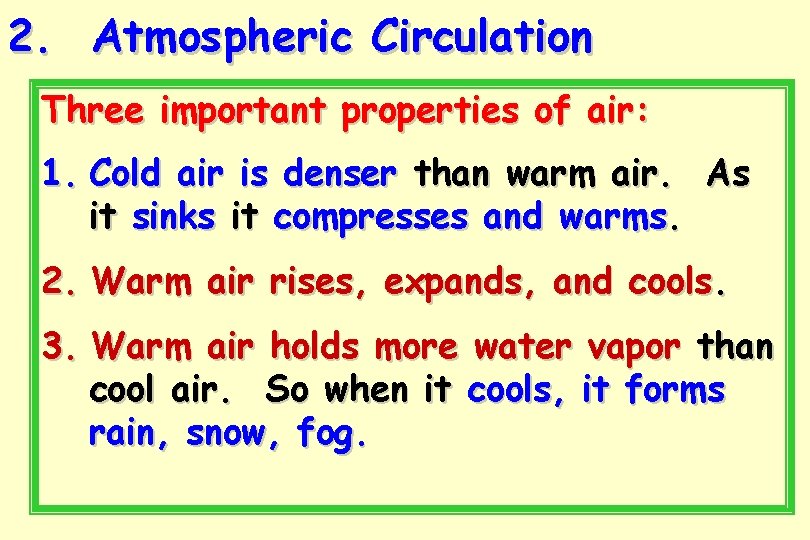
2. Atmospheric Circulation Three important properties of air: 1. Cold air is denser than warm air. As it sinks it compresses and warms. 2. Warm air rises, expands, and cools. 3. Warm air holds more water vapor than cool air. So when it cools, it forms rain, snow, fog.
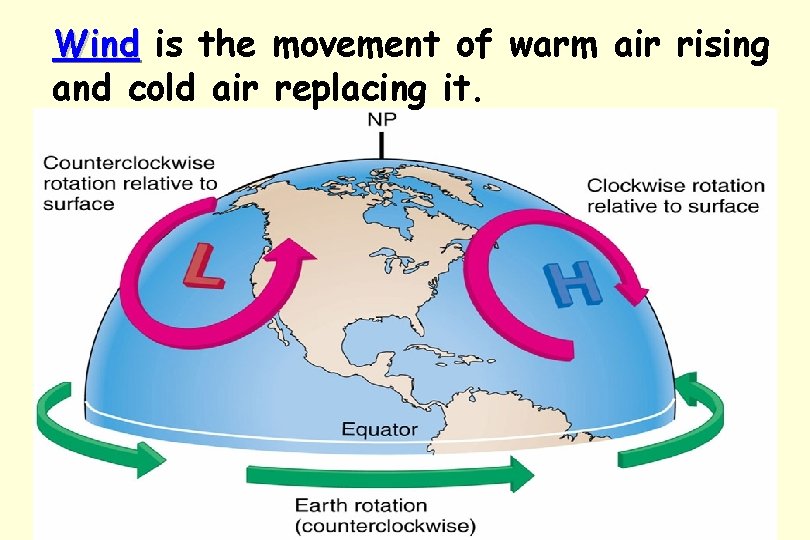
Wind is the movement of warm air rising and cold air replacing it.
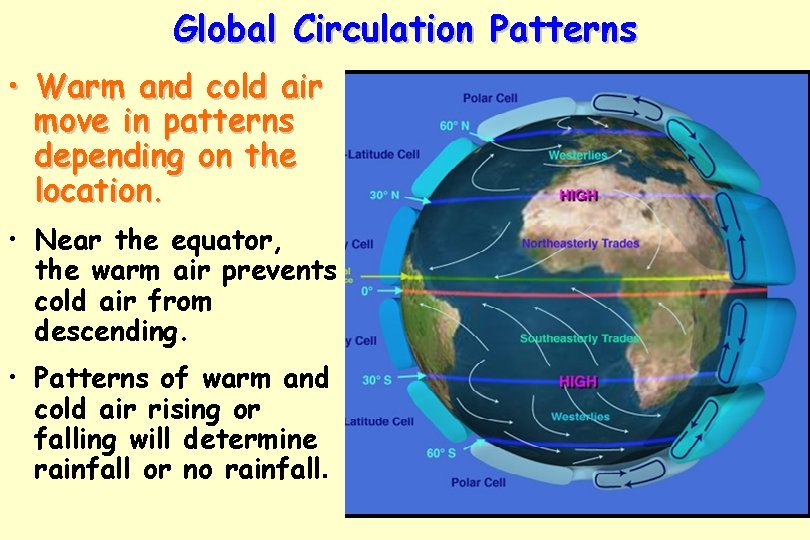
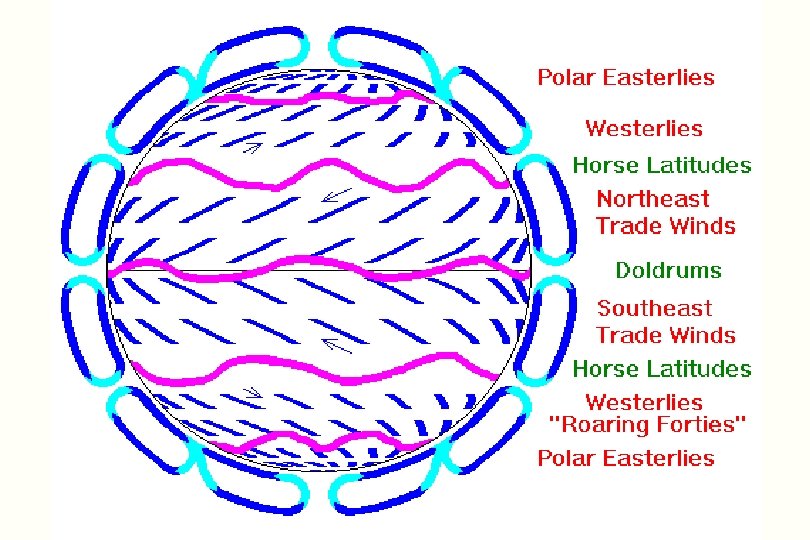
Global Circulation Patterns • Warm and cold air move in patterns depending on the location. • Near the equator, the warm air prevents cold air from descending. • Patterns of warm and cold air rising or falling will determine rainfall or no rainfall.
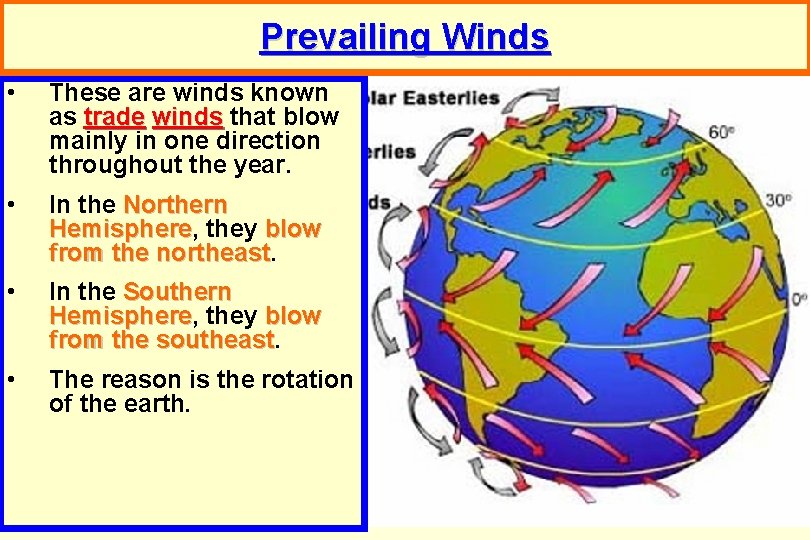
Prevailing Winds • These are winds known as trade winds that blow mainly in one direction throughout the year. • In the Northern Hemisphere, Hemisphere they blow from the northeast • In the Southern Hemisphere, Hemisphere they blow from the southeast • The reason is the rotation of the earth.
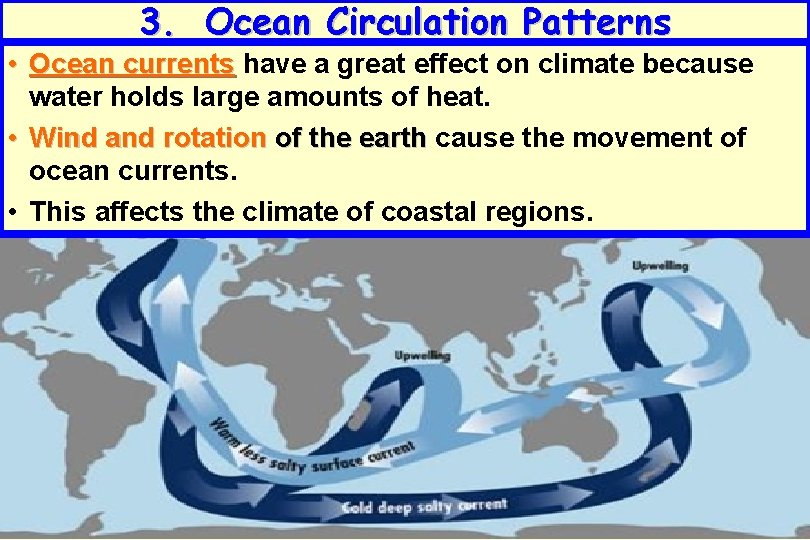
3. Ocean Circulation Patterns • Ocean currents have a great effect on climate because water holds large amounts of heat. • Wind and rotation of the earth cause the movement of ocean currents. • This affects the climate of coastal regions.
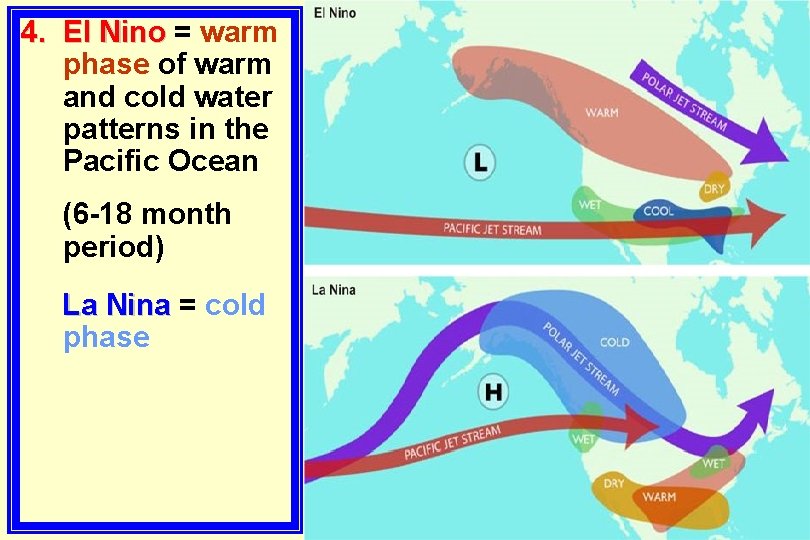
4. El Nino = warm phase of warm and cold water patterns in the Pacific Ocean (6 -18 month period) La Nina = cold phase
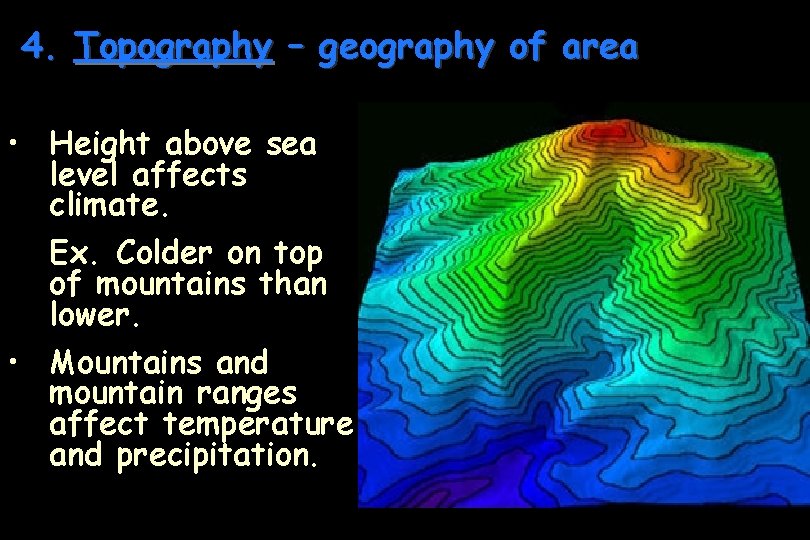
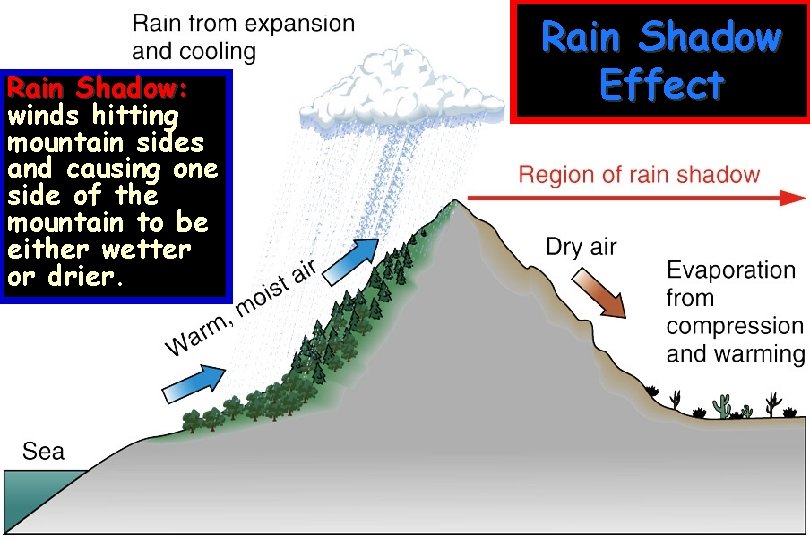
4. Topography – geography of area • Height above sea level affects climate. Ex. Colder on top of mountains than lower. • Mountains and mountain ranges affect temperature and precipitation.
Rain Shadow: winds hitting mountain sides and causing one side of the mountain to be either wetter or drier. Rain Shadow Effect
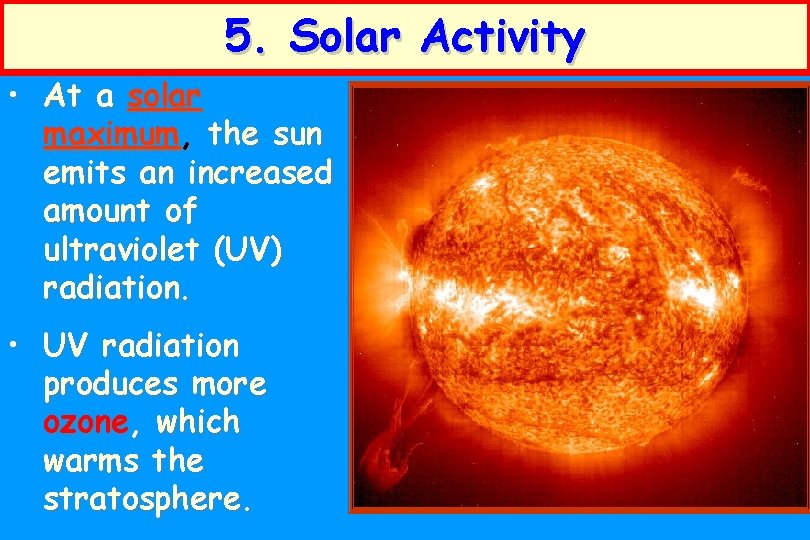
5. Solar Activity • At a solar maximum, the sun emits an increased amount of ultraviolet (UV) radiation. • UV radiation produces more ozone, which warms the stratosphere.
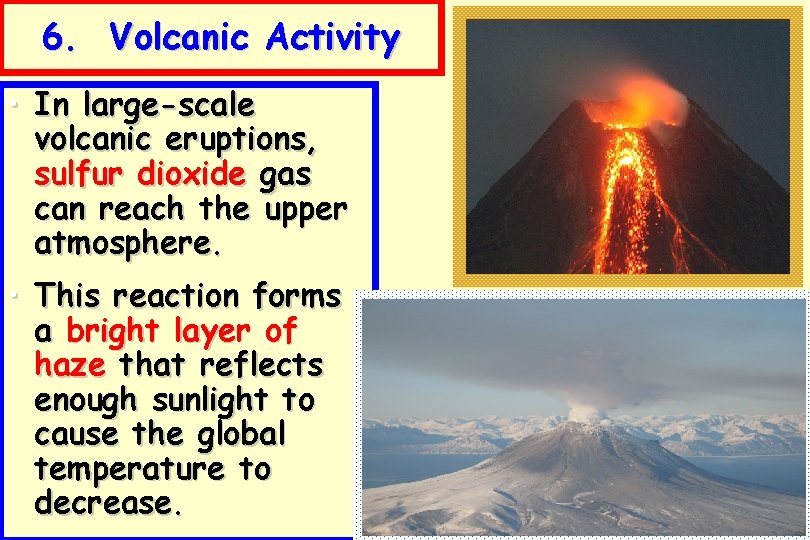
6. Volcanic Activity • In large-scale volcanic eruptions, sulfur dioxide gas can reach the upper atmosphere. • This reaction forms a bright layer of haze that reflects enough sunlight to cause the global temperature to decrease.
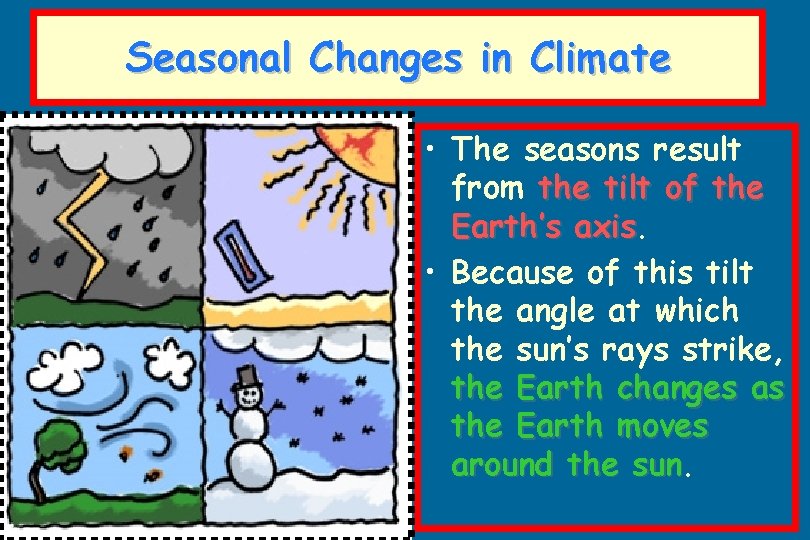
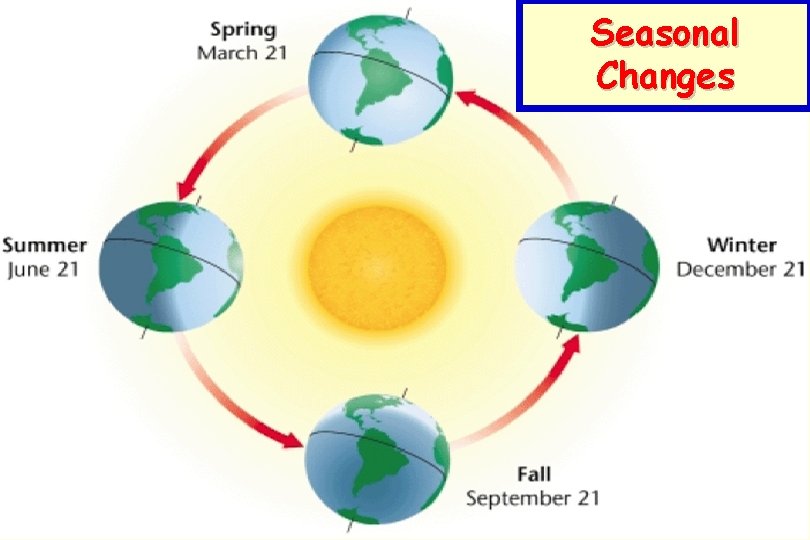
Seasonal Changes in Climate • The seasons result from the tilt of the Earth’s axis • Because of this tilt the angle at which the sun’s rays strike, the Earth changes as the Earth moves around the sun
Seasonal Changes
1. 2. 3. 4. Define weather. Define climate. Explain the difference between climate and weather. Climate is determined by a variety of factors. These factors include latitude, latitude atmospheric circulation patterns, patterns oceanic circulation patterns, patterns the local geography of an area, area solar activity, activity and volcanic activity For each factor listed, describe how each factor affects climate patterns. 5. Explain why different parts of the Earth have different climates. 6. Explain the difference between El Nino and El Nina. 7. Explain what causes the seasons.