
Climate and Biodiversity Chapter 5 Sections 1 4
Climate and Biodiversity Chapter 5 Sections 1 -4

Key Concepts Factors influencing the Earth’s climates Effect of climate on Earth’s major biomes Characteristics of major biome types Human impacts on the biosphere

Blowing in the Wind Benefits of wind Hazards of wind “Red tides” Volcanoes and climate Everything is connected Fig. 5 -1, p. 78
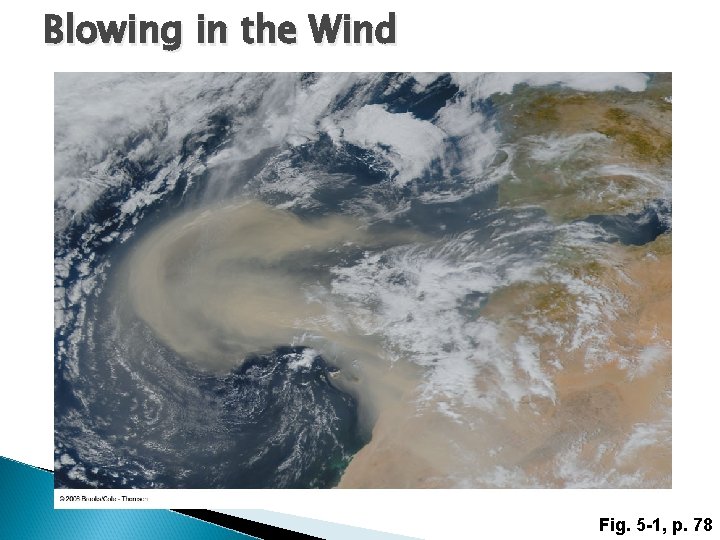
Blowing in the Wind Fig. 5 -1, p. 78
Weather and Climate Differences between weather and climate Major factors determining climate ◦ Uneven heating of Earth’s surface ◦ Earth’s rotation ◦ Properties of air, water, and land

Earth’s Climatic Zones Fig. 5 -2, p. 80
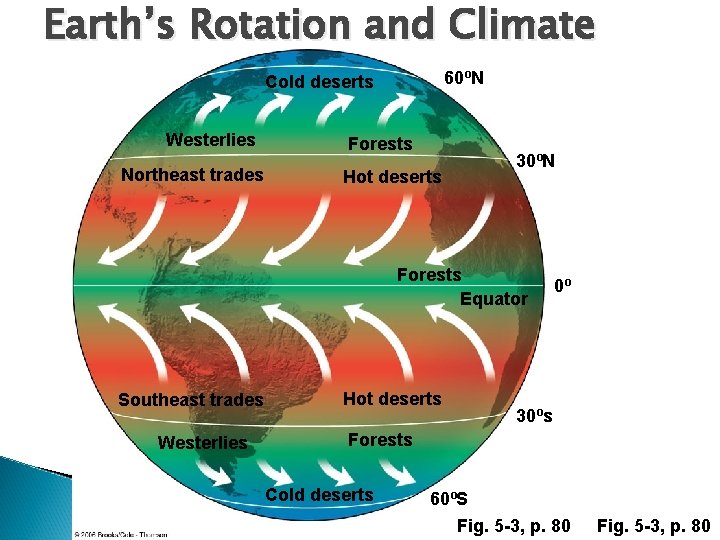
Earth’s Rotation and Climate 60ºN Cold deserts Westerlies Northeast trades Forests Hot deserts 30ºN Forests Equator Southeast trades Westerlies Hot deserts 0º 30ºs Forests Cold deserts 60ºS Fig. 5 -3, p. 80
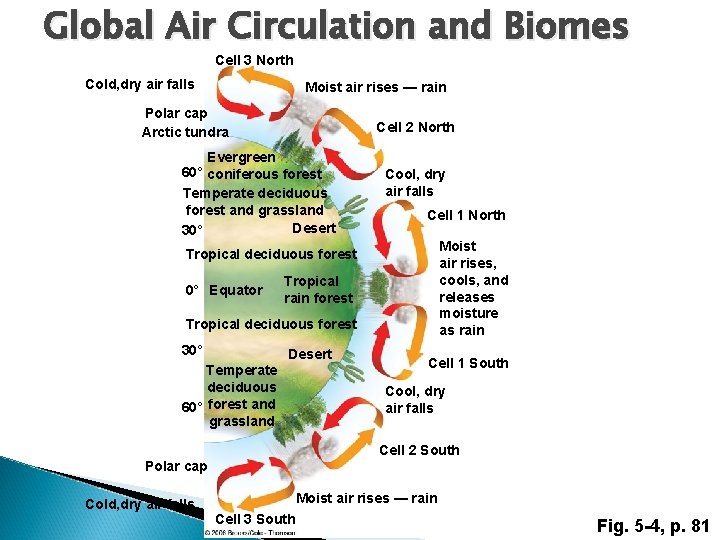
Global Air Circulation and Biomes Cell 3 North Cold, dry air falls Moist air rises — rain Polar cap Arctic tundra Cell 2 North Evergreen 60° coniferous forest Temperate deciduous forest and grassland Desert 30° Cool, dry air falls Cell 1 North Moist air rises, cools, and releases moisture as rain Tropical deciduous forest 0° Equator Tropical rain forest Tropical deciduous forest 30° Desert Temperate deciduous 60° forest and grassland Cell 1 South Cool, dry air falls Cell 2 South Polar cap Cold, dry air falls Moist air rises — rain Cell 3 South Fig. 5 -4, p. 81
Effects of Water, Wind, and Land on Climate Ocean currents and wind Currents: warm and cold ocean currents, currents redistribute absorbed solar heat from one place to another, influence vegetation and climate near coastal regions. Wind: moving away from coastal regions result in upwelling of cold, nutrient-rich bottom waters as surface water moves offshore. These nutrients support large populations of phytoplankton, zooplankton, fish and sea birds Gases in the atmosphere ◦ Greenhouse gases and the Greenhouse Effect ◦ ◦ Water vapor, CO 2, CH 4, & Nitrous Dioxide Greenhouse effect: allows mostly visible light, some infrared radiation and ultraviolet radiatin to pass through the troposphere causing natural warming Topography and local climate Rainshadow effect: an air mass moves inland from an ocean, reaches a mountain range, and as the air is forced to rise, it cools and loses moisture on the windward side. The leeward side of the mountain will be drier due to the loss of moisture on the windward side. Microclimates in urban areas Bricks, asphalt and other building materials create distinct microclimates in cities that are warmer, have more have and smog and lower wind speeds than the contryside around them.
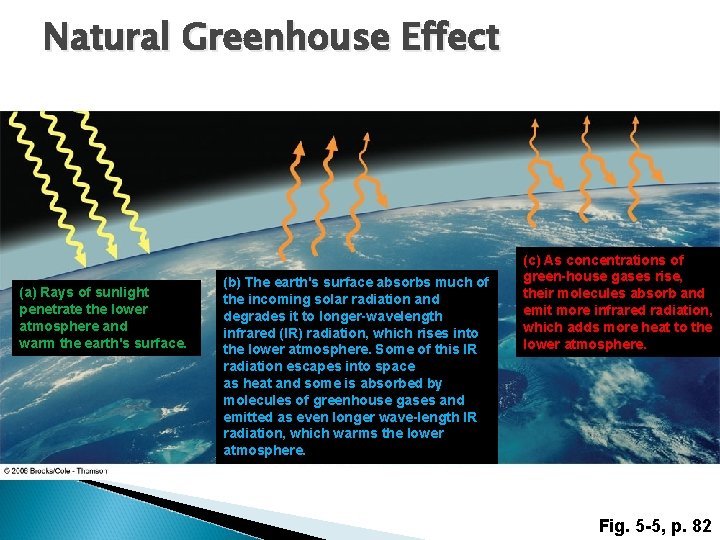
Natural Greenhouse Effect (a) Rays of sunlight penetrate the lower atmosphere and warm the earth's surface. (b) The earth's surface absorbs much of the incoming solar radiation and degrades it to longer-wavelength infrared (IR) radiation, which rises into the lower atmosphere. Some of this IR radiation escapes into space as heat and some is absorbed by molecules of greenhouse gases and emitted as even longer wave-length IR radiation, which warms the lower atmosphere. (c) As concentrations of green-house gases rise, their molecules absorb and emit more infrared radiation, which adds more heat to the lower atmosphere. Fig. 5 -5, p. 82
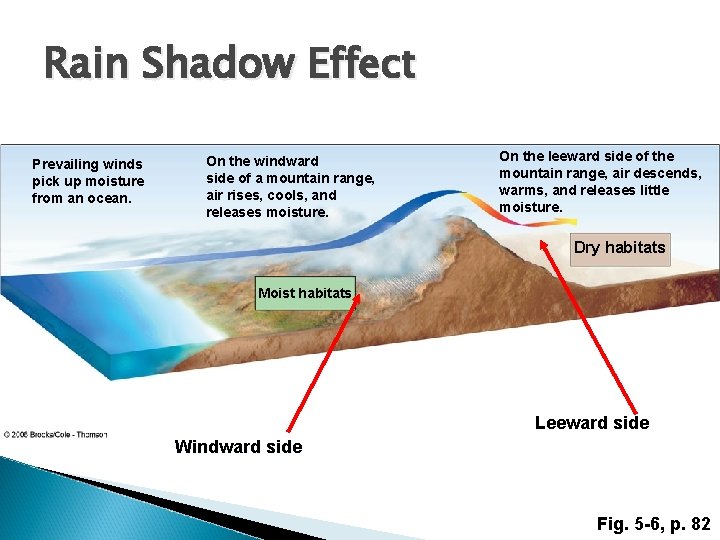
Rain Shadow Effect Prevailing winds pick up moisture from an ocean. On the windward side of a mountain range, air rises, cools, and releases moisture. On the leeward side of the mountain range, air descends, warms, and releases little moisture. Dry habitats Moist habitats Leeward side Windward side Fig. 5 -6, p. 82
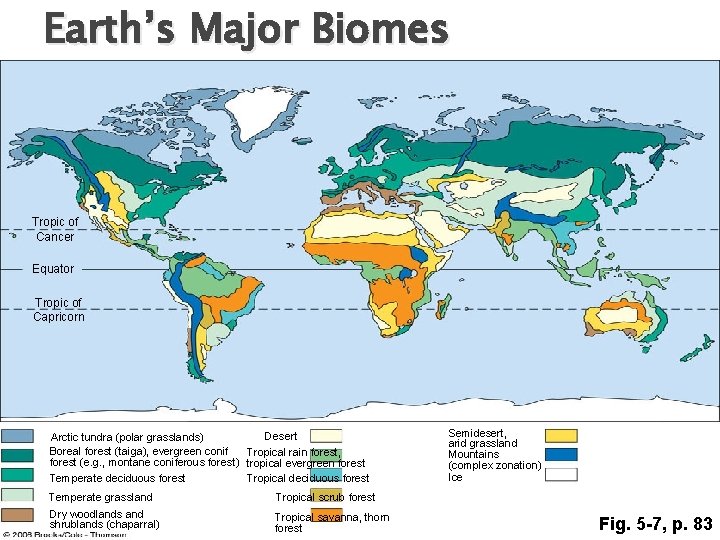
Earth’s Major Biomes Tropic of Cancer Equator Tropic of Capricorn Desert Arctic tundra (polar grasslands) Boreal forest (taiga), evergreen conif Tropical rain forest, forest (e. g. , montane coniferous forest) tropical evergreen forest Tropical deciduous forest Temperate grassland Tropical scrub forest Dry woodlands and shrublands (chaparral) Tropical savanna, thorn forest Semidesert, arid grassland Mountains (complex zonation) Ice Fig. 5 -7, p. 83

Precipitation and Temperature Affects Biome Type Cold Polar Tundra ng tem pe ra tu re Subpolar Temperate asi Coniferous forest De cre Desert Deciduous forest Grassland Tropical Hot Chaparral Desert We t Savanna Rain forest Tropical seasonal forest Decreas y Dr Scrubland ing precip itation Fig. 5 -8, p. 84

Effects of Altitude and Latitude on Climate and Biomes Altitude Mountain Ice and snow Tundra (herbs, lichens, mosses) Coniferous Forest Deciduous Forest Latitude Tropical Forest Deciduous Forest Coniferous Forest Tundra (herbs, lichens, mosses) Polar ice and snow Fig. 5 -9, p. 85
Climate – Weather - Biomes http: //www. youtube. com/watch? v=s. B 5 y. ZFNi-Jc&feature=related
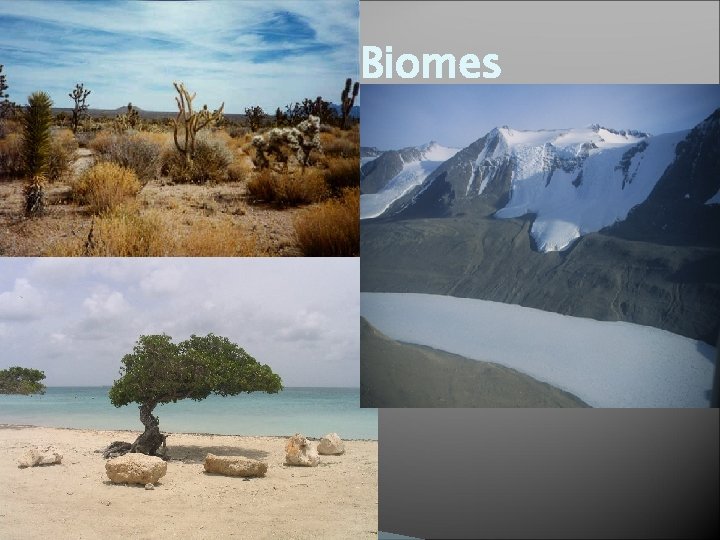
Desert Biomes Deserts: have little precipitation and vegetation. They are found in tropical, temperate, and polar regions. Approx 30% of the Earth’s surface is desert. Tropical: hot, dry most of the year with few plants, rocks and sand. Temperate: high day temperatures in summer, low temperatures in winter with more rain than in tropical deserts. Plants are widely spaced, mostly droughtresistant shrubs, cacti/succulents Cold/Polar: cold winters, warm summers with low rainfall
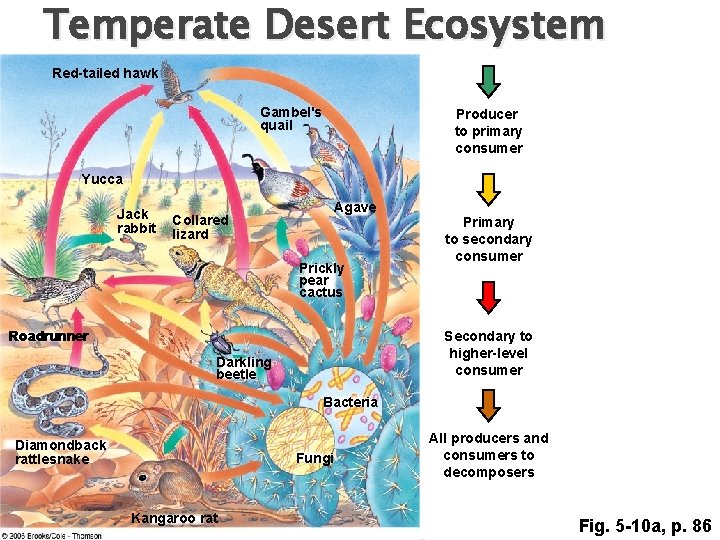
Temperate Desert Ecosystem Red-tailed hawk Gambel's quail Producer to primary consumer Yucca Jack rabbit Collared lizard Agave Prickly pear cactus Roadrunner Primary to secondary consumer Secondary to higher-level consumer Darkling beetle Bacteria Diamondback rattlesnake Fungi Kangaroo rat All producers and consumers to decomposers Fig. 5 -10 a, p. 86
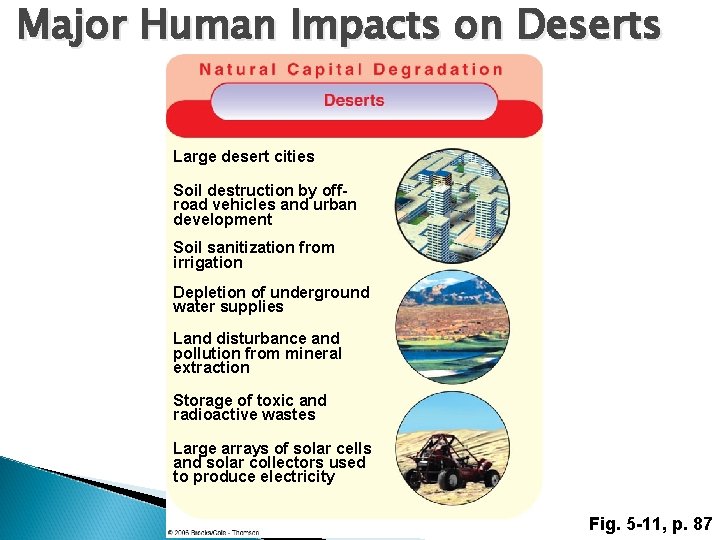
Major Human Impacts on Deserts Large desert cities Soil destruction by offroad vehicles and urban development Soil sanitization from irrigation Depletion of underground water supplies Land disturbance and pollution from mineral extraction Storage of toxic and radioactive wastes Large arrays of solar cells and solar collectors used to produce electricity Fig. 5 -11, p. 87
Grasslands Effects of drought, herbivores, and fires: have enough water to support grasses, but few if any, trees. They persist because of seasonal drought, grazing by large herbivores, occasional fires that keep shrubs and trees from growing. Savanna: Grazers and browsers: Temperate grasslands: Prairies: N. America tall grass prairies and short grass prairies, used for raising cattle and Tundra: polar grassland, treeless, cold plains, waterlogged during summer Permafrost: usually has warm temperatures year-round, two long dry seasons with much rain the rest of the year. ◦ Large herds of grazing animals ◦ Competition for plant materials minimized due to specialized eating habits ◦ Many animals killed for coats, tusks, and ivory instead of grassland crops over grazing of a number of areas has led to sagebrush desert have cold winters, hot, dry summers, and deep, fertile soils is permanently frozen layer of soil when water freezes
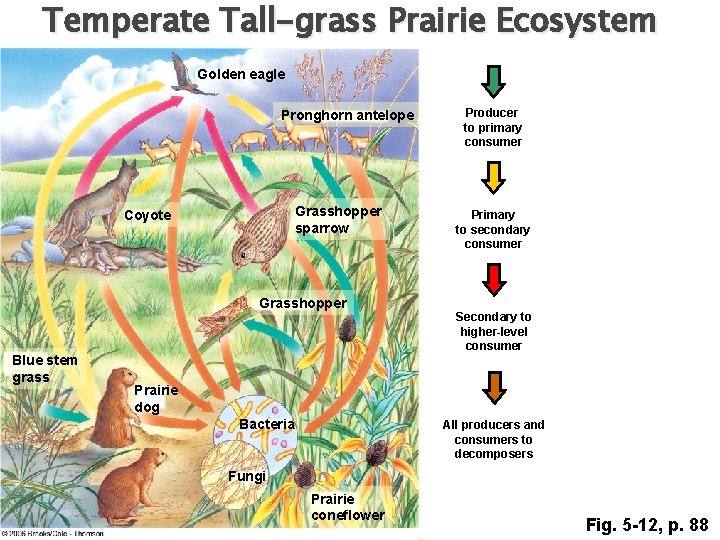
Temperate Tall-grass Prairie Ecosystem Golden eagle Pronghorn antelope Grasshopper sparrow Coyote Grasshopper Blue stem grass Producer to primary consumer Primary to secondary consumer Secondary to higher-level consumer Prairie dog Bacteria All producers and consumers to decomposers Fungi Prairie coneflower Fig. 5 -12, p. 88
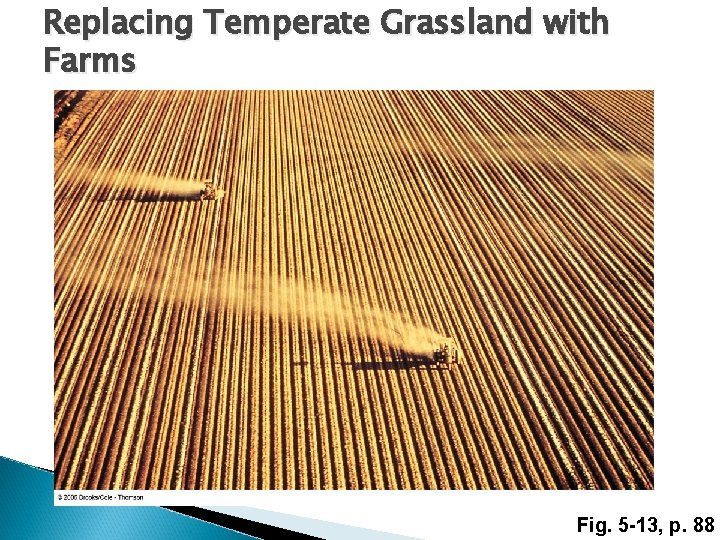
Replacing Temperate Grassland with Farms Fig. 5 -13, p. 88
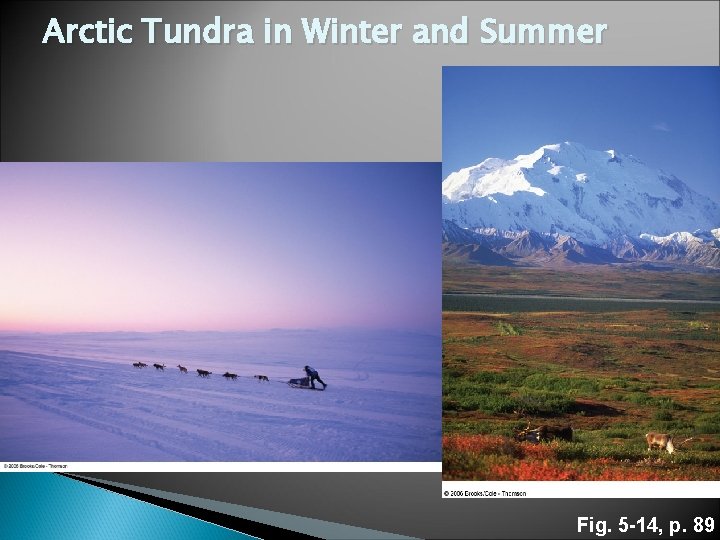
Arctic Tundra in Winter and Summer Fig. 5 -14, p. 89
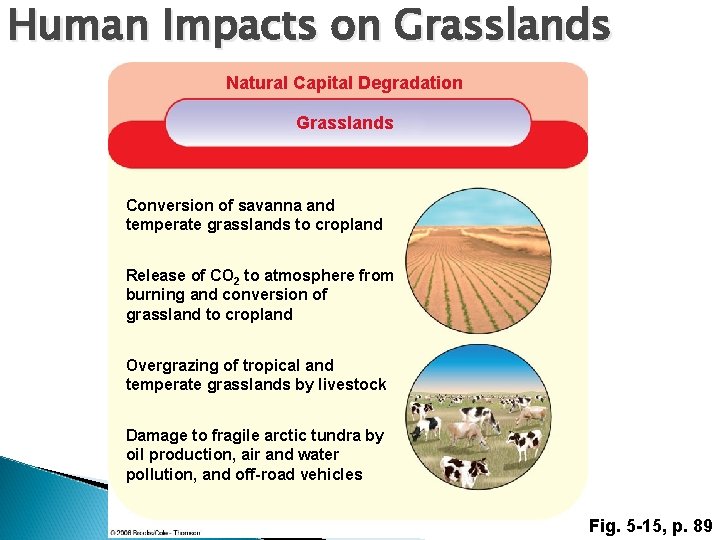
Human Impacts on Grasslands Natural Capital Degradation Grasslands Conversion of savanna and temperate grasslands to cropland Release of CO 2 to atmosphere from burning and conversion of grassland to cropland Overgrazing of tropical and temperate grasslands by livestock Damage to fragile arctic tundra by oil production, air and water pollution, and off-road vehicles Fig. 5 -15, p. 89

Forest Biomes Types of forests: ◦ Tropical rain forests: near the equator, have hot, humid conditions and almost daily rainfall Broadleaf evergreen plants: dominate in rain forest, most animal life is found in the sunny canopy later of the forest ◦ Temperate deciduous forests: and long, warm summers grow in areas with moderate average temperatures, abundant rainfall Broadleaf deciduous forests: leaves drop in fall, trees become dormant, and new leaves grow in spring ◦ Evergreen coniferous forests (boreal and taigas): around the northern sub-artic regions of the earth Muskegs: located in areas just south of artic tundra soil type containing various dead plants in stages of decomposition, moss/peat AKA: bog ◦ Coastal coniferous (temperate rain) forests Oregon coast
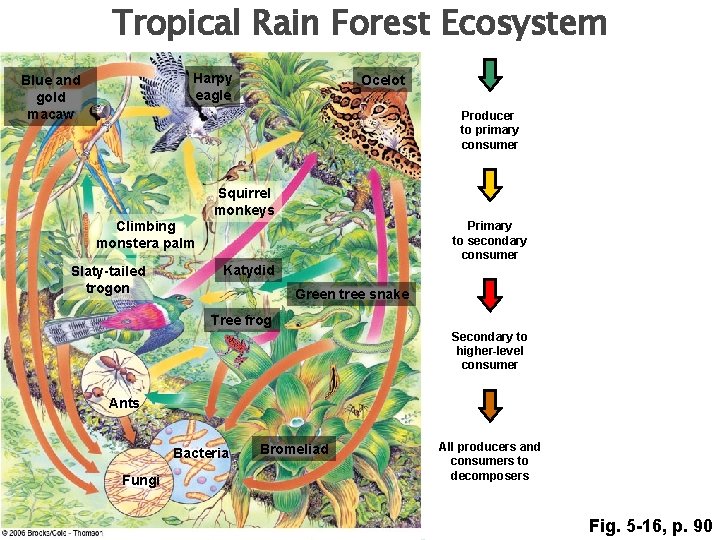
Tropical Rain Forest Ecosystem Harpy eagle Blue and gold macaw Ocelot Producer to primary consumer Squirrel monkeys Climbing monstera palm Slaty-tailed trogon Primary to secondary consumer Katydid Green tree snake Tree frog Secondary to higher-level consumer Ants Bacteria Fungi Bromeliad All producers and consumers to decomposers Fig. 5 -16, p. 90

Temperate Deciduous Forest Ecosystem Broad-winged hawk Producer to primary consumer Hairy woodpecker Gray squirrel White oak White-tailed deer White-footed mouse Metallic woodboring beetle and larvae Mountain winterberry Shagbark hickory May beetle Fungi Bacteria Long-tailed weasel Primary to secondary consumer Racer Secondary to higher-level consumer All producers and consumers to decomposers Wood frog Fig. 5 -18 a, p. 92
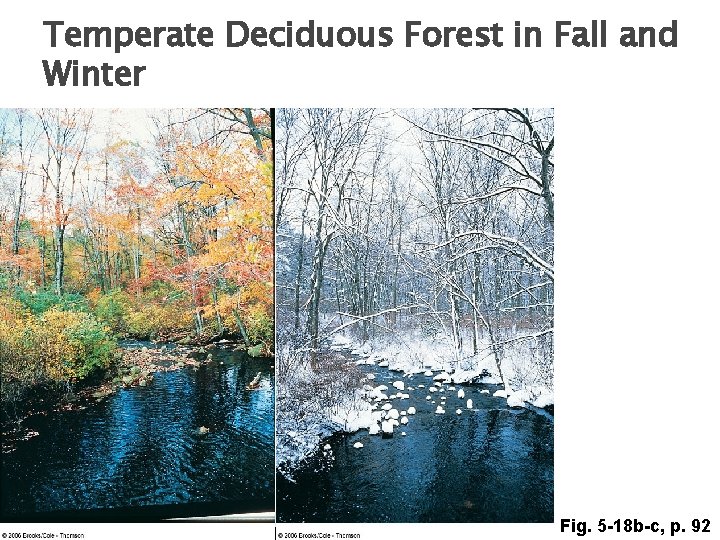
Temperate Deciduous Forest in Fall and Winter Fig. 5 -18 b-c, p. 92
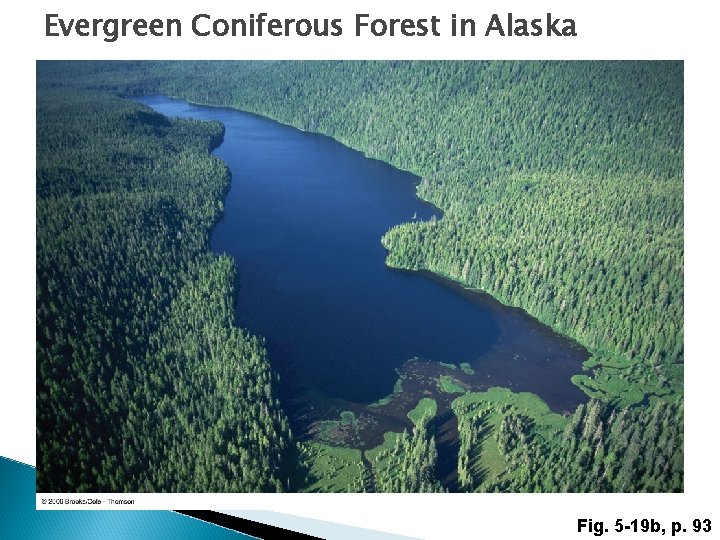
Evergreen Coniferous Forest in Alaska Fig. 5 -19 b, p. 93
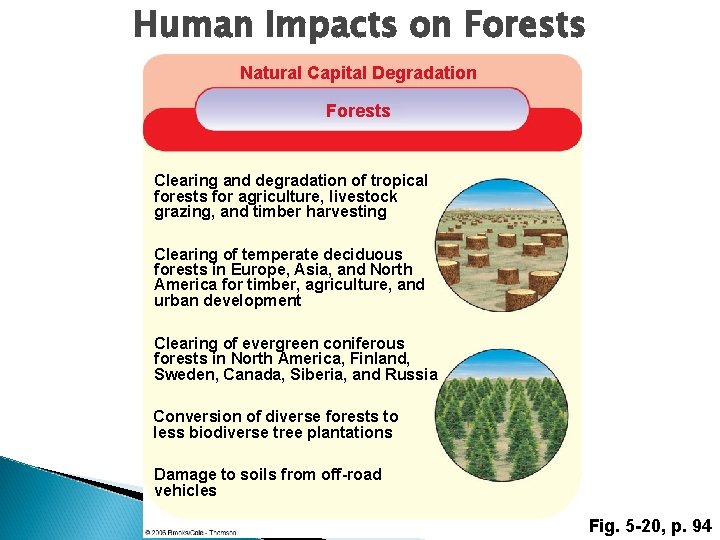
Human Impacts on Forests Natural Capital Degradation Forests Clearing and degradation of tropical forests for agriculture, livestock grazing, and timber harvesting Clearing of temperate deciduous forests in Europe, Asia, and North America for timber, agriculture, and urban development Clearing of evergreen coniferous forests in North America, Finland, Sweden, Canada, Siberia, and Russia Conversion of diverse forests to less biodiverse tree plantations Damage to soils from off-road vehicles Fig. 5 -20, p. 94
Aquatic Environments: Types and Characteristics Aquatic life zones: ◦ Saltwater ◦ Freshwater cover ~ 71% of the earth’s surface
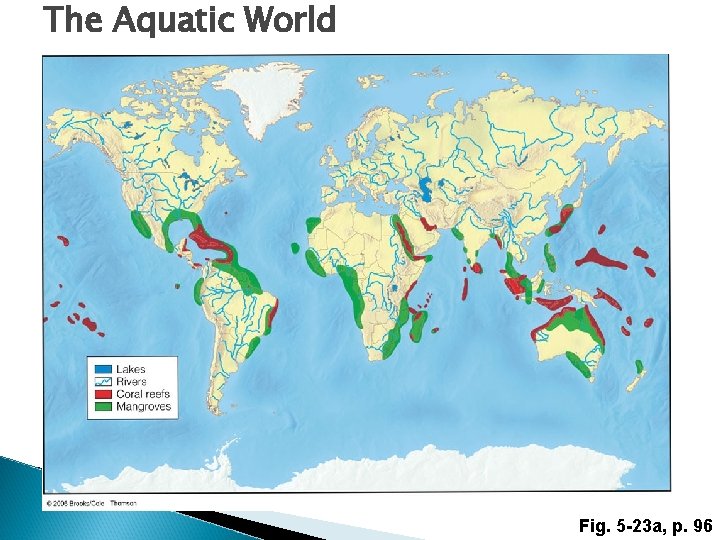
The Aquatic World Fig. 5 -23 a, p. 96
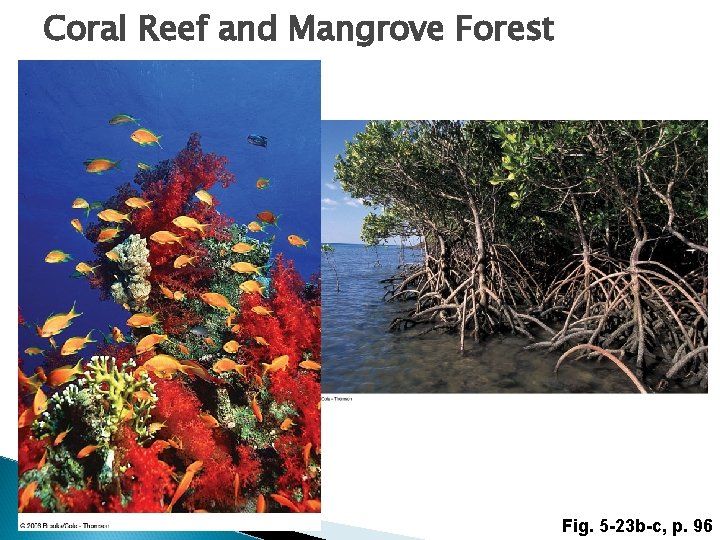
Coral Reef and Mangrove Forest Fig. 5 -23 b-c, p. 96

Organisms in Aquatic Life Zones Phytoplankton: plant plankton Zooplankton: animal plankton Nekton: fish, turtles and whales Benthos: bottom dwellers: barnacles, oysters, worms, lobsters and crabs Decomposers: break down organic matter into simple nutrients for use by producers
Factors that Limit Life with Water Depth Temperature Sunlight (photosynthesis, euphotic zone) Dissolved oxygen content Availability of nutrients (net primary productivity)

Saltwater Life Zones Open ocean Coastal zone Estuaries Coastal wetlands Mangrove swamps Intertidal zones (rocky shores and barrier beaches) Coral reefs
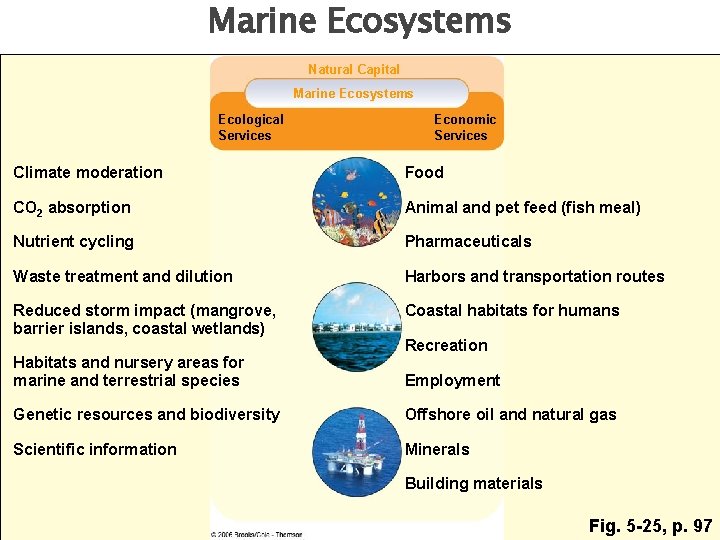
Marine Ecosystems Natural Capital Marine Ecosystems Ecological Services Economic Services Climate moderation Food CO 2 absorption Animal and pet feed (fish meal) Nutrient cycling Pharmaceuticals Waste treatment and dilution Harbors and transportation routes Reduced storm impact (mangrove, barrier islands, coastal wetlands) Coastal habitats for humans Habitats and nursery areas for marine and terrestrial species Recreation Employment Genetic resources and biodiversity Offshore oil and natural gas Scientific information Minerals Building materials Fig. 5 -25, p. 97
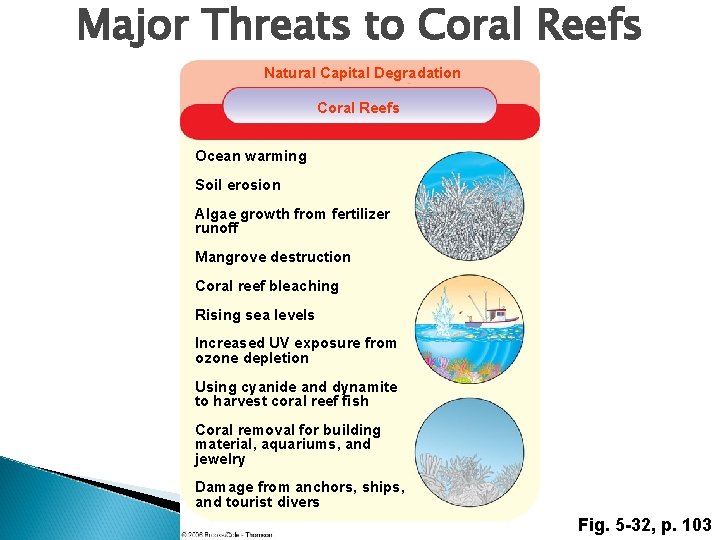
Major Threats to Coral Reefs Natural Capital Degradation Coral Reefs Ocean warming Soil erosion Algae growth from fertilizer runoff Mangrove destruction Coral reef bleaching Rising sea levels Increased UV exposure from ozone depletion Using cyanide and dynamite to harvest coral reef fish Coral removal for building material, aquariums, and jewelry Damage from anchors, ships, and tourist divers Fig. 5 -32, p. 103
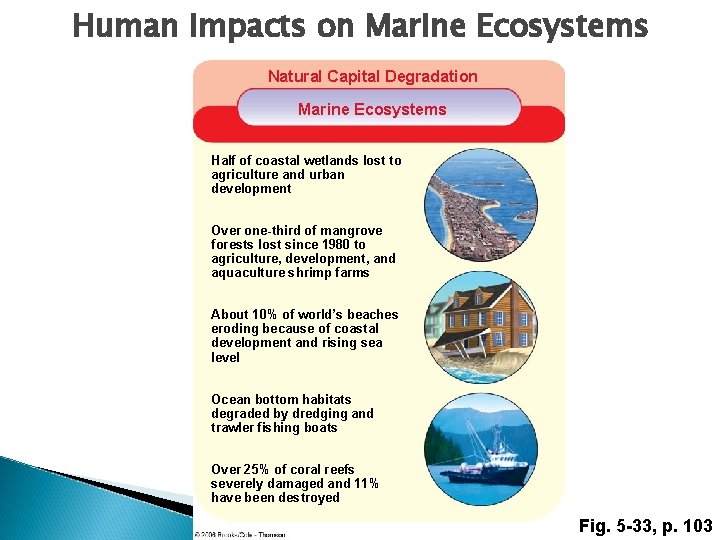
Human Impacts on Marine Ecosystems Natural Capital Degradation Marine Ecosystems Half of coastal wetlands lost to agriculture and urban development Over one-third of mangrove forests lost since 1980 to agriculture, development, and aquaculture shrimp farms About 10% of world’s beaches eroding because of coastal development and rising sea level Ocean bottom habitats degraded by dredging and trawler fishing boats Over 25% of coral reefs severely damaged and 11% have been destroyed Fig. 5 -33, p. 103
Freshwater Life Zones Standing water (lakes) Flowing water (streams)
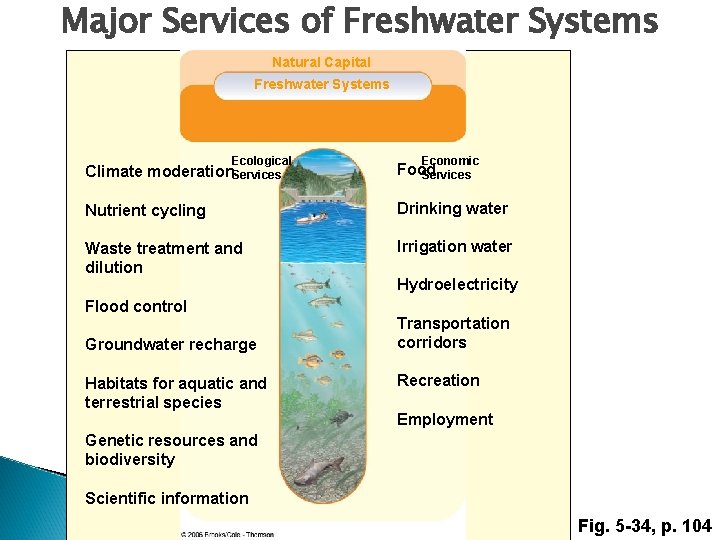
Major Services of Freshwater Systems Natural Capital Freshwater Systems Ecological Economic Climate moderation. Services Food Services Nutrient cycling Drinking water Waste treatment and dilution Irrigation water Flood control Groundwater recharge Habitats for aquatic and terrestrial species Hydroelectricity Transportation corridors Recreation Employment Genetic resources and biodiversity Scientific information Fig. 5 -34, p. 104
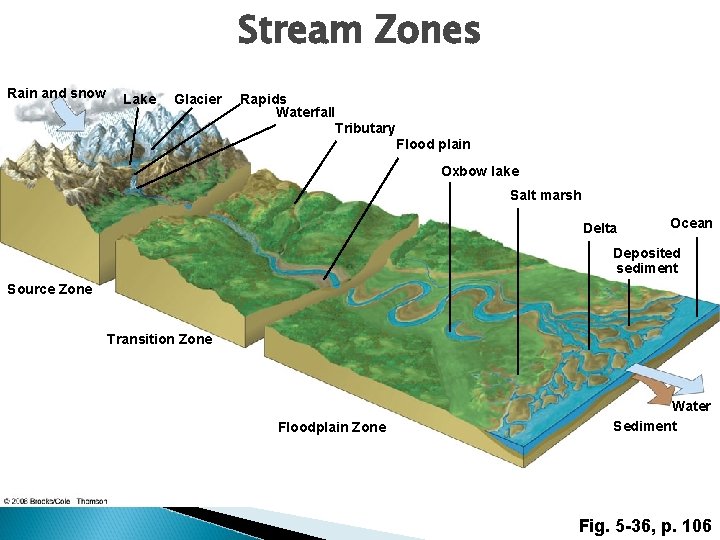
Stream Zones Rain and snow Lake Glacier Rapids Waterfall Tributary Flood plain Oxbow lake Salt marsh Delta Ocean Deposited sediment Source Zone Transition Zone Floodplain Zone Water Sediment Fig. 5 -36, p. 106
Human Impacts on Freshwater Systems Dams, diversions and canals Flood control levees and dikes Pollutants from cities and farmlands Wetland destruction
- Slides: 42