
Climate and ammonia emission reduction policy in agriculture

- Slides: 14
Climate and ammonia emission reduction policy in agriculture Latvia University of Life Sciences and Technologies Jelgava Center of Bioeconomy February 27, 2020
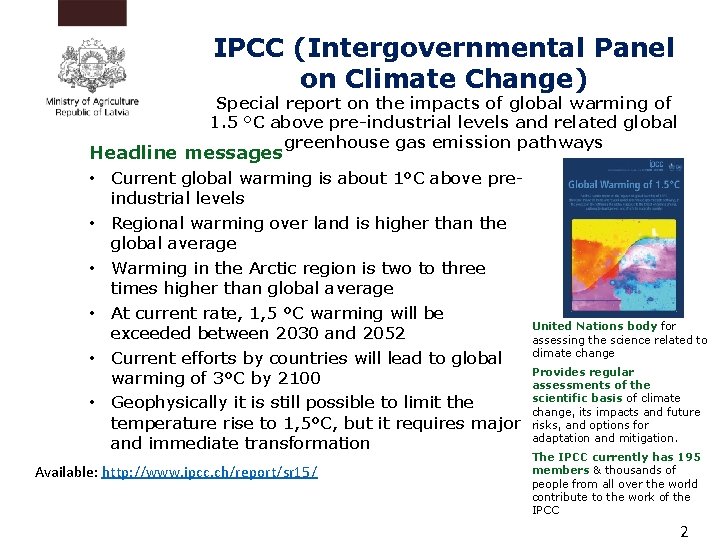
IPCC (Intergovernmental Panel on Climate Change) Special report on the impacts of global warming of 1. 5 °C above pre-industrial levels and related global greenhouse gas emission pathways Headline messages • Current global warming is about 1°C above pre • • • industrial levels Regional warming over land is higher than the global average Warming in the Arctic region is two to three times higher than global average At current rate, 1, 5 °C warming will be exceeded between 2030 and 2052 Current efforts by countries will lead to global warming of 3°C by 2100 Geophysically it is still possible to limit the temperature rise to 1, 5°C, but it requires major and immediate transformation Available: http: //www. ipcc. ch/report/sr 15/ United Nations body for assessing the science related to climate change Provides regular assessments of the scientific basis of climate change, its impacts and future risks, and options for adaptation and mitigation. The IPCC currently has 195 members & thousands of people from all over the world contribute to the work of the IPCC 2
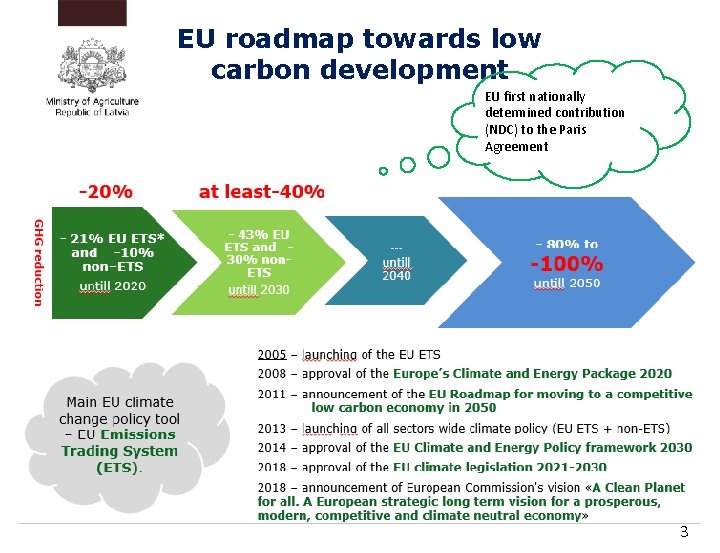
EU roadmap towards low carbon development EU first nationally determined contribution (NDC) to the Paris Agreement 3
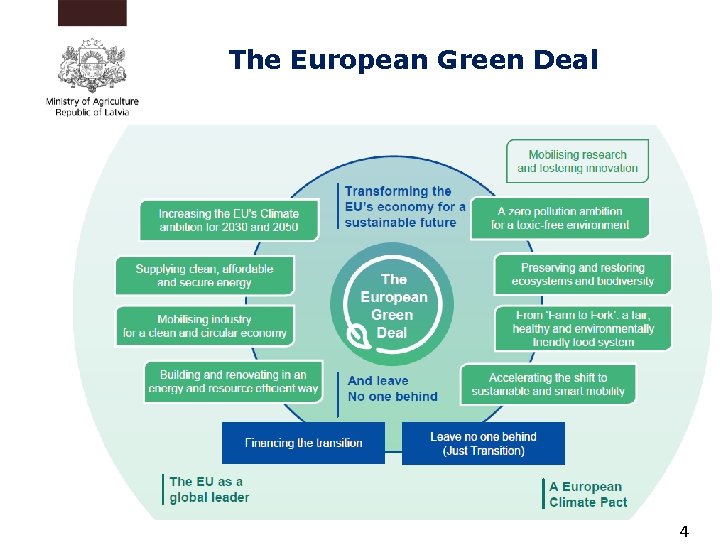
The European Green Deal 4
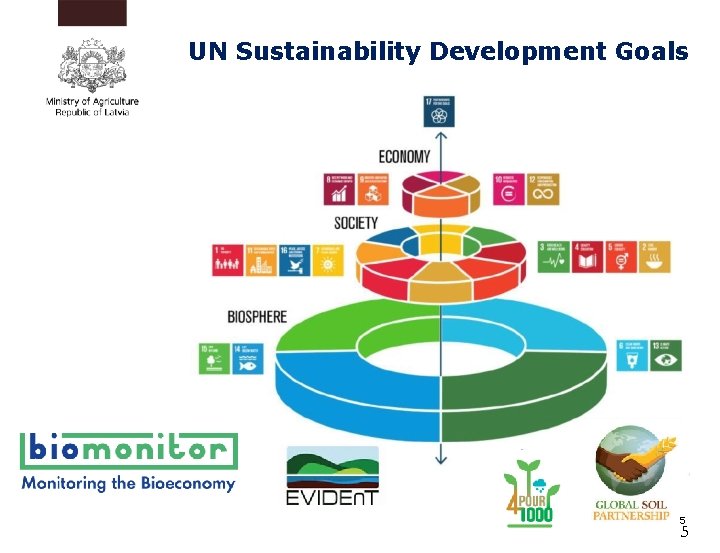
UN Sustainability Development Goals 5 5
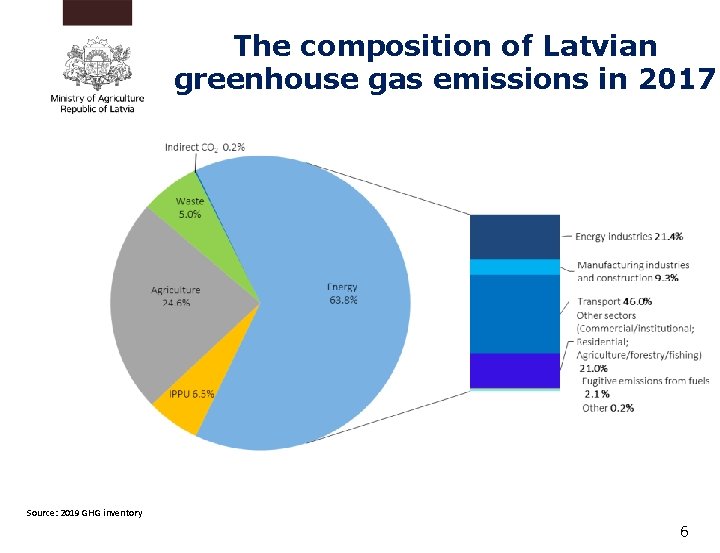
The composition of Latvian greenhouse gas emissions in 2017 Source: 2019 GHG inventory 6
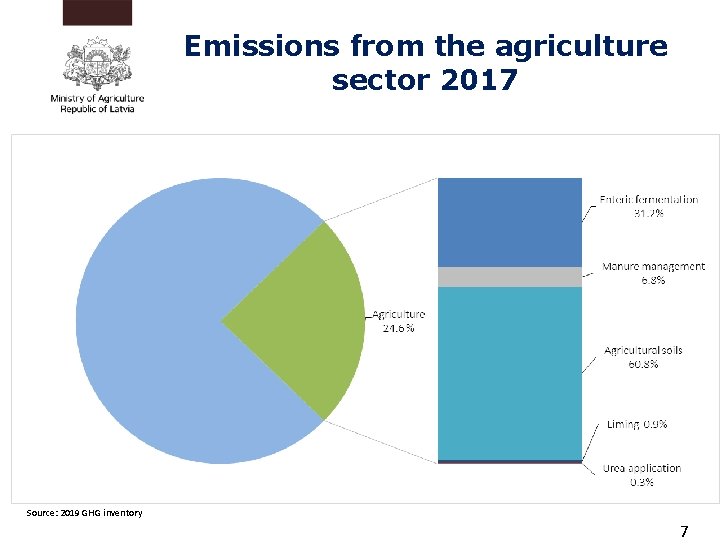
Emissions from the agriculture sector 2017 Source: 2019 GHG inventory 7
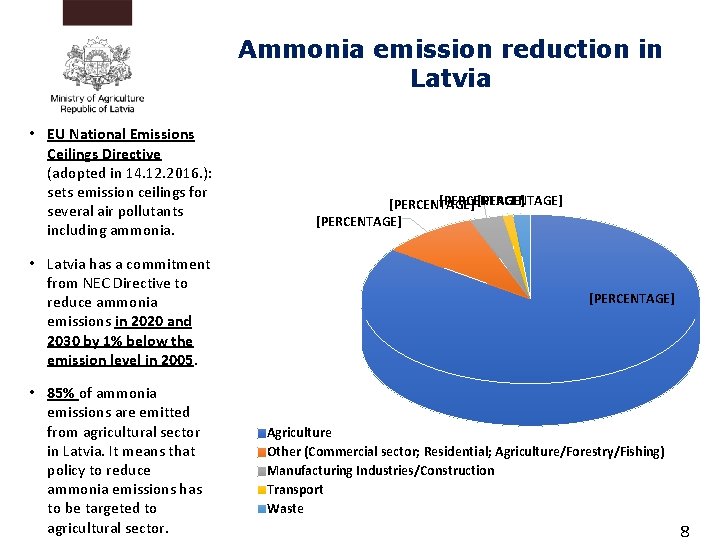
Ammonia emission reduction in Latvia • EU National Emissions Ceilings Directive (adopted in 14. 12. 2016. ): sets emission ceilings for several air pollutants including ammonia. • Latvia has a commitment from NEC Directive to reduce ammonia emissions in 2020 and 2030 by 1% below the emission level in 2005. • 85% of ammonia emissions are emitted from agricultural sector in Latvia. It means that policy to reduce ammonia emissions has to be targeted to agricultural sector. [PERCENTAGE] [PERCENTAGE] Agriculture Other (Commercial sector; Residential; Agriculture/Forestry/Fishing) Manufacturing Industries/Construction Transport Waste 8
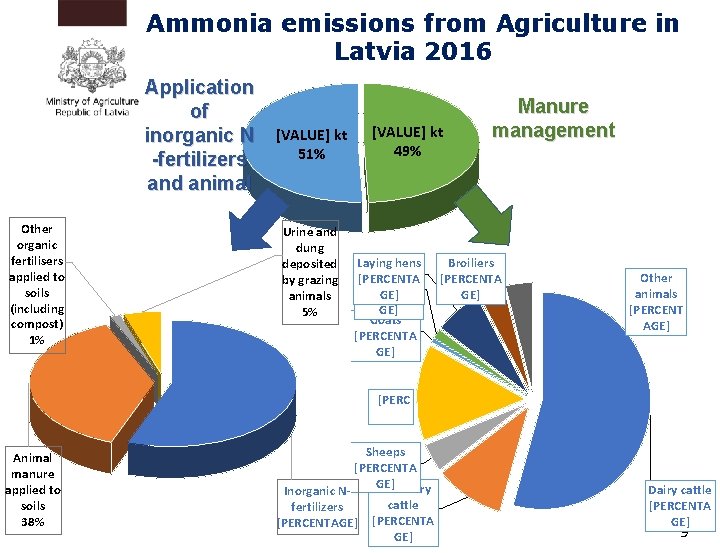
Ammonia emissions from Agriculture in Latvia 2016 Application of inorganic N -fertilizers and animal Other organic fertilisers applied to soils (including compost) 1% [VALUE] kt 49% [VALUE] kt 51% Urine and dung deposited by grazing animals 5% Laying hens Horses [PERCENTA GE] Goats [PERCENTA GE] Manure management Broiliers [PERCENTA GE] Other animals [PERCENT AGE] Swine [PERC Animal manure applied to soils 38% Sheeps [PERCENTA GE] Non-dairy Inorganic Nfertilizers [PERCENTAGE] cattle [PERCENTA GE] Dairy cattle [PERCENTA GE] 9
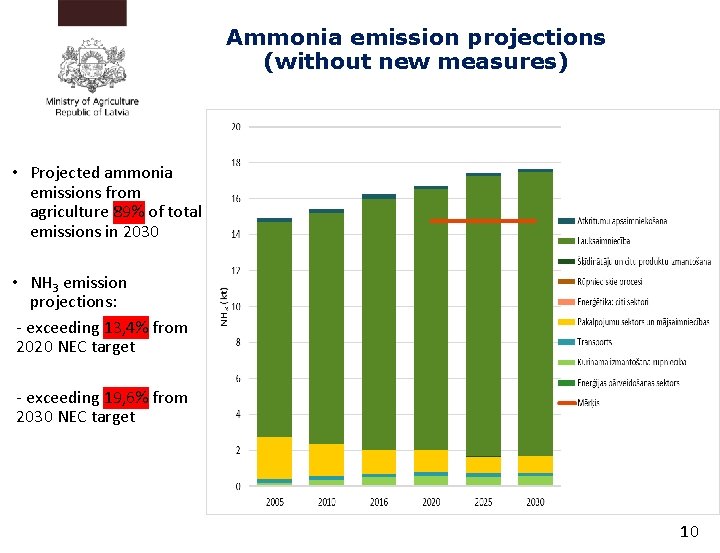
Ammonia emission projections (without new measures) • Projected ammonia emissions from agriculture 89% of total emissions in 2030 • NH 3 emission projections: - exceeding 13, 4% from 2020 NEC target - exceeding 19, 6% from 2030 NEC target 10
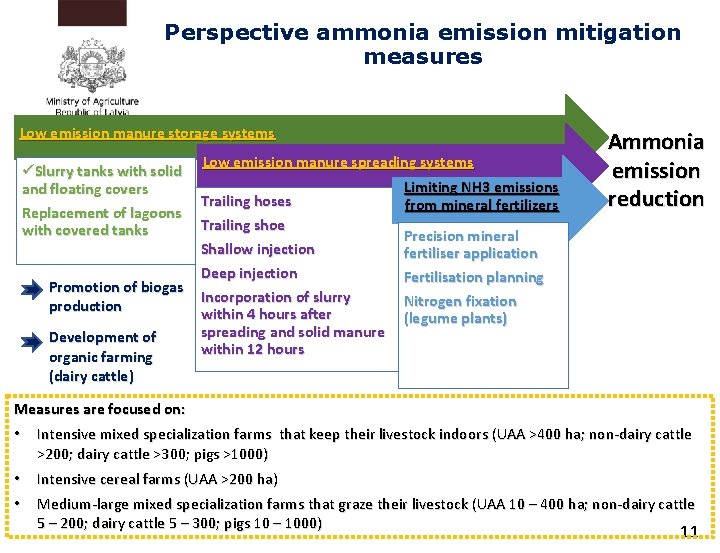
Perspective ammonia emission mitigation measures Low emission manure storage systems üSlurry tanks with solid and floating covers Replacement of lagoons with covered tanks Promotion of biogas production Development of organic farming (dairy cattle) Low emission manure spreading systems Trailing hoses Trailing shoe Shallow injection Deep injection Incorporation of slurry within 4 hours after spreading and solid manure within 12 hours Limiting NH 3 emissions from mineral fertilizers Ammonia emission reduction Precision mineral fertiliser application Fertilisation planning Nitrogen fixation (legume plants) Measures are focused on: • Intensive mixed specialization farms that keep their livestock indoors (UAA >400 ha; non-dairy cattle >200; dairy cattle >300; pigs >1000) • Intensive cereal farms (UAA >200 ha) • Medium-large mixed specialization farms that graze their livestock (UAA 10 – 400 ha; non-dairy cattle 5 – 200; dairy cattle 5 – 300; pigs 10 – 1000) 11
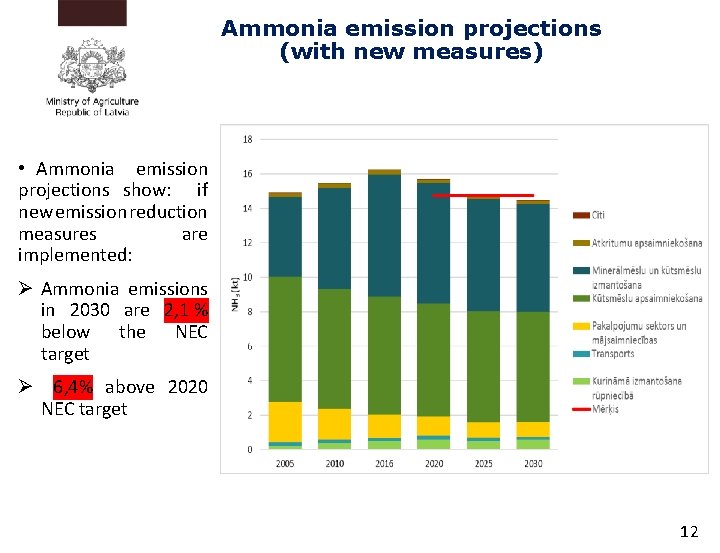
Ammonia emission projections (with new measures) • Ammonia emission projections show: if new emission reduction measures are implemented: Ø Ammonia emissions in 2030 are 2, 1 % below the NEC target Ø 6, 4% above 2020 NEC target 12
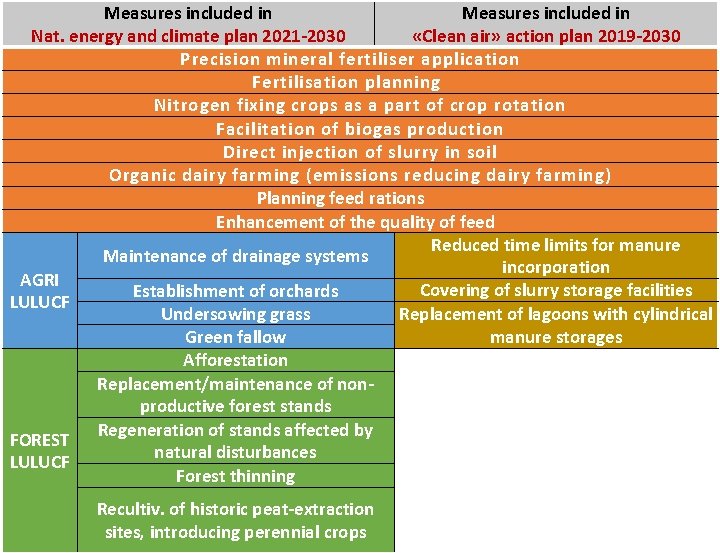
Measures included in «Clean air» action plan 2019 -2030 Nat. energy and climate plan 2021 -2030 Precision mineral fertiliser application Fertilisation planning Nitrogen fixing crops as a part of crop rotation Facilitation of biogas production Direct injection of slurry in soil Organic dairy farming (emissions reducing dairy farming) Planning feed rations Enhancement of the quality of feed Reduced time limits for manure Maintenance of drainage systems incorporation AGRI Covering of slurry storage facilities Establishment of orchards LULUCF Undersowing grass Replacement of lagoons with cylindrical manure storages Green fallow Afforestation Replacement/maintenance of nonproductive forest stands Regeneration of stands affected by FOREST natural disturbances LULUCF Forest thinning Recultiv. of historic peat-extraction sites, introducing perennial crops 13
Thank you!