
Client Server Architecture Client Server Architecture A network
- Slides: 11
Client – Server Architecture
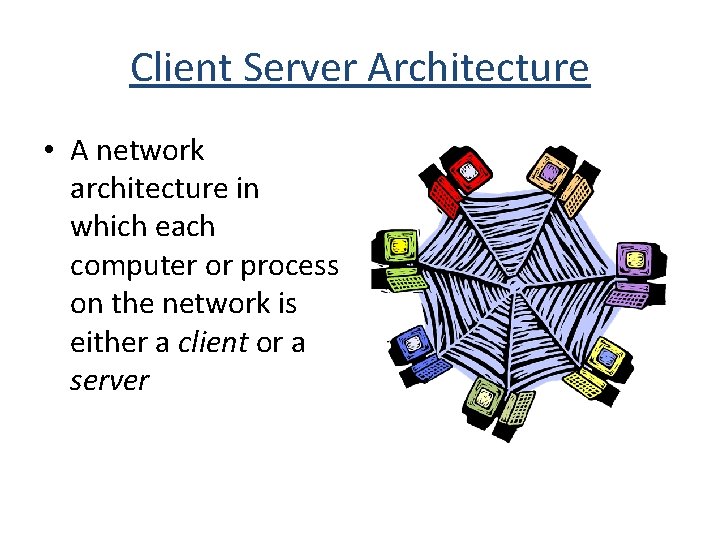
Client Server Architecture • A network architecture in which each computer or process on the network is either a client or a server
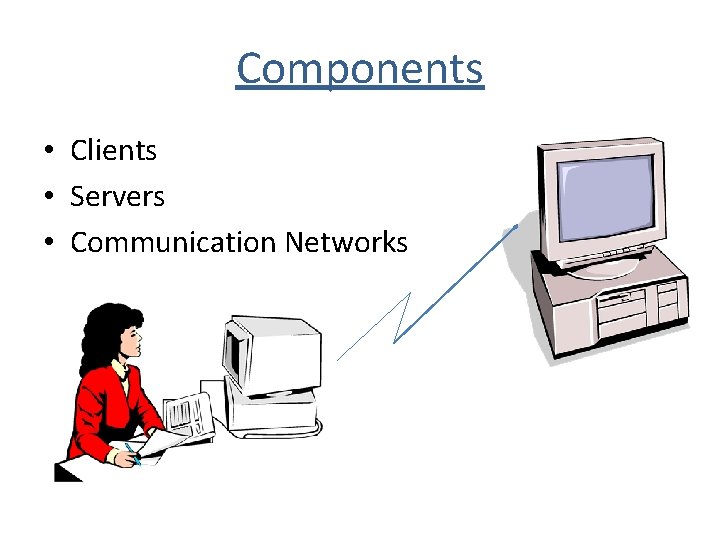
Components • Clients • Servers • Communication Networks
Clients • Applications that run on computers • Rely on servers for – Files – Devices – Processing power Clients are Applications • Example: E-mail client – An application that enables you to send and receive e-mail
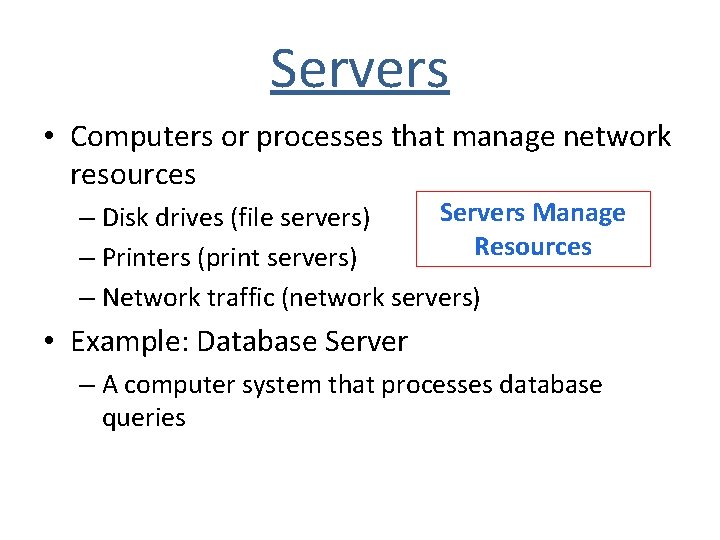
Servers • Computers or processes that manage network resources Servers Manage – Disk drives (file servers) Resources – Printers (print servers) – Network traffic (network servers) • Example: Database Server – A computer system that processes database queries
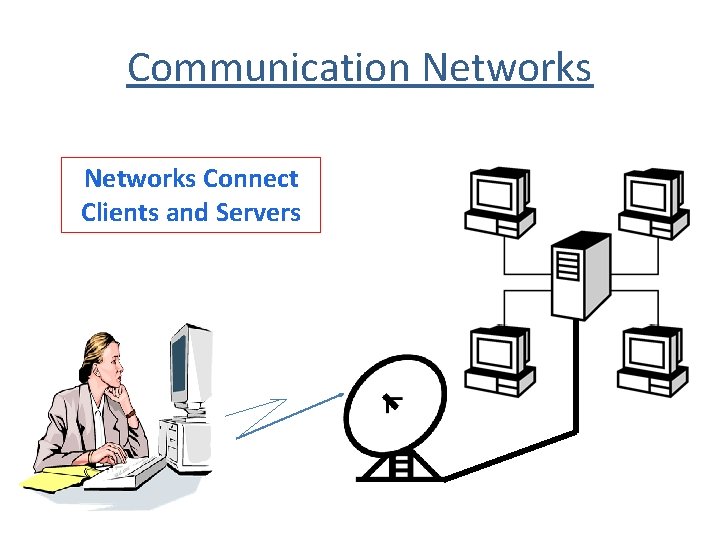
Communication Networks Connect Clients and Servers
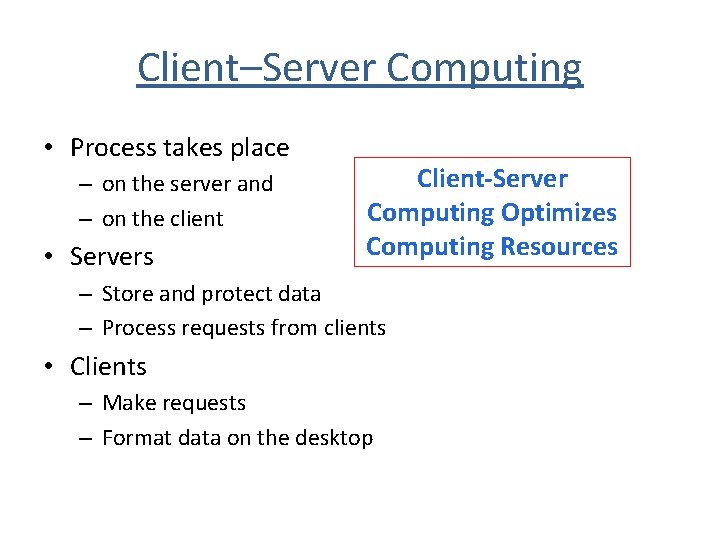
Client–Server Computing • Process takes place – on the server and – on the client • Servers Client-Server Computing Optimizes Computing Resources – Store and protect data – Process requests from clients • Clients – Make requests – Format data on the desktop
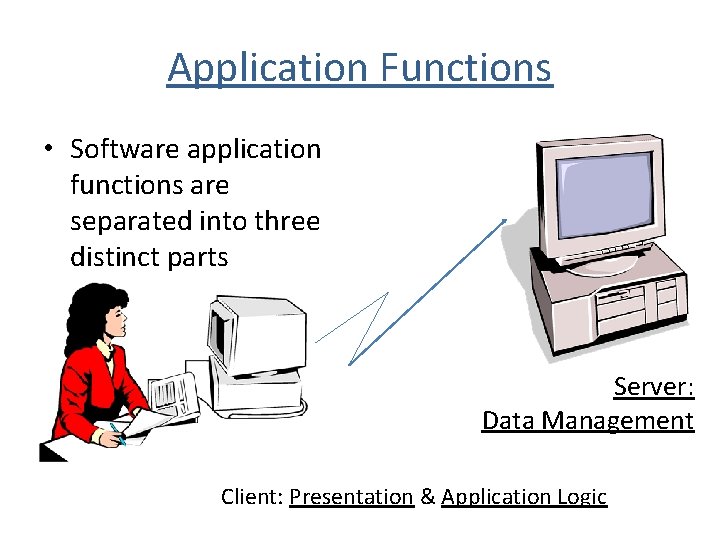
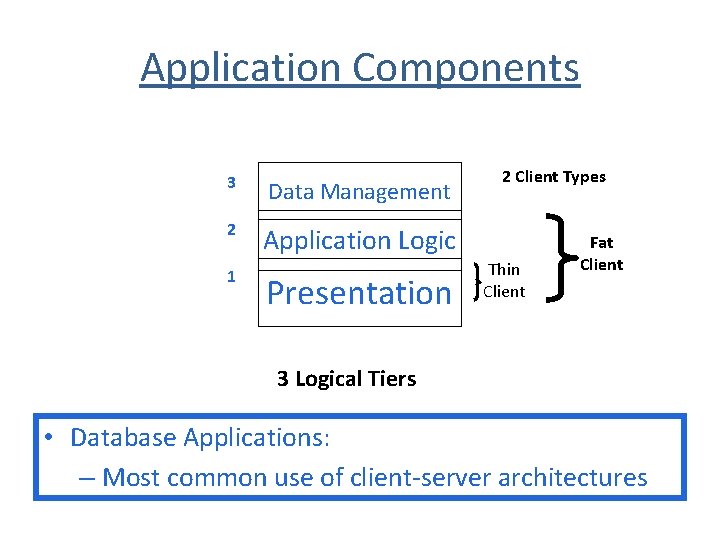
Application Functions • Software application functions are separated into three distinct parts Server: Data Management Client: Presentation & Application Logic
Application Components 3 Data Management 2 Application Logic 1 Presentation 2 Client Types Thin Client Fat Client 3 Logical Tiers • Database Applications: – Most common use of client-server architectures
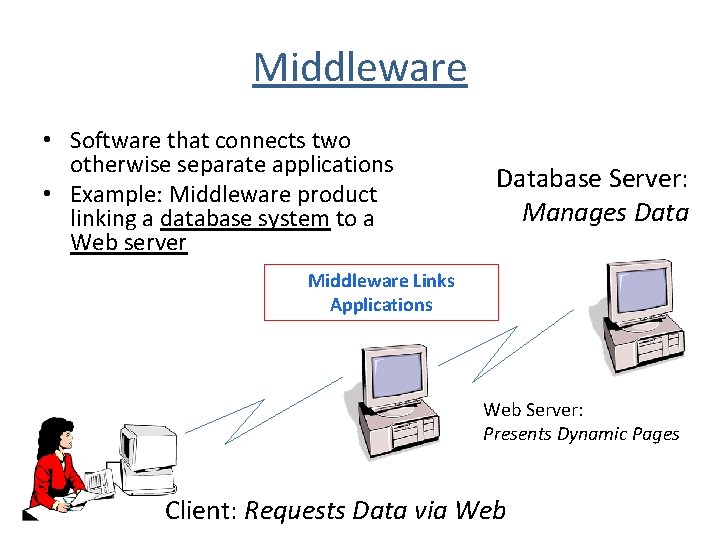
Middleware • Software that connects two otherwise separate applications • Example: Middleware product linking a database system to a Web server Database Server: Manages Data Middleware Links Applications Web Server: Presents Dynamic Pages Client: Requests Data via Web
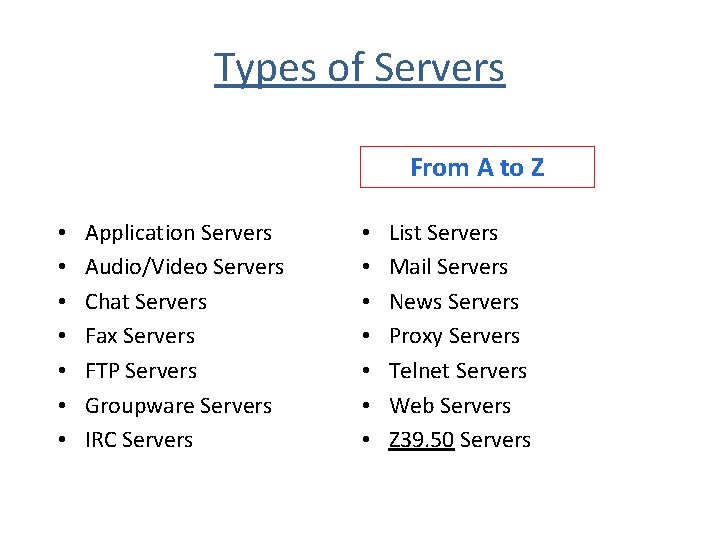
Types of Servers From A to Z • • Application Servers Audio/Video Servers Chat Servers Fax Servers FTP Servers Groupware Servers IRC Servers • • List Servers Mail Servers News Servers Proxy Servers Telnet Servers Web Servers Z 39. 50 Servers