
Clicker 1 How many unpaired electrons and valence

- Slides: 21
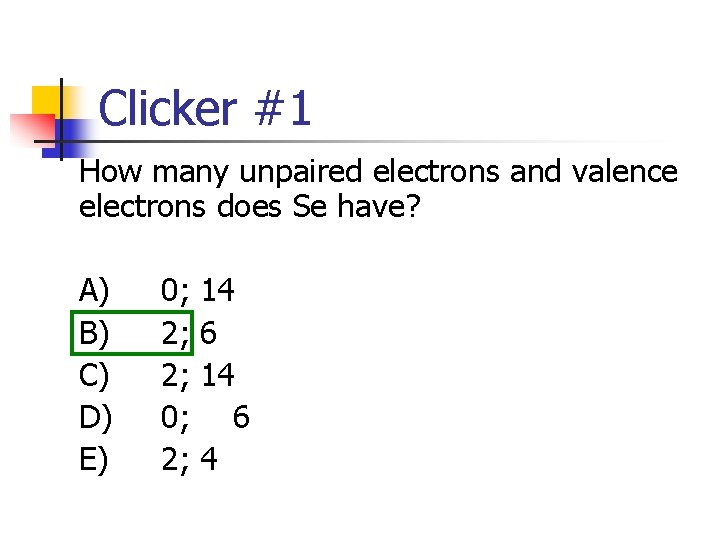
Clicker #1 How many unpaired electrons and valence electrons does Se have? A) B) C) D) E) 0; 2; 2; 0; 2; 14 6 4
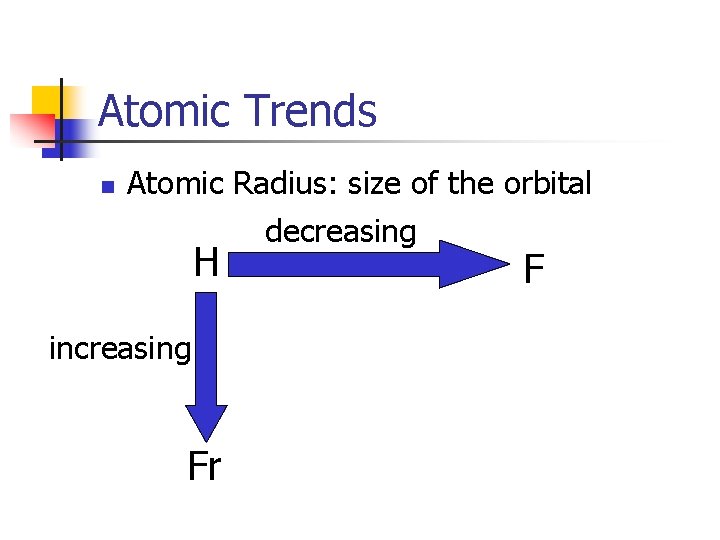
Atomic Trends n Atomic Radius: size of the orbital decreasing H increasing Fr F
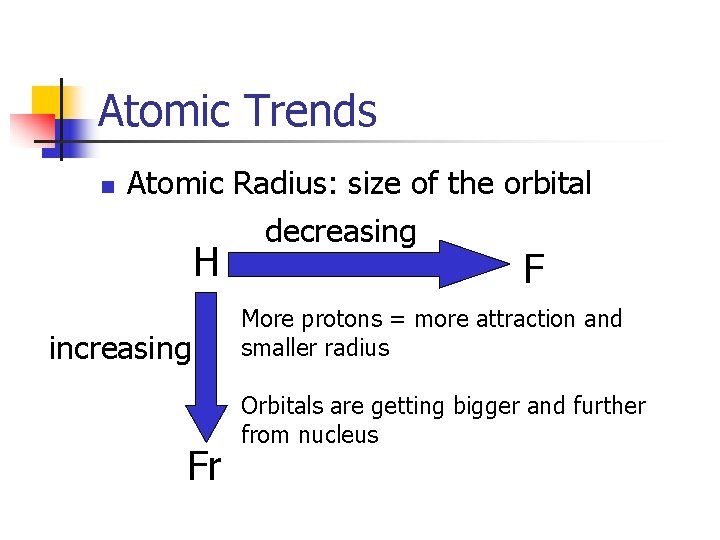
Atomic Trends n Atomic Radius: size of the orbital decreasing H increasing Fr F More protons = more attraction and smaller radius Orbitals are getting bigger and further from nucleus
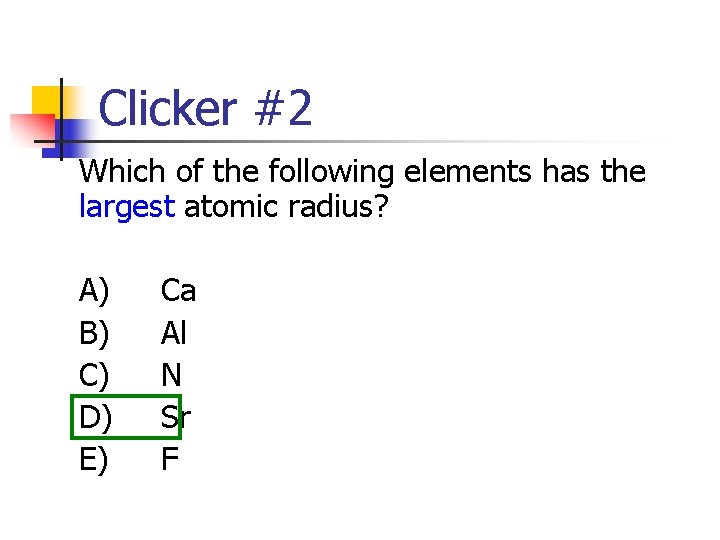
Clicker #2 Which of the following elements has the largest atomic radius? A) B) C) D) E) Ca Al N Sr F
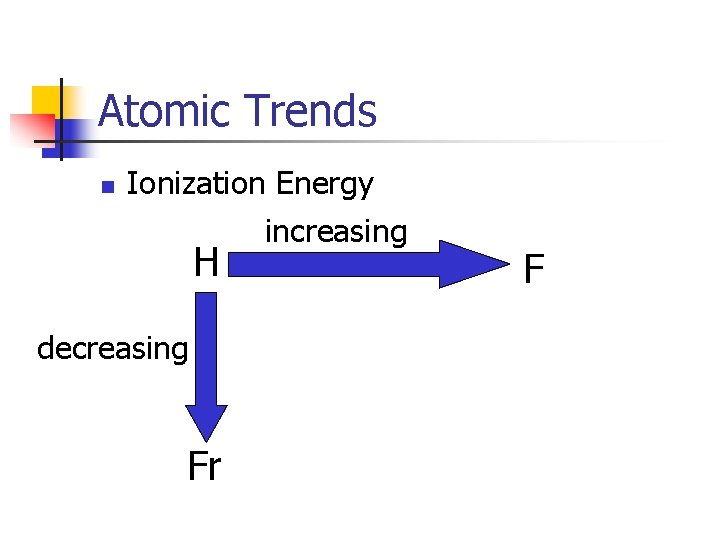
Atomic Trends n Ionization Energy increasing H decreasing Fr F
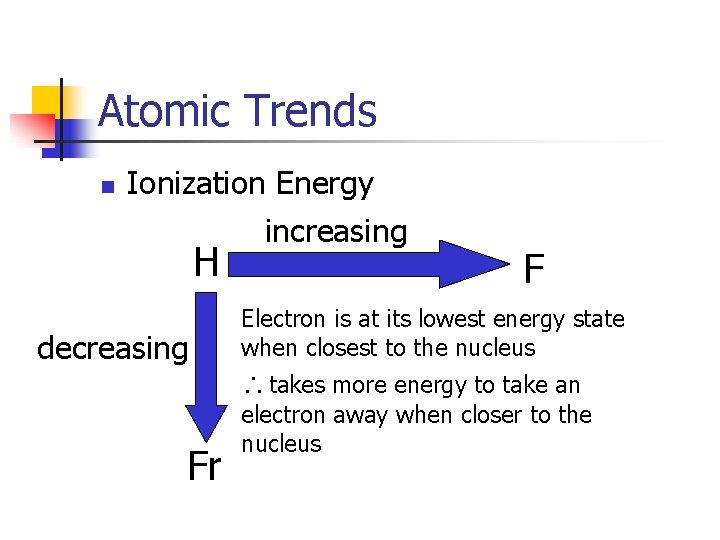
Atomic Trends n Ionization Energy increasing H decreasing Fr F Electron is at its lowest energy state when closest to the nucleus takes more energy to take an electron away when closer to the nucleus
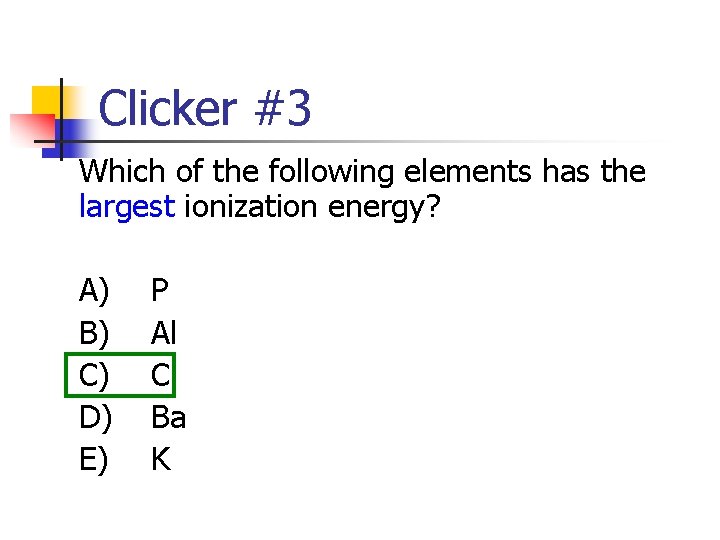
Clicker #3 Which of the following elements has the largest ionization energy? A) B) C) D) E) P Al Cl Ba K
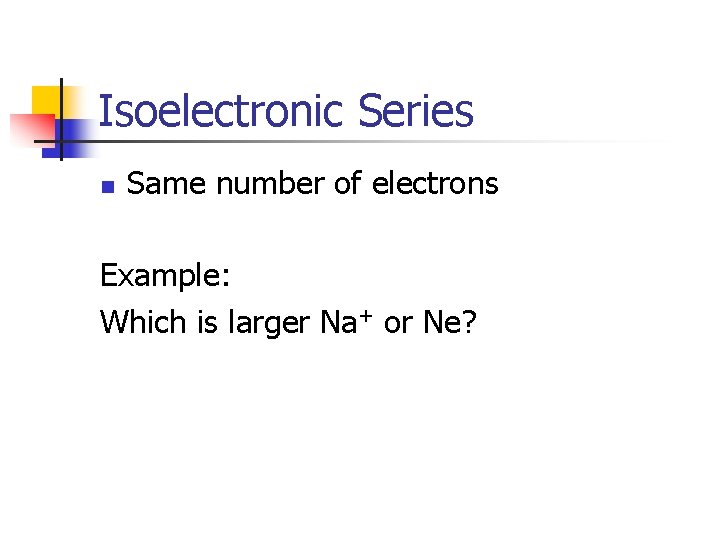
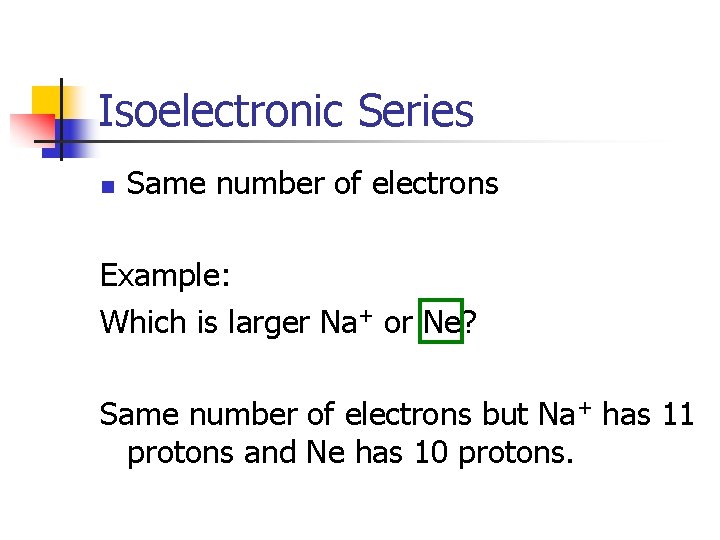
Isoelectronic Series n Same number of electrons Example: Which is larger Na+ or Ne?
Isoelectronic Series n Same number of electrons Example: Which is larger Na+ or Ne? Same number of electrons but Na+ has 11 protons and Ne has 10 protons.
Example Which is larger Cl- or Ar? Which has a higher ionization energy Clor Ar?
Example Which is larger Cl- or Ar? Which has a higher ionization energy Clor Ar?
BONDING n n “Forces” What is meant by a “chemical bond”? Why do atoms bond to form molecules? How do atoms bond to form molecules?
BONDING n Two Types of Bonding n n Intramolecular (within a molecule) Intermolecular (between molecules)
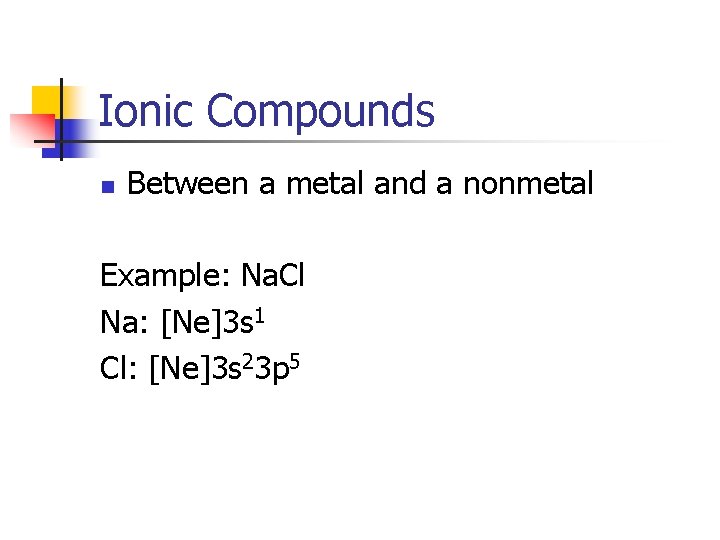
Ionic Compounds n Between a metal and a nonmetal Example: Na. Cl Na: [Ne]3 s 1 Cl: [Ne]3 s 23 p 5
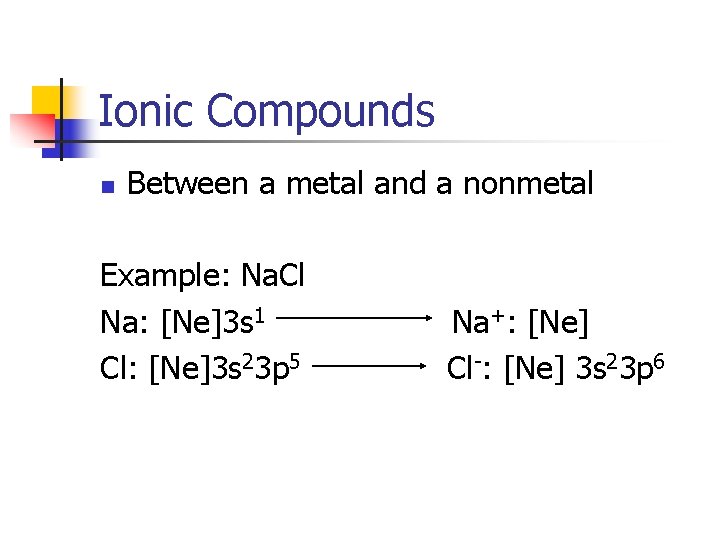
Ionic Compounds n Between a metal and a nonmetal Example: Na. Cl Na: [Ne]3 s 1 Cl: [Ne]3 s 23 p 5 Na+: [Ne] Cl-: [Ne] 3 s 23 p 6
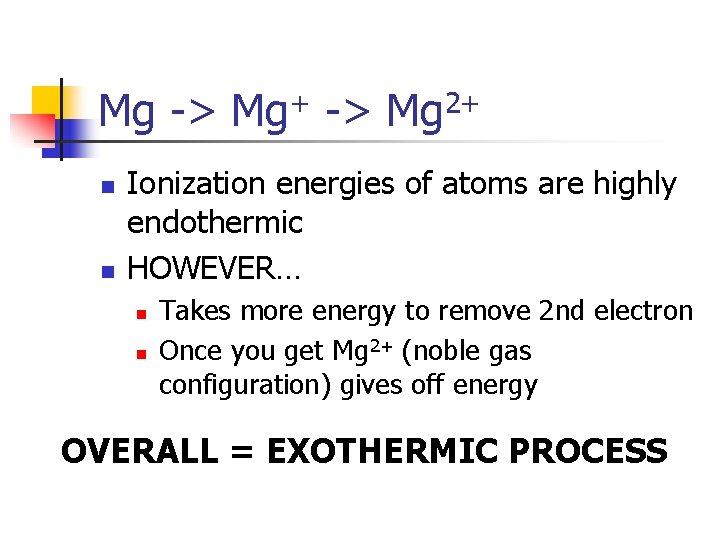
Mg -> Mg+ -> Mg 2+ n n Ionization energies of atoms are highly endothermic HOWEVER… n n Takes more energy to remove 2 nd electron Once you get Mg 2+ (noble gas configuration) gives off energy OVERALL = EXOTHERMIC PROCESS
Bonding in H 2 n Is this ionic?
Bonding in H 2 n Covalent Bonding n n n Sharing electrons Hydrogens share the electrons and have noble gas configuration Why isn’t He diatomic?
Bonding in H 2 n Covalent Bonding n n n Sharing electrons Hydrogens share the electrons and have noble gas configuration Why isn’t He diatomic? n Already has a noble gas configuration
Therefore… n Covalent bonding has same idea as ionic bonding… But Neither atom is “strong” enough to remove electron from the other atom
What about CO?