
Click anywhere to get started LOCKOUT TAGOUT TRYOUT
- Slides: 10
Click anywhere to get started…
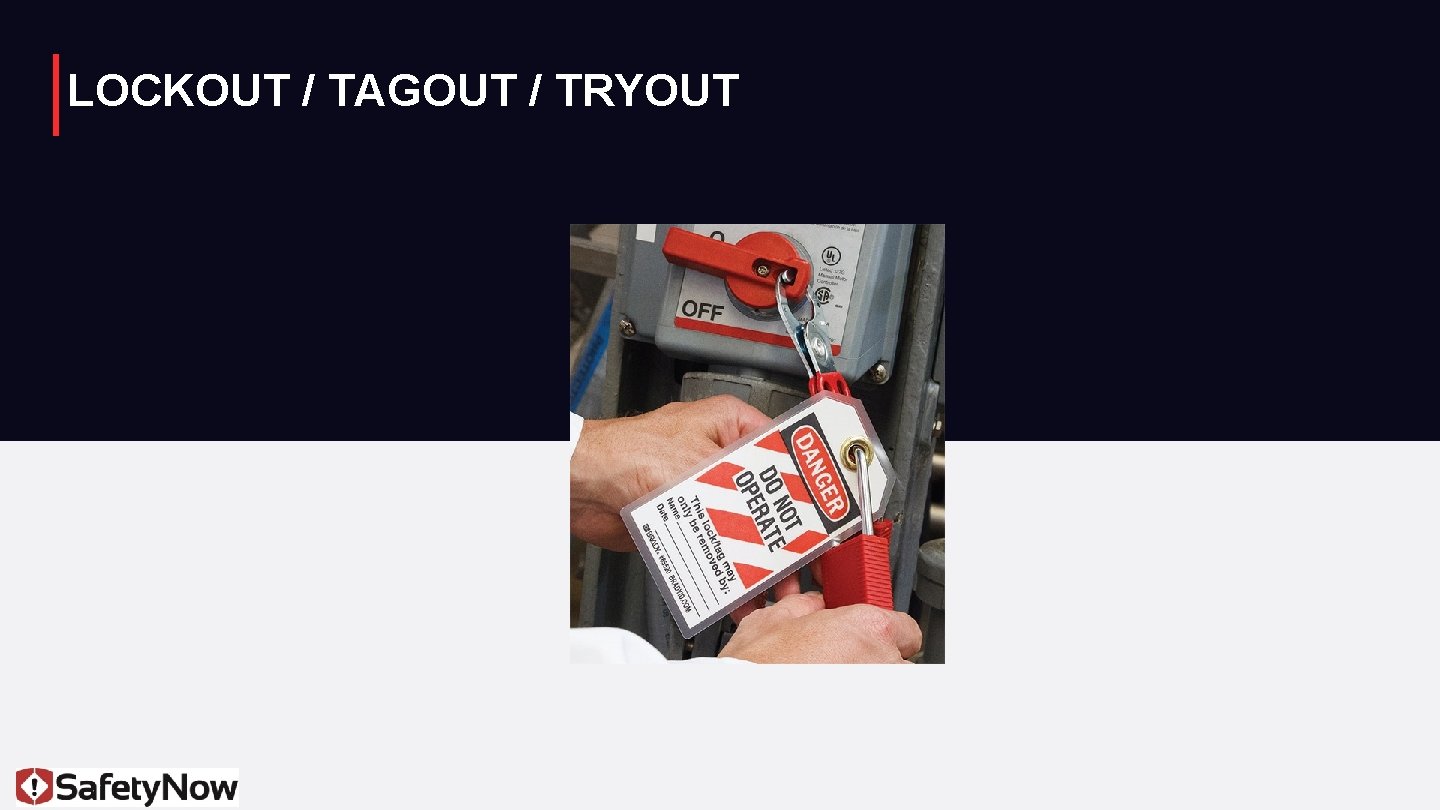
LOCKOUT / TAGOUT / TRYOUT
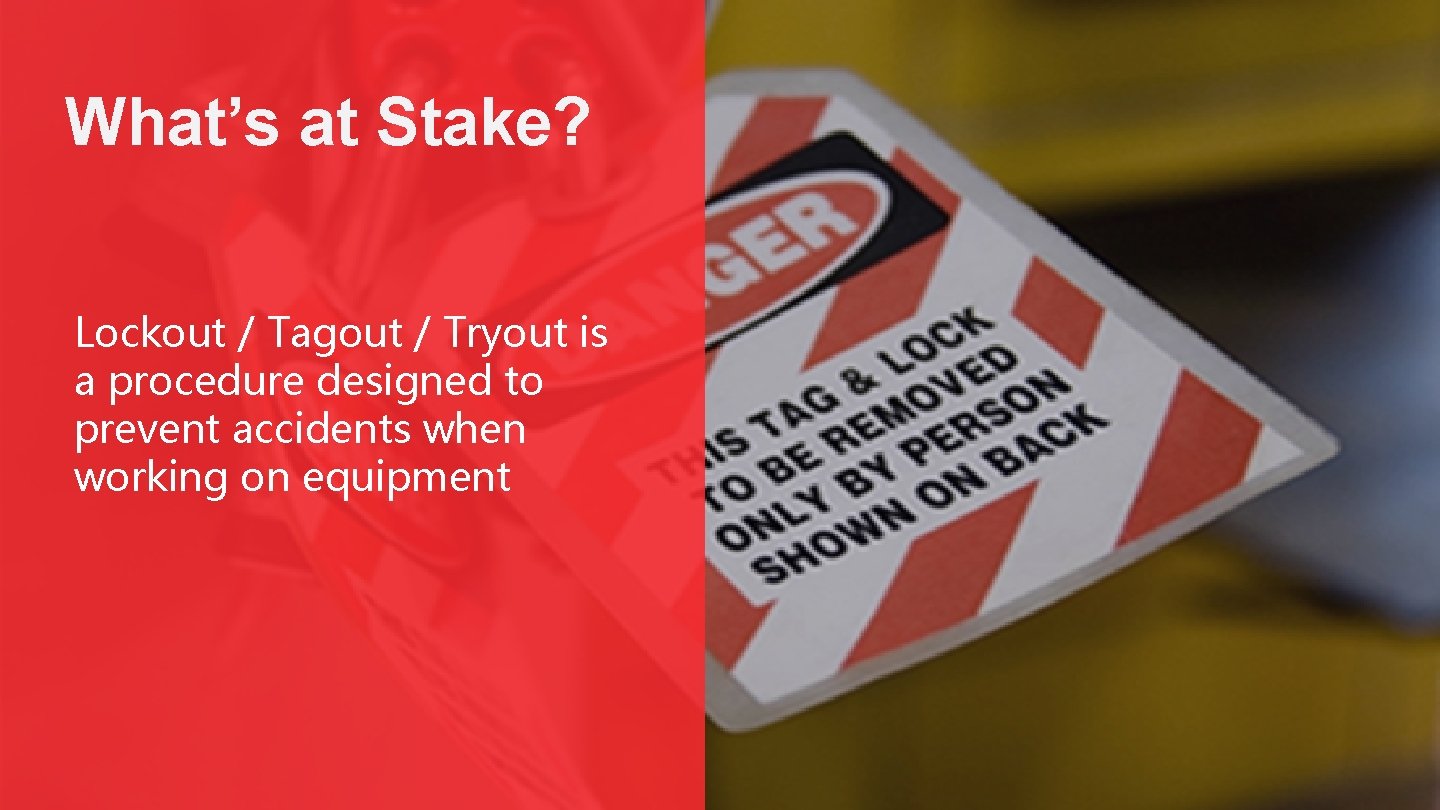
What’s at Stake? Lockout / Tagout / Tryout is a procedure designed to prevent accidents when working on equipment
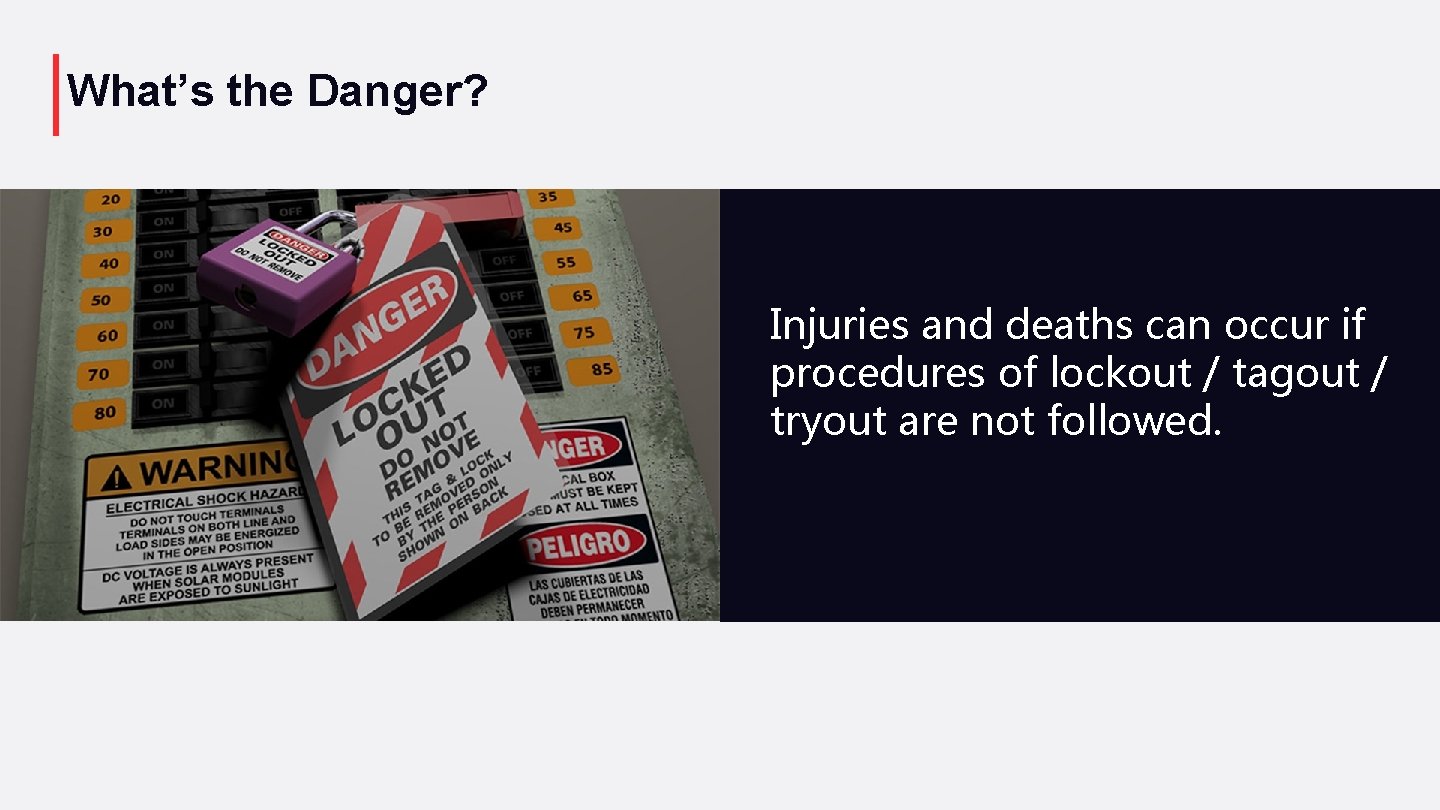
What’s the Danger? Injuries and deaths can occur if procedures of lockout / tagout / tryout are not followed.
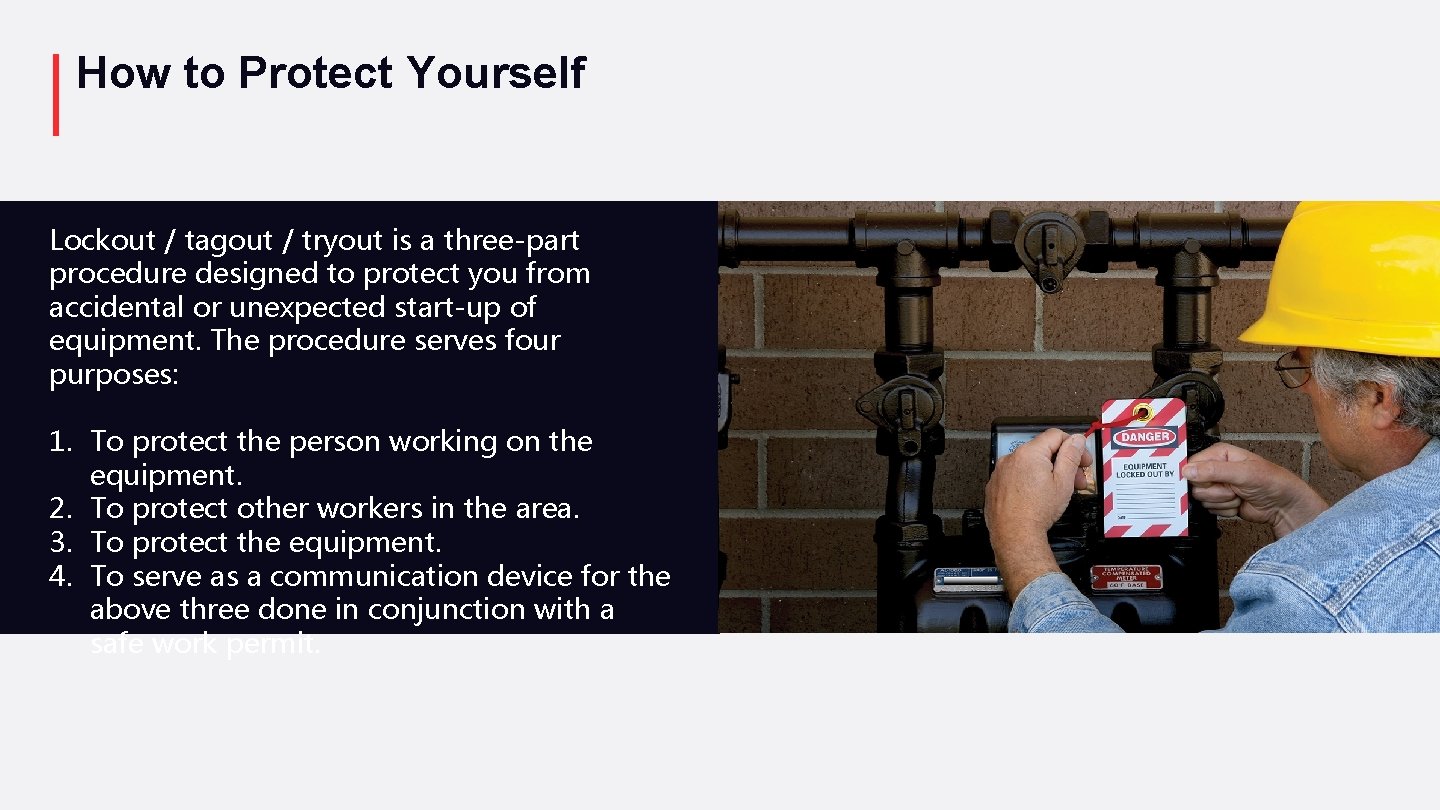
How to Protect Yourself Lockout / tagout / tryout is a three-part procedure designed to protect you from accidental or unexpected start-up of equipment. The procedure serves four purposes: 1. To protect the person working on the equipment. 2. To protect other workers in the area. 3. To protect the equipment. 4. To serve as a communication device for the above three done in conjunction with a safe work permit.
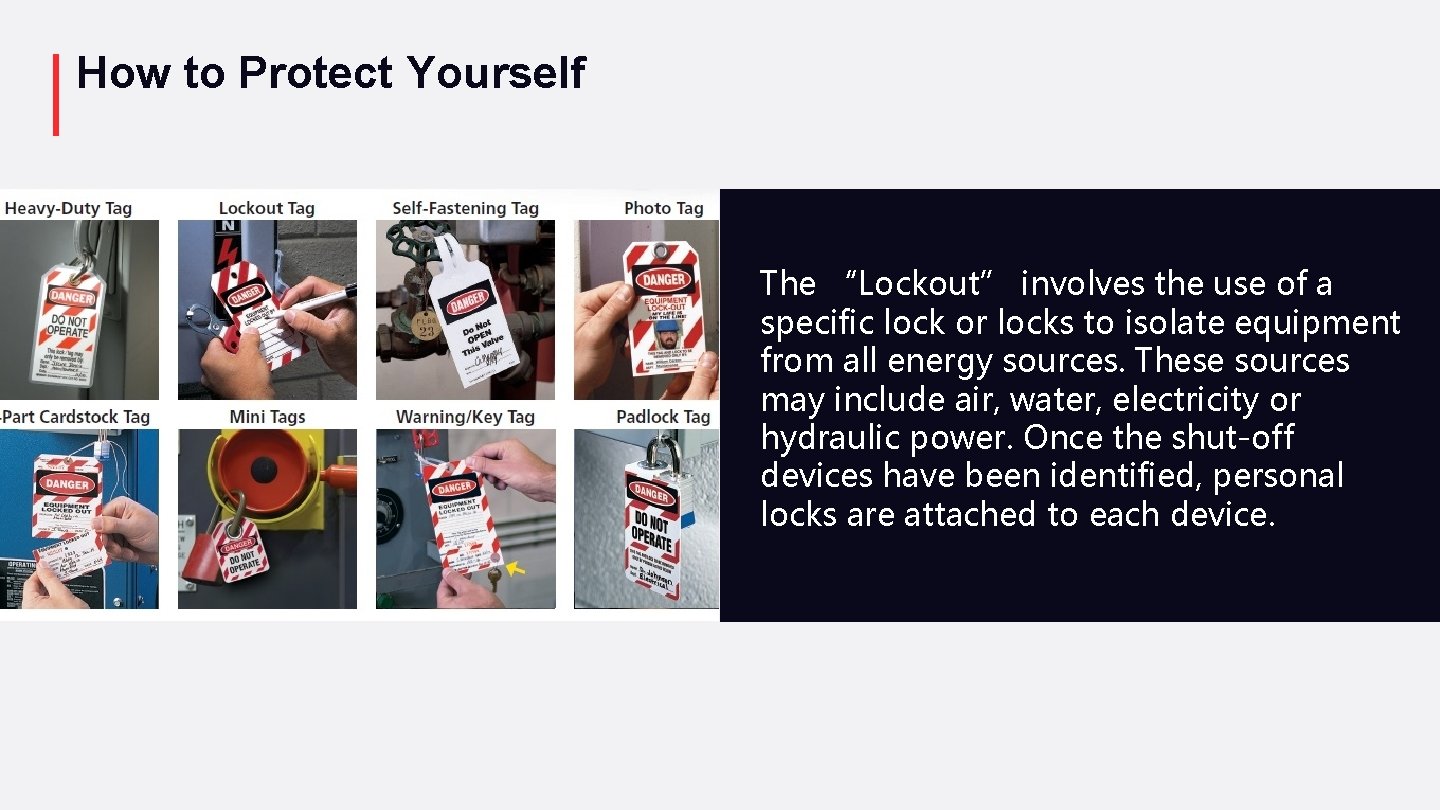
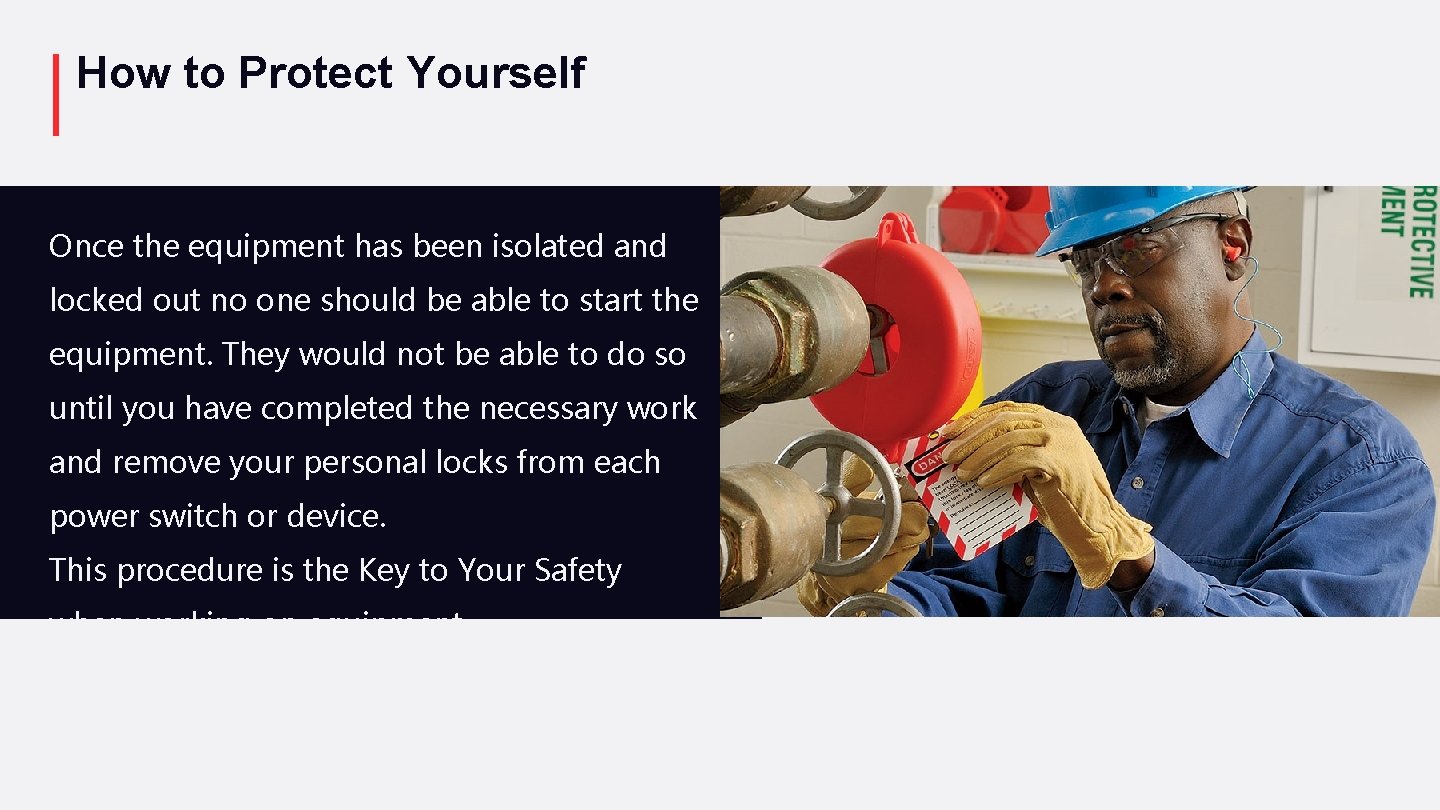
How to Protect Yourself The “Lockout” involves the use of a specific lock or locks to isolate equipment from all energy sources. These sources may include air, water, electricity or hydraulic power. Once the shut-off devices have been identified, personal locks are attached to each device.
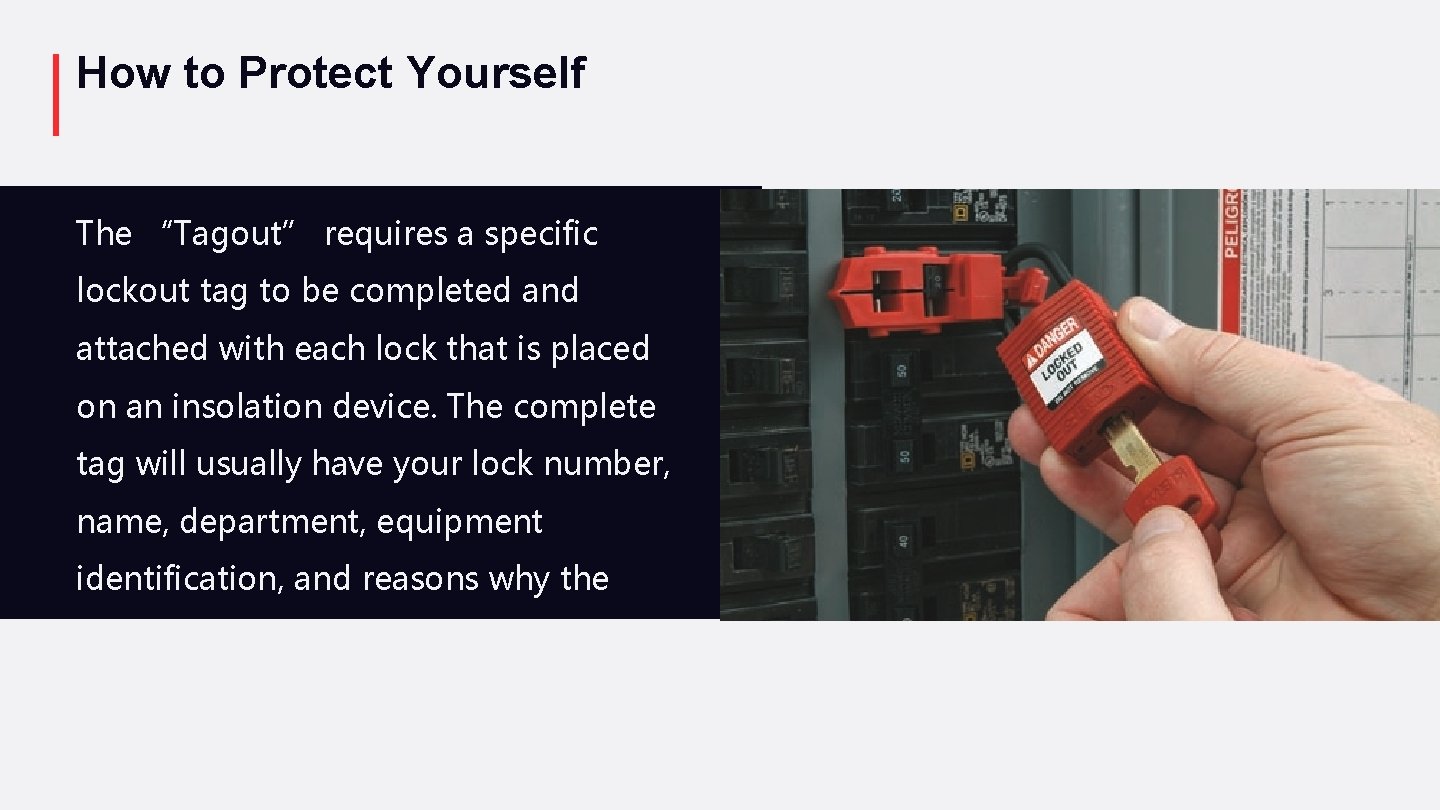
How to Protect Yourself The “Tagout” requires a specific lockout tag to be completed and attached with each lock that is placed on an insolation device. The complete tag will usually have your lock number, name, department, equipment identification, and reasons why the equipment is down.
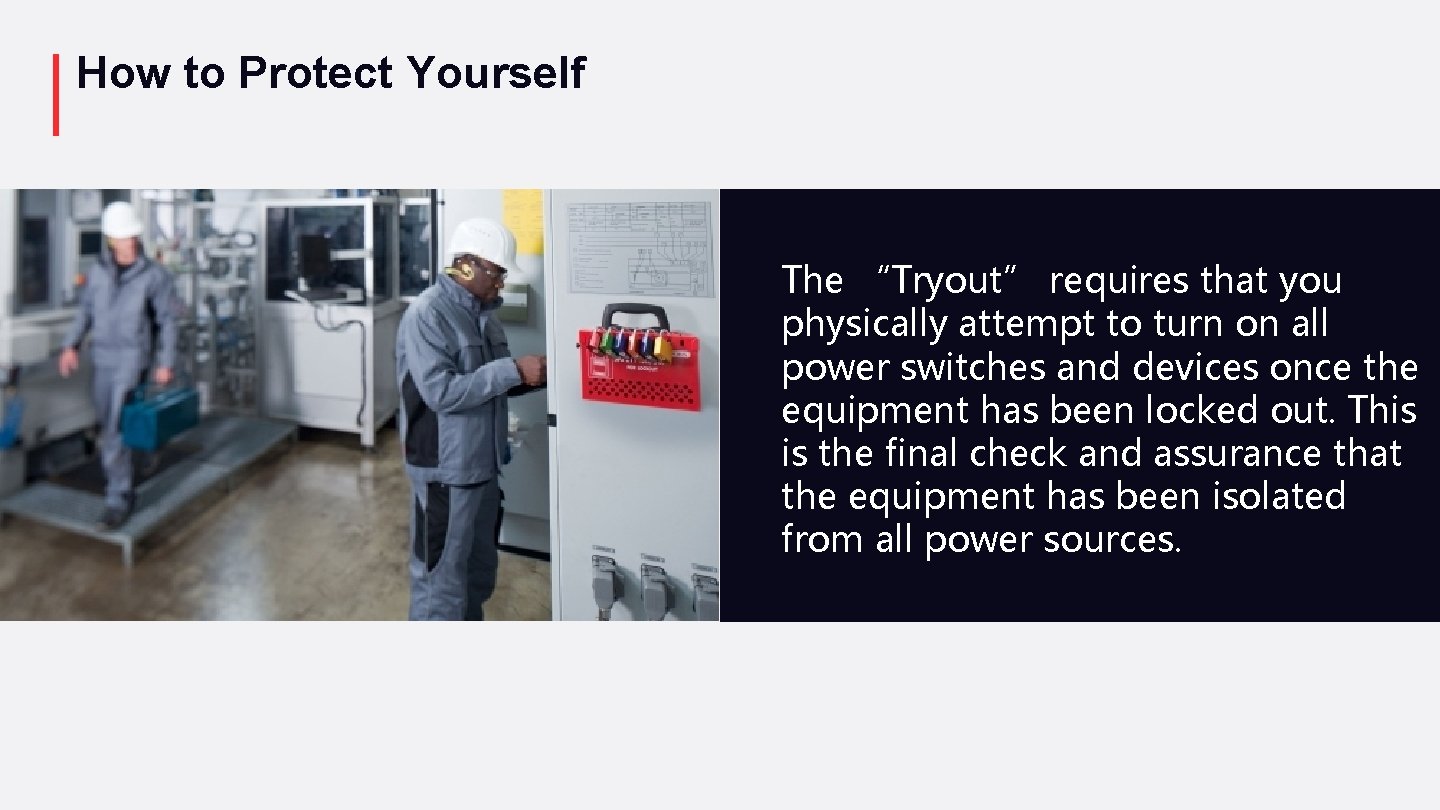
How to Protect Yourself The “Tryout” requires that you physically attempt to turn on all power switches and devices once the equipment has been locked out. This is the final check and assurance that the equipment has been isolated from all power sources.
How to Protect Yourself Once the equipment has been isolated and locked out no one should be able to start the equipment. They would not be able to do so until you have completed the necessary work and remove your personal locks from each power switch or device. This procedure is the Key to Your Safety when working on equipment.
Final Word Lockout / Tagout / Tryout requirements will always vary from one facility to the next. If you are unsure about any specific requirements, you should always ask for more information.