
Click anywhere to get started Electrical Safety Oil
- Slides: 9
Click anywhere to get started…
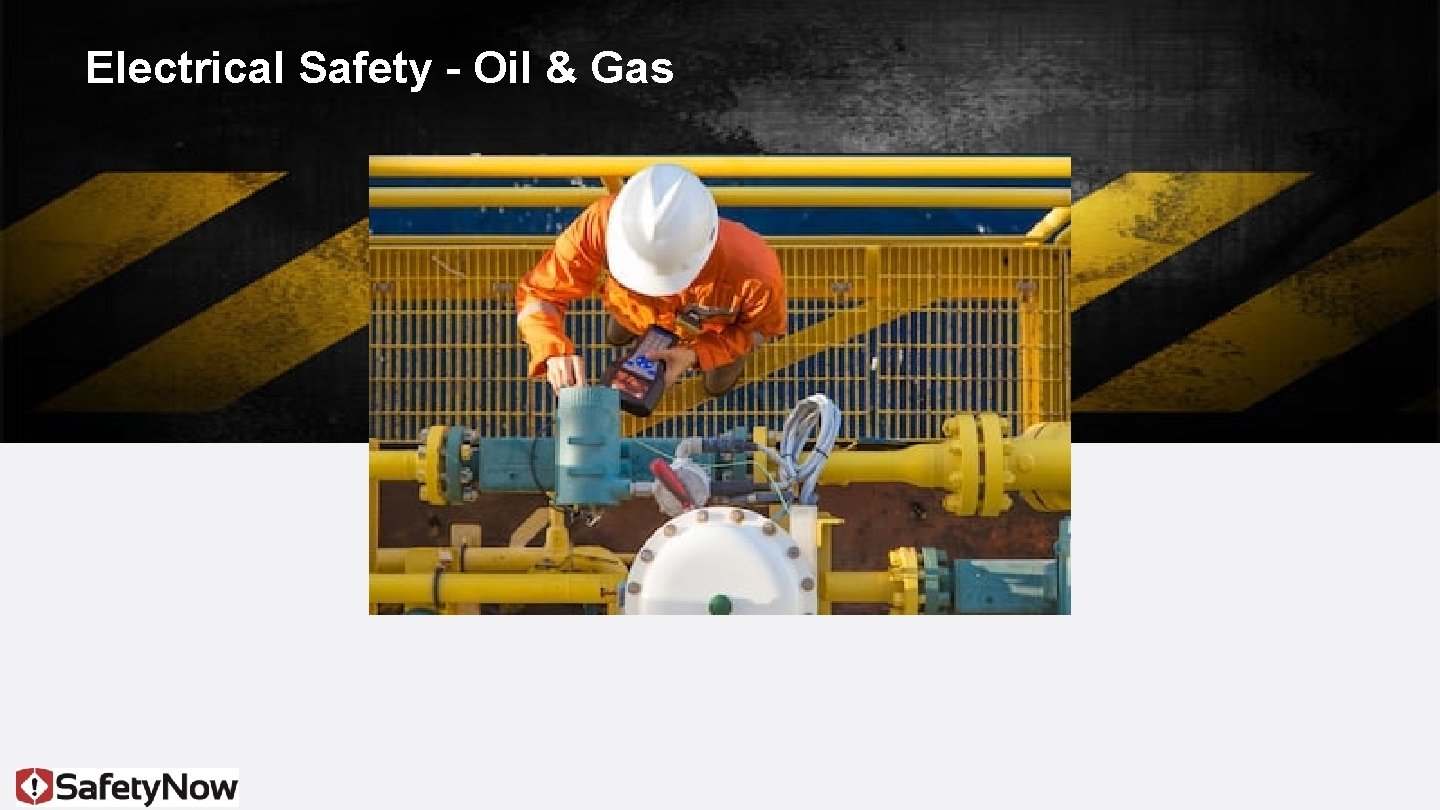
Electrical Safety - Oil & Gas
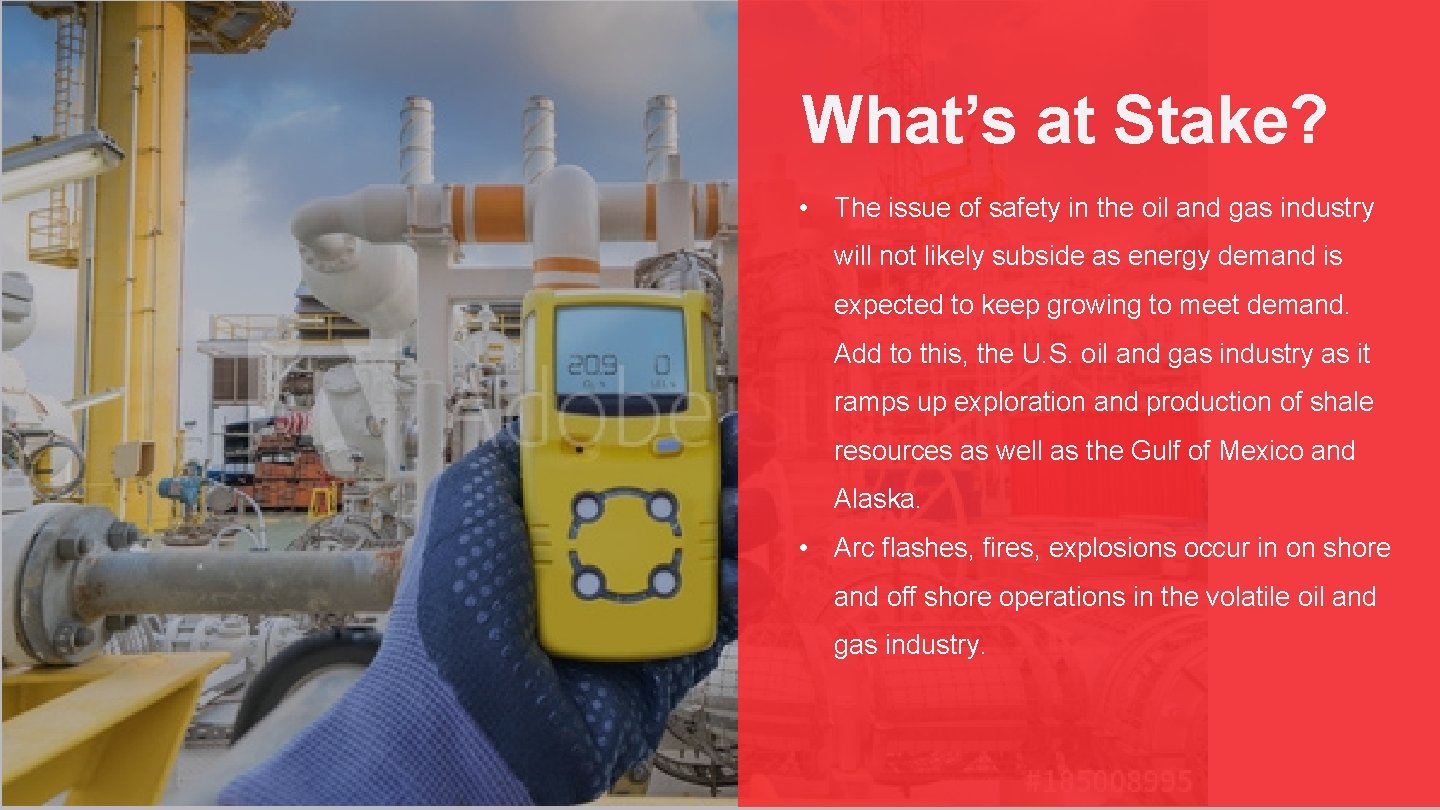
What’s at Stake? • The issue of safety in the oil and gas industry will not likely subside as energy demand is expected to keep growing to meet demand. Add to this, the U. S. oil and gas industry as it ramps up exploration and production of shale resources as well as the Gulf of Mexico and Alaska. • Arc flashes, fires, explosions occur in on shore and off shore operations in the volatile oil and gas industry.
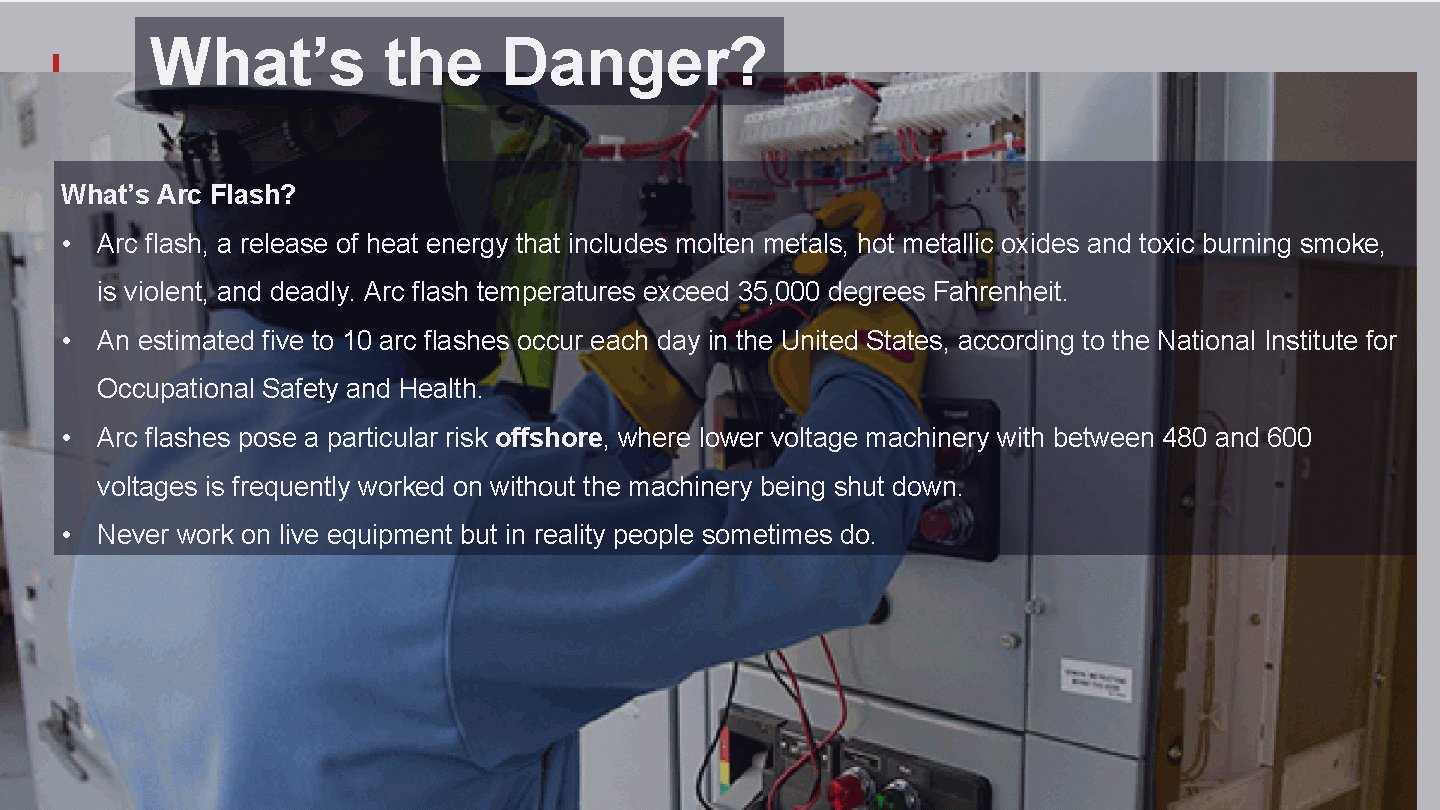
What’s the Danger? What’s Arc Flash? • Arc flash, a release of heat energy that includes molten metals, hot metallic oxides and toxic burning smoke, is violent, and deadly. Arc flash temperatures exceed 35, 000 degrees Fahrenheit. • An estimated five to 10 arc flashes occur each day in the United States, according to the National Institute for Occupational Safety and Health. • Arc flashes pose a particular risk offshore, where lower voltage machinery with between 480 and 600 voltages is frequently worked on without the machinery being shut down. • Never work on live equipment but in reality people sometimes do.
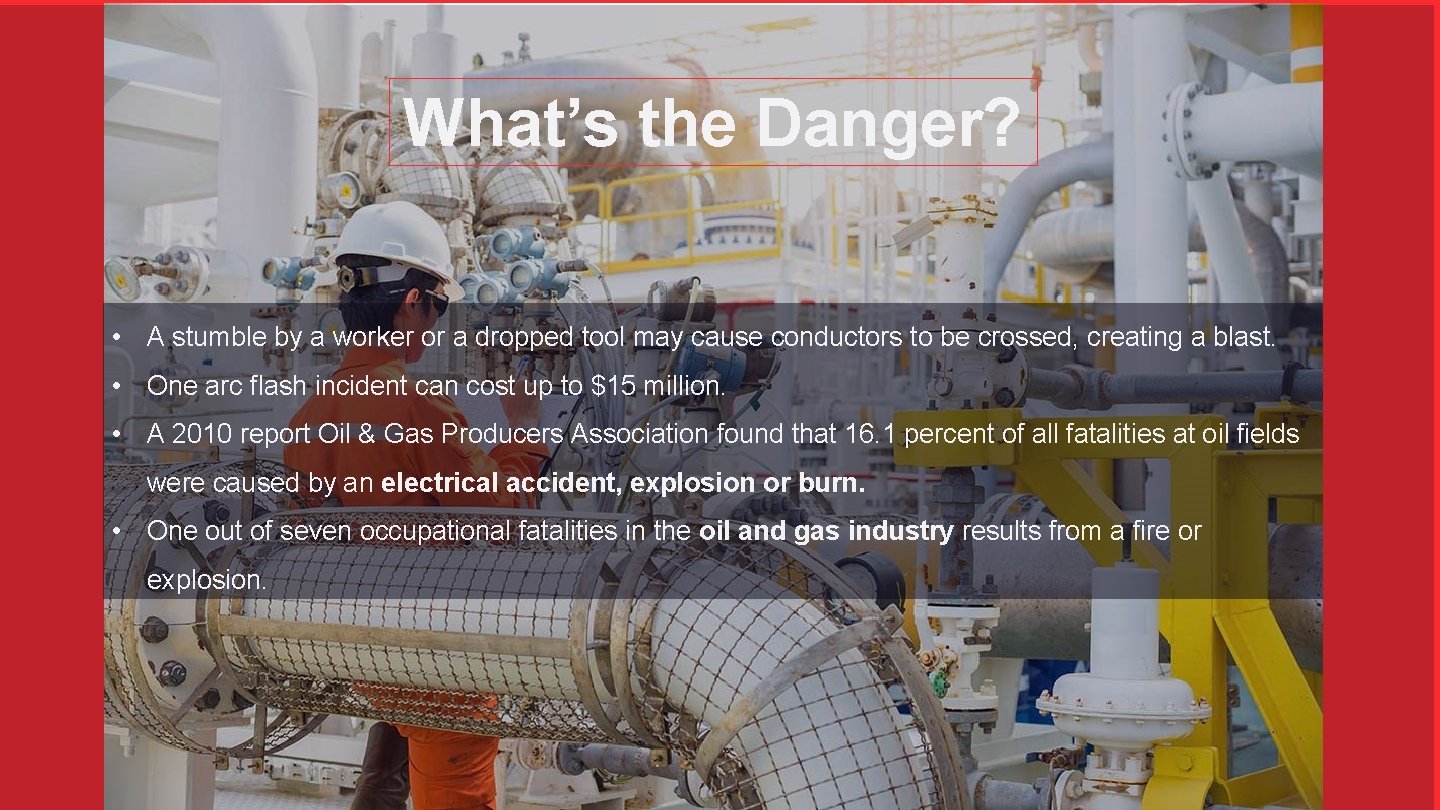
What’s the Danger? • A stumble by a worker or a dropped tool may cause conductors to be crossed, creating a blast. • One arc flash incident can cost up to $15 million. • A 2010 report Oil & Gas Producers Association found that 16. 1 percent of all fatalities at oil fields were caused by an electrical accident, explosion or burn. • One out of seven occupational fatalities in the oil and gas industry results from a fire or explosion.
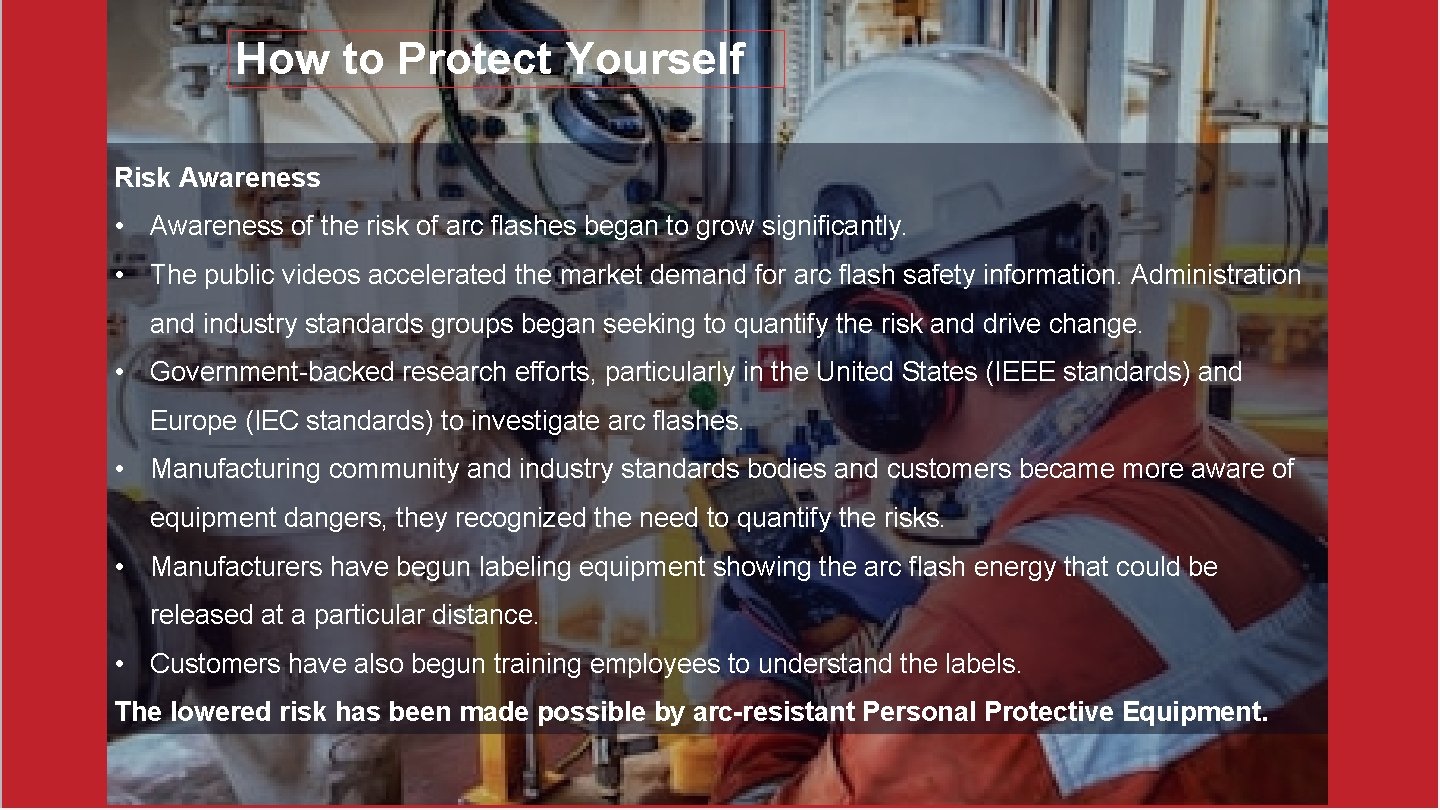
How to Protect Yourself Risk Awareness • Awareness of the risk of arc flashes began to grow significantly. • The public videos accelerated the market demand for arc flash safety information. Administration and industry standards groups began seeking to quantify the risk and drive change. • Government-backed research efforts, particularly in the United States (IEEE standards) and Europe (IEC standards) to investigate arc flashes. • Manufacturing community and industry standards bodies and customers became more aware of equipment dangers, they recognized the need to quantify the risks. • Manufacturers have begun labeling equipment showing the arc flash energy that could be released at a particular distance. • Customers have also begun training employees to understand the labels. The lowered risk has been made possible by arc-resistant Personal Protective Equipment.
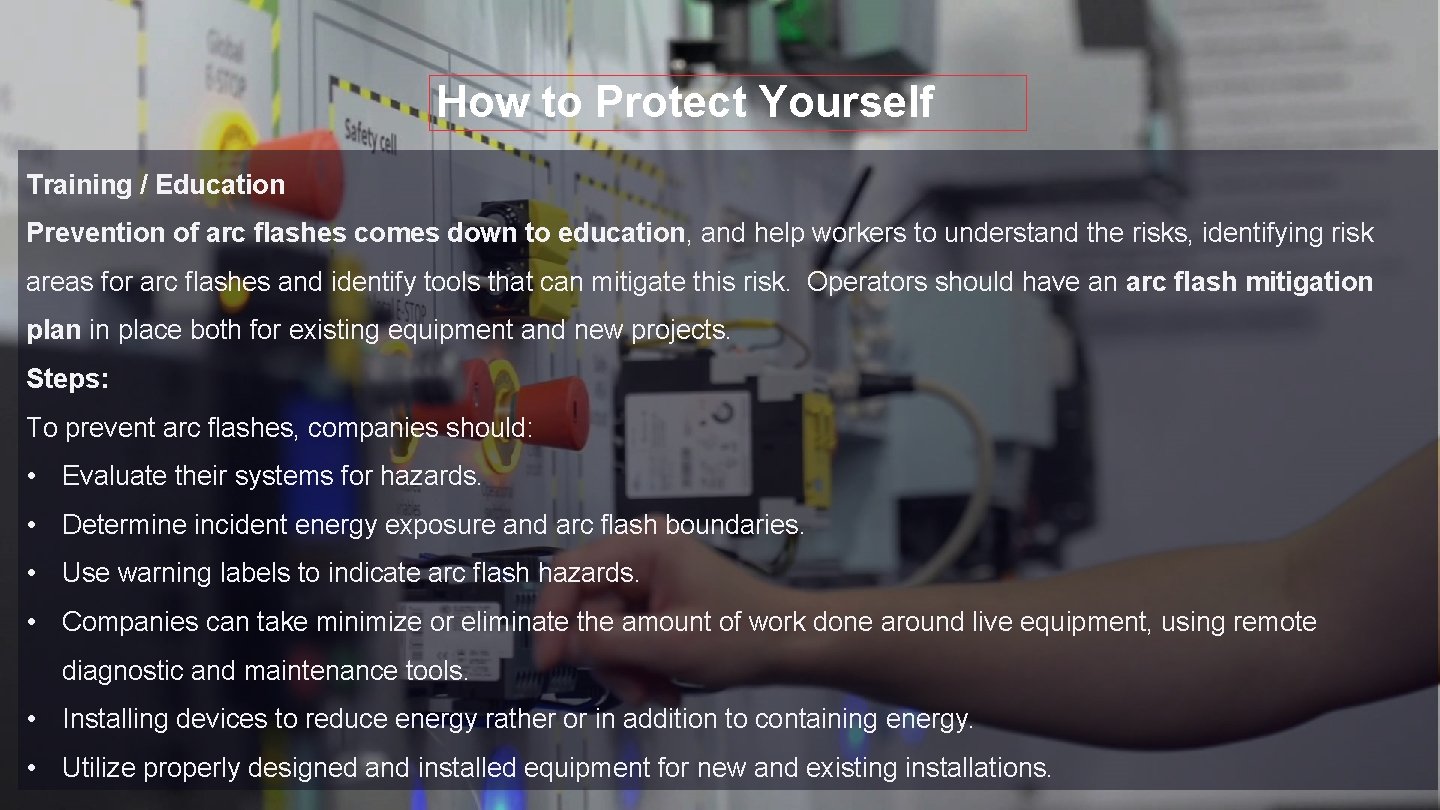
How to Protect Yourself Training / Education Prevention of arc flashes comes down to education, and help workers to understand the risks, identifying risk areas for arc flashes and identify tools that can mitigate this risk. Operators should have an arc flash mitigation plan in place both for existing equipment and new projects. Steps: To prevent arc flashes, companies should: • Evaluate their systems for hazards. • Determine incident energy exposure and arc flash boundaries. • Use warning labels to indicate arc flash hazards. • Companies can take minimize or eliminate the amount of work done around live equipment, using remote diagnostic and maintenance tools. • Installing devices to reduce energy rather or in addition to containing energy. • Utilize properly designed and installed equipment for new and existing installations.
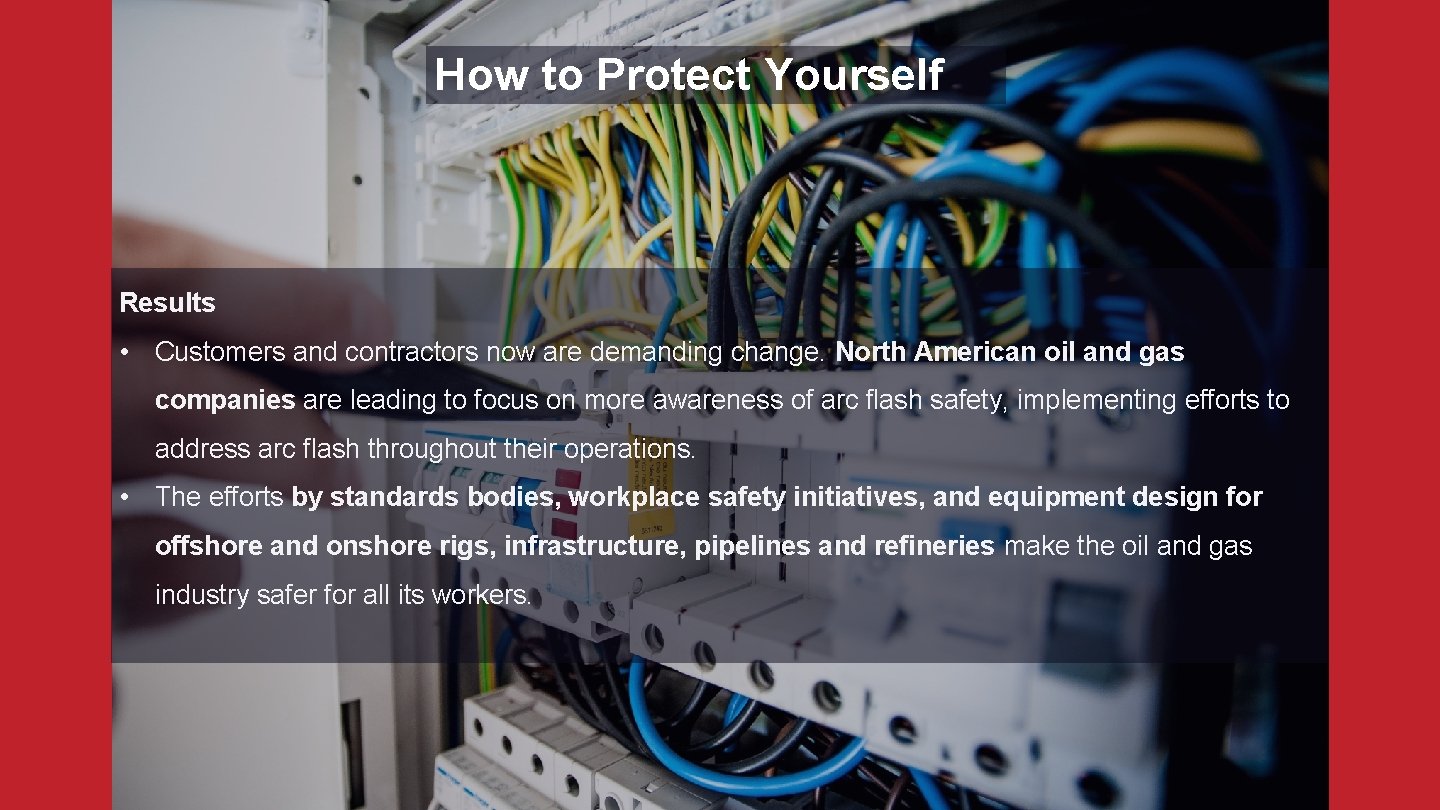
How to Protect Yourself Results • Customers and contractors now are demanding change. North American oil and gas companies are leading to focus on more awareness of arc flash safety, implementing efforts to address arc flash throughout their operations. • The efforts by standards bodies, workplace safety initiatives, and equipment design for offshore and onshore rigs, infrastructure, pipelines and refineries make the oil and gas industry safer for all its workers.
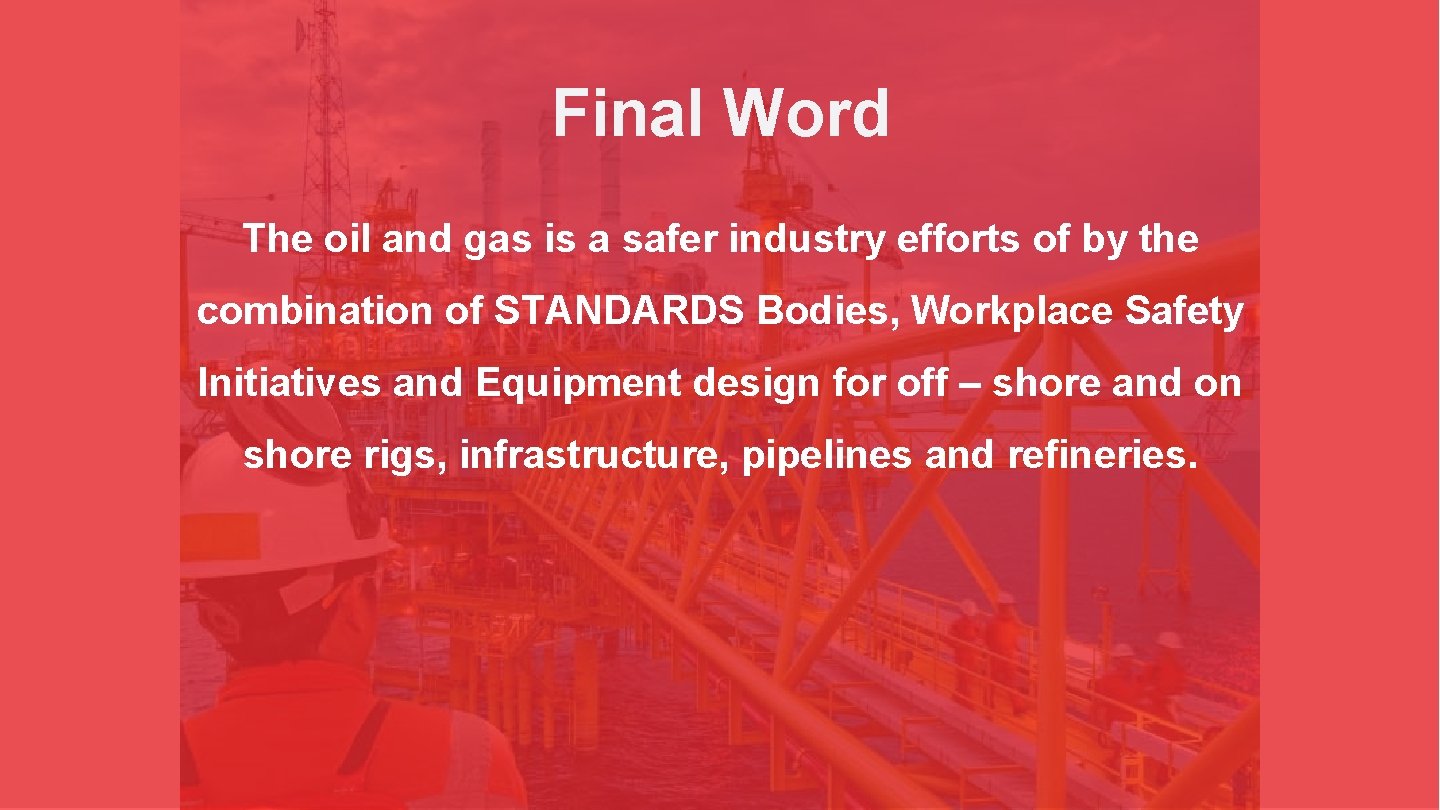
Final Word The oil and gas is a safer industry efforts of by the combination of STANDARDS Bodies, Workplace Safety Initiatives and Equipment design for off – shore and on shore rigs, infrastructure, pipelines and refineries.