
CLI Definitions Can We Speak the Same Language




- Slides: 20
CLI Definitions Can We Speak the Same Language? Update on the Peripheral Academic Research Consortium (PARC) Schuyler Jones, MD Duke University Medical Center
Schuyler Jones, MD Astra Zeneca – Research Grant Agency for Healthcare Quality and Research – Research Grant
Word about sponsorship n Graciously received grants from several industry partners n No honoraria are given n No profit or product outside of agreed upon definitions / potentially data elements / data dictionaries
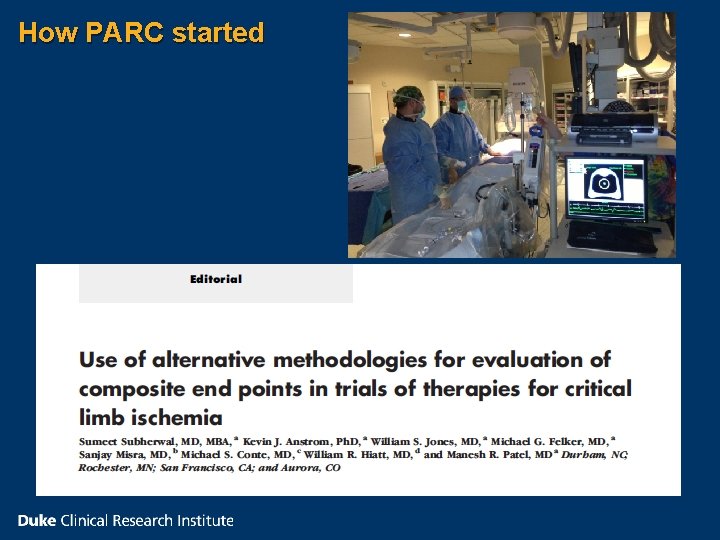
How PARC started
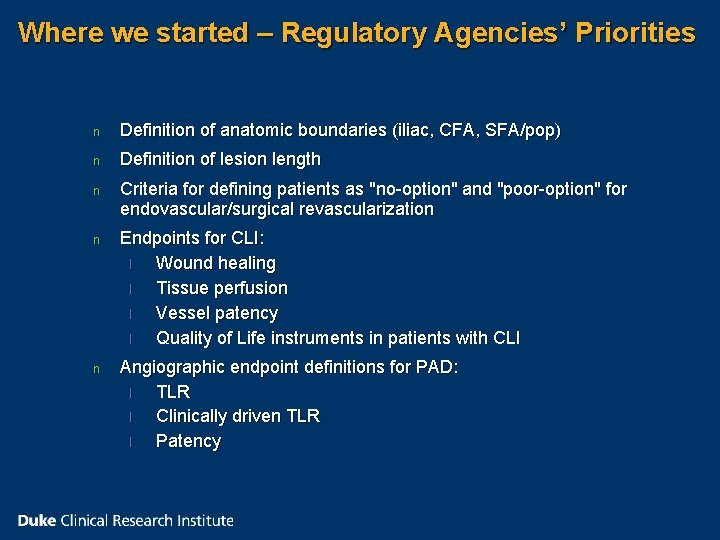
Where we started – Regulatory Agencies’ Priorities n Definition of anatomic boundaries (iliac, CFA, SFA/pop) n Definition of lesion length n Criteria for defining patients as "no-option" and "poor-option" for endovascular/surgical revascularization n Endpoints for CLI: l Wound healing l Tissue perfusion l Vessel patency l Quality of Life instruments in patients with CLI n Angiographic endpoint definitions for PAD: l TLR l Clinically driven TLR l Patency
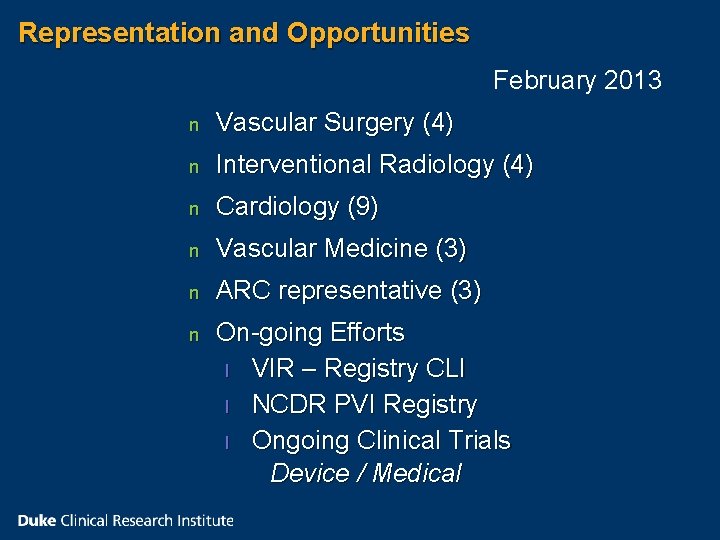
Representation and Opportunities February 2013 n Vascular Surgery (4) n Interventional Radiology (4) n Cardiology (9) n Vascular Medicine (3) n ARC representative (3) n On-going Efforts l VIR – Registry CLI l NCDR PVI Registry l Ongoing Clinical Trials Device / Medical
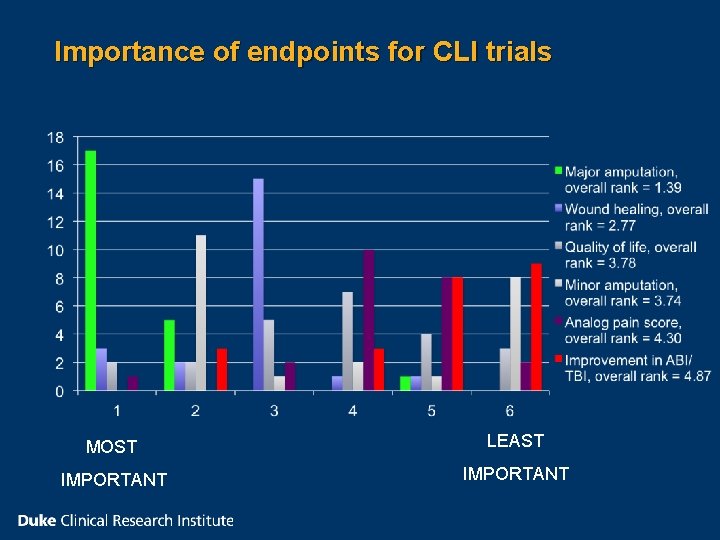
Importance of endpoints for CLI trials MOST LEAST IMPORTANT
Academic Attendees Michael Conte Donald Cutlip Nabil Dib Laura Findeiss William Hiatt Koji Ikeda Fumiaki Ikeno Michael Jaff Schuyler Jones Robert Lookstein Roxana Mehran Sanjay Misra Lars Norgren Manesh Patel Rahul Patel Kenneth Rosenfield Fadi Shamoun James Tcheng Thomas Tsai Pascal Vranckx Christopher J. White Hiroyoshi Yokoi FFDA Attendees PMDA Attendees Steven Brooks, MD Medical Officer, Office of Device Evaluation, Peripheral Vascular Device Branch Eriko Fukuda, Ph. D International Liaison Officer Kenneth Cavanaugh, Ph. D Branch Chief, Office of Device Evaluation, Peripheral Vascular Device Branch Masayuki Kawahara, MD Medical Reviewer Lisa Lim, Ph. D Scientific Reviewer/Biomedical Engineer Lindsay Pack Scientific Reviewer/Biomedical Engineer Kohei Takeshita, MS Reviewer
Rules of Engagement n We will have heated debates n We will ask for opinions n We will determine important areas for focus n We will NOT determine clinical trial designs n We will NOT determine the ideal endpoint for trials n End of Today we will agree upon set of definitions for PAD and identify areas of further work
Breakout Groups n Syndrome/Indications for Intervention n Anatomic Considerations n Definition of Procedural Success n Outcomes/Endpoints
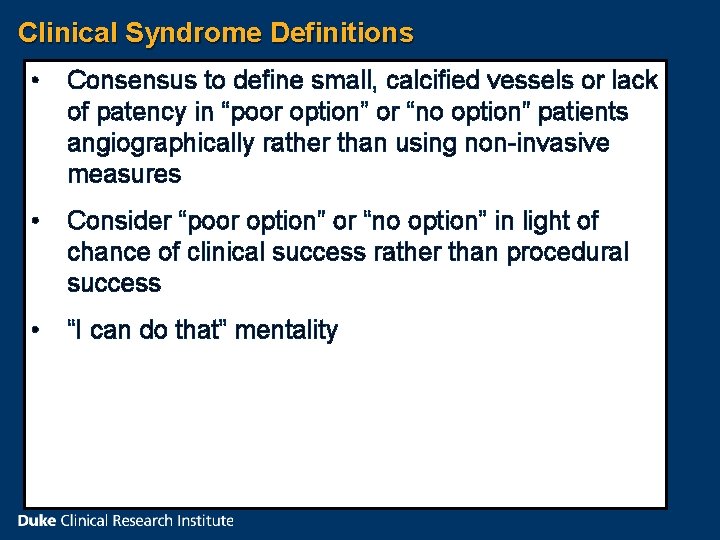
Clinical Syndrome Definitions • “Poor Option” Patients: Patients felt to have poor endovascular or Consensus to define small, calcified vessels or lack surgical options for revascularization defined as requiring prosthetic of patency in “poor option” or “no option” patients conduits for bypass or repeat bypass with at most 1 vessel below the angiographically rather than using non-invasive knee or poor surgical targets or severe vascular calcification. measures Factors to consider: • • Age. Consider “poor option” or “no option” in light of • Renal Failure chance of clinical success rather than procedural • No vessels below the knee vs. 1 vessel success • Infection • “No Option” Patients: Patients felt to have no surgical or “I can do that” mentality endovascular options for revascularization for critical limb ischemia, traditionally characterized by patients with severely calcified small vessels disease without any evidence arterial vessels below the knee.
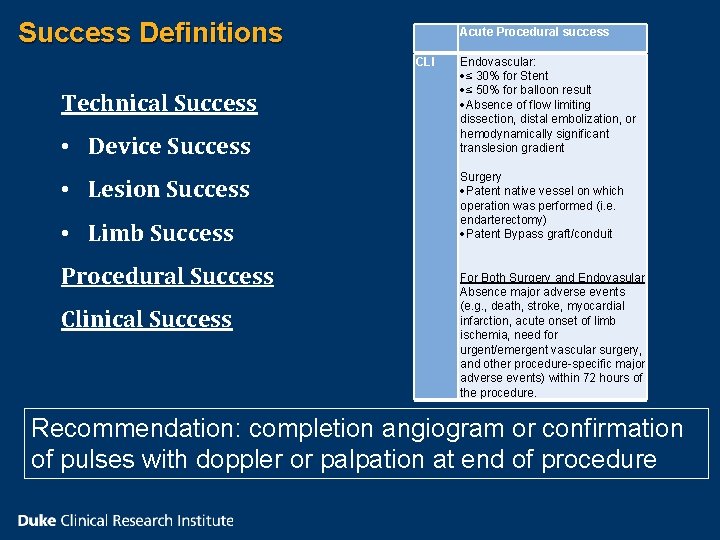
Success Definitions Technical Success • Device Success • Lesion Success • Limb Success Procedural Success Clinical Success Acute Procedural success CLI Endovascular: ≤ 30% for Stent ≤ 50% for balloon result Absence of flow limiting dissection, distal embolization, or hemodynamically significant translesion gradient Surgery Patent native vessel on which operation was performed (i. e. endarterectomy) Patent Bypass graft/conduit For Both Surgery and Endovasular Absence major adverse events (e. g. , death, stroke, myocardial infarction, acute onset of limb ischemia, need for urgent/emergent vascular surgery, and other procedure-specific major adverse events) within 72 hours of the procedure. Recommendation: completion angiogram or confirmation of pulses with doppler or palpation at end of procedure
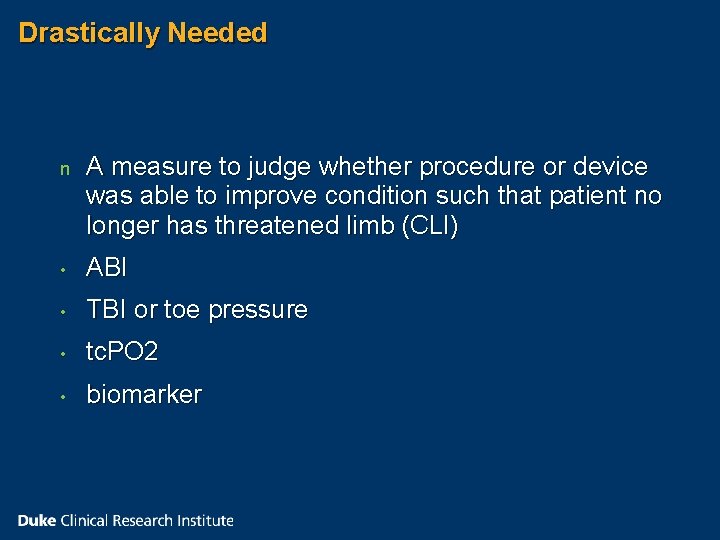
Drastically Needed n A measure to judge whether procedure or device was able to improve condition such that patient no longer has threatened limb (CLI) • ABI • TBI or toe pressure • tc. PO 2 • biomarker
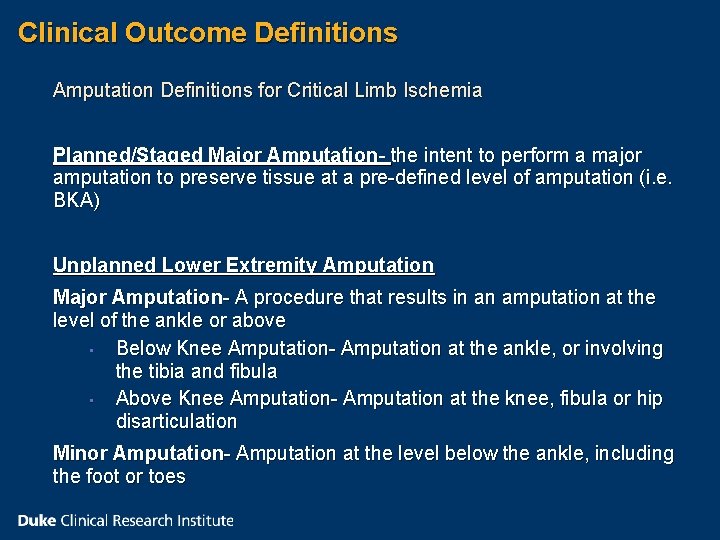
Clinical Outcome Definitions Amputation Definitions for Critical Limb Ischemia Planned/Staged Major Amputation- the intent to perform a major amputation to preserve tissue at a pre-defined level of amputation (i. e. BKA) Unplanned Lower Extremity Amputation Major Amputation- A procedure that results in an amputation at the level of the ankle or above • Below Knee Amputation- Amputation at the ankle, or involving the tibia and fibula • Above Knee Amputation- Amputation at the knee, fibula or hip disarticulation Minor Amputation- Amputation at the level below the ankle, including the foot or toes
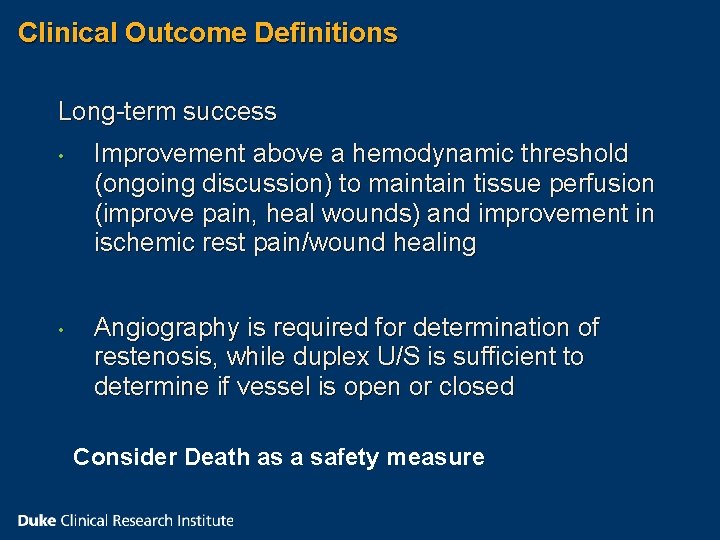
Clinical Outcome Definitions Long-term success • Improvement above a hemodynamic threshold (ongoing discussion) to maintain tissue perfusion (improve pain, heal wounds) and improvement in ischemic rest pain/wound healing • Angiography is required for determination of restenosis, while duplex U/S is sufficient to determine if vessel is open or closed Consider Death as a safety measure
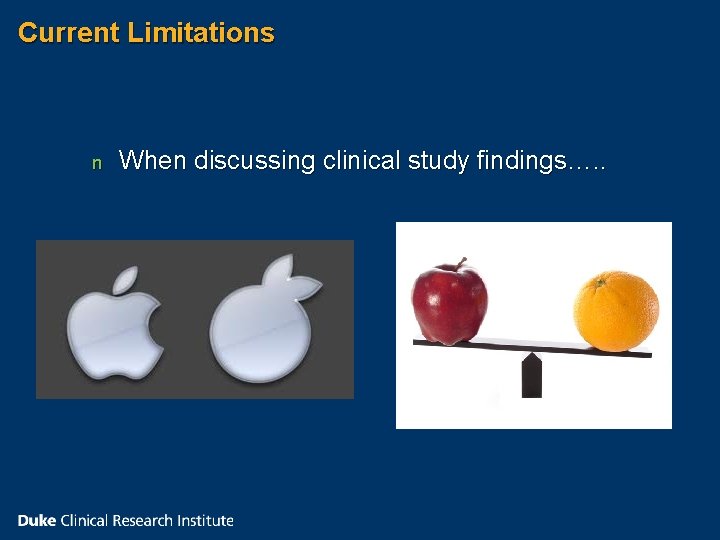
Current Limitations n When discussing clinical study findings…. .