
Cleveland Clinic Florida How to Create a PFO





- Slides: 35
Cleveland Clinic Florida How to Create a PFO Program Robert J. Cubeddu, MD Section Head, Structural Heart Disease Cleveland Clinic Florida Heart & Vascular Institute Cleveland Clinic Florida
PFO CLOSURE RECEIVES FDA APPROVAL
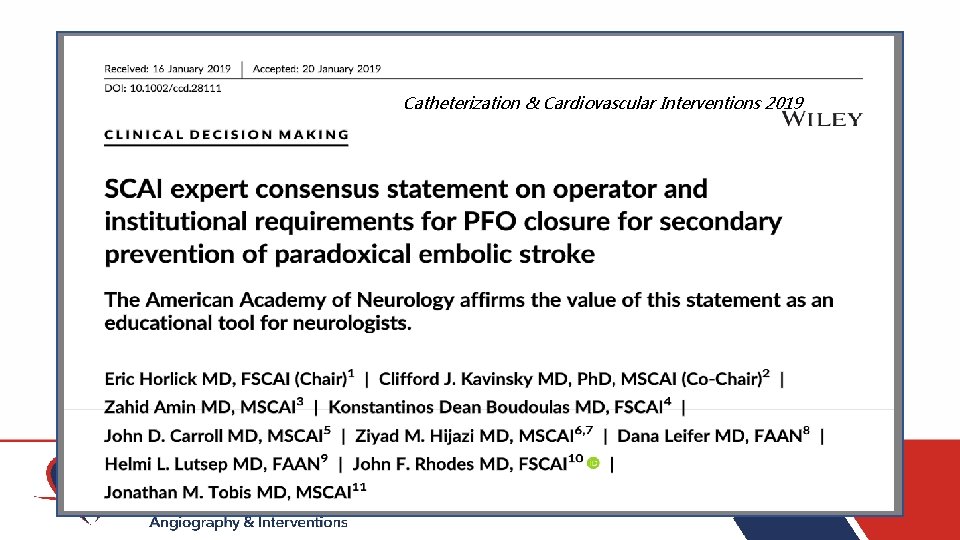
Catheterization & Cardiovascular Interventions 2019
Are you ready to become a PFO implanter and lead your hospital and team into a new frontier?
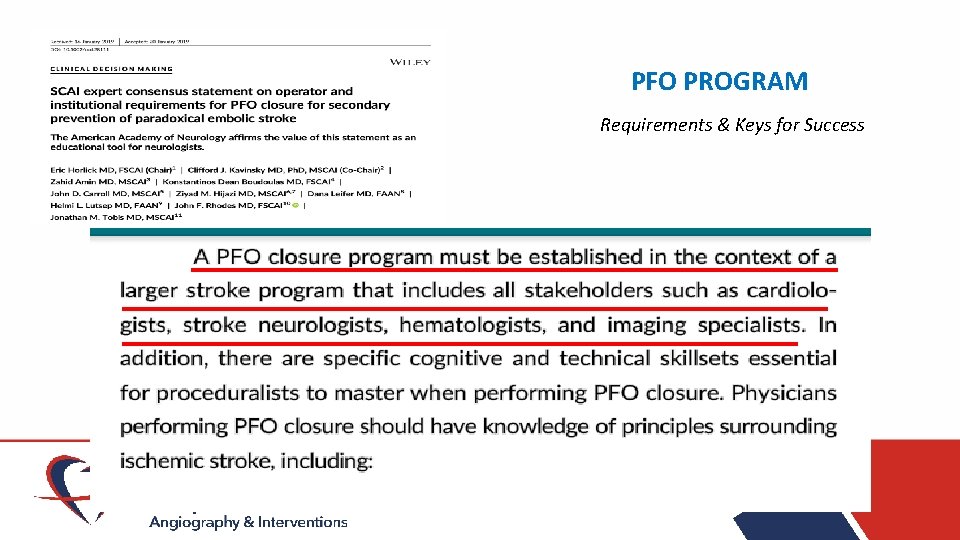
PFO PROGRAM Requirements & Keys for Success
PFO Program: Requirements & Tips for Success • A PFO program should be institutional in nature, with the assessment and therapy delivered across multiple disciplines. • It is expected that physicians will operate within the context of a MDT to optimize patient selection and clinical benefit. • “Patient centered care” should be the guiding principal
I. Get to know the data …
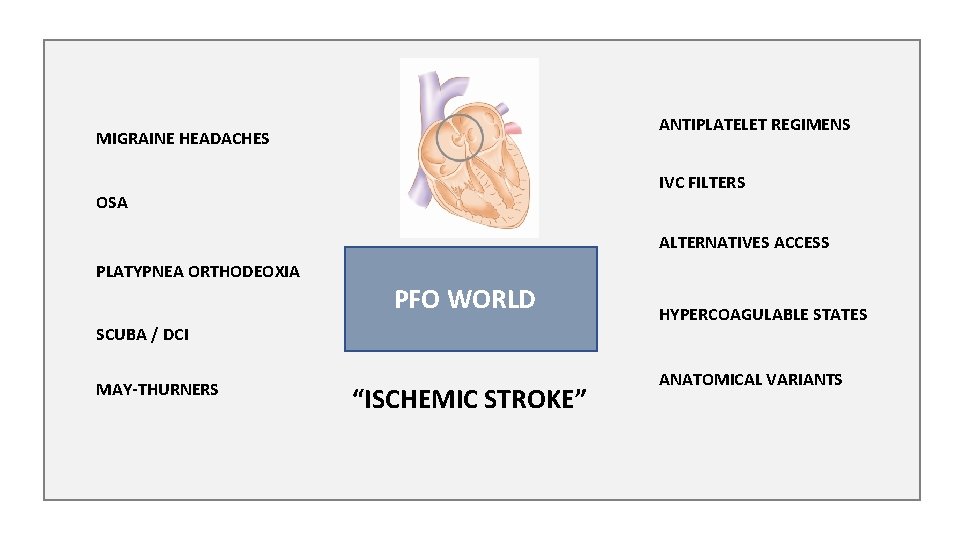
ANTIPLATELET REGIMENS MIGRAINE HEADACHES IVC FILTERS OSA ALTERNATIVES ACCESS PLATYPNEA ORTHODEOXIA PFO WORLD SCUBA / DCI MAY-THURNERS “ISCHEMIC STROKE” HYPERCOAGULABLE STATES ANATOMICAL VARIANTS
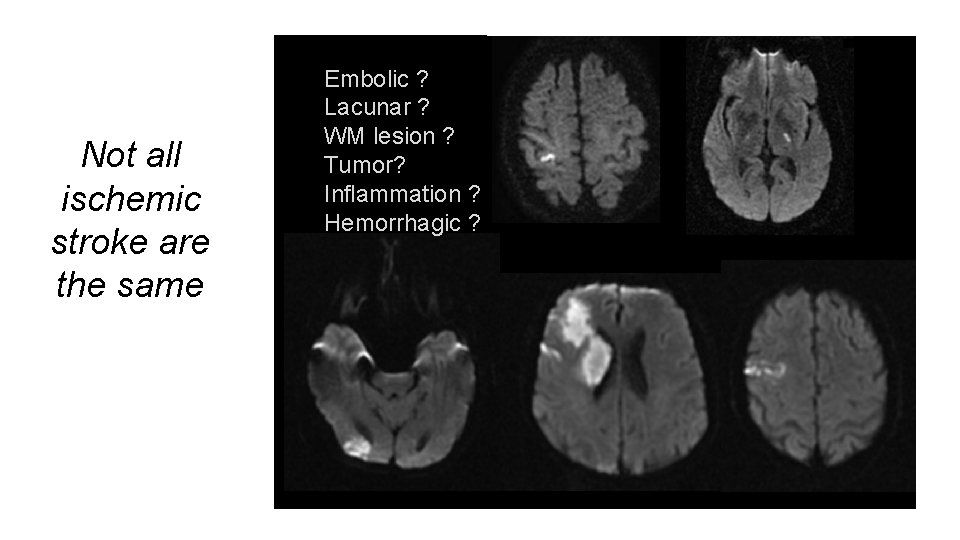
Not all ischemic stroke are the same Embolic ? Lacunar ? WM lesion ? Tumor? Inflammation ? Hemorrhagic ?
Ro. Pe Score
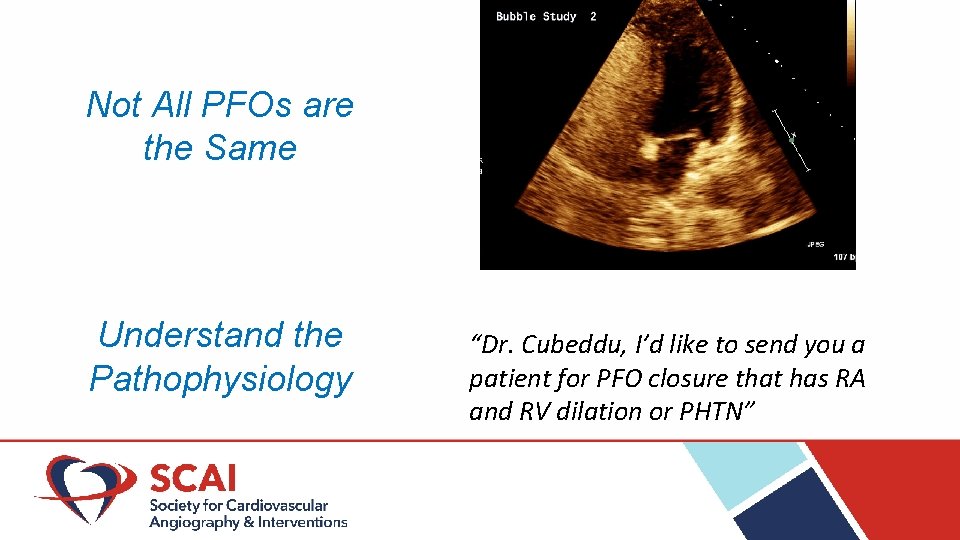
Not All PFOs are the Same Understand the Pathophysiology “Dr. Cubeddu, I’d like to send you a patient for PFO closure that has RA and RV dilation or PHTN”
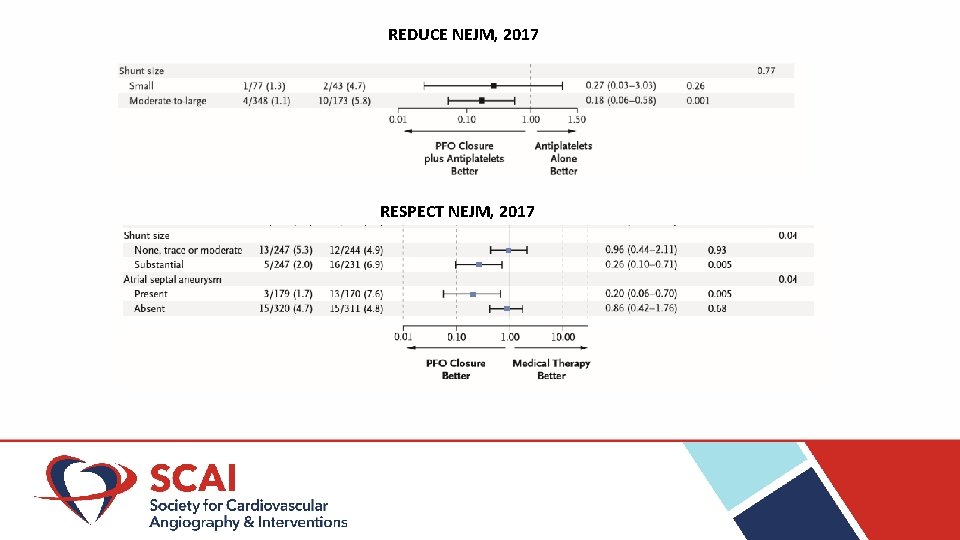
REDUCE NEJM, 2017 RESPECT NEJM, 2017
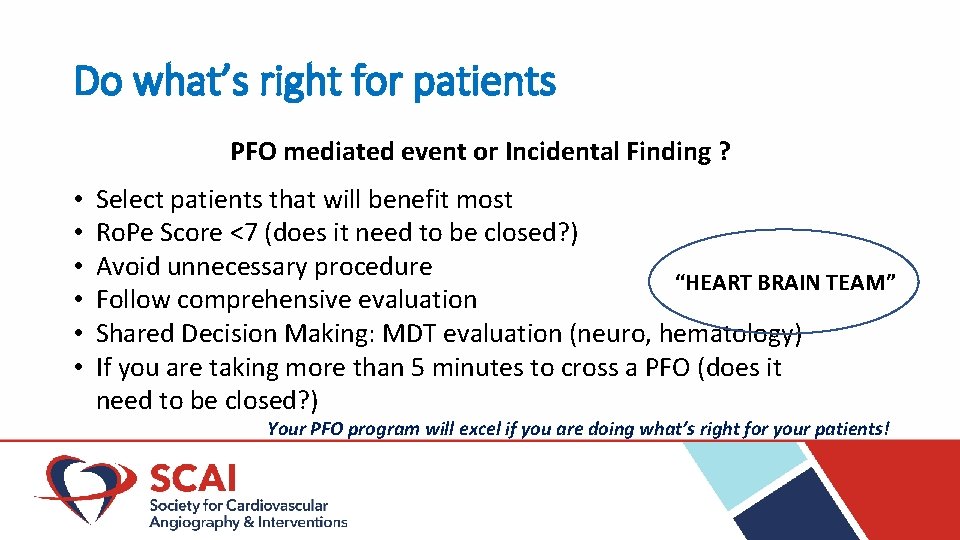
Do what’s right for patients PFO mediated event or Incidental Finding ? • • • Select patients that will benefit most Ro. Pe Score <7 (does it need to be closed? ) Avoid unnecessary procedure “HEART BRAIN TEAM” Follow comprehensive evaluation Shared Decision Making: MDT evaluation (neuro, hematology) If you are taking more than 5 minutes to cross a PFO (does it need to be closed? ) Your PFO program will excel if you are doing what’s right for your patients!
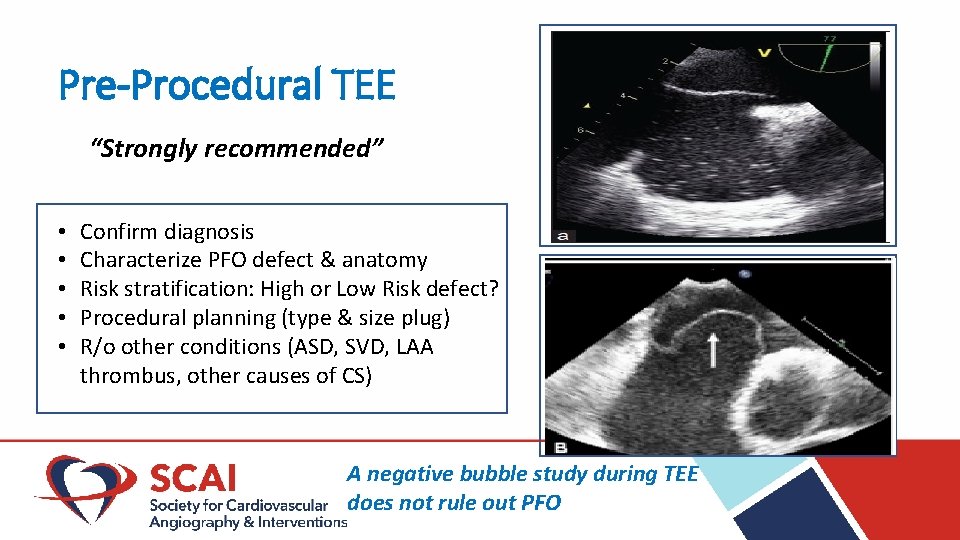
Pre-Procedural TEE “Strongly recommended” • • • Confirm diagnosis Characterize PFO defect & anatomy Risk stratification: High or Low Risk defect? Procedural planning (type & size plug) R/o other conditions (ASD, SVD, LAA thrombus, other causes of CS) A negative bubble study during TEE does not rule out PFO
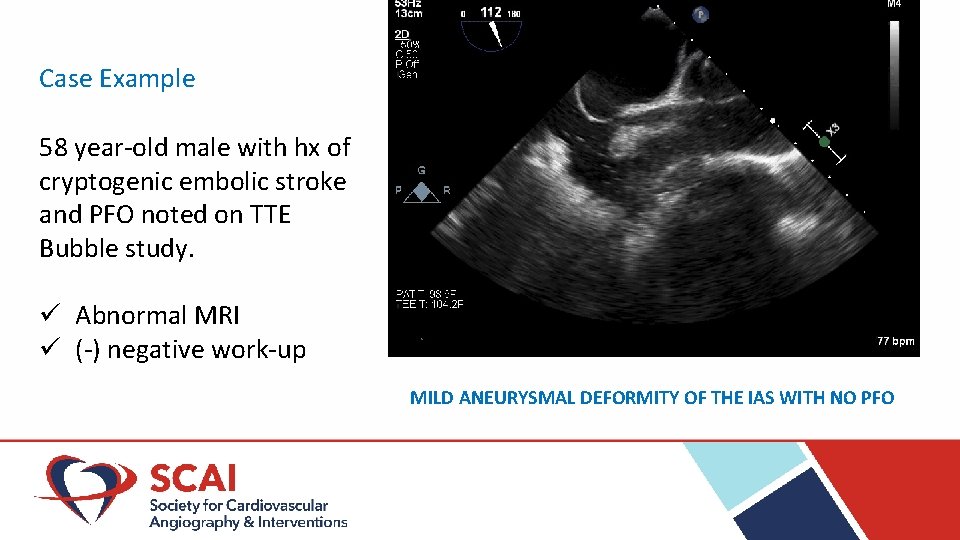
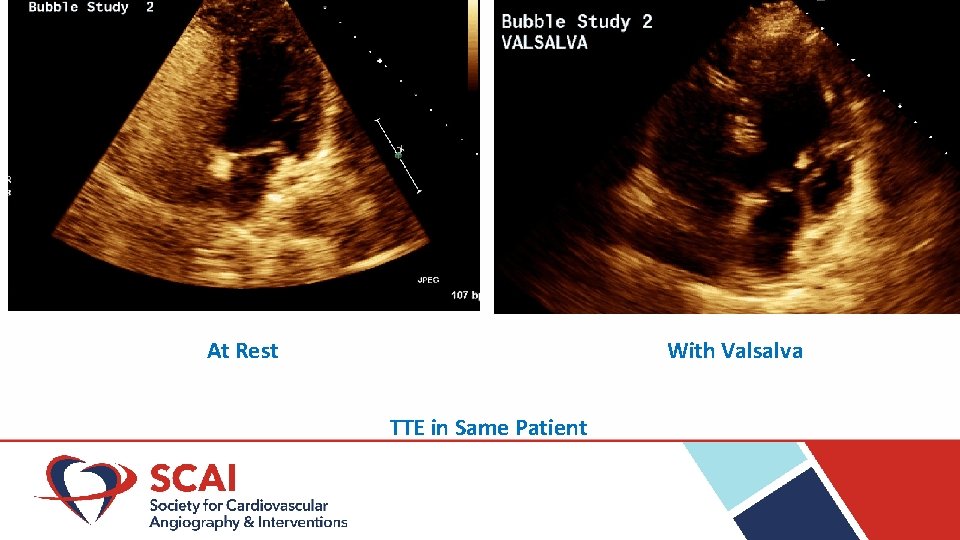
Case Example 58 year-old male with hx of cryptogenic embolic stroke and PFO noted on TTE Bubble study. ü Abnormal MRI ü (-) negative work-up MILD ANEURYSMAL DEFORMITY OF THE IAS WITH NO PFO
At Rest With Valsalva TTE in Same Patient
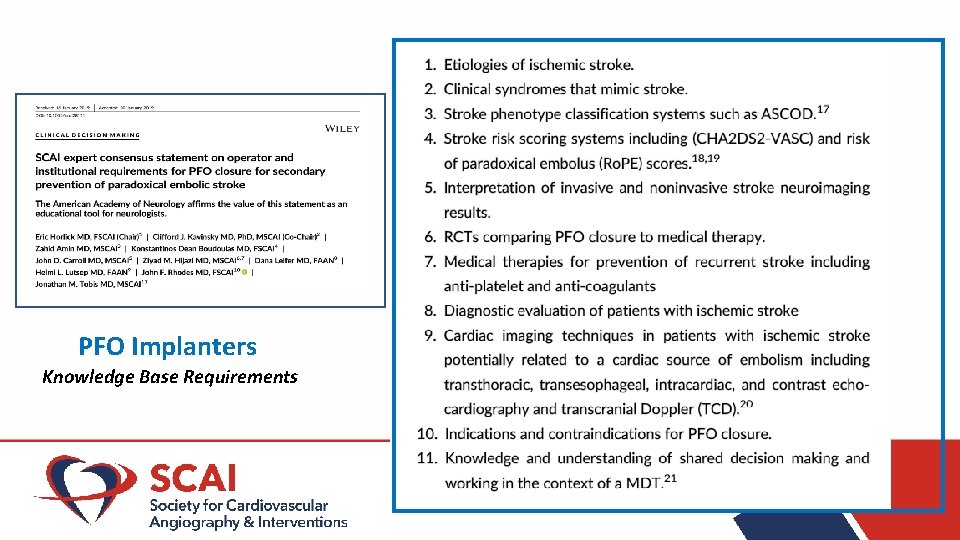
PFO Implanters Knowledge Base Requirements
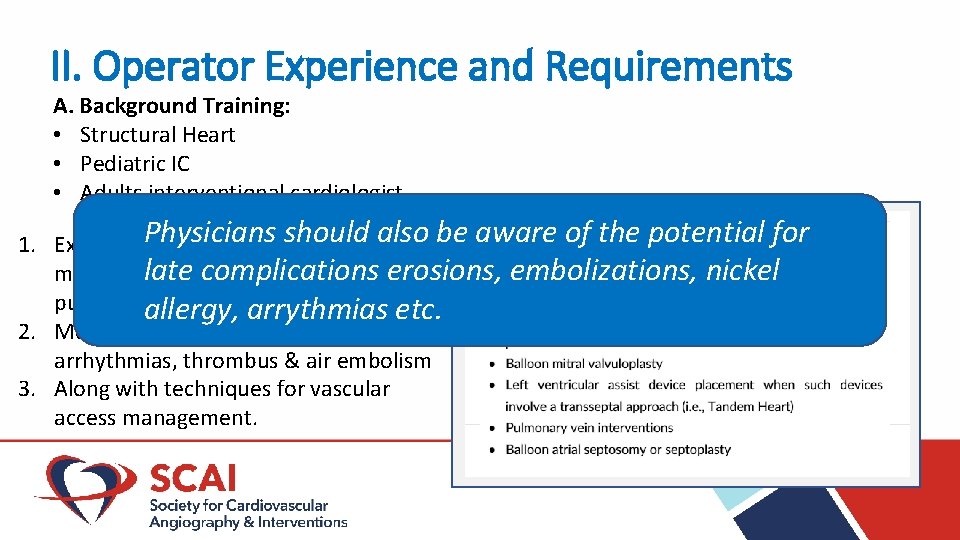
II. Operator Experience and Requirements A. Background Training: • Structural Heart • Pediatric IC • Adults interventional cardiologist should also be aware of the potential for 1. Expertise. Physicians in catheter, wires and sheath lateincomplications manipulation the RA, LA and erosions, embolizations, nickel pulmonary veins. arrythmias etc. allergy, 2. Meticulous techniques to avoid arrhythmias, thrombus & air embolism 3. Along with techniques for vascular access management.
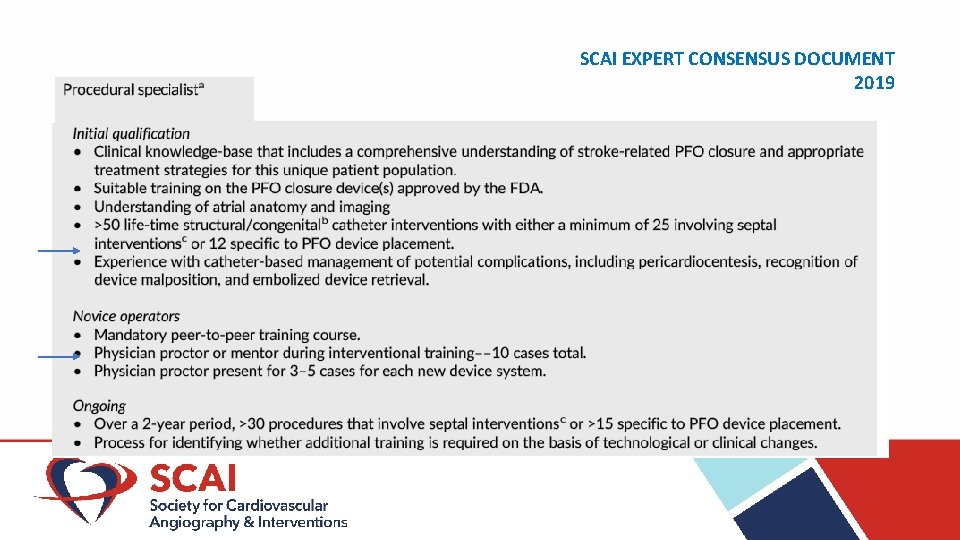
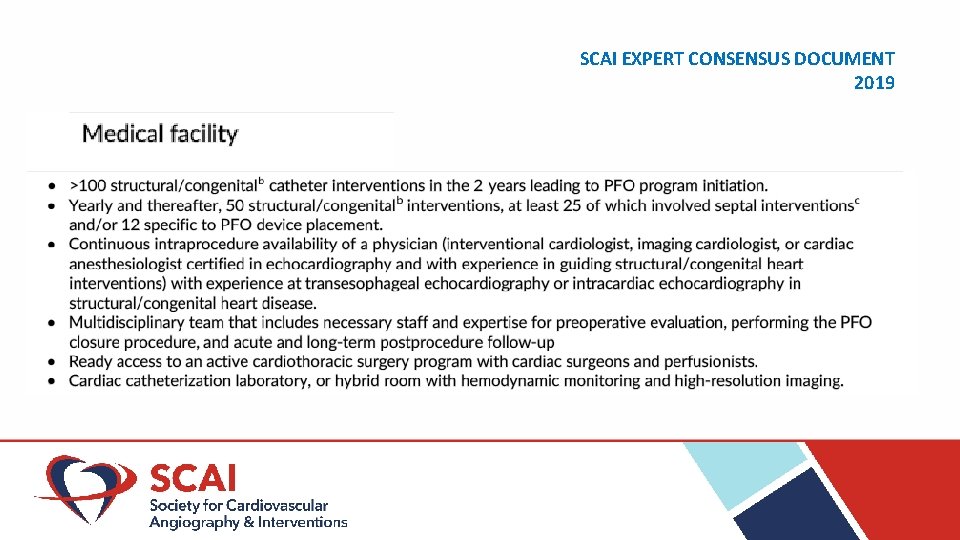
SCAI EXPERT CONSENSUS DOCUMENT 2019
SCAI EXPERT CONSENSUS DOCUMENT 2019
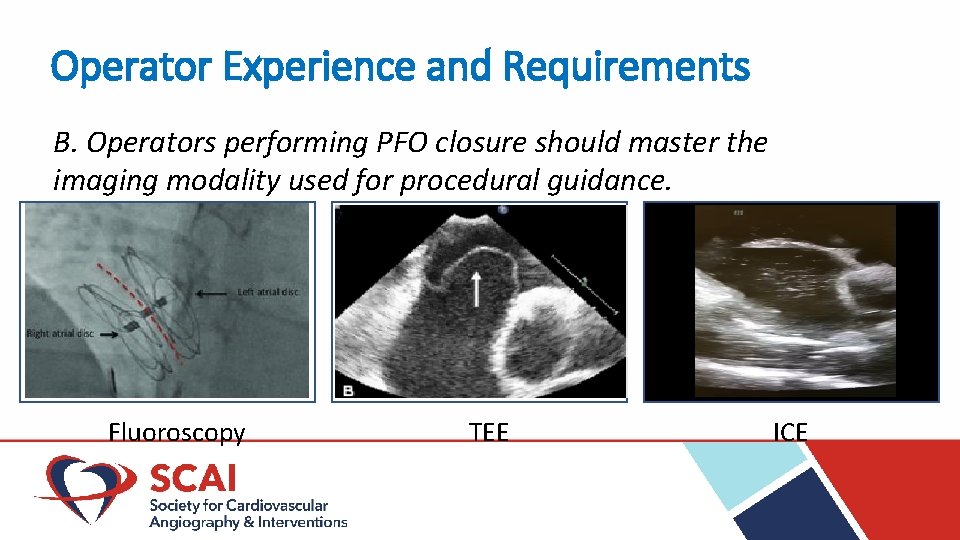
Operator Experience and Requirements B. Operators performing PFO closure should master the imaging modality used for procedural guidance. Fluoroscopy TEE ICE
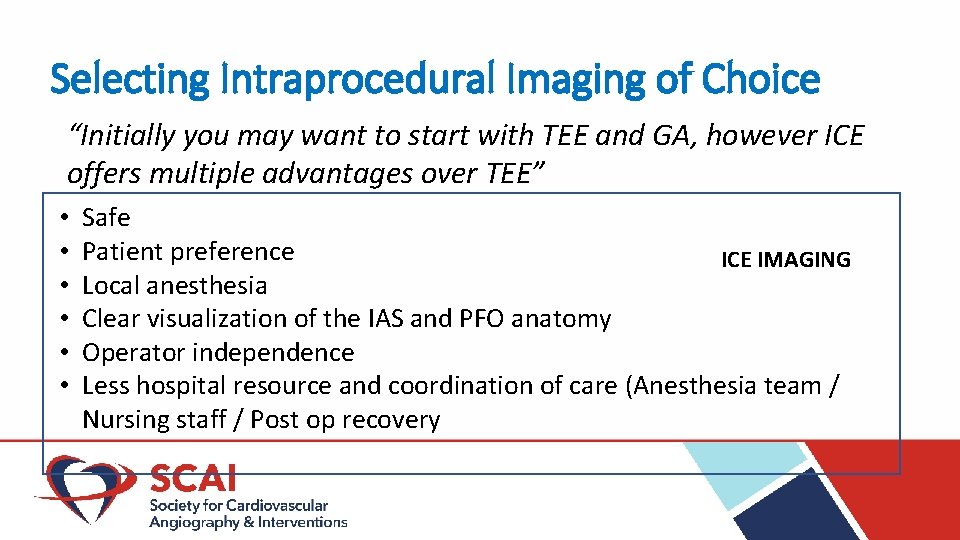
Selecting Intraprocedural Imaging of Choice “Initially you may want to start with TEE and GA, however ICE offers multiple advantages over TEE” • • • Safe Patient preference ICE IMAGING Local anesthesia Clear visualization of the IAS and PFO anatomy Operator independence Less hospital resource and coordination of care (Anesthesia team / Nursing staff / Post op recovery
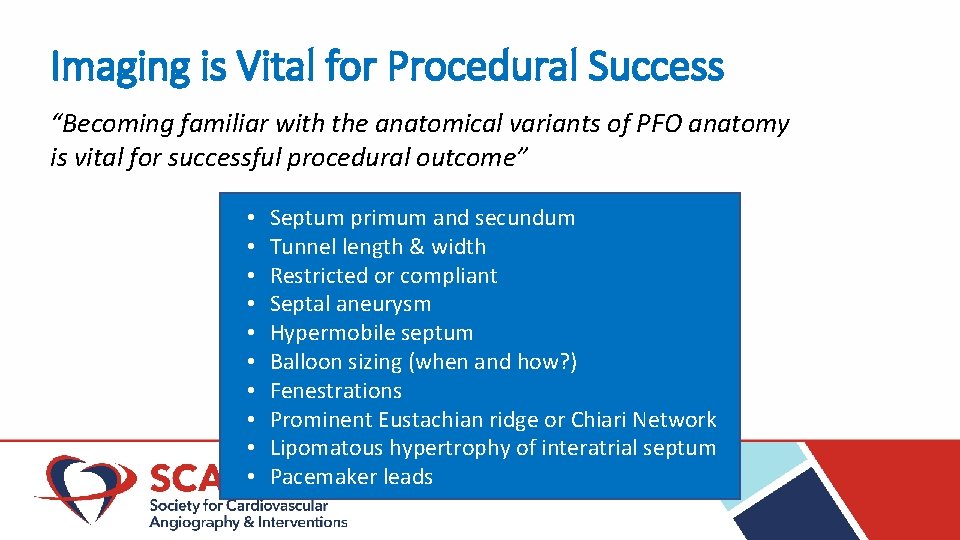
Imaging is Vital for Procedural Success “Becoming familiar with the anatomical variants of PFO anatomy is vital for successful procedural outcome” • • • Septum primum and secundum Tunnel length & width Restricted or compliant Septal aneurysm Hypermobile septum Balloon sizing (when and how? ) Fenestrations Prominent Eustachian ridge or Chiari Network Lipomatous hypertrophy of interatrial septum Pacemaker leads
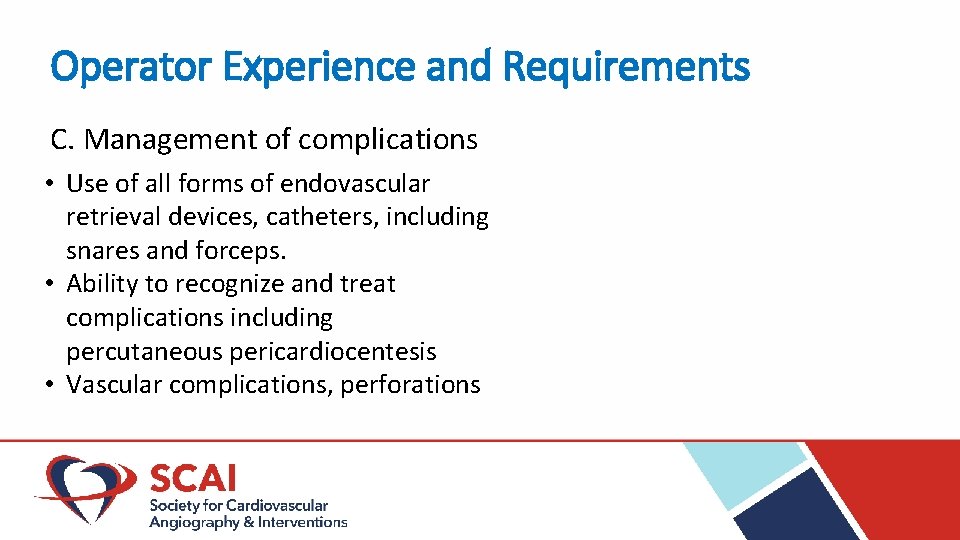
Operator Experience and Requirements C. Management of complications • Use of all forms of endovascular retrieval devices, catheters, including snares and forceps. • Ability to recognize and treat complications including percutaneous pericardiocentesis • Vascular complications, perforations
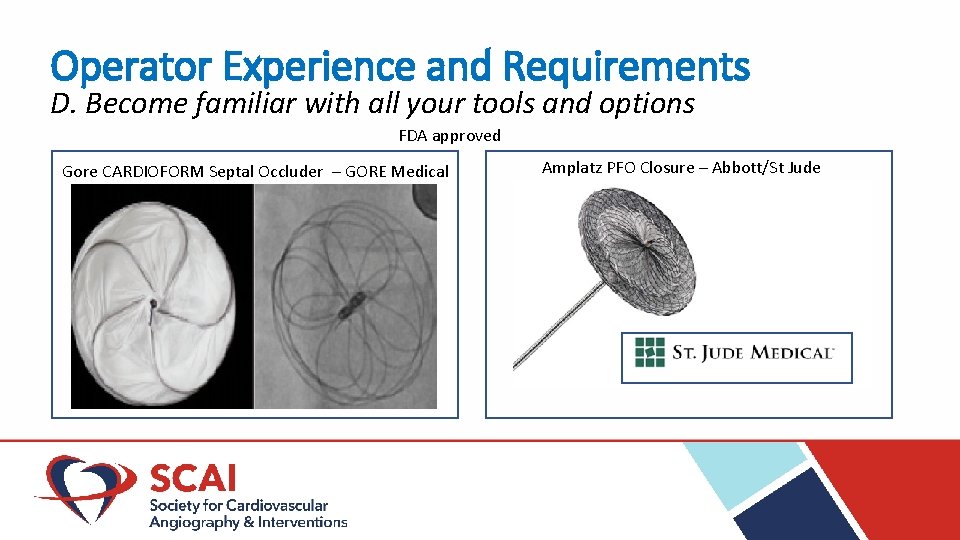
Operator Experience and Requirements D. Become familiar with all your tools and options FDA approved Gore CARDIOFORM Septal Occluder – GORE Medical Amplatz PFO Closure – Abbott/St Jude
III. Recognize your limitations • • ICE vs TEE Complex anatomy Alternate access (ie. jugular or transhepatic) Residual PFO shunt requiring 2 nd closure device. Proctored support Don’t be afraid to refer out Avoid complications early on
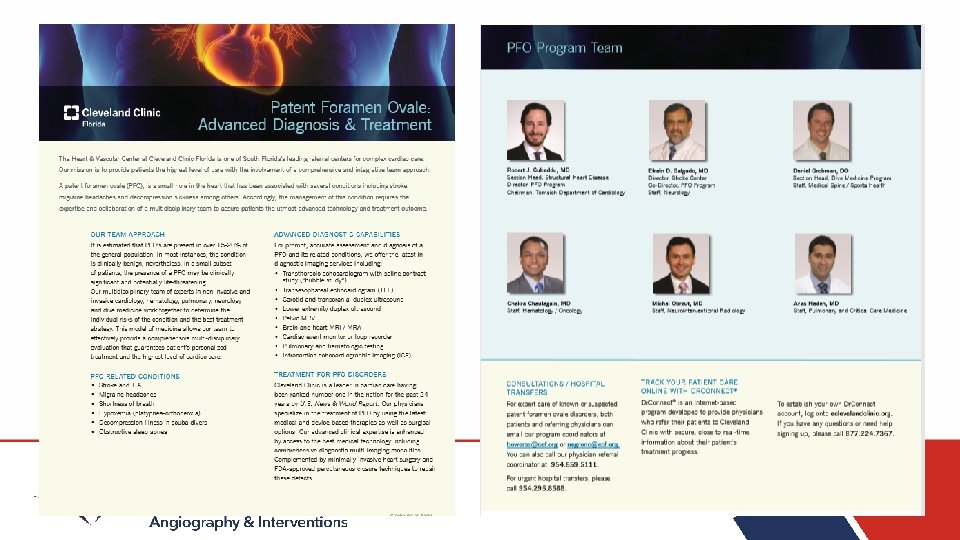
IV. Identify your team and build it “Should include Expertise in other disciplines”
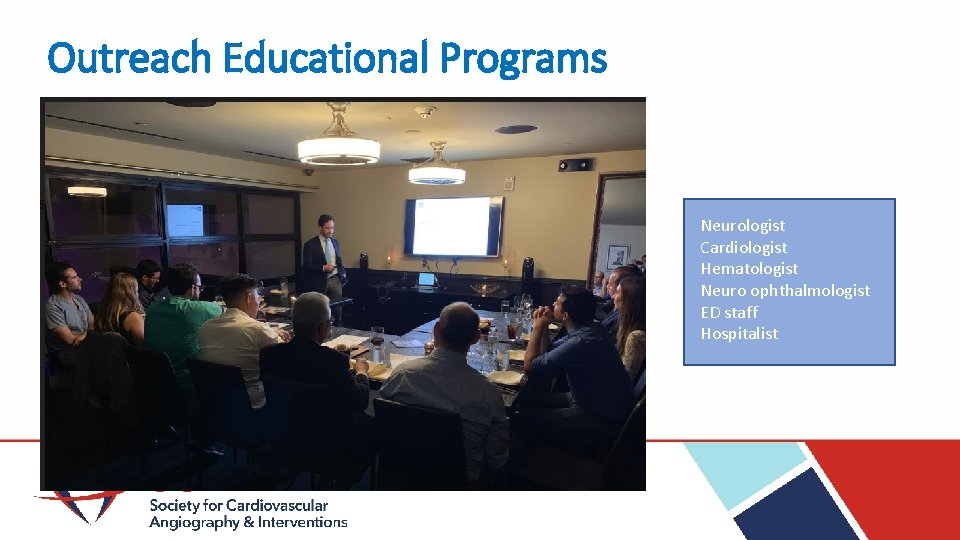
Outreach Educational Programs Neurologist Cardiologist Hematologist Neuro ophthalmologist ED staff Hospitalist
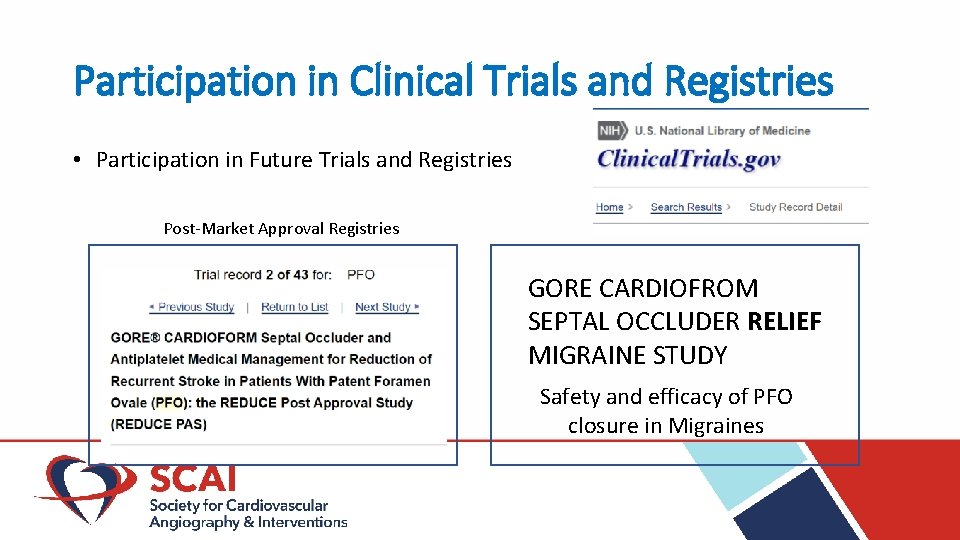
Participation in Clinical Trials and Registries • Participation in Future Trials and Registries Post-Market Approval Registries GORE CARDIOFROM SEPTAL OCCLUDER RELIEF MIGRAINE STUDY Safety and efficacy of PFO closure in Migraines
Conclusions • Read consensus document (SCAI 2019) • Understand the needs and demands of your hospital system • Are you ready to focus and devote time / effort? • Become familiar with the data (EBM) and tools (ICE) • Identify your team (neurology partner) • Start with easiest case • Avoid complications early on • Engage in marketing & outreach awareness programs
Cleveland Clinic Florida Thank You