
Cleidoic Amniotic Egg Amazing Life Support System I
- Slides: 17
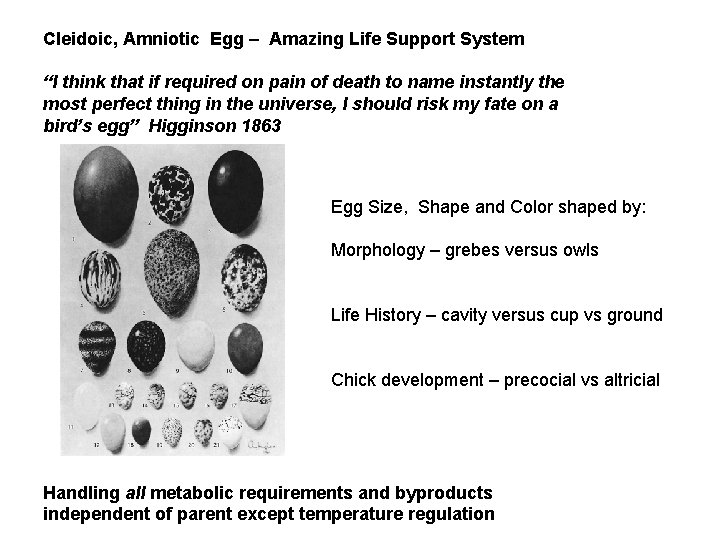
Cleidoic, Amniotic Egg – Amazing Life Support System “I think that if required on pain of death to name instantly the most perfect thing in the universe, I should risk my fate on a bird’s egg” Higginson 1863 Egg Size, Shape and Color shaped by: Morphology – grebes versus owls Life History – cavity versus cup vs ground Chick development – precocial vs altricial Handling all metabolic requirements and byproducts independent of parent except temperature regulation
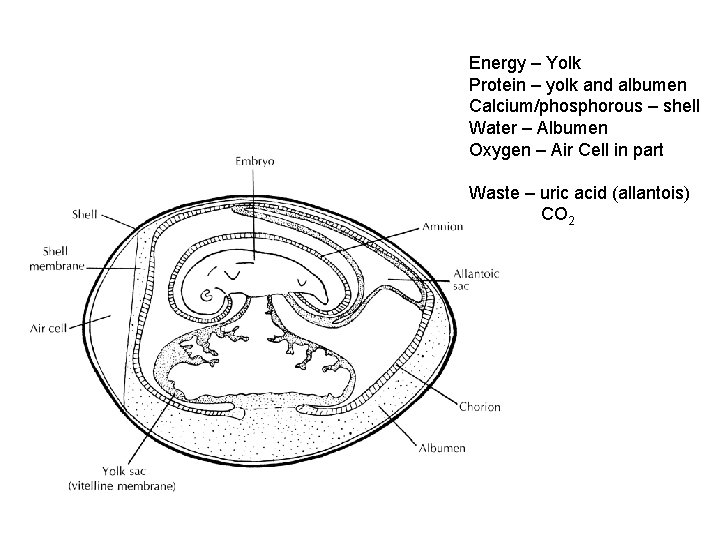
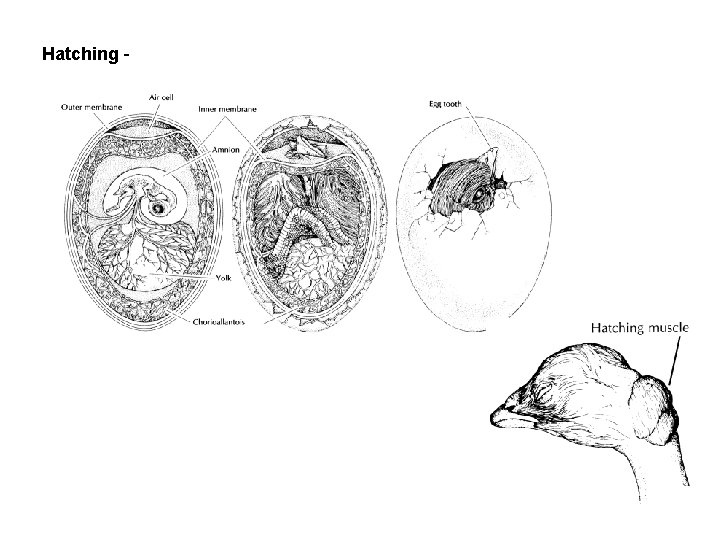
Energy – Yolk Protein – yolk and albumen Calcium/phosphorous – shell Water – Albumen Oxygen – Air Cell in part Waste – uric acid (allantois) CO 2
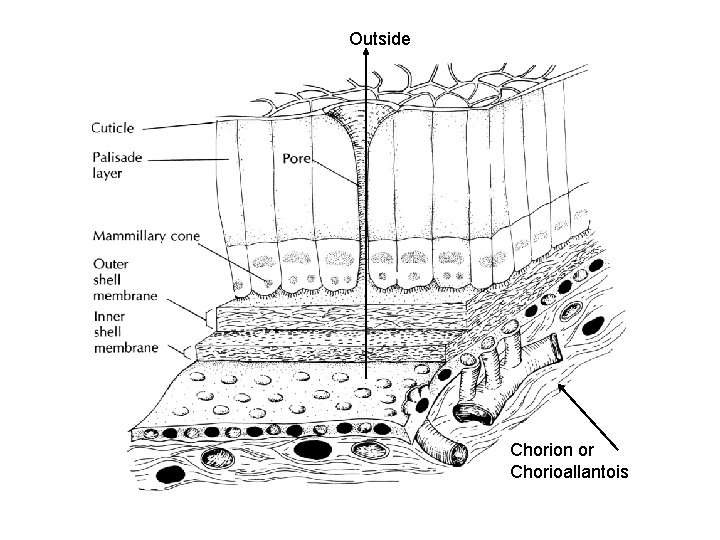
Outside Chorion or Chorioallantois
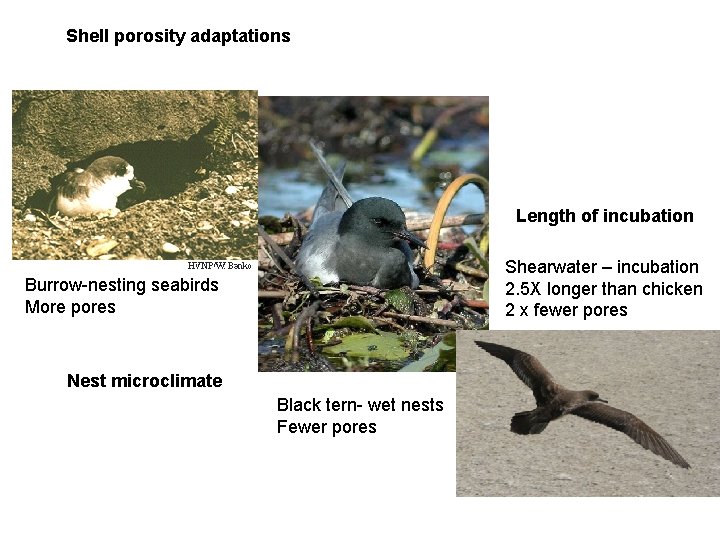
Shell porosity adaptations Length of incubation Shearwater – incubation 2. 5 X longer than chicken 2 x fewer pores Burrow-nesting seabirds More pores Nest microclimate Black tern- wet nests Fewer pores
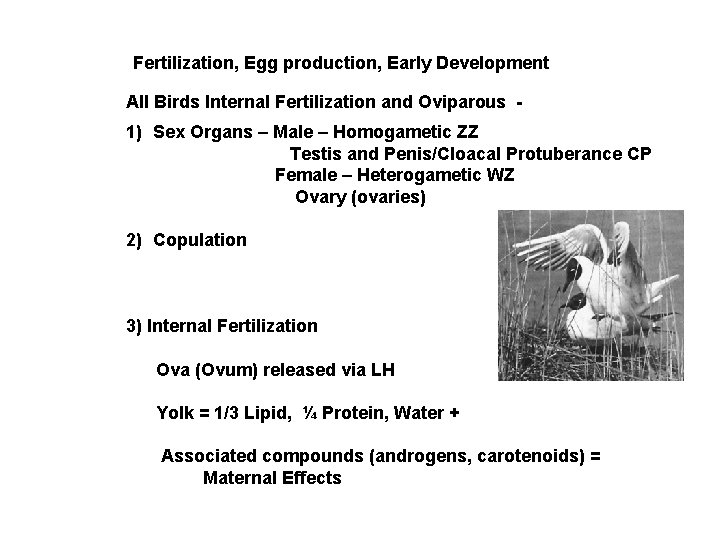
Fertilization, Egg production, Early Development All Birds Internal Fertilization and Oviparous - 1) Sex Organs – Male – Homogametic ZZ Testis and Penis/Cloacal Protuberance CP Female – Heterogametic WZ Ovary (ovaries) 2) Copulation 3) Internal Fertilization Ova (Ovum) released via LH Yolk = 1/3 Lipid, ¼ Protein, Water + Associated compounds (androgens, carotenoids) = Maternal Effects
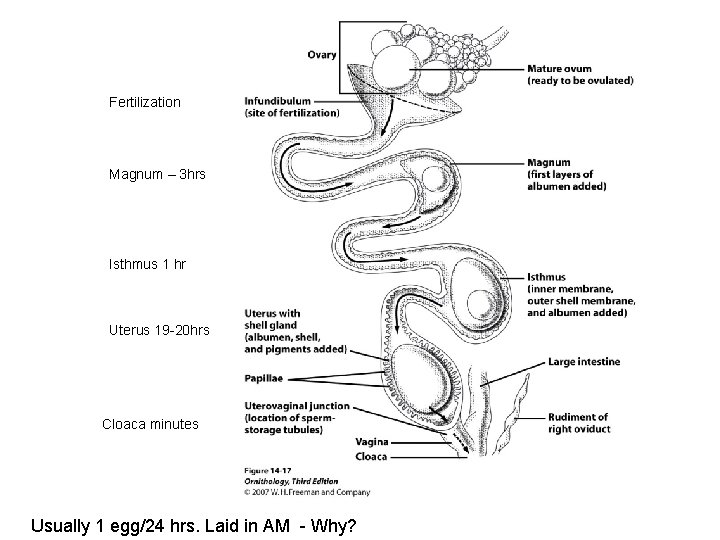
Fertilization Magnum – 3 hrs Isthmus 1 hr Uterus 19 -20 hrs Cloaca minutes Usually 1 egg/24 hrs. Laid in AM - Why?
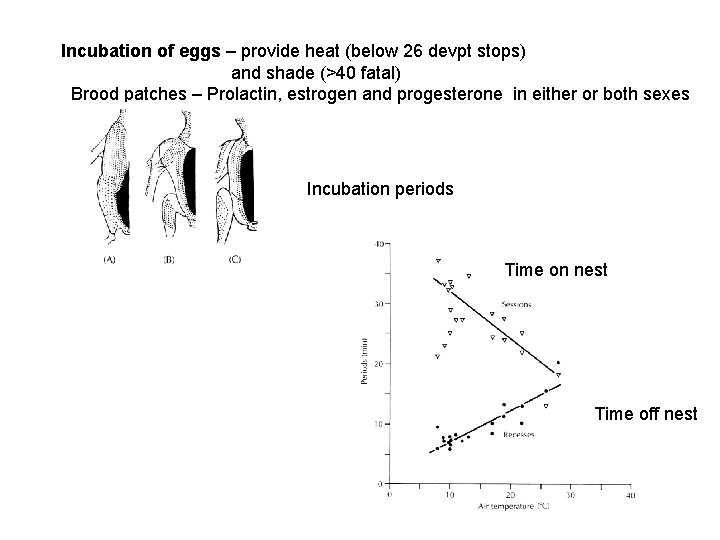
Incubation of eggs – provide heat (below 26 devpt stops) and shade (>40 fatal) Brood patches – Prolactin, estrogen and progesterone in either or both sexes Incubation periods Time on nest Time off nest
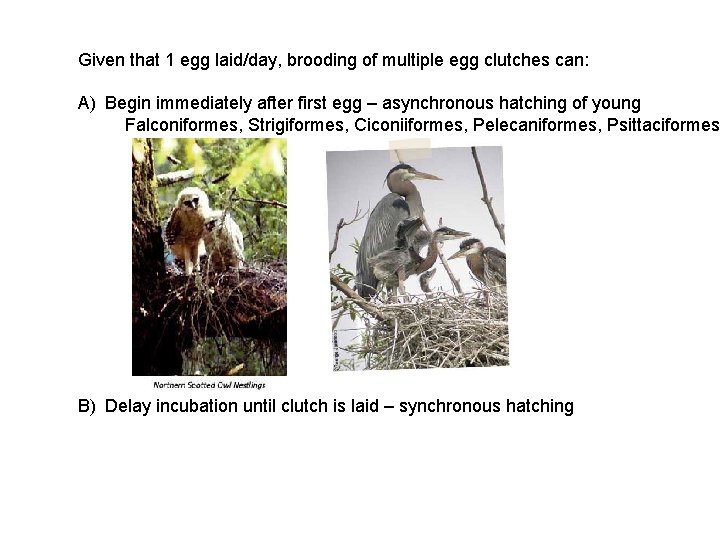
Given that 1 egg laid/day, brooding of multiple egg clutches can: A) Begin immediately after first egg – asynchronous hatching of young Falconiformes, Strigiformes, Ciconiiformes, Pelecaniformes, Psittaciformes B) Delay incubation until clutch is laid – synchronous hatching
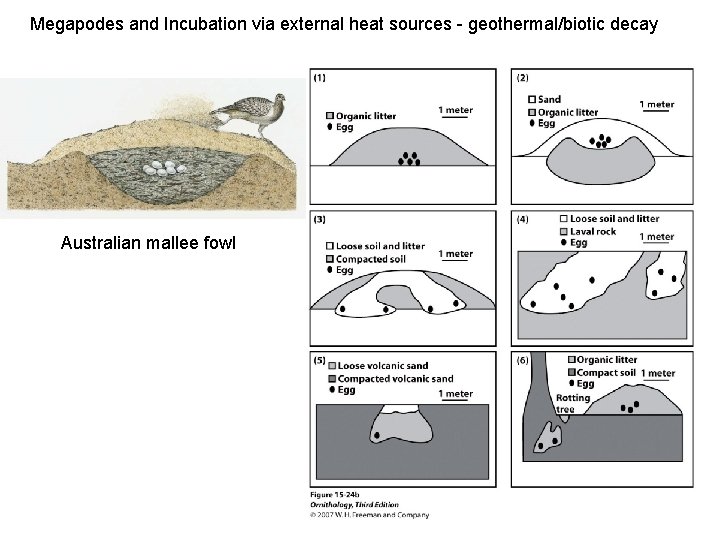
Megapodes and Incubation via external heat sources - geothermal/biotic decay Australian mallee fowl
Hatching -
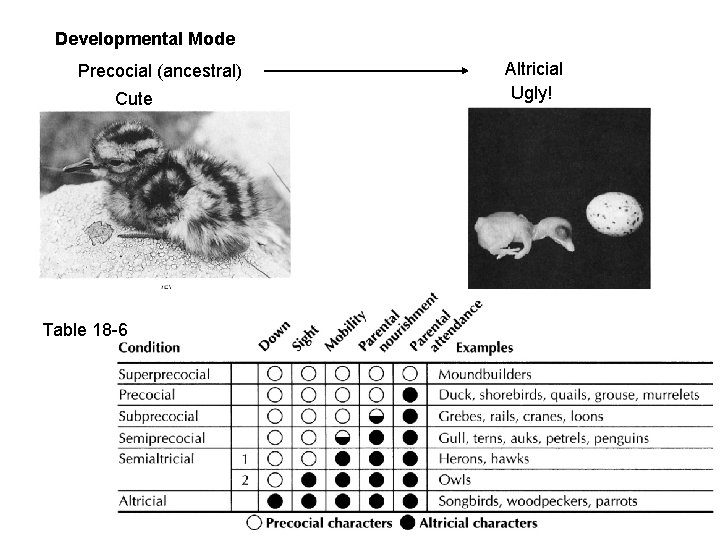
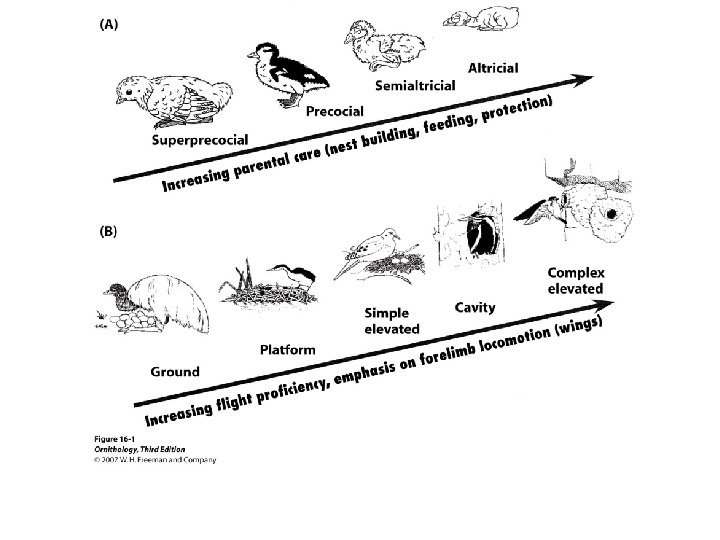
Developmental Mode Precocial (ancestral) Cute Table 18 -6 Altricial Ugly!
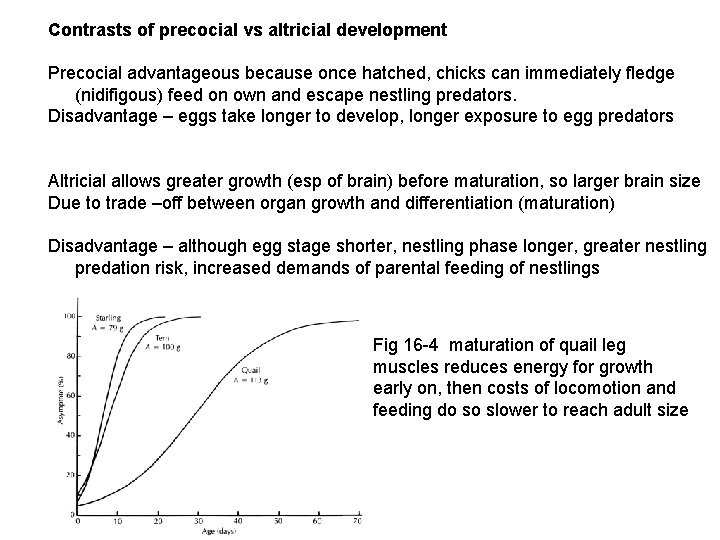
Contrasts of precocial vs altricial development Precocial advantageous because once hatched, chicks can immediately fledge (nidifigous) feed on own and escape nestling predators. Disadvantage – eggs take longer to develop, longer exposure to egg predators Altricial allows greater growth (esp of brain) before maturation, so larger brain size Due to trade –off between organ growth and differentiation (maturation) Disadvantage – although egg stage shorter, nestling phase longer, greater nestling predation risk, increased demands of parental feeding of nestlings Fig 16 -4 maturation of quail leg muscles reduces energy for growth early on, then costs of locomotion and feeding do so slower to reach adult size
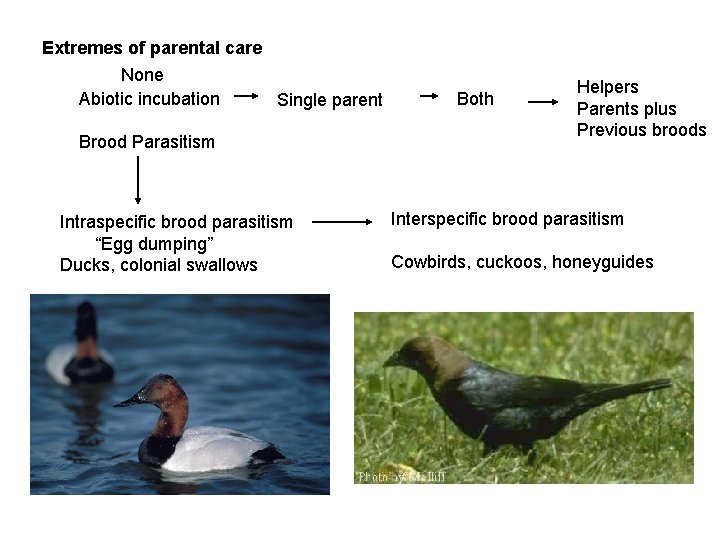
Extremes of parental care None Abiotic incubation Single parent Brood Parasitism Intraspecific brood parasitism “Egg dumping” Ducks, colonial swallows Both Helpers Parents plus Previous broods Interspecific brood parasitism Cowbirds, cuckoos, honeyguides
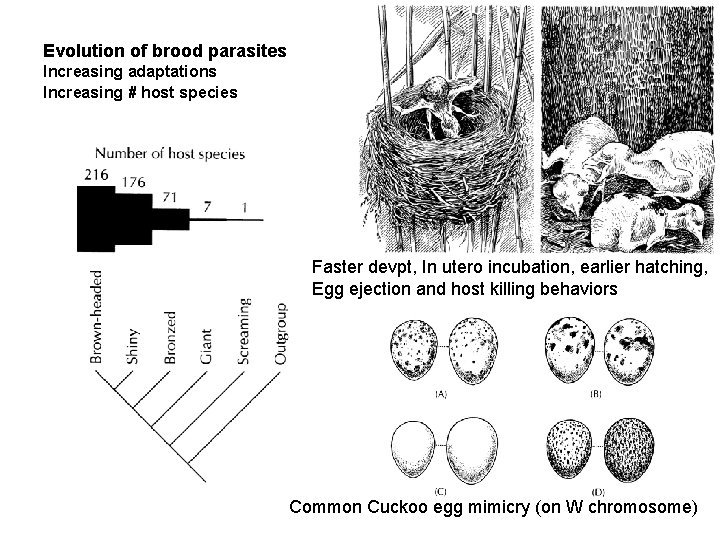
Evolution of brood parasites Increasing adaptations Increasing # host species Faster devpt, In utero incubation, earlier hatching, Egg ejection and host killing behaviors Figure 19 -5 Common Cuckoo egg mimicry (on W chromosome)
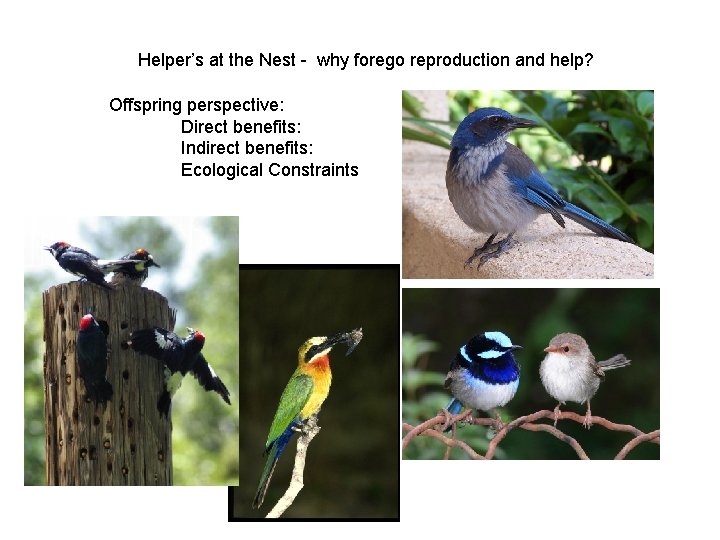
Helper’s at the Nest - why forego reproduction and help? Offspring perspective: Direct benefits: Indirect benefits: Ecological Constraints
Clutch Size Determinate vs. Indeterminate Layers - will a bird replace eggs? Clutch size variation: Correlated variables Lower latitude, lower altitude, body size, age Evolution: Lack (1947) maximum # parents can feed and nourish Alternatives: Trade-off hypothesis – long-term repro output reduce clutch to inc adult survival Predation – reduce time exposed , attractiveness and cost of loss where predation high (tropics) Seasonality – greater the pulse in resources over baseline, the greater the clutch (latitude)